整理:Nancy,PANews
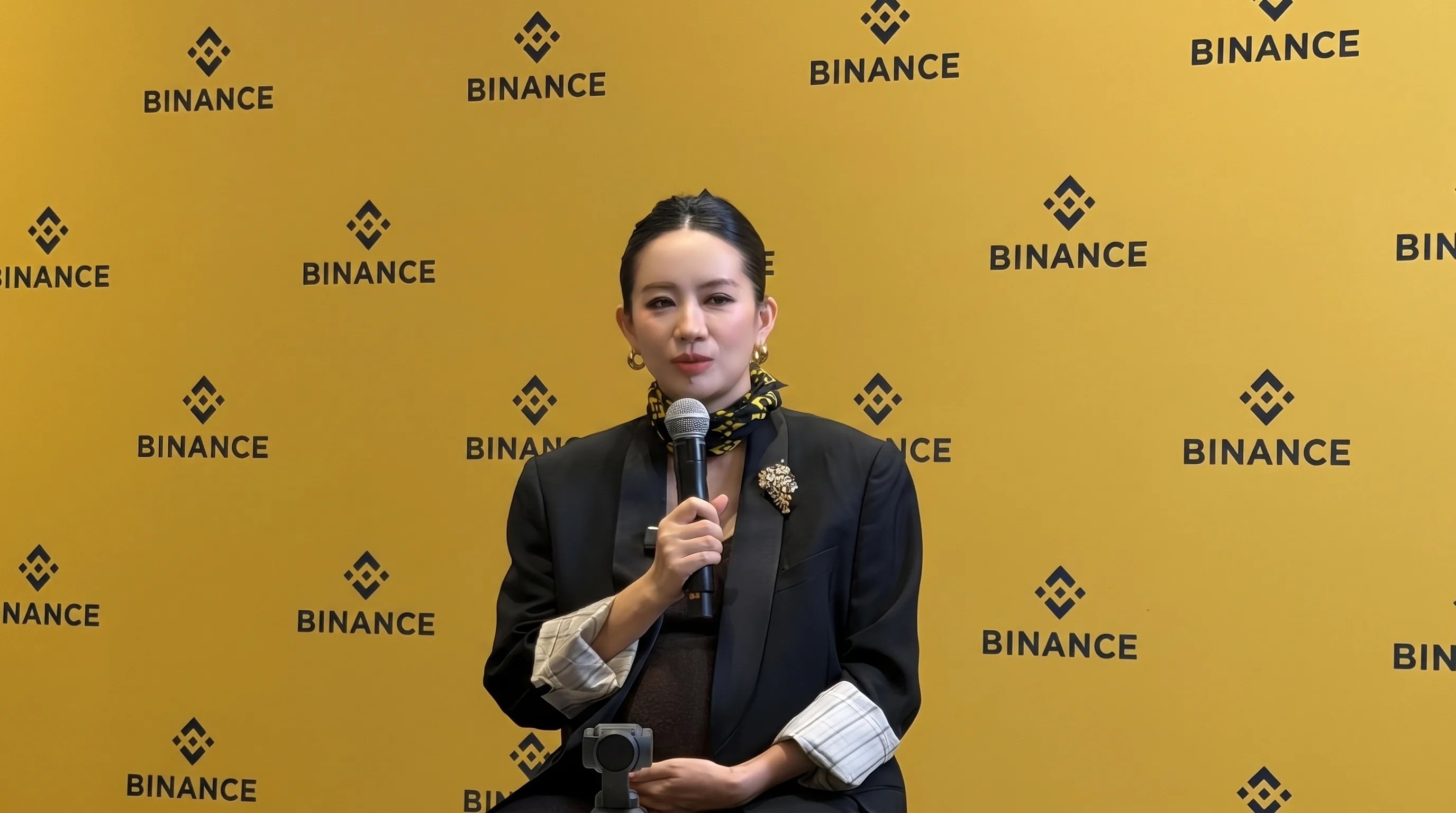
On November 28, Binance Blockchain Week opened in Bangkok, Thailand. During this period, Binance co-founder He Yi accepted interviews with media such as PANews, sharing her latest thoughts on topics such as platform security, AI applications, the integration of traditional finance and the cryptocurrency industry, asset issuance mechanisms, and global market layouts.
Speaking about recent security incidents, He Yi stated that Binance will further tighten AI access management, reinforce risk prevention and control through employee safety training, sandbox mechanisms, and an independent AI security audit system; regarding AI applications, she believes that the changes brought by AI are not only an increase in efficiency but also a reshaping of talent structure and working methods. Currently, Binance has not laid off any employees due to AI. Meanwhile, faced with challenges such as a sluggish market and insufficient quality asset supply, He Yi emphasized that the core of a trading platform should not just be to pursue profits and trading volume, but to maintain ecological balance, and provide users with truly valuable assets and financial services.
She also discussed the long-term impact of the cryptocurrency industry on traditional finance, the growth potential of the Asian market, and the internal challenges Binance will face in the next decade, believing that the greatest threats to enterprises often come from within, and that maintaining objectivity, fairness, and continuous evolution is key to long-term development.
Q1: Recently, global cybersecurity incidents have frequently occurred, and AI automated attacks are showing stronger concealment and scaling trends. After experiencing a significant security incident at the end of October, what key adjustments and upgrades has Binance made in security defense? In the face of AI-driven new attack methods, what practical experiences and defense strategies does Binance have to share with the industry?
He Yi: First of all, to be objective, since the theft incident in 2019, Binance has been continuously improving its security system according to the principle of zero trust, with strict isolation implemented between departments. This is also an important reason why Binance's security has not had problems in recent years.
Of course, from an external perspective, everyone may think that this incident is essentially a seemingly primitive social engineering attack. However, in reality, social engineering attacks happen every day, and some real cases may be far more complex than people imagine, even quite absurd and outrageous.
For example, there was a candidate who was consistently involved by the same person throughout the interview process, but when it came time for formal onboarding, another person appeared. However, we identified the inconsistency in personnel identity during the onboarding process and promptly halted the related procedures.
In another case, all the information provided by a candidate during the interview was correct, and due diligence and background checks did not reveal abnormalities, but we later found that their IP address was suspiciously interacting with some doubtfully recognized IPs. We initiated verification with them. At that time, it was their first day of employment, and they had not even accessed the company's internal systems, but upon our direct inquiry, they disappeared.
Therefore, this type of complex social engineering attack is indeed happening every day.
I believe this incident has indeed exposed issues in our security management. Since Binance has been actively promoting employees to use AI, the settings for AI access management at that time were indeed not strict enough, granting overly relaxed permissions to AI.
This also involves an important topic: AI is indeed a very powerful and remarkable tool, but at the same time, it may bring corresponding security risks. It is a double-edged sword. From another perspective, AI can be both a spear and a shield.
Currently, our solution approach mainly revolves around several aspects:
First, strengthen employee security training.
Previously, the company had established corresponding training and examination mechanisms. For example, employees undergo safety training every day and take a test with five questions, which is considered to complete related security risk training. However, after this incident, we realized that simply relying on conventional training is not enough, and we need to further increase practical drills. In addition to conducting training for all employees, we also brought in third-party institutions to simulate real social engineering attack scenarios for testing employees.
In the past month, we have carried out relevant work, but even so, there were still seven employees who failed the tests. These seven employees have all received warnings: if similar situations occur again, they may face immediate dismissal, regardless of their rank. Therefore, employee security training needs to evolve from mere knowledge dissemination to more practical risk awareness training, so that everyone truly realizes that they may face real social engineering attacks every day and may also encounter simulated attacks from within the company. Whether or not serious consequences arise, any violation of relevant security requirements may face the risk of dismissal. This is our first measure taken from the level of employee security awareness.
Second, establish a sandbox mechanism.
Currently, we have established a sandbox environment. When employees conduct work using company devices, the related operations will occur within the sandbox environment. This way, even if an attack occurs, the related actions will first enter the sandbox environment, and the risks can be isolated, triggering corresponding security alerts.
Third, establish an independent AI security supervision mechanism.
In the past, everyone’s focus on AI security was mostly on internal data boundaries and permissions boundaries, that is, what data AI can access and what permissions it can obtain. But now, in addition to using AI to assist in code writing, we also need to establish an independent AI security supervision system to monitor and review the code and information uploaded by employees on a daily basis.
In other words, the same AI should not be responsible for information upload, download, and security supervision at the same time. Instead, a separate, dedicated AI system for security auditing should be established to continuously monitor related behaviors in a 24-hour running simulation environment.
Therefore, currently, the foundation for reconstructing our security system mainly includes three levels: employee security awareness training, technical and physical protection measures, and sandbox mechanisms with AI security supervision systems.
Of course, the more specific technical details may be clearer when explained by colleagues from the security team; I primarily understand these measures from the perspective of the overall framework. For instance, the security standard I hope to achieve is that we should not wait until an employee has already downloaded relevant information to discover anomalies and take measures, but should issue an alert at the moment they trigger the download behavior, identifying and intercepting risks in the sandbox phase proactively.
Currently, the overall principle we have established for the team is: minimize permissions, minimize information, and execute all related measures around this principle.
In addition, I believe there is another issue worth noting. For a long time, the company has granted employees a high degree of operational freedom. In this process, employees are not without security awareness, but from 2019 onwards, as time has passed, some employees, though possessing basic security awareness, may have relaxed in their execution, failing to fully implement relevant security requirements.
Therefore, I believe that ultimately, we cannot rely on employees' self-discipline or awareness for security; we cannot simply depend on employees knowing about risks and actively paying attention to them, but require stricter technical means and management measures to control risks.
Of course, on the other hand, Binance has always respected employees and provided them with considerable operational freedom. However, freedom and responsibility always go hand in hand. This incident also implies that Binance may need to further adjust employees' operational freedom, especially in terms of security management and permission control, and will adopt stricter measures in the future.
Currently, Binance has hired three security audit companies to conduct external audits, and related announcements should have been released in the past couple of days.
Q2: How does Binance view the relationship between platform profits and user scale? Are Binance's users primarily driven by trading needs?
He Yi: Profits will definitely shrink. So, in essence, I believe that what Binance is pursuing is not purely profit but the core value that this endeavor brings to the general public.
When your user scale is large enough, you can generate sufficient scale effects and network effects. At that point, even if you earn little money from each user, the overall efficiency of the ecological platform will still be enhanced.
The main difference between platform products and individual operators is that your investment is relatively fixed; the more users there are, the more income there is. So, fundamentally, it still revolves around achieving scale effects.
In reality, many of our users from various countries and regions are not typical trading users. This may differ from what many people might imagine. People might think that Binance's users are all traders, all so-called "gamblers," believing we are just a big casino. But in reality, our users are very diverse and encompass various types.
A classic example is that users in some countries essentially use our platform as a national life service tool similar to Alipay.
In other countries, such as the Philippines and Pakistan, which are labor-exporting countries, many user scenarios involve remittances home. Because traditional international remittance costs are high, our platform can achieve fund transfers at a lower cost and higher efficiency.
Therefore, Binance's real competitors are not other cryptocurrency platforms, nor is it about who has lower trading fees, but rather the traditional financial system. We are comparing costs and efficiency.
So, is income important? Yes, it is. Is profit important? Yes, it is too. Why is it important? Because enterprises need a healthy business model; they cannot maintain operations indefinitely relying on losses. But is it the most important thing? No, it is not. Ultimately, it depends on what core value this company creates for society as a whole.
Of course, if we categorize users by tiers, some users are more typical investment users. They may come from higher GDP countries, have certain funds, and wish to find a place to allocate their assets, whether that be investing in U.S. stocks or other assets. This type of users may in fact have higher trading frequencies.
Q3: Overseas technology companies like Google are exploring ways for ordinary people to participate in more complex financial activities. How does Binance view the integration of AI and financial services? What do you think will be the most important direction for development in the future?
He Yi: I believe that whether it is Google or other platforms, when they undertake this task, their first thought is not to redevelop an entirely new product, but to think about what the current users' usage scenarios are.
For example, Google might consider integrating AI users with payment systems so that AI can operate autonomously, executing tasks continuously as long as there is money in the account. Users would not need to manually click each time they complete an operation. Therefore, each platform has different needs and usages regarding AI applications.
From Binance's perspective, I think we can first allow users' accounts to take on daily payment functions; secondly, users can use it for wealth management; thirdly, they can use it for investment. But this does not imply that every user needs to constantly trade with their funds.
I believe the first and foremost step that is crucial for users is understanding the basic knowledge. You will notice that many users online harbor significant bitterness, but essentially they do not have a real concept of investment. When the market rises, they think that someone is manipulating the prices; when the market falls, they believe that someone is crashing the prices or that there is a so-called "hand of God" manipulating the market. I feel that this mindset itself is not a particularly mature investment perspective.
Therefore, I believe AI on a platform like Binance should help users make more accurate judgments and decisions. In fact, we have been exploring development ideas in this aspect for quite a while, creating many tutorials and content products such as Binance Square.
However, the people on content platforms vary widely. Some write macro articles that may not attract much traffic, while others gain more traffic by simply dancing in live streams. This is human nature. But this does not mean that professional content lacks value. Those who are willing to read will still seek it out; those who do not want to read may directly turn off the content even if it is pushed in front of them. But at the very least, I believe that as a platform, we should provide this knowledge to users, allowing them to gain a certain understanding of investment.
Additionally, I believe the greatest significance of AI in our industry is to achieve capability equality. If blockchain itself reduces financial barriers, such as enabling users to trade 24 hours a day and allowing trades as small as $5, making it easier for people from more countries to participate in global markets, then I think the greatest significance of AI is achieving equal opportunity in capabilities.
Some have asked me, as AI becomes ubiquitous, does that mean everyone is back on the same starting line? But I believe that even if everyone obtains the same tools, just like everyone has a smartphone and can use the internet, in the end, some individuals will use these tools to find their own paths for growth, continuously exploring and progressing. However, some will get smartphones and computers just to scroll through short videos, and that is their choice.
The key is that you must first provide them with this opportunity, to create AI and put it in front of them. If they do not use it, that is their own issue; but if we did not provide this opportunity, then that is our issue.
Q4: Has AI started to replace some positions at Binance? Is there currently a clear replacement rate or personnel adjustment plan?
He Yi: Many people may not know that realistically, I had a strong inclination toward AI from the very beginning. Because Binance has a large user base and numerous customers, including substantial personnel involvement in basic positions such as customer service and auditing. However, later we found one thing: AI's efficiencies have indeed improved, but staff numbers have not decreased as a result.
From a technical architecture perspective, it can roughly be divided into three levels; we will not discuss chips and other underlying infrastructures for now. The first level is massive data; the second level consists of trained models, which are pre-trained small models in specific fields; the third level is the large models.
No matter whether you use OpenAI, Claude, Kimi, or large models from other companies, even if you have a very perfect, very expensive large model to deploy directly in the industry, piling knowledge onto it is still ineffective. Because you need someone to truly clean and organize all the data sufficiently before providing it to the model for it to function.
Thus, our early investments in AI were significant, but eventually, it felt a bit like alchemy. Why? Because the data was neither clean nor accurate enough. In this journey, we have navigated with caution and explored for a long time.
Initially, when AI became popular, with dialogue models just emerging, we thought they could definitely replace customer service roles, so we began hiring large model talents and started R&D. But after a considerable amount of time, almost a year, the results were still not very noticeable.
Later, with the development of related models, we began using open-source models for retraining and saw gradual results. Simultaneously, we restarted data cleaning efforts, progressively structuring all data outputs.
Consequently, I believe that while AI has enhanced efficiency at Binance, this improvement is still relatively limited. At least, we have not laid off any staff due to AI.
However, I think there is a larger reflection here: the changes brought by AI may imply that the requirements for talent are changing. Previously, the typical large organization structures were relatively rigid, operating like assembly lines. Although everyone might be engineers, their working style was assembly-line-like.
Especially among large Chinese firms, work often gets divided into layers, making it easier to manage. Conversely, companies in Europe and America might have more relatively independent engineers capable of managing their own projects. You will find that when structured organizations encounter AI, AI may enhance efficiency and improve delivery quality, but it does not necessarily replace existing organizational hierarchies.
Therefore, this era may have different demands for AI talent. They do not necessarily need a computer science background, or even the traditional backgrounds that large firms used to require. You could just be an arts major and still handle many tasks through natural language processing, managing many tools, and achieving product development.
This realization has led to a lot of self-reflection. I think that just like when the electrical age arrived, continuing to churn out candles may no longer be an important skill. Skills that were once crucial in a past era may not hold the same importance in a new era.
As a result, we are continuously adjusting our recruitment and talent acquisition strategies, hoping to attract more fresh blood.
I believe that talent in the AI era must first possess proactivity and the ability to learn actively. These abilities may be more vital than academic qualifications or past professional backgrounds.
So, in summary, we have invested a lot, conducted many tests, and continuously reflected, but we have not laid off any staff due to AI.
Because in the first half of the year, my view was that AI would greatly enhance efficiency; by the second half of the year, my observation is that AI is changing the portrait of talent requirements.
Regarding customer service and other positions, you can understand that in these areas, we may not have significantly increased personnel but also have not considerably reduced staff. Currently, these relevant businesses are relatively mature, including some model testing and other tasks.
Overall, though, we are still carefully navigating forward. I do not want to adopt an aggressive approach, such as directly cutting 30% of the staff. What if key positions are cut? Therefore, Binance prefers to proceed steadily.
More importantly, once the AI era arrives, whether these roles can be merged or recombined to create new job demands instead of adhering to the past tiered organizational structures and assembly-line work approaches is crucial. I feel that the entire way work is conducted may be in need of change.
Q5: How is the integration of traditional finance and the cryptocurrency industry occurring? What changes will the cryptocurrency industry bring to traditional finance in the future?
He Yi: The transformation from eight hours to twenty hours is actually compelled. Who compels it? Isn’t it the exchanges that push this? So, this shift is happening subtly and repetitively day by day, rather than suddenly witnessing a hallmark event.
In this process, we see that many traditional quantitative firms are now starting to use our products to hedge their existing stock holdings. Additionally, many institutions that create ETFs have approached us for collaboration. For example, some very large ETF companies in Asia will ask us if they can directly introduce ETFs onto our platform for our users.
Because if you purely look at global scale, even if you regard Binance as a brokerage, its scale is already among the top in the world. Therefore, I believe that the power and changes that Binance itself can bring to traditional finance are well known. However, various reasons do slow down this process in advancement.
For instance, regulatory bodies have a relatively cautious understanding of this matter. Of course, when a new technology emerges, it inevitably impacts the traditional vested interest structures, which may trigger a backlash.
After all, no one wants their business, which could previously earn passive income, to suddenly transform into a company that needs to operate continuously 24 hours a day. But the tide of the times has arrived; you have to do it. So, you will find that the world is moving forward in a constant process of adjusting and pushing against each other. I am quite confident in the entire cryptocurrency industry and the changes it will bring to traditional finance.
I believe this is not just a change at the asset level but an overall restructuring at the foundational level. From the technical layer, operational layer, to the discovery of assets and price discovery, there are all structural changes occurring. But this change does not happen by simply flipping a switch.
It is more like the process of electric lights replacing candles. Initially, only a segment of people started using electric lights, and then more people gradually abandoned candles. Just like when I was young, I used kerosene lamps. The electric light had actually been invented for many years, even over a hundred years, but it took time for the technology to truly permeate everyone's life.
I believe that the changes brought about by technology to humanity are advancing day by day in this way.
Q6: How do you view the relationship between AI and the cryptocurrency industry in the future? Will AI form competition against the cryptocurrency industry?
He Yi: Regarding future perspectives, I think it still revolves around the point mentioned earlier.
Some may worry that people in the cryptocurrency industry might all rush to the AI industry? I think this can be likened to the development of electric vehicles. For instance, Tesla's electric vehicle technology has actually existed for over a hundred years, but widespread application happened only in the past decade or two.
Technology is not meaningless; it is just that it may have been temporarily set aside. There could be many reasons for it being set aside. For example, the traditional automobile manufacturing industry, whether in America or Europe, is a very significant sector and one of the core sources of fiscal revenue. The emergence of electric vehicles may thereby pose a threat to the traditional automobile industry, and hence, the development of this technology may be subject to various factors. But whenever a technology drives societal progress and enhances efficiency, it will eventually demonstrate its value and be embraced in public life.
Today, people might see AI and the cryptocurrency industry as being in competition, but if understood this way, you will discover that AI poses a threat to every industry. It may threaten designers, writers, journalists, and even the investment sector. Those writing code are particularly facing evident impacts, with quite a number of relevant positions being replaced by AI.
Thus, I believe that AI is actually empowering all industries. Ultimately, what matters is what products this industry creates with AI and who uses them.
Q7: In recent years, Binance has continuously adjusted its asset issuance and listing mechanisms. With changes in market conditions, has this impacted Binance's profits?
He Yi: Essentially speaking, every time there is a new asset listed, people inherently believe that the launch of a new asset implies a profit opportunity.
Since 2019, we have begun relevant attempts. Because Binance can be considered one of the largest comprehensive trading platforms in the world, if a project is not listed on Binance, the significance of launching it elsewhere may not be that great. Thus, if project teams want to be listed on Binance, they may need to offer us some discounts. We then pass these discounts on to users, allowing everyone to participate in new asset investments at lower prices.
Essentially, this is about providing benefits to users through discounts. However, this route gradually became unfeasible over time.
Why is that? Because in the early days, a project's valuation might have been only one hundred million dollars, and offering a 50% or 30% discount was acceptable. But in the last cycle, many projects were valued extremely high right from the start. Regardless of how much you discount, it is hard for users to obtain attractive prices genuinely. Ultimately, these highly valued tokens still need to enter the market for circulation and sale. Thus, you will find out that solely relying on discounts is no longer a viable path. The only partners remaining are those willing to sell tokens through discounting and raising funds. However, when project teams realize they can directly issue assets on platforms like X without needing exchanges for distribution, they will naturally choose their own approach.
In the second phase, we began to work on Alpha. The Alpha business indeed once performed poorly, with many assets displaying poor price performance after listing, resulting in discontent among quite a few users. However, the logic behind Alpha remains the same: our standards for spot listings are relatively high but Alpha itself is chain-based trading. If project teams are willing to offer users some benefits, we are also willing to allow entry to the platform via Alpha.
The amount we have cumulatively invested in Alpha should approach 1 billion dollars. To be precise, at least 800 million dollars. I remember having done a statistic at the time; however, with the fall in cryptocurrency prices, the figure may have decreased when calculated according to current prices. If calculated according to the earlier prices, this genuinely provided several benefits to many ordinary users for almost a year. But later, we found it hard to continue on the Alpha path as well. Why? Because project teams claim they are not making any profits. So, I think the problem lies not in the model itself but in the lack of good projects. Without good projects, forcing a listing sometimes is not better than not listing at all. Because at least in the initial stages, there might still be some astute early users who can obtain a certain investment opportunity.
In fact, during previous interviews with employees, someone asked me: as a trading platform, what do you think the most important thing is? I thought about it for a long time. In the past, we might have said the standard answer is to protect users and establish trust with users. This is certainly correct. But after 10 years, we still faced strong criticism from users. So, where does the problem lie? Later, I realized that the most important thing for a trading platform is to maintain ecological balance.
For the past ten years, we have been trying to start from a relatively strong position, endeavoring to provide as many benefits as possible to regular users. For example, when project teams raise significant funding, how much of the benefits are really distributed to retail investors? Whether through early issuance or Alpha, we have continually pondered this question. But one day, project teams will also say they have no money left. If you want me to go live, I have no funds; even if I go live, I am unable to continuously provide liquidity.
So, I think the greatest problem in the whole industry right now is asset-related issues, specifically the lack of good assets. If there are no good assets, then what difference does it make whether or not to launch them? It would be better to search for genuinely valuable stocks and other assets for everyone.
Q8: Does Binance's profit primarily depend on market conditions and trading fluctuations? Will changes in asset issuance methods significantly impact profits?
He Yi: If you ask me, I certainly hope the market rises daily. Because for me, a bull market is truly the time to make money, and users' willingness to trade will be particularly strong. Our main business model revolves around earning transaction fees.
Many of the actions I take can be straightforwardly seen as offering benefits to users. For example, in the past, providing users benefits through Alpha and similar mechanisms primarily aims to maintain ecological balance as much as possible. You must also consider that the market cannot turn into an environment entirely dominated by institutions.
If users are facing highly professional funds and quantitative institutions, then there is an asymmetry in capabilities. These institutions possess the smartest talents, the best quantitative models, and macro research teams capable of analyzing various market fluctuations. Ordinary retail investors obviously find themselves at a relative disadvantage in such an environment.
So, from Binance's stance, we have always been striving to secure more benefits for retail investors. However, you will find that many participants in the market have stated that project teams say they have no funds left, and market makers assert that the market is sluggish and are unwilling to trade. There might have been some profits in the past, but now trading has ceased, and many operations have halted. Therefore, as an exchange, we must continually sustain the ecological balance of the entire platform while seeking good assets.
We hope that what users gain on the platform is not merely trade services, but solutions that can genuinely address their needs.
For example, I have a sum of money that can be invested here; even if I do not have funds for trading, I can use it like Alipay as a daily financial tool. This is our current direction of thought.
As for profits, I believe they primarily depend on market conditions and trading activity, rather than solely on asset issuance methods. Because many revenues generated by these businesses ultimately flow back to retail investors in various forms.
Some users may state that since Alpha has ceased operations, you no longer issue low-income guarantees. Because for some users, not trading means they are merely utilizing the platform for benefits. Only when benefits are accessible do they feel they have gained returns; however, as soon as they lose a dollar, they no longer perceive it as a benefit. Thus, you will discover that we have been incessantly trying to balance the entire ecosystem.
Maintaining ecological balance ultimately hinges on good asset targets. This is also why we have begun reevaluating: when assets like stocks, gold, and silver are all declining, what truly good assets are still worth investing in? But I remain relatively optimistic. Because market sentiment will always fluctuate between overbuying and overselling.
I firmly believe in two things: one is cycles, and the other is value investing. If we extend the time cycle, good assets always retain their value.
Of course, for me, liquidity is even more important, as my profession dictates. For instance, are houses in Lujiazui, Shanghai valuable? Of course, they are valuable in the long run. But their liquidity may not be that good. Similarly, houses in Shenzhen Bay or Manhattan may hold long-term value, but they cannot always be liquidated at any moment.
Therefore, my profession dictates that I regard liquidity as the primary factor. Only under conditions of adequate liquidity do I consider the intrinsic value of the asset.
Essentially, most people comprehend the significance of cycles: markets inherently oscillate between rises and falls, just as there will always be individuals who overbuy and others who oversell. Everyone also knows what constitutes valuable assets. However, the difficulty lies in the gap between knowing and doing. You understand that you should persistently hold good assets, but executing it is not easy. For instance, everyone knows Nvidia holds value, but after its stock price increases by 30% and then drops again, many may decide to sell. You are entirely unaware of how much further it may ascend.
Thus, the problem is not that the market lacks money, but rather that people do not know when they should spend money, nor how to allocate assets. Furthermore, the current global economy is in a downward cycle. This pessimistic sentiment is not limited to the cryptocurrency industry but is also present in global markets.
Q9: With changing market conditions, how will Binance adjust the positioning and issuance rhythm of Alpha? In the future, will there be more connections with platform IPO businesses?
He Yi: I think initially, our intention with Alpha is to provide benefits to users, but we did not consider only providing benefits to studios. This is essentially a cat-and-mouse game. As long as you provide benefits, there will always be individuals who come specifically for those benefits. Sometimes, ordinary retail investors do not appear to be that astute and may miss out on such profit opportunities. But fundamentally, our original idea was quite simple: we wanted to grant ordinary users some benefits.
Regarding the position of Alpha itself, it is essential to clarify one point: Are Alpha users the core source of the platform's income? Certainly not. Therefore, it is unnecessary for us to create asset issuance solely for Alpha. This logic is evidently flawed. It can only be said that when good asset targets appear in the market, and we can provide benefits to users through these assets, we will try our best to improve related mechanisms. This is the correct logic.
Thus, you may speculate whether we are making arrangements for some business objectives. However, I think Alpha is about providing benefits to everyone, and creating asset issuance opportunities solely for the sake of benefits is inappropriate. Essentially, as long as there are good asset targets in the market, regardless of whether the market heats up or cools down, we should strive to maintain the platform's neutrality. We must seek good assets for users and maintain ecological balance. At the same time, we hope that even if users do not trade, they can remain on the platform, meeting their needs through daily investment or other financial services.
This is something we have been contemplating for a long time.
Q10: How does Binance view the Asian market? What differences will future market strategies have across different Asian countries and regions? What plans do you have for markets that have not yet obtained licenses?
He Yi: If you look at demographic data, you will find that Asia's population accounts for a substantial proportion of the global population, exceeding 50%, and possibly even over 70%. I'm not entirely sure of the exact figures. But this means that if you aim to achieve global user growth, the Asian market is undoubtedly a top priority.
On this basis, we will definitely conduct market segmentation. Countries with larger populations will have higher priority; economically developed countries will also enjoy higher priority.
In fact, we are currently communicating with regulatory agencies in hundreds of countries around the world. The progress may vary significantly from one country to another. In some countries, we have obtained licenses and entered local regulatory sandboxes; in others, there may be multiple different regulatory bodies involved. For instance, in some countries, central banks handle regulation, while in others, agencies that previously regulated securities markets supervise cryptocurrencies in addition to their existing mandates, and in some countries, there are independent cryptocurrency regulatory departments. Some nations even had no dedicated crypto regulation departments before but have suddenly established new regulatory entities.
Thus, you might have obtained a license but cannot enter the App Store; or you may have entered the Application Store, yet local tax policies may not be clear enough. In some countries, local regulators might say you can start operations first, and we will discuss tax issues later. Various situations can occur.
You will find that every country and every regulatory body has different focal points. Some may focus on payment services, while others are concerned with different business types; even if one regulatory department approves it, you still cannot proceed to the next step without agreement from another department. Certain countries may even stipulate that foreign ownership cannot exceed 50% or 40%. These varied circumstances are commonplace.
However, I believe that there are more solutions than difficulties. Any industry in its early developmental stages may experience a relatively steep growth curve. But once you genuinely enter a popular phase, you will confront all sorts of regulatory challenges and operating costs. We cannot consider the early exponential growth to be the norm. Any enterprise may experience exponential growth and then gradually stabilize, seeking new secondary growth curves. This is how I view market development.
As for organizational challenges, I believe that Binance's organizational capacity has actually been strengthening over the past few years, even if the change may not be apparent to everyone, but the organizational capability is indeed continuously iterating.
My requirement for organizational capability is: even if I am not managing, the team can operate independently and execute tasks well. Over the past few years, we have onboarded some truly outstanding talents. They may have previously worked within regulatory systems or come from similar companies with successful experiences. These experiences can be reused. Therefore, I assert that our entire team's collective organizational capacity is indeed constantly enhancing.
Q11: If we extend the timeframe to the next decade, from 2027 to 2037, what do you believe is most likely to defeat Binance? Is it AI, regulation, hacker attacks, or something new that has yet to emerge?
He Yi: I think the most likely to defeat Binance is something new that has yet to appear. But if you ask me what the greatest threat is, I believe that the greatest threats will always come from within. The “within” here primarily refers to ourselves.
Humans can easily fall into a state of not knowing what they do not know. Many may believe they understand, but they essentially do not. Therefore, I think there are two keywords that have been seldom mentioned internally in Binance in the past two years, but are now increasingly emphasized.
The first is objectivity. This is actually the pursuit of truth and pragmatism often mentioned in the past. As a child, when I saw these words, I may not have understood their significance. They were often posted on classroom walls or at the back of blackboards, but now I genuinely appreciate the importance of being pragmatic and seeking the truth. What seeking the truth means is that you must objectively recognize what your position is in the market. For example, while Binance may be the largest trading platform globally, we are not necessarily the largest in some specific sub-markets.
Taking Thailand as an example, we are not the largest trading platform there. There may be some local platforms that use the local language, provide localized services, and have products that are even closer to local users, almost like their neighbors. This resembles the competition between Uber and Didi years ago. Uber may be powerful, but in local markets, Didi may better understand local users and the market environment. Thus, the iteration of organizational capacity is vital, but must be founded on the principle of being pragmatic and seeking the truth.
The second keyword is fairness. I believe I am a relatively fair person. I particularly dislike taking advantage of others or having others take advantage of me. Therefore, I try to consider from the user's perspective: what do users genuinely need? Users may not expect the platform to guarantee they will definitely make money, but they at least hope it is a fair and reasonable platform. This is akin to the relationship between employees and bosses. I may not find a perfect boss, but I hope my boss is at least fair. Why does that person next door get more resources? Is it because the boss prefers them, or because their work results are better? I believe fairness is fundamentally significant.
Consequently, I think that many so-called failures often stem from internal factors rather than external ones. Innovation and talents can continuously iterate. But if a team stops growing, then it has genuinely halted.
Moreover, I believe that a team’s stoppage of growth is unrelated to its size. It may involve several aspects: first, do you still retain curiosity? Second, are you still actively learning? Third, do you possess a sense of ownership, or do you just echo what many big companies often say: “This is not my business”? These could be aspects I care deeply about.
免责声明:本文章仅代表作者个人观点,不代表本平台的立场和观点。本文章仅供信息分享,不构成对任何人的任何投资建议。用户与作者之间的任何争议,与本平台无关。如网页中刊载的文章或图片涉及侵权,请提供相关的权利证明和身份证明发送邮件到[email protected],本平台相关工作人员将会进行核查。