Written by: Maher, Foresight News
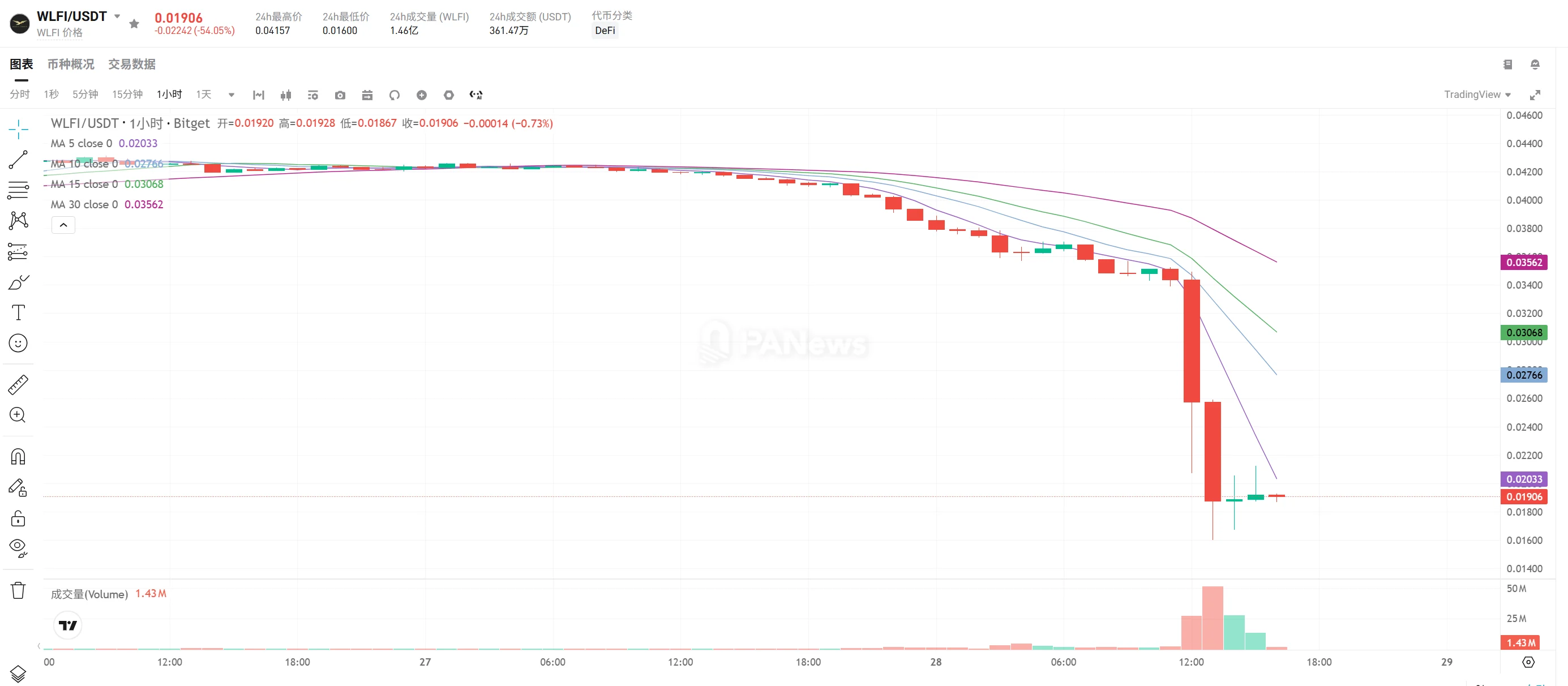
On November 28 at around 12 PM, World Liberty Financial's token WLFI experienced a flash crash. According to Bitget market data, WLFI plummeted directly from around $0.04 to $0.016, and by the time of publication, the token price had rebounded to around $0.019, with a 24-hour decline exceeding 50% and a market capitalization shrunk to approximately $600 million.
Subsequently, the panic spread to stablecoins. Today at around 3 PM, the project’s stablecoin USD1 faced increasing depegging, once dropping below the $0.95 mark to a low of $0.946 (with a maximum depeg of 5.4%), and has now stabilized around $0.99, with a current market capitalization of $2.76 billion.
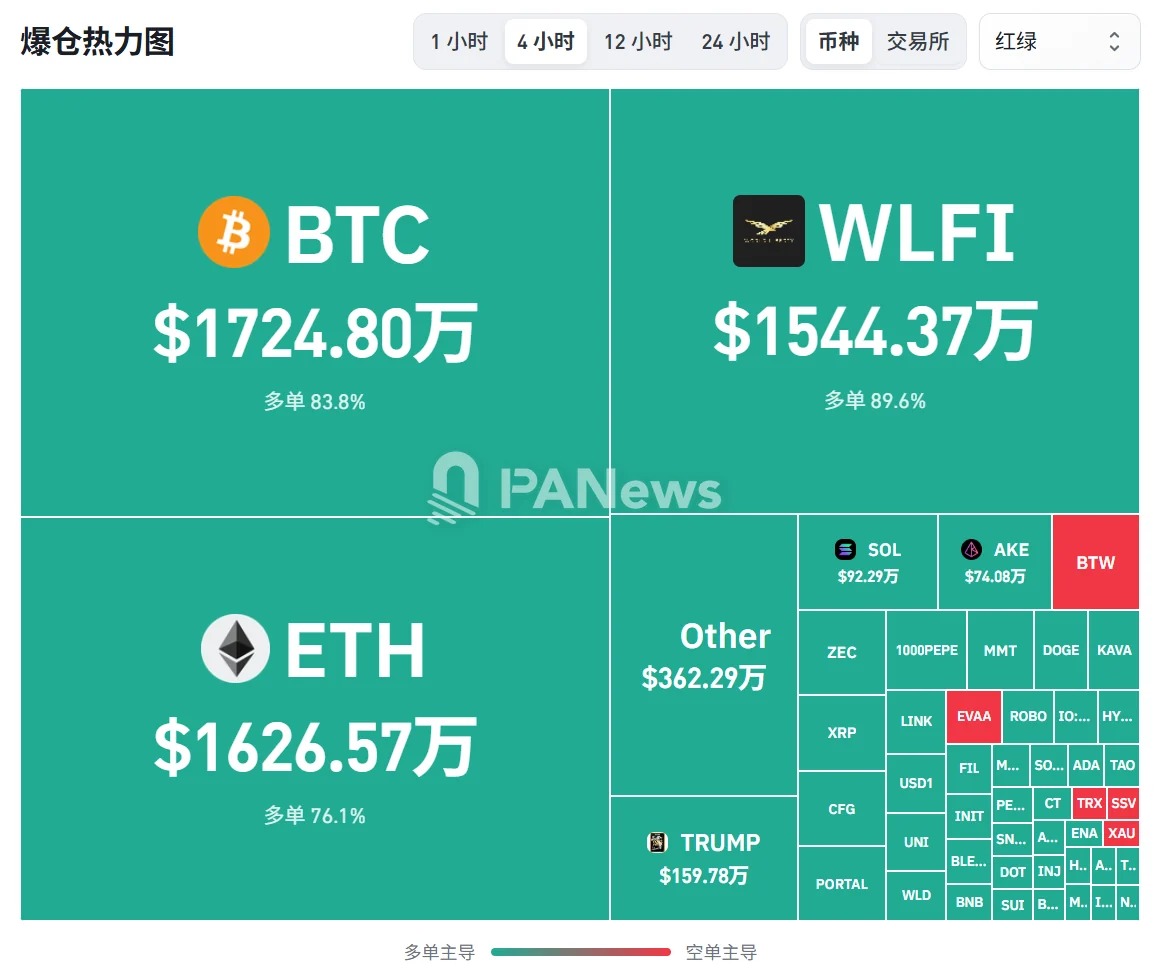
The derivatives market was also severely impacted. According to CoinGlass data, in the past 4 hours, the total amount of liquidation for WLFI contracts across the network skyrocketed to $15.44 million, with long positions accounting for as much as 89.6%, and the liquidation volume was close to that of BTC and ETH during the same period. Even the stablecoin USD1 appeared on the network's liquidation heatmap.
This flash crash of WLFI in the spot market quickly broke through the WLFIUSDT perpetual contract defenses on major platforms like Binance. Due to the extreme market conditions, the insurance fund's limits were exceeded, forcing the exchange to trigger an automatic liquidation (ADL) mechanism, sorting by return on investment (ROI) and effective leverage, and forcibly liquidating some profitable short positions with returns exceeding 300% at the bankruptcy price of the counterparty.
Currently, the funding rate for contracts has fallen into a deep negative zone, confirming that the market has an extremely crowded short sentiment. In this extreme cleanup, high-leverage long positions were liquidated to zero, and the project has suffered nearly $20 million in losses, with even the winning shorts being cut off from late profits by ADL.
Selling 12,100 ETH to Bail Out
The direct trigger for this flash crash stemmed from the WLFI team’s massive collateral position on the lending protocol Dolomite being on the verge of liquidation.
It is worth noting that Corey Caplan, the co-founder of Dolomite, is also an official advisor to WLFI. Related addresses of WLFI had staked about 5.1 billion WLFI (approximately 19% of the total circulating supply based on current market value) on this protocol, borrowing large amounts of USD1, with the liquidation line before the collateral call hovering around $0.021. Once that defensive line was breached, the illiquid WLFI would inevitably face a chain of forced liquidations.
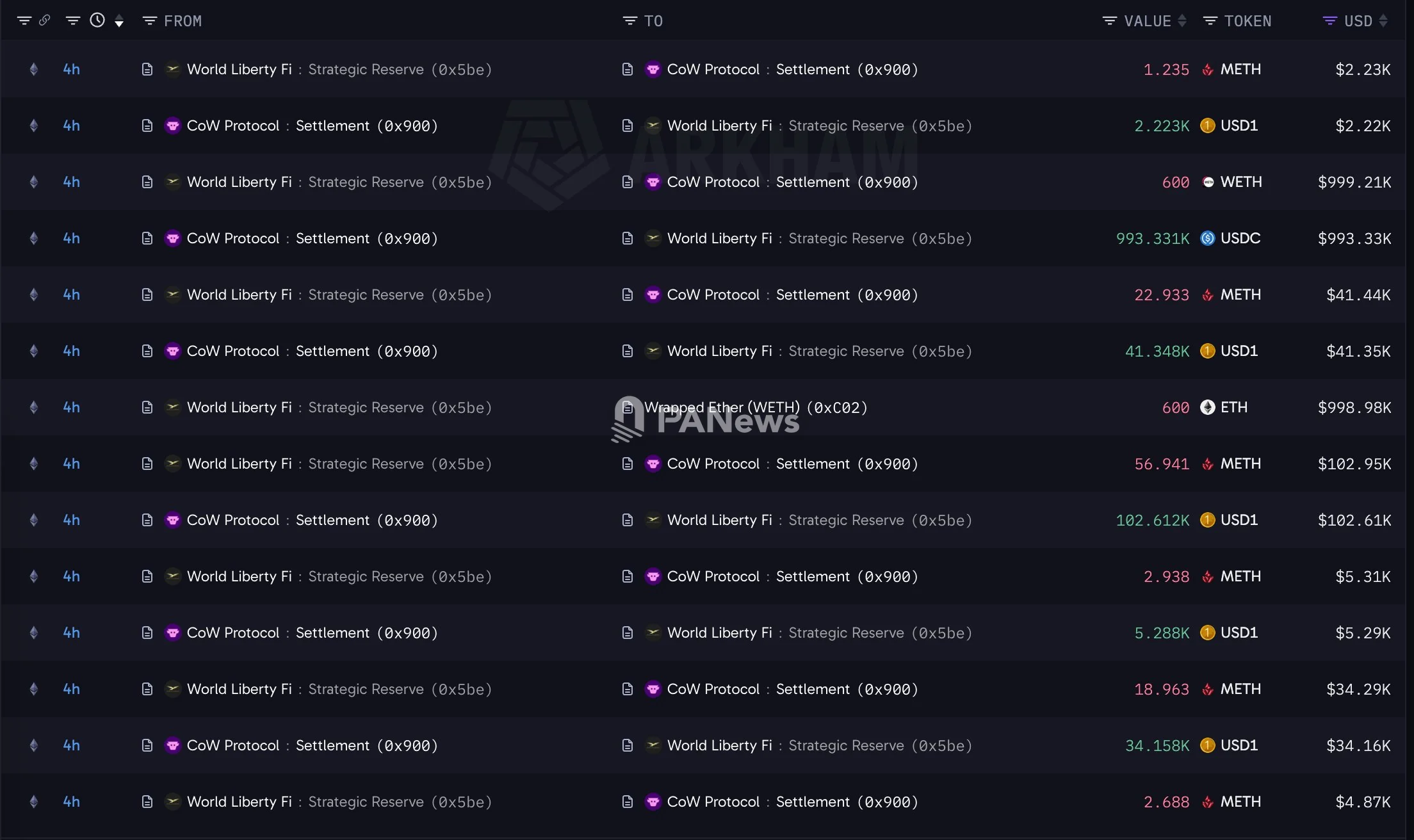
According to Arkham on-chain data, to maintain the liquidation line, the WLFI strategic reserve wallet (address starting with 0x5be) urgently sold in batches 10,600 ETH (including WETH) and 1,378 yield-bearing wrapped tokens mETH (since the exchange rate of mETH to ETH is greater than 1, totaling approximately 12,121 ETH), cashing out about $20.06 million, which was swapped for 17.58 million USDC and 2.48 million USD1 around the time of the midday crash (around 11 AM to 12 PM).
This batch of ETH had an average buying price of $3,244, but this liquidation was at an average price of only $1,655, directly converting an unrealized loss into a realized loss of $19.26 million. After injecting funds to Dolomite to replenish margin, the liquidation price for that position was dropped to around $0.0118.
Although the team sold ETH instead of WLFI, the market still chose to "vote with their feet."
Using core strategic reserves to make a "halving loss" firmly established the team’s cash flow difficulties. Even more critically, the complete transparency of on-chain operations was akin to revealing their cards to the entire market of short-sellers—exposing not only the new liquidation coordinate of $0.0118 but also triggering deep questioning about the substantial borrowing of USD1 against 5.1 billion WLFI: where did that massive USD1 flow go? How much usable hard asset ammunition does the team have left? The stampede then completely ignited.
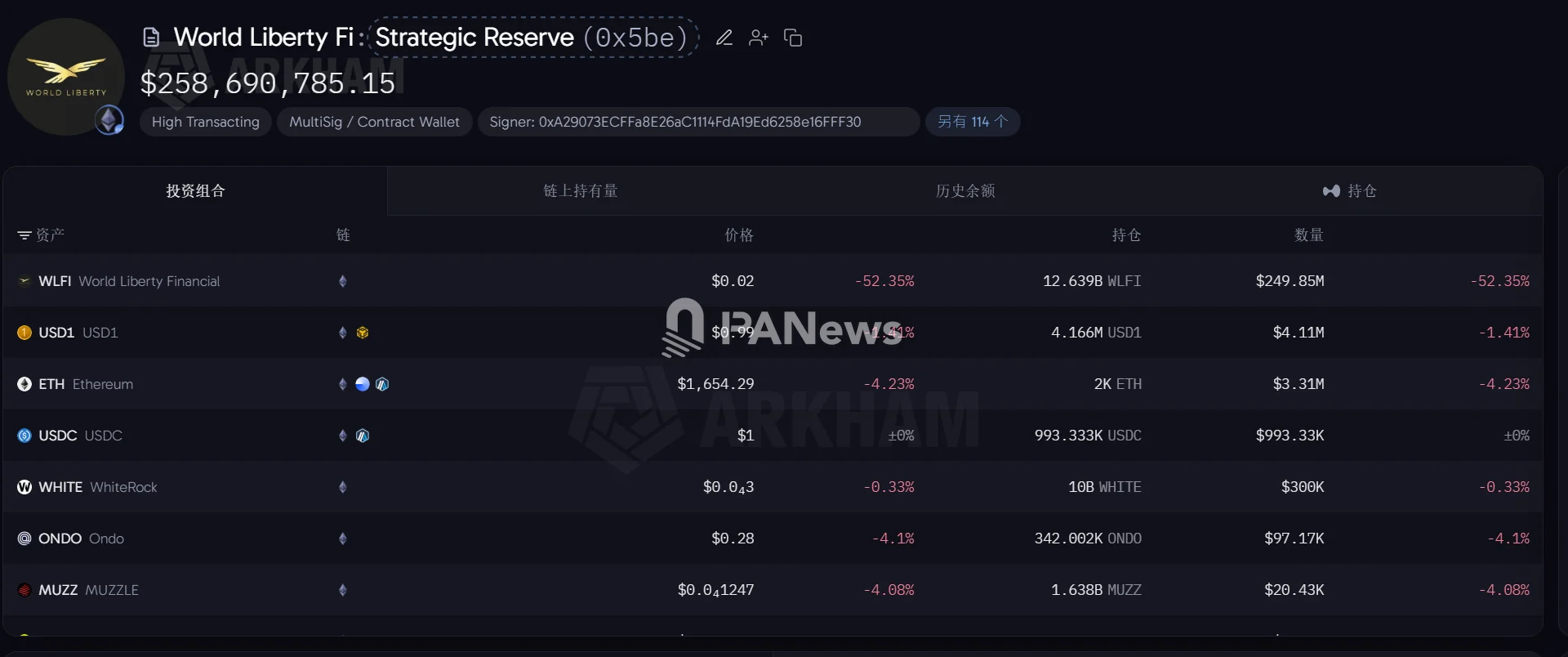
Arkham's real-time holding data provided a brutal answer.
At the time of publication, the WLFI strategic reserve wallet (address starting with 0x5be) showed holdings of $258 million, but a staggering 96.6% (about $250 million, counting 12.639 billion tokens) consisted of its own token WLFI in free fall; the remaining external hard currency ammunition had severely bottomed out, with only about 2,000 ETH (around $3.31 million) and 993,000 USDC left, plus 4.166 million of its own stablecoin USD1 (approximately $4.11 million).
This means that if WLFI continues to drop below the liquidation line of $0.0118, this reserve wallet has almost no cards left to play.
Saturday Redemption Black Hole
In addition to the project team's bail-out, the USD1 stablecoin, with a market capitalization of over $2.7 billion, depegged over 5% in just a few hours, behind which was a dual blow of liquidity mismatch and a structural trust crisis.
November 28 fell on a Saturday in U.S. time, when traditional banks and U.S. Treasury custody channels were closed, and market makers could not arbitrage 1:1 fiat redemptions through the primary market. On-chain liquidity pools were unable to bear concentrated panic sell pressure, resulting in a typical "weekend liquidity black hole."
Moreover, nearly 20% of WLFI's circulating supply was collateralized in an advisor-related protocol to borrow its own stablecoin, essentially using a volatile governance token to leverage stablecoin liquidity.
Once WLFI breached the liquidation line, causing Dolomite to incur difficult-to-digest bad debts, the market feared that the risks would directly backlash against the underlying credit of USD1, prompting risk-averse funds to flee.
Political Premium Zeroes Out, Valuation Anchor Loosens
From a longer-term perspective, the collapse of WLFI and assets related to the Trump family concept was not a sudden occurrence.
After the U.S. midterm elections concluded on November 3, with the Democrats regaining control of both the House of Representatives and the Senate, related assets such as TRUMP coin promptly plummeted, and WLFI also fell into a prolonged downturn for several weeks.
The high valuation of WLFI was never built on the moat of DeFi products; its core pricing lever was "political shelter and regulatory privileges."
With the Congressional landscape reversal, the sword of Damocles of conflict-of-interest reviews and regulatory investigations hangs over them, and smart money has long since withdrawn taking advantage of the situation. When the valuation anchor of political premium completely loosens, today’s liquidation and bail-out is merely the last straw that breaks the camel's back.
Justin Sun Calls for Delisting WLFI and USD1
Just as the market was in a state of shock, at around 3 PM today, Justin Sun, the founder of Tron and an early key investor and advisor of WLFI who later publicly severed ties with the project due to an asset freeze scandal, criticized on X platform, stating that today’s WLFI event was nothing more than a repeated performance of internal circular borrowing cash-out, insider violations, illegal freezing of investor assets, and fraud against investors, and accused relevant team members of deleting social media content and communication records in bulk to attempt to cover up their crimes.
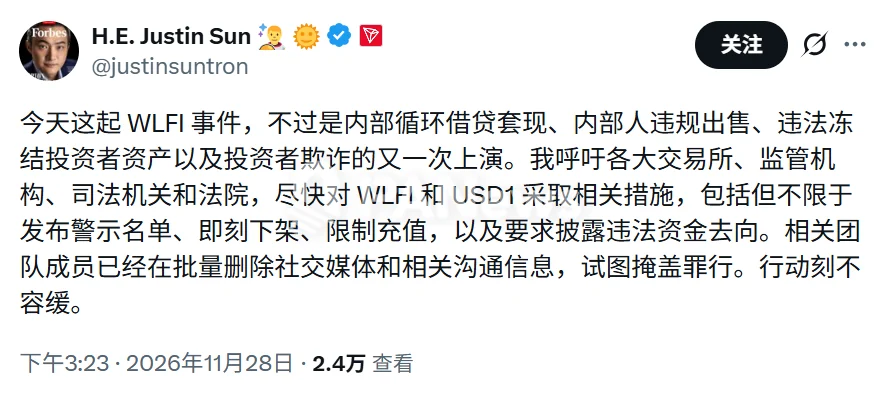
Justin Sun further publicly called on major exchanges, regulatory bodies, judicial authorities, and courts to take immediate action, including "issuing warning lists, immediate delisting, and restricting recharge" for WLFI and USD1, and demanded disclosure of the whereabouts of illicit funds. By the time of publication, the WLFI official had not responded to the above accusations.
Although the project team's bail-out actions temporarily postponed the immediate explosion at $0.021, the new defensive line for WLFI at $0.0118 still lay exposed to short-sellers' eyes.
Until USD1 regains a stable peg, and the team responds to market accusations and publicly discloses the complete lending ledger and reserve whereabouts of Dolomite, the battle around liquidity fundamentals and credit crises is far from over.
免责声明:本文章仅代表作者个人观点,不代表本平台的立场和观点。本文章仅供信息分享,不构成对任何人的任何投资建议。用户与作者之间的任何争议,与本平台无关。如网页中刊载的文章或图片涉及侵权,请提供相关的权利证明和身份证明发送邮件到[email protected],本平台相关工作人员将会进行核查。