Perhaps the people behind the “Birds Aren’t Real” conspiracy theory were just a few years ahead of their time.
Russian neurotechnology company Neiry has begun accepting orders for aerial photography using live pigeons fitted with brain implants, Forbes Russia reported Wednesday. The company calls them “biodrones” and conducted its first outdoor flight trials in November 2025.
The service is in beta and available only in Russia, with prices starting at 300,000 rubles, or roughly $3,800, per square kilometer, according to Notebookcheck.
You can now act on the news you read: Go long or short Anthropic, Nvidia, Microsoft and more with perpetual futures, all from your Decrypt Money Account.
In an earlier announcement, Neiry described a setup involving surgically implanted electrodes, a lightweight controller, solar panels and a camera. Electrical stimulation encourages the birds to turn in a desired direction, while they retain their natural flight behavior.
Operators can guide the birds remotely or upload a planned route. Neiry has tested the system in Russia and other Commonwealth of Independent States countries, and claims the birds could cover up to 400 kilometers (249 miles) in a day without stopping.
“Our current focus is pigeons, but different species may be used depending on the environment or payload,” Neiry founder Alexander Panov said in the earlier announcement.
Neiry says its longest trial lasted more than 10 hours and that operators guided birds from over 62 miles away. The company also claims more than 100 flights outside the laboratory and over 1,000 photographs.
Pigeon versus machine
Unlike conventional drones, pigeons can navigate around obstacles on their own and do not rely on batteries for propulsion. Their onboard electronics still need power, however.
Neiry says the birds can fly where conventional drones face restrictions. The birds' inconspicuous appearance also raises potential surveillance and espionage concerns, as BalkanWeb reported Thursday.
The company is targeting infrastructure inspections and environmental monitoring, with potential applications in search and rescue. Neiry says it blurs faces using AI before handing images to customers. It has also identified Brazil and India as potential markets.
Before you rush to social media to criticize Neiry for exploiting the poor pigeons, note that the idea of turning birds into flying cameras predates these biodrones. During the Cold War, the CIA developed cameras that pigeons could carry for low-altitude reconnaissance. The agency says the approach ultimately failed because the birds did not reliably fly over the intended targets.
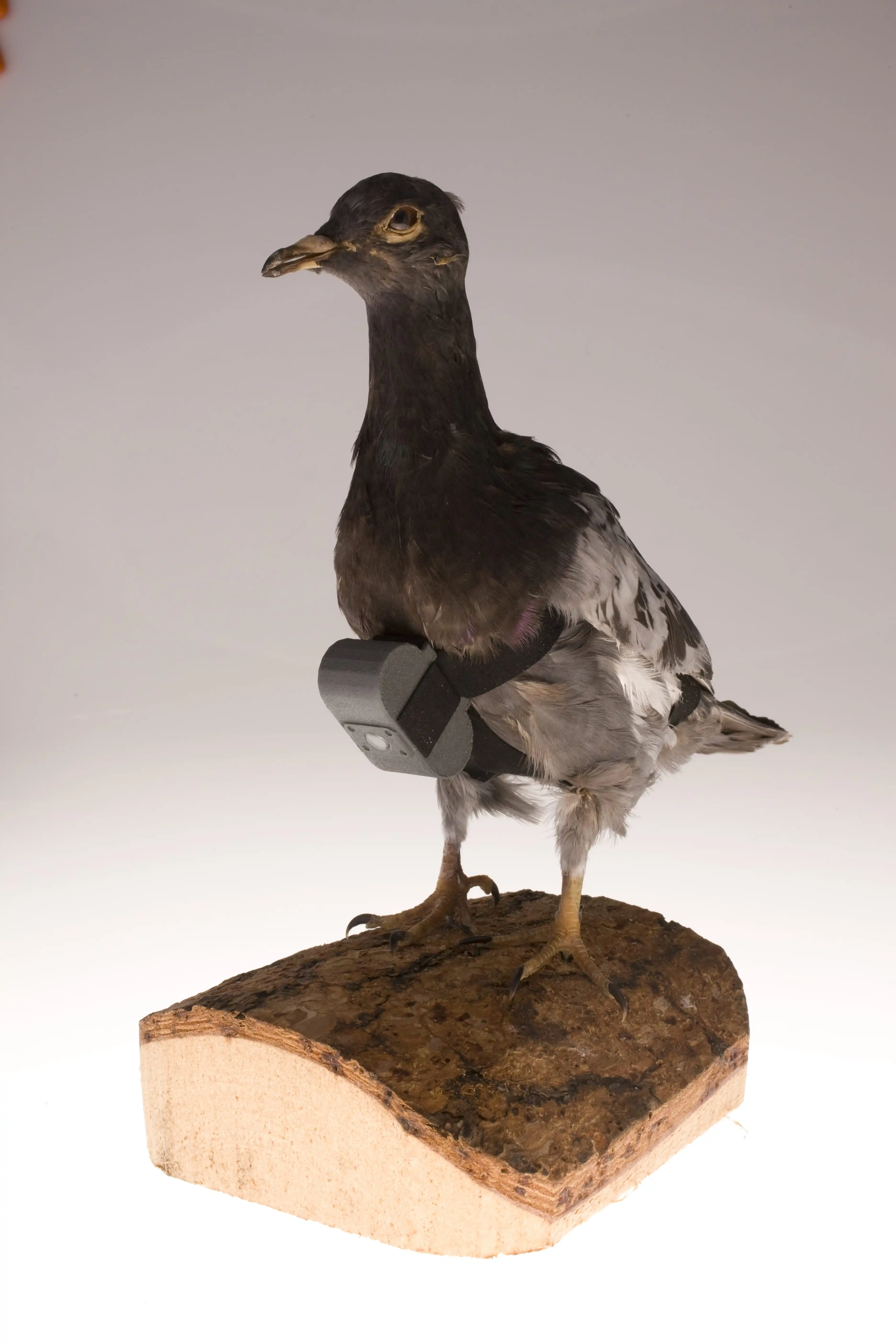
Image: CIA
In 2021, researchers in South Korea published a study examining how electrical stimulation of the brain affected pigeons' flight trajectories.
Neiry has a history of unusual brain-computer interface experiments. Forbes Russia reported that it collaborated with researchers to connect a rat’s brain to an AI system in 2024, and announced plans for neural implants in cows to increase milk production in 2025.
Animal welfare remains a concern. Neiry says it follows an approved ethical protocol, but independent evidence of the implants’ long-term effects on the pigeons remains unavailable.
The company says its researchers are aiming for a 100% survival rate during surgery—a goal, rather than a demonstrated outcome.
免责声明:本文章仅代表作者个人观点,不代表本平台的立场和观点。本文章仅供信息分享,不构成对任何人的任何投资建议。用户与作者之间的任何争议,与本平台无关。如网页中刊载的文章或图片涉及侵权,请提供相关的权利证明和身份证明发送邮件到[email protected],本平台相关工作人员将会进行核查。