Written by: Xiao Bing
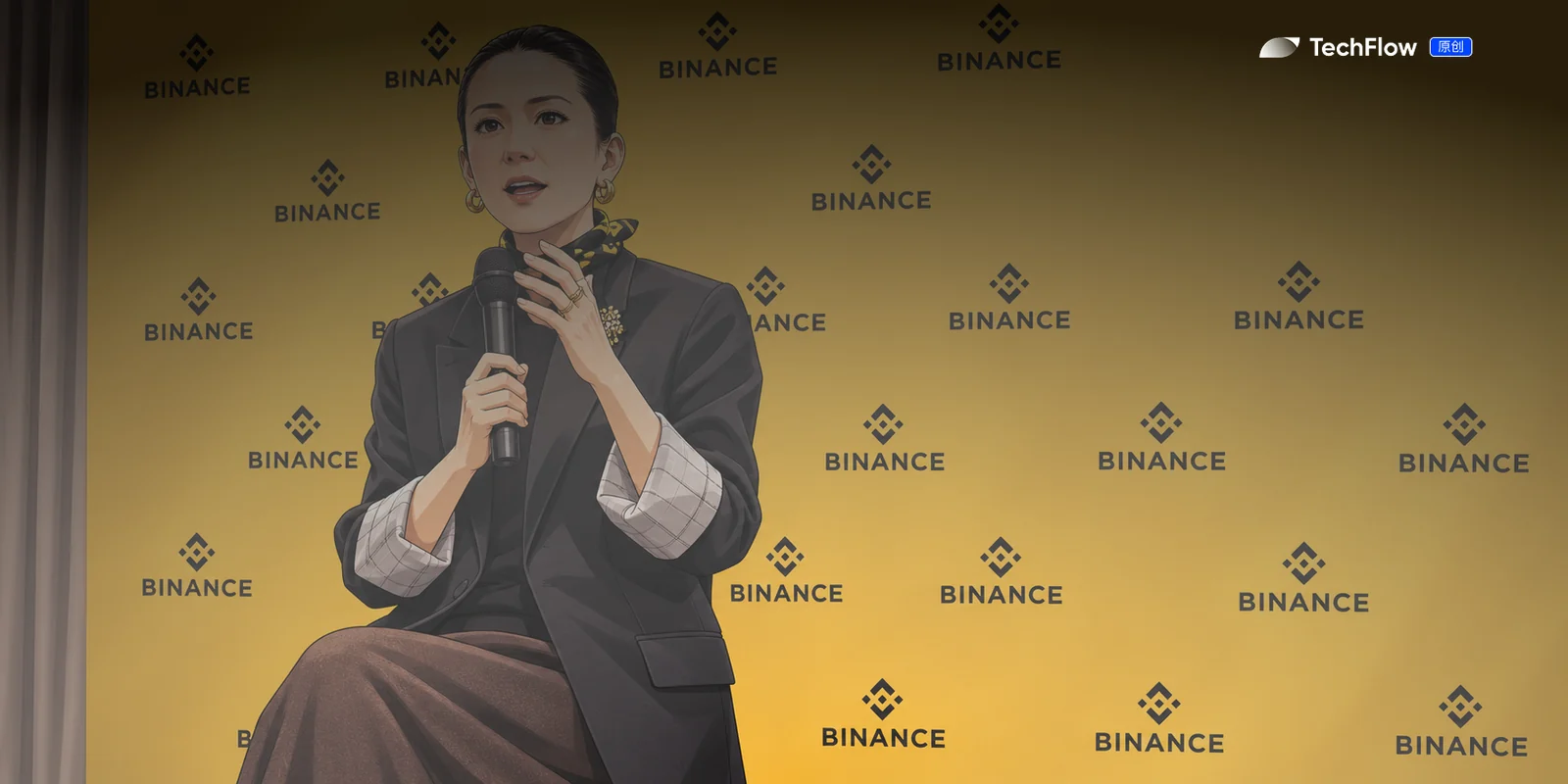
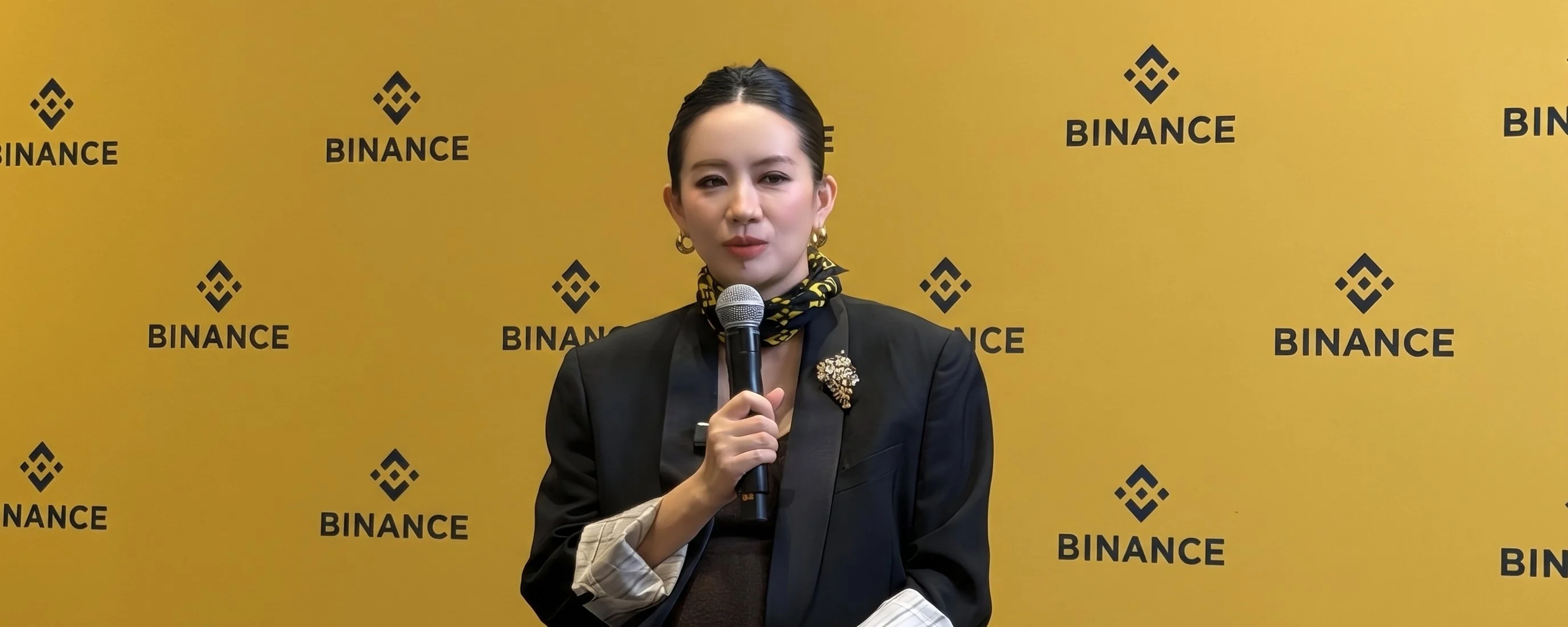
In a conference room in Bangkok on a November afternoon, the first thing He Yi said was to remind a room full of reporters who had traveled from afar: Here, if someone invites you out for drinks, definitely don't go; the room is full of laughter.
This is the first day of Binance Blockchain Week (BBW), exactly one month after the $6.3 billion theft incident. At this moment, the joke feels more like a heartfelt piece of advice borne out of trauma: Binance's hole also started from a seemingly innocuous invitation—an elaborate recruitment scam.
She is pregnant, her belly quite prominent, and she sat in the chair for over 70 minutes. Questions ranged from security incidents to AI layoffs, from the tokenization of U.S. stocks to the suspension of Alpha; she almost answered every question posed to her.
After listening to the entire session, one feeling stands out: the CEO of the world's largest exchange speaks more like a crisis-aware challenger.
Safety: Bringing the hope back from "human awareness"
From October 29 to 30, Binance's hot wallet was attacked, with approximately $6.34 billion in assets stolen. The FBI attributed it to the North Korean hacker group TraderTraitor. Binance's investigation report shows that the starting point of the attack was an elaborate recruitment scam; after the attackers took control of an employee's computer, they used an internal AI tool to gain even more access. Binance subsequently announced that the losses would be fully covered by the platform and completed asset replenishment by mid-November.
He Yi did not shy away from the topic. She first provided the background: after the theft in 2019, Binance rebuilt its security system based on the "zero trust" principle, with strict isolation between departments, which is why there haven't been significant issues since. Social engineering attacks happen every day, some of which are beyond imagination: during an interview, one person manages the entire process, only to be replaced by another person on the first day of reporting for work; a new hire who passed all background checks was found to have an IP address interacting with a suspicious location on their first day, and when questioned, the person vanished.
Regarding this issue, she spoke plainly: "We are aggressively pushing everyone to use AI, and the permissions granted by AI are too loose." AI is a tool; it can be a double-edged sword, serving as both spear and shield.
She provided a three-tiered remedy plan.
The first is awareness. Previously, security training involved answering a few questions to pass. Now, Binance employs third parties to simulate social engineering attacks on employees; in the past month, seven people still fell for scams. These seven individuals received warnings: if they get caught again, they will be directly dismissed, regardless of their position.
The second is environment. Everyone using company devices operates within a sandbox; if an attack occurs, it first hits the sandbox, triggering an immediate alarm. The standard she seeks is for the alarm to sound the moment an employee downloads suspicious files, rather than waiting to investigate afterward.
The third is using AI to supervise AI. The AI that writes code and the AI that audits it will have separated permissions; an independent security auditing AI will be established to monitor the code and information uploaded daily, 24/7. The overarching principle is least privilege and minimal information.
A deeper reflection lies in culture. Binance has been long distant-working, always emphasizing giving employees freedom.
"The other side of freedom is responsibility," she said. Everyone has security awareness, but the execution is not thorough enough, so "we cannot place our hope on human self-discipline; we must use strong measures to control." At the external level, Binance has engaged three security audit companies for audits.
Should exchanges advise you to trade less?
When asked, "If the best advice for users is to trade less or even not trade, would Binance's AI say this?", He Yi's answer started with industry logic: In any industry, profit is high during the boom period, but once it enters mature competition, profits will definitely shrink. The logic of platform businesses lies in scale; if each person earns a little but has enough users, the platform still stands.
She wanted to correct the external perception of Binance users. "People think the users of Binance are purely traders, like a big casino. I’m very sorry; our users are incredibly diverse." Some countries view Binance as a national application akin to Alipay; in labor-exporting countries like the Philippines and Pakistan, many people use it to remit money home. The competition is against the cost and efficiency of traditional cross-border remittances, and comparing fees with other exchanges is meaningless. High-frequency trading users only emerge among populations with higher GDP and disposable income.
Income and profit are certainly important because "we can't lose money running this business," but the top priority is understanding why users want to use you.
When discussing AI entities, her assessment was also cautious: accounts can handle everyday payments, wealth management, and investments, but not every user needs to have an agent constantly making trades. Many retail investors have issues stemming from basic misconceptions; when prices rise, they attribute it to institutional manipulation, and when they fall, they blame institutions for crashing the market, treating it as if it were "the hand of God." What the platform should do is bring knowledge to users, helping them make better judgments.
She provided a smartphone analogy: everyone has access to smartphones and the internet; some have found their own "path to immortality," leveling up and overcoming obstacles, while others use their phones merely to scroll through short videos.
"If you create AI and put it before him and he doesn’t use it, that’s his problem; if you don’t make it, that’s our problem." In her view, the greatest significance of AI for this industry is the leveling of the playing field.
AI did not lead to layoffs at Binance; it changed the talent profile
The first large-scale implementation of AI at Binance happened in customer service and compliance (positions that are labor-intensive like KYC, KYB, and EDD). There were many detours: when conversational models were just gaining popularity, the team hired people specifically to create a customer service model, which took a year with little effect—“it felt a bit like alchemy.” The problem was the data; no matter how expensive the model, directly pouring industry data into it was ineffective; someone had to "clean the data like cleaning a sewer." Later, when open-source models emerged, the team retrained and structured the data based on these models, which began to show results.
The conclusion is that efficiency improved, but the extent was slight, and the number of people did not significantly decrease. "I don't want to say, 'Let's cut 30% of the staff; what happens if we hit a major artery?'"
What she truly cares about is the change in talent standards. Chinese large companies are used to a pipeline-like, tiered structure; while AI can improve coding efficiency and quality, it cannot elevate the hierarchy itself. The new era AI talent may not necessarily have a computer background; a liberal arts student can use natural language to coordinate various tools, creating their own product.
"Electricity has arrived; candle makers may find rolling candles is no longer an important skill." Initiative and learning ability are more important than degrees and backgrounds.
Going public on the U.S. stock market does not mean abandoning crypto
This year, Binance has been aggressive in traditional finance, launching over 8,000 U.S. stocks and ETFs for non-U.S. users in June, as well as introducing TradFi perpetual contracts and tokenized stocks called bStocks. He Yi revealed that stock-related contracts account for 40 to 50% of the relevant business.
She does not believe Binance is in a tug-of-war with Robinhood.
Binance has no U.S. users; the demands of the groups they serve are entirely different: you can buy U.S. stocks for $5, and you can trade whenever you want. Consequently, price discovery occurs ahead of time; when there’s significant news about Nvidia, for instance, the U.S. stock market has not opened yet, but prices on Binance respond first, and news released over the weekend is similarly reflected in the prices immediately.
Liquidity is the most questioned shortcoming.
He Yi openly admitted that when integrating the 8,000 stocks, "we did not consider the underlying liquidity issue, just connected it to the pool," and they are currently making improvements; they will soon directly connect to the liquidity of traditional brokers. The bStocks are placed in a dedicated market-making program, with market-making costs allocated to external institutions and large clients, with Binance itself not participating. Under the double constraints of ADGM regulations and U.S. oversight, all projects are reported weekly; even small price fluctuations need to be explained.
In terms of selection, Binance will prioritize highly popular and frequently traded stocks. She also mentioned that they are discussing a potential collaboration with several exchanges: some companies that have healthy and potential profit models have given up on traditional IPOs due to high costs; can they go public through tokenization from day one, while still following standard auditing and information disclosure processes? As for A-shares, "that still depends on the acceptance process of regulators."
Many native crypto users worry that their funds will just flow into buying stocks, leaving no path for the crypto sphere.
He Yi said she does not share this concern, as she has consistently maintained since 2017: a good token should be built on a good business model, with revenue, profit, and positive cash flow; only when the business is performing well can it empower the token, and only then does the cycle swing back.
She is quite blunt in her criticism of the industry: the recurring storyline over the past decade is a group of well-connected individuals, raising a few billion dollars, selling the tokens, "buying a villa by the sea, retiring, and then, goodbye, I'm off to be a big shot in the AI circle." "If this industry is in decline, who caused it? Every participant is just taking out money without giving back."
So, Binance has begun to bring various global assets onto its platform, with the logic being "do not impose on others what you do not desire for yourself": ordinary users want to buy long-term valuable assets that won’t spike today and drop to zero tomorrow. For those who genuinely do not understand, her suggestion is to first put their money into stablecoin wealth management for a month before proceeding, "don’t jump in and gamble everything, only to lose money and then blame me."
She also recounted an old story. In her early years, she personally did not like contracts, believing the risks were too high, and if users lost money, they would seek to protect their rights, so she never got involved. The bear market in 2018 taught her a lesson: opening her account daily showed a consistent decline in funds, with all coins falling, amid ringing user complaints. "When the market is only going down, having tools to short at least provides opportunities to earn money."
Looking at a longer time frame, she likens today's crypto market to the internet bubble and early bond markets, where each market experiences a fireworks-like upward phase that makes everyone feel like an investing genius. Beyond the narrative, stablecoins have already entered thousands of households; in countries with inflation of 10% or 20%, many people use stablecoins for everyday transfers and cross-border remittances. "For so many years I have reiterated the need for a business model, and I've always been ridiculed by those saying I don’t understand; in the end, it all circles back to basic business knowledge."
After the disappearance of IEO: Asset Hollowing
This year, IEOs and ICOs have nearly vanished, and He Yi reviewed the shifts in Binance's new listing logic over the years.
The early Launchpad logic was "discounted new offerings," where project parties provided discounts that Binance passed on to users. Later, projects would come in with estimations of $1 billion, rendering discounts futile—a path that no longer worked. The second phase was Alpha, with high standards for spot listings, where Alpha utilized on-chain trading; projects of lower quality that were still willing to give users cash could still participate. According to her statistics, Alpha distributed around $800 million to $1 billion in benefits to users, sustaining over about a year.
Alpha couldn't continue, primarily due to the lack of good projects; "if it's forced on, sometimes it’s still not as good as a meme," as memes at least start with lower market valuations, giving perceptive users a chance to earn.
After ten years in the exchange business, she concluded that the most critical thing for any platform is to maintain ecological balance. Whales have the best quantitative models and macro research, while retail investors are at a naturally asymmetric disadvantage, "if the market were filled with only whales, retail would be finished."
Whether it’s IEOs or Alpha, both serve as benefits for retail investors. Nowadays, when project parties claim there’s no money, and whales argue the market is bad, the real issue in the industry is asset hollowing. "If there are no good assets, what difference does it make whether you list or not? You might as well find some good stocks."
Binance's revenue still largely depends on trading fees, which are directly related to market conditions and less so to whether new products are launched. Users refer to Alpha airdrops as "social welfare," and she finds this term very telling: getting a few great deals could be termed welfare, but losing even a dollar is no longer called that.
Regarding the future of Alpha, her positioning is very straightforward: it's just about issuing some benefits to retail users and isn't merely aimed at studios. As long as benefits are provided, there will always be those who come specifically for them; this is a cat-and-mouse game. Alpha users are not Binance's core revenue source, which is why they won't issue assets solely for Alpha; “cooking dumplings just for a portion of garlic doesn't make much sense.”
She remains optimistic about the market.
She believes in cycles and value investing; the market will always experience over-buying and over-selling. Currently, most users hold stablecoins and cash because the sentiment is too pessimistic for bold action.
A while back, she revealed that her personal account shrank by about $100 million in a month, which was to tell everyone: "I'm also losing, but I have confidence." However, translating knowledge into action is difficult; most people understand cycles and value, but when it comes to operations, if something rises 30% only to drop back, they think, "let's call it a day, I’ll sell.”
She also stated her preferences: properties in Lujiazui, Shenzhen Bay, and Manhattan will hold value long-term, but there’s no liquidity. "My profession dictates that liquidity is the primary factor; under the condition of liquidity, I consider the best assets."
The greatest danger is internal
When discussing the future, He Yi's assessment is that institutionalization is gradually occurring in subtle ways.
BlackRock and Fidelity are now partners with Binance; Wall Street has extended trading hours from 8 hours to 23 hours, which, in her view, has been influenced by exchanges; many quantitative firms are beginning to hedge stock holdings using Binance's perpetual contracts, and a large ETF company in Asia proactively reached out, hoping to tokenize ETFs for sale on the platform. Regulatory caution and the resistance of vested interests may slow the process down, "no one wants to turn what was easy and profitable into a 24-hour business, but the wave of the times has rolled in, and you have to adapt."
Asia's population accounts for more than half of the global total, and Binance's goal of reaching 3 billion users cannot overlook Asia.
She revealed that Binance is currently in communication with regulators from over a hundred countries, with different concerns from each: some are worried about taxes, others about inflation, some have granted in principle but require approval from other departments to proceed, and there are restrictions on foreign shareholding ratios. "There are always more solutions than problems; we cannot see exponential growth as normal."
The final question in the group interview was: in the next ten years, what is the most likely threat to Binance? AI, regulations, hackers, or something new yet to emerge?
She chose the yet-to-emerge new things, immediately saying: "The greatest danger always comes from within."
Humans fear a lack of objectivity the most, fearing the state of "not knowing what they don't know." Over the past two years, she has repeatedly emphasized two terms internally.
One is objectivity, which means the practical concept she didn't understand as a child when it was plastered on the back of the blackboard. Binance is the largest globally, but it’s not the first in some niche markets; for example, in Thailand, the largest platform is a local one, providing service in the local language and hands-on customer engagement like a neighbor, "very much like the competition between Uber and Didi in the past."
The other is fairness. She expressed her dislike for taking advantage of others and doesn't appreciate it when others take advantage of her. From a user perspective, the user does not need a platform to guarantee profit, but they need a fair and reasonable platform; from an employee’s perspective, one cannot find a perfect boss but hopes that the boss is fair.
When does a team stop growing? She stated it doesn't relate to numbers but looks at a few things: whether there is still curiosity, whether they are actively learning, whether they have ownership, and whether they can utter the common phrase in large companies, "That's not my scope."
Two ends of the scale
Returning to He Yi's repeatedly mentioned term: ecological balance.
One end of the scale is project parties and whales, who have money, models, and information; the other end is retail investors, who only possess an account and hope. The exchange stands in the middle, with IEO discounts adding weight on the retail side, as does the Alpha airdrop. After ten years of adding weight, the scale is still unbalanced, for a very simple reason: no amount of clever rules can outweigh human nature.
No one can withstand the temptation of getting rich overnight without responsibility. Project parties think about selling out after raising funds to buy beachside villas; retail investors think about making high-stakes bets to turn their fortunes; when they lose money, everyone complains together.
This script has played out in the crypto sphere for ten years; He Yi asked, "Who's responsible for the downturn in this industry?"
She returned the key to solving the problem to the most fundamental common sense: good assets—businesses with revenue, profit, and cash flow that have long-term value and won't drop to zero tomorrow.
This path is slow and has no end. Today it is about U.S. stocks and tokenization, and tomorrow it might be something new yet to appear; exchanges can only keep exploring, and with each new discovery, the scale becomes a bit more balanced.
The $6.3 billion theft can be compensated for, rules can be amended, and shelves can be replaced. The future of the industry ultimately depends on every individual who is still willing to build here and take responsibility for their choices. Those who profit from the industry's gains and then turn around to blame it can never determine its fate.
免责声明:本文章仅代表作者个人观点,不代表本平台的立场和观点。本文章仅供信息分享,不构成对任何人的任何投资建议。用户与作者之间的任何争议,与本平台无关。如网页中刊载的文章或图片涉及侵权,请提供相关的权利证明和身份证明发送邮件到[email protected],本平台相关工作人员将会进行核查。