Author: Zhang Yongyi, Geek Park
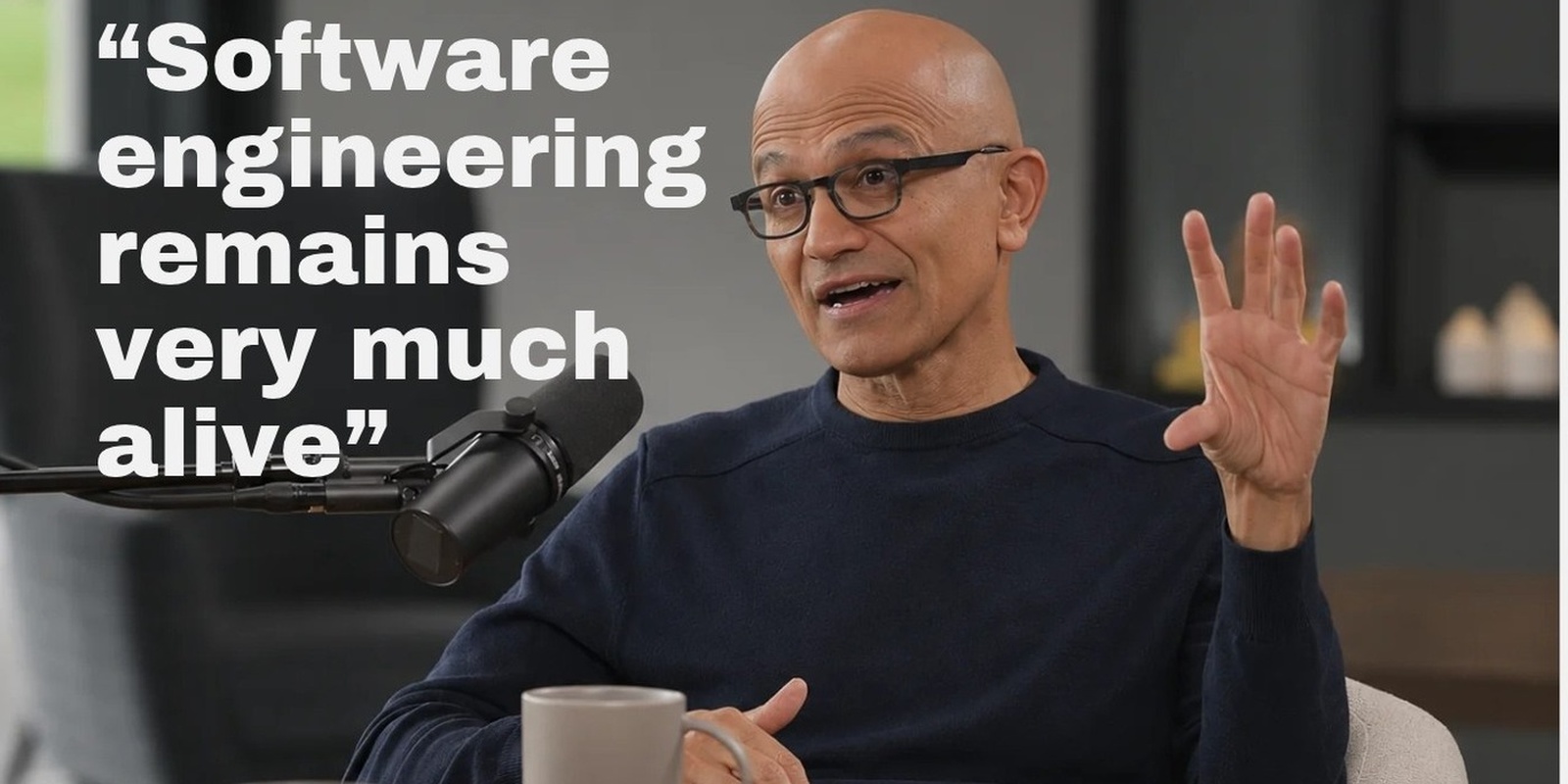
In the AI era, Microsoft, known for daring to make structural changes while effectively innovating, has become a new practitioner of AI organization. However, this time Microsoft’s news is not good; it has publicly acknowledged that "Microsoft has delayed the recruitment process for fresh graduates."
Recently, on The Pragmatic Engineer podcast, when asked by the host if Microsoft is still hiring fresh graduates, CEO Satya Nadella openly admitted that the recruitment of fresh graduates has indeed slowed down, and added, "Many companies are doing this."
He explained that the primary task now is to ensure that all internal personnel are adjusted to the right positions, first establishing a "software factory" model where people and AI share the workload in software development.
However, in his plan, the second step after repositioning is still to fully utilize the AI budget. He talked about the AI-native companies built around AI from the very beginning, stating, "What is an AI native company? They start with an AI budget and one person. This person fully utilizes the AI budget, and then says, let’s add another person." He also expressed his judgment, "Every company will begin to become like this."
This statement not only caused a stir but also sharply contrasted with his statements from ten months ago. During the Davos Forum in January of this year, Nadella had stated during a podcast interview, "I still very much believe in campus recruitment because AI is a mentor that helps newcomers get up to speed faster."
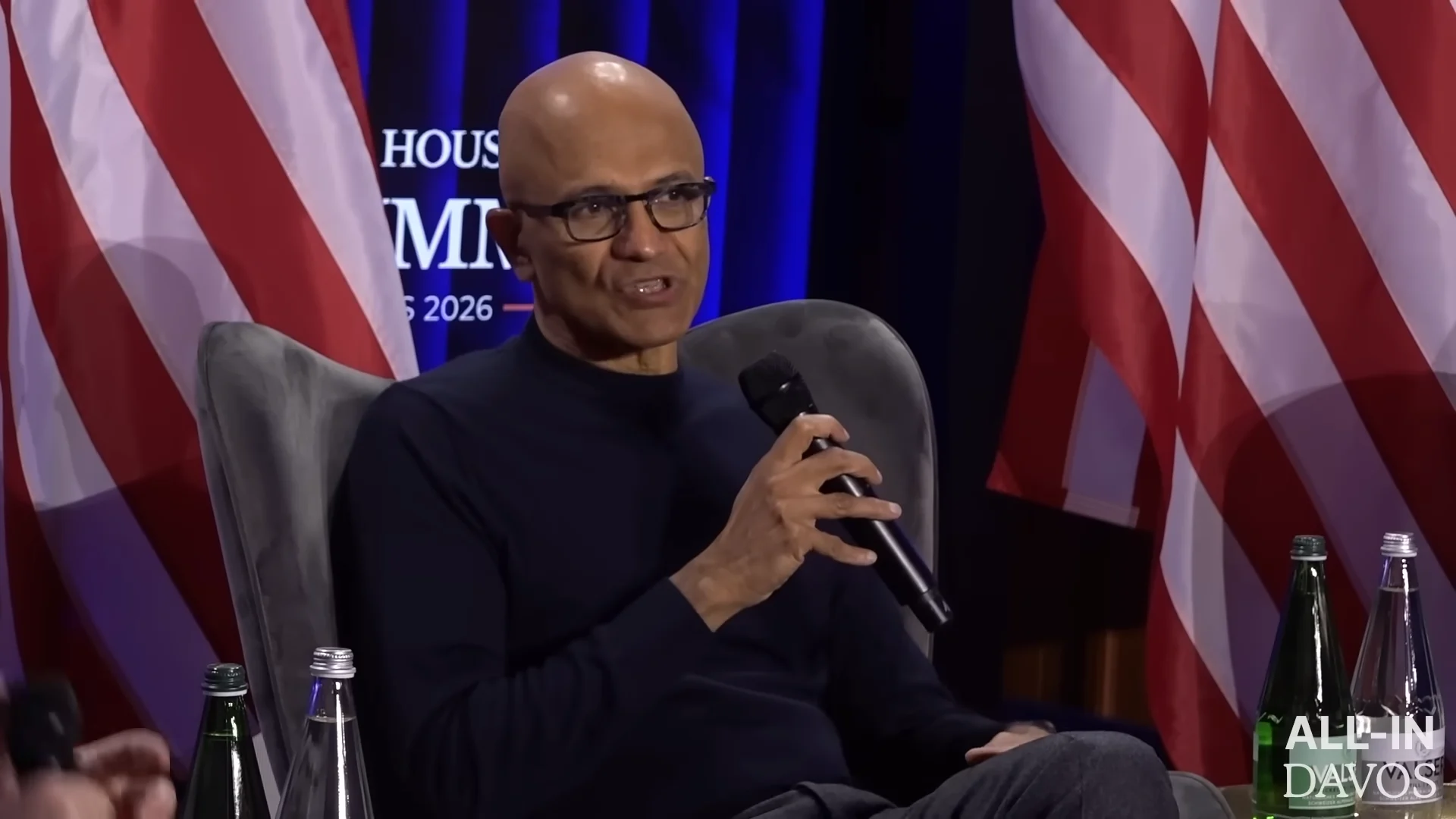
Image: In January at Davos, Nadella expressed belief in campus recruitment (Source: All-In)
He might not have anticipated that ten months later, AI would shift from being a mentor for newcomers to a budget to be fully spent before hiring new employees.
Microsoft's Own Calculation
As the current CEO of Microsoft, who has always presented himself as a savvy professional manager, Nadella's willingness to contradict his own statements from ten months ago indicates that Microsoft internally has recognized the new situation encountered in the AI organizational transformation. This is the first time in ten years that the employee count has decreased at Microsoft while the business continues to grow.
According to Microsoft’s annual report data, there are currently about 223,000 full-time employees, which is about 5,000 fewer than a year ago, while revenue has increased by 18%. This marks the first annual decrease in employees since 2016, when it wrapped up the Nokia mobile phone business.

Image: Microsoft’s R&D has decreased from 80,000 to 77,000 (Source: Microsoft)
The largest reduction happened in product R&D, indicating that business growth is no longer accompanied by a proportional increase in engineers. The annual report shows a decrease of about 3,000 in product R&D, marking the second consecutive year of decline. Of the net reduction, three out of every five employees were in R&D, not accounting for the new round of approximately 4,800 layoffs announced in July.
Currently, Microsoft’s focus is on rearranging existing employees, as Nadella mentioned, first placing internal personnel in suitable positions before recruiting newcomers. This is why Microsoft recently offered a voluntary departure program to most software engineers, allowing employees to choose whether to accept it before December.
While encouraging employees to move to teams that better suit them, Nadella also said, "If you feel stuck career-wise in a team, you can vote with your feet."
Nadella candidly expressed the difficulties faced by a large organization like Microsoft in the context of AI organizational transformation: "I really wish I could sit here and tell you that everything will remain the same. But I can't."
Nadella's statement, "Every company will start to become like this," is indeed accurate, as the options for newcomers in the entire tech industry are rapidly narrowing. A report from venture capital firm SignalFire in June of this year shows that, compared to 2019, the hiring of newcomers and entry-level positions at 12 major tech companies, including Microsoft and Apple, has decreased by about 65%.
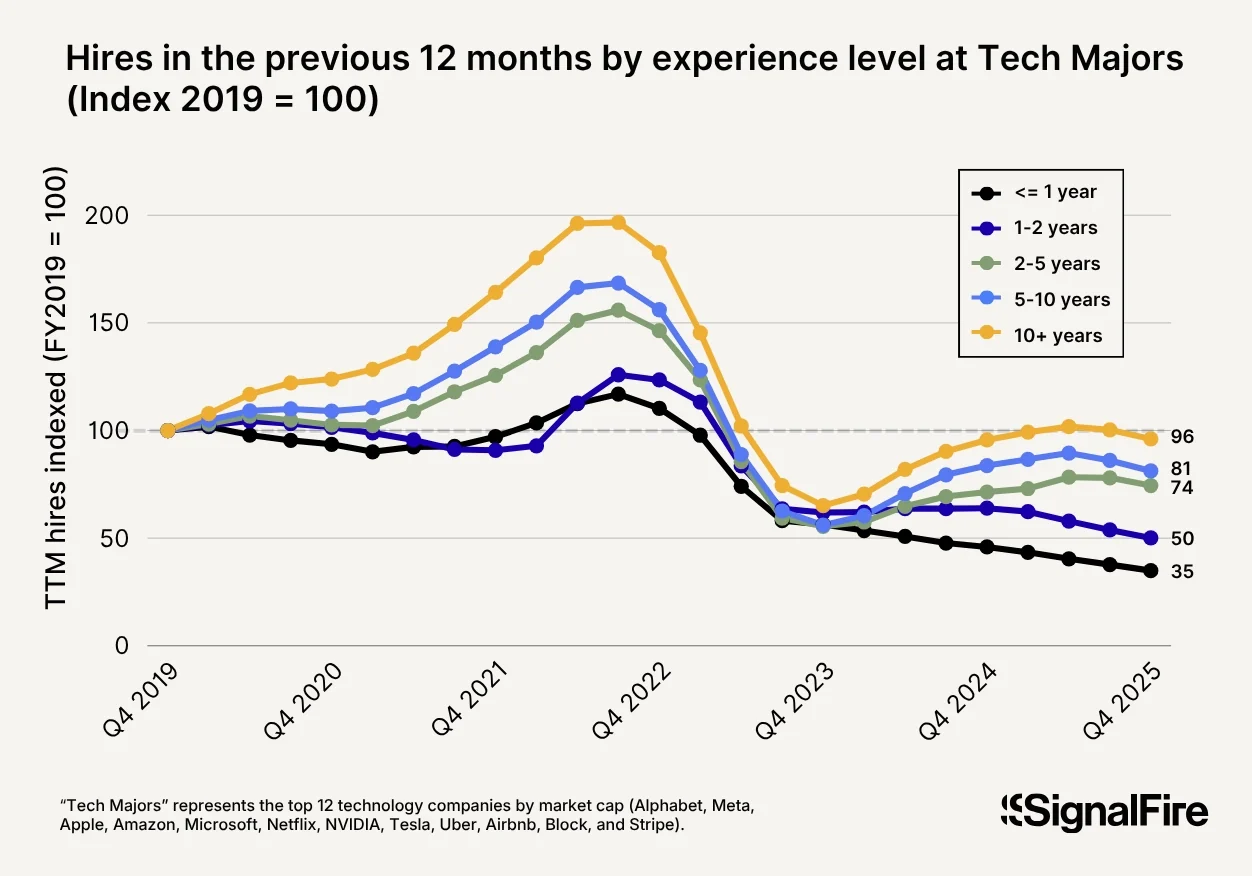
Image: Newcomer recruitment is only about 30% of what it was in 2019 (Source: SignalFire)
In the same report, the overall recruitment of these large companies was only 25% lower than in 2019, with the deepest cuts impacting those just out of school. Early-stage startups have seen even larger declines in the hiring of new employees. In April of last year, Shopify CEO Toby Lutke wrote in an internal letter that "the team must explain why AI cannot accomplish these tasks before applying for more manpower and resources."
In May of last year, Anthropic CEO Dario also stated in a media interview that AI could eliminate half of entry-level white-collar jobs within five years. The warnings may not all come true, but they are enough to make young job seekers and their parents feel anxious.
As for Microsoft, it is already one of the 12 major companies that hire fewer newcomers, and Nadella's acknowledgment of this issue merely highlights a selection that the industry has been undergoing for more than a year.
Non-Layoff Reduction
Unlike layoffs, the issue of reducing recruitment itself has never been a news hotspot, with corresponding effects only revealed in the financial reports and internal research of large enterprises. In November of this year, Lindsey Raymond from MIT and Eleanor Dillon from Microsoft's Research Institute published a non-peer-reviewed paper on the preprint site arXiv. The paper states that GitHub Copilot, an AI assistant sold to enterprises by Microsoft, can automatically complete content when writing code.
Comparing companies that were pushed to adopt Copilot early based on the timing of their existing contract renewals, those companies hired 29% fewer technical personnel in each quarter after one year, yet the number of departures and total technological positions remained unchanged.
The reduction mainly affects junior positions. In the group of companies pushed to adopt Copilot early, recruitment of junior software engineers decreased by about 40%, with the more code-centric roles seeing the largest reductions, while recruitment for experienced engineers remained relatively unchanged.
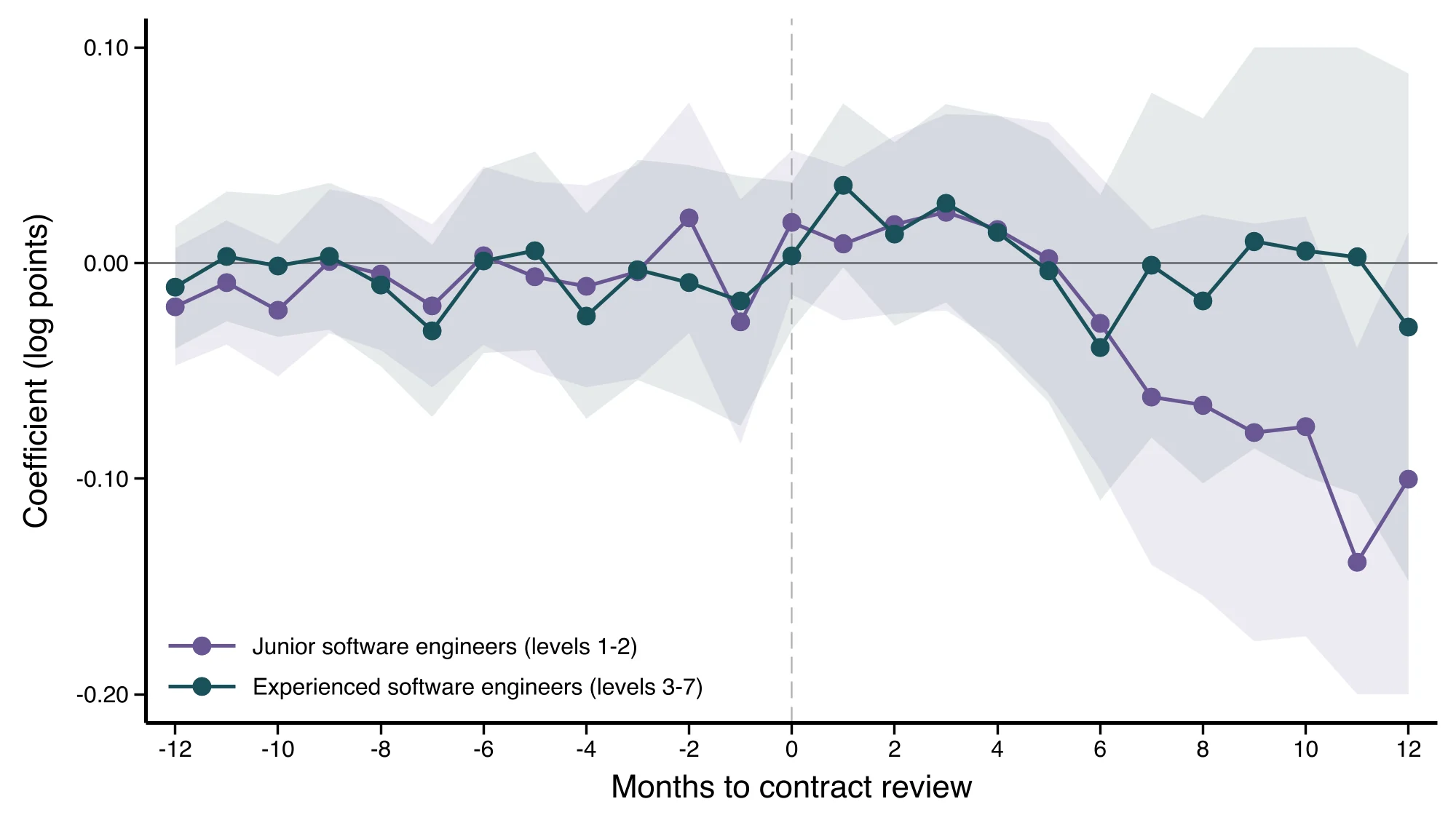
Image: Six months after renewal, junior recruitment (purple line) begins to decline (Source: Raymond, Dillon)
However, the 29% figure given in the paper is a very broad estimate, and the authors point out that at least half of the reduced hiring for technical positions since 2022 has come from industry contraction, and the sample is entirely composed of large multinational corporations, measuring only the first-generation completion tools.
The Digital Economy Lab at Stanford, led by Brynjolfsson and others, observed the same scene using data from U.S. payroll services provider ADP. The August update showed that among the jobs most affected by AI, the employment of young people aged 22 to 25 was about 19% lower than it should be as of June this year, and the gap is widening.
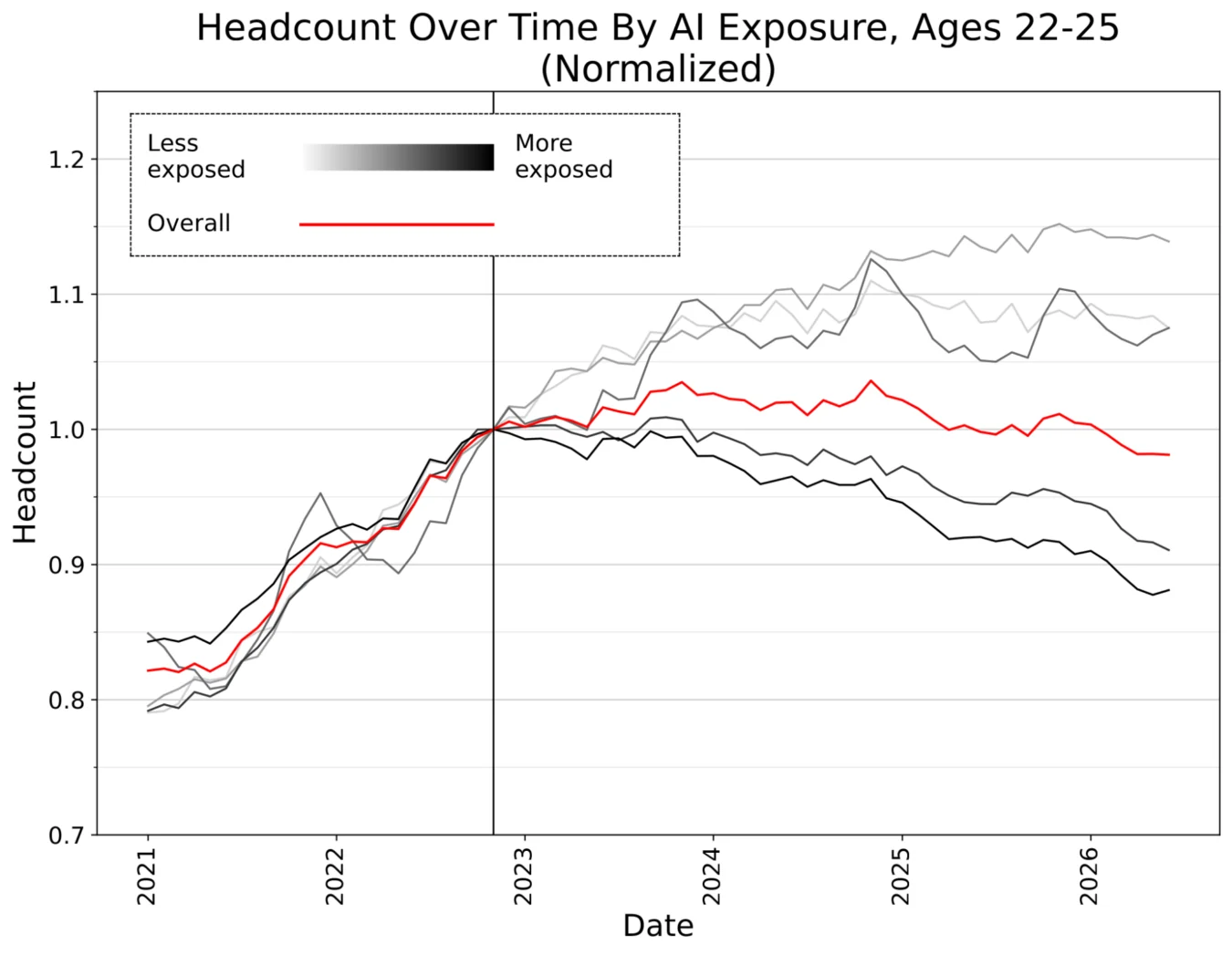
Image: The more affected by AI, the more young people move down (Source: Stanford Digital Economy Lab)
The gap mainly comes from reduced hiring of young people, as companies shift funds initially allocated for recruitment to purchasing AI invocation quotas and hiring ready-made experienced workers. Basic tasks requiring fundamental code writing are likely to be taken over by AI first. Once this portion of work is shared between humans and machines, the motivation for companies to train novices from scratch diminishes. The paper also found that companies that adopted the tool early hired candidates with longer average work experience and higher proportions of master's and doctoral holders when sourcing senior employees.
Diamond-Shaped Pyramid
Moreover, under the influence of AI, the structure of employment in companies is also changing.
Lucy Beaumont from the talent assessment company SHL told CNBC, "If the previous organization was pyramid-shaped, what we are seeing now is diamond-shaped." This means fewer newcomers at the bottom and more experienced individuals in the middle.
However, there is evidently a critical issue that everyone has been avoiding discussing. Those experienced, judgment-capable individuals in the middle of the diamond were originally cultivated from junior positions.
AI has eliminated the effort of writing basic code, but it cannot replace the seasoned judgment developed by newcomers. Cheney Hamilton from the research institution Bloor remarked to CNBC, "AI raises the lower limit of output for newcomers but does not provide them with the ability to discern where the output is wrong."
Newcomers not only have fewer opportunities to practice but also face challenges in maturing into experienced hands if they rely solely on AI for their tasks.
Many in the industry also recognize the hidden dangers behind this perilous logic. In August of last year, AWS CEO Matt Garman mentioned in an interview that some executives claimed, "AI can replace all junior employees in the company," to which he replied, "This is the dumbest thing I've ever heard." He believes newcomers "are probably your cheapest employees and the most willing to work with AI tools."
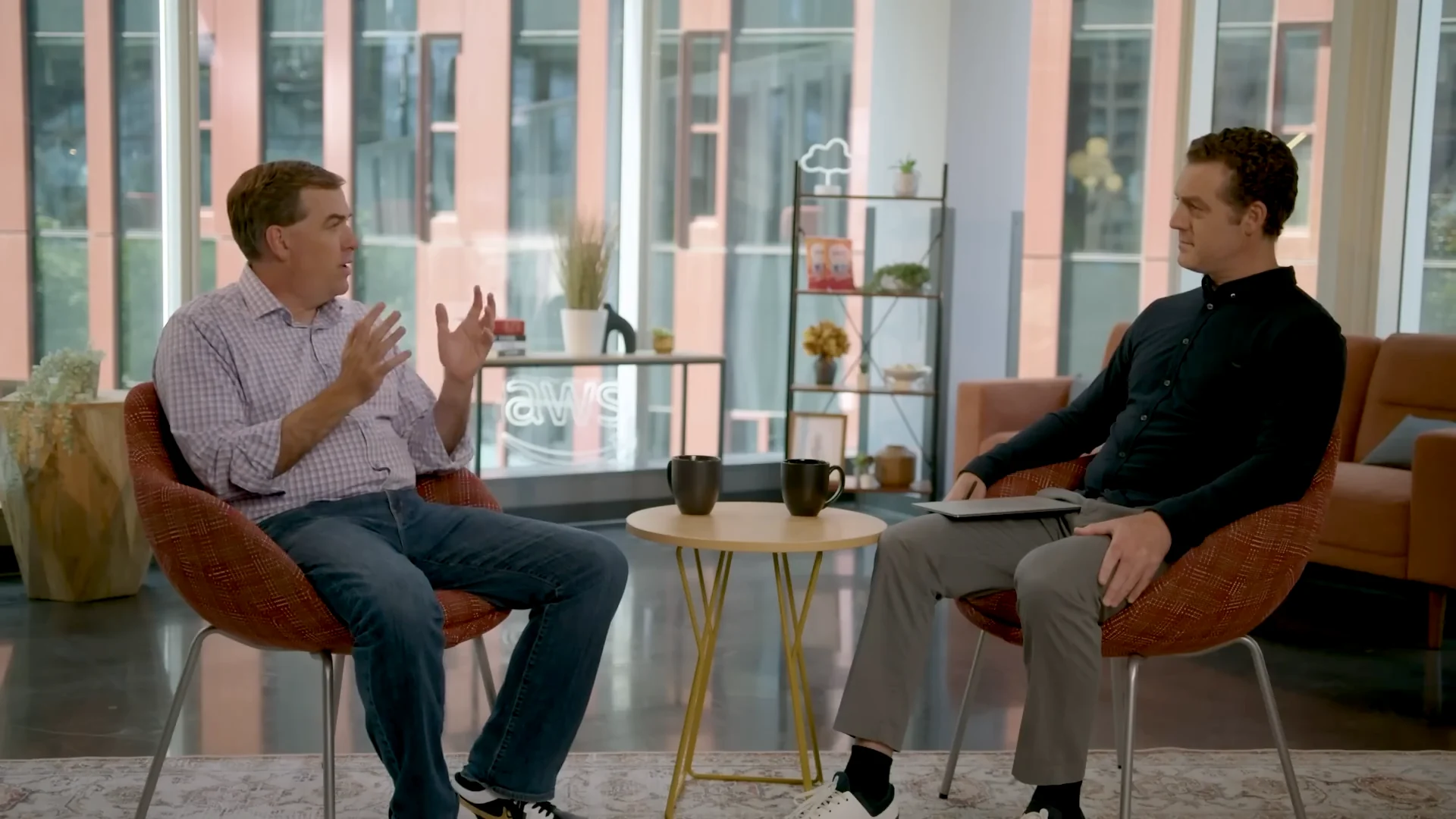
Image: Garman said that replacing newcomers with AI is the dumbest thing he has ever heard (Source: Matthew Berman)
Garman is worried about a longer-term gap and retorted, “In ten years, if no one accumulates experience and learns anything, what will happen?” Hence, he stated, “That’s why we absolutely have to continue hiring fresh graduates.”
Though the rationale is clear, it turns into a collective dilemma for each company. Bringing in new graduates requires tapping into the energy of seasoned employees; training them can also lead to staff leaving. Hiring fewer newcomers and adding to the AI budget can show immediate cost savings this year.
From the company's financial perspective, hiring fewer newcomers is a profitable transaction, as they can go back to recruit experienced workers trained by others in a few years. However, if all companies in the industry follow Nadella’s approach of waiting to spend the AI budget before hiring, the number of senior engineers available for recruitment a decade later will diminish significantly. This long-term issue has yet to surface in the financial reports of large companies, but the anxiety has already been borne by young job seekers and their parents.
Microsoft’s own actions also reflect this indecision. On one hand, it is selling Copilot to businesses and slowing down campus recruitment; on the other hand, Microsoft is collaborating with Carnegie Mellon University on a mentorship program called PRAISE aimed at entry-level engineers. Nadella also mentioned on the podcast, "It seems too early to draw long-term trends now." According to the host's interpretation, he believes that the various anomalies occurring during the current restructuring period are merely temporary, and that entry-level recruitment will rebound once things are sorted out.
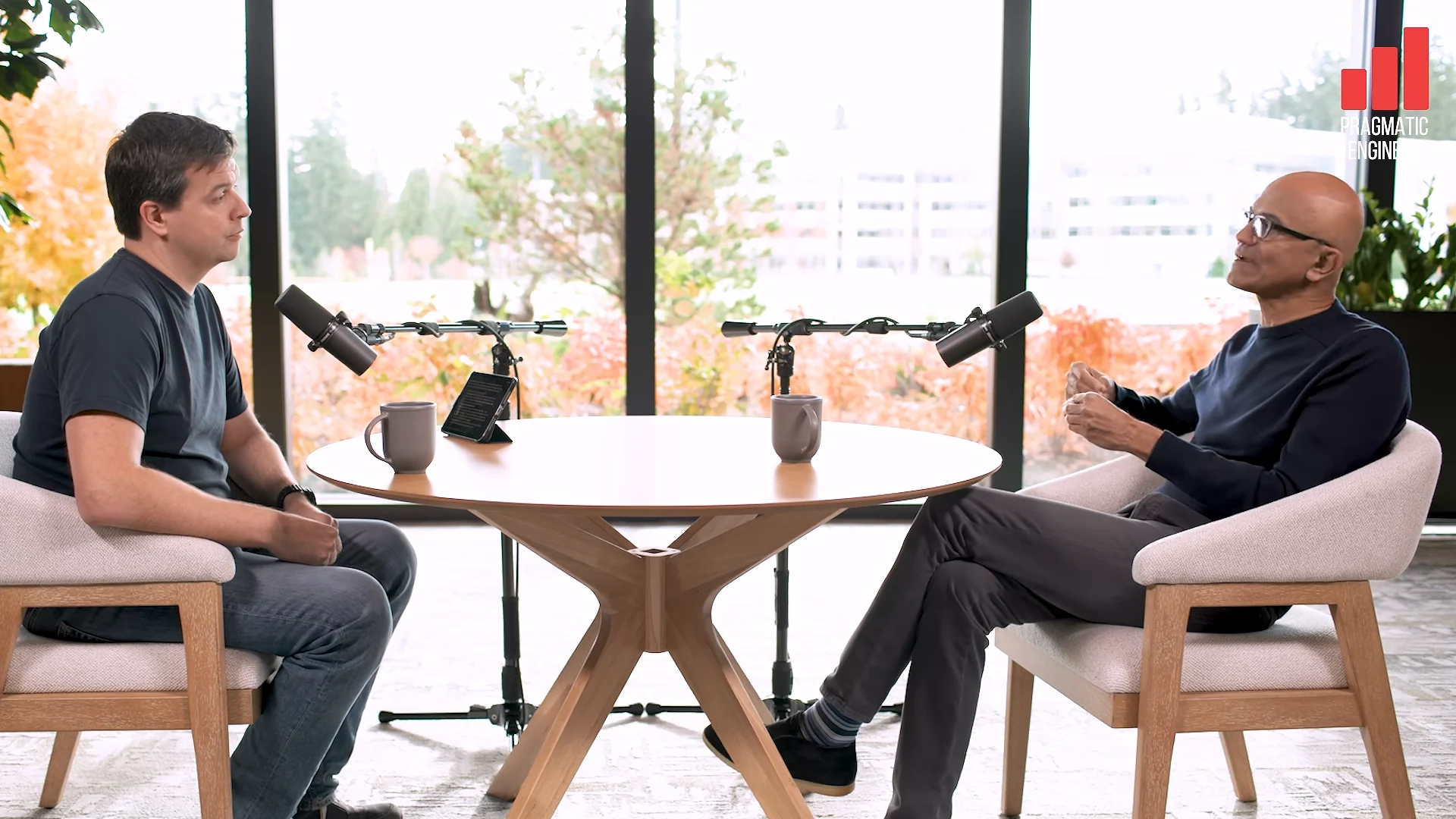
Image: When discussing reduced recruitment, Nadella said it is too early to draw conclusions (Source: The Pragmatic Engineer)
However, even if this is just a transitional period, Nadella’s statement about "one AI budget and one person" has already rewritten the career path for job seekers.
Looking ahead, young people stepping out of school will likely have to prove not only that they can work faster than their peers but also why they are worth hiring even after adding another AI budget.
For Microsoft and the entire tech industry, what will truly become scarce in the future may not be those who can write code, but rather those who can spot where AI makes mistakes. However, such individuals cannot be conjured from thin air; they must be given opportunities to grow through gradual training and practical experience.
After calculating the current AI budget, the industry will sooner or later need to answer the question, which may have shifted from "Are we still hiring newcomers?" to "Where will newcomers grow into experienced hands?"
免责声明:本文章仅代表作者个人观点,不代表本平台的立场和观点。本文章仅供信息分享,不构成对任何人的任何投资建议。用户与作者之间的任何争议,与本平台无关。如网页中刊载的文章或图片涉及侵权,请提供相关的权利证明和身份证明发送邮件到[email protected],本平台相关工作人员将会进行核查。