Title: Fortune Interview with a16z Partner Chris Dixon: The New Path of Crypto Philosophy
Author: Leo Schwartz, Fortune Magazine Reporter
Translated by: Luffy, Foresight News
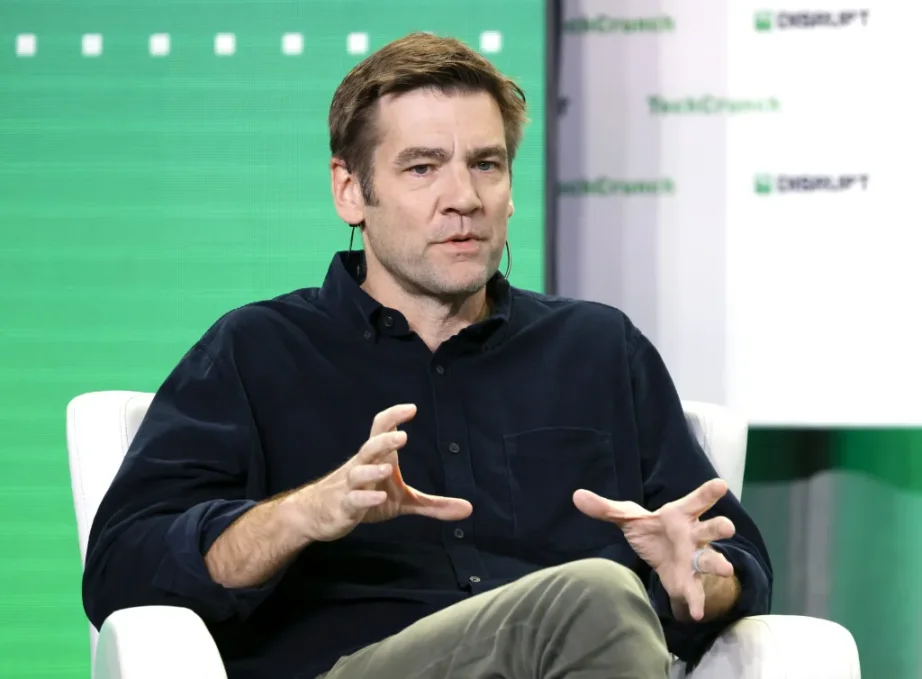
In October 2022, just weeks before the collapse of FTX, Chris Dixon sat down to write a book about cryptocurrency. This venture capitalist and eternal optimist wanted to share a new vision of the technology he loves with everyone. In the early days of the internet, before companies like Google and Facebook swallowed up every bit of wealth, Dixon founded startups, believing that the decentralized promise of blockchain could revitalize the early components of the open internet.
By the end of 2022, this vision had been overshadowed by an industry dominated by a gambling mentality and defined by criminals like Sam Bankman-Fried. The failure of FTX felt like a turning point, and for many observers, cryptocurrency became synonymous with fraud.
"I thought at the time, 'Damn, this is so frustrating,' and then I felt sorry for myself," Dixon told me over breakfast last week. "Then I thought, 'I can see this as a frustrating moment, or I can see it as an opportunity.'"
Dixon has worked in the tech industry for decades, from being an entrepreneur creating early AI companies to an angel investor, and now a partner at a16z, a venture capital giant. He has never experienced such a huge gap between public perception of his projects and his own understanding. "I might try to narrow that gap," he thought to himself.
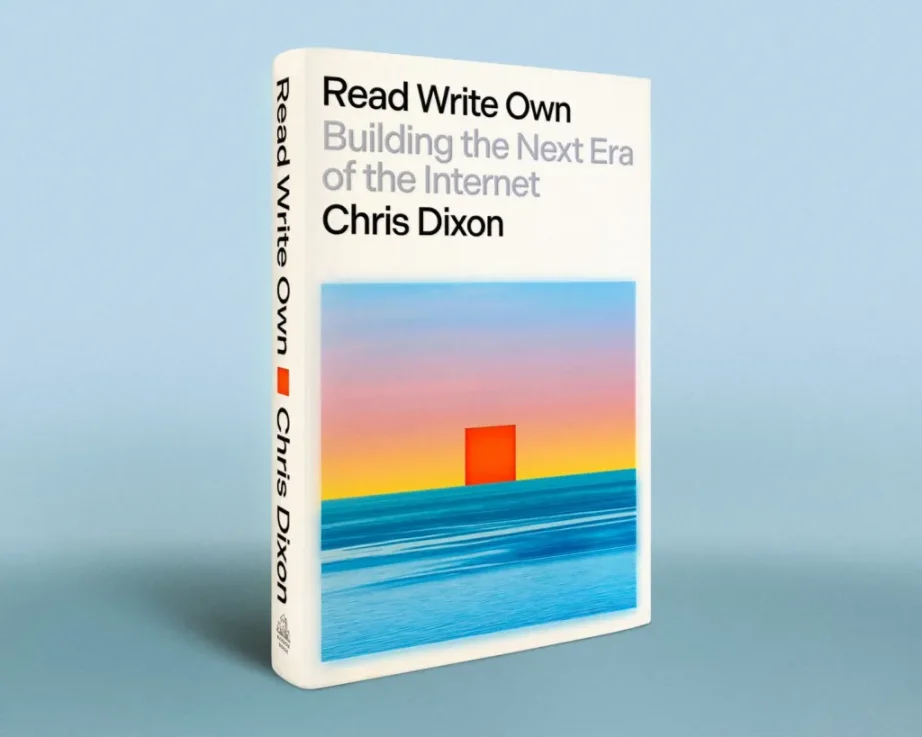
The result is "Read Write Own," a manifesto about the advantages of cryptocurrency. For those who still believe that blockchain technology will open the doors to the next generation of the internet, it may become a combination of the Bible and a self-help book. The book is set to be published on January 30, providing a clear defense of an industry that is often ridiculed by the outside world.
At only 52 years old, Dixon has become a veteran politician in the cryptocurrency field. He believes that blockchain is not just a "digital rise" gamble and a plaything for self-proclaimed degens; it can be a non-political software that can rescue the internet from corporate dominance.
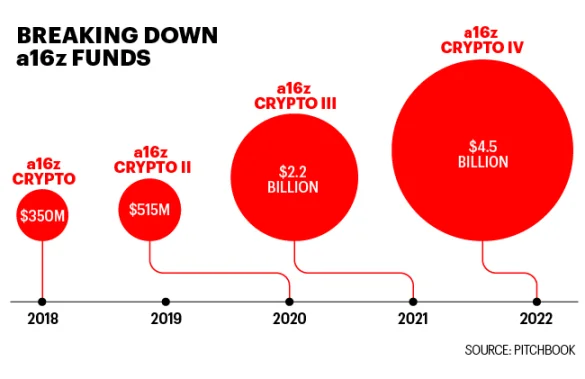
As the head of a16z crypto, Dixon is not just a theorist on paper. He has a real stake in this game, with his fund raising $7.6 billion from investors. His book is not just a paper on the future of the internet, but also a call to survive in the industry.
Cathedrals and Bazaars
Dixon views the internet from a network perspective, not just how people connect, but also how different technologies interact to build the network infrastructure we know today.
Most of what we consider to be the internet today is owned and controlled by big companies. From WhatsApp to Gmail, and the cloud computing services that support them, everything is controlled by a few companies, which not only determine how the platforms operate but also take away almost all the profits, destroying many industries from newspapers to travel agencies.
This was not always the case. The early developers of the internet envisioned a more open network, managed democratically, with decision-making power given to the people (or at least to those who care enough and are involved).
This vision still exists in the modern components of the internet, such as the standardized email communication of SMTP and the HTTP protocol that helps computers communicate with each other. Another example is DNS, which allows us to access web pages with human-readable names, such as fortune.com, instead of a series of numbers.
These protocols are often free or very cheap to use, and are either open source or managed by non-profit organizations responsible for maintenance rather than seeking profit. Their existence is the main reason why email is not controlled by Google, URLs are not controlled by Amazon, and web surfing is not controlled by Microsoft.
"I've always hated Microsoft," Dixon told me. For one of the most powerful people in the tech industry, this seems like a strange statement, especially for someone working at a venture capital firm that has invested billions of dollars in companies like Facebook and Twitter, helping to build the internet we know today.
Despite being wealthy and well-known, Dixon gives off a relaxed vibe. He suggested we meet at a small restaurant, and since his favorite restaurant in Tribeca had closed, I found one near the Fortune office. Eating a plate of eggs, sausages, and potatoes, he looked more like a college professor than a venture capital giant, often answering questions with long sentences, and his tone would rise when he got excited about an idea. When we walked outside and saw his black SUV and driver waiting, his academic image was shattered.
Dixon said his career began with a love for open-source software, such as the Unix operating system. This is what drew him into blockchain. He is a prolific blogger, writing about decentralization in the internet around 2009. Specifically, he was amazed by an analogy created by programmer Eric Raymond, the "Cathedral and the Bazaar." In the Cathedral model, software is strictly confined within the inner circle of developers, often employed by companies, and they can build complex and beautiful structures that are not open to external contributors. In contrast, the Bazaar is open source, bustling, and lacks a clear order, but is vibrant due to collaboration among contributors.
At the time, platforms like Twitter and Facebook were trying to position themselves as bazaars. They invited developers to build applications on their platforms, and Twitter promised to support RSS, another open-source protocol that allows users to follow different websites and blogs. Nevertheless, Dixon understood that their functionality was more like a cathedral. "The problem is that Twitter isn't really open," he wrote in a blog post in October 2009, "at some point, Twitter will need to make a lot of money to justify its valuation."
Meanwhile, in October 2008, Satoshi Nakamoto published a white paper introducing Bitcoin to the world. Dixon did not immediately convert. The use case for Bitcoin was in the financial sector, as Nakamoto initially envisioned the cryptocurrency as a new form of money, while Dixon was more concerned with broader infrastructure protocols. Nevertheless, he saw the value of blockchain: a new type of network with decentralized ownership, managed by participants and run by software.
After a few years as an angel investor, Dixon's influence was limited. In 2012, he joined a16z and the venture capital alliance. "The only reason I wanted to join a venture capital firm was whether I could raise the level and really try to figure out new computer movements," he told me.
Whether blockchain will become the future is still unknown. Dixon's first bet was on Coinbase, a cryptocurrency exchange born in 2013, but he also invested in VR company Oculus (later acquired by Meta) and drone startup Airware (which went bankrupt in 2018).
He expected Bitcoin's development to allow software developers to add new features and expand the use cases of blockchain. The Bitcoin team has never done this. Instead, a new blockchain called Ethereum was launched in 2015, promising to allow developers to create any form of decentralized application. Three years later, a16z launched the first cryptocurrency-specific fund, led by Dixon.
"High Sugar"
Dixon's advocacy for blockchain is simple, and the title of his new book elegantly summarizes it. The first era of the internet, driven by early protocols and innovations like web browsers, allowed us to consume (read) information. The second era, driven by companies like Facebook and Apple, allowed us to create (write) our own content. The third era, driven by blockchain, will allow us to control the entire process from decision-making to reaping.
For example, decentralized social media platforms will allow users to vote on content moderation and keep the code open source to form a vibrant third-party application ecosystem. Advertising revenue will not go to the platform, and users can actually monetize their own content, while token systems can distribute income and serve as a governance mechanism.
It's a beautiful world worth imagining, but 15 years after the birth of Bitcoin, such a world has not become a reality. This is not due to a lack of attempts. There are many cryptocurrency projects targeting consumers, and billions of dollars in capital have been invested to make them popular. However, cryptocurrency has not yet had its "ChatGPT" moment.
A common saying in the crypto space is that we are still in the early stages, and it took decades for people to enter the internet era. The first paper on artificial neural networks was published in 1943, 75 years before the launch of ChatGPT. Dixon admits that he often grasps trends too early. He founded his first AI company in 2009, but eventually sold it to eBay due to technological bottlenecks.
Dixon firmly believes in "functional parity," meaning that crypto applications will only become popular if they are as good as their non-blockchain competitors. This day seems far off due to the slow processing time, high fees, and long-standing security issues of blockchain. "How many killer applications can you develop when a transaction costs $10?" he said. Nevertheless, Dixon stated that in an "optimistic scenario," blockchain computing power will be sufficient in the next 12 months.
Meanwhile, the only popular activity in the cryptocurrency space is speculation, from the recent enthusiasm for Bitcoin ETFs to gambling on crypto assets like FTX.
"People always can't help but talk about prices," Mary-Catherine Lader, COO of a16z portfolio company Uniswap Labs, told me. "Money has a natural magic."
Dixon describes the speculative frenzy in the cryptocurrency space as "high sugar." This not only gives the industry a bad image and alienates users, but also makes his portfolio company try to build unattractive infrastructure. "You'll hear people walking down the street saying, 'Hey, get on the Bonk train,'" he told me, with Bonk referring to a memecoin hyped on the Solana blockchain. "People are usually interested in these."
In response, Dixon plays an unusual role as a venture capitalist, spending a lot of time lobbying in Washington for new laws regulating cryptocurrency. Like many in the industry, he believes that the U.S. Securities and Exchange Commission is stifling innovation by cracking down on utility tokens like Solana and domestic companies like Coinbase, while allowing junk coins and offshore exchanges to thrive.
a16z crypto has hired former regulatory agency staff, and Dixon himself is a donor, with public data from OpenSecrets showing that he has donated to over a dozen cryptocurrency-friendly members of Congress. "Meeting with legislators is a difficult and tedious job," venture capital legend and Dixon's old friend Ron Conway told me. "Most venture capital firms avoid this activity."
Ben Horowitz, co-founder of a16z, told me that the company decided to lobby after seeing large tech companies like Meta demonstrate their influence in Washington. "These powerful companies with monopolistic products are very active in Washington," he told me. "If no one represents small tech companies, we will be bound by regulations, and innovation will slow down significantly."
The Elephant in the Room
Dixon does not overlook the irony of a16z's ascent to the throne of decentralized networks. By investing in companies like Airbnb, Facebook, and Twitter, the venture capital firm helped lead the era of the internet owned by corporations, and Dixon is now pleading for us to move on from this era.
"I thought it would be more decentralized, but I was wrong," Dixon said. "We don't want to create a system that would lead to the extinction of venture capital, because four companies would control the internet."
According to Horowitz's estimation, a16z has basically stopped betting on Web2, even outside of its crypto fund, except for photo-sharing app BeReal (he did not mention the $4 billion investment to help Elon Musk acquire Twitter in 2022). "That's the benefit of being a venture capitalist," Horowitz said. "You can make a lot of investments."
While venture capital can diversify bets, the involvement of large venture capital firms in cryptocurrency still raises concerns that it may undermine the decentralized mission of blockchain. Like other cryptocurrency venture capital firms, a16z's investments often receive tokens instead of traditional equity, meaning it could have a significant impact on project governance.
This concern has sparked controversy, such as a16z's support for an unpopular proposal in Uniswap, to use another portfolio company, LayerZero, as the underlying infrastructure instead of a competitor called Wormhole. Despite a16z's attempt to deflect criticism by claiming to distribute tokens to student clubs and non-profit organizations, angry purists on Twitter accuse the company of being the actual owner of Uniswap, a protocol that appears to be open.
Lader works at Uniswap Labs, which is technically separate from the Uniswap protocol, and she said she does not discuss governance issues with Dixon. Nevertheless, she believes that decentralization is not a guarantee of equal ownership, but a measure of "fair, open access."
Another issue troubling cryptocurrency venture capitalists is the tendency to sell tokens for short-term gains. In traditional venture capital, companies hold investments for many years until they exit through an initial public offering or acquisition. In cryptocurrency, the ownership period for tokens is only one year.
"If you're a cryptocurrency venture capitalist, your obligation is to cash out as soon as possible," said Omid Malekan, a part-time professor at Columbia Business School. "This design is very bad for the long-term survival of most crypto projects."
Dixon admits that many cryptocurrency venture capital firms operate more like hedge funds, but he stated that he supports longer lock-up periods. He even helped introduce such provisions in proposed cryptocurrency legislation. "Short-term incentives are a very dangerous thing," he told me. According to an a16z spokesperson, their cryptocurrency fund still holds 94% of all tokens purchased in private market transactions.
For Dixon, the more existential question is whether cryptocurrency projects need venture capital and the expectations that come with it. He bets that the recipients of a16z funds will not only become the foundation of the next generation of the internet but also reap billions of dollars.
When I asked Horowitz, he compared this gamble to DNS. They are not directly investing in utility, but in tokens—similar to how venture capital firms bought a lot of URLs in the early days of the internet. "I don't actually think there's tension there," he said.
Scholar Malekan believes that recent trends indicate the opposite, especially as venture capital firms typically invest in foundations, labs, tokens, and protocols that support crypto projects. However, successful projects like Bitcoin and Ethereum only require minimal funding. "In the cryptocurrency space, you can almost say there's a very strong negative correlation between success and the amount of money you raise," he told me. "It's not just about being successful like a project—you have to act like a billion-dollar company."
While Dixon acknowledges that tokens are a way to incentivize participation through healthy speculation (like homeownership), they can also easily replicate the harmful, profit-driven incentives that built our current internet. Axie Infinity, supported by a16z, is a breakthrough consumer crypto project that has stimulated a distorted alternative economy, where workers in the southern hemisphere invest their savings in the game and use it as a second job. The short-term success of this game may be a failed experiment, but it still gives us a glimpse of what venture capital-backed, blockchain-dominated future might bring.
Currently, this is a theoretical issue, and SBF has hardly appeared in our review, and the cryptocurrency industry is also looking for a foothold. Dixon is famously reluctant to do media interviews, but through "Read Write Own," he is emerging from the shadows, ready to take on a leadership role and pave the way forward for his industry and non-believers. The burden of a16z may not make him the ideal messenger, but he is at least a notable one.
"If we can make it work, it seems like a very huge opportunity because it's very counterintuitive," Dixon said. "By the way, that's how you make money."
免责声明:本文章仅代表作者个人观点,不代表本平台的立场和观点。本文章仅供信息分享,不构成对任何人的任何投资建议。用户与作者之间的任何争议,与本平台无关。如网页中刊载的文章或图片涉及侵权,请提供相关的权利证明和身份证明发送邮件到support@aicoin.com,本平台相关工作人员将会进行核查。