One of the areas that Rhythm BlockBeats has been focusing on is the on-chain TCG card market. This year we have written an in-depth article, which is currently one of the most profitable businesses on-chain. But what else does the on-chain TCG card platform need to reach a larger market? We believe that, more than channel distribution, it is crucial to return to this question— the joy of opening packs comes from the unknown results, but whether the card pool is real and whether the rules have been enforced should not become another inexplicable uncertainty. Especially when the platform procures cards itself and rearranges the prize pool, the richer the product experience, the more specific the trust responsibility the operator has to bear.
It is not just about proving that a random number is valid, but about how the prize pool is constructed, when the lists are sealed, and why the random results correspond to this card. Open-source algorithms and publicly available verification tools ensure that fairness does not have to remain solely within the platform descriptions but can also serve as verifiable evidence for users and third parties.
The significance of this path will make the on-chain TCG card market no longer limited to on-chain card-drawing businesses alone, but able to apply the same verification process to other collectible assets and use cases. Before understanding these possibilities, we need to return to the TCG market: why do people continue to buy, collect, and trade these cards, which is exactly the demand foundation that the platform needs to serve.
The Business Behind a Card: Competition, Collecting, and Intergenerational Demand
We have all played TCG cards to some extent, especially "checking-in" games from our childhood, but there may not yet be enough research on why TCG cards are so popular today and the current scale of the TCG market.
A TCG card can enter a competitive deck or can be placed in a protective sleeve, becoming a collection that someone wants to complete. These two uses together support the TCG market. Grand View Research estimates that by 2025, the global TCG market will reach approximately $18.537 billion, and by 2033 it is expected to reach $32.141 billion; the Pokémon TCG's estimated market size in the same study for 2025 is about $6.681 billion, accounting for approximately 36%.
The physical market for TCG cards is continually expanding. Bandai's survey indicates that Japan's multi-brand TCG market has grown in terms of suggested retail price from 111.2 billion yen for the fiscal year ending March 2022 to 319.7 billion yen for the fiscal year ending March 2025, an increase of approximately 11.7% year-over-year.
The secondary market is also active, with transactions of rare cards at sky-high prices making it clear that this is no longer the realm of toys, but of collectibles. On February 16, 2026, a unique Japanese Pikachu Illustrator card, rated PSA GEM MT 10 and held by YouTuber and WWE star Logan Paul, sold for $16,492,000 including buyer's premium at Goldin, with a hammer price of $13,300,000.
The first layer of demand for this business can be seen at the battle tables. Pokémon's official tournament results show that TCG participants at the North American International Championships increased from 2,274 in 2023 to 3,119 in 2024, and then to 4,562 in 2025, an increase of approximately 100.6% in two years. Among these, the Masters group grew from 1,897 to 3,812 participants. For these players, cards are primarily competitive tools; they need to test decks, find key cards, and then bring their decks to competitions. Therefore, beyond opening packs, the ongoing demand is to purchase specific cards to form the desired combinations.
Competition also attracts viewers who do not personally sit at the competition tables. Esports Charts recorded a simultaneous peak viewership of 77,088 for the Masters group of the Pokémon TCG World Championships in 2024, rising to 82,507 in 2025. Even in this group, tens of thousands of viewers are already present for the finals. In 2026, the agency recorded a peak of 173,698 for TCG events.
Prize money is continually increasing. The prize for the 2023 Pokémon official world champion in TCG was $25,000; in 2026, the prize for champions across all age groups listed in the rules is $50,000, with a nominal total prize amount of $1,020,000 for the three TCG age groups. Specifically for leading players, Chilean player Fernando Cifuentes won the Masters group championship at the 2024 World Championships with his Iron Thorns ex deck, and the championship prize recorded in the event database was $50,000. He also described in a first-person article published in The Guardian in January 2025 his experience of being invited to the Chilean presidential palace and meeting President Gabriel Boric after winning. Just like in the esports market, the prizes, publicly available card lists, and champion stories encourage participation and attract more attention to the cards and the players.
Beyond competition, collecting represents a much larger consumer intent. Those who put their cards in protective sleeves do not necessarily aspire to become champions. For many adult collectors, reacquiring cards means reconnecting with beloved childhood characters. Reuters interviewed 36-year-old Kenneth Ho, a commercial pilot living in Hong Kong, in March 2026. He grew up in Toronto and started collecting Pokémon cards in the 1990s, interrupting during high school and college, then returning to this hobby during the COVID lockdown. His collection includes Mario Pikachu promotional cards and Pikachu cards clad in Charizard-themed capes. In the report, he connected childhood memories with the collectible potential he sees today; character memories and adult purchasing power intersect in the same person.
This sentiment extends to the next generation. In a 2024 report from Japan's BSS about a newly established card area in Yonago City, a father was interviewed who plays Pokémon cards with his child. He said, "I had Pokémon cards when I was a kid. I feel nostalgic looking at these cards, and my child said they want to play, so we play together as father and son."
Children might simply hope for their favorite Pokémon to appear, players hope to complement their decks with needed cards, while collectors await special illustrations or high-rarity versions. The lasting influence of classic IPs has made related TCG cards appealing to all ages, creating a continuous desire to consume, which is why the TCG card market is thriving.
From the Joy of Opening Packs to Trust in Platforms: Why Fairness Needs Verification
One of the greatest joys of TCG cards is the uncertainty when opening card packs. When purchasing single cards, users already know what they will receive, but opening a pack is akin to opening a blind box; the results are only revealed when the pack is opened. Breaking open a standard pack and stumbling upon a favorite character or special card design is the very appeal that distinguishes opening packs from direct purchases. For instance, the Charizard ex 199/165 from Scarlet & Violet—151 is a Special Illustration Rare card; its card art, character, and rarity make it distinct from the ordinary cards purchased just to complete a deck. Similarly, one can find Luffy, Law, and Kid in the Super Parallel special versions included in the Pirate King English OP-05 “AWAKENING OF THE NEW ERA,” which also features a special Luffy card with a new illustration by Eiichiro Oda to mark its first anniversary.
Factors such as limitations on offline outlets restrict people from enjoying this pleasure; at the same time, in today's highly developed online social environment, people have higher expectations for enjoying this joy, which has led to the emergence of online card opening platforms.
DOPA! and Clove cover Pokémon and One Piece cards alike; they sell original draw products where operators procure cards and rearrange the prize pool instead of factory-sealed booster packs. Users purchase credits, select card pools, and participate in card openings. According to official sources, as of August 2026, DOPA! had accumulated over 1,500,000 users, with over 500 types of card packs available for sale at any given time.
Whatnot retains the enjoyment of live unboxing and viewing. Its Card Break sells physical cards according to predefined slot rules, allowing buyers to watch the host's operations, ask questions live, and then wait for their physical items to arrive. The platform's officials claim that in September 2026, Pokémon card sales on its platform exceeded 10 million cards.
Compared to purchasing card packs at offline outlets, online pack openings offer greater convenience, a wider variety of pack choices (self-assembled prize pools), and a more enriched social experience, among other advantages. However, online pack opening lacks the innate trust that consumers have towards card pack issuers as compared to buying packs at offline outlets. Especially in cases where platform operators source cards themselves and assemble the prize pool, while the experience is indeed richer, the corresponding fairness and trust that must be established is also greater.
The joy brought by the uncertainty of opening card packs is based on a foundation of fairness and transparency. Controversies over fairness can affect whether consumers are still willing to accept uncertainty as an entertainment experience, challenging one of the industry's most fundamental consumption needs. In March 2026, The Athletic and Sports Collectors Daily reported that consumers raised private arbitration against Whatnot regarding random card pack opening and repackaging. Whatnot explicitly denied the related descriptions, emphasizing that the platform does not allow gambling and that live unboxings occur in front of cameras, with violating sellers facing penalties.
As the TCG card market rapidly develops, disputes are inevitably increasing, as the evidence of fairness often remains in the hands of operators. Controversial cases cannot demonstrate unfair conduct by Whatnot, but they do provide a differentiated competitive advantage for on-chain TCG card platforms—can the verifiable rights of fairness and transparency be given to consumers?
Pool algorithms and input requirements can be made public, the pool list can form an on-chain commitment before the draw, and random proofs and rules for card selection can be used to verify specific results. After obtaining corresponding complete inputs and having the prize pool details and historical draw records made available, external entities can recalculate on their own rather than just waiting for explanations from the platform. It is not enough to simply publish “the probability of drawing a certain type of card”; making the inputs, algorithms, and results that link public commitments available would further allow users to check how particular distributions were generated, which is the expectation regarding fairness in the on-chain TCG card market.
Fairness is More than Randomness; Discovering the Advantages of Renaiss through Fair Transparency
First, let's discuss the fairness and transparency of TCG cards, focusing on several specific questions: does the platform construct prize pools according to public rules? Is the drawn card one that was previously placed into the prize pool? Has the platform modified the cards or valuation records after the draw? Given the established drawing rules, should this card have been awarded to the user?
Overall, among the five mainstream on-chain TCG card platforms presently, Renaiss stands out in terms of fairness and transparency; this platform performs excellently.
The first question is to check whether the prize pool was composed according to public conditions. Renaiss has made their pool algorithm and required data public. Once the corresponding candidate cards are obtained, and their valuations and configurations are recorded, external parties can re-run the same set of rules to check if they can arrive at the same prize pool and whether it meets the stipulated quantities and average valuation ranges. For example, if a configuration requires the prize pool to contain a certain number of high-level cards, recalculation can verify whether the final list meets this condition rather than trusting just a prize image displayed on the page.
The verification of the prize pool list answers whether "this list has changed afterwards," and being able to recalculate the list further answers whether "given these candidate cards and conditions, was this list initially generated according to the rules," making the execution of the group rules a verifiable issue.
In this respect, horizontal comparisons with other platforms reveal:
· Some can verify the pool list after it has been formed and have made card selection rules public, but there are no detailed descriptions of how the complete candidate inventory is formed into the final prize pool according to all group rules.
· Public recalculations mainly target the random results of card pack openings and specific candidate card selections, lacking detailed descriptions of the whole grouping process.
The second question is to check whether the selected card belongs to the sealed prize pool before the draw and whether the recorded valuation has been altered. Renaiss stores the verification record of the entire prize pool list on-chain before drawing; this process is called Seal. The unique identifier and recorded USD valuation at that time for each card are included in this record. After the draw, users can verify the winning card against the corresponding certificate to confirm if it matches the item from the original sealed list. Assuming a card was recorded as $100 upon sealing, if it is then changed to $200, it will not match the original seal record upon verification. Even if the platform secretly changes the price on the webpage or database side, the modified data cannot masquerade as the original record for verification. Similarly, swapping in another card, or adding or deleting cards in the prize pool, would lead to inconsistent checks for the entire pool.
In this regard, Renaiss correlates the sealing records with the on-chain timestamp before the drawing, allowing checks to answer not just "has the data changed," but also "did this commitment occur prior to the result being generated." Horizontal comparisons with other platforms show:
· There are platforms with similar capabilities, but whether the prize pool records were publicly posted on-chain before the random draw results were generated is not clearly stated.
· They can check the relationship between some candidate cards and winning cards, but cannot confirm that the complete prize pool and its valuations were jointly fixed before the drawing.
The third question is about verifying according to the extraction rules why the user should receive this card. Proving that the winning card was originally in the prize pool is not enough; the platform also needs to explain why that card was awarded to this user. Renaiss allows external validation of the random result, then, combined with previously drawn cards, recalculates which card should have been selected from the remaining prize pool at the time. If the card provided by the platform does not match the recalculation result, it cannot pass this verification step.
This is a critical point and one where users are most sensitive, so practically all platforms implement it in some manner, whether through publishing historical VRF integration data or checking the relationship between random indices and prizes via contracts. However, Renaiss's advantage lies not in having unique superior effects on the three issues mentioned above, but in completely connecting them together: first checking how given data forms the prize pool, then verifying the pre-draw commitments of cards and valuations, and finally validating the random output and how it maps to this card. VRF is responsible for random proof, Merkle Root is responsible for data commitments, and the grouping and card selection rules link the two into a verifiable process.
Testing Renaiss Fair: How to Verify Prize Pools and Results
Renaiss is able to achieve the above effects because they have a complete open-source fair transparency verification system, Renaiss Fair. Even if you don’t open packs on the Renaiss platform, you can experience the effects of this system directly through the Renaiss Fair page, which we have done.
First, how is the prize pool constituted? We used the Verify a Gacha feature of Renaiss Fair to check the PANDORA 88 prize pool:
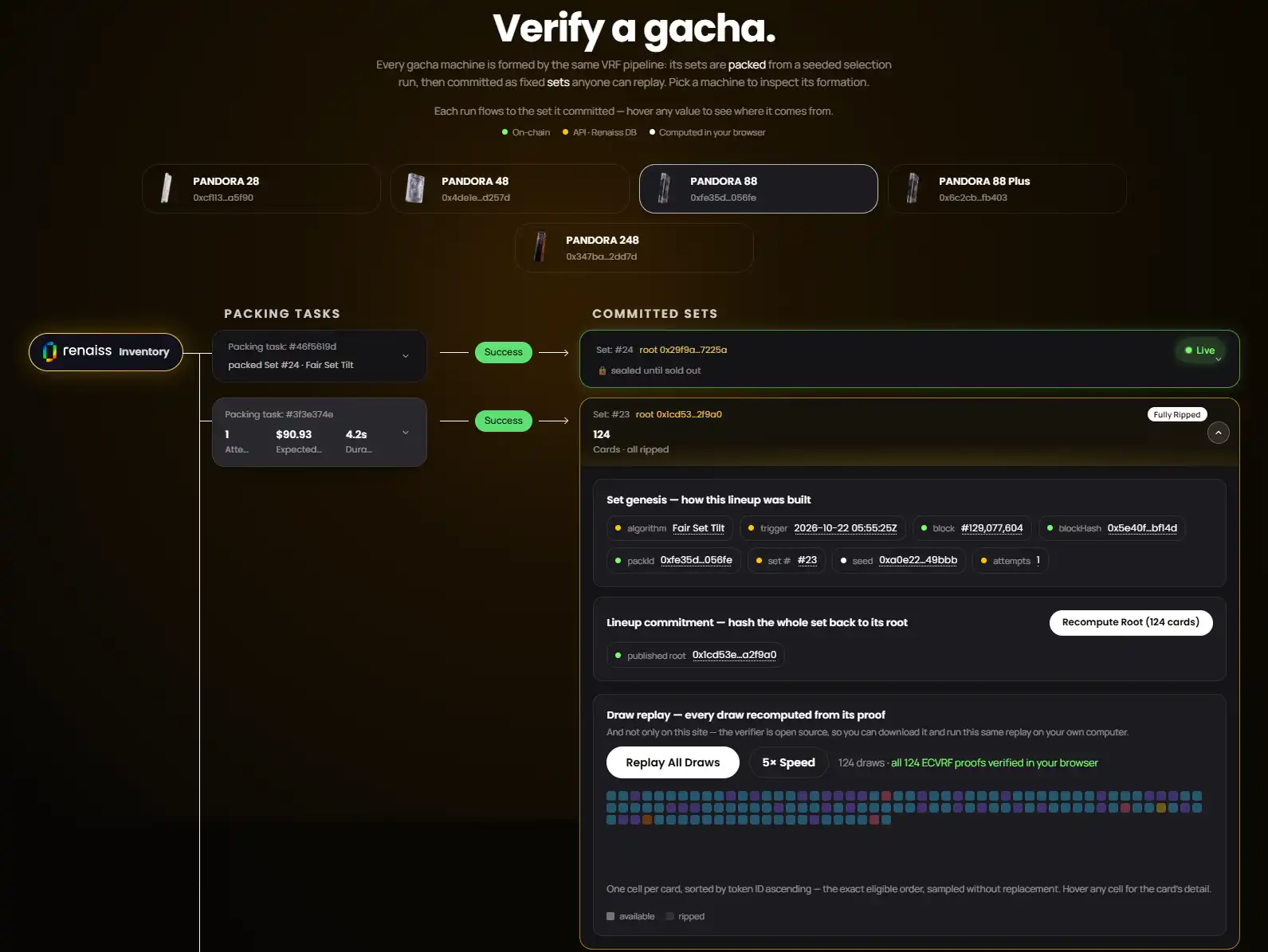
When viewing PANDORA 88, the completed 23rd pool displayed 124 cards, constructed using the Fair Set Tilt algorithm, and noted the triggering time, block, seed, and attempt count. The page simultaneously marked the currently selling 24th pool as sealed. The algorithm for the prize pool's composition, triggering time, block, seed, attempt count, and the number of cards in the pool were all very comprehensive.
Renaiss's Fair Set Algorithm uses candidate inventories, card valuations, configurations, and reproducible random flows to construct the prize pool. It then checks against expected value (EV, which is the average card value calculated by draw probability) ranges and the number of cards at various valuation levels. Candidate pools that do not meet hard conditions will not be directly published. At the same time, open source enables identical inputs, algorithm versions, and configurations to match the same construction results. External parties can check why the prize pool list was accepted rather than taking the platform at its word that it meets the requirements.
Next, can the prize pool be altered after it has been drawn? We clicked the Recompute Root button in the image above, and the page recalculated the root value from 124 cards, indicating, "Derived root equals the published root," meaning that the recalculated value for this public list of 124 cards matched the issued root value, the same as the root value read on-chain:
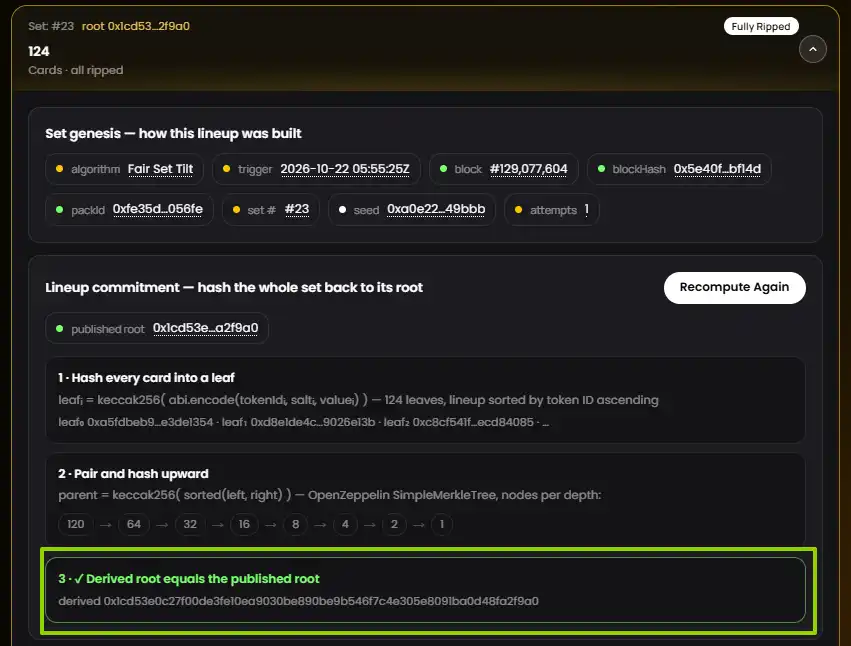
Renaiss's design organizes the prize pool card data into a Merkle Tree before the draw and records the Merkle root on-chain. The Merkle root can be understood as a "digital fingerprint" of the prize pool list used to verify coherence with the sealed state. The leaves of the tree contain card token IDs, salt, and valuations at build time. If cards are added, removed, or swapped, or committed valuations altered, a recalculation will usually yield a different root value, and this divergence will be detected.
Lastly, why did the user ultimately receive this card? The Use Demo Rip feature of Renaiss Fair provided a transaction that went through six verification steps. This transaction can also be queried on BscScan, and the public API indicates it came from the PANDORA 88 Pool 1, with a checkoutId of 1. The expanded verification results are as follows:
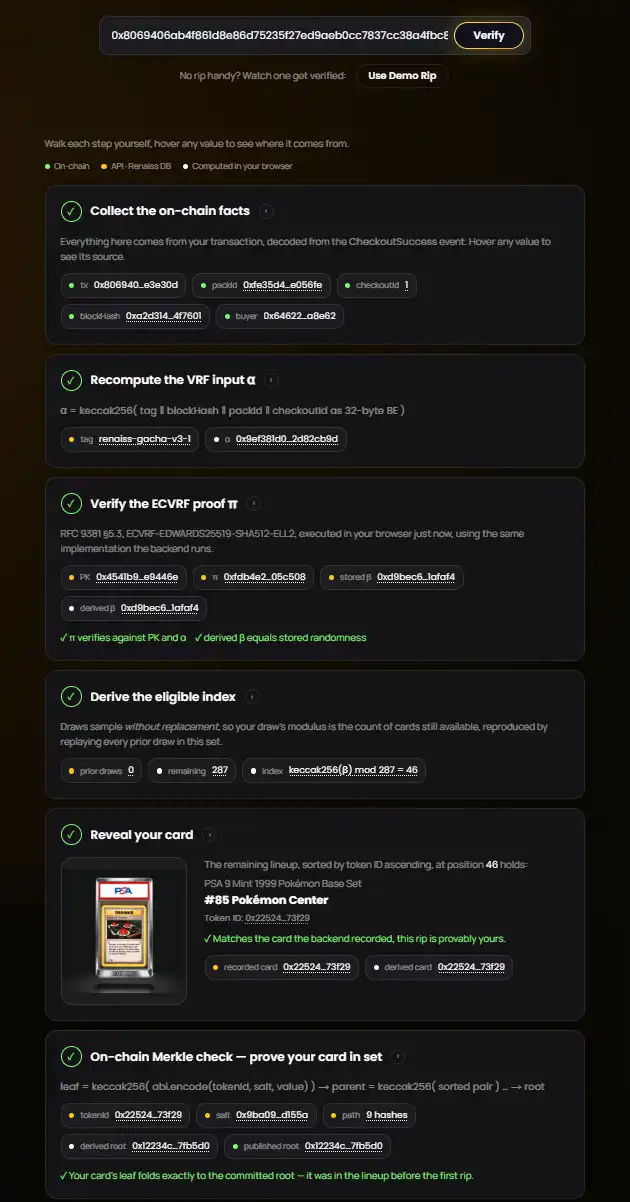
Verification results show that the pool had 287 cards, with no prior draw needing to be deducted. After passing the ECVRF proof, the recalculated index was 46, mapping to PSA 9 Mint's 1999 Pokémon Base Set "#85 Pokémon Center." Finally, the root value obtained from recalculating along the Merkle path composed of 9 hashes matched the published root value.
The official front-end tool lowers the operational threshold, and the open-source implementation allows third parties to verify independently without relying on the same webpage.
Extending Business Boundaries: What More Can a Complete Open-source Verifiable Fairness Mechanism Do?
Renaiss Fair as an open-source fair transparency system is indeed excellent, but why do we say it has the potential to trigger a reassessment of value?
First, the financial utility of on-chain TCG cards has yet to be fully realized. As early as 2023, we saw @S4mmyEth obtain a loan with an APY of 36% using one of his Pokémon cards; however, for years, the potential of TCG cards in lending and more DeFi scenarios has not been effectively unleashed on a large and stable platform.
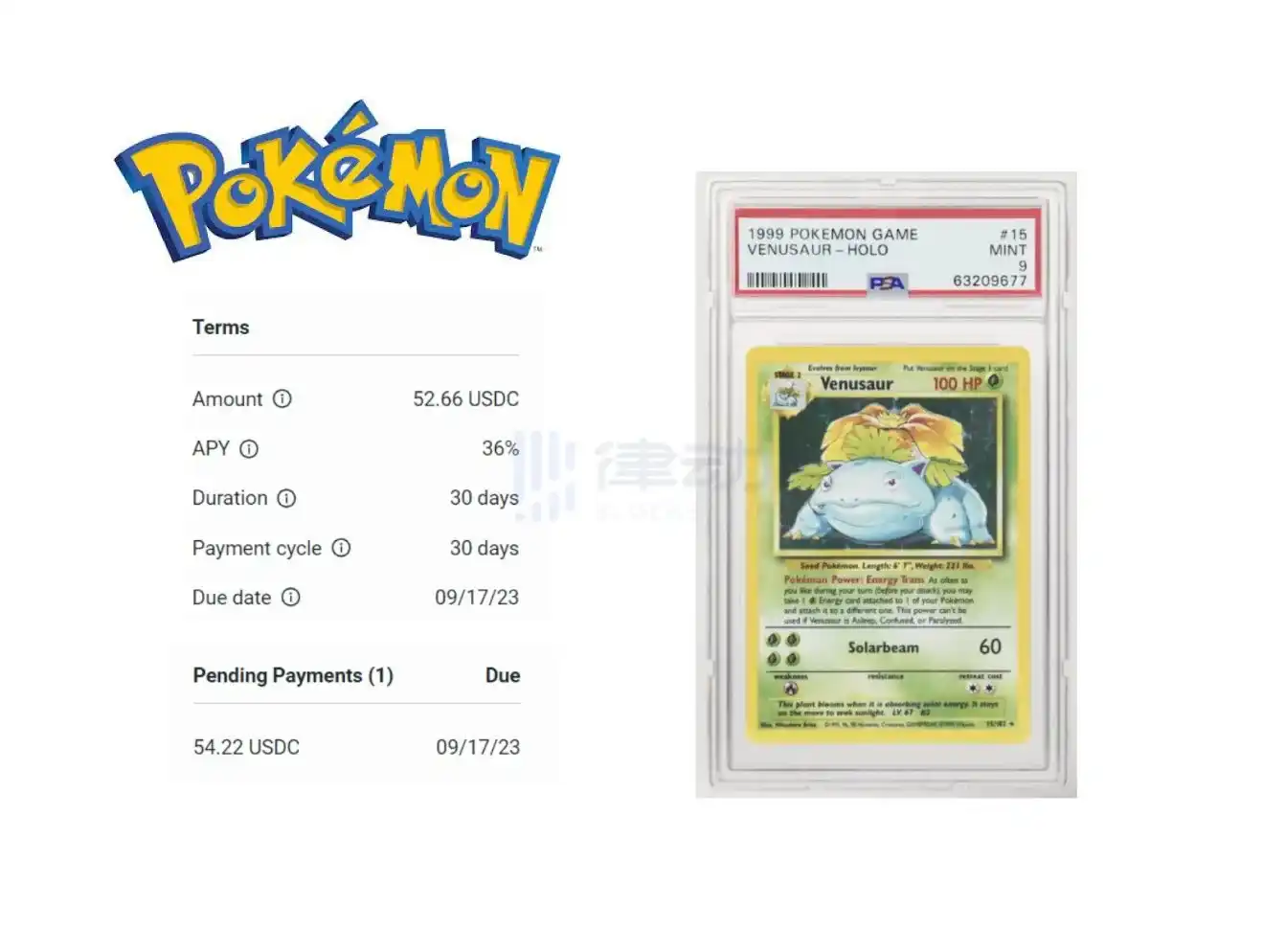
Since last year, several platforms have focused on creating perpetual contracts for TCG cards as well as new collectible assets such as CS2 and Dota 2 skins, like those on HyperEVM's Trove. These platforms often use oracle-fed pricing, with the end results frequently leading to rug pulls. Establishing a complete open-source fair transparency system, in itself, demonstrates a commitment from the project team.
The vast majority of current on-chain TCG card platforms remain positioned within the vertical application layer of "card distribution," which is a good and profitable position, but competition has become quite homogenous. Distribution competition revolves around channels, but Renaiss's fully open-source verifiable fair system not only showcases its long-term development commitment but also allows it to transcend simple channel competition, presenting greater possibilities in the verification layer.
During the Consensus conference in Hong Kong in February this year, Renaiss held a specialized exhibition focusing on high-end physical collectibles. Renaiss collaborated with card shops like LOGOMAN and YAMACARDO to display cards with QR codes for visitors to view ownership and custody information. What is presented here is not just related to online card openings, but how the physical items provided by partner shops connect with verifiable digital records, extending external scenarios that leverage their capabilities.
This is a standardized process from physical to on-chain, with identification and verification phases completed by third-party professional institutions, including LegitApp and partner shop staff, combined with on-chain signing confirmations; physical assets are then transferred and stored by recognized distributed third-party custodians or vaults via Renaiss Network Vault OS, with scanning and minting signing completed. Renaiss chose from the design's inception not to adopt the generic "physical NFT" approach but instead to create a dedicated smart contract standard for physical collectibles.
This external partnership case illustrates that the fairness mechanism can integrate collections of assets with clear sources and custody relationships. If the partner shop or issuer wishes to issue limited editions or randomly distribute versions, the next step is to seal the asset list, sales quantity, and distribution rules in advance, allowing buyers to verify whether the assets they received conform to the commitments made. The physical side is responsible for providing credible asset records, while the Fair verification process can be used to check the subsequent distribution.
In the sales of limited collectibles, what consumers often face first is not how low the probability might be, but whether they can know why their qualifications disappear. Kotaku reported on September 8, 2026, that reservations for the Pokémon Center's 30th Celebration cards saw a wave of cancellations, with multiple buyers claiming they queued for hours with their phones and only placed one order, yet still had it canceled. Some players speculate that the platform mistakenly targeted real people while clearing bots, while others suspect over-selling.
This reservation was not a verifiable random lottery. If we change the limited sale to use a Renaiss Fair-like qualification distribution process, the business side can seal the anonymous application list, publicly sale quantities, and reserved quotas post-audit, while also fixing the rules for limit purchases, cancellations, and replacements, with the purchasing order then generated by VRF and a public distribution algorithm. Users can check whether there were temporary additions, reductions in public quotas, or exclusions from the reserve after sealing.
Another issue is whether the specific rights received after obtaining purchase qualifications conform to the commitments made. During the 2026 World Cup, the Random Selection Draw randomly allotted ticket eligibility when demand exceeded inventory, but disputes still existed. The Athletic reported on April 8 that a fan who purchased a Category 1 ticket found that the seats for two matches fell in an area marked as Category 2 on the purchasing map. FIFA responded that the map was only a category range guidance, not an exact seat map, and subsequent maps would reflect the final partition; the New York and New Jersey Attorney General issued subpoenas in May investigating issues relating to seats not matching promotions.
If a verifiable mechanism were adapted, it would not only seal the applicant list but also commit to the public inventories of all categories, and the mapping rules between categories and specific seat pools, and then utilize random proofs and deterministic algorithms to achieve non-repetitive allocation. Thus, external parties could check whether the actual distribution stemmed from the originally committed collection, whether inventory was reused, and whether certain rights were reclassified after the results were generated. Of course, definitions of categories, exceptions, and refund conditions should still be communicated in advance; cryptography cannot substitute the judgment of seat quality, but it can provide a verifiable chain of evidence between "winning by random draw" and "actual delivery," which aligns with Renaiss Fair’s approach of not only checking random numbers but also validating whether the obtained cards belong to the pre-sealed list.
Besides making existing products' lotteries verifiable, it can further transform the issuance experiences of NFTs and tokens: issuers provide a complete collection of assets in advance, participants subscribe according to public conditions, and then a verifiable random result determines the specific distribution. This design brings the sense of participation in revealing results into the sales process while distributing rights is no longer solely controlled by issuers behind the scenes.
Taking NFTs as an example, creators can first deposit the series up for sale into a contract, fixing the quantity, distribution weights, and sales conditions of each version. Participating funds are held in escrow, and once the predetermined launch conditions are met, specific NFTs are randomly allocated; a portion of the works can also be directly distributed to supporters according to a predetermined ratio, with the remainder entering an asset pool for ongoing sales. What pieces later participants receive will be jointly determined by public rules and random proofs, rather than subjectively designated by operators. When funds settle for supporters and creators, or there’s an unfinished issuance, these should also be agreed upon in advance and executed by the respective contract.
For token sales, NFTs can be exchanged for corresponding established token share claim tickets or randomly allocate subscription qualifications in the event of oversubscription. Issuers first fix the total quotas, shares per tier, and corresponding probabilities, then seal the qualified participant list; after allocation, users verify if the tickets, token quantities, and claiming conditions received align with the original rules. In this way, sales do not have to revolve only around ordering first and waiting for backend quotas but can additionally incorporate the fun of result revelation. Randomness does not change the total issuance, and refunds for unallocated funds, token locks, and claiming times will still be handled according to public terms.
Here, "fairer" does not mean that different tiers must have the same probability, but that probabilities and quotas cannot be unilaterally rewritten after subscription. If different weights are employed, the weights themselves and their correspondence with assets should also be committed in advance; participation requests need to be bound to corresponding asset collections, and new assets, retries, or failed attempts cannot serve as selective entry points for altering results. The construction records, pre-sealing, and random result verification of Renaiss Fair provide a replicable process for these checks.
According to third-party data dashboards on Dune, the cumulative transaction volume of openings for the five main on-chain TCG card platforms, including Renaiss, has been approximately $638 million over the past three months. However, if we step out of the on-chain scope, the annual trading volume of this niche market for trading cards is about $8 billion. Furthermore, moving into the complete asset class of collectibles, the global collectibles market is projected to reach $551.63 billion by 2026 and is expected to reach $915.61 billion by 2035.
TCG card openings can be an early way to facilitate asset distribution and user acquisition, but the collectibles market is still vast, and opportunities cannot always derive from competition in distribution channels. The substantial efforts that Renaiss has dedicated to fairness and transparency present it with endless possibilities for connections with the larger collectibles market in the future.
Conclusion
What Renaiss is doing is not limiting business and channel competition to on-chain. On the business side, Renaiss Fair's open-source verification process can serve as a shared technological foundation for various applications: from card extraction to limited releases, purchase qualification distribution, and NFT/token issuance, the specific products can change, but the relationships that need to be verified among rules, pre-commitments, and outcomes can continue.
Moreover, aside from exploring business possibilities, on the channel side, they are doing something oft-overlooked yet crucial—bringing real players together. In physical stores related to card sales in the real world, you can often see groups of players who genuinely enjoy the fun of TCG cards, lingering in a store for prolonged periods, engaged in battles or sharing collecting insights.
Even though we are online and on-chain, we are all human. Platforms may employ airdrops, rebates, low withdrawal fees, and low prices to vie for users, but the true moat is not only fairness and transparency; it is also network effects. Currently, while the business scale of on-chain card openings has rapidly developed over the past two years, the daily active user metrics remain relatively small. According to Blockworks data, the daily active address count for Collector Crypt has remained consistently between 1,000 and 1,500 over the past 30 days. The world is vast, and so many people who love TCG cards might not even be on-chain.
To connect with them, it requires genuinely engaging with player communities to win their hearts. In June of this year, Renaiss hosted a highly successful offline event at KCCF, Korea's largest card culture expo, featuring mini-games, Vinci Gacha, lucky draws, and collector interactions.
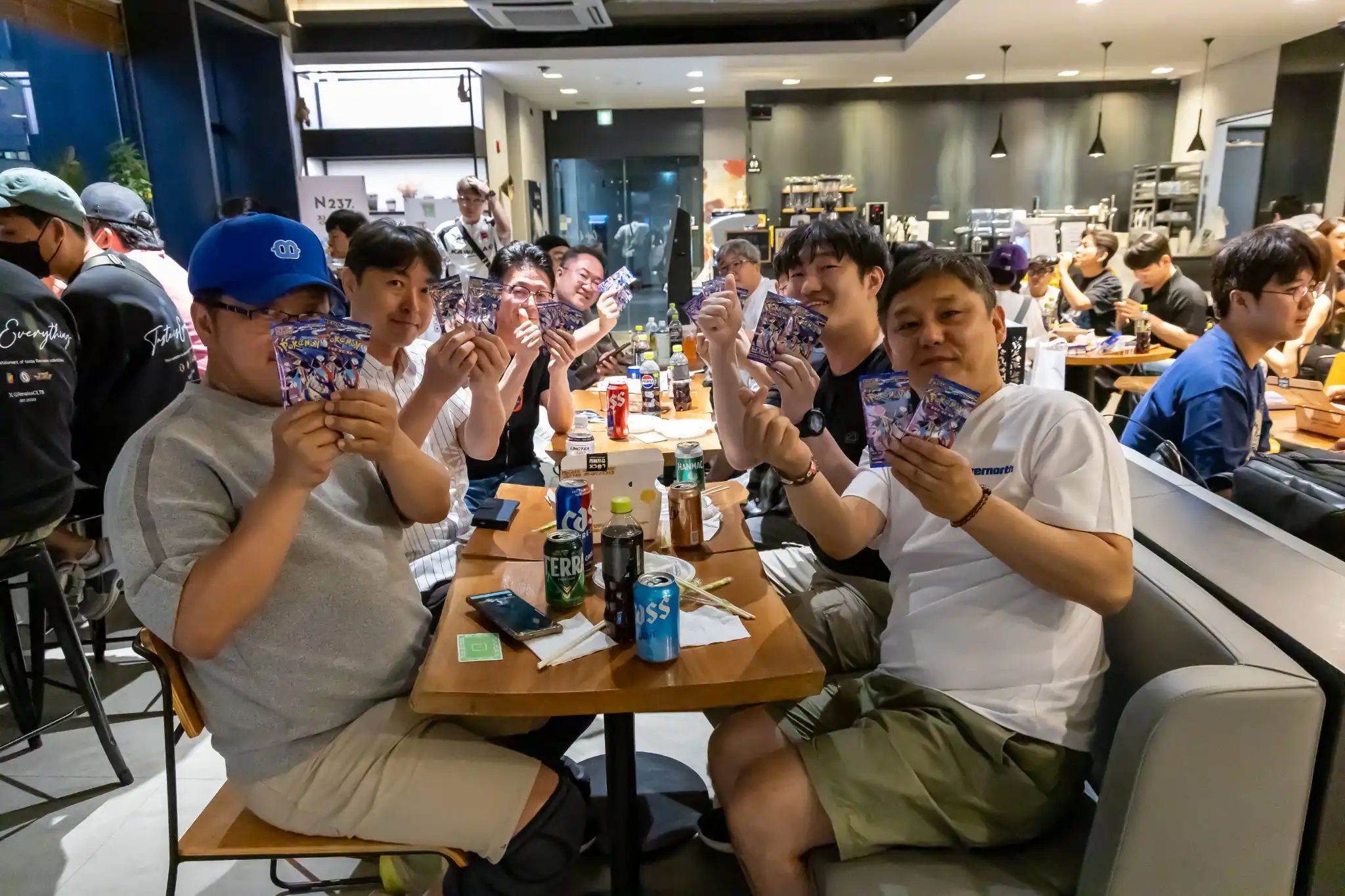
This is also where Renaiss's business and channels can support each other: a reusable fairness mechanism allows the platform to service scenes beyond simply card openings; engaging with a broader player base lets technology serve not just existing on-chain players. Fairness and transparency form the foundation of trust, while sustained discussions and community connections around cards allow this trust to enter everyday usage. The key to long-term competition is not just to keep more transactions on-chain but also to make business land in more and larger external scenarios, encouraging more genuine players to participate.
However, whether in the expansion of business or channels, the ultimate return must be to a verifiable fairness mechanism. Renaiss Fair breaks down the process of opening packs into three independently verifiable stages: card packs are assembled according to public algorithms from rated card inventories, the card pack composition's Merkle root is sealed on-chain, and any addition, deletion, or replacement would result in a mismatch in the root value. Upon payment completion, the system uses on-chain data as a seed and generates random numbers through a verifiable random extraction mechanism (ECVRF), then maps them to specific cards according to public rules. Users can verify an opening by simply opening the transaction hash corresponding to the opening record, or copying the hash to the Renaiss Fair's "Verify a Rip" page for inquiries; the page will replay the extraction process locally in the browser, verify the ECVRF proof, and directly display the specific card drawn, rather than just its rarity.
This complete open-source verifiable fairness mechanism not only embodies Renaiss's long-termism but also will reflect increasing value in Renaiss's future development. Feel free to visit the official Renaiss Fair page for a firsthand experience.
Click here to learn about job openings at Rhythm BlockBeats
Welcome to join the official Rhythm BlockBeats community:
Telegram subscription group: https://t.me/theblockbeats
Telegram discussion group: https://t.me/BlockBeats_App
Official Twitter account: https://twitter.com/BlockBeatsAsia
免责声明:本文章仅代表作者个人观点,不代表本平台的立场和观点。本文章仅供信息分享,不构成对任何人的任何投资建议。用户与作者之间的任何争议,与本平台无关。如网页中刊载的文章或图片涉及侵权,请提供相关的权利证明和身份证明发送邮件到[email protected],本平台相关工作人员将会进行核查。