A piece of clothing is made from materials purchased in China, with various processes split between Vietnam and Indonesia, and finally sold to Europe and America. Suppose the trading company taking the order is based in Singapore: the European and American clients pay a sum for the goods, but this company has several accounts in different countries that need to be settled.
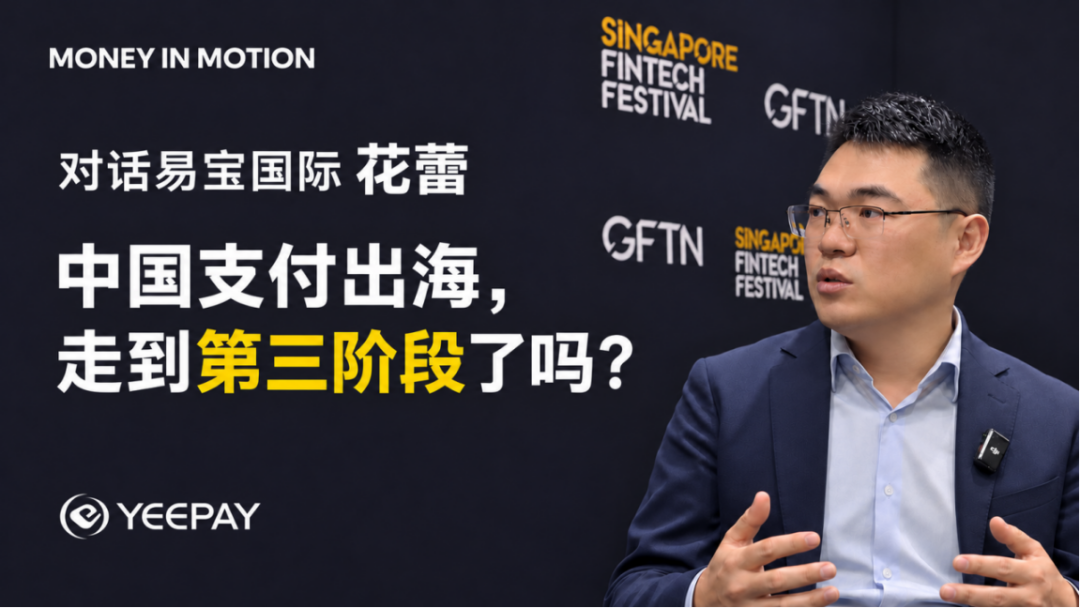
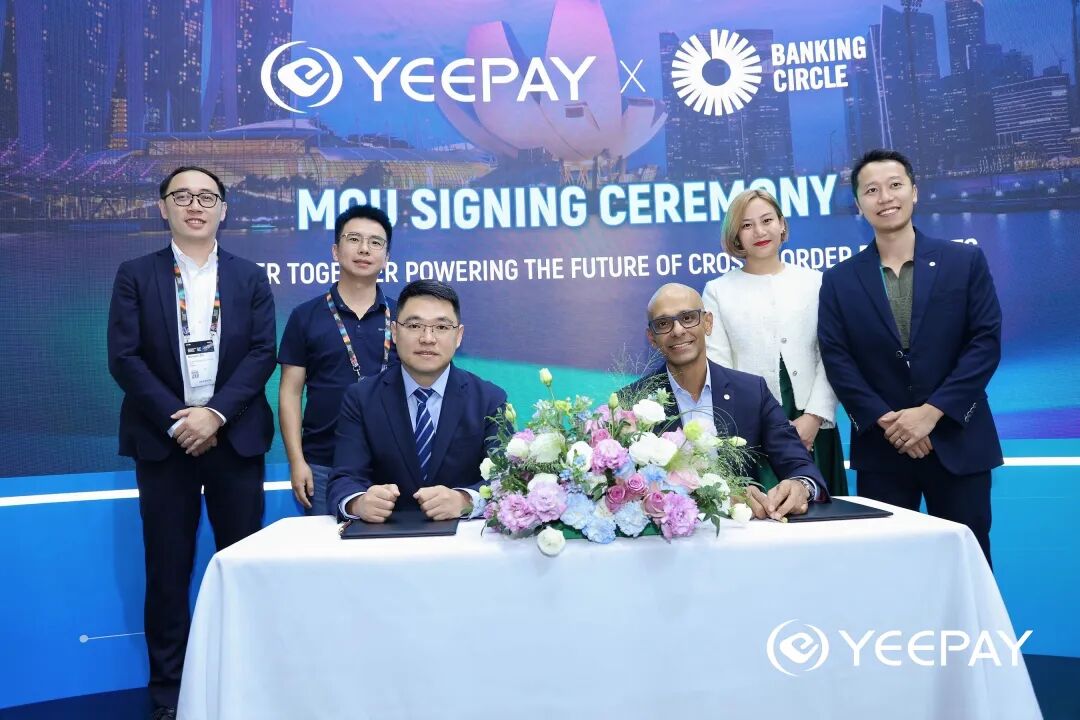
At the Singapore Fintech Festival, the Senior Vice President of YeePay, and CEO of YeePay Global Terry Hua provided an example of this clothing factory. "Few companies can build a global funding platform like BYD does." Even a typical clothing factory has to find a way to pay each supplier.
Terry worked in state-owned enterprises and strategic consulting firms before entering the payment industry in 2013 and joined YeePay in 2024 to oversee YeePay Global's global operations.
In this episode of Money in Motion, we want to discuss a question with him. Chinese payment companies first helped foreign trade enterprises with payments, then followed e-commerce to serve global buyers. Now that Chinese companies are setting up factories and sourcing overseas, have their payment companies also reached a third stage?

1. Why does a clothing factory need a global funding platform?
When the sales funds arrive in Singapore, how is the next payment made? The trading company needs to pay Chinese suppliers for raw materials and also pay processing fees to factories in Vietnam and Indonesia. Collection and payment involve different parties, and the currencies used in different places also vary.
Terry said that large enterprises can build their own systems to manage this money, but it's challenging for typical clothing factories to set up a dedicated funding platform.
What YeePay Global wants to do is turn these capabilities into standardized products, providing businesses with a "virtual funding platform" to use according to their business layout.
From the perspective of Chinese suppliers, the problem is more direct: there are customers overseas buying my goods, how do I collect the money?
Terry mentioned that many Chinese sellers find it difficult to open financial accounts overseas and first want to find a familiar company to help with payment collection. Costs, security, and ease of operation are all considerations. There is also the coverage: if one company services two countries, they have to find another for the other three, with sellers needing to figure out who to collect money from whenever they enter a new market.
However, when dealing in minor currencies, customers' questions tend to be more urgent. Once they receive local currency, its value may drop. Can it quickly be converted to USD or RMB? How long will it take for the funds to reach offshore accounts? If there are foreign exchange restrictions or tax requirements locally, can these aspects be managed together?
This is also a trade-off that YeePay Global faces when selecting markets. Clients hope that one service provider can cover enough countries, but they need to answer all of these questions, requiring a deep understanding of the local situation each time they go to a new place.
Terry summarizes this trade-off in a sentence: “Major currencies are not falling behind, while minor currencies have their uniqueness.”
2. Why do we enter the Nigerian market and seek licenses in Europe?
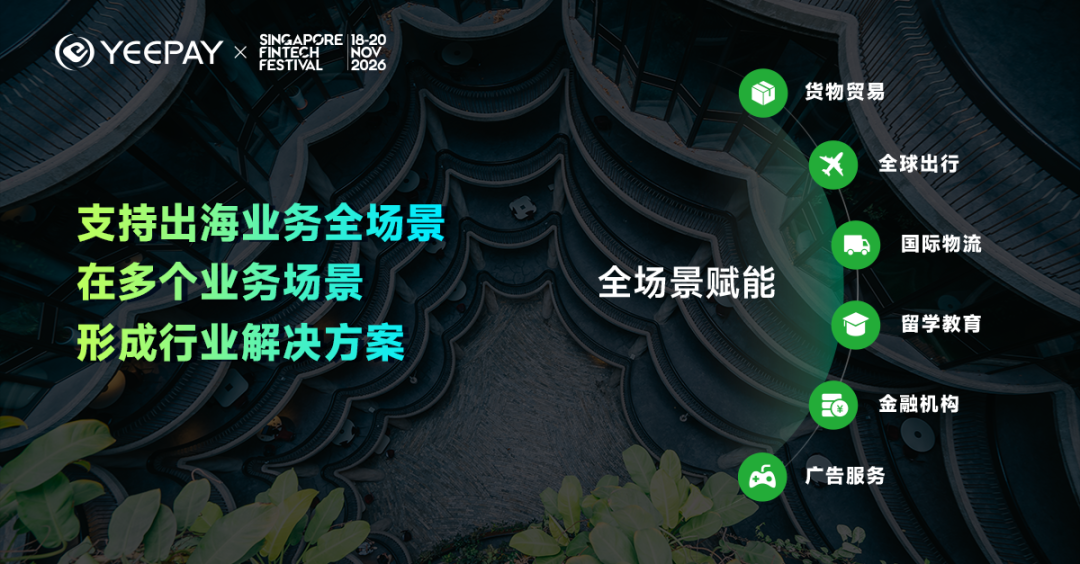
YeePay serves over 6.5 million enterprises, with business in digital travel, retail consumption, cross-border e-commerce, and foreign trade. Its payment service network covers more than 200 countries and regions worldwide, offering global payments and foreign exchange services in over 100 currencies.
With so many markets, which ones are worth investing in with local teams and making their unique features? The European and American markets are large, and Terry hopes that YeePay Global can capture a certain share there. For Latin America, Africa, and some Middle Eastern countries, he provided specific targets: when clients mention these countries or local services, one of the first two service providers they think of should be YeePay Global.
We asked about Nigeria. In 2025, YeePay Global signed a cooperation agreement for a local project during an Africa-themed conference in Changsha. With so many countries in Africa, why start here?
Terry responded: “If you want to go offshore, you must first step on that land. If you don’t stand on that land, it isn't considered going offshore.”
In his recollection, once he was on-site, the people he met and the markets he saw were quite different from his pre-departure expectations. The team investigated: were there peers entering the market? Was the financial infrastructure sound? What about telecommunications infrastructure? Among the markets they examined, Nigeria is populous, with relatively sound infrastructure and regulatory policies that seem open to them. These conditions combined led the team to choose Nigeria.
However, if we extrapolate based on YeePay Global's license map, it would likely lead to different answers on where they aim to enter the market. Terry distinctly differentiates these two aspects: “Acquiring licenses and deepening in local markets operates on two different logics.”
When deciding where to acquire a license, he first considers the entry barrier and the currency. In some places, the application threshold is already high. If they do not start now, it might become more challenging in a few years. Some markets have relatively open financial systems, and local currencies circulate widely internationally. The EU, the UK, and Singapore are all within these considerations.
When deciding where to deepen his presence, he is more concerned about where clients' trades are moving. Seen this way, Mexico, Singapore, and other ASEAN markets are worth investing in because they are picking up new trade or production links. These two logics can also intersect in the same place.
Terry mentioned a practical difference: in significant trade hubs, collaborating with financial institutions as a local licensed entity yields different services compared to negotiations through offshore entities.
Looking at it from the other side, it's easier to understand why YeePay Global offers Pay to China. For an overseas entity, China is precisely the market that needs someone to guide it through the local processes.
3. Pay to China: Buyers coming from abroad face the seller's processes
Last year, while we were developing payment services, we also used YeePay Global's API. During a discussion about Pay to China, what I wanted to know was about the steps behind the interface: when an overseas business needs to pay a Chinese supplier for procurement, at which step is it most likely to encounter difficulties?
Terry's explanation starts by examining whose perspective the process is designed from. Many domestic rules and product processes start from the point of view of Chinese sellers, like how sellers declare and where to submit information. But overseas purchasers come in from the other end of the transaction. They have an invoice to pay but may not be familiar with the set of rules that Chinese sellers are used to. For them, the obstacles can be as minor as “Which entry should I go through?” or “Is there an English version of this page?”
Terry noted: “For every flow of funds, you must communicate with regulatory authorities and cooperating banks, and you also need to declare.” He likened this process to a snowball. Initially, the supported scenarios are limited. As each one is developed, more merchants and institutions can be accommodated by the product. External partners connect to an API, while the scenarios behind it have been gradually accumulated over the years.
At this point, I thought of the changes in outbound and inbound tourism. A decade ago, discussions in the payment industry primarily revolved around how Chinese people spend money overseas. Now, an increasing number of overseas companies are coming to China for procurement, and more Chinese companies are opening factories abroad. Despite their different origins, these two types of companies may seek to accomplish the same task: paying Chinese suppliers from overseas.
If that payment is in Naira, the next question is who will handle the exchange rate fluctuations before the RMB arrives?
4. Smart currency exchange: Why don't customers want to wait even two hours?
When discussing YeePay Global's intelligent FX product, we asked a direct question. The foreign exchange business can be profitable if done well and can also incur significant losses if mishandled. Have you experienced losses during your explorations?
“During the exploration process, everyone has definitely incurred losses.” Terry then discussed what "speed" means to clients. In the USD business, if a transaction is processed in two hours, clients might think that’s acceptable. But when it involves minor currencies with significant volatility, in the same two hours, the exchange rate may have changed several times. For merchants, this waiting period has a very specific cost: even if the amount received in local currency is the same, the final amount that can be converted back into USD or RMB may be less.
Hence, to improve timeliness, it requires a comprehensive operational adjustment. If handled according to the original inflow and outflow rules, merchants may suffer from currency losses; adjusting the rules would expose the service provider to new risks, necessitating alterations to risk control and compliance strategies. There are many mature derivatives and currency locking tools in the USD market, while options in the minor currency market are often limited. The team must evaluate which capabilities can be developed internally and which require exploration with local partners to offer products that provide locking effects.
We continued to ask: taking Nigeria as an example, local buyers use Naira, and the cost of obtaining USD is relatively high. What can a merchant really gain from you?
Terry first mentioned credit limits. When clients handle a payment, they need a channel with sufficient, continuous, and stable credit to process funds before quoting becomes meaningful. He stated that YeePay Global provides such channels locally and offers competitive pricing. For merchants concerned about exchange rate fluctuations, they can offer products similar to currency locking; for large clients with particularly unique transaction scenarios, the team will design solutions individually.
Stable channels must withstand scrutiny: if the usual route suddenly becomes unavailable, can the next payment still be processed as usual? This is something Terry particularly highlighted during discussions of next year's plans.
5. Doing payments locally requires backup channels and local understanding
Terry mentioned that in 2026, the team's focus will be on Latin America, Africa, the Middle East, and Southeast Asia. He noted that YeePay Global obtained licenses in Mexico, the UK, and the Netherlands that year. He anticipates that relevant licenses in Singapore and the UAE may gradually be established in 2027.
Regarding 2027, he mentioned two levels of goals. One is to continue expanding coverage; the other is to establish both primary and backup channels simultaneously in specific countries. With more channels, they can start discussing which path to choose based on clients and transaction scenarios to further refine smart routing.
So, what do Chinese payment companies have and need to supplement compared to European and American payment companies that have been globally oriented since their inception?
Terry believes that the Chinese market is large, and payment institutions have processed massive transactions; fierce competition has also led everyone to focus intensely on costs, efficiency, and user experience. These experiences can be taken abroad. The challenge lies in whether, upon entering another country, they are still willing to invest time to understand the habits that local users have developed.
He used a very regular example: “We think WeChat Pay is great, but they might be more accustomed to other payment methods.” Why do locals prefer to pay this way? Within their familiar processes, which steps still have room for improvement? He hopes the team will first ask these two questions before determining what to include in the product.
When discussing how to recruit the overseas team, a phrase used by YeePay to describe its corporate culture came up - “A group's romance.”
Terry stated that when recruiting, in addition to assessing professional capabilities, they also consider how well team members fit together and whether their values align. According to him, YeePay Global has teams across continents, with a focus on Latin America, Africa, and Europe. Team building typically occurs in two steps: first recruiting a group of Chinese employees and locals working in the area, and once this group has integrated well, they will continue to hire locally.
After discussing markets, licenses, channels, and teams, we posed a more straightforward question that could be answered with numbers: What about next year's performance goals? Should we double again?
“We have been doubling for several years now, so we are currently targeting a percentage of growth instead, as the base is already large.” Terry said the team aims to transform the company into a transactional service provider that can serve global clients in the long term, taking advantage of the changing trade landscape.
When setting goals, he looks at speed and acceleration as well. “If the speed is too fast, will it make me a speedster?” Establishing local channels and teams in more countries has its own pacing.
6. Helping McDonald's and Luckin Coffee with local life, he has redefined payment
When it comes to understanding merchants, Terry recalls his time working on Douyin's local life services.
When he left his previous payment company, YeePay invited him to join. Having experience in domestic payments, it was a new business seen during research that piqued his interest: Douyin planned to develop offline life services and compete with Meituan.
“At that time, Douyin's life services were still in their early stages, and they hadn't established the life service sector.” In Terry's view, at least part of this business was something he understood. When users purchase something online, they must verify in-store, and verifications are related to payments. So the team got involved. “We grew alongside it, also burning cash in the process.”
While providing services to McDonald's and Luckin Coffee, the team had to work on content and marketing and also do the client’s operational support. Previously familiar only with payment and verification from the background, Terry realized how much merchants needed to do to get customers through the door before collecting payment.
Once the local life business matured, he handed it to the operational team. When YeePay came to talk to him again, it was about going offshore. Early payment companies established channels around direct trade. Now clients are distributing production across multiple countries; while payables and receivables products may appear similar, the partners payment companies seek, the processes they establish, and the standards they follow are all changing.
“I originally came from a strategic background, so this is the direction I want to pursue.”
Conclusion | What do you say to yourself in the mirror?
As the interview was nearing its end, we asked Terry: after more than a decade in payments and now starting from scratch to build a cross-border network, do you also "draw dreams" for yourself?
“Absolutely.” He replied quickly. “I first give myself a beautiful vision, then say it to myself in front of the mirror every day. So much so that I am moved by it and fully believe in it without needing to memorize it. I can just say it fluently and then go on to inspire others.”
So, what do you say to yourself in the mirror? Can you share it?
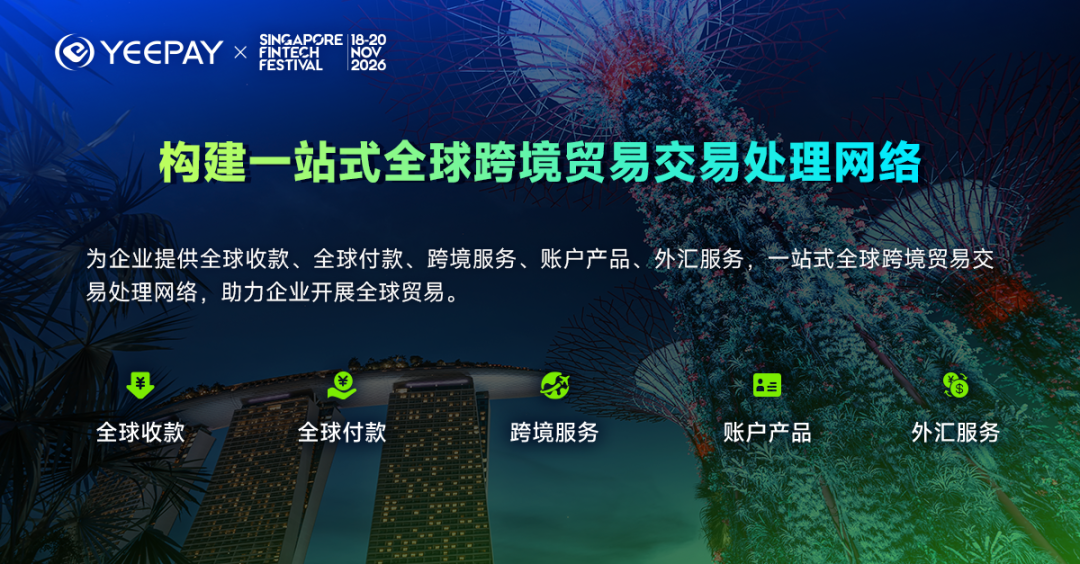
“Build a one-stop global cross-border trade transaction processing network.”
Terry said, starting from zero, he first had to clarify why he was doing this. Further down, he needed to determine what to achieve at each stage, “just like pacing in running.” As for how to do it, he needed to gather a group of people to accomplish it together.
As advice for outbound enterprises, he said pragmatically, “Don’t put all your eggs in one basket.” Markets can be tackled one by one, starting with areas where the team is familiar and leaving room for adjustments in the future.
Returning to the earlier clothing factory. The payment from European and American clients has reached Singapore, but the factory in Vietnam is still waiting for processing fees, and Chinese suppliers are waiting for raw material payments.
When we say that payments going offshore have reached a third stage, we refer specifically to this point: clients have conducted business there, and payment companies need to have the ability to ensure that each supplier receives their payments on time.
免责声明:本文章仅代表作者个人观点,不代表本平台的立场和观点。本文章仅供信息分享,不构成对任何人的任何投资建议。用户与作者之间的任何争议,与本平台无关。如网页中刊载的文章或图片涉及侵权,请提供相关的权利证明和身份证明发送邮件到[email protected],本平台相关工作人员将会进行核查。