The information flow is too fast, and in-depth analysis articles are easily drowned out by hot topics. The "Weekly Editor's Picks" column extracts these content with judgment value from the vast amount of information, helping you filter out the noise, leaving insights and inspiration.

Macroeconomic Situation
Hedge funds have completed a nearly panic-driven deleveraging, but mutual funds, retail investors, and ETF funds are still in the market, indicating that the market may be some distance from a true bottom. The real "slow money" has not yet sold.
So far, this is an AI bear market, not a bear market for the entire stock market, but this situation is about to change.
Apple is the last major stock that has not yet fallen. Safe-haven funds are flowing into consumer goods.
The hottest PCE data in three years, a 97% probability of rate hikes in December, and new tariffs on more than a dozen economies such as the EU suggest that the dollar has plenty of reasons to continue rising, while long-duration technology stocks have ample reasons to continue falling.
The final buyers will be leveraged retail investors.
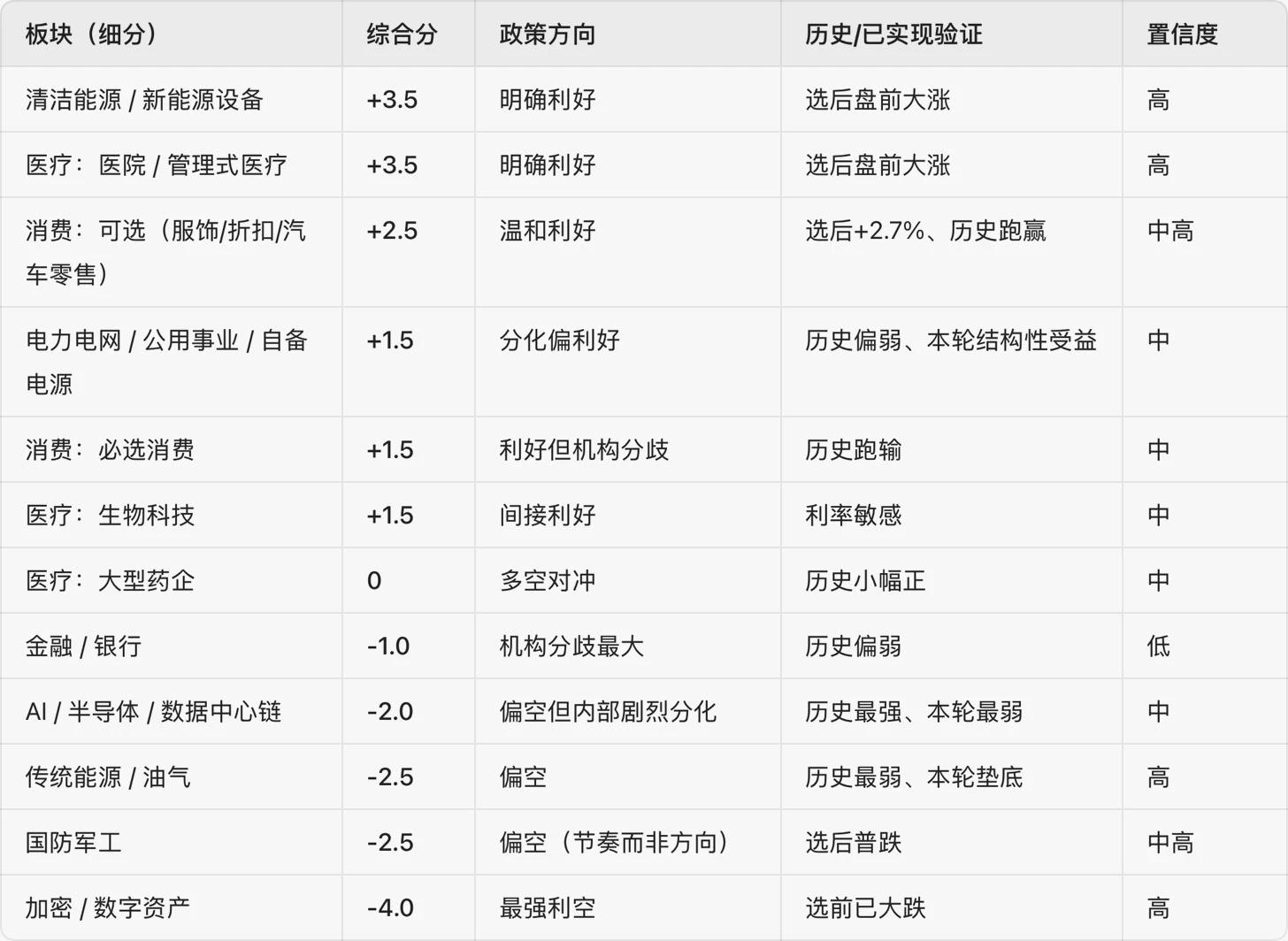
Countdown to the Democratic Party's administration, which sectors will benefit first?
Bitcoin, U.S. stocks, and gold, which will hit bottom first?
The cycle low of Bitcoin needs confirmation from price trends and cross-asset signals.
Even if the lows still appear roughly in a four-year rhythm, the duration of the next upward cycle may be shorter. Similarly, the on-chain "equilibrium price" of about $38,600 provides a reference for deep retracement; whether it can be reached still depends on whether the sell-off continues. If no new lows are established in the next 4 to 7 weeks, some shorts may shift in early 2027, creating conditions for a rebound in March to June.
The real changes that could bring recovery for Bitcoin would be a halt in interest rate hike expectations and subsequent policies being milder than what the market has already priced in.
Gold is still falling, and if it cannot stabilize, the adjustment of risk assets may drag beyond its original expected window. Even if gold stops falling first, tech stocks still face another test: whether the rebound can break previous highs, and whether investors are willing to continue paying current valuations for the expected returns of AI investments.
Investment and Entrepreneurship
BTC drops to $55,000, a generational buying opportunity?
The author predicts that a crisis in the AI industry will trigger the final bottom for BTC at some point in the coming year, followed by a trend reversal driven by U.S. credit expansion and monetary easing.
The research report provides a panoramic view of the current situation from five dimensions: time cycles, depth of retracement, capital dormancy, macro liquidity, and ETF holdings. Although this cycle has lasted 412 days and appears to be reaching its peak, from the 53% retracement rate and only fulfilling 2 bottom indicators, the market has yet to experience a complete washout as seen in previous bear markets that breaks the realized price ($53,205), and the market still faces severe tests ahead.
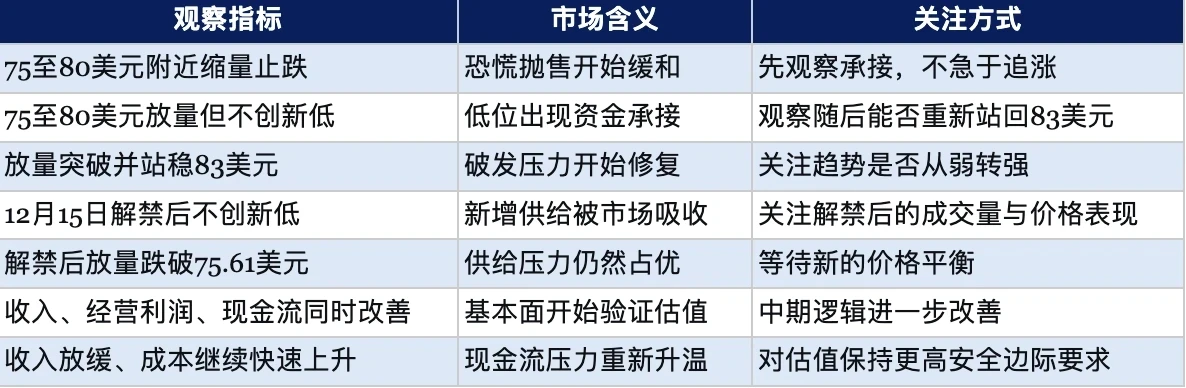
After ANT's 29% drop below the issue price, is $75 the bottom?
The first week after ANT's listing did not see a regular pullback of tech stocks, but a very intense IPO price discovery. $75.61 is now more suitable as a support test level rather than a so-called "absolute bottom."
Now ANT's biggest contradiction is that operational data is strong, but the market has begun to anticipate the capital and cash flow costs that will need to be borne in the coming years. ANT's financial reports cannot solely focus on revenue growth rates. What truly matters in the future is whether three things can improve simultaneously: whether revenue growth continues to cover computing costs, whether operating profit margins can stabilize, and whether operating cash flow can remain positive.
The trend of ANT in the coming months is likely not simply "fall first then rise," but instead constantly undergoing new supply tests.
SpaceX Space Data Center approved, Nvidia expected to return to $200?
The Federal Communications Commission (FCC), responsible for radio and satellite communication licenses, has officially approved SpaceX's space data center plan "Starmind." Officially dubbed the "first space data center satellite license in U.S. history," the plan aims to deploy up to 1 million satellites to build the space data center, using Nvidia's Vera Rubin NVL72 rack-mount system exclusively. Musk has clearly stated that SpaceX will exclusively use Nvidia because they believe Vera Rubin is currently the best AI architecture and have co-designed the satellite computing payload with Nvidia.
On Thanksgiving Day, SpaceX not only announced a stock gifting plan worth up to $22 billion targeting tens of millions of children in the U.S., but also brought Musk's earlier vision that "space computing could surpass ground computing" further into reality. More importantly, Nvidia's long-term orders are further guaranteed, making it a win-win situation.
Also recommended: "Review of Global Venture Capital in 2026: AI Absorbs 90% of Financing Increment, Traditional Funds Still Struggling to Exit".
Prediction Market
The American Anti-Corruption Data Collective (ACDC) released the fifth brief in the "Gambling on Democracy" series on November 23, analyzing the prediction market's performance in the 2026 U.S. midterm elections. It concluded that the accuracy of the prediction market in the elections was no different than that of predecessors, with new information approaching zero, at the cost of ordinary users' money flowing to a very few accounts. This report acknowledged that Kalshi, Polymarket, and Polymarket US predicted this midterm election quite accurately, but also questioned whether being that accurate was worth the money, and where that money ultimately ends up.
Ordinary users actually make money in the trading process, with the biggest losses occurring at settlement, because they did not sell losing contracts at high prices but held them all the way to expiration, ending up at zero.
The counterparties in prediction markets are market makers and traders taking orders; the platform collects transaction fees, and the losses from price misjudgments do not go into the platform’s pockets. It is valid to state both "the platform is the winner" and "the user loses," but they are not part of the same causal chain.
Policy and Stablecoins
If gold drops another 17%, USDT could really face a crisis
Tether had a cushion of $7.95 billion in September, which has shrunk to about $2.8 billion at current market prices. Among these, the drop in gold prices caused about $2.8 billion in losses and Bitcoin caused about $2.3 billion in losses. This is because Tether holds $16.3 billion in gold and only $6 billion in Bitcoin.
If Bitcoin maintains the current price, and gold drops to about $2,940 per ounce, the cushion will go to zero. This means gold needs to drop another 17% from its current price.
If we rely solely on Bitcoin's decline to breach the cushion, Bitcoin would need to drop 47% to around $32,100.
The above calculations assume that the $4.18 billion in stock assets held by Tether maintain their original value. If these stocks drop like gold mining stocks or Twenty One Capital, the cushion will further shrink to $1.2 billion to $1.9 billion, and gold may need to drop another 8% to 12% to breach it.
Tether's own real-time data currently shows a cushion of $5.47 billion. It appears that this number takes into account the impact of Bitcoin price declines but does not account for the impact of gold price declines.
If you hold USDT, redemptions are still proceeding normally.
Since September, $8.75 billion USDT has been redeemed, with the current trading price of USDT at $0.9985. What is truly concerning is the report that Tether plans to release next January, at which point its reserve coverage may fall below 100%.
Also recommended: "The Democratic Counterattack: Detailed Analysis of the Possibility of Overturning 36 Cryptocurrency Policies from the Trump Era".
CeFi & DeFi
The next stablecoin: nearly $300 billion potential market, 50 times the growth opportunity
Looking at tokenized stocks in 2026 may be similar to stablecoins that were not widely adopted in 2020; the market space is vast, and the various demands generated around it are likely to become an important part of both the cryptocurrency market and the global economy.
In the midst of the crash, small and medium-sized crypto treasuries are secretly selling coins
When a treasury company's stock price drops below the value of its held assets, its own crypto assets become the most easily accessible source of cash. This is the reality that follows the end of a model that relied on new financing and constant expansion of crypto asset holdings. By selling crypto assets to repurchase shares, the improvement effect on mNAV may not be as evident as it seems.
The next batch of sellers may be companies facing pressure from loan liquidations.
For investors, what truly deserves attention is the time lag between these trades and the company's public disclosures.
On-chain tracking still has its limitations, and the actual scale of sales may be larger.
Borrowing $77 million, did Sky's founder empty his own lending pool?
Sky's founder Rune repaid 3 million USDS to his lending pool, and within 24 seconds, that amount was withdrawn completely by depositors and arbitrage bots. After several South Korean cryptocurrency exchanges listed SKY and its stablecoin USDS as warning objects, Rune publicly apologized on platform X, admitting that his excessive borrowing was a significant reason why stUSDS users could not withdraw funds.
Currently, Rune still owes about 77 million USDS and plans to repay the debt by selling some SKY tokens to institutional investors. The market speculates that Rune's hefty borrowing is due to the failure of his personal venture (game studio Raw Power Games).
The co-founder of ABCDE Capital, Du Jun, has publicly expressed acquisition intentions.
From Curve to Sky, the story of DeFi founders using their tokens as collateral for large borrowings is being replayed. When market conditions are good, founders can obtain large amounts of cash without selling tokens; when conditions deteriorate, personal debts can turn into liquidity crises for entire protocols.
Airdrop Opportunities and Interaction Guide
Ethereum and Scaling
The new rules of EIP-8037 increase the fees for opening a new storage slot on-chain to about 5 times, as this data needs to be carried by all network nodes for a long time, posing a heavy burden. The new rules can make gas pricing closer to the actual workload of operations and control state inflation under the premise of continued gas limit increases.
The trouble is that many contracts already operating on-chain have hardcoded how much fees are needed for this step or rely on how much fee is left to determine whether the next step should be executed. Once fees rise, the originally sufficient amount may become inadequate, and judgments based on fees may also fail. Once contracts are deployed, they are difficult to modify, so developers need to assess how many contracts may fail.
Two paths, each will be delayed further.
Also recommended: "PQAI#0: Preparing Ethereum for a post-quantum, post-AI world."
This Week's Hotspots Recap
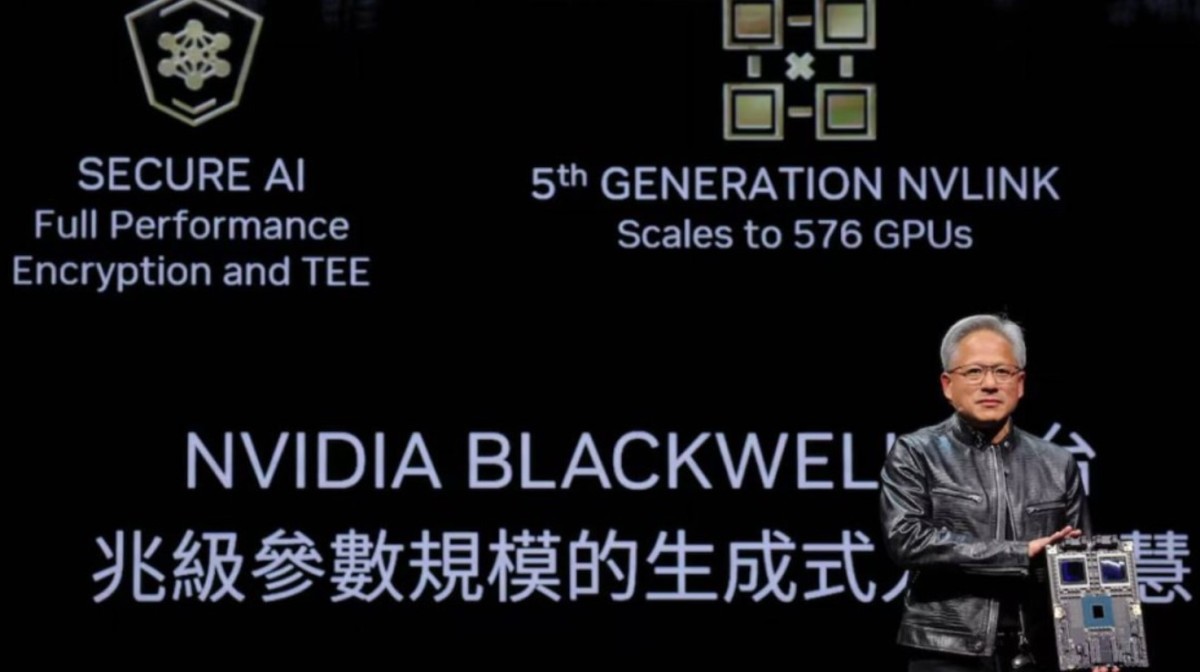
Jensen Huang returns to Nvidia, resuming his positions as President, CEO, and board member;
Related reads: "Nvidia's market value surged by $950 billion overnight, who knew about Jensen Huang's return in advance?","Trump reveals behind-the-scenes of Jensen Huang's return: I convinced the Nvidia board","Jensen Huang's "return of the king", who is happy and who is worried?","Jensen Huang is not Nvidia's "miracle drug", these six hidden dangers are brewing","Jensen Huang is back, and 2018 is back too","Old Huang's return: but the previous Nvidia is hard to come back".
Policy and Macro Market
The U.S. plans to impose new tariffs on 14 trading partners, including China;
The White House plans to reduce the use of special government employee status, involving Musk and former crypto affairs chief David Sacks;
The U.S. Strategic Bitcoin Reserve Act aims to prohibit the government from selling BTC for at least 20 years;
The Korean "Basic Law on Digital Assets" government draft has been released, requiring exchanges to compensate for hacking incidents;
The Nasdaq 100 index is on the brink of a bear market, as the decline in AI trading has led to a massive sell-off of tech stocks;
The U.S. stock market sell-off may intensify next week, with Goldman Sachs tracking a Bitcoin-sensitive stock portfolio that has already fallen 11%;
Viewpoints and Voices
JPMorgan: Recent market corrections are primarily driven by the deleveraging of AI trades;
Bloomberg: BTC's loyal investors have seen their enthusiasm wane due to market crashes, with funds shifting towards AI stocks and prediction markets;
Billionaire Bill Ackman warns of the risk of over-tightening by the Federal Reserve, stating that continued interest rate hikes may trigger a recession in the U.S.;
Save the Nasdaq! "Big Short" Burry goes long: short positions nearly cleared, with a quarter of cash reserved for bottom fishing;
Elon Musk: AI computing infrastructure faces significant funding pressure, and cash shortages in the industry may be severe next year;
Arthur Hayes: The day the AI bubble bursts is when the crypto super bull market ignites;
Institutions, Big Companies, and Leading Projects
Anthropic's cash reserves have surpassed the combined total of Alphabet, Amazon, SpaceX, and Apple;
Musk proposes a long-term vision for SpaceX: in the future, its market value could reach a million times the global economy;
SpaceX announces that it will grant 1 newly issued Class A common stock to every activated Trump Account (Trump Children Investment Account); Musk later stated that he would match that number in donations;
Pump.fun will charge extra fees on the first block transactions of newly issued tokens (interpretation);
PolyMarket launches a new AI computing market;
Data
BTC briefly dropped to $55,500, creating a new low in 27 months;
Security
More than $600 million of stolen Binance assets have been transferred via THORChain, with an additional $342 million moved through mixing services (criticism of THORChain's "double standard");
Chainflip was hacked for $12 million;
Ansem's associated wallet sold off large amounts of the Meme coin named after itself, ANSEM;
Bitcoin hardware wallet COLDCARD released a report on security incidents...
Attached is the series "Weekly Editor's Picks." See you next time!
免责声明:本文章仅代表作者个人观点,不代表本平台的立场和观点。本文章仅供信息分享,不构成对任何人的任何投资建议。用户与作者之间的任何争议,与本平台无关。如网页中刊载的文章或图片涉及侵权,请提供相关的权利证明和身份证明发送邮件到[email protected],本平台相关工作人员将会进行核查。