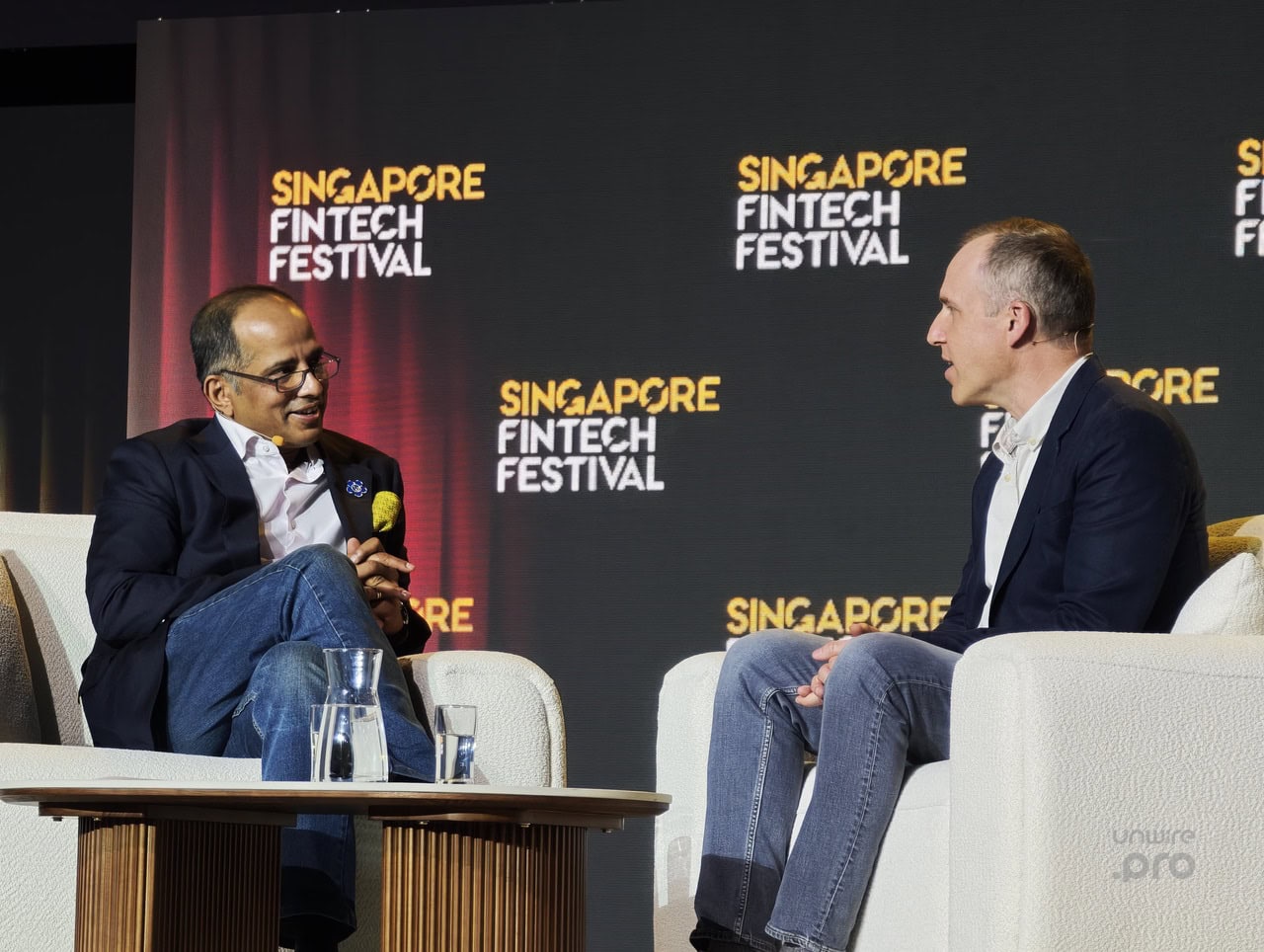
Bret Taylor, the Chairman of OpenAI and co-founder and CEO of the AI agency platform Sierra, attended the Singapore FinTech Festival, discussing practical AI transformation in the banking industry with Sopnendu Mohanty, the CEO of the Global FinTech Network (GFTN). Reporters from unwire.pro were present and gained valuable insights. Bret Taylor stated outright that AI will not automatically make banks more profitable, as all competitors can access the same technology, and the market only offers a brief first-mover advantage. With AI digitalizing non-digital channels such as phone hotlines for the first time, he expects banks will need to restructure their operational models within the next 4 to 5 years; otherwise, they may lose competitiveness due to excessively high service costs. The financial technology analysis program "The End of Analog Banking" also pointed out that banks' past profitability was heavily reliant on customer inertia; after software breaks this inertia, banks must maintain the last line of risk control between humans and machines.
Customer Inertia Dividend Ineffective AI Is Not a Panacea for Bank Profitability
While the banking industry recorded record profits last year, market valuations have plummeted by more than two-thirds. "The End of Analog Banking" noted that investors have seen through the fact that bank profits stem from customer inertia, which software does not exhibit. McKinsey estimates that up to $23 trillion of global consumer deposits are sitting in zero-interest accounts.
This aligns with Bret Taylor's economic judgement. He explicitly stated in discussion that banks and competitors can use the same AI models in a competitive market, and simply cutting costs through automation will not raise industry profit margins. He believes AI is a fundamental threshold for maintaining competitiveness, rather than an additional advantage, akin to how companies must establish official websites. If banks fail to leverage AI to reduce operational costs, they will be forced to raise prices or bear service costs higher than their competitors in the coming 4 to 5 years, ultimately losing competitiveness. He also mentioned that the focus of AI applications has shifted from cost-saving automation to driving significant revenue growth (top-line revenue growth).
Stop Asking How Much AI Budget By Breaking Down Transformation Lists into Five Core Business Areas
In response to inquiries from small and medium-sized banks about the minimum budget for deploying AI, Bret Taylor believes this is fundamentally the wrong question. He pointed out that simply distributing ChatGPT to every employee can only enhance individual efficiency, not drive the bank's digital transformation. If management sets a budget without clear business goals, the institution will succumb to numerous proof of concepts, ultimately failing to deliver any customer results. He described this phenomenon as "AI tourism," akin to junk food in the AI realm.
He suggests that bank CEOs and boards plan from first principles top-down, first clarifying what kind of institution the bank wants to become after AI becomes widespread, and then examining the impacts of emerging AI services on customer acquisition, product exploration, and pricing. If a bank receives 10 million customer service calls in a year and management plans to delegate 50% of those to AI, they can then work backward to determine the necessary budget and system access permissions. Regional regulatory requirements, customer lifetime value (LTV), and segmentation of retail, commercial, and investment banking customer groups will also become clearer, allowing for the listing of a "digital transformation receipt" and the establishment of accountability and implementation plans.
"The End of Analog Banking" applies this checklist thinking, categorizing hundreds of products from large banks into five fundamental actions: See, Move, Borrow, Grow, and Protect. In the past, banks had to comprehensively "See" customer data, often necessitating a renewal of underlying frameworks. Bret Taylor pointed out that this is a major misconception because modern AI has reasoning capabilities; even if banks have a legacy mainframe or 12 disparate data systems, AI agents can still process complex data across systems like frontline staff, without needing to start from scratch.
He revealed that Sierra has collaborated with eight systemically important banks globally, including building a digital gateway for Santander in Spain, and that fintech company Fiserv and Singapore telecom Singtel completed end-to-end activation in under two months. Singtel replaced traditional phone IVR with AI agents, autonomously resolving 70% of phone inquiries. Bret Taylor described AI as having digitalized the "last non-digital channel," the phone hotline, for the first time. Regarding the "Borrow" and "Grow" aspects, American retail mortgage company Rocket Mortgage uses AI agents to collect upfront income, property, asset, and credit information, which is then followed up by specialists; the asset management company Vanguard allows customers to request tax forms via AI, contacting financial advisors only when necessary. The "Move" aspect of funding not addressed in the discussion indicates that the show anticipates future payment infrastructure heading towards machine-driven, real-time, 24/7, and tokenized development.
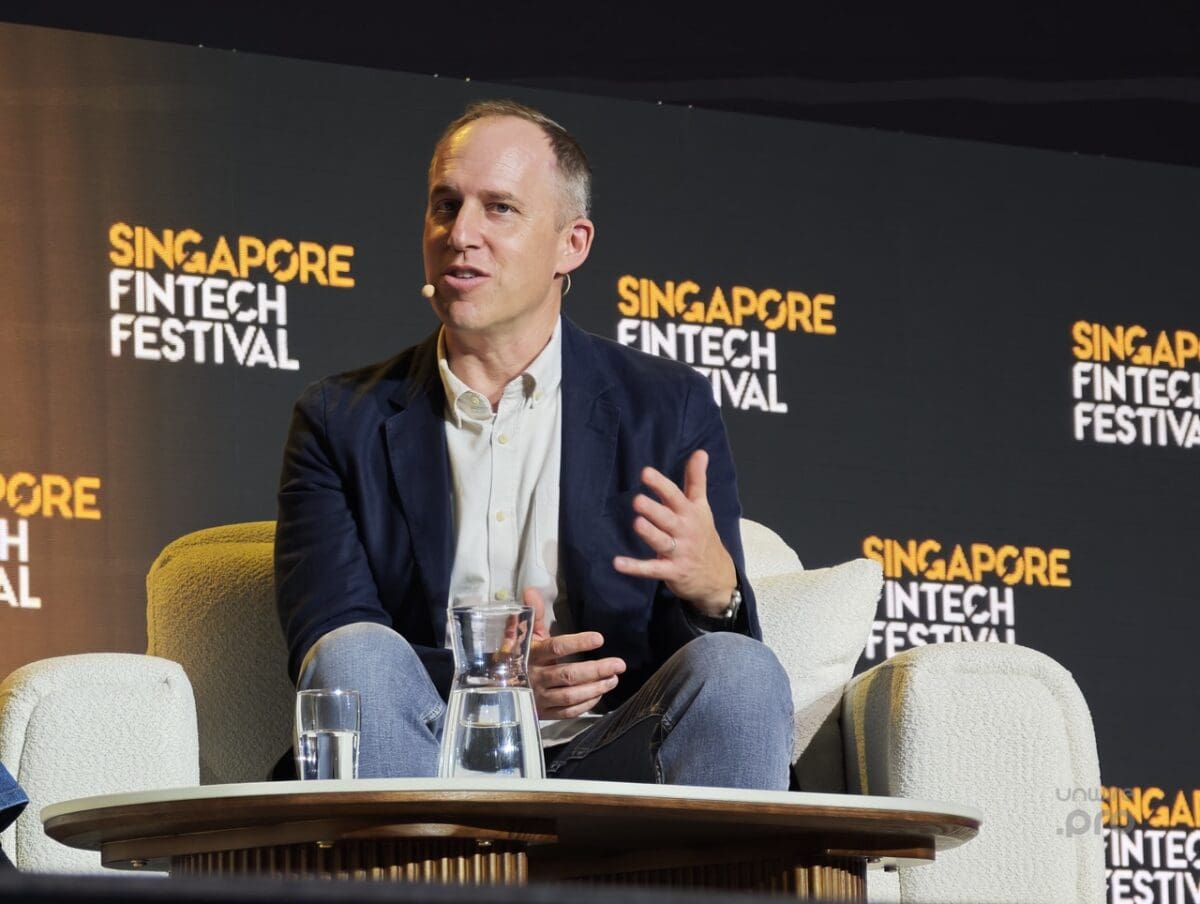
Farewell to the "BC" Era of Banks Evolving into the "Last Control Wall" Between Humans and Machines
Simultaneously, banks face the triple constraints of technological complexity, large operations, and stringent regulations, positioning themselves at the center of the gap between AI model capabilities and practical applications. Sopnendu Mohanty pointed out the compliance difficulties in the discussion: whether regarding financial advice or customer service, banks will not receive penalties waivers if errors occur due to AI.
Bret Taylor jokingly referred to four years ago as the "dark ages," dividing computer history into "BC (Before ChatGPT)" and after. Before ChatGPT’s emergence, computers were merely tools that rapidly followed rules. Today, AI is nearly superintelligent but possesses "non-deterministic" traits, potentially answering incorrectly once in every 100 or 1,000 dialogues, which poses significant headaches for traditional banking compliance departments.
He noted that adopting AI will not absolve institutions of responsibility towards customers, but suggested that boards and risk committees should not confront non-determinism head-on; they should continue using existing risk control frameworks. Banks have always assumed that incidents will occur and have established monitoring mechanisms to detect, remedy, and reduce future risks, complementing human intervention to ensure the same logic applies to AI, thereby breaking the compliance deadlock. "The End of Analog Banking" believes that as more everyday tasks are handed over to robots, banks will not vanish; rather, they will become the "final control wall" in the area of "protection." Banks will be the last regulated institutions standing between customer funds and machine errors, with the authority to say "no."
Freeing from the Shadow of Cloud Cash Burn Software Shifts Towards Outcome-Based Pricing and Outsourced CYA
Chief Financial Officers (CFOs) are equally cautious about the ROI of AI investments. Sopnendu Mohanty bluntly stated that technology companies have repeatedly promised in the past 30 years that new technologies would reduce costs, yet after banks migrated systems to the cloud, bills have kept soaring, causing financial executives to worry that AI may turn into a never-ending expense black hole consuming tokens.
Bret Taylor believes that AI agents, capable of completing tasks autonomously, are triggering the third transformation in the software industry’s business model, evolving from 1990s perpetual licensing and cloud-based SaaS subscriptions to "outcomes-based pricing." KYC/AML (Know Your Customer/Anti-Money Laundering), new customer onboarding, mortgage approvals, or handling customer service inquiries are all quantifiable results. American fintech company Figure, a Sierra customer, only pays when AI successfully approves a home equity line of credit (HELOC); if tasks are not completed, companies do not need to pay for the tokens consumed.
He quoted a famous advertising saying, "I know that 50% of the promotional budget is wasted; I just don’t know which 50%," pointing out that the closer a business model aligns with quantifiable results understandable to CFOs, the more willing companies are to allocate resources. He anticipates that most of the software industry will shift towards outcomes-based pricing in the next 4 to 5 years, akin to how the digital advertising industry evolved from charging for impressions to charging for clicks and conversion rates, driven by Google AdWords.
Discussing expensive core banking systems, Bret Taylor pointed out that companies today often spend $1 to purchase software, alongside an additional $5 on system implementation. He estimates that as we enter the era of AI agents, system migration and portability will become much easier than before, with intensified competition in the software market increasing vendor accountability, benefiting both traditional banks and fintech companies. He predicts that as global software vendors can use superintelligence to write code, existing functionalities will inevitably converge, leading banks to consider the division of development costs and future roadmaps when choosing partners, essentially deciding which horse to hitch their wagons to.
Some companies are considering developing internal tools through AI (vibe-coding), and Bret Taylor presented a realistic hypothesis: if outsourcing an AI financial auditing agent costs $1 million, and the CTO proposes developing it internally at $500,000, the vast majority of CFOs will still choose to spend $1 million on outsourcing to "cover your ass." He candidly stated that no one wants to explain to the audit committee after a mishap with a self-built auditing tool that they initially aimed to save $500,000.
At the Foot of the AGI Mountain, Compute Power and Tokens Are Economic Energy
When asked whether core banking systems will eventually be completely eliminated by AI, Bret Taylor admitted this is his first experience with Artificial General Intelligence (AGI), making it difficult to predict the future at this stage. At the close of the discussion, he further stated that the industry is standing "on the foothills of AGI."
He expressed concern about the current bottleneck in AI infrastructure, noting the complexity of the compute power supply chain, alongside certain suppliers dominating the market, as well as insufficient data centers and power supply, causing supply shortages in nearly every segment. This directly drives up AI costs and limits the production of tokens suitable for AGI. He compared compute power to energy, indicating that energy supply is highly correlated with local GDP growth, anticipating that AI and token supply will play a similar role in the future. He believes countries should regard data centers and compute power production just as they plan for energy infrastructure, accelerating supply expansion to drive economic growth.
Setting Aside Business Positions, Banks Have No Room for Delay
As both the Chairman of OpenAI and CEO of Sierra, Bret Taylor advocated for outcome-based pricing, not needing to rewrite old systems, and discouraging self-development while tightly aligning with Sierra’s own business model, which may lead decision-makers in companies to discount his pitch. Putting aside any sales component, his warnings remain sharp: as AI agents swiftly eliminate customer inertia, if management continues to expend resources on the fruitless "AI tourism," they will ultimately lose pricing power and customer base in the future.
This article is reproduced from unwire.pro, with copyright belonging to the original author and original media.
免责声明:本文章仅代表作者个人观点,不代表本平台的立场和观点。本文章仅供信息分享,不构成对任何人的任何投资建议。用户与作者之间的任何争议,与本平台无关。如网页中刊载的文章或图片涉及侵权,请提供相关的权利证明和身份证明发送邮件到[email protected],本平台相关工作人员将会进行核查。