The global AI model competition has entered the "no man's land," and the gap between China and the United States is expected to continue to narrow in the next two years.
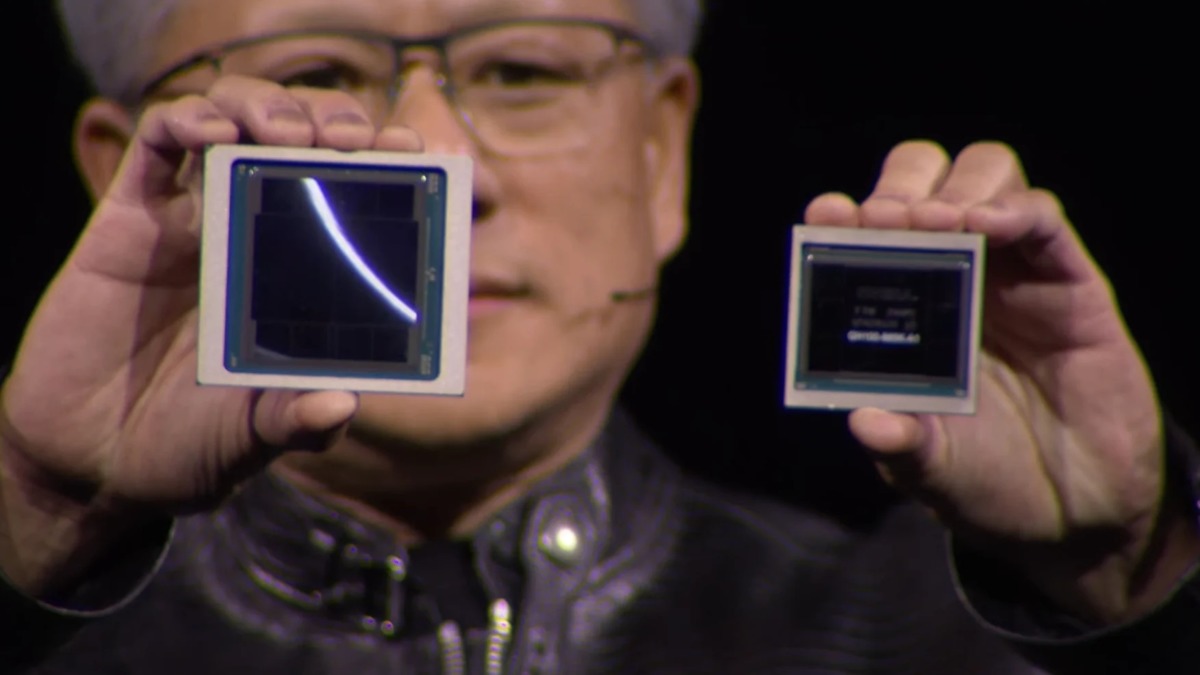
The performance of domestic chips is improving, and Birun Technology expects that the next generation of products can match or even surpass Nvidia's H200.
The computational power bottleneck is driving the development of the "light in and electricity out" trend, and Horizon Robotics is actively expanding into the autonomous driving market.
Zhipu's Xiao Lei: Stacking parameters is approaching the limits of model competition, shifting to "no man's land."
Birun Technology's Li Yanlin: The performance of the new generation of domestic chips can match or even surpass the H200.
Xizhi Technology's Zhang Hong: The "light in and electricity out" trend is expected to have 30% of computing center chips involving optical technology within 5 years.
Horizon Robotics' Wang Lei: Next year, AD chips are likely to surpass Nvidia's to establish a new curve in embodied intelligence.
Xiao Lei, secretary of the board at Zhipu, stated at the Futu Blue Ocean Capital Summit that the cutting-edge technology roadmap for large AI models has not yet converged, and coupled with the parameter expansion nearing physical boundaries such as computational power, electricity, and data walls, global competition has entered the "no man's land." He estimates that within the next 24 months, the competitive gap between China and the U.S. models will narrow, and due to China’s large pool of engineers and advantages in vertically segmented scenarios, domestic models are even expected to surpass overseas models in actual expert workflow experiences.
He believes that the current technological paradigms in cutting-edge model competition have not converged to one or two consensus points; whether it is attention mechanisms, recurrent architectures, deep reasoning, or data formulations, synthetic data, and post-training environments, the points available for expansion are growing. Overseas manufacturers are currently primarily expanding in peak computational power and base parameter size, while domestic model companies, due to limited boundary conditions, have shifted in the past year to horizontal expansion in inference effective depth, training environments, data, and engineering aspects. It is expected that the industry competitive window will remain open for the next 3 to 5 years.
Xiao Lei stated that merely stacking parameters is nearing physical limits; for instance, the U.S. faces limitations in data center equivalency and electricity costs, while China is dealing with the "data wall" issue. If the general internet data is only 30T, it is difficult to train an 8T parameter model with a ratio of more than 20 to 1. When each expansion direction reaches physical boundaries, the industry will move towards a "no man's land" beyond programming (Coding) into more complex environments.
In the competition within "no man's land," the key lies in whether it is possible to continuously and stably validate the reward function in complex environments in bulk, thereby defining task delivery standards. Xiao Lei pointed out that environmental data will become the core of the next stage; through post-training reinforcement learning, it enables models to realize an end-to-end closed loop within expert workflows, improving performance from just passing the passing line to above 90 points.
Birun Technology's senior vice president and investment management head Li Yanlin stated that Nvidia's H20 chip has been effectively replaced by domestic chips, and there is currently discussion in the market about whether the H200 will be impacted. She pointed out that the industry has already seen the emergence of a new generation of domestic chips that can match or even exceed the H200. Referring to Nvidia's timeline from product launch to customer mass production delivery, which takes about 9 months, she expects that by next summer, domestic chips will complete delivery and shift from the "just good" phase to the "actually useful" stage, after which related discussions will cease to exist.
She mentioned that in the past, the actual operational performance of domestically produced chips had considerable discounts from design parameters, but now many products' design parameters have matched or exceeded the H200, and the actual measured performance can truly meet design targets, reflecting significant progress in both chip design and supply chain.
Secondly, the software ecosystem's efficiency in adapting to domestic models has significantly improved. Li Yanlin described that chip architecture determines peak computational power, while the software ecosystem determines whether performance can be utilized. In the past, adapting domestic chips with models often required hundreds of engineers spending months, but with programming moving towards agentification and modeling, similar scenarios now only require about 20 engineers for optimization. She believes that domestic chips are transitioning from past compliance or rigid replacement indicators to being practically usable and user-friendly.
Regarding the supply chain, she noted that Birun Technology has been advancing the domestic supply chain as early as 2023 and has currently established close relationships with domestic partners in core areas such as wafers, packaging and substrates, expecting these advantages to gradually reflect in future products and revenues.
Xizhi Technology's CFO Zhang Hong stated that as the "light in and electricity out" trend advances, it is expected that about 30% of the chips in newly built computing centers in the next 5 years will be related to optical technology. He pointed out that optical computing is not meant to replace traditional electrical computation at this stage but rather serve as a complementary solution to address the bottlenecks faced by current computing centers.
Zhang Hong pointed out that compared to traditional electrical technology, optics have inherent advantages in data transmission, bandwidth, and power consumption and do not rely on the most advanced semiconductor manufacturing processes. The industry is currently actively seeking technological and practical breakthroughs in the optical field to help alleviate the hardware constraints faced by computing centers.
Horizon Robotics' CFO Wang Lei stated that the company has over a 50% market share in China's basic assisted driving market, and high-end autonomous driving (AD) ranked second in the first half of this year, with a gap of less than 10 percentage points from the first-ranked Nvidia, expecting to leap to the first position in the AD chip field next year.
Wang Lei pointed out that as the domestic basic intelligent driving market share exceeds half, the company will seek growth through product upgrades and overseas expansion. Horizon is also promoting robotics and embodied intelligence as a "second growth curve." Wang Lei stated that the "DiGua Robot" incubated by the company focuses on non-automotive robot chips, with shipments exceeding 8 million units by mid-year.
This article is reproduced from the Hong Kong Economic Daily, with copyright belonging to the original author and original media.
免责声明:本文章仅代表作者个人观点,不代表本平台的立场和观点。本文章仅供信息分享,不构成对任何人的任何投资建议。用户与作者之间的任何争议,与本平台无关。如网页中刊载的文章或图片涉及侵权,请提供相关的权利证明和身份证明发送邮件到[email protected],本平台相关工作人员将会进行核查。