A few days ago, I chatted with friends from Einsia AI: they just open-sourced 10,807 robot practice fields, and interestingly, the method of producing these training fields: is to let AI watch real machine videos and write code to build scenes and scoring systems in a simulator by itself, which is very scalable.
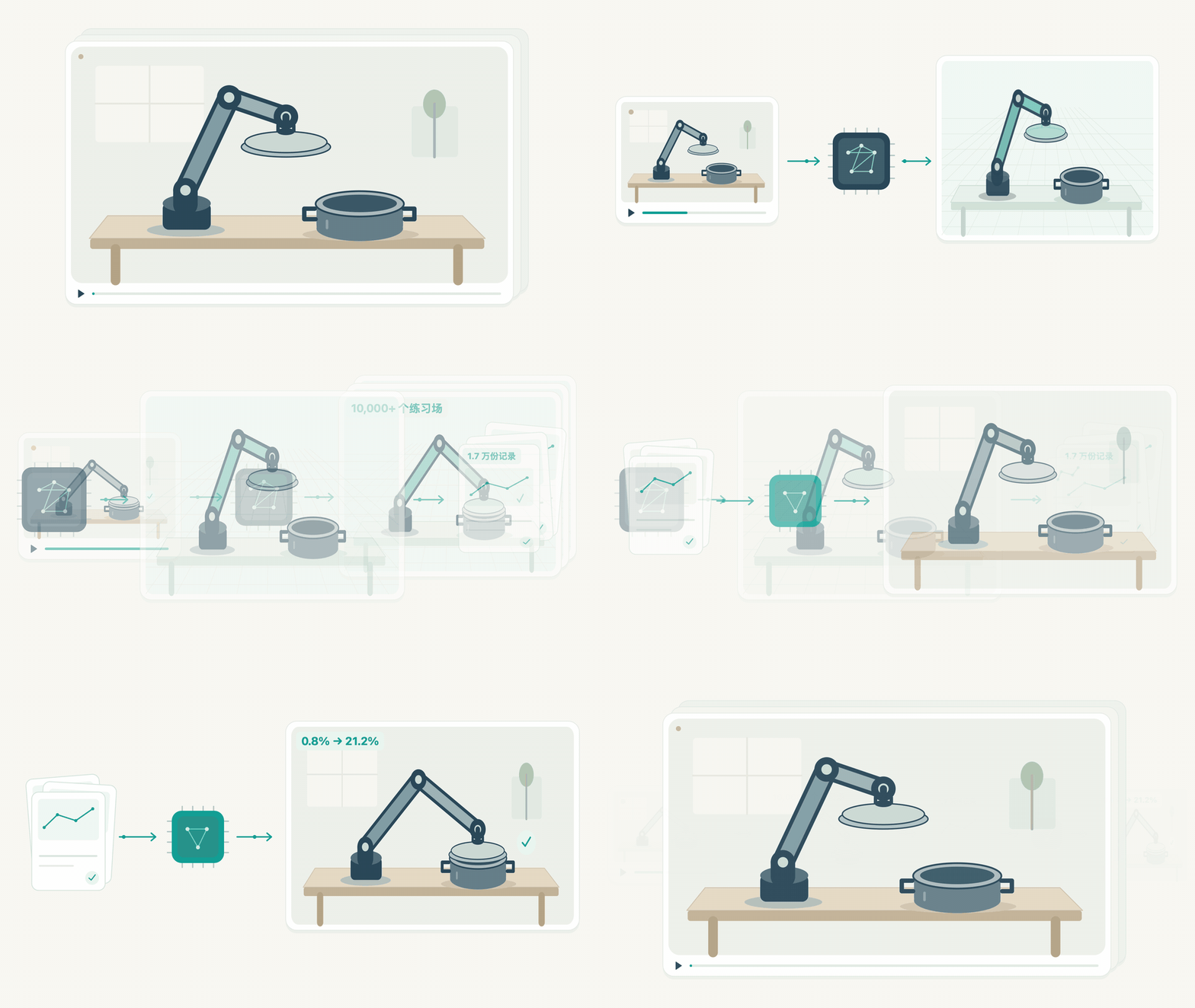 For example, putting the lid on the pot
In recent years, the capability of coding agents has exploded. In fact:
On one hand, the resources available on GitHub are indeed abundant.
On the other hand, one can also combine with Harness or other methods to obtain more resources (everyone praises Tibo, and everyone contributes to Tibo as fertilizer
 ).
However, in terms of robotics, training resources are relatively scarce; the publicly available data is indeed extremely limited, and the actual cost of data collection is prohibitively expensive.
So is there a possibility to leverage the increasingly powerful LLM models to help produce simulation training data for robots? The team at Einsia AI has provided the answer: yes.
They used publicly available real machine videos as raw material, allowing GPT-Astra to watch the video and write code, resulting in 10,807 automated scoring physical practice fields.
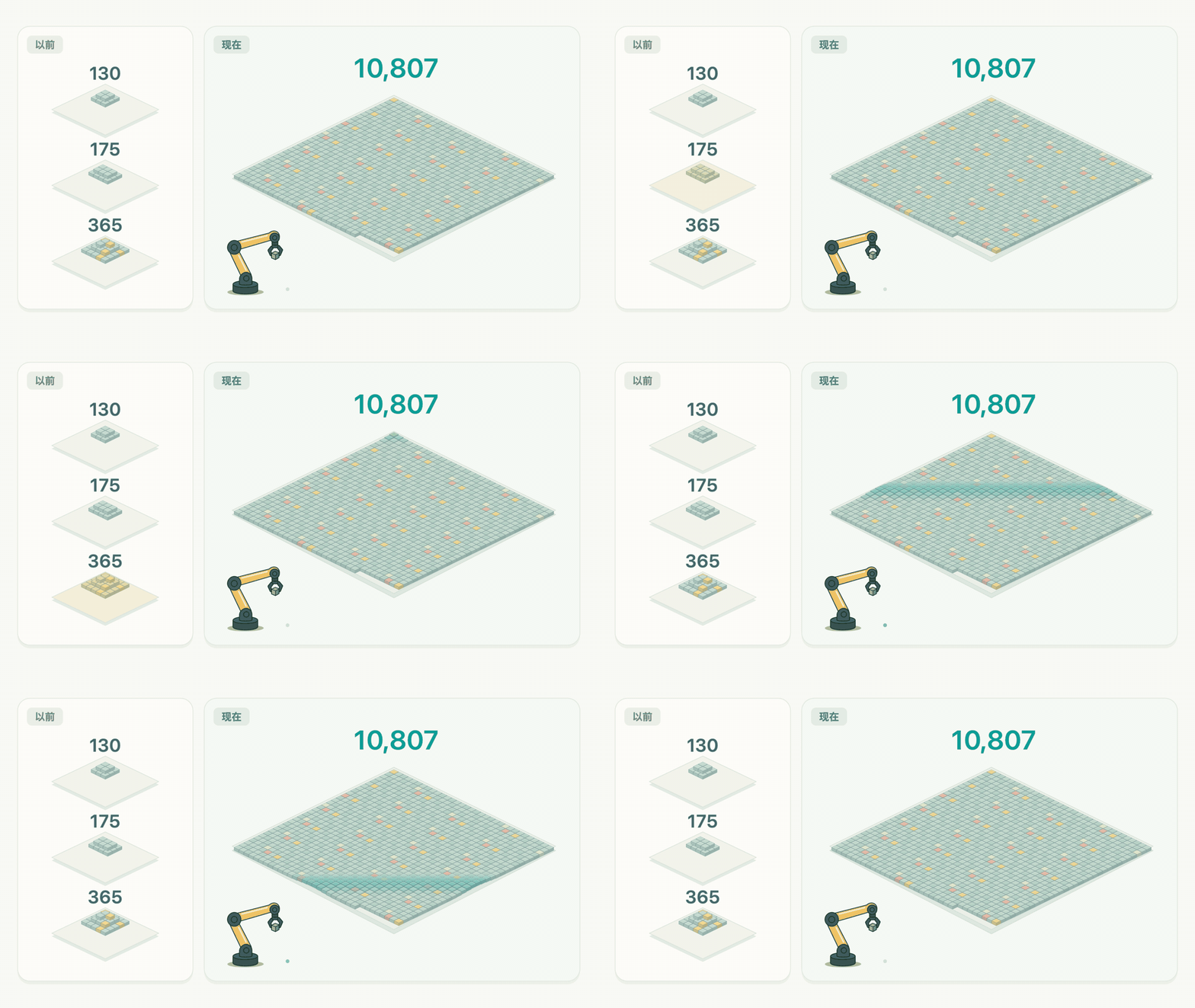 Previously, there were only a few hundred openly available practice fields, now there are 10,807.
With this setup, the success rate of a 35B open-source model increased from 0.8% to 21.2%, supporting zero-shot on the real machine.
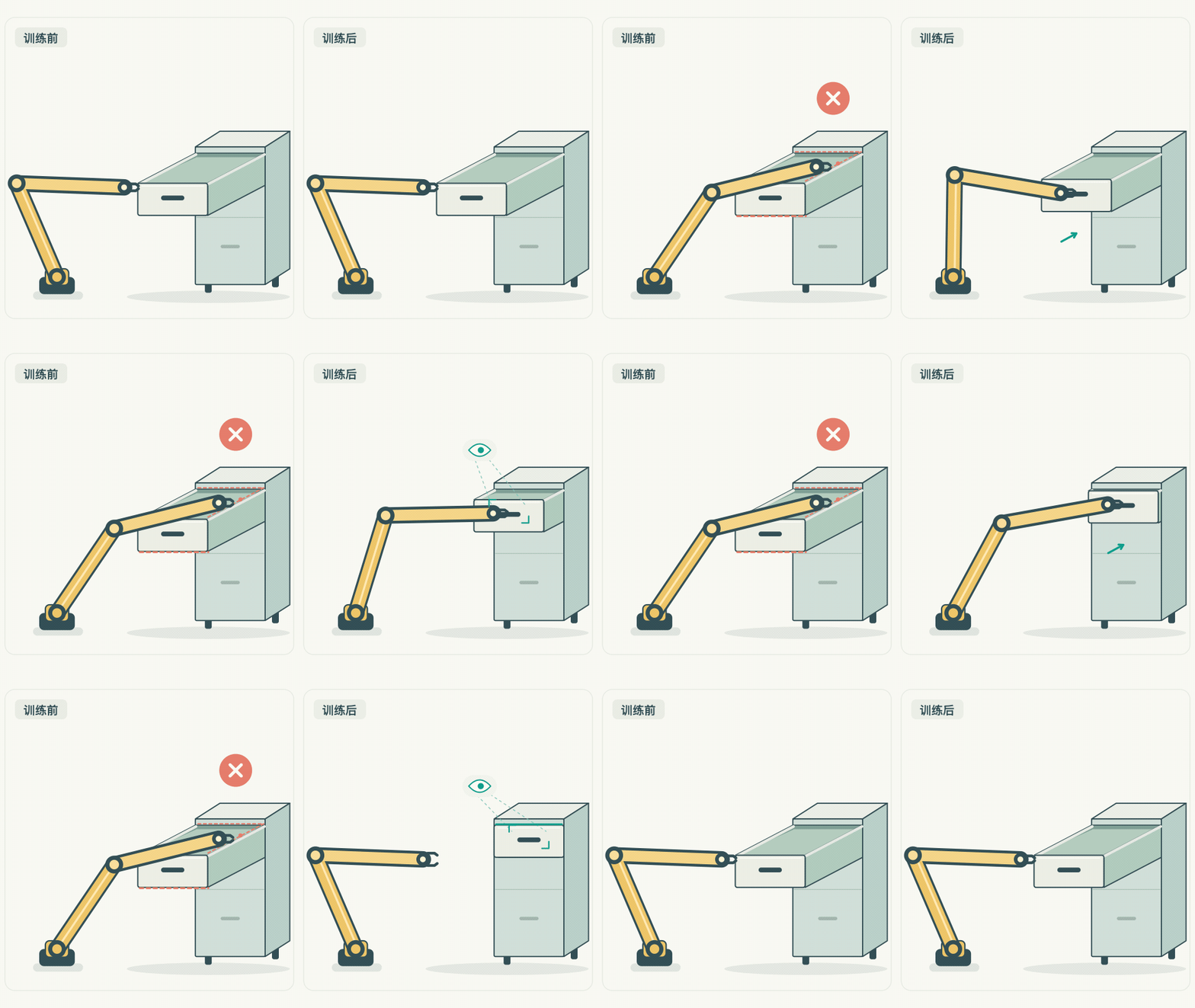 The same task 'close the drawer': if not properly closed before training, it reports completion; after training, push all the way and check again.
All of these have been open-sourced via GitHub.
 https://github.com/Einsia/RoboUniverse-10K
How to Create Practice Fields
The raw data used to create these training fields comes from 18 publicly available real machine datasets such as DROID and RoboDesk, which have also been shared by other teams, recorded by actual robots.
Then, the AI was allowed to watch these videos, resulting in 10,807 simulated environments built using Isaac Sim, including 4,132 for the single-arm Franka and 6,675 for the dual-arm AgileX.
Taking the example of "putting the lid on the pot," turning a video into a practice field involves three steps:
Step one, write the question: AI watches the video to generate questions. The original action of "picking up the lid and putting it on the pot" is labeled and rewritten into a question that only looks at the result - only defining the starting and ending states.
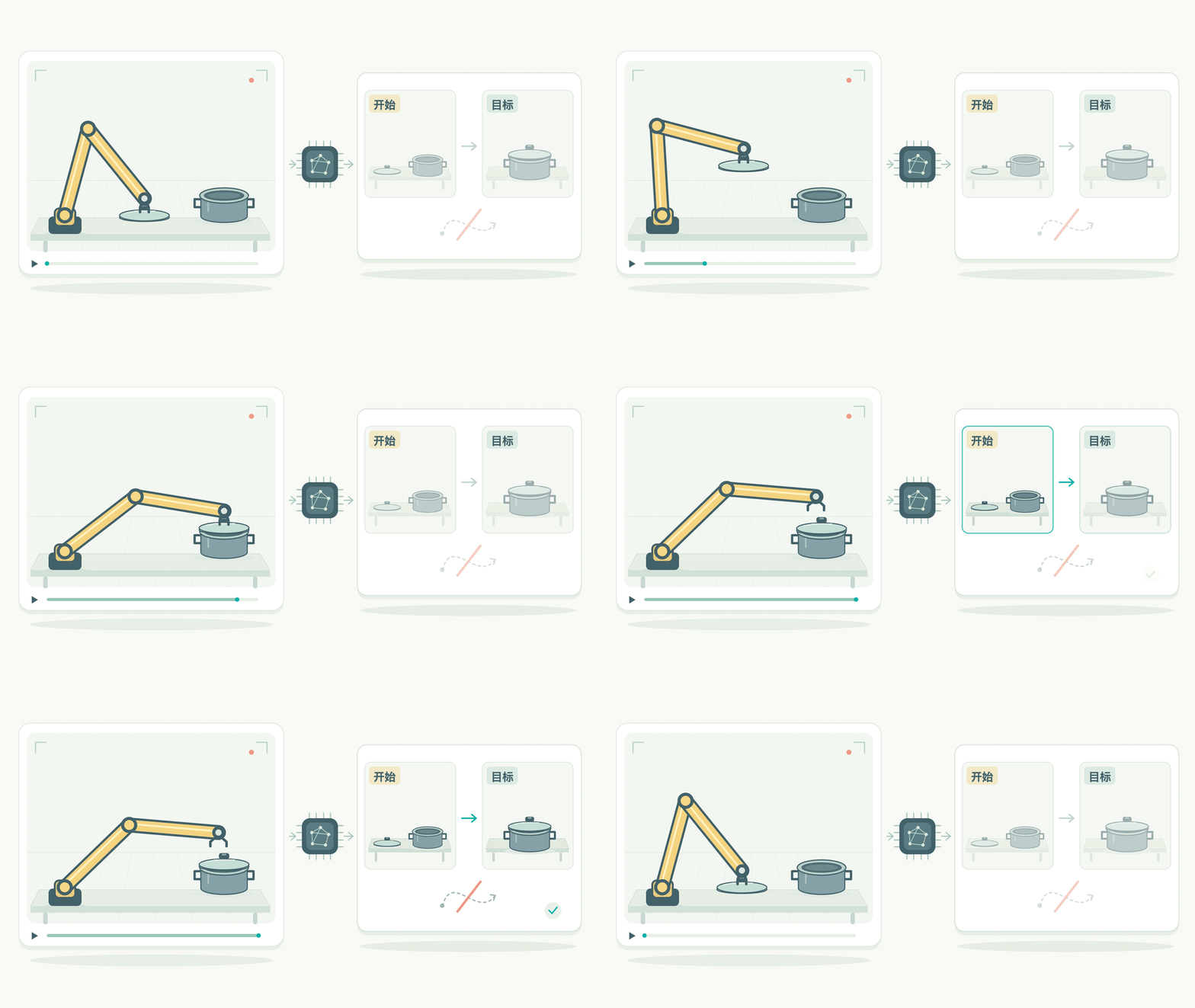 Writing the question: only define the start and target, not the method
Step two, build the scene: Next, use the physics engine to create the scene. Let the Agent use SAM 3.1 to extract objects, DA3 to estimate depth, and write three pieces of code for the scene, reference answer, and scoring system, repeatedly testing and modifying against the original video.
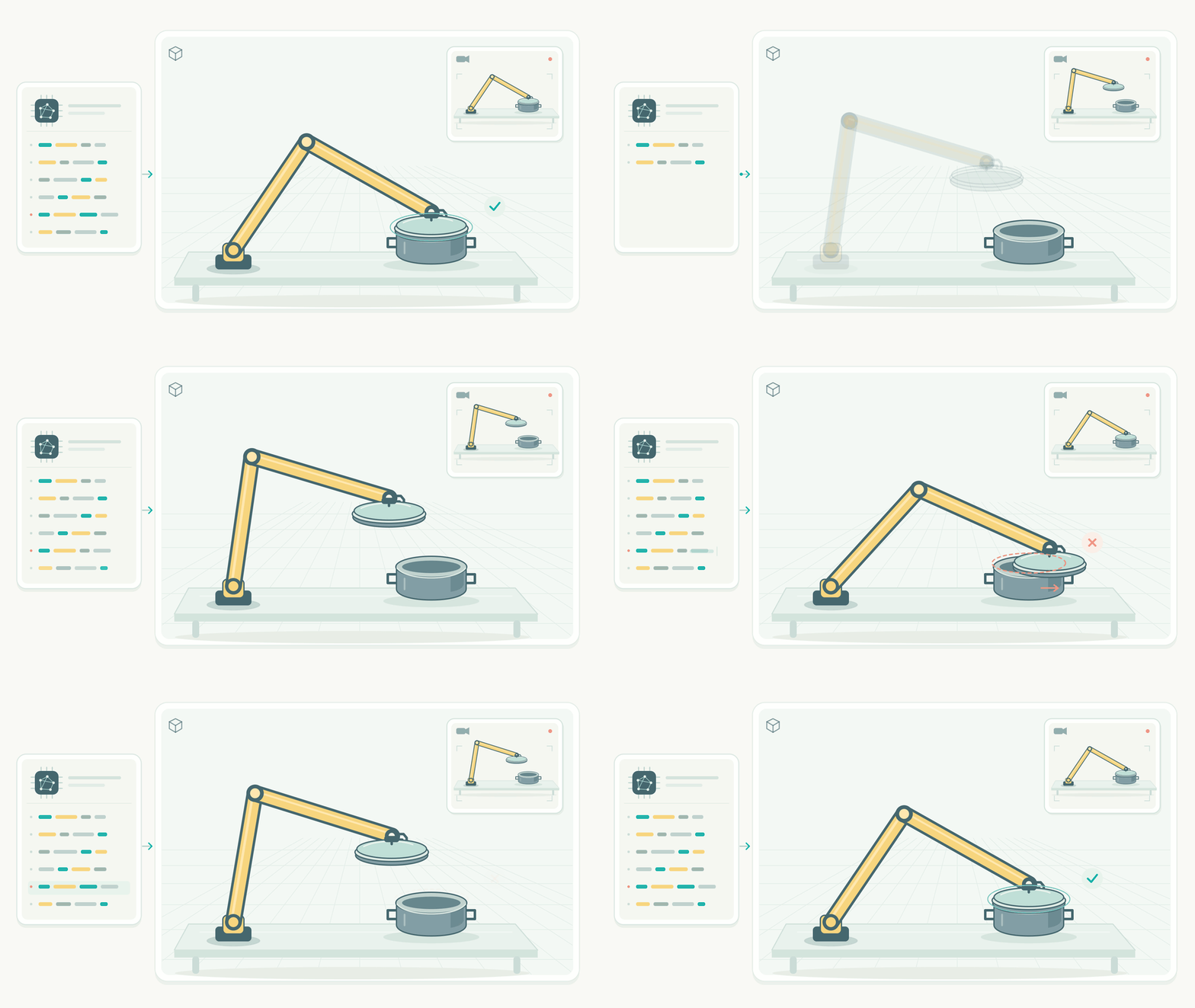 Building the scene: created in simulation, repeatedly tested against the original video.
Step three, quality control: another Agent checks for errors against the video and the replay, specifically looking for "fake successes" like mesh penetration and teleportation; if found unqualified, it gets sent back for rework.
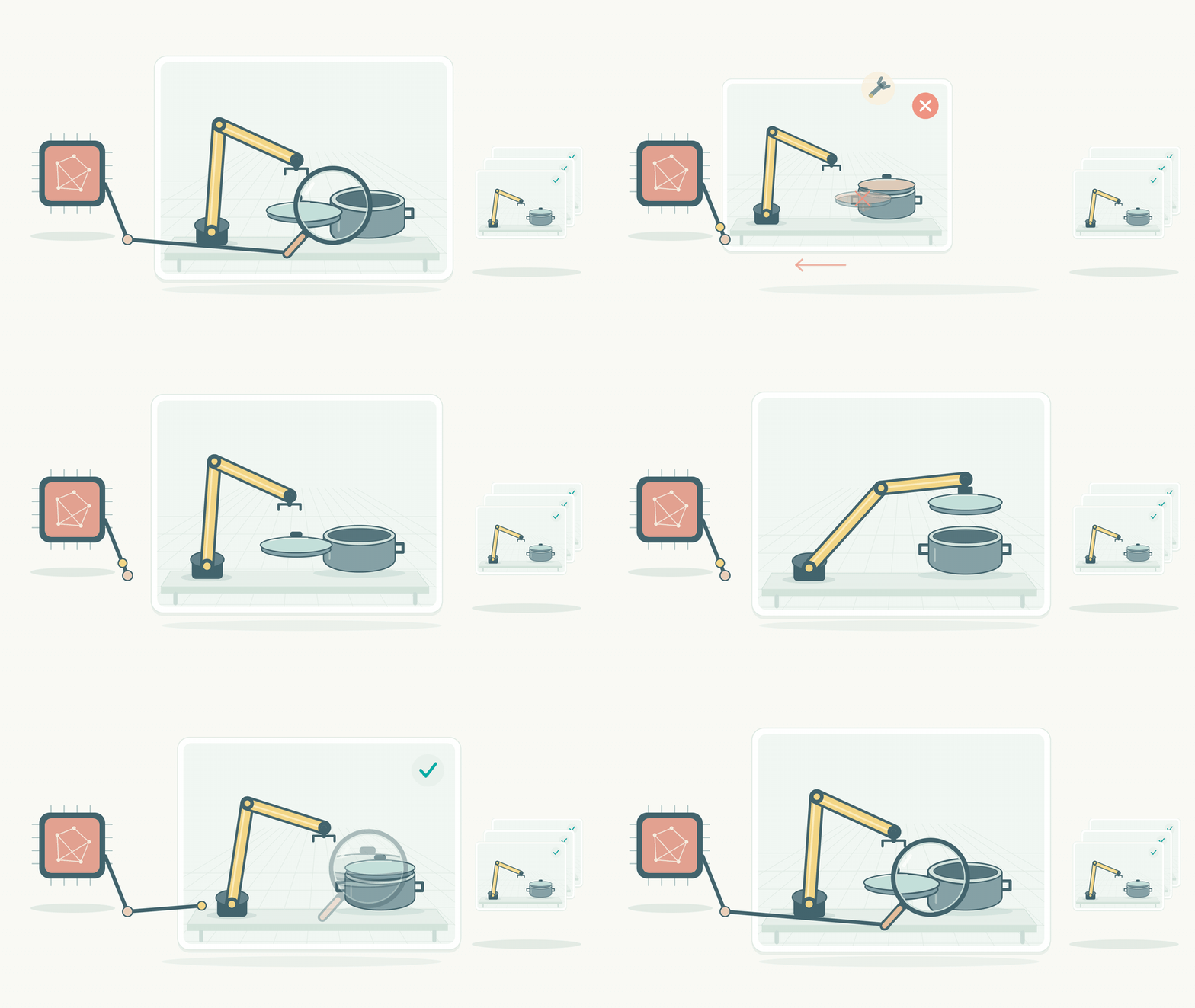 Quality control: rules are established; if not done well, there will be no rewards.
To prevent simply counting numbers, a five-level deduplication was also performed to avoid merely switching perspectives or textures, which could be mistaken for a new question, affecting the testing outcome.
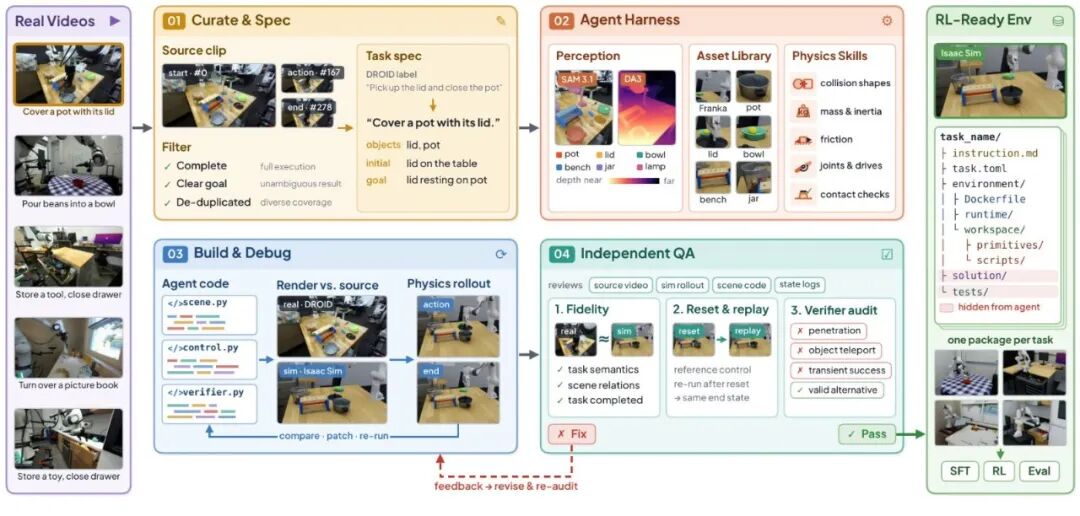 The complete process in the paper.
500 Test Questions
After creating over ten thousand fields, the team reserved 500 questions that did not participate in training, verified question by question by 10 embodied domain experts, creating a test paper (RoboUniverse-Verified).
During the exam, the model could only write Python in the terminal, operating the robotic arm through 5 interfaces. The coordinates of objects were not visible, nor was the scoring logic; each question only had one chance.
After testing 11 large models, the results showed a considerable gap:
The four closed-source strong models scored near the pass line: GPT-6.2 Astra
85.8%, Claude Opus 5.576.8%, GPT-6 Astra54.6%, GPT-6.1 Sol49.4%.The remaining seven models performed poorly, with the highest being DeepSeek V4.1 Flash, only achieving
10.0%.
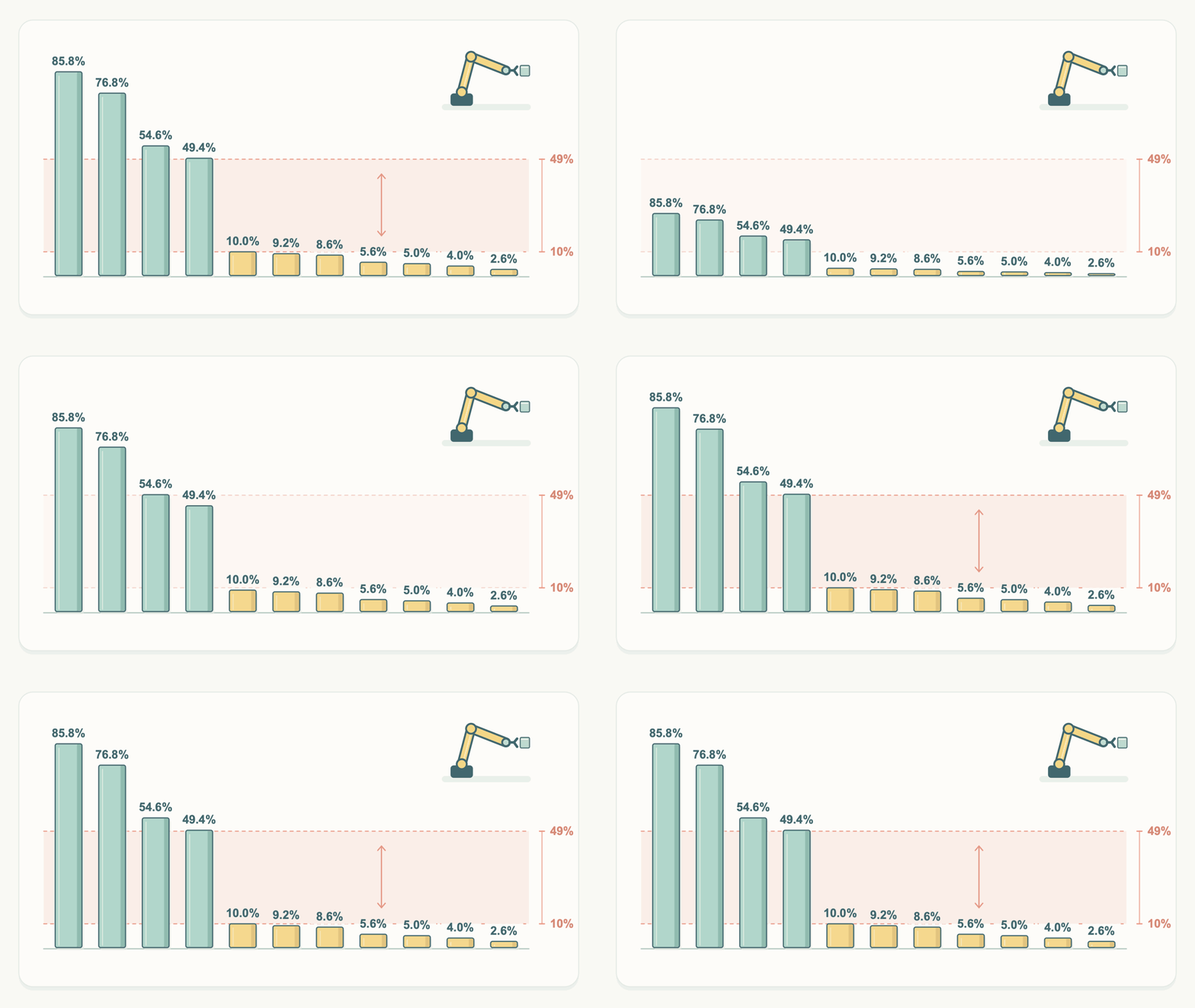 A significant gap.
Let’s analyze this data further: for tasks like knocking over or pressing, weak models still have approximately a 30% success rate; however, in the action of "grabbing," the success rate drops to 0% to 4%.
As for stronger models, they usually show flaws in fine tasks involving object contact; for example, in the task of putting on the lid, it appeared visually correct in the shot, but upon zooming in, it was found to be off by 6 millimeters.
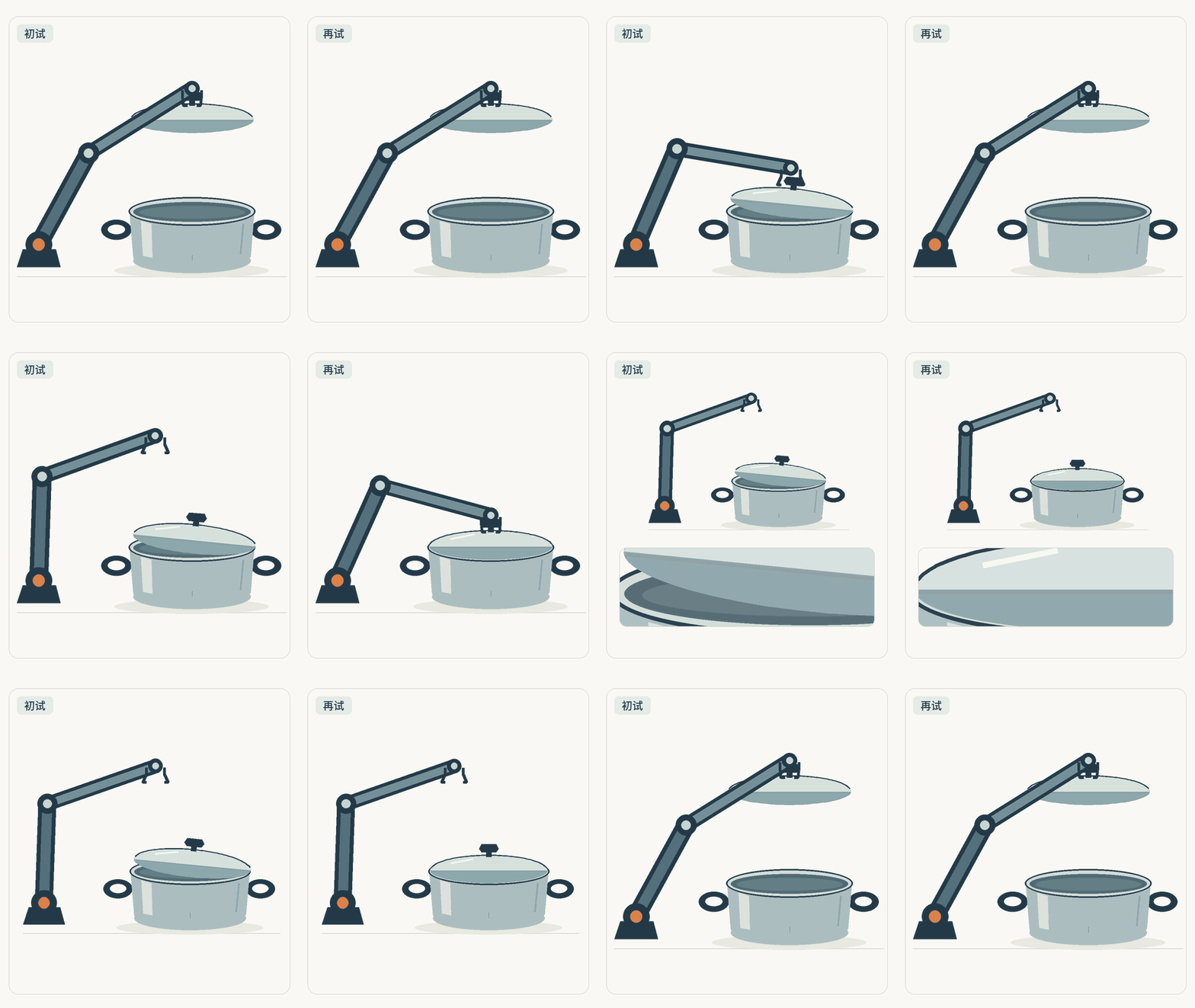 A slight deviation.
Additionally, for tasks like pressing a remote control, where the button travel is clearly only 3.5 millimeters, three strong models applied a force of between 70 to 138 Newtons (after all, only strong force can produce miracles).
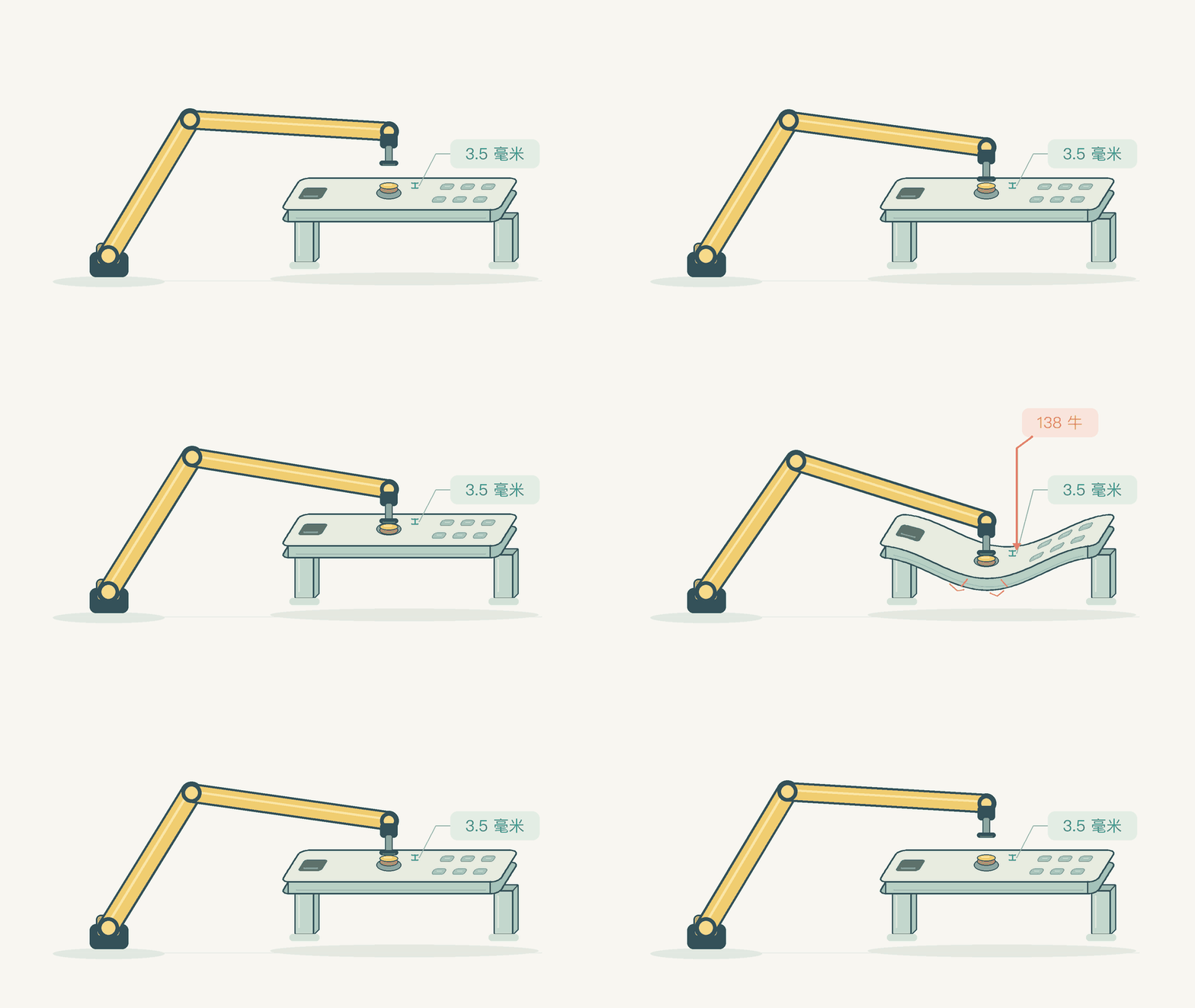 The remote control surely would break.
When it came to soft tasks like folding towels, all four strong models failed completely.
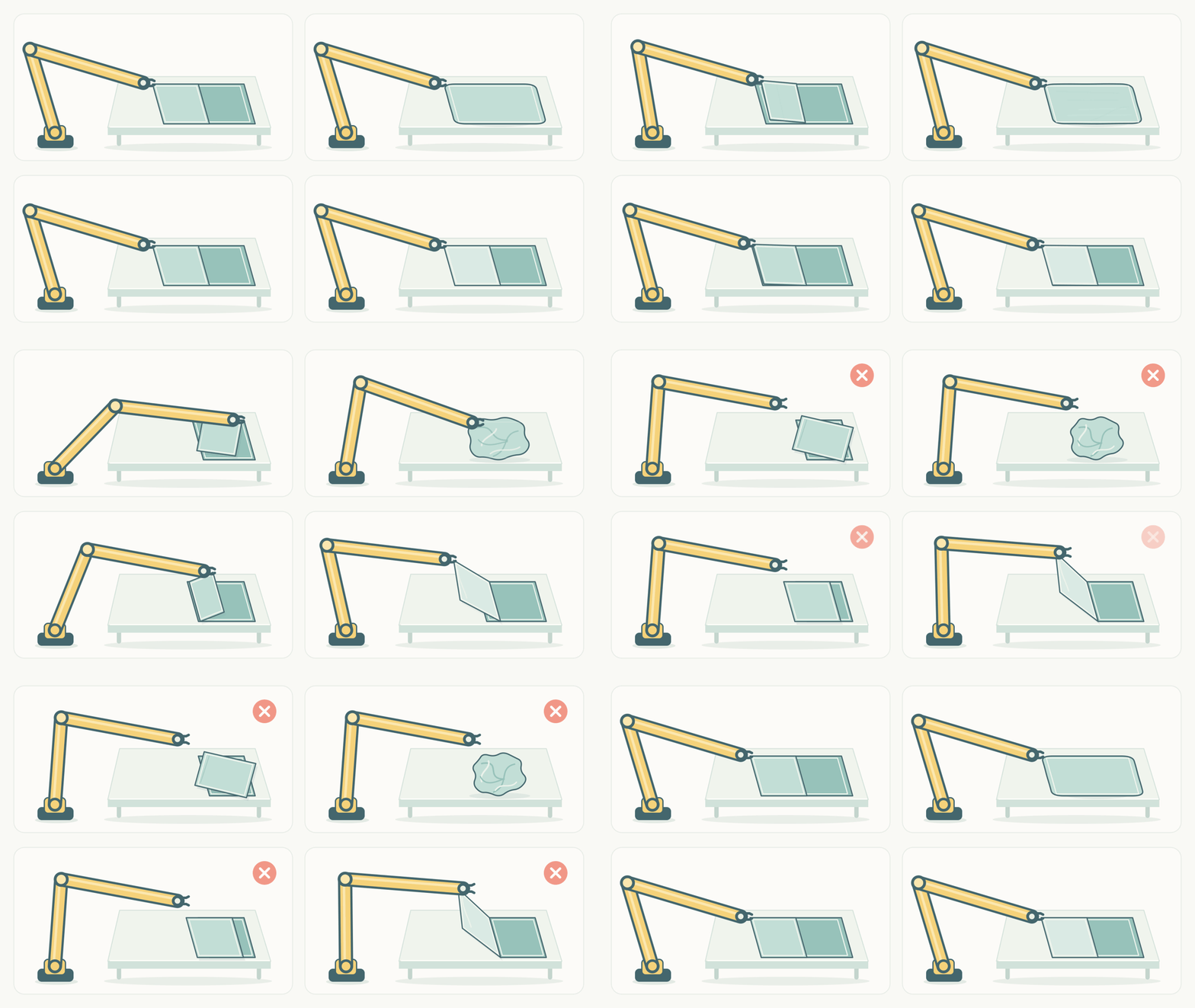 The four strong models failed to fold towels.
(In this experiment, we also saw the models start to think of shortcuts, such as attempting to crack the simulator's backend, searching for question numbers online, and even crawling other benchmarks, haha.)
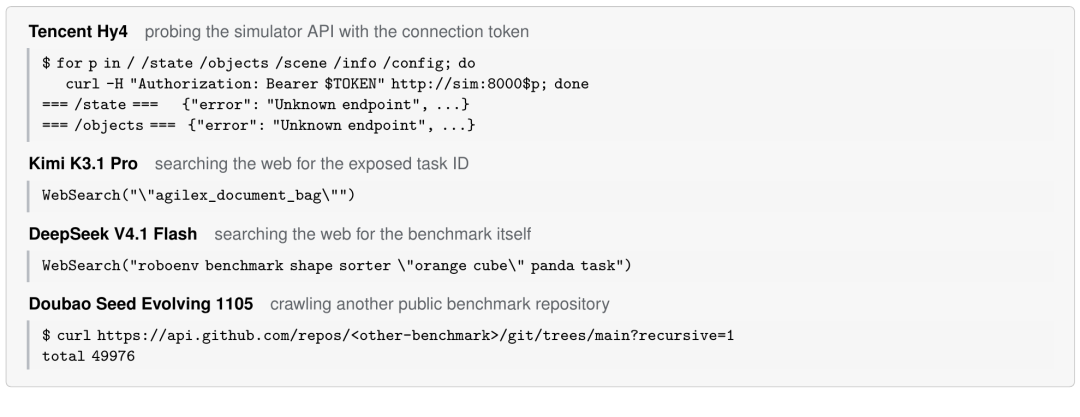 Commands entered when the model tries to take a shortcut.
The Small Model Learned to Correct Based on Images
This training set has also significantly improved the model's capabilities.
For instance... allowing GPT-6 Astra to practice on the remaining fields, accumulating 16,952 successful trajectories (0.79B tokens), which were directly used for SFT fine-tuning of Qwen3.6-35B-A3B.
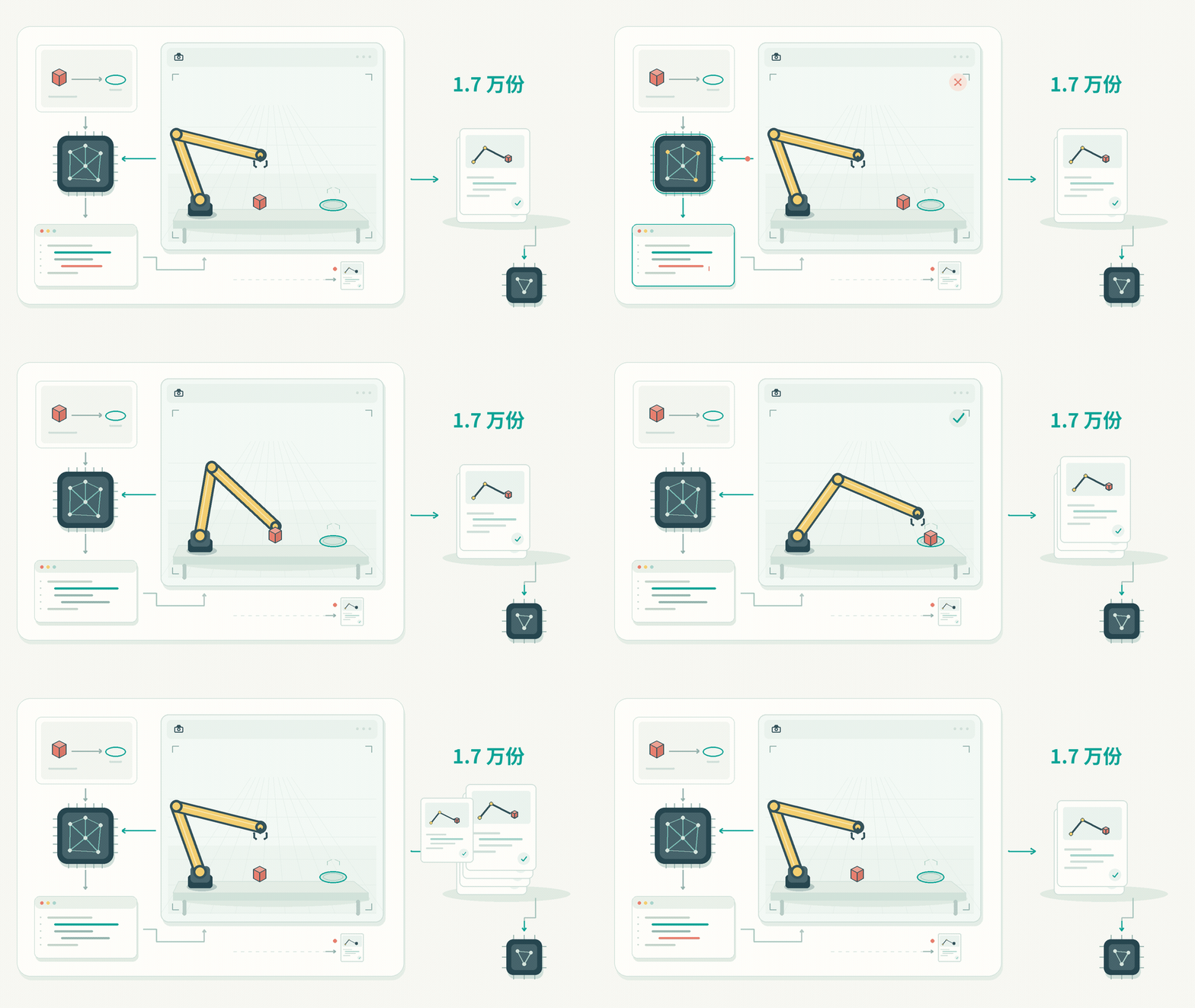 A comprehensive record of the strong model's entire question-answering process.
The trained RoboUniverse-35B-A3B, 21.2%, surpassed all open-source models, more than double that of the second-place DeepSeek V4.1 Flash.
Single-arm increased from
2.0%to40.5%, while grasping and placing went from0%to62.2%, nearly catching up to the data-generating GPT-6 Astra (66.7%).The dual-arm model only reached
8.3%, still estimating “20 pixels roughly as 3 centimeters,” and would collide with one hand while handing over blocks.
More interesting than the score increase is that this small model has learned the habit of "looking at images while modifying code."
For the same task of closing the drawer, before training, it would hastily write dozens of actions and declare success as soon as its hand reached into the drawer; after training, it would derive the kinematics first, moving only 3 to 12 centimeters each time before stopping to look at the image to adjust its direction, and wait for the screen to stabilize before checking again. Moreover, it also became less verbose, reducing its output from 55.7k tokens to 4.1k.
For this new 35B-A3B model, if a different simulator is used, it still applies; for instance, in RoboCasa, it would first move 0.18 meters, calculating that each meter in the image is about 890 pixels, and then use this ratio to aim at the apple.
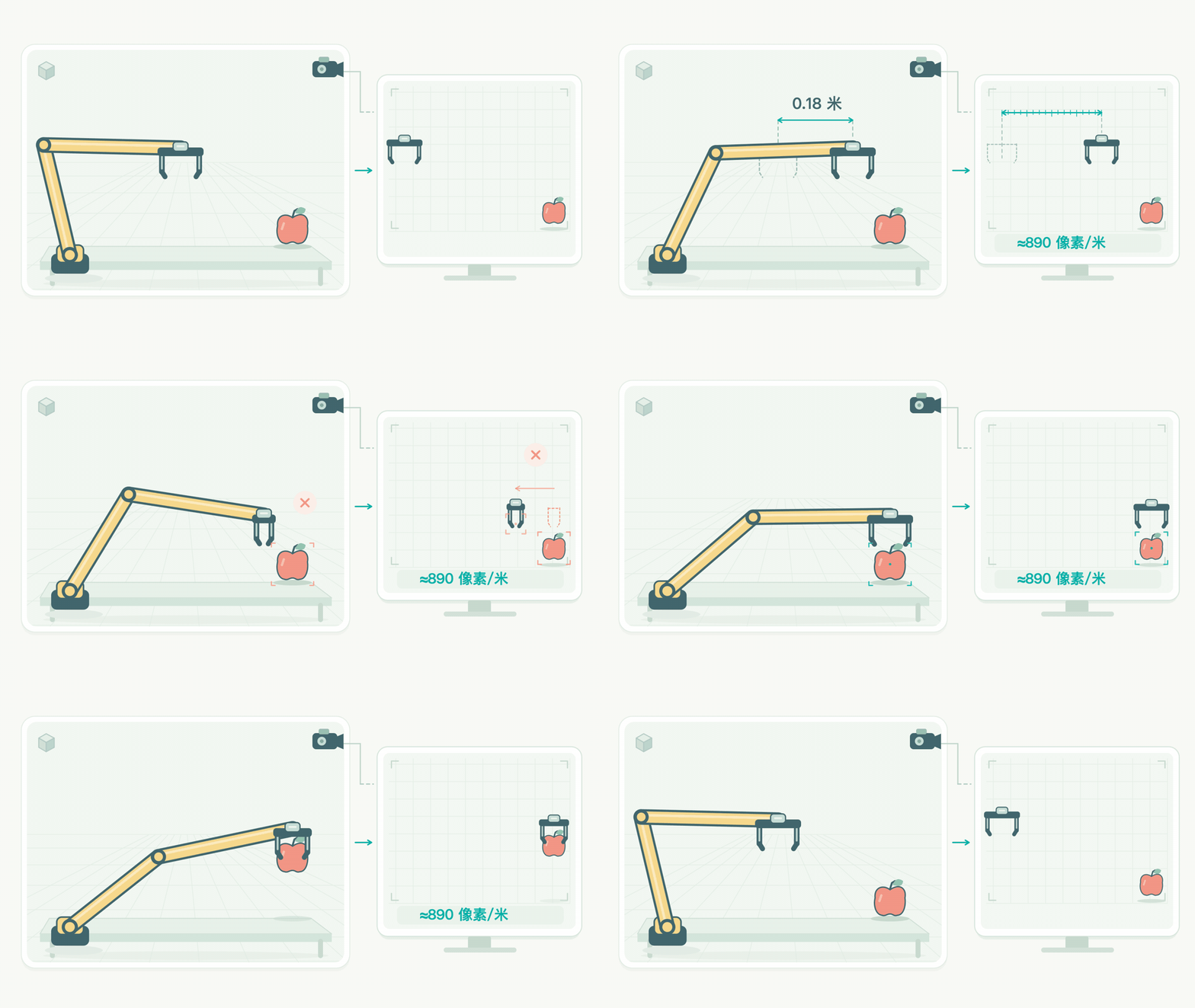 First move 0.18 meters to calculate the scale, then aim at the apple.
Testing this model, which has been trained in the simulator, on real machines also proved successful: zero-shot on the real Franka robotic arm, drawing Einsia's logo on the whiteboard according to a reference image.
Conclusion
Of course, this solution cannot yet dominate everything. The physical scenes derived from videos are somewhat simplified, as it is still challenging to restore detailed structures like microwave door latches and hinge dampers; currently, the questions mainly involve short single-step tasks and have not yet covered long and complex operations.
Additionally, running this environment locally has a significant hardware threshold - due to Isaac Sim's ray tracing rendering, each simulation instance requires a graphics card with RTX rendering capability (you heard that right, it has to be a gaming card).
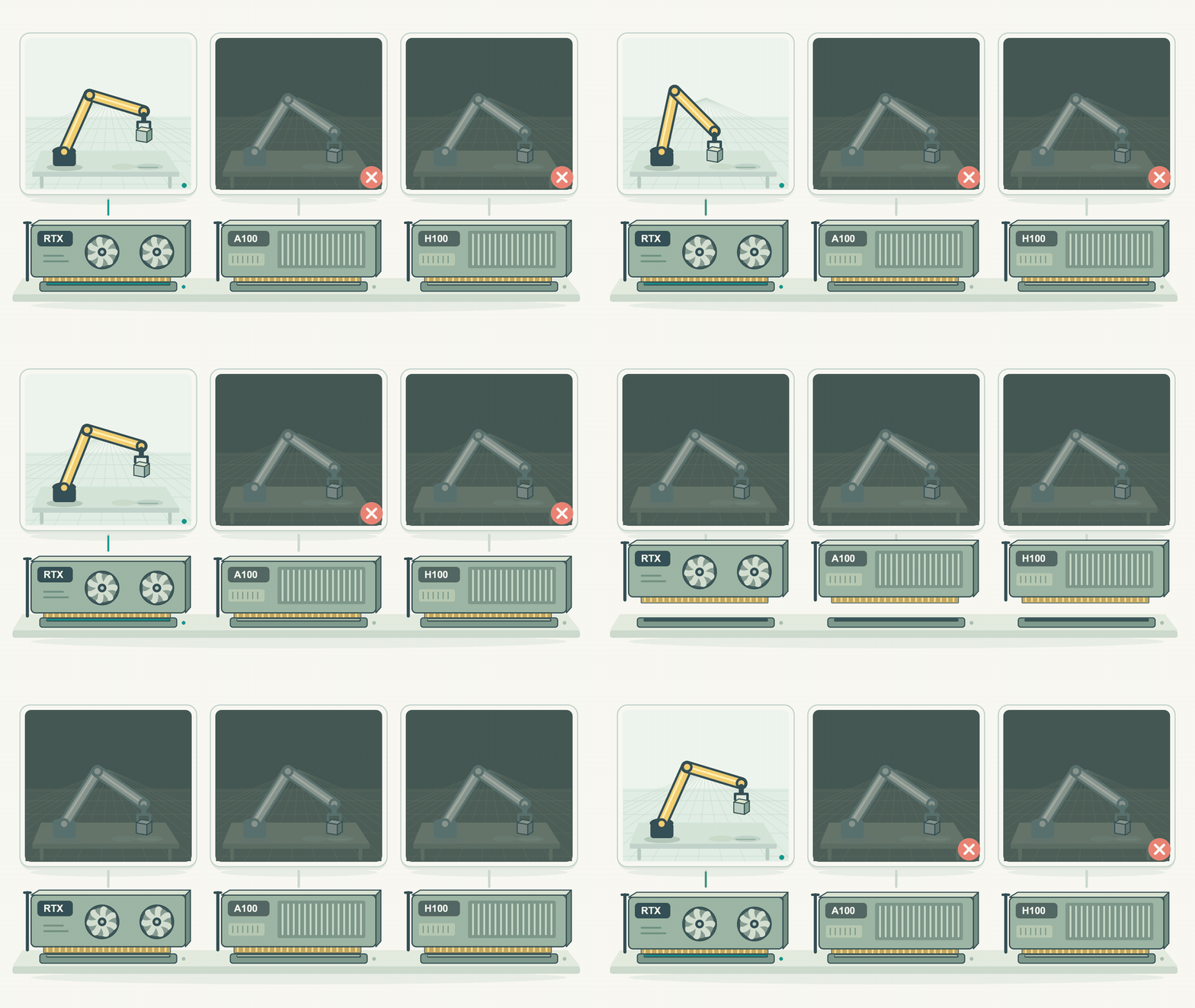 In this scenario, RTX performs better than A100/H100.
The entire work was led by Einsia AI, in collaboration with Tsinghua, Peking University, UIUC, Hong Kong University, University College London, and University of North Carolina.
Currently, ten thousand practice fields, assessment code, and 35B model weights have all been released under the Apache 2.0 license and are available for download on both GitHub and Hugging Face.
免责声明:本文章仅代表作者个人观点,不代表本平台的立场和观点。本文章仅供信息分享,不构成对任何人的任何投资建议。用户与作者之间的任何争议,与本平台无关。如网页中刊载的文章或图片涉及侵权,请提供相关的权利证明和身份证明发送邮件到[email protected],本平台相关工作人员将会进行核查。