TL;DR
· On November 26, Musk expressed on social media that he would give one share of SpaceX stock every year to all children in the United States; the day before, SpaceX had just announced its plan to gift two shares to each active child investment account, with Musk personally matching one share.
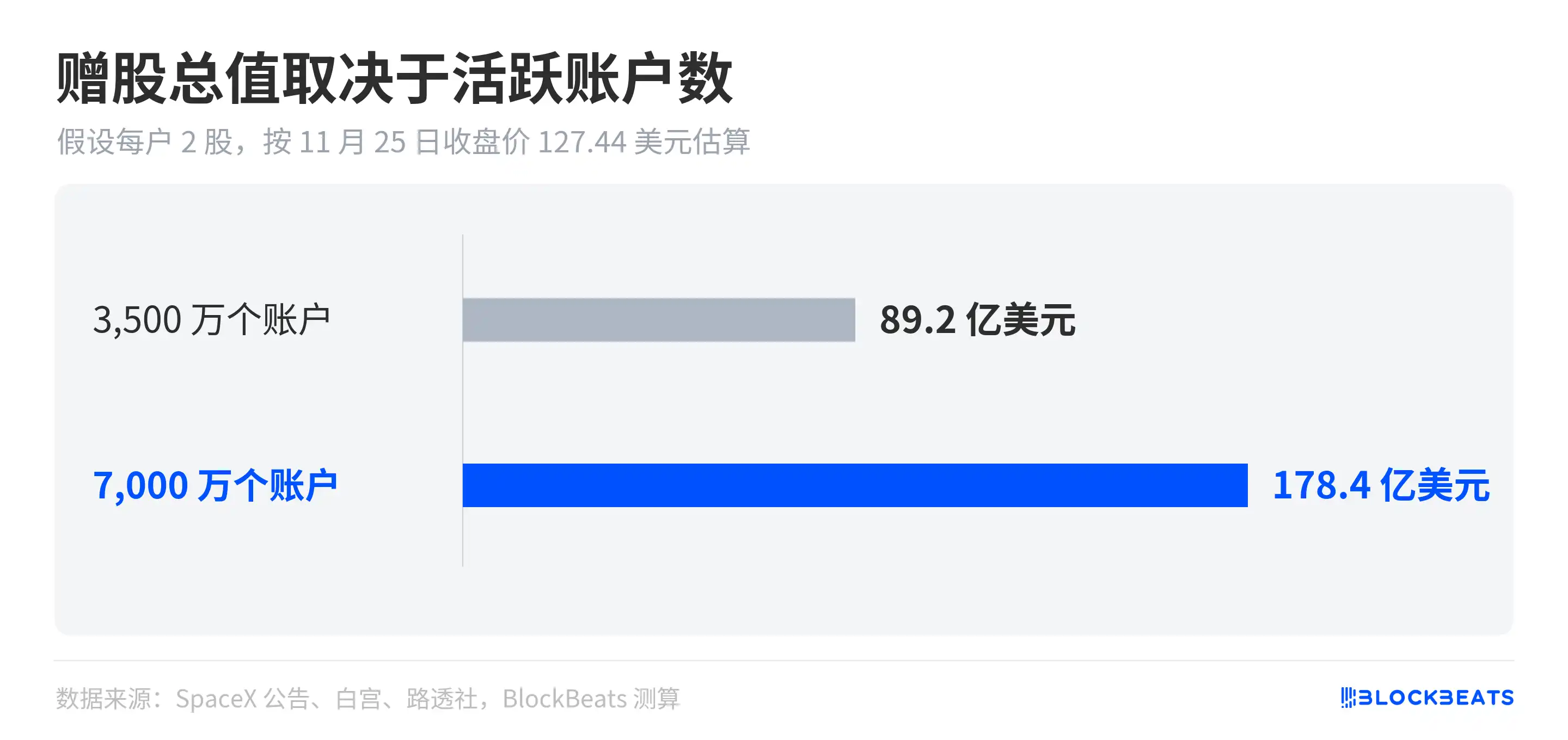
· Based on the closing price of $127.44 on November 25 and an estimated cap of nearly 70 million accounts, the first round of two shares is valued at approximately $18 billion; this move has limited dilution for the company and does not significantly shake Musk's control, indicating a clever strategy behind the expanding public opinion game in orbital computing and the distribution of AI dividends.
· Related subjects: SpaceX (SPCX), Anthropic (ANT)
On November 26, SpaceX CEO Musk announced in response to a netizen on social media that he would gift one more share of SpaceX stock every year to all children in the United States. Just the day before, he and the company had jointly proposed to give two shares to each American child.
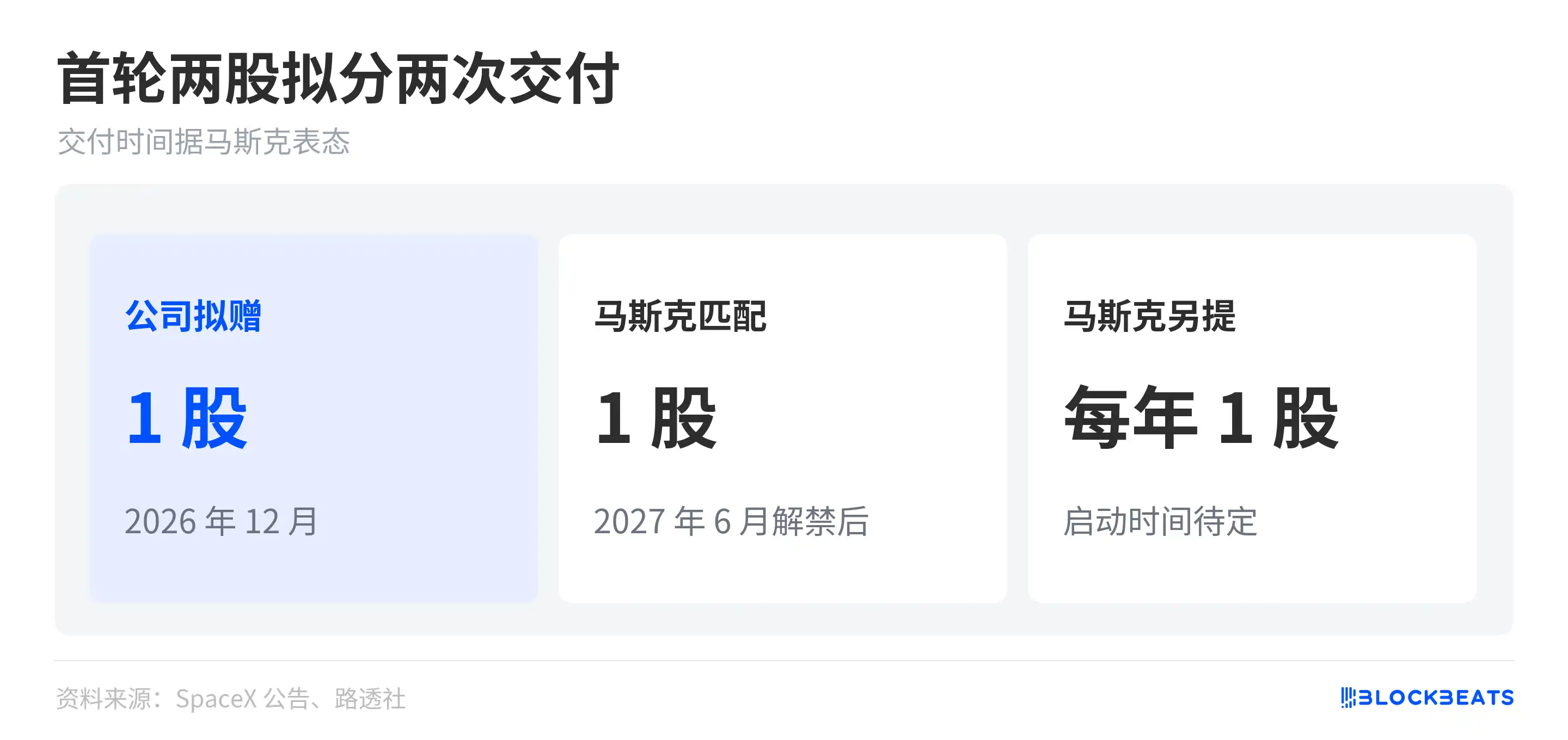
According to SpaceX's official announcement on November 25, the company would donate one newly issued Class A common stock to each currently active Trump account (a tax-advantaged investment account for minors in the United States), with Musk personally matching it with one share, valuing the total at nearly $18 billion based on the estimated cap of 70 million accounts.
In just two days, the charity gift increased from "two shares" to "one more share every year," which appears to be a high-profile charitable gesture for Thanksgiving, but under the valuation and regulatory situation following SpaceX's acquisition of xAI, it reflects a clever accounting of capital and public sentiment.
Without Cash Outlay, Without Losing Control, How Advantageous Is This Billion-Dollar Deal?
First, let's clarify the true cost of this deal. There are approximately 72 to 73 million children under 18 in the United States. The White House stated in October that nearly 70 million Trump accounts have been opened, with a maximum market value of around $9 billion for each share based on SpaceX's closing price of $127.44 on November 25.
For secondary market shareholders, the initial impact is actually limited. SpaceX's current market capitalization is about $1.73 trillion, and the company has approximately 70 million newly issued shares, corresponding to a direct dilution of only about 0.5%; however, whether the "one share per year" will ultimately be funded by Musk personally or through company issuance will determine the long-term dilution.
For Musk personally, this is a deal that nearly does not consume cash flow. He is donating unreleased Class A common stock, which neither requires selling on the secondary market to avoid price drops, nor does it harm his control as he holds about 6.42 billion shares and owns over 80% of voting rights; gifting about 1.1% of the common stock each year does not affect control at all.
According to Musk's disclosed timeline, the company's gift of one share will be transferred this December, while the matching share from Musk will only be delivered after the lock-up period ends in June 2027; as for the "one more share each year," it currently remains at the stage of his personal verbal commitment.
Paving the Way for a Million Satellite Data Centers, Turning American Families into Shareholders
Compared to the nominal cost, Musk places greater importance on the public opinion buffer gained by directly turning tens of millions of American families into SpaceX shareholders. Following SpaceX's acquisition of xAI and increased focus on space computing this year, its expansion has begun to encounter increasingly apparent public and political resistance.
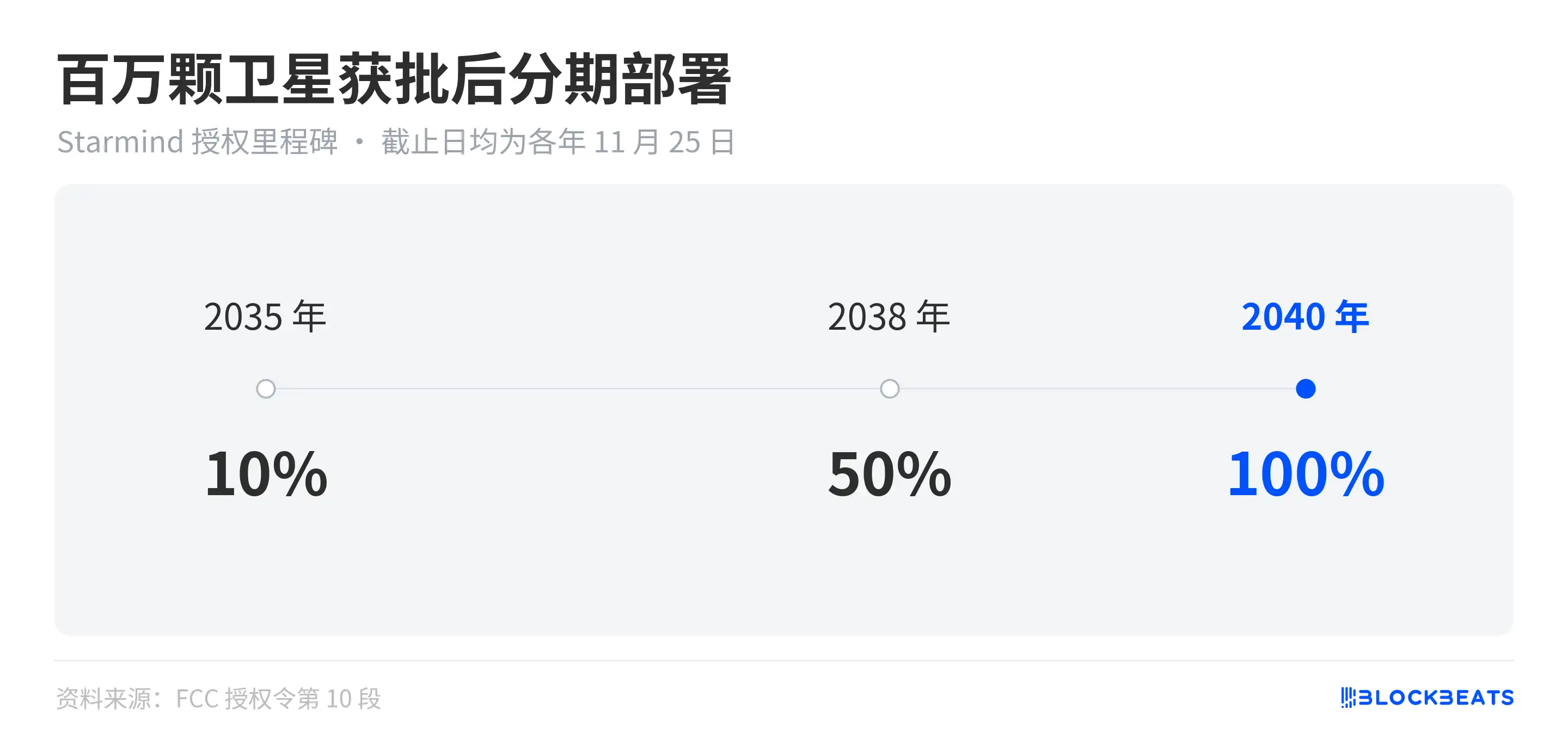
The U.S. Federal Communications Commission recently approved SpaceX to deploy up to 1 million satellites for orbital data centers, which was immediately met with strong opposition from organizations such as the American Astronomical Society; moreover, during this month's midterm elections, candidates opposing the expansion of data centers performed remarkably well within the Democratic Party.
When the expansion of infrastructure faces environmental, astronomical observation, and community resistance, allowing all American children to hold company stock amounts to binding the vision of space computing into the long-term asset tables of ordinary families, objectively reducing future policy approvals and public opinion friction.
At the same time, since SpaceX went public with an issuance price of $135 in June, its stock price has recently lingered in the failure range around $127.44. Musk publicly urged recipients not to sell their stocks, which has objectively strengthened the narrative of retail investors and the public holding shares.
Confronting Anthropic's Route, How Should AI Era Dividends Be Distributed?
When expanding the view to the entire AI industry, this high-profile move is also a direct collision of two dividend distribution routes in AI. As SpaceX integrates xAI, it has become a direct competitor to Anthropic, which just landed on NASDAQ on November 19 in the race for computing power and models.
In the face of societal anxiety about job disruption from AI, Silicon Valley has previously discussed cash handout-style universal basic income, while Anthropic announced back in October its intention to donate 5% of its shares (valued at over $50 billion at current prices) to establish a public interest fund, taking a professional foundation route.
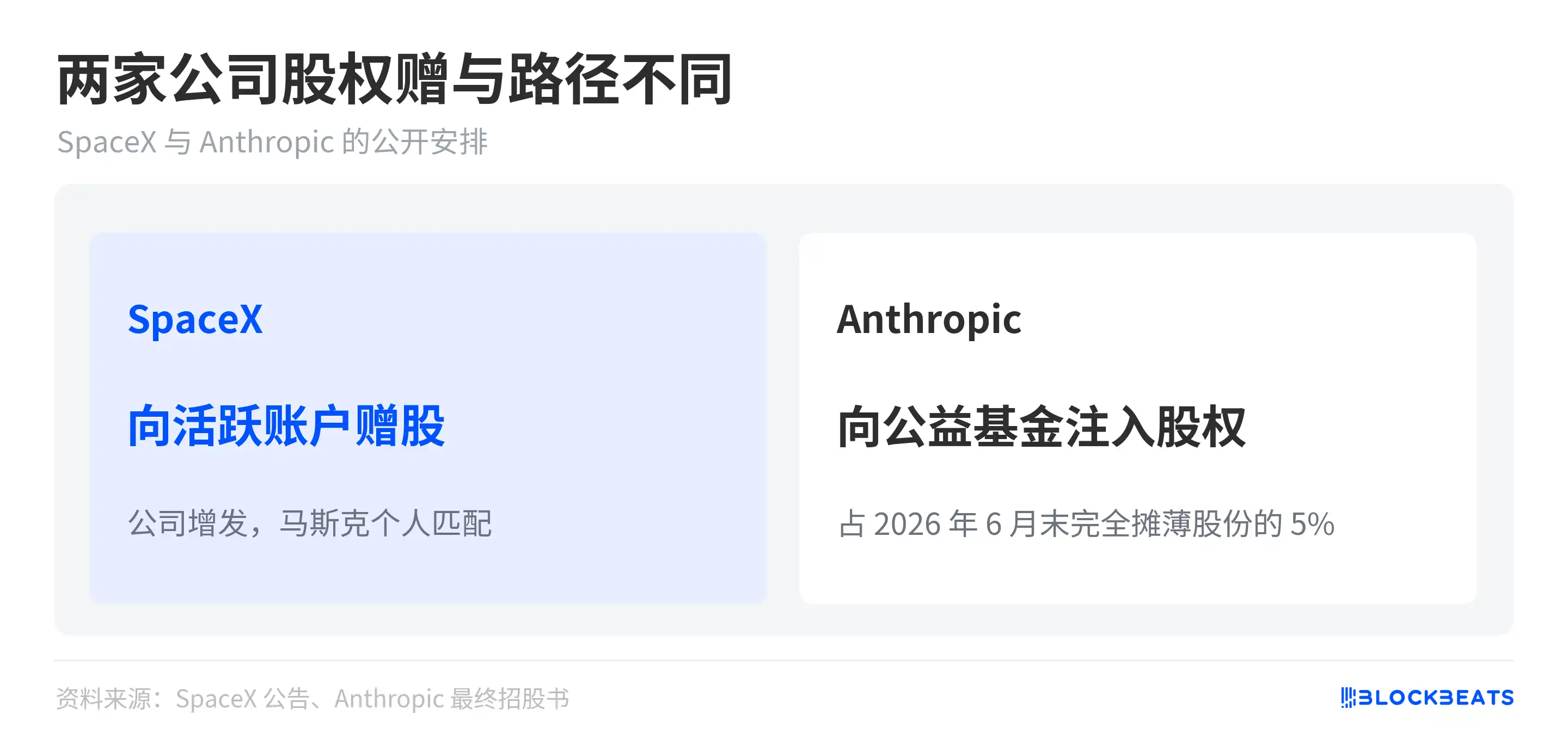
Wall Street buy-side institutions are clear about this. Mark Tinkler, Chief Investment Officer at Toscafund Hong Kong, bluntly states that Musk's choice to make a high-profile stock gift on Thanksgiving not only creates momentum for the Trump accounts but also directly hedges Anthropic's public interest momentum.
By proclaiming "directly giving future economic equity to the next generation," Musk not only holds a more impactful communication power than traditional foundations but also attempts to seize the moral and public opinion high ground for SpaceX and xAI in this new narrative of "direct shareholding for everyone."
Active Account Threshold and Withdrawal Details Determine the Commitment's Genuine Value
Despite the shocking figures, there are still several realistic thresholds from verbal commitment to actual delivery. Musk refers to "all American children," but SpaceX's official announcement clearly limits it to "currently active Trump accounts," so the actual number of eligible recipients may be significantly less than the 70 million cap.
The delivery's lock-in and tax rules are also pending resolution. Although Trump accounts restrict withdrawals before age 18, SpaceX has not clarified whether Musk's personal 1 share donation will also go through that account or have a separate lock-up period; the company's announcement also points out that the actual gifting is still subject to third-party and government approvals.
As for the latest commitment on November 26 of "one more share each year," although Musk's original words used the first person to signify personal donation, there is still no formal document specifying the start time and funding method. Whether the first batch of transfers can happen in December and the details of redemption after the unrestricted access in June next year are the real metrics to assess the authenticity of the commitment.
Click to learn about the job openings at Rhythm BlockBeats
Welcome to join the official community of Rhythm BlockBeats:
Telegram Subscription Group: https://t.me/theblockbeats
Telegram Discussion Group: https://t.me/BlockBeats_App
Twitter Official Account: https://twitter.com/BlockBeatsAsia
免责声明:本文章仅代表作者个人观点,不代表本平台的立场和观点。本文章仅供信息分享,不构成对任何人的任何投资建议。用户与作者之间的任何争议,与本平台无关。如网页中刊载的文章或图片涉及侵权,请提供相关的权利证明和身份证明发送邮件到[email protected],本平台相关工作人员将会进行核查。