TL;DR
· According to the Financial Times, Nvidia has requested partners such as Dell and Supermicro to suspend shipments of servers containing its chips to Malaysia, Singapore, Thailand, and Indonesia. Some orders have been put on hold.
· This suspension follows the new export control regulations by the US Department of Commerce that came into effect on November 19, which expanded the scope of licensing to include four Southeast Asian countries and Brazil, and for the first time imposed restrictions on offshore data centers providing remote computing power to restricted parties, although US-based recipients may be exempt with monthly reporting.
· Related subjects: Nvidia (NVDA), Dell Technologies (DELL), Supermicro (SMCI)
According to the Financial Times on November 25, Nvidia has requested server manufacturing partners such as Dell Technologies and Supermicro to suspend shipments of AI servers equipped with its chips to Malaysia, Singapore, Thailand, and Indonesia, with some buyer orders being put on hold.
This sudden halt in shipments closely follows the new export control regulations issued by the US Department of Commerce's Bureau of Industry and Security, which officially took effect on November 19. The new rules require obtaining licenses for exporting advanced AI chips to the aforementioned four countries and Brazil, primarily aimed at closing the loophole of renting computing power through overseas data centers.
As of now, Nvidia, Dell, and Supermicro have not publicly commented, and the duration of the suspension remains unclear. However, informed sources disclose that this is more of a temporary measure as the supply chain assesses the licensing approval process, rather than a complete abandonment of the Southeast Asian market.

The new regulations directly target offshore cloud renting, abolishing old classification for precise licensing
Ordinary investors may easily view this regulation as a conventional intensification of the chip ban, but the real change brought by the new rules is the rewriting of regulatory boundaries—previously focused on preventing chips from being directly shipped to China, it has now, for the first time, extended the restrictions to remote computing power rentals from offshore data centers.
The temporary final rule submitted by the US Department of Commerce on November 16 and published on November 19 formally repealed the AI diffusion country classification and model weight controls introduced last January, while also imposing two more targeted restrictions.
The first targets re-export and high-risk areas, adding Malaysia, Singapore, Thailand, Indonesia, and Brazil to the licensing list; the reason why the four Southeast Asian countries are under immediate pressure is that they have become a core hub for China's AI computing power exports, while Brazil is more of a preventive measure.
The second covers global data centers. If chip exporters are aware that overseas data centers will provide large training and inference clusters with total processing performance exceeding 12 million (a regulatory indicator of comprehensive chip computing power) to restricted parties such as China, they must also obtain licenses in advance.

Non-US cloud providers get hit, while US cloud giants gain compliance exemptions
Less than a week after the new regulations took effect, the computing power supply chain in Southeast Asia has quickly shown signs of differentiation. The first to be affected are local non-US background computing rental companies. The Financial Times reported that banks have suspended loans of about $500 million to the Singapore service provider Aolani, which were originally intended to support collaborations with ByteDance.
At the same time, there has been pressure on the distribution side. According to CNBC, the secondary market has posted an unusually large supply of Nvidia GPUs after the new regulations took effect, including thousands of high-end B300 chips originally scheduled for delivery to data centers serving Chinese tenants, with a reassessment of channel premiums in sight.
However, the Southeast Asian market is not entirely frozen. The new regulations explicitly state that recipients headquartered in the US or having a US parent company only need to report monthly to the Department of Commerce to obtain licensing exemption, meaning that Microsoft, Google, and Amazon's data centers being built in Southeast Asia will face relatively limited obstacles.
This results in a significant shift in the landscape: local and Chinese-funded cloud providers heavily investing in computing power rentals in Southeast Asia face short-term pressure, while US-based cloud giants with exemption status may seize the opportunity to accommodate more compliant computing power demands.
The Singapore trillion-dollar bill and why Nvidia hit the brakes immediately
External observers are puzzled as to why Nvidia did not wait until the end of the 90-day window given to Southeast Asian cloud providers to apply for licenses before halting shipments. The core reason is that the new regulations came into effect on November 19; once exporters are aware that chips are flowing to restricted tenants, it constitutes a violation.
Before the approval standards and customer due diligence mechanisms are streamlined, combined with the recent US regulatory and market scrutiny of Nvidia's overseas compliance, Nvidia's request to Dell and Supermicro to hit the pause button is essentially a defensive stop-loss measure prioritizing caution.
Nvidia's own multinational accounts also explain Singapore's sensitivity. Company records show that Nvidia's Singapore subsidiary is projected to report up to $104 billion in revenue for 2025, an increase of 72% year-on-year, while the net profit during the same period is only about $53 million, indicating its nature as a multinational invoicing and settlement center rather than a terminal market.
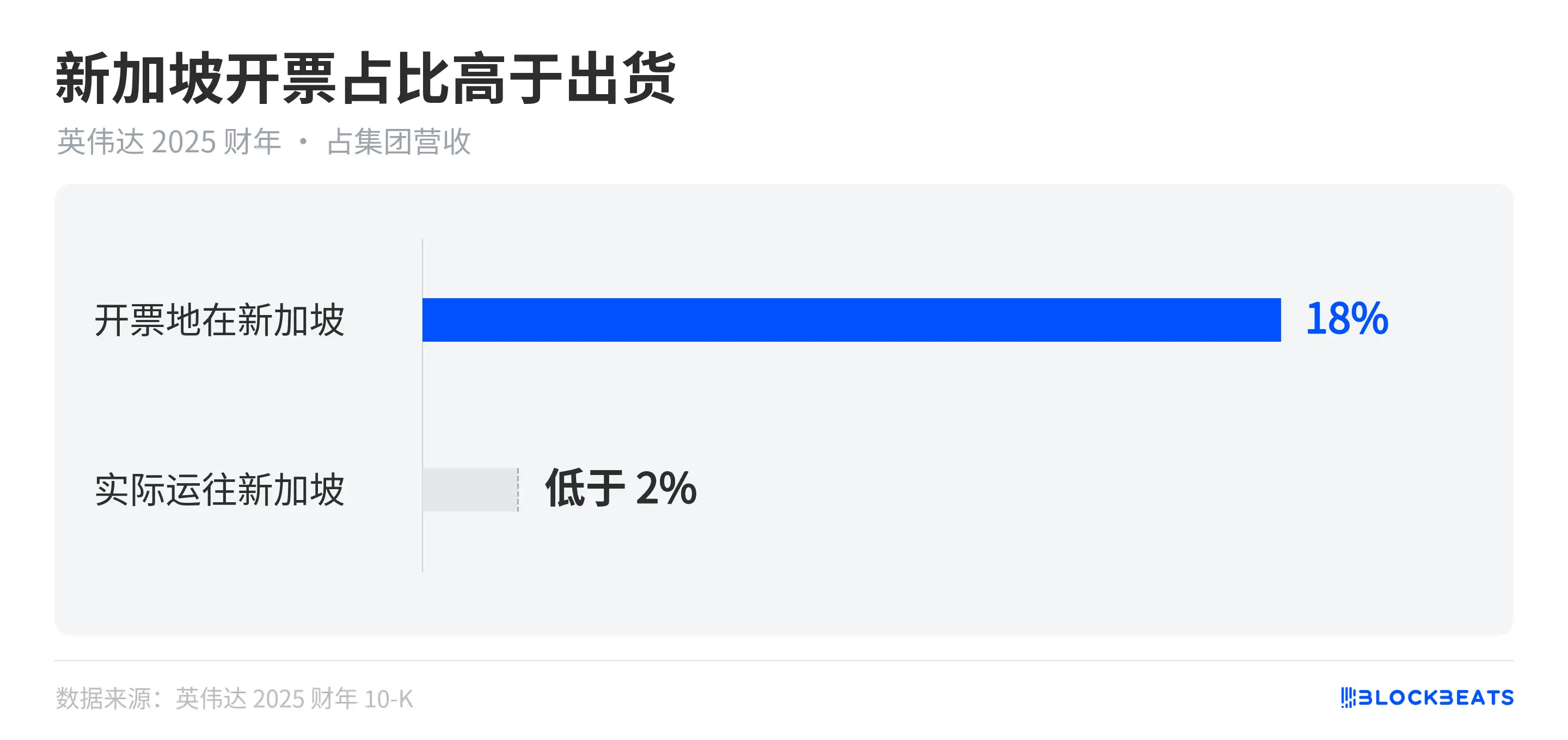
Even so, the enormous regional revenue flow has made Singapore and surrounding countries the focus of Washington’s scrutiny. Nvidia has previously adjusted its financial reporting regional revenue metrics from "customer invoicing location" to "customer headquarters location" in order to reduce outside misinterpretation.
Bypassing Congressional Legal Boundaries and the 90-Day Approval Scale
It is worth noting that this new regulation still leaves room for procedural and legal maneuvering. To date, Congress has yet to formally legislate granting the Department of Commerce authority over "remote cloud access" controls; the relevant bill has been stuck in the Senate since passing the House of Representatives in January this year, with the Department of Commerce utilizing existing final use authorization curves to implement this regulation.
Furthermore, although the rule has taken effect, there remains a 60-day public comment period, with a deadline around mid-January 2027. Chip manufacturers, cloud service providers, and the legal community are expected to exert pressure on the Department of Commerce regarding execution boundaries and exemption details.

Whether Nvidia’s current pause is merely a few weeks of compliance adjustment or will evolve into a long-term slowdown in Southeast Asian computing power expansion ultimately depends on two tangible nodes: the strictness of license approvals within the 90-day window, and when the orders for Dell and Supermicro that have been put on hold will resume delivery.
Click here to learn about job openings at BlockBeats
Welcome to join the official BlockBeats community:
Telegram Subscription Group: https://t.me/theblockbeats
Telegram Discussion Group: https://t.me/BlockBeats_App
Twitter Official Account: https://twitter.com/BlockBeatsAsia
免责声明:本文章仅代表作者个人观点,不代表本平台的立场和观点。本文章仅供信息分享,不构成对任何人的任何投资建议。用户与作者之间的任何争议,与本平台无关。如网页中刊载的文章或图片涉及侵权,请提供相关的权利证明和身份证明发送邮件到[email protected],本平台相关工作人员将会进行核查。