The most expensive "too early to sell" in the world.
Written by: David Yaffe-Bellany, The New York Times
Translated by: Luffy, Foresight News
Sam Bankman-Fried (SBF), the convicted cryptocurrency fraudster, lives in a 30-person cell block at Federal Prison Lompoc in California. This wire-fenced yard is worlds apart from his life as a tech billionaire in the Bahamas.
34-year-old SBF stated during a recent phone call that he tries not to think about "what could have been" most of the time. However, there is one thing that has become hard for him to ignore.
At the end of 2021, when his FTX cryptocurrency exchange was at its peak, SBF invested $500 million in a then-little-known AI startup called Anthropic in exchange for a 13.5% stake. This week, Anthropic is set to launch its IPO, with an expected valuation of $14 billion, potentially making it one of the largest IPOs in Wall Street history.
At this valuation, SBF's investment from five years ago would now be worth a staggering $35 billion, about the size of the entire business during FTX's peak period.
But those shares are no longer his. They've been locked in bankruptcy court until 2024, when executives responsible for liquidating FTX's remaining assets sold the Anthropic shares for $1.34 billion, which is just a tiny fraction of their current value.
For Anthropic, the ownership of those shares is just a peculiar footnote in history. For SBF, it is a source of extreme frustration and resentment. Even after being convicted of fraud, having his appeal denied, and enduring a series of public humiliations, he is still trying to prove his innocence, claiming FTX had sufficient resources at the time that could have prevented bankruptcy.
"Indulging in regret is pointless," he said, "but nonetheless, I indeed spent a lot of time thinking about it."
In September of this year, SBF submitted a barely hopeful appeal to the Supreme Court, citing this Anthropic investment. He claimed that the presiding judge should not have barred him from asserting "FTX had enough funds to repay users."
But none of his arguments are likely to overturn the basic facts of FTX's collapse, an epic financial fraud reminiscent of Bernard Madoff's Ponzi scheme. In November 2022, after a run on the bank exposed an $8 billion hole in customer accounts, SBF surrendered control of FTX. A year later, he was convicted on seven counts of fraud and conspiracy. The misappropriated funds were used to buy luxury homes, donate to political campaigns, and invest in startups like Anthropic.
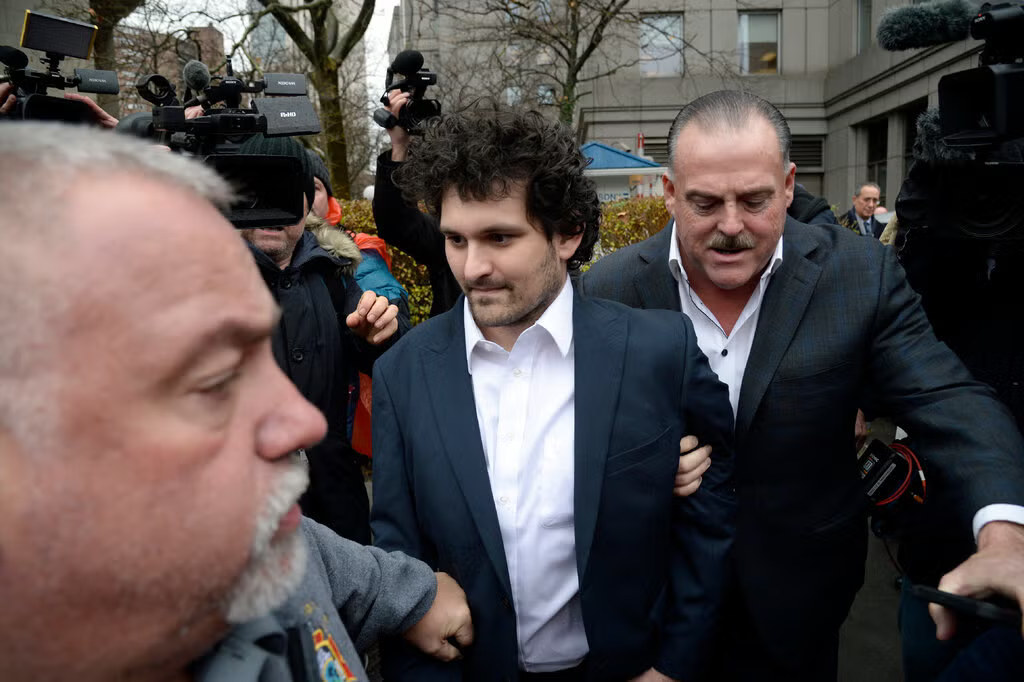
In 2022, Sam Bankman-Fried, founder of the cryptocurrency company FTX, leaves Manhattan Federal Court.
Ultimately, in terms of guilt or innocence, the returns on these investments proved insignificant. Judge Lewis A. Kaplan of the Southern District of New York made a memorable metaphor: SBF was like a "thief who took the loot to Las Vegas and won." He sentenced SBF to 25 years in prison.
"SBF deliberately avoided a fact: he misappropriated and gambled away customer money," said John J. Ray III, an expert in corporate restructuring responsible for the bankruptcy proceedings, in a statement, "We pride ourselves on the integrity and effectiveness demonstrated by a large and responsible professional team."
A spokesperson for Anthropic declined to comment.
Before FTX filed for bankruptcy, SBF reportedly had a net worth of $24 billion and a significant influence in business and politics. His company was one of the largest crypto exchanges in the world, where customers could buy, sell, and store digital assets.
SBF was also an important practitioner of "effective altruism," a philanthropic movement focused on addressing threats that may emerge in decades or even centuries to come. Like many effective altruists, he was very concerned about this long before AI dangers became a significant political topic in the United States.
These views put him in alignment with Anthropic CEO Dario Amodei, who was also active in the same effective altruism circles.
Amodei left OpenAI at the end of 2020 due to disagreements over "how to make technology safer" and subsequently founded this AI company.
SBF said he spoke with Amodei not long after, while FTX was still in Hong Kong. "There was only one degree of separation between us; I knew several people who knew him," SBF recalled. He described Amodei as "very smart, focused, and insightful."
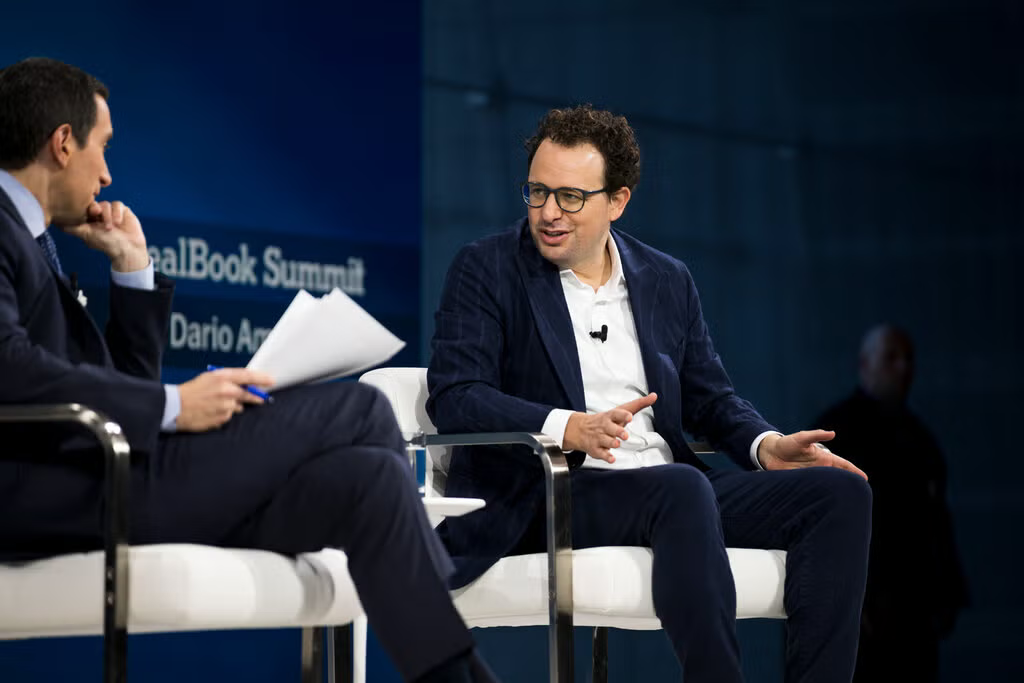
Dario Amodei, founder of Anthropic
In April 2022, Anthropic announced SBF and his two FTX colleagues' investment, which garnered little attention at the time.
"We care whether AI companies are responsible and preparing to help rather than harm society," SBF said in a jail phone call, "Compared to other large companies, Anthropic seems more steadfast in this regard."
Later, in the autumn of 2022, FTX fell into crisis, revealing a large-scale misappropriation of customer funds. Three weeks later, OpenAI released the ChatGPT chatbot, triggering an AI frenzy.
In less than a year, SBF was convicted, while Anthropic was raising funds from well-known investors like Amazon and had just released a popular chatbot named Claude.
As Anthropic became one of Silicon Valley's hottest startups, the fate of SBF's shares became a hotly debated topic in the Delaware bankruptcy court.
When FTX collapsed, SBF handed control to Ray, who had previously overseen the liquidation of Enron. Ray collaborated with the law firm Sullivan & Cromwell to begin raising funds to fully repay FTX customers. SBF left behind a tangled mess of company assets, including illiquid digital assets, properties in the Bahamas, and shares in other companies.
Ray's team began searching for buyers. In corporate bankruptcies, large-scale sales are routine, with the task of liquidating assets being to maximize recovery in the most efficient way. However, some customers hoped FTX would hold onto the Anthropic shares a bit longer.
"I wish they had held onto them at that time," said FTX customer Sunil Kavuri, who testified at SBF's sentencing hearing, "I foresaw that it would be one of the most valuable assets."
Worse still, Ray seemed unaware of the potential value of those shares. In an interview with author Michael Lewis, he referred to the company as "this thing called Anthropic."
"It's just a bunch of people with ideas," Ray said, "there's nothing there."
Ultimately, according to court documents, FTX sold the Anthropic shares to dozens of investors at about $30 per share, raising a total of $1.34 billion. Buyers included business entities associated with the UAE investment fund Mubadala, the nonprofit Ford Foundation, and the trading firm Jane Street, which had previously employed SBF.
A spokesperson for FTX's liquidation assets stated that the sale was "completed at the market price at the time under court supervision."
"Billions of dollars in funds were misappropriated and invested without customer consent," the spokesperson said, "At the time, no one could know whether these investments would succeed or fail, and many did indeed fail."
Representatives from Jane Street and the Ford Foundation declined to comment. Mubadala did not respond to requests for comment.
The bankruptcy liquidators have significant discretion over when and how to sell assets. Emory University Law School professor Lindsey Simon said in such cases, FTX's handling of the Anthropic shares was reasonable.
In May 2024, the liquidators announced that FTX creditors would receive up to $1.18 for every dollar lost, exceeding full reimbursement. But this did not quell public anger.
The promised reimbursements were calculated at the cryptocurrency prices when FTX collapsed, during a severe market downturn. If customers held Bitcoin on the day FTX filed for bankruptcy, their compensation corresponded to that moment's coin price, not the much higher price today.
"That was our money, we didn't authorize him to use our money," Kavuri said.
Now, SBF has very limited contact with the outside world. He exchanges messages with a group of reporters, friends, and relatives who continuously provide him updates on developments in the AI field. He can use the prison phone for 15 minutes at a time, with calls automatically cutting off after the time limit.
During several calls this autumn, he repeatedly mentioned Ray and the bankruptcy lawyers. "I'm sure you could think of ways to make things worse," he said, "but I honestly can't come up with anything right now."
SBF's repeated grievances have long been dismissed in court. But has he ever considered a parallel universe where, if FTX had not imploded, those Anthropic shares might have made him immensely wealthy?
"I’ve thought about it a little," he began to answer, "I try not to spend too much time on it…"
Then the call was cut off.
免责声明:本文章仅代表作者个人观点,不代表本平台的立场和观点。本文章仅供信息分享,不构成对任何人的任何投资建议。用户与作者之间的任何争议,与本平台无关。如网页中刊载的文章或图片涉及侵权,请提供相关的权利证明和身份证明发送邮件到[email protected],本平台相关工作人员将会进行核查。


