After the Democratic Party won both chambers of the United States Congress, the first change was not a specific bill, but rather the market's perception of the relationship between business and politics.
Elon Musk was requested to preserve records related to Starlink and Starshield, and the Trump family's crypto business entered the investigation list for the next Congress. After Jensen Huang resigned from his position as CEO of NVIDIA, the company became embroiled in congressional inquiries, board investigations, and shareholder lawsuits.
These events have different origins and cannot all be attributed to the Democratic Party. However, they reveal a common issue: for the past two years, proximity to the White House was seen by the market as a policy advantage. After the Democratic Party won Congress, the same business-political relationship began to become a clue for committee investigations and conflict of interest examinations.
The majority seats are not yet effective
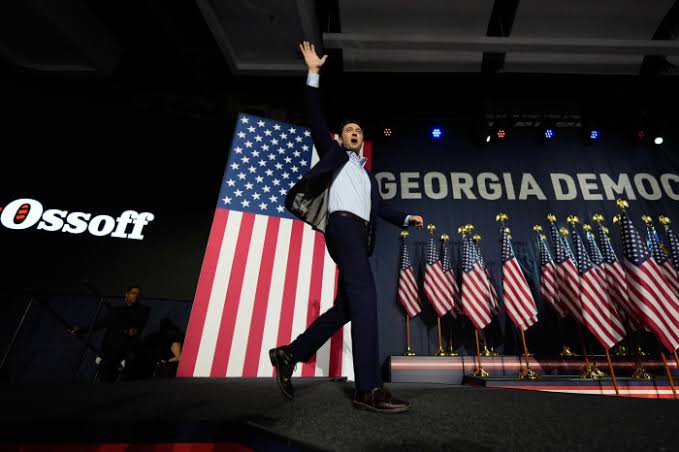
In the midterm elections on November 3, 2026, the Democratic Party won the majority in both the Senate and the House of Representatives.
The new Congress will not officially take office until January 3, 2027. Before this, the Republicans still control the current Congress. The Democrats can now prepare investigations and request relevant agencies to preserve documents; however, truly coercive committee subpoenas will have to wait until the power transition occurs.
This is also the most important dividing line in assessing this round of political risk.
Currently, what is publicly available mainly involves congressional oversight, board investigations, and civil lawsuits. They could damage corporate reputation and slow down government contracts and regulatory approvals, but they do not equal criminal convictions, nor can it be said that a "cleansing" has been completed.
The Democratic Party cannot unilaterally rewrite the rules based on existing seats. Trump still holds the presidential veto, and the Democrats in both chambers have not achieved the two-thirds majority needed to overturn a veto.
With limited legislative space, investigative power thus becomes even more important.
Musk was the first to receive a letter
Elon Musk was the first among Trump's business allies to enter substantive proceedings.
In November 2026, two Democratic senators officially wrote to Musk, requesting him to preserve records related to the use of Starlink and Starshield in Ukraine, including communications between SpaceX executives and the White House and the Pentagon.
SpaceX simultaneously possesses commercial satellite communication and military communication technology, along with numerous contracts with the U.S. government. Musk himself has also participated in the work of the Department of Efficiency as a government special employee. Entrepreneur, government advisor, political donor, and federal contractor—all of these identities converge in one person.
When the Republicans controlled Congress, attempts by the Democrats to summon Musk were blocked. After the majority seats changed hands, this layer of protection will disappear in January 2027.
The House Democrats are also preparing to investigate the cuts in federal employees by the Department of Efficiency, government contracts of SpaceX, and whether there are conflicts of interest between Musk's enterprises and the federal government.
For Tesla, short-term risks may not immediately reflect on car sales. What is more worthy of attention are subsidies, procurement, regulatory approvals, and Musk's personal focus.
For SpaceX, the issues are more direct. One of its biggest advantages is its close binding with the U.S. national security system. Now, this binding also provides Congress with reasons to intervene in the company's operations.
The suspense of Jensen Huang's return
Jensen Huang's situation is more complex, as the pressures he faces come from different lines.
The initial request for him to undergo a closed-door inquiry came from three Republican House committee chairpersons. NVIDIA's board initiated a corporate governance investigation, while shareholders launched a civil securities lawsuit. Subsequently, Democratic members sought to expand the investigation but were not the only driving force.
On November 12, 2026, NVIDIA announced that Jensen Huang resigned from his positions as president, CEO, and director, effective immediately. Chief Financial Officer Colette Kress temporarily took over as CEO; Harvey C. Jones became the first chairman of NVIDIA's board in history.
The announcement did not specify the exact reasons for Huang's departure, and the board's independent investigation has not yet concluded.
His departure does not necessarily mark the end of this personnel change.
The Financial Times reported on November 15, citing anonymous informed sources, that Huang has already discussed the possibility of returning to NVIDIA with close associates. Some Silicon Valley entrepreneurs, employees, and shareholders are also pushing the board to reconsider his departure. Musk publicly supports the related petition; two investment institutions holding NVIDIA shares sent a letter to the board, urging them not to hastily rule out Huang's return.
However, there remains quite a distance from "rehiring." Currently, the news of his return is only based on anonymous sources, and Huang himself has not made any public statements. NVIDIA's public stance is that the company is hiring external headhunting firms and has not officially contacted any CEO candidates, making speculation about specific candidates premature.
The board has also not suspended the succession process. It has separated the positions of chairman and CEO and is clearly considering both internal and external candidates. The ongoing independent investigation, congressional inquiry, and Washington's scrutiny of NVIDIA's compliance with export control could all affect whether Huang returns to the management level.
This controversy raises a question that the market must face again, one that was rarely discussed seriously in the past: how much of NVIDIA's recent valuation belongs to CUDA, product roadmaps, and the developer ecosystem, and how much belongs to Jensen Huang himself?
According to NVIDIA's market data, the company's stock price fell from $204.64 on October 30, 2026, to $162.85 on November 13, with a decline of approximately 20.42%; the closing market capitalization on November 13 was about $3.93 trillion.
However, after rumors of his return emerged, the market quickly reacted. Some over-the-counter contracts linked to NVIDIA's stock rose more than 3% at one point. This at least indicates that investors still view Huang as an independent variable in NVIDIA's valuation.
What is truly information-rich next is whether the board will formally include Huang in the candidate list and what conclusions the independent investigation will reach.
Cryptocurrency is a bigger money bag
Compared to NVIDIA, the connection between the Trump family's crypto business and political power is more direct.
The upcoming Democratic committee in Congress has included the Trump family's business dealings, World Liberty Financial, and related digital asset businesses in its investigation direction. Democratic members are concerned about whether there is an exchange of interests between government policy, foreign funds, and family income.
According to disclosures by public media, the Trump family's crypto-related businesses have gained considerable revenue over the past year. Some transactions are also closely timed with Middle Eastern capital and U.S. AI chip export policies. Existing information is insufficient to prove illicit exchanges of interests, but it is enough for Congress to request documents, witnesses, and financial records.
Regulatory expectations have also changed. The much-anticipated "CLARITY Act" failed to secure the necessary 60 votes in the Senate procedural vote in September 2026. After the Democrats won both chambers, the difficulty of restarting the bill in its current form has increased further.
The controversies are concentrated in two areas.
One is the potential conflicts of interest arising from government officials and their families holding and managing crypto assets; the other is whether yield-bearing stablecoin products will siphon deposits from community banks.
This means that the revenue gained by the Trump family from crypto business is no longer just political news. It will directly affect whether the U.S. crypto industry can gain a clear regulatory framework.
The industry originally anticipated regulatory certainty, but is now facing a potential ethical investigation ahead, with market structure legislation taking a step back.
Funds begin to seek alternatives
This round of changes truly impacts the market in that funds no longer view "proximity to Trump" merely as a positive.
The previous trading logic is easy to understand: Trump supports AI infrastructure construction, benefiting NVIDIA and computing power chains; Trump relaxes crypto regulation, benefiting Bitcoin, trading platforms, and stablecoin companies; Musk helps Trump campaign, providing Tesla and SpaceX with a better political environment.
This logic overlooked one cost. The closer the relationship between businesses and the president, the higher the investigative value when the opposition party takes back Congress. Businesses may obtain contracts, policies, and regulatory conveniences but will also be more easily required to explain how these benefits came about.
Evidence of fund diversion has already begun to emerge. In the initial trading phase after Huang's resignation, some funds briefly flowed towards AMD, Broadcom, and concepts of cloud manufacturers developing their own chips. The market is not trading on "the disappearance of AI," but rather reducing dependence on a single company like NVIDIA.
The crypto market is no different. Bitcoin and related stocks have simultaneously faced pressure from rising U.S. Treasury yields, stalled regulatory bills, and expectations of political investigations, which cannot solely be attributed to the Democratic victory. However, the policy imaginations that used to support valuations have indeed weakened.
For traditional financial institutions, this is actually an opportunity.
If interest payments on stablecoins are restricted, the pressure of deposit outflows for banks will ease; if crypto platforms face stricter conflict of interest scrutiny, institutions with licenses, customer identification systems, and mature compliance departments will regain an advantage.
The value has not left the financial system; it is simply shifting from participants with stronger political relationships to those better able to withstand compliance scrutiny.
The protective layer begins to be valued
After the Democratic Party regained the House of Representatives in 2018, it could not easily overturn Trump's policies, so it turned committee investigations and subpoenas into primary checks and balances.
The difference in this round is that a larger business alliance has formed around Trump.
Musk owns rockets, satellites, cars, AI platforms, and social media; the Trump family is directly involved in crypto assets; NVIDIA is the core of AI computing power and is at the center of chip export controls to China. Business interests, national security, and political donations are already intertwined.
The Democratic Party finds it challenging to dismantle this system through legislation all at once but can compel related companies to continuously submit documents, accept hearings, and explain government contracts and regulatory decisions.
This will increase legal fees and the burden on management, and may also delay approvals, procurements, and cooperations. More troublesome is that investigations will continually remind investors that the policy dividends previously counted in valuations may not be able to cross electoral cycles.
What the market truly needs to price in next is not whether a certain billionaire will receive a subpoena.
Rather, it is how much the layer of political protection that NVIDIA, Tesla, SpaceX, and crypto companies relied on in the past is worth now that the White House is still in Trump's hands, but Congress has shifted to the Democrats.
*The content of this article is for reference only and does not constitute any investment advice. The market has risks, and investment should be done cautiously.
免责声明:本文章仅代表作者个人观点,不代表本平台的立场和观点。本文章仅供信息分享,不构成对任何人的任何投资建议。用户与作者之间的任何争议,与本平台无关。如网页中刊载的文章或图片涉及侵权,请提供相关的权利证明和身份证明发送邮件到[email protected],本平台相关工作人员将会进行核查。


