Author: Felipe Montealegre, Founder of Theia Research, Felipe Montealegre (IFS)
Translation: Shenchao TechFlow
Shenchao Guide: Stablecoins and tokenized funds have been hailed as the crown jewels by traditional financial giants, while decentralized perpetual contracts are advancing alongside the parent company of the New York Stock Exchange into mainstream capital markets. The viability of the cryptocurrency technology route has been confirmed; however, most practitioners and investors are mired in unprecedented despair and fatigue.
Felipe Montealegre, the founder of Theia Research, has uniquely deconstructed the entire cryptocurrency industry into a three-statement financial model consisting of an income statement, cash flow statement, and balance sheet. He sharply points out that the practitioners’ cold feelings do not stem from a lack of income from protocols, but rather from a deeper asset-liability sheet recession.
With the industry’s annual cash inflow at only about $26.6 billion, the on-paper wealth evaporated by Ethereum and Solana over the past year has reached as high as $350 billion. To make up such a massive capital gap, the industry needs not only more leading tokens with actual cash flow capabilities but also a re-evaluation of the underlying value storage assets.

Why is sentiment at an all-time low despite the industry operating?
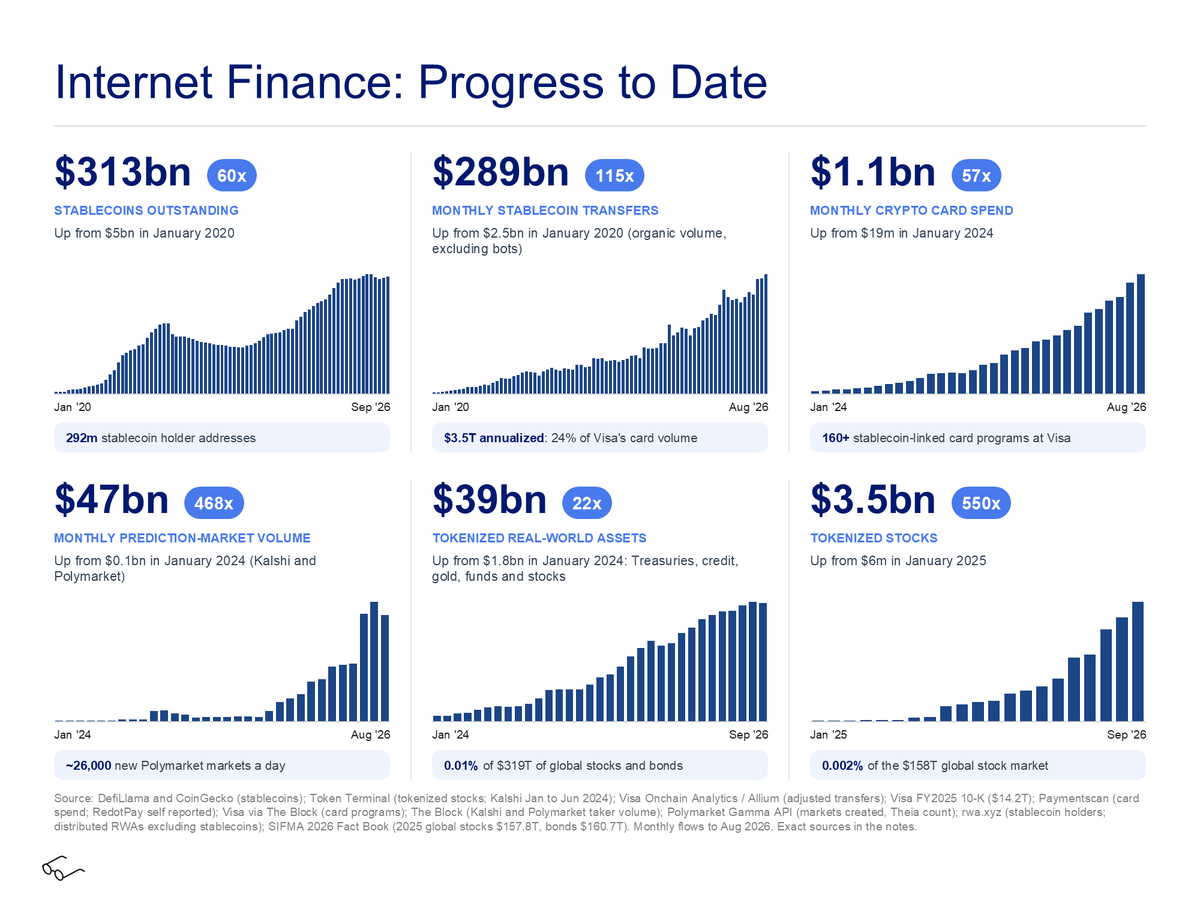
Cryptocurrency technology is indeed operational, yet the entire market seems indifferent. Just a few years ago, stablecoins and tokenized funds were mere distant concepts; prediction markets, lending protocols, and automated market makers (AMMs) were still in the draft phase of academic whitepapers.
Now, U.S. Treasury Secretary Scott Bessent has publicly stated that stablecoins will soon reach a scale of $2 trillion; BlackRock CEO Larry Fink is confident that all assets will ultimately be tokenized; Hyperliquid has partnered with the parent company of the New York Stock Exchange, ICE, to introduce on-chain perpetual contracts into the U.S. capital markets.
If you have always believed that cryptocurrency technology will completely reconstruct the global financial system, then you are absolutely right. So, why do you, as someone in the industry, feel so bitter and hopeless today?
In the early stages of my career, I received a piece of advice: never work for an organization that is bound to a new fund round and will not earn performance compensation (Carry). This is not because they cannot offer competitive salaries, but because the team culture of the company will inevitably fall into a quagmire.
The underlying logic of human nature is often very simple: only when people both work hard and genuinely make big money can they feel joyful and invigorated. This rule not only applies to a single company but also to the entire macro industry.
Before delving into various specific details, I wish to materialize this abstract emotional sensation into a financial model of the industry comprised of three complete financial statements: the income statement, cash flow statement, and balance sheet. Next, let us examine the simplified financial statements of the cryptocurrency industry one by one.
Income Statement: Protocol Revenue is Stable, but Distribution is Highly Differentiated
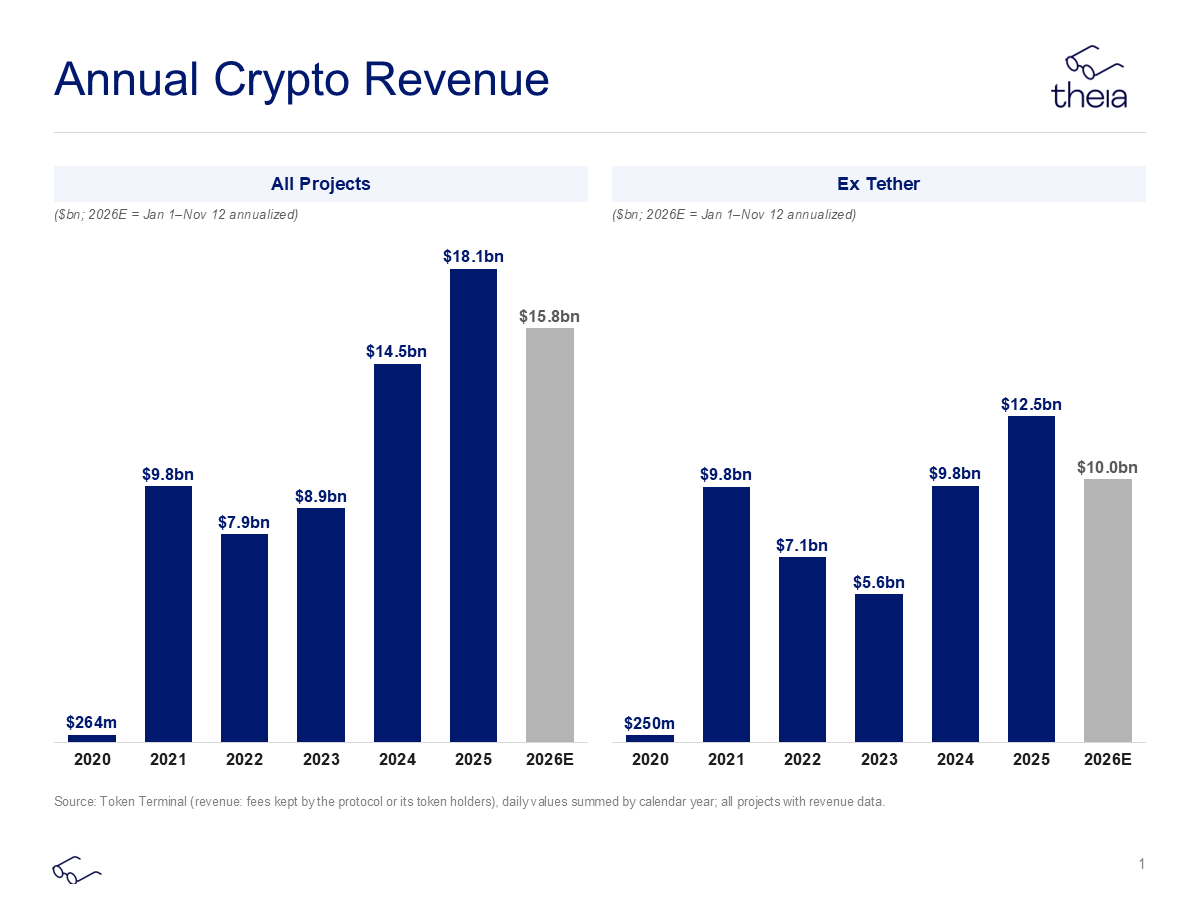
In the income statement, let us focus on the operating revenue of the entire industry. Most operational costs directly linked to this revenue ultimately flow to various labor forces and participants within the industry, including software engineers, business development teams, node validators, and security auditing firms.
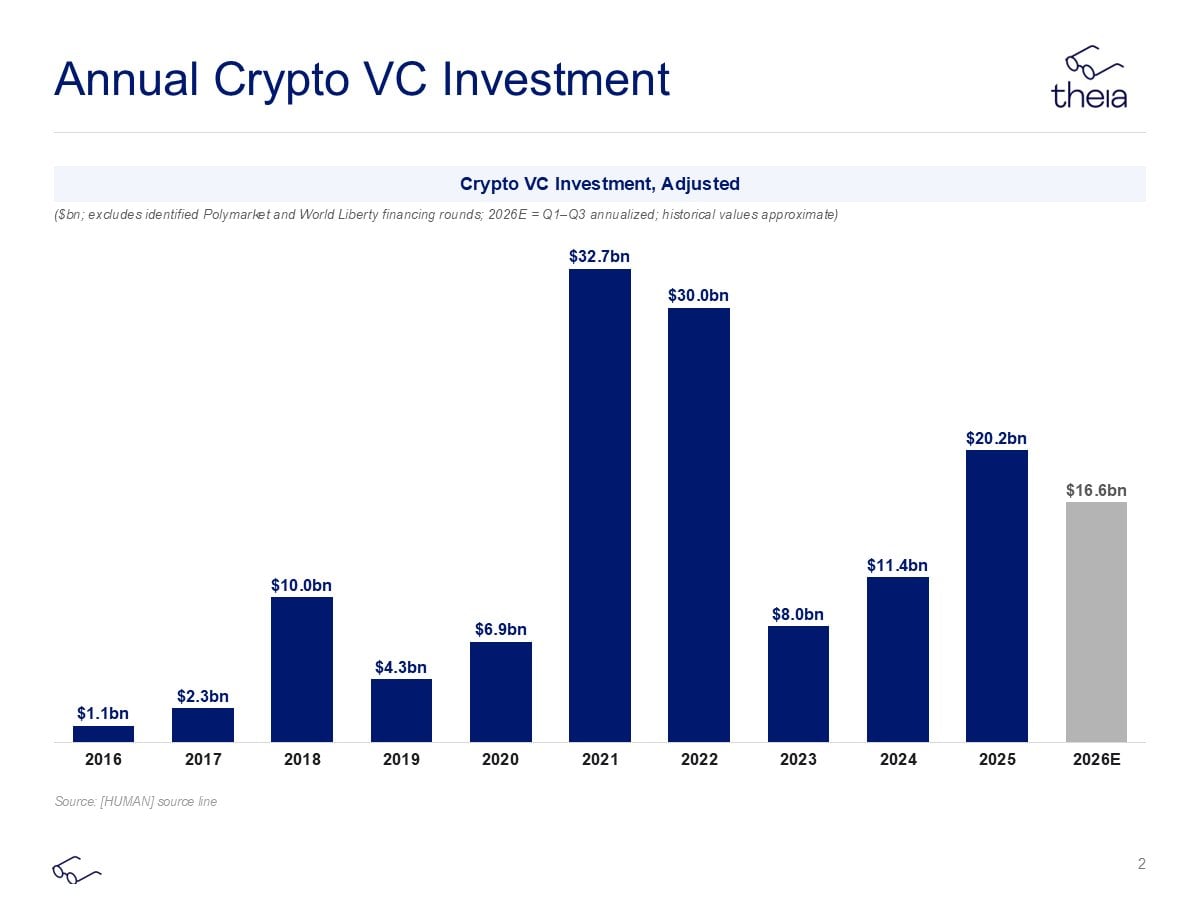
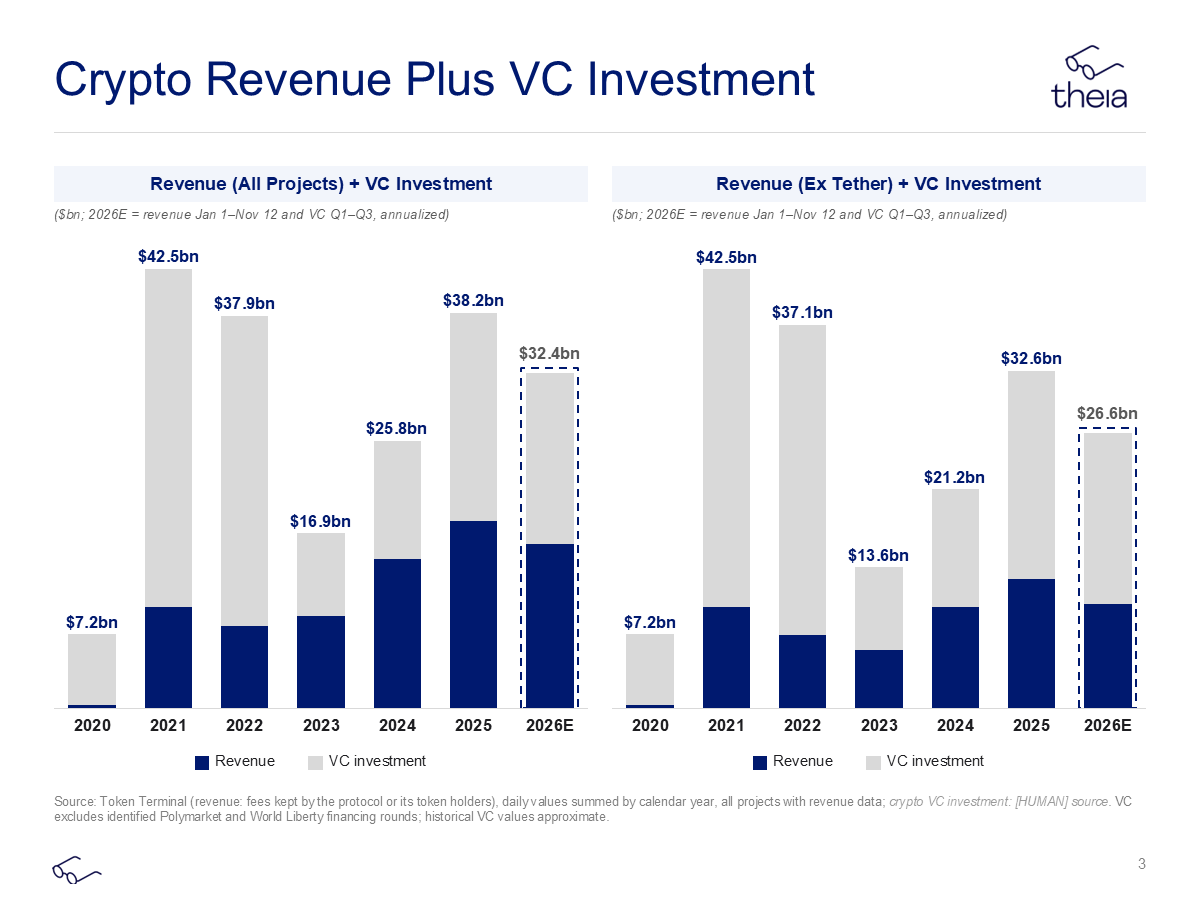
From the perspective of operating revenue, the performance of the cryptocurrency industry is not actually bad: since 2021, the total annual income of the entire industry has increased by about $8 billion; even after excluding Tether's astonishing profits, the industry revenue has only slightly decreased by about $3 billion compared to that year.
It is worth noting that fluctuations in asset prices that lead to changes in the balance sheet, while often recorded in traditional corporate income statements under net profit, will be specifically analyzed in the last section, i.e., the overall balance sheet of the industry.
Cash Flow Statement: Salary Constriction Caused by the Downturn in VC Financing
A standard cash flow statement typically covers three major parts: cash flows from operating activities, cash flows from investing activities, and cash flows from financing activities.
In our simplified model, based on previous discussions, operating cash flow can reasonably be substituted with the industry’s operating revenue. Cash flow from investing activities is crucial in heavy asset industries but has minimal impact on the cryptocurrency industry, as on-chain protocols hardly have substantial capital expenditures (Capex).
Cash flow from financing activities is the core variable that determines the industry’s sentiment. Historically, the salary remuneration, luxurious offices, and daily travel expenses of the vast majority of practitioners in the cryptocurrency industry have essentially relied on the continuous influx of venture capital (VC dollars).
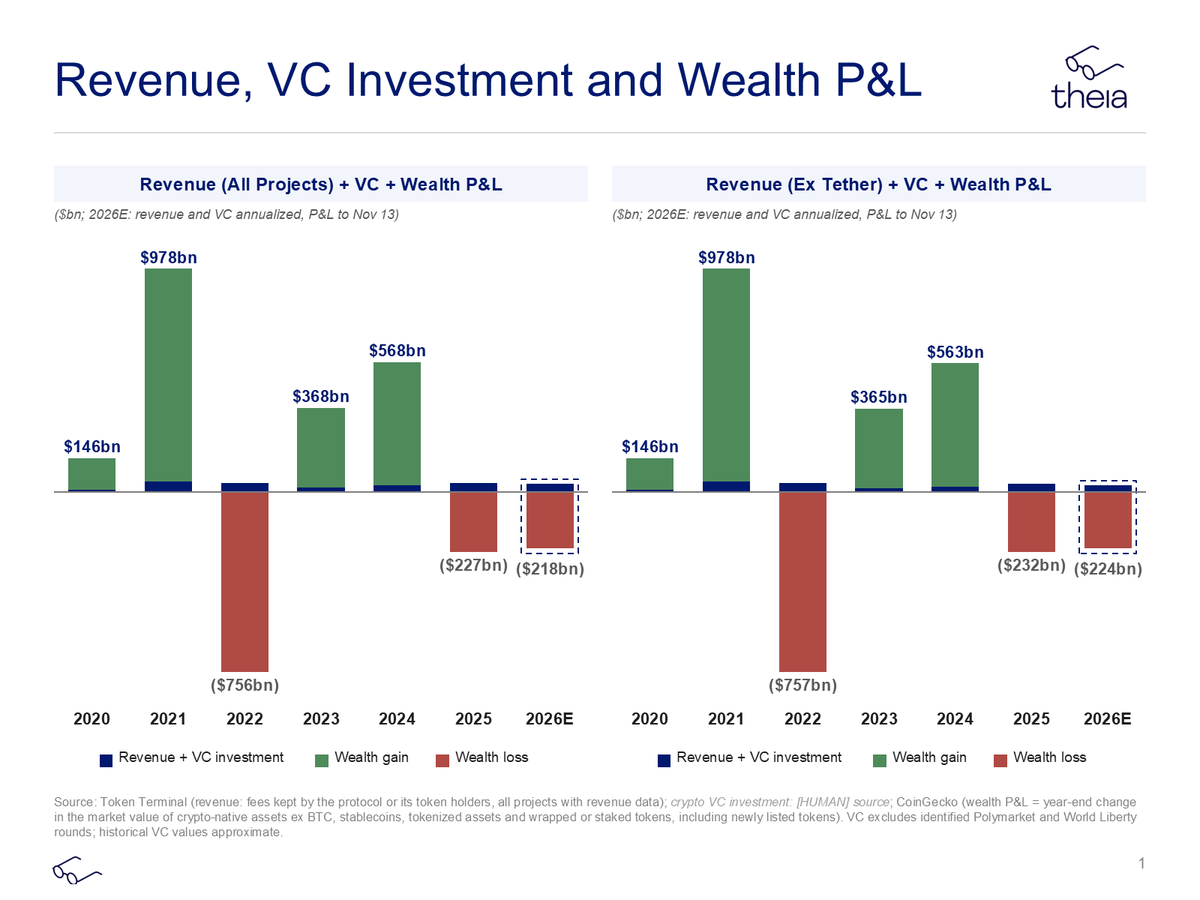
By totaling the actual revenues of all protocols in the industry and the net inflows of external venture capital, we can derive the total cash flow that genuinely flows into the cryptocurrency world each year for paying salaries, facilities, auditors, strategic consultants, headhunters, and validating nodes. What remains after deducting expenses is the profit for investors.
The data clearly shows: compared to the peak frenzy of 2021 and 2022, the annual net inflow of external cash into the cryptocurrency industry has sharply decreased by about $15 billion (this figure similarly excludes Tether, as its cash flow remains highly retained within the system).
A net reduction of $15 billion in real cash is enough to cut extremely substantial high-paying jobs and operational budgets. However, this still does not fully explain why the current cryptocurrency industry is undergoing such a profound, almost collapse-like surrendering despair.
Balance Sheet: Core Issues and the $350 Billion Wealth Evaporation
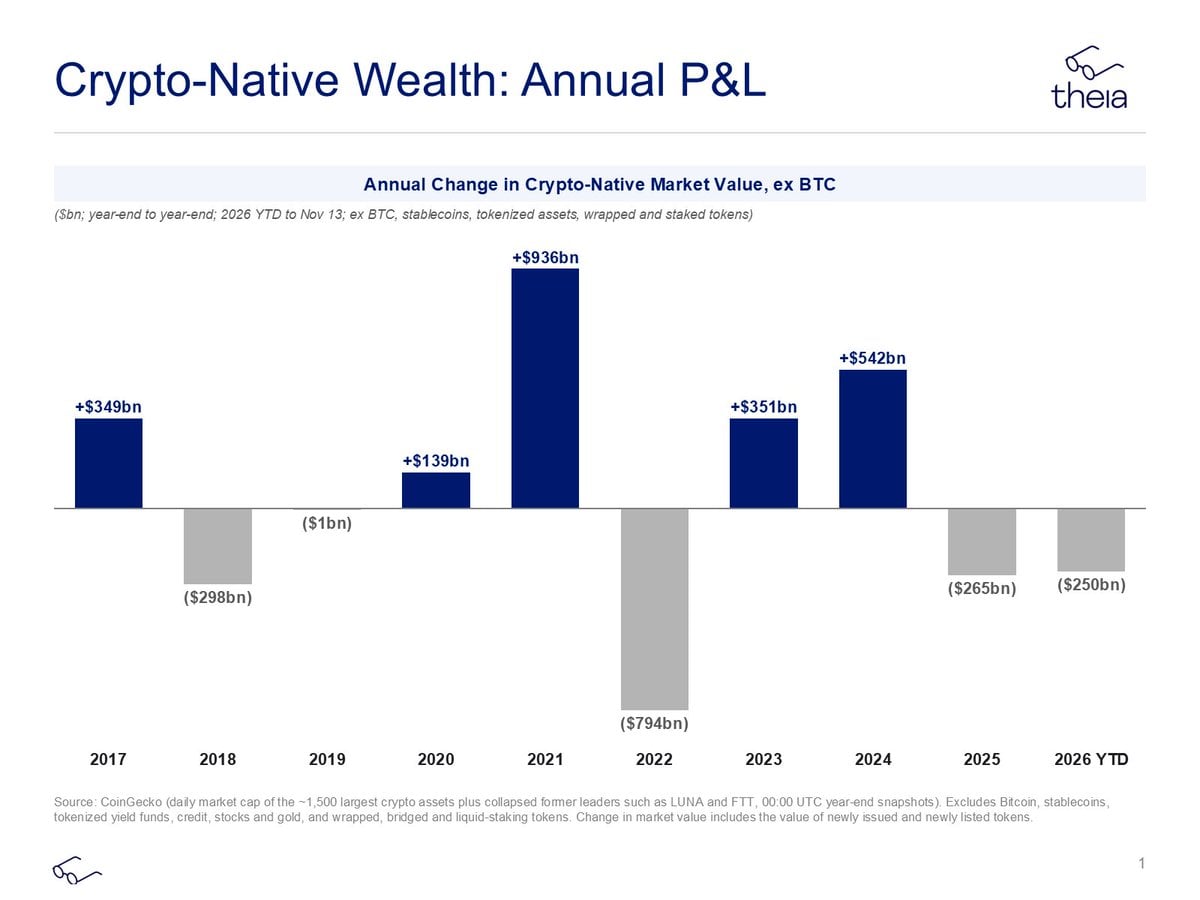
This is the true source of the collective pain among the entire industry. Please take a close look at this astonishing mathematical disparity: the entire cryptocurrency industry's total external cash inflow this year is only $26.6 billion; during the same period, only Ethereum (ETH) and Solana (SOL) have evaporated about $350 billion in wealth from the industry’s balance sheet since last October.
The cryptocurrency industry is an extremely rare and special species, where the assets recorded on its balance sheet have an astronomical discrepancy compared to its actual day-to-day operational cash flow.
No amount of traditional U.S. stock tokenization expansions or slight growth from stablecoin extraction can fill the rigid bleeding deficit of $350 billion on the balance sheet.
If we solely rely on protocol revenue growth to make up for the collapse in the asset values of Ethereum and Solana, we would need to increase the total industry revenue by 35 times, equivalent to creating 350 Hyperliquid-level super cash cows out of thin air on-chain.
When you align all the numbers in the same coordinate system, you will gain clarity: the health of the industry’s balance sheet is the only truly dominant first-order driving force affecting everyone’s fate and emotions.
I firmly believe that to thoroughly understand the underlying state of an industry, the most effective way is to extend the time axis to examine the dynamic evolution of its three financial statements, particularly clarifying the circulation of funds (who is drawing capital, who is reinvesting, where the money is ultimately spent). This analytical framework is equally applicable to Silicon Valley tech giants, U.S. private equity, or the AI wave.
This article’s整理of the financial statements of the cryptocurrency industry, although taken from a minimalist perspective, is sufficient to explain the true background of the current market: the reason everyone is generally immersed in sadness and pain is purely that the token prices have fallen, and the on-paper capital has experienced extreme shrinkage.
Outlook for 2027 to 2028: Two Ways to Emerge from Despair
Although the situation feels severe, we still have solid reasons to remain optimistic. First, the most intense phase of the bubble burst and sell-off is likely over: quality on-chain protocols are currently being priced at extremely rational valuations, while narrative tokens from the old era like Cardano (ADA) have seen their total market cap plummet from a peak of $80 billion to only $5 billion.
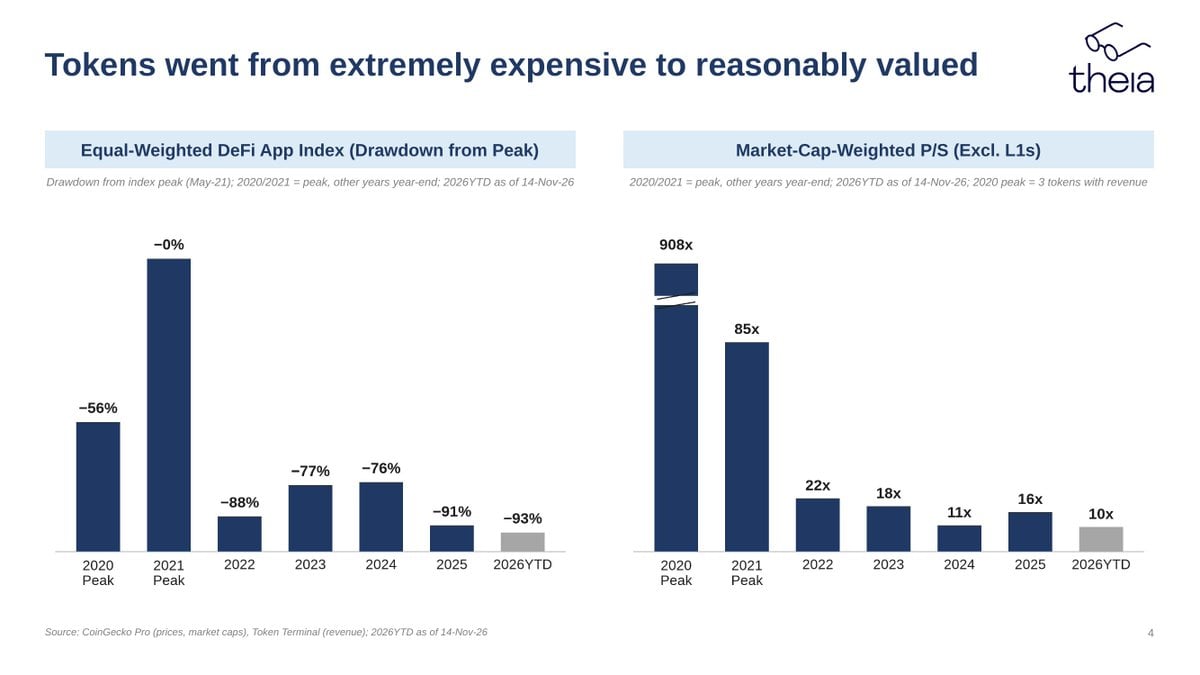
The first way to emerge from the current prolonged despair cycle is to actively cultivate truly revenue-generating tokens.
Although merely relying on operating revenue to offset the $350 billion wealth loss requires 350 Hyperliquids, under the leverage effect of asset pricing multipliers, we actually just need a few tokens like HYPE that have real cash-generating capabilities to reshape the asset side of the balance sheet, bringing the overall net assets of the industry back to their best levels in 2024.
The other more direct way hinges on core native assets (such as BTC, ETH, SOL, and ZEC) with value storage potential regaining an increase of $350 billion in total market cap.
For Bitcoin, this translates to only about a 30% increase in value (of course, if we exclude non-reinvesting external ETF retail investors and pure hoarders, the entire industry may need over 60% of Bitcoin's price increase to provide external liquidity).
Or it could rely on Ethereum and Solana to start another push toward their historical all-time highs (ATH). This inference may not be novel, but in the cold, hard logic of mathematics, only real capital inflow can dissolve the deep-seated crises of the balance sheet.
免责声明:本文章仅代表作者个人观点,不代表本平台的立场和观点。本文章仅供信息分享,不构成对任何人的任何投资建议。用户与作者之间的任何争议,与本平台无关。如网页中刊载的文章或图片涉及侵权,请提供相关的权利证明和身份证明发送邮件到[email protected],本平台相关工作人员将会进行核查。


