
Author: Shao Jiadian
A cryptocurrency payment company has finally completed its license application and is now preparing to connect with banks, open corporate accounts, receive customer fiat currency, and initiate settlements between stablecoins and traditional currencies.
License documents, company registration certificates, board member and shareholder information have all been prepared, and the business plan does not appear to have any obvious issues. However, halfway through the bank’s due diligence, they suddenly began to inquire: From which countries are the main customers? Where did the stablecoins initially enter the platform? Who controls the customer wallets? To whom are the exchanged euros ultimately paid? If the transaction involves third-party wallets, how does the company prove the source of the funds and handle abnormal transactions?
Only then did the project team realize that while the regulatory agency had allowed them to operate, the bank might not be willing to allow funds to enter its account system.
This is not a phenomenon unique to the cryptocurrency payment industry, but it becomes more pronounced in businesses that involve on-chain assets, cross-border funds, and multiple service entities.
The license addresses whether the company can legally provide specific financial services, while the bank account opening assesses whether the bank is willing and able to comply with taking on the risks associated with this company and its transactions. The two are related, but they have never been the same approval process.
For cryptocurrency payment projects that are truly prepared for long-term operation, obtaining a license is just the first step. Establishing stable and sustainable banking and payment partnerships is what truly determines whether the business can operate effectively.
01 Why can banks still refuse even after regulatory approval?
The most common misunderstanding for projects is: since the regulatory agency has already reviewed the company, why does the bank need to conduct another review?
The reason lies in the different responsibilities assumed by both parties.
During the licensing process, the regulatory agency primarily assesses whether the company meets the market entry requirements for the corresponding financial activities. For instance, a CASP needs to prove that it has the governance, prudent resources, customer asset protection, and ongoing compliance capabilities required to provide approved cryptocurrency asset services; payment institutions need to meet the relevant regulatory requirements for payment services.
However, banks are faced with a different specific business relationship.
When a bank opens accounts for a cryptocurrency payment company, receives funds, executes payments, or provides settlement services, it needs to independently assess the anti-money laundering, sanctions, fraud, operational, and other risks generated by that customer and related transactions, and consider whether these risks can be effectively managed by their existing systems, processes, and risk tolerance.
In other words, the regulatory agency reviews:
Whether you are qualified to conduct this business.
The bank also needs to judge:
Once this business enters my account and payment system, can the relevant risks be effectively identified, controlled, and continuously monitored?
This distinction is particularly evident in the U.S. MSB registration issue. FinCEN explicitly states that MSB registration is not a government certification or endorsement of the legality, business capability, or compliance level of a company; FinCEN itself does not issue operational licenses covering nationwide businesses through MSB registration, and related activities may still involve state-level licensing requirements.
Therefore, providing a bank with an MSB registration certificate is, at most, just part of the regulatory identity review and cannot replace the bank's judgment on the actual business.
Even if a company has obtained a more comprehensive CASP, payment institution, or other formal licenses, the bank still needs to complete its own customer due diligence.
02 What banks are really worried about is not that the project uses blockchain
Suppose a traditional cross-border payment company receives payments from corporate clients daily and then settles with overseas suppliers. Banks can usually establish due diligence logic around the payer, payee, transaction contract, goods or services, and related cash flows.
But if the same business incorporates stablecoins, the flow of funds might become: an overseas customer first pays USDC through an on-chain wallet, the platform collects and converts the assets, and then another financial institution pays euros to the merchant.
At this point, the bank might only see a fiat currency deposit from an exchange agency or payment partner, while the actual payer and the previous on-chain asset path are outside the bank's account.
The bank needs to further assess: where exactly do these funds come from? What transaction do the funds correspond to? Do the on-chain assets involve high-risk addresses? Does the company have the capacity to identify and explain abnormal flows?
The European Banking Authority (EBA), in its 2024 anti-money laundering risk factors guidance for cryptocurrency assets, specifically required CASPs to identify potential money laundering and terrorist financing risks in conjunction with customer, product, service channels, and regional risks, suggesting risk mitigation measures including on-chain analysis. The relevant guidance also pertains to other financial institutions conducting business with CASPs.
Similarly, the FATF's previously released virtual asset risk indicators focus on abnormal transaction patterns, amounts and frequencies lacking reasonable commercial explanation, sources of funds, highly anonymous transaction tools, and high-risk jurisdictions.
This means that banks do not simply view all on-chain transactions as problematic.
What banks find most difficult to accept is often:
The company can complete the transaction but cannot provide sufficient information to prove the underlying customer, source of funds, and business purpose for the transaction.
If the project cannot clarify where upstream customers come from, which wallets the funds flow through, why conversions and cross-border settlements are necessary, it becomes even more difficult for banks to assume these risks on behalf of the project.
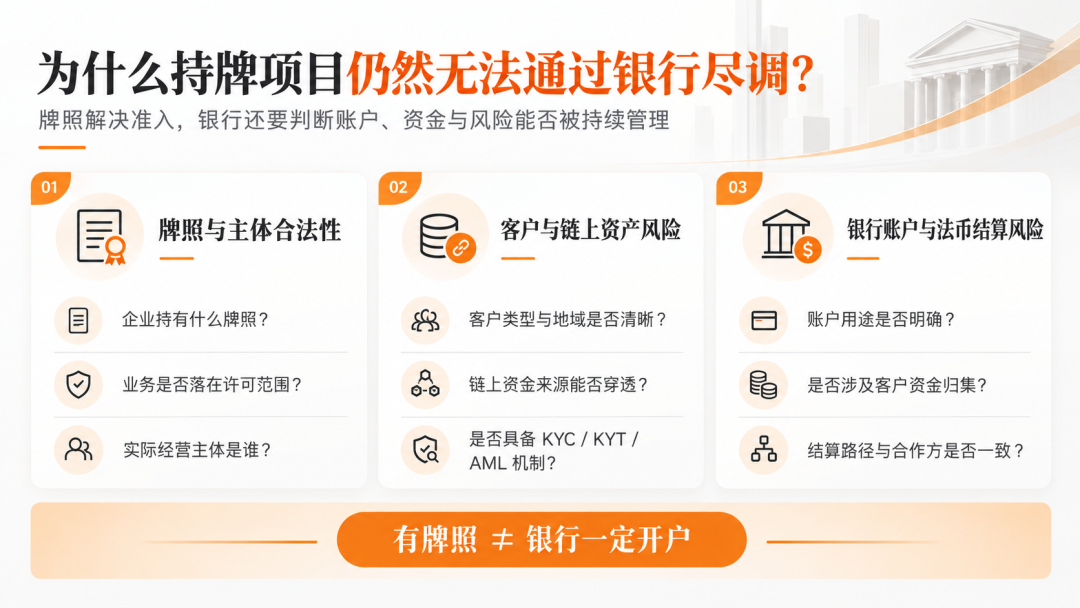
Figure 1 | Three core concerns for bank due diligence: License and entity legality, customer and on-chain asset risks, account and fiat settlement risks
03 More easily overlooked than "unclear source of funds" is unclear account purpose
Many projects, when contacting banks, only present one requirement:
"We need to open a corporate bank account."
But for banks, this description is far from sufficient.
Because even though it is a corporate account, the actual purposes may differ significantly.
The first type is a company’s own funds account, mainly used for receiving shareholder investments, paying employee salaries, office rent, and other operational expenses.
The second type is an operational income and payment account, used to receive genuine business revenues and make corresponding payments to contractual counterparts.
The third type involves client funds, merchant settlements, or the collection of funds from multiple clients. The legal relationships, fund ownership, customer fund protection requirements, and payment service attributes of such accounts may differ significantly from ordinary company operational accounts.
For example, a CASP needs to open an account to pay employee salaries, while another cryptocurrency payment platform wishes to receive euros from multiple clients through a single account and then pay global merchants. For the bank, these represent two different business risks.
Especially in the latter scenario, the bank may further consider whether there is third-party collection and payment, commingling of customer funds, unclear actual control over accounts, or under-disclosed payment services.
Some projects think that as long as they transfer customer funds into a group company’s account and then transfer it to the payment partner, they can make the settlement path easier.
However, from the bank's perspective, if this arrangement cannot clarify the genuine trading relationships, it may instead increase the risk of mismatching the account's use with the actual business.
Banks need to know not just who owns the account, but also who the money in the account belongs to, and why the business has the right to receive and pay those funds.
Therefore, cryptocurrency payment projects should clarify before opening an account whether they are applying for a company operating account, a business account, or some specific client fund or settlement arrangement.
Different account needs may correspond to different types of banks and payment institutions and may require different regulatory qualifications and customer asset protection arrangements.
04 Regulation is supporting compliant cryptocurrency operations, but that does not mean banks must unconditionally open accounts
From the perspective of international regulatory trends, interpreting "banks refusing crypto" as a universal, fixed regulatory ban is no longer accurate.
In March 2025, the U.S. FDIC canceled the previous special prior notice requirement for banks it regulates to conduct cryptocurrency-related activities, clarifying that banks can engage in permitted cryptocurrency asset-related business as long as they comply with applicable laws and effectively manage risks, without needing to obtain prior FDIC special approval simply because they are involved with cryptocurrency assets.
In April of the same year, the FDIC and the Federal Reserve retracted two previous joint statements regarding risks related to cryptocurrency assets, emphasizing that banks can provide relevant services as long as they meet safe and sound operation and applicable legal requirements.
However, this change does not mean that all banks must accept cryptocurrency payment companies, nor does it mean that banks can reduce anti-money laundering and account management requirements.
The European Banking Authority also opposes excessive de-risking without sufficient justification. Its guidance released in 2023 emphasizes that financial institutions should adopt a risk-based approach and should not refuse to provide services merely because a certain type of customer poses potential risks without reasonable analysis.
The Hong Kong Monetary Authority's 2023 circular on corporate banking services also emphasizes that banks should implement customer due diligence commensurate with risk upon account opening, facilitating reasonable access to banking services.
These regulatory directions collectively indicate one thing:
Cryptocurrencyoperations should not be simply equated with unacceptable risks, but banks still have the responsibility to identify and manage specific customer and transaction risks.
Therefore, if a project faces a bank refusal, it should not immediately conclude that “there is a local ban on cryptocurrency operations,” nor should it turn around and believe that “regulators are supporting crypto, so banks have no reason to refuse.”
A more realistic approach is to first confirm where the issues arise, whether from the scope of business, customer and fund transparency, the bank's internal risk policies, or whether the existing materials fail to support the bank’s due diligence.
05 Which cryptocurrency payment projects are more likely to get stuck at this bank hurdle?
In actual business structures, several scenarios are especially worth evaluating in advance.
The first type involves platforms that serve a large number of third-party clients but lack clear customer and funds penetration mechanisms. For example, companies may claim to only facilitate stablecoin settlements, but the actual clients include multiple layers of agents, distributors, or other payment service providers, making it difficult for the bank to confirm the ultimate payer, payee, and genuine transaction purpose.
The second type involves projects with complex sources of on-chain assets. Especially when involving a large number of self-custodied wallets, OTC trades, multiple liquidity providers, or cross-chain asset transfers, banks may require companies to prove that they possess effective KYT, risk screening, and abnormal transaction handling capabilities, rather than just providing a generic AML system.
The third type involves projects where the entity and account purpose are inconsistent. For instance, if a licensed entity is in the European Union but the customer contracts are signed by an offshore company, and stablecoins are controlled by another company, ultimately requiring the bank to accept all settlement payments for a company with no direct customer relationship.
These structures do not necessarily imply wrongdoing or inability to open accounts, but without reasonable contracts, authorizations, and explanations of fund flows, the bank finds it hard to assess the actual business and corresponding risks undertaken by the accounts.
Another frequently overlooked type is when a project has obtained a license while its product is still just stablecoin exchange, but when applying for an account, it is ready to expand into wallet custody, merchant acquiring, cross-border remittances, or other new functionalities. If the current business plan differs from the originally authorized scope, customer agreements, or application materials, it will also increase the difficulty for banks in due diligence.
What banks worry about most is not necessarily the complexity of the business, but whether that complexity exceeds the enterprise's own management and explanation capabilities.
06 Before opening an account, at least clarify these six questions
Rather than waiting for the bank to continuously request additional materials, it's better to review the project from the bank’s perspective before formally contacting any banks.
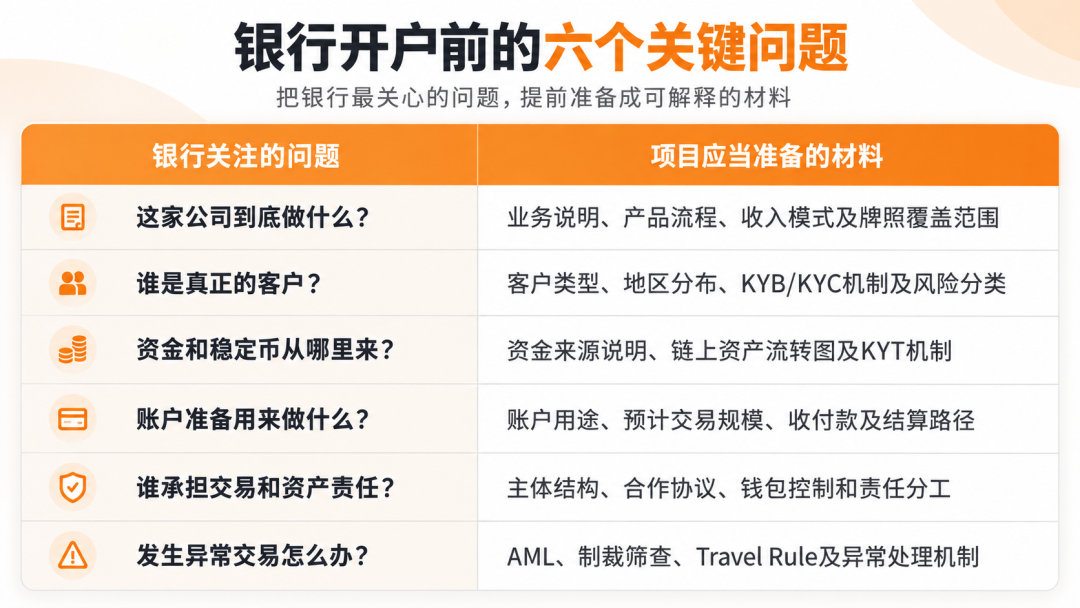
Figure 2 | Six questions the project must clarify before contacting the bank
These six questions do not imply that all banks will require the same set of materials; the specific review content still depends on local regulations, bank policies, and account functions.
However, for cryptocurrency payment projects, if they cannot clearly answer all six of these questions, banks will likely need to repeatedly request additional due diligence materials.
In particular, the "On-chain and Off-chain Fund Path Map" should accurately reflect the relationships between customers, wallets, CASP, trading and exchange service providers, PI/EMI, banks, and merchants.
If there are multiple transfers of assets on-chain, it should further explain which wallets are controlled by the project, which belong to customers, which are managed by licensed partner organizations, and at which point the stablecoin is exchanged for fiat currency.
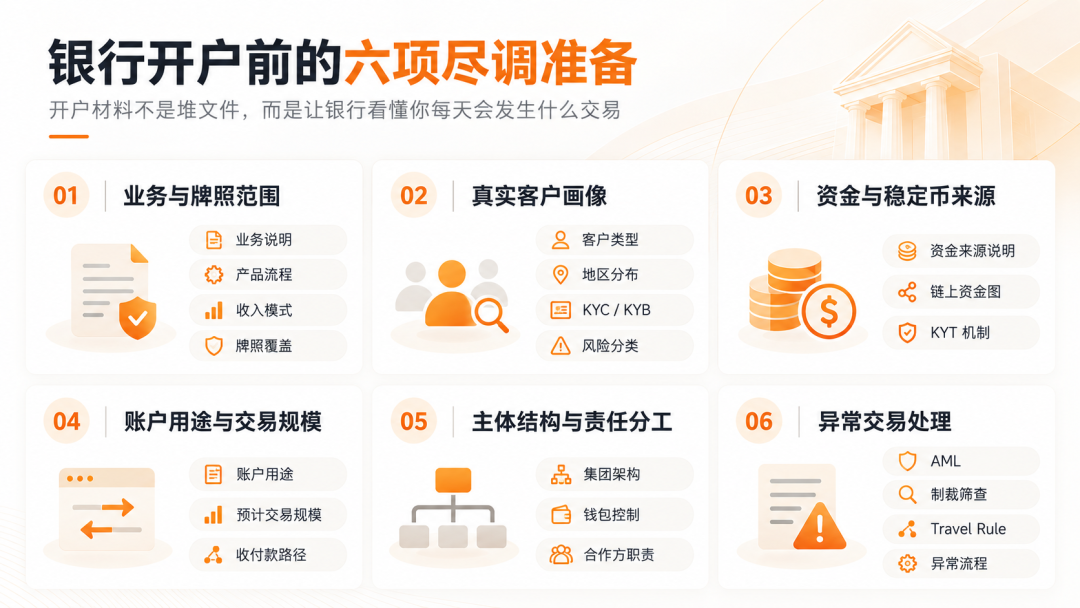
Figure 3 | Due diligence material list corresponding to the six questions
07 After being refused by the bank, what should the project change first?
After a bank refuses to open an account, many projects react by trying to switch to another bank or find an intermediary that can provide an account.
However, if the original issue stems from unclear fund paths, customer types exceeding risk tolerance, or mismatched account purposes, simply changing banks may not be effective.
The truly reasonable processing order should first distinguish the reason for the refusal.
If the bank clearly states that it does not take on certain types of business, a reassessment should be done to see if there are other institutions with corresponding service capabilities and risk preferences.
If the issue is insufficient materials, then business proof, customer structure, fund flows, licensed partnership, and risk control documents should be supplemented.
If the bank finds that the project's actual business matches neither the license nor the cooperation agreement, then business arrangements need to be adjusted first, rather than just changing the descriptions in the account opening materials.
What should be particularly avoided is to conceal the source of cryptocurrency assets, borrow unrelated company accounts, use personal accounts to receive client funds, or disguise real client payment operations as ordinary trade receipts in order to obtain an account.
Such actions could escalate what could otherwise have been resolved through business adjustments into risks related to account usage, anti-money laundering, or even other legal issues.
If a project is truly not suited to establish direct bank settlement capabilities at this time, it can also evaluate client arrangements with PIs, EMIs, or other financial institutions in accordance with the law, but the prerequisite remains that the partners possess corresponding service permissions and genuinely assume the associated business and regulatory responsibilities.
Licensed partnerships are a business structure choice, not a shortcut to evade bank due diligence.
08 How do we usually support such projects?
For projects that have obtained CASP, MSB, VASP, or other relevant regulatory identities but still face obstacles in bank account opening and settlement, the first step is generally not to contact more banks immediately but to reassess whether the business model matches the account purpose.
We will provide diagnostic opinions based on the enterprise's regulatory identity, actual customer regions, product functionality, group structure, control of on-chain assets, and fiat settlement arrangements, first distinguishing whether the issues arise from licensing scope, customer structure, fund flows, or the bank's own risk policies.
For stablecoin payments, PayFi, and enterprise cross-border settlement projects, we can further assist in mapping the on-chain and off-chain fund path, analyzing the purpose of bank accounts and the ownership of funds, and constructing a group function and regulatory responsibility matrix, clarifying why each fund enters the corresponding account, as well as what legal relationships exist between the account holders and the real customers.
Once entering the institution connection phase, it will be necessary to prepare the bank and payment institution due diligence material package in conjunction with the specific requirements of banks and payment partners, including product business descriptions, licensing scope, AML/KYC/KYT frameworks, on-chain transaction monitoring, sanctions screening, and transaction anomaly handling mechanisms.
If multiple licensed institutions are involved, it will also be necessary to verify which businesses CASPs, PIs/EMIs, banks, and other partners cover, as well as whether the relevant contracts align with the actual flow of funds.
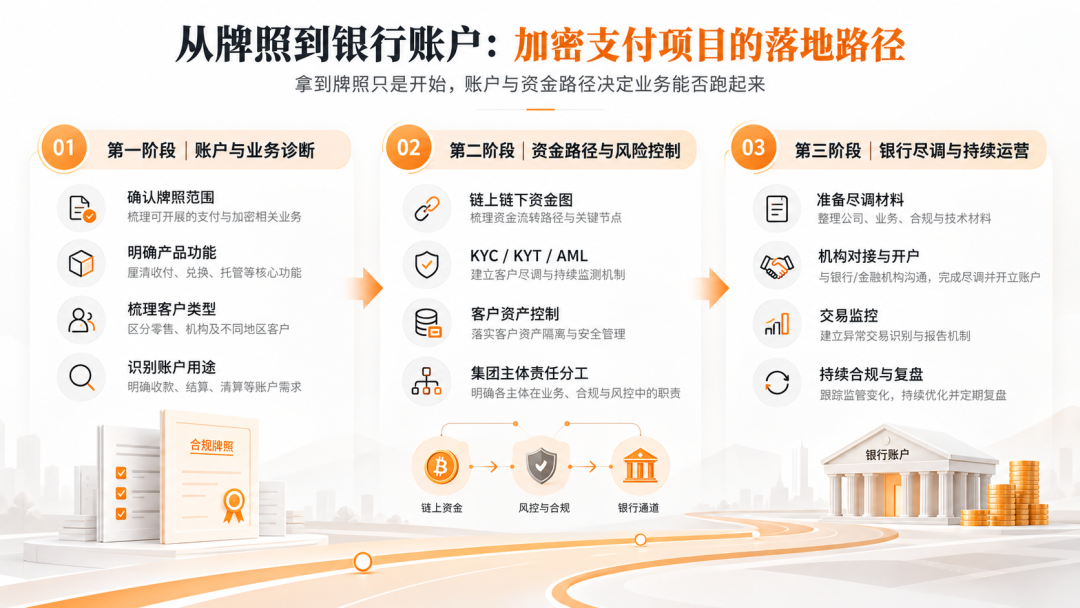
Figure 4 | Three-phase implementation path from license to bank account
Conclusion: A license enables a project to operate, but a bank account determines whether the business can really run
For cryptocurrency payment projects, licenses, bank accounts, and fund paths are not three unrelated matters.
A license proves the enterprise's qualification for specific business regulatory activities, the bank account undertakes the actual fiat receipt and settlement functions, while the fund path connects customers, digital assets, licensed entities, and final recipients.
Any problem in one link will affect the actual operation of the business.
The regulatory environment is providing a clearer path for compliant digital asset businesses, but this does not mean banks can ignore customer due diligence, source of funds, and ongoing risk management.
Therefore, projects should not wait until the license is obtained to start looking for banks, designing accounts, and explaining fund paths.
The ideal state is to synchronously answer who will open accounts, how funds will enter the banking system, and how this payment chain will be understood and accepted by financial institutions while planning the first license.
Returning to the title:
Why do cryptocurrency payment projects that have obtained a license still struggle to open accounts with banks?
Because what banks need to confirm is never just whether a business is qualified to conduct this business.
More importantly:
Whether every penny generated by this business can be clearly seen, managed, and continuously bear corresponding risks by the bank.
免责声明:本文章仅代表作者个人观点,不代表本平台的立场和观点。本文章仅供信息分享,不构成对任何人的任何投资建议。用户与作者之间的任何争议,与本平台无关。如网页中刊载的文章或图片涉及侵权,请提供相关的权利证明和身份证明发送邮件到[email protected],本平台相关工作人员将会进行核查。


