Author: Limitless
Translation: Deep Tide TechFlow
Deep Tide Guide: Jensen Huang convinced six major financial giants to raise over $500 billion for Nvidia's clients, turning GPUs into collateralizable assets, a scene strikingly similar to the 2008 mortgage bundling game. But the demand-side data tells another story: rising chip rental prices and explosive revenue from major firms. This article breaks down the key signals and real risks of this high-stakes gamble.
This doesn’t feel like 2008… or does it?
Earlier this week, Jensen Huang announced something surprising.
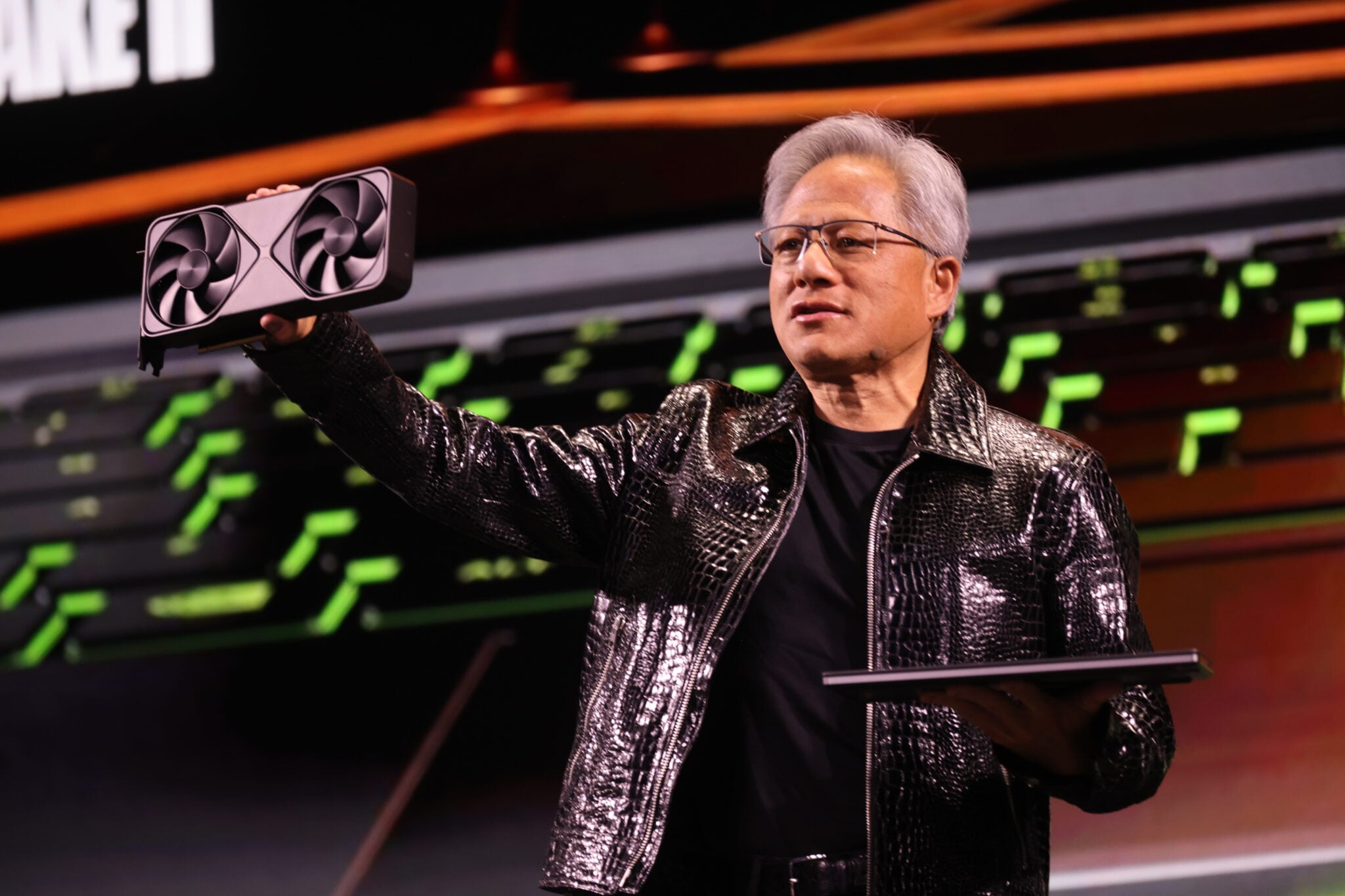
He convinced the world’s largest six financial institutions—Apollo, BlackRock, Blackstone, Brookfield, Goldman Sachs, and KKR—to jointly raise over $500 billion to allow his clients to continue purchasing Nvidia chips.
His ability to persuade these institutions to put up so much money seems crazy to me (AI funding has become very self-reliant in the past year), but then I saw his reasoning. In his own words:
This is really the first time that technology chips have been turned into an investable asset class.
His point is that GPUs meet the key characteristics of a financial asset:
- They can generate substantial income
- They can serve a broad customer base
- The depreciation lifecycle of these devices lasts over 10 years
- Therefore, GPUs should theoretically be considered collateralizable assets… somewhat like houses in 2008…
So, let’s figure out if this will evolve into a famous financial bubble burst like it did back then.

$500 billion in financing
Why do the world’s wealthiest companies need to raise $500 billion? The answer is simple: AI infrastructure has become so expensive that even the cash-rich companies in history can no longer afford it. Google even recorded its first negative cash flow last month.
Super cloud computing firms (like Microsoft, Google, Amazon) have pledged record-breaking expenditures of $2.6 trillion on data centers, chips, and electricity in the future. Alone, Google has about $900 billion worth of bills waiting to be paid.
The reasoning behind this massive expenditure is that these companies anticipate AI will bring in more revenue. So they are investing funds now to lock in the computing power and GPUs necessary for future profit-making.
But when your own money runs out, where do you get more? Wall Street. That’s what happened yesterday. Jensen Huang isn’t raising $500 billion because the situation is dire, but because expenditures have already exceeded what companies can realistically afford.
Structure (2008 flashback warning)
The basic operation of this strategy is as follows:
- Take an asset (here, GPUs)
- Bundle them together
- Use them as collateral to borrow money
- Slice the debt into different tiers (a fancy term for risk levels)
- Sell shares to yield-seeking investors
This is almost exactly what Wall Street did with mortgages before 2008. Take a hard-to-value asset, financialize it, and continually leverage it, leaving everyone holding others' risks… and then praying that the collateral doesn’t depreciate.
I want to add a disclaimer: The financing Jensen Huang is raising depends on Nvidia clients meeting a host of conditions. In other words, Wall Street isn’t just handing over $500 billion for free. They need to see:
- Clients have money to repay debts
- Clients are indeed earning money by using these GPUs
Jensen Huang even provides a guarantee of up to 25% to the lenders.
Well, if it seems like the 2008 financial crisis, then the outcome must be the same, right? To be honest, I’m not sure.
Data tells another story
The reason for the 2008 crash was that the whole system was built on a premise: housing prices would never fall. Clearly, that assumption did not hold true.
If we look at today’s AI demand from the same perspective… it’s moving in completely the opposite direction.
GPU rental prices have risen about 40% since October, as market capacity continues to be depleted. The latest chips for next year have effectively sold out.
Moreover, these companies are making money. Anthropic's revenue has risen from about $10 billion to $47 billion within a year, and rumors suggest they could reach $100 billion by the end of 2026; Nvidia's quarterly revenue forecast is about $91 billion.
Most of this information is public: just flip through any financial report of top cloud computing firms, and you’ll see their revenues are growing significantly.
And to be honest, these companies are the best capital allocators on the planet. So if I had to place a bet, I would wager they have already analyzed this, right in line with a demand curve that is much larger than we expect.
We must be optimistic yet cautious
I can't guarantee what this market will look like in 12 months… because no one can. The main things to watch are:
- Whether AI chips can retain their value
- Whether they can continue to generate income
- Whether the conditions for the raised funds are not overly restrictive
A 2008-like crash requires demand to disappear, and so far, we are seeing the opposite (at least for now).
免责声明:本文章仅代表作者个人观点,不代表本平台的立场和观点。本文章仅供信息分享,不构成对任何人的任何投资建议。用户与作者之间的任何争议,与本平台无关。如网页中刊载的文章或图片涉及侵权,请提供相关的权利证明和身份证明发送邮件到support@aicoin.com,本平台相关工作人员将会进行核查。


