Authors: Nick Carpinito & Luke Leasure
Translation: Deep Tide TechFlow
Deep Tide Introduction: Trump is personally pushing the CLARITY Act, but the Democrats and Republicans are completely torn on the ownership of enforcement power—Republicans insist it should go to the Department of Justice, and the nominee for Attorney General happens to be Trump’s personal lawyer, who made one billion dollars last year solely from cryptocurrency. This "self-regulation" design caused the market to quickly cool down from Tuesday's frenzy to Wednesday's drop in gains.
On Wednesday, the market took a breath as optimism over the CLARITY Act cooled after the release of the Senate's new version of the bill. Although cryptocurrency stocks gave back some of their recent gains, ETF inflow continued to strengthen, extending the strongest streak of continuous inflows since May. Below, we pull away from the bustling headlines to dissect what exactly has changed in the latest draft of CLARITY, and which parts are most critical for the crypto market.
Market Dynamics
On Wednesday, the intraday performance diverged, with BTC and stock indices slightly declining, giving back some of the gains from earlier in the week. The probability of the CLARITY Act passing during the Tuesday session soared from 31% to 51%, driving cryptocurrency stocks like COIN and CRCL to double-digit gains, but this probability has since fallen back to 38%, dragging down cryptocurrency stocks and other indices together.
Senate Republicans released an updated text of the bill on Wednesday, embedding ethical clauses into the law; the market is now possibly pricing the voting prospects of this actual language rather than just trading on headlines. The volatility of these cryptocurrency stocks indicates that this sector might be the biggest beneficiary of the bill's passage. Stock index futures moved lower overnight, with NASDAQ opening down -0.97%, dragging mainstream cryptocurrency coins down slightly before Thursday's open.
The brief surge in the probability of CLARITY lifted most crypto assets. If the momentum continues to build and the probability rises further, we should expect this legislation to become a rising tide that lifts all boats. Shifting from high uncertainty to low uncertainty is beneficial in itself, regardless of how stringent the final rules are.
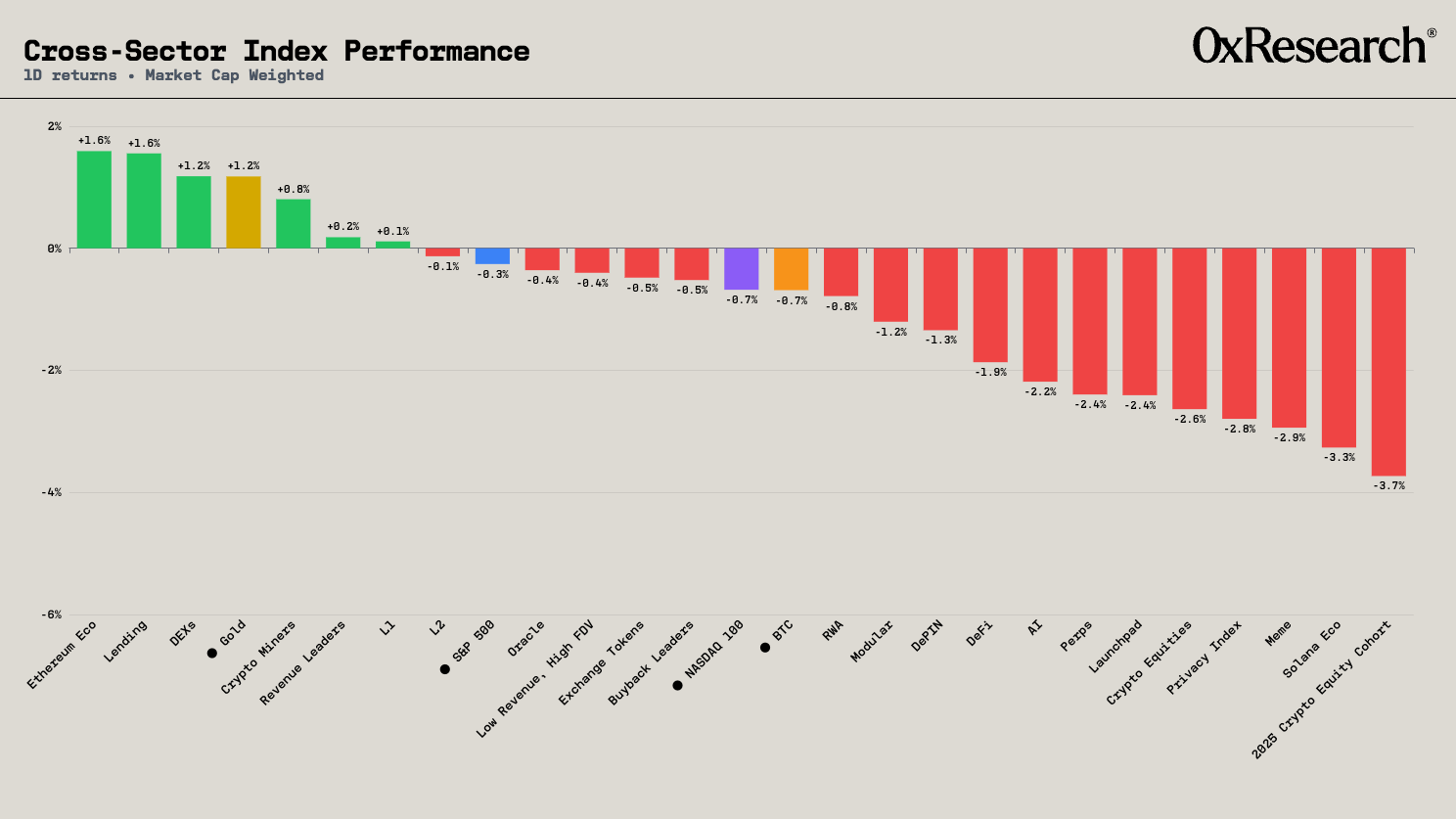
Image: Probability of CLARITY Act passing (Source: Blockworks Research)
Additionally supporting prices, ETFs are experiencing their longest consecutive inflow period since early May, attracting a net inflow of $750 million in the past five days.
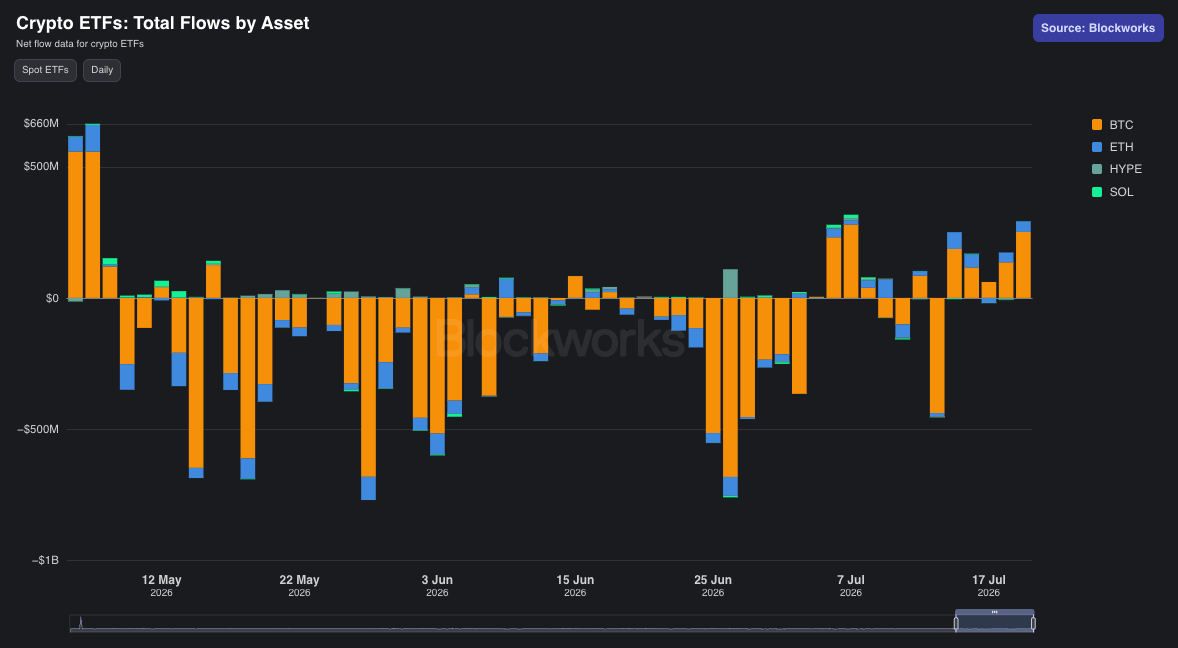
Image: Continuous inflow into ETFs (Source: Blockworks Research)
Cutting Through the Noise of CLARITY
Trump broke the summer stalemate of the CLARITY Act this week, but the core struggle over enforcement power remains unresolved. A White House official informed Republican negotiators that the President accepted an ethical clause prohibiting federal officials, including himself and the Vice President, from holding personal cryptocurrency interests, bringing CLARITY a step closer to a Senate vote. Lummis released the updated text on Wednesday, incorporating the work of both the Banking and Agriculture Committees, so the ethical clause is now publicly visible. However, it still does not specify who will enforce this ban, and the Democrats have stated they have not seen a version they can accept.
Lummis and Moreno negotiated this ethical clause package with the White House without Democratic signatures. It prohibits the President, Vice President, members of Congress, federal judges, and their spouses from issuing or sponsoring digital assets for compensation during their terms, expiring on January 20, 2029. Restricted officials must sell their cryptocurrency and shares in crypto companies or transfer them to blind trusts that they cannot control. Republicans assigned civil enforcement power to the Department of Justice, including the authority to sue exchanges listing banned tokens, with intermediaries facing fines of up to $250,000 per violation per day, and the officials themselves facing the recovery of profits plus a fine of $500,000 or 10%. Sales over $1,000 must be disclosed, and the Government Accountability Office (GAO) will study the remaining loopholes.
The two sides are divided on enforcement. Senate Democrats want state attorneys general to oversee this restriction. The White House and Republicans prefer federal attorneys general and the Justice Department to enforce it. Democrats argue that relying solely on federal enforcement is ineffectual for a President—especially since the President's former personal lawyer, Todd Blanche, is waiting for confirmation in the Senate as the Attorney General nominee, and his disclosure documents show he made over one billion dollars from cryptocurrency last year. Senator Angela Alsobrooks stated that relying solely on the Justice Department for enforcement is "not serious." There is also pressure from the left. Indivisible and Demand Progress have been pressuring Senate Democrats, including Kirsten Gillibrand, this week to reject a weak ethical agreement. And these are precisely the votes that Republicans need to reach 60 votes.
The rest of the bill's text has not changed much. Industry insiders say the Blockchain Regulatory Clarity Act is the same as the May version from the Banking Committee, continuing to exclude non-custodial developers and infrastructure providers from the definition of money transmitters; the Lummis-Grassley amendment retains criminal liability for intentionally aiding in illegal trading; the Protect Your Coins Act protects self-custody rights. The yield provisions for stablecoins retain the Tillis-Alsobrooks compromise, prohibiting interest on idle stablecoin balances but allowing activity-based rewards. A new enforcement section provides funding for state and local crypto investigations and establishes a cybersecurity center targeting North Korea and Iran; it also requires stablecoin issuers to comply with lawful freeze and seizure orders, with bankruptcy provisions treating customer assets as customer property rather than assets of a failing custodian—which is a direct response to FTX.
Time Window: Less than Three Weeks
There are less than three weeks remaining. Majority Leader John Thune has promised to schedule a floor vote before the recess beginning around August 7. The Senate vote is just one hurdle. The House will take over the revised version after reconvening in September, followed by the President's signature and subsequent rule-making by the CFTC and SEC.
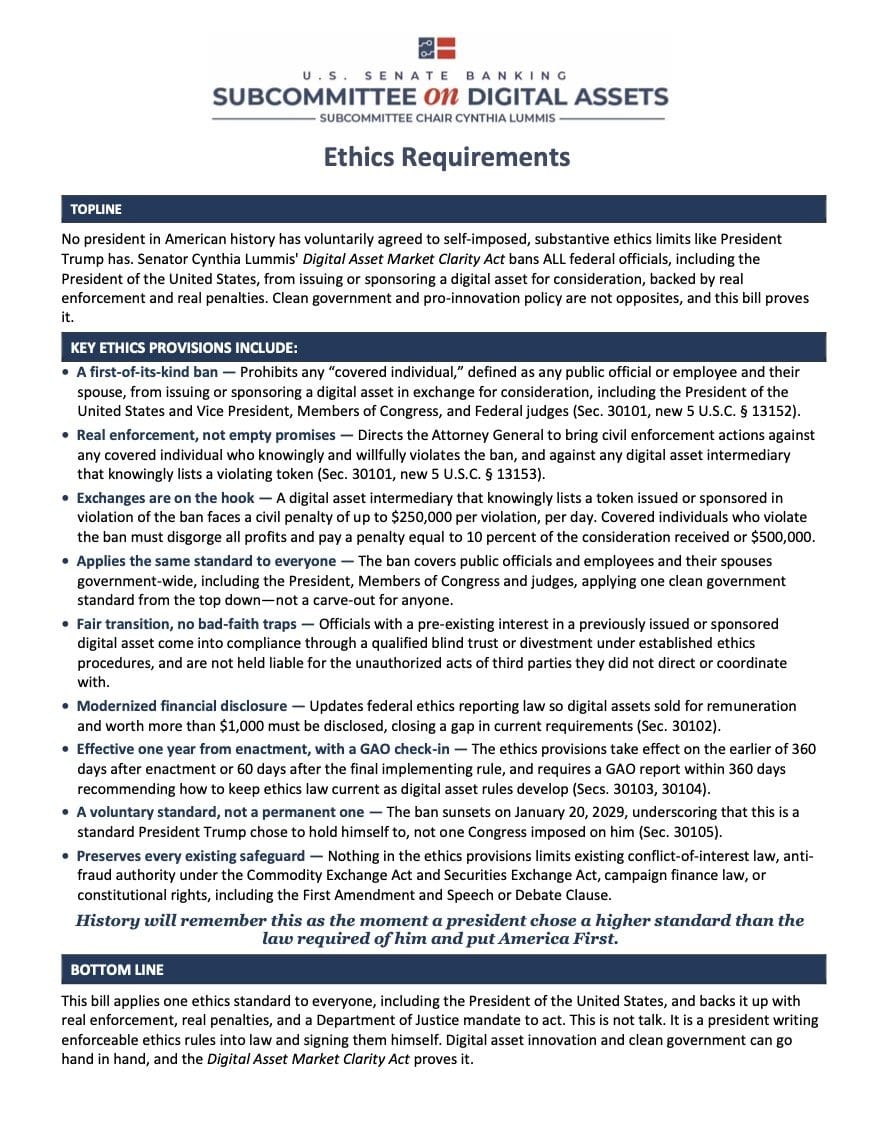
Image: Timeline of CLARITY Act and ethical clause sunset nodes (Source: Blockworks Research)
How the Market Prices the "Vote"
Traders are pricing the "vote" and "outcome" separately. The probability of a Senate vote before the recess approaches 72% on Kalshi, but the volume is only $31,000, thin enough to be negligible. The probability of "enacting by 2026" on Polymarket is close to 41% (with a volume of $2.4 million), while Kalshi's deeper market on "enacting crypto market structure before year-end" is nearly 42% (with a volume of $3.6 million). These two deepest markets are ten percentage points apart on the same question, with neither side placing the enactment probability above 50%. The claim of "probability of passing above 50%" lies exactly on the optimistic edge of this range.
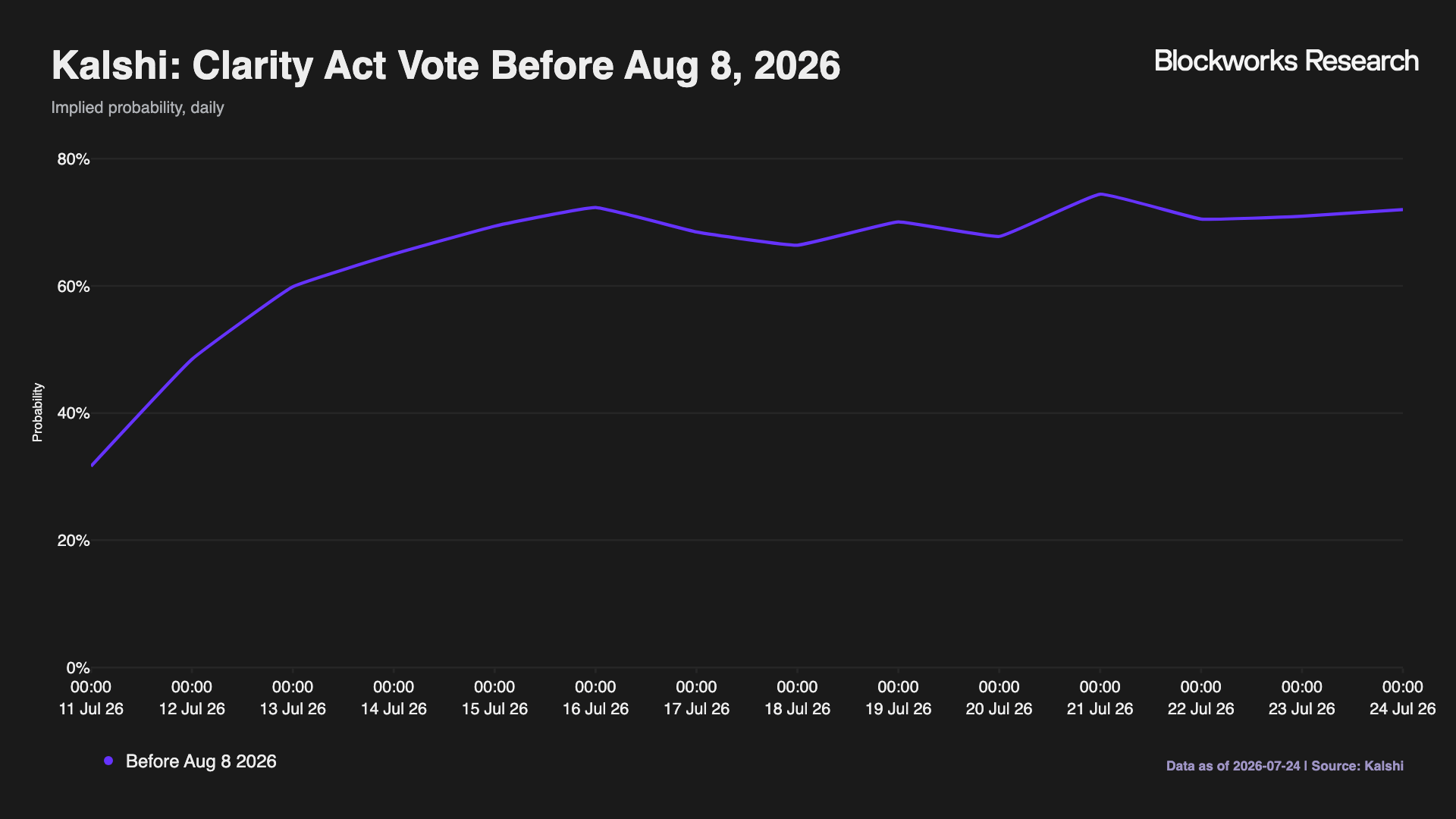
Image: Kalshi and Polymarket pricing of CLARITY enactment probability (Source: Blockworks Research)
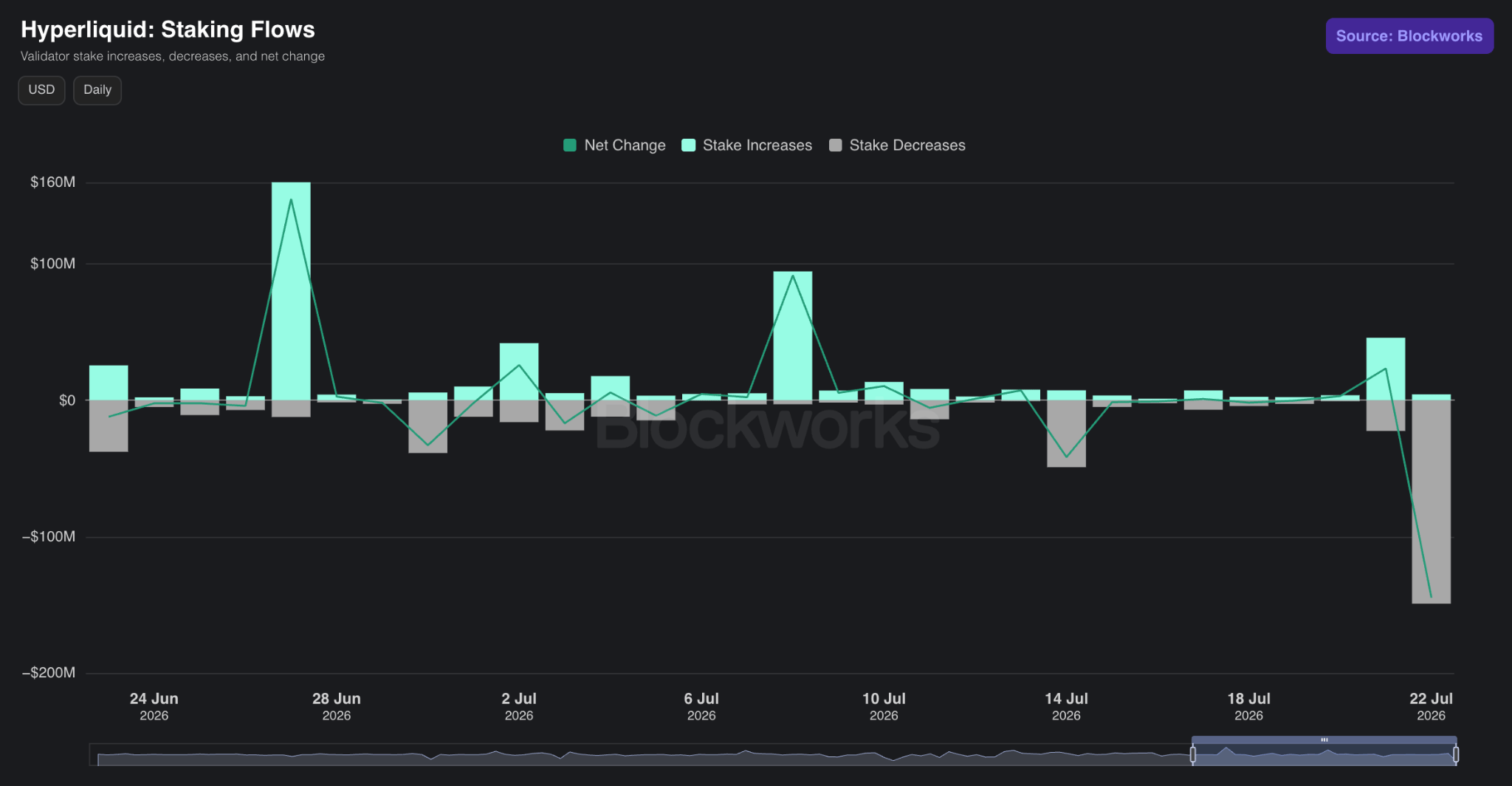
Image: Probability market for crypto market structure legislation (Source: Blockworks Research)
The Loudest This Week, the Shallowest Foundation
The loudest thing this week is precisely the one with the shallowest foundation. An unverified rumor claims that CLARITY will impose geographic restrictions on U.S. users through the RPC layer and enforce against specific wallets, rendering it bearish for HYPE; simultaneously coupled with an unverified statement—that Multicoin sold approximately $120 million of HYPE before its unlocking on July 28. Multicoin's Tushar Jain confirmed a large unbonding on Wednesday but stated that the company is not exiting, attributing it to privacy-driven "wallet rotation" rather than liquidation. No one has presented draft text to support this geographic restriction mechanism, and Lummis' released version on Wednesday contains no such clauses.
Reading and Listening
Helium Q2 Token Holder Report
Blockworks interprets this quarter as a "pricing reset" rather than a demand slump: after HIP-143 cut operator payment rates from $0.50/GB to about $0.10/GB on June 4, offload volumes saw an approximately 20% increase during the transition. DC-burn revenue reported $3.35 million, a decline of 14%; Blockworks points out that the headline "2.2 times revenue coverage of emissions" metric is emissions-driven—since HNT emissions fell by 39% to $1.5 million, while the revenue line itself is declining, so approximately 1.7 times the exit rate is a cleaner forward reading. After the quarter, HIP-149, approved by veHNT, transferred deployment rewards to usage and retired "Proof-of-Coverage," funded by approximately 141 million HNT, which will self-terminate, flipping the network from deflationary to net issuance—this is key to whether Helium's pure operator model can self-sustain.
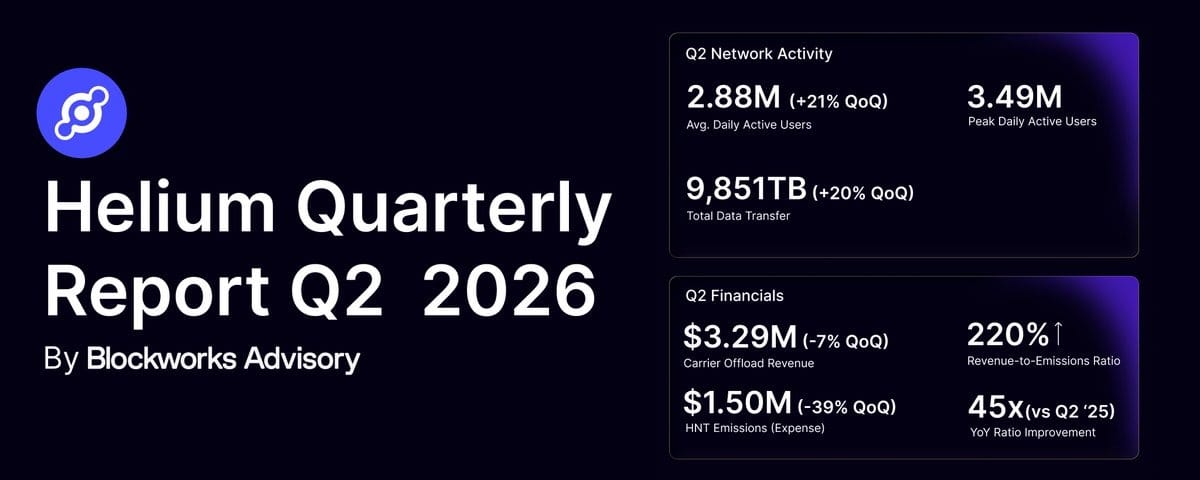
Image: Helium Q2 Token Economic Data (Source: Blockworks Research)
Stablecoins Reach Ramp
Ramp has partnered with Privy to incorporate a stablecoin channel on its payment platform, allowing businesses to open "stablecoin accounts" that hold USDC or USDT backed by cash reserves, earning up to 3.25% rewards, and sending payments to vendor wallets in over 140 countries or exchanging for over 40 fiat currencies. Stablecoins have also become an independent payment method in "Bill Pay": businesses can fund expenses from their USD bank accounts, with Ramp completing the exchange before sending, without requiring a balance. Ramp reports that over 1,000 businesses have paid suppliers using this method, with over 70% of transaction volume occurring outside traditional banking hours—this data point captures the core selling point: 24/7 settlement in the face of wire transfer cut-off times and cross-border delays.
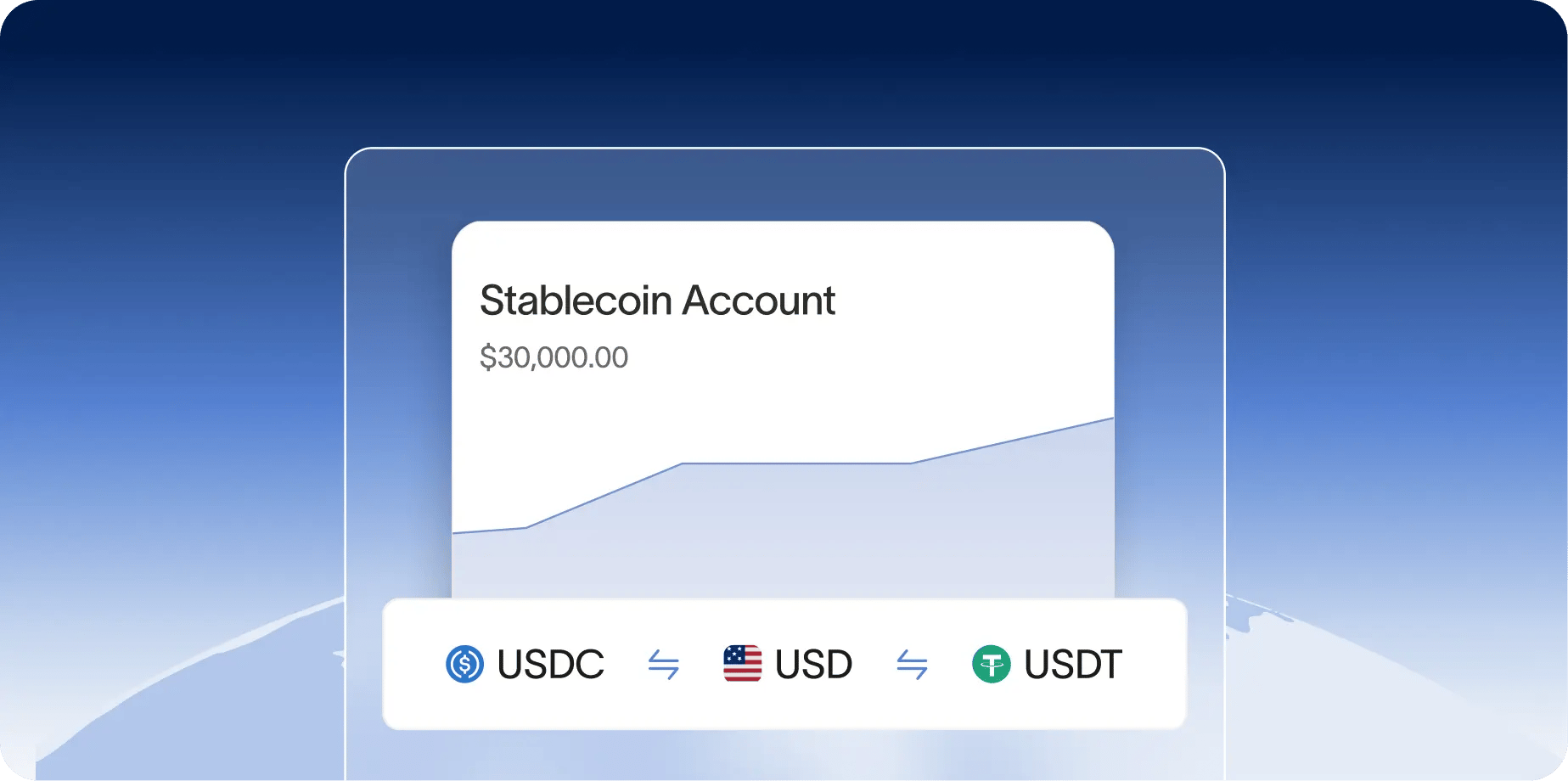
Image: Ramp Stablecoin Payment Channel (Source: Blockworks Research)
Profitable Dollars, Not Fluid Dollars
Sky's Global BD Head John Conneely believes that the stablecoin ranking misrepresents the numbers—mixing payment dollars and savings dollars in the same competition, while both are vying for different shelf spaces. His argument regarding USDS/sUSDS focuses on "where the yield is": governance issues Sky's savings rate, which is inherent to the asset itself; while payment dollars like OUSD leave returns within platform-determined distribution agreements. He anchors his argument in Sky's $13.96 billion collateral book, spanning over 40 positions, including $4 billion in stablecoin reserves, $1.5 billion in tokenized treasury bonds held via BlackRock’s BUIDL and Janus Henderson Anemoy, and nearly $3 billion in cross-chain and OTC crypto lending, framing "allocation" rather than "supply" as the metric determining the savings competition. Read this as a case study from Sky's BD perspective rather than a neutral investigation; Conneely notes that this viewpoint is his personal opinion, not that of Sky Frontier Foundation.
免责声明:本文章仅代表作者个人观点,不代表本平台的立场和观点。本文章仅供信息分享,不构成对任何人的任何投资建议。用户与作者之间的任何争议,与本平台无关。如网页中刊载的文章或图片涉及侵权,请提供相关的权利证明和身份证明发送邮件到support@aicoin.com,本平台相关工作人员将会进行核查。


