Author: Wall Street Insights
The current global market is facing a triple mutually reinforcing reflexive cycle: political oil prices, massive capital expenditures by cloud giants, and AI debt risks. Goldman Sachs warns that the negative feedback mechanism created by these three factors places the current market on a fragile and dangerous balance.
This week, Goldman Sachs' Head of 1-Delta Trading, Rich Privorotsky, pointed out in the latest client report that the dual pressure from soaring oil prices and rising interest rates is increasingly making it difficult for the market to digest, and the negative impact from the bond market has sharply deteriorated.
He stated that without substantial political easing, the market will have to digest risks on its own, pushing the situation in a worse direction.
Meanwhile, the uncontrolled expansion of capital expenditures by tech giants and the plummeting prices of bonds related to AI infrastructure are shaking investors' confidence in the narrative of massive cloud service providers.
Privorotsky warned that betting on the essence of these companies is evolving into a high-risk gamble of "the revenue turning point arriving before the peak in expenditure."
Oil Prices - Politics - Inflation: The First Reflexive Cycle
The bidirectional feedback mechanism between oil prices and politics is the first reflexive chain that Privorotsky is most concerned about.
This week, the price of Brent crude oil briefly broke above $100 per barrel, testing market expectations regarding responses to Trump’s policies.
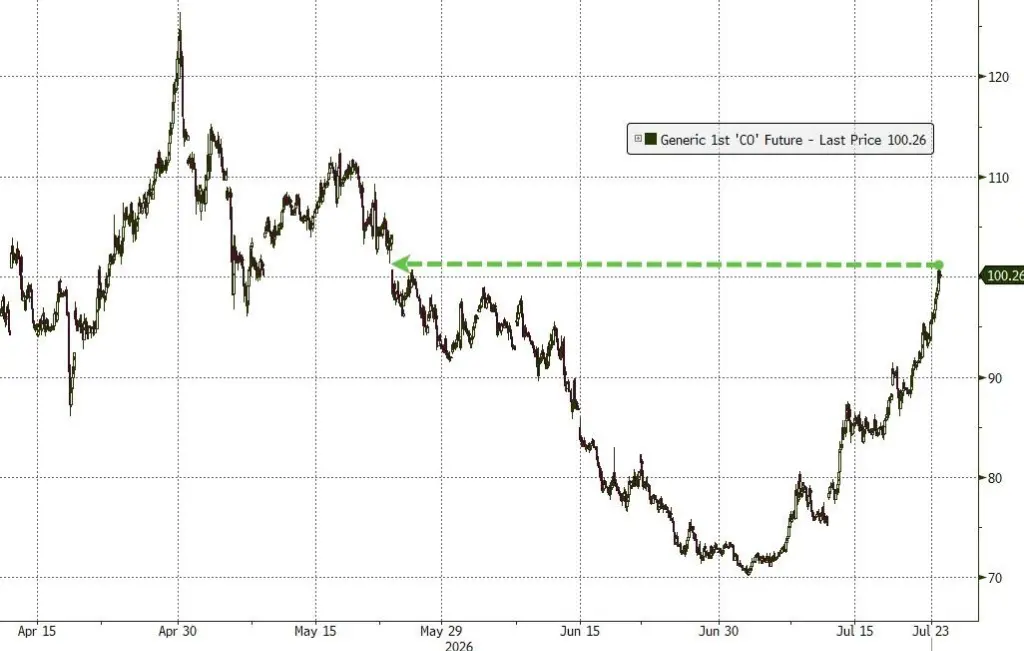
Previously, the market widely expected that once oil prices breached a certain threshold, leading to increased gasoline retail prices and dragging down presidential approval ratings, the Trump administration would intervene to suppress oil prices.
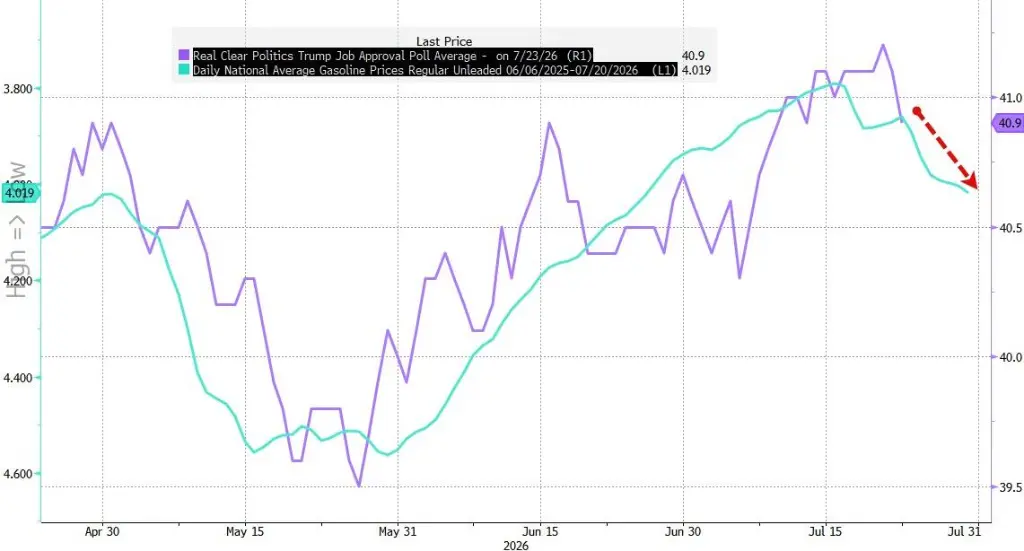
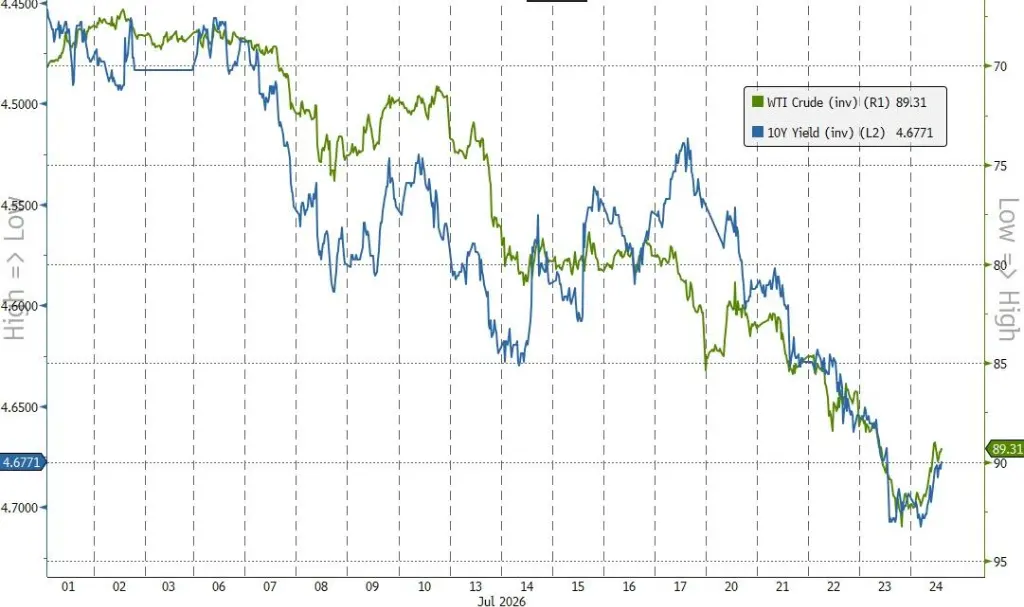
This expectation has somewhat supported the stock market's resilience, but Privorotsky pointed out that with each passing day, as policy responses at the same price level are delayed, the market increasingly needs to drive the results itself.
Interest rate shocks are becoming the most difficult variable to ignore in this cycle.
Meanwhile, the transmission of energy costs to food inflation is about to become a reality.
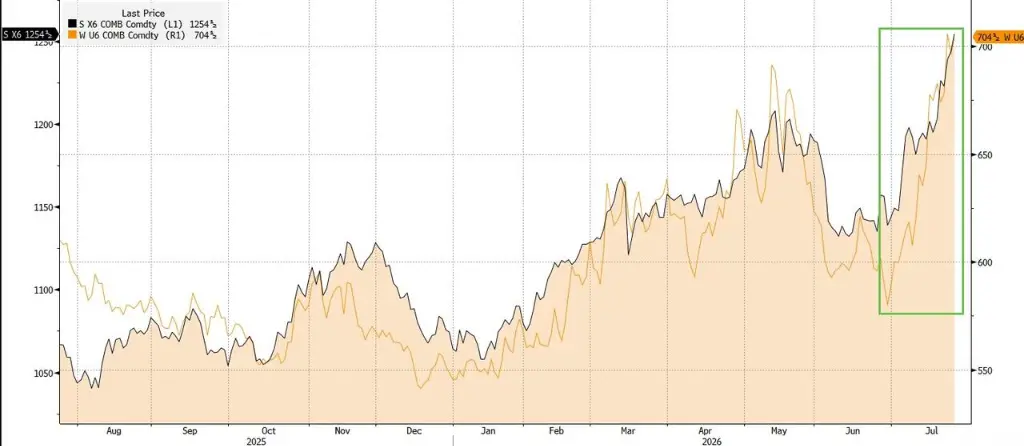
The warning signs at the real economy level have already appeared — despite American Airlines reporting record high revenue, rising ticket prices, and stable demand, it has still lowered its performance guidance for 2026 due to a cumulative increase of about $1.6 billion in fuel costs since early July.
Geopolitical tensions are also continuing to rise.
According to CCTV News, on July 24 local time, President Trump discussed the "exit strategy" for the war in Iran at the White House, stating that the U.S. has two options: one is to continue current military actions and possibly escalate attacks to gradually destroy Iran's military capabilities; the other is to negotiate an agreement.
Wall Street Insights noted that earlier that day, sources reported by Reuters indicated that Pakistan is exploring ways to revive the stalled U.S.-Iran negotiations.
Israeli Prime Minister Netanyahu will meet with Trump at the White House next Tuesday, and Privorotsky suggested that this timing may be brewing a "TACO moment" in the market — a sudden negotiation or compromise scenario.
Massive Cloud Provider Expenditure: The Second Reflexive Cycle
The second reflexive cycle revolves around the capital expenditures of massive tech companies, with its core contradiction being whether the market is still willing to view large investments as costless growth signals.
Google has become a negative symbol in this earnings season for tech companies. The company announced an increase in its 2026 capital expenditure guidance to between $195 billion and $205 billion, while reporting a negative free cash flow of $5.9 billion for the quarter, and its stock price subsequently fell by 6.9%.
The operational data showing an 82% growth in cloud business should be impressive, but the market is no longer willing to see expenditures as strategic investments without cost, and inquiries into product roadmaps and investment returns have almost gone unanswered.
The further-reaching impact lies in competitive transmission. If Google increases its spending, it will force competitors to follow suit, putting pressure on the entire massive cloud computing sector. The hardware side is also in distress:
- STMicroelectronics' core profits did not meet expectations, and its revenue guidance for the third quarter appears somewhat weak, leading to a stock price drop of about 14%;
- Texas Instruments (TXN) showed a steady performance but still closed down by 3%.
In terms of AI competitive landscape, Privorotsky noted that the gap between leading closed-source models and Chinese open-source models has significantly narrowed.
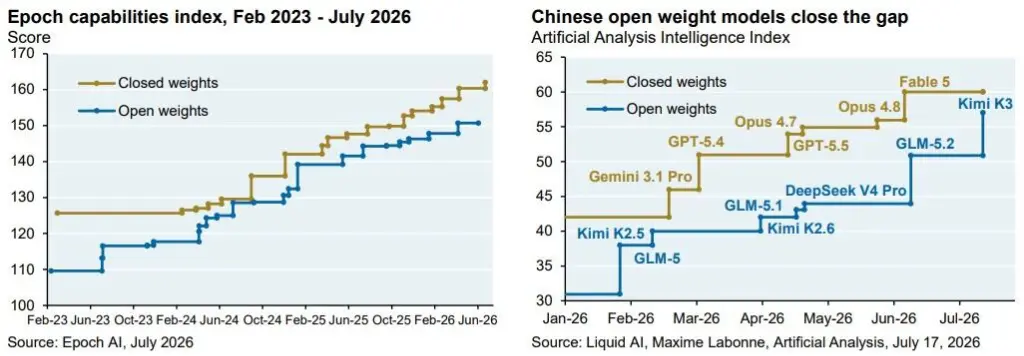
He stated that the gap previously measured in nine to twelve months has now been compressed to just a few weeks in some benchmark tests. The cost and marginal return ratios between pre-training compared to reinforcement learning and post-training are giving rise to entirely different economic models; the intensity of competition at the application layer and the flatness of the competitive landscape are both historically rare.
He believes that the risks associated with small models and efficiency improvements are still a "later story," but should not be underestimated.
AI Infrastructure Debt: The Third Reflexive Cycle
The third reflexive cycle is hidden within the bond and financing structures of massive tech companies.
Privorotsky views the bond market as the current risk signal that deserves the most attention.
Taking Meta's "Hyperion" financing through Beignet SPV as an example, this $27.3 billion bond was issued at face value, and at one point traded above 109 but has now fallen back to around 95.
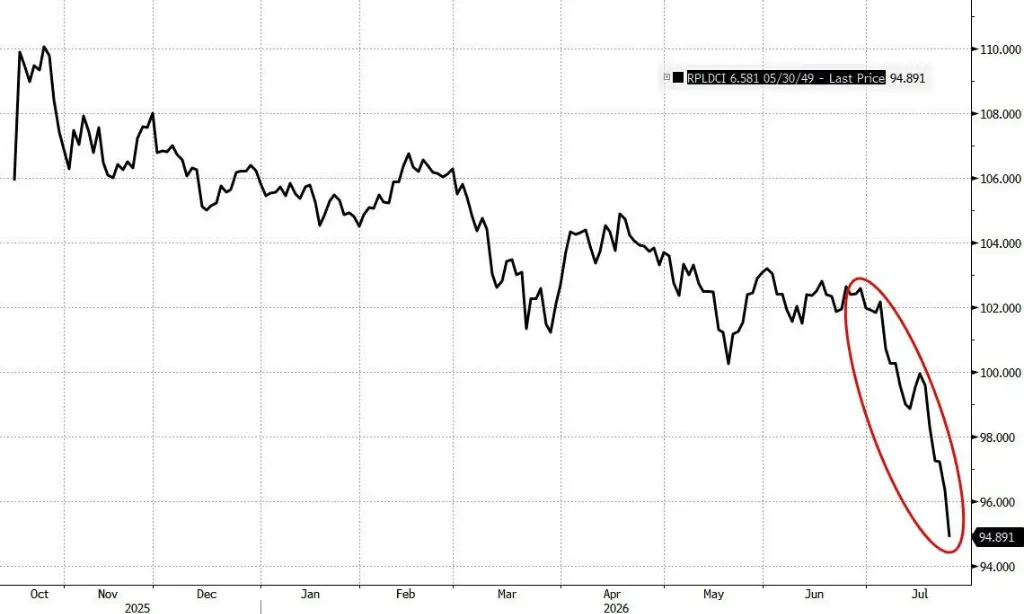
While the overall financial situation of massive cloud providers remains robust, with low leverage ratios, the impact from valuation repricing has been quite significant on stock multiples.
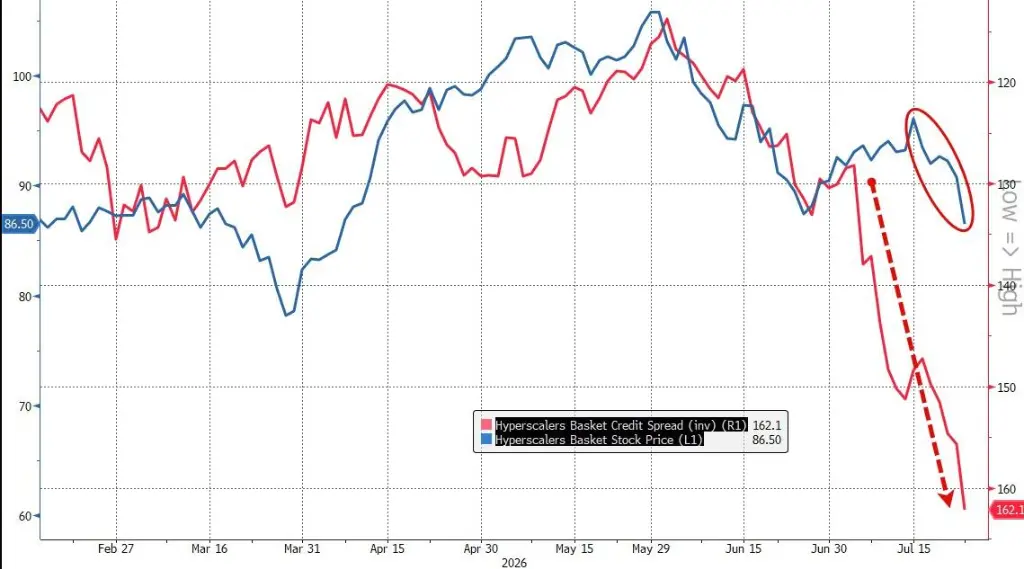
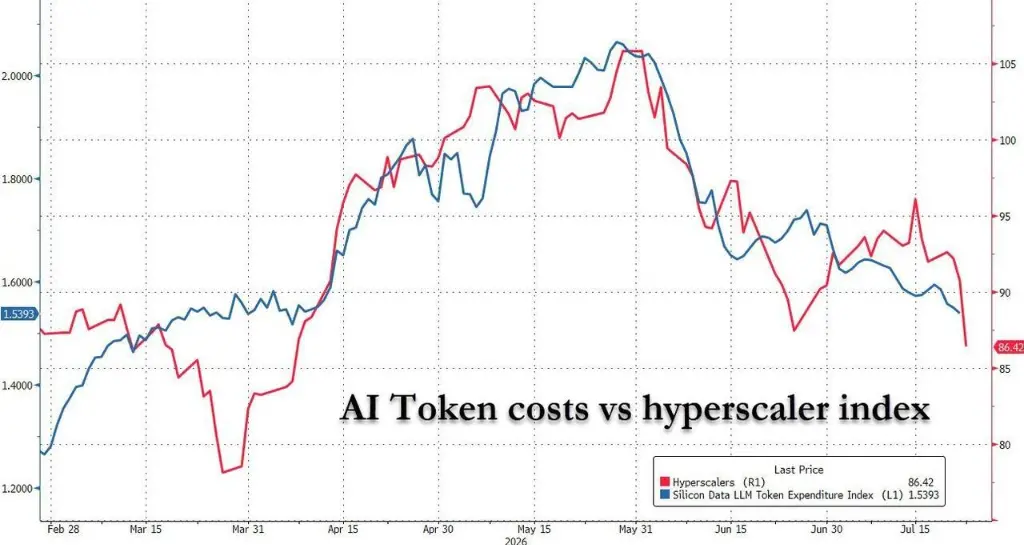
The more severe issue is that with accelerated capital expenditures, the conversion rate of free cash flow is continuing to deteriorate, and leveraged entities providing financing for infrastructure construction will be hit even harder.
Privorotsky warned that today’s capacity expansion could evolve into tomorrow’s computing power surplus, and at that time, larger depreciation expenses will start to wash through the profit and loss statement.
Outlook: Microsoft Earnings Report and Longsys Storage IPO as Key Catalysts
Looking ahead, Privorotsky highlighted two significant events that will serve as important tests for the aforementioned reflexive themes.
The first is Microsoft’s earnings call this Wednesday. He believes, "If the reflexive themes are going to unfold, this could be the most critical call."
The market will closely examine Microsoft’s balance between capital expenditures, cloud growth, and free cash flow to determine whether the narrative of massive tech companies can stabilize.
The second is the IPO of Chinese memory chip company Longsys on the Sci-tech Innovation Board. Longsys is currently the world’s fourth-largest DRAM producer, and this fundraising effort is approximately $8.6 billion.
Privorotsky emphasized, "This is far from an inconsequential new competitor," and if its stock price trades close to the valuation implied by the over-the-counter perpetual market post-IPO, it will have a significant impact on the entire memory chip sector.
Privorotsky concluded with a statement summarizing the current situation:
It feels a bit like a circular reference on the issue of oil prices.
In a market dominated by reflexivity, every variable is both a cause and an outcome.
免责声明:本文章仅代表作者个人观点,不代表本平台的立场和观点。本文章仅供信息分享,不构成对任何人的任何投资建议。用户与作者之间的任何争议,与本平台无关。如网页中刊载的文章或图片涉及侵权,请提供相关的权利证明和身份证明发送邮件到support@aicoin.com,本平台相关工作人员将会进行核查。


