Approximately 911.5 million insider shares of SpaceX will be released from lock-up on August 6, corresponding to a market value of about 116 billion dollars.
Written by: Yang Chen, Wall Street Insights
For the first time following the largest IPO in history, the initial lock-up expiration is about to occur, and the market is assessing its potential impact on stock prices.
According to SpaceX's prospectus, approximately 911.5 million insider shares will be released from lock-up on August 6, involving a market value of about 116 billion dollars, with the timing just two days after the company announces its quarterly results. By the end of the year, the total circulating shares will surge from the current approximately 639 million to 5.33 billion shares.
Faced with this massive release scale, SpaceX's stock price is under evident pressure. Since the closing high on June 16, the stock price has decreased by 37%, erasing over 425 billion dollars in market value. As of Tuesday at press time, it rose by 3.8% intraday, potentially ending a seven-day decline.
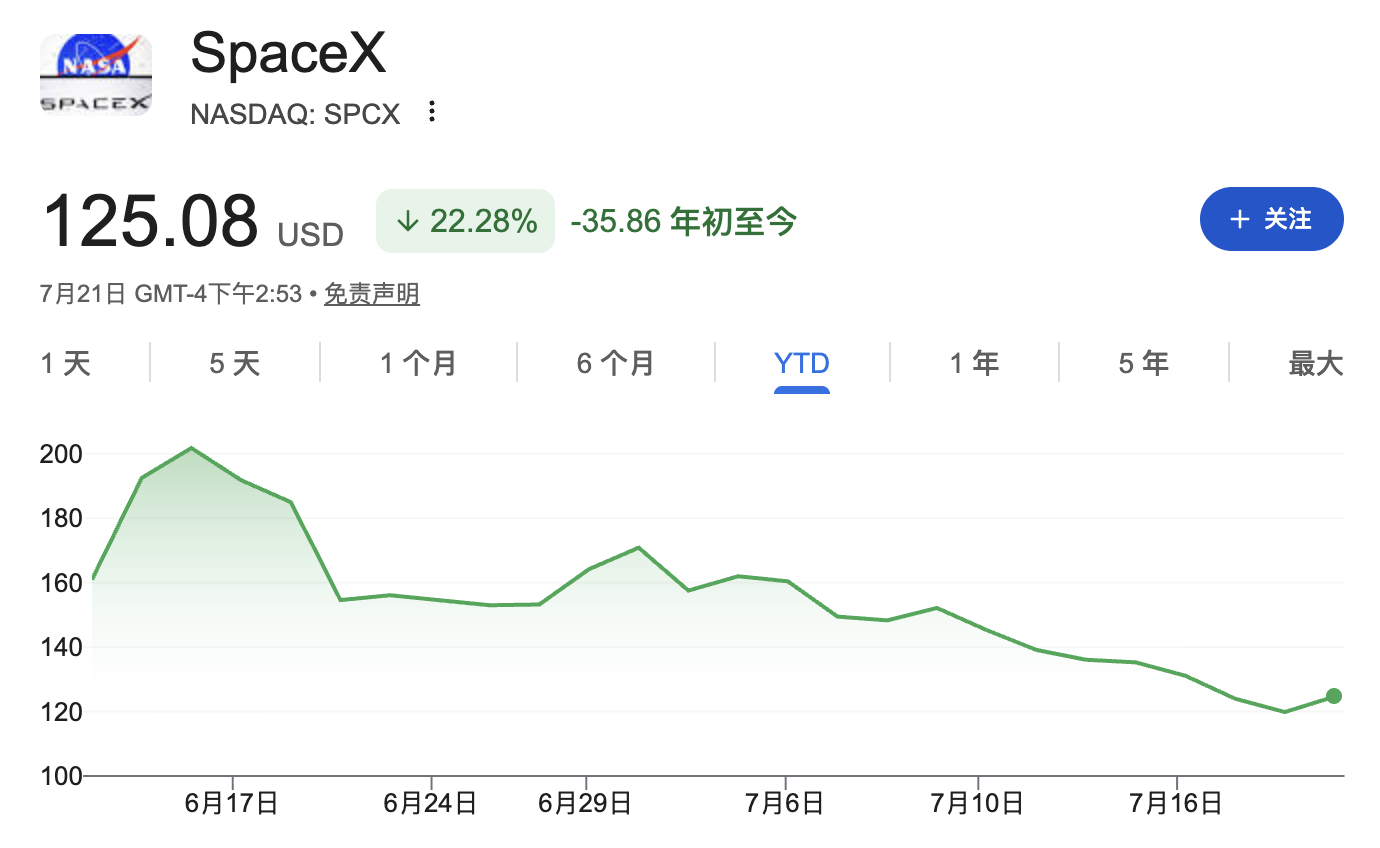
According to data from S3 Partners, about 30% of the tradable shares are currently shorted, with short sellers realizing approximately 7 billion dollars in profits.
The uniqueness of this lock-up release is that SpaceX has not followed the convention of a uniform 180-day release after the IPO but has designed a phased release arrangement to expand the liquidity while trying to avoid a severe impact on market supply and demand.
Phased Release: An Unusual Structural Arrangement
Compared to traditional IPO lock-up releases, SpaceX's phased and staggered release mechanism is rare in the market. The prospectus indicates that over 900 million shares to be unlocked on August 6 are only the first batch; in the following months, the release scale will continue to expand, and by early December, the total tradable shares in the market will jump to 5.33 billion, more than seven times the current level.
It is notable that there is also a conditional trigger mechanism after August 6: if SpaceX's stock price reaches 175.50 dollars at least five times during the ten trading days before the earnings announcement, an additional 455.8 million shares will be immediately permitted for trading after the earnings release.
Based on Monday's closing price of 119.85 dollars, hitting this threshold would require a price increase of over 46%, a challenge that the market generally considers difficult.
Musk holds approximately 7.8 billion shares, accounting for about 60% of the total equity. The prospectus shows that the lock-up period for his shares extends more than a year after the company's June listing, meaning he will not be a source of lock-up pressure in the short term.
Early Investors Facing Rich Exit Opportunities
Despite the recent significant pullback in stock price, early shareholders still possess considerable floating profits compared to pre-IPO valuation levels. A year ago, SpaceX was valued at about 400 billion dollars in a round of private financing.
Earlier this year, SpaceX completed the acquisition of xAI, which at that time granted SpaceX an overall valuation of as much as 1 trillion dollars, while xAI was valued at 250 billion dollars, according to Bloomberg. This transaction allowed many investors to realize profits of billions of dollars, with their equity in the listed company now worth several times their initial investment.
The phased release arrangement means that early private market investors and insiders will gradually encounter exit windows over the coming months, allowing them to choose to liquidate in batches at different price levels.
Short Sellers Pressuring the Market, IPO Sentiment Weakened
The expectations of lock-up releases combined with valuation disputes have triggered a large influx of short sellers. According to S3 Partners data, about 30% of the tradable shares are currently shorted, with short sellers realizing approximately 7 billion dollars in profits.
In the past 12 trading days, SpaceX's stock price has fallen for 10 days, driven not only by lock-up expectations but also by the Starship rocket halting launches due to engine failures and a market-wide rotation of funds out of artificial intelligence concept stocks.
SpaceX's volatility has had a spillover effect on the overall new stock market.
According to Bloomberg data, the weighted average return of new listed companies this year has dropped to -4.4%. Even excluding SpaceX and SK Hynix, the overall return rate of this year’s new stocks is only 5.3%, far below the S&P 500 index's increase of 9.4% during the same period.
Balancing liquidity release with stock price stabilization will be the core challenge faced by SpaceX and its underwriting team in the coming months.
免责声明:本文章仅代表作者个人观点,不代表本平台的立场和观点。本文章仅供信息分享,不构成对任何人的任何投资建议。用户与作者之间的任何争议,与本平台无关。如网页中刊载的文章或图片涉及侵权,请提供相关的权利证明和身份证明发送邮件到support@aicoin.com,本平台相关工作人员将会进行核查。


