Walsh has long advocated for "less intervention and balance sheet reduction," but reality is forcing him to make difficult choices between inflation, the bond market, and economic stability, with no good path among the three.
Written by: Long Yue
Source: Wall Street Viewed
Taking over the Federal Reserve, Walsh may have just taken on the hottest position in the global financial sector.
According to an analysis article released by Fringe Finance on May 17, Walsh was officially confirmed as the new chairman of the Federal Reserve last week with the most partisan voting results in history. What he faces is a macro environment full of leaks: accelerating inflation, soaring oil prices, a turbulent bond market, and high stock market valuations.
On the Friday he was about to take over (i.e., May 15), the market gave a preview.
The S&P 500 fell 1.24% that day, and the Nasdaq dropped 1.54%. However, Fringe Finance pointed out that the real "protagonist" that day was not the stock market but the bond market— the yield on the U.S. 30-year Treasury bond broke through 5.1%, as bond investors struggled to digest last week's hotter inflation data and the reality that "interest rates may remain high for longer than Wall Street anticipates."
The Bond Market is the True Source of Risk
When the stock market drops 5%, financial media can shout "buy the dip." The bond market is different.
Analysis indicates that when Treasury yields rise rapidly, financial conditions tighten simultaneously: mortgage rates remain high, corporate funding costs increase, refinancing pressures on commercial real estate intensify, and the federal government's own interest expenses begin to swell.
This is not isolated market volatility. It will transmit from the bond market to every corner—first-time homebuyers, corporate CFOs, private equity funds, and even the Treasury will feel the pressure simultaneously.
Consumers are Already on the Edge of the Crack
Meanwhile, the financial situation of American consumers is deteriorating.
Data shows that the default rate on auto loans in the United States is close to the levels seen during the 2008 financial crisis, and credit card default rates are also hovering near crisis peaks. Consumers, while their real wages are eroded by persistent inflation, increasingly rely on high-interest debt to maintain daily consumption.
Inflation data is also not optimistic: the CPI remains at 3.8%, the PPI is as high as 6%, and oil prices have surpassed $100.
Fringe Finance pointed out the crux of the issue: in such an environment, the Federal Reserve has no room to casually "lower interest rates" or restart quantitative easing—doing so would merely pour more oil onto the already overheated inflation fire.
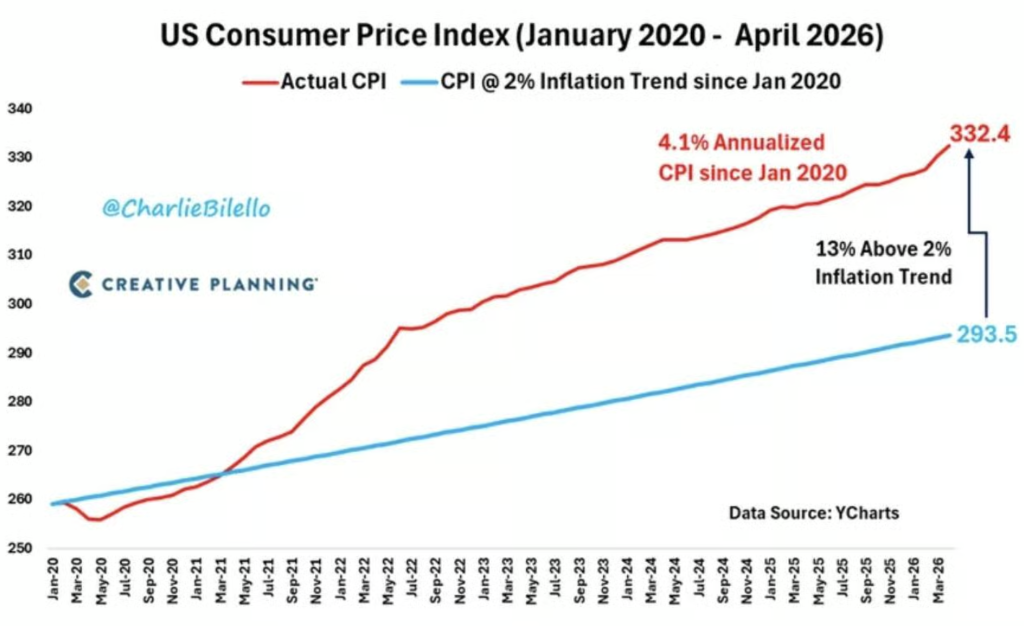
Walsh's Dilemma: The Direct Collision of Ideals and Reality
This is precisely where Walsh's situation becomes the most awkward.
He has publicly advocated for years that the Federal Reserve intervenes too deeply in the financial markets, suggesting a faster reduction of the $6.7 trillion balance sheet and to stop acting as "the market's eternal backstop," returning to traditional monetary policy tools.
The article comments straightforwardly: "It sounds noble, disciplined, and 'the market should stand on its own.' But now, the market is testing whether he really means what he says."
Fringe Finance pointed out that when the stock market is surging and volatility is subdued, it's easy to make speeches about "moral hazard." But when the bond market starts "throwing furniture," long-end yields continue to rise, and economic corners are simultaneously under pressure, that's a different matter.
Three Roads, None are Easy
Walsh has three options in front of him, each with a cost:
Allow yields to continue rising—this would lead the market to face a broader repricing, an increase in default rates, a weakening housing market, and credit pressures spreading to the real economy.
Aggressive rate cuts or restarting bond purchases—this would be akin to throwing fuel onto an already overheated inflation.
Staying put and observing changes—the bond market might make the decision for him.
Fringe Finance cites the case of former UK Prime Minister Liz Truss as a reminder: bond investors can force policymakers to "bow down" at an unexpectedly rapid pace.
Stock Market Valuation: Another Thundercloud Hanging Overhead
Meanwhile, U.S. stock valuations do not reflect the aforementioned risks.
The Shiller P/E ratio is currently about 42 times, placing it in an extremely overvalued range. The premise for this valuation level is that inflation cools rapidly, interest rates fall, corporate profits remain strong, and liquidity is abundant—that is to say, "almost everything needs to go in the positive direction, yet many things are, unfortunately, going in the negative direction right now."
The article concluded: "This is not a soft landing; this is a pressure test disguised as a promotion. While everyone is watching Nvidia dip 4% one day, Walsh should be focused on the U.S. bond market—because that is where his real trouble begins."
免责声明:本文章仅代表作者个人观点,不代表本平台的立场和观点。本文章仅供信息分享,不构成对任何人的任何投资建议。用户与作者之间的任何争议,与本平台无关。如网页中刊载的文章或图片涉及侵权,请提供相关的权利证明和身份证明发送邮件到support@aicoin.com,本平台相关工作人员将会进行核查。


