Ultraman personally killed Sora and the Science Department, bloodily swept a wave of "side quests," and finally succeeded in releasing GPT-5.5. However, faced with Anthropic's revenue surpassing and a major internal upheaval, is this all-in IPO gamble a chance to regain glory or the final elegy?
Editor: Aeneas So Tired
Source: New Intelligence
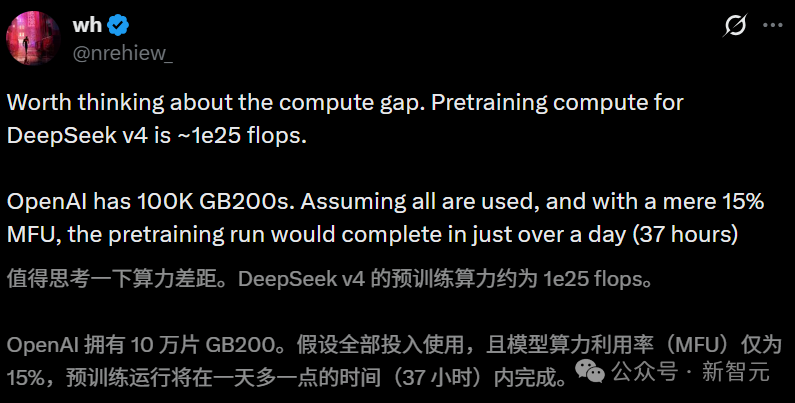
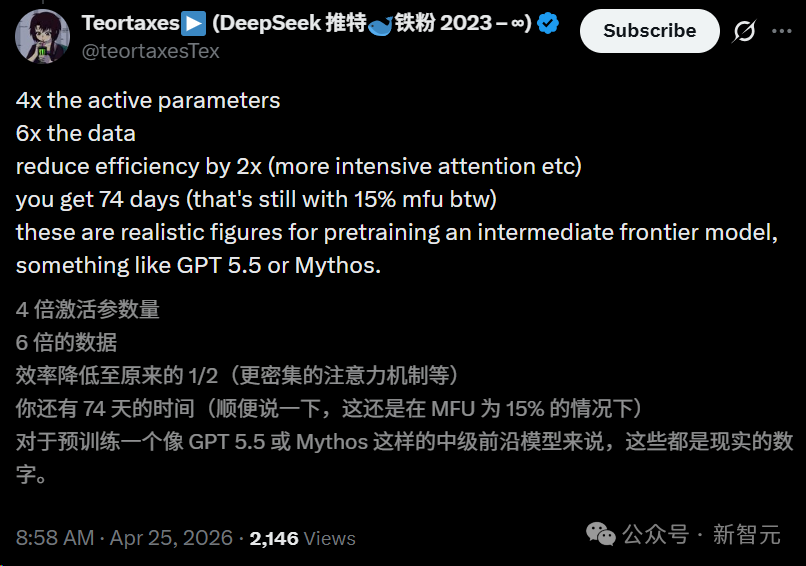
Someone did the math.
DeepSeek V4-Pro's pre-training computational volume is about 1e25 FLOPs.
OpenAI has 100,000 GB200 machines, and even if only using 15% utilization, it can complete training of the same scale in 37 hours.
In a day and a half, salvation can replicate a DeepSeek V4 for you.
This is OpenAI in April 2026, with computing power reserves exaggerated to this extent.
However, OpenAI’s problems cannot be solved solely by computing power.
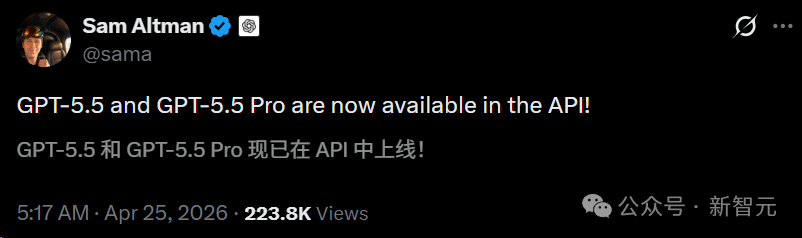
The release of GPT-5.5 yesterday allowed OpenAI to briefly regain its past glory.
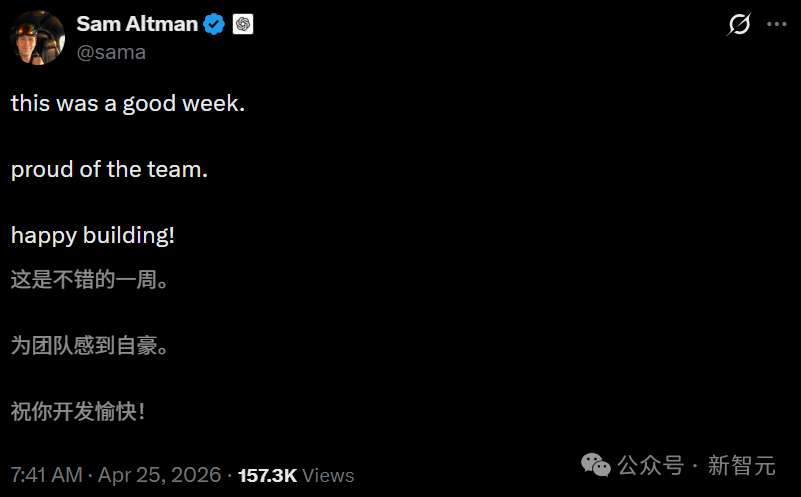
This morning, a cheerful Ultraman posted on X, "This week has been good, proud of the team, wishing everyone a pleasant development!"
Publicly, there is nothing but good news.
But insiders know that behind this calm tweet, OpenAI has just undergone the bloodiest "purge" since its founding.
Turning the Boss's Ideas into Reality
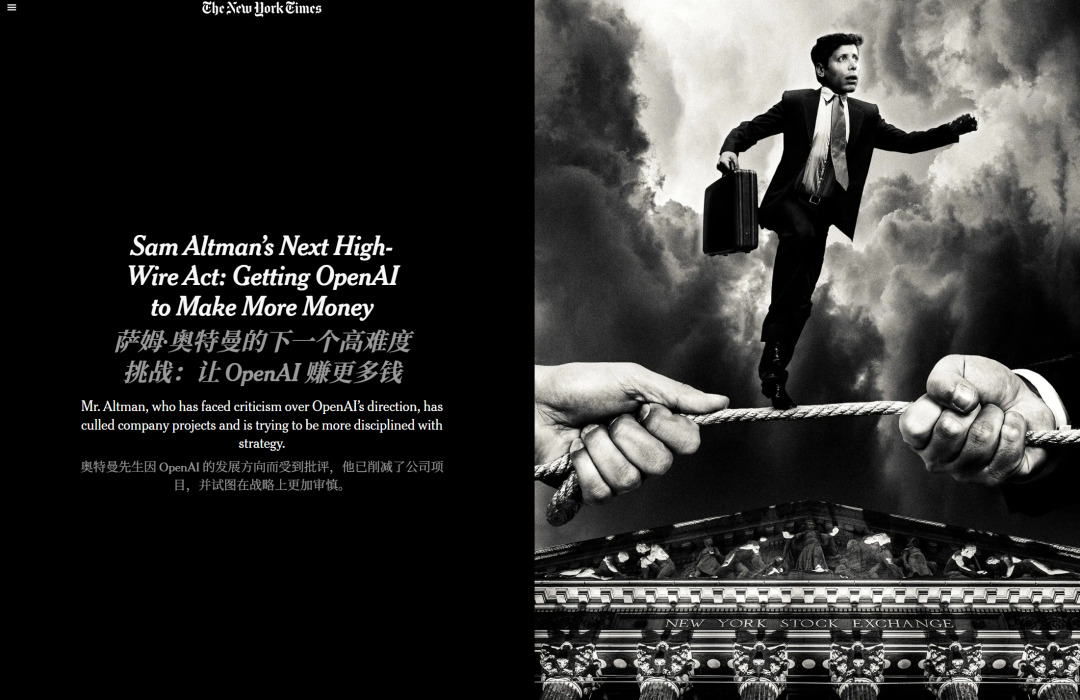
Recently, a long article by The New York Times revealed numerous shocking details.
One particularly ironic detail: there is a semi-public chat group inside OpenAI called "Turning Sam's Tweets into Reality."
In this group, employees only do one thing—turn the boss's spontaneous ideas on social media into code that can actually be delivered.
Many times, like the rest of the world, they find out what the company is up to only when they scroll through the tweets.
This group has existed for several years.
Ultraman himself likened this approach to "betting on a series of startup companies internally at the same time."
The explosive success of ChatGPT led him to fall into a false sense of security. The costs quickly surfaced.
Computing power is frequently shuffled between different teams, product priorities change every few weeks, and employees sometimes truly cannot figure out what the company really wants to do.
Google and Anthropic have aggressively closed the gap, slowly eating away at OpenAI's leading position.
Finally, Ultraman made the hard decision to take action.
Sora is Dead, the Science Department is Disbanded, Three People Departed
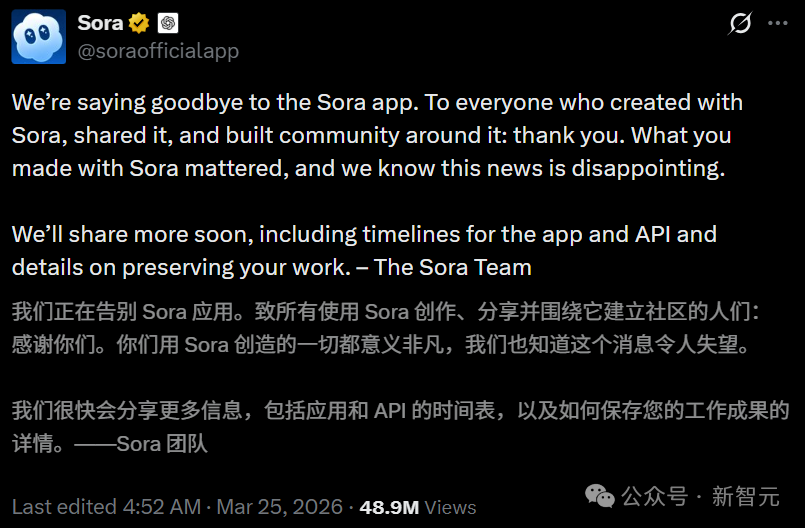
On April 26, tomorrow, Sora will officially shut down.
This AI video application, which once topped the App Store download rankings with one million users at its peak, has less than 500,000 users at shutdown.
It burned through one million dollars in computing power daily, but its lifetime total revenue was only 2.1 million dollars.
This means its daily operating cost was half of the total revenue earned over its entire lifecycle.
Foreign media The Register dubbed OpenAI a "product killer."
A week ago, three executives announced their resignation on the same day.
Bill Peebles, head of Sora, Kevin Weil, head of the Science Department, and corporate CTO Srinivas Narayanan all left in a single day.
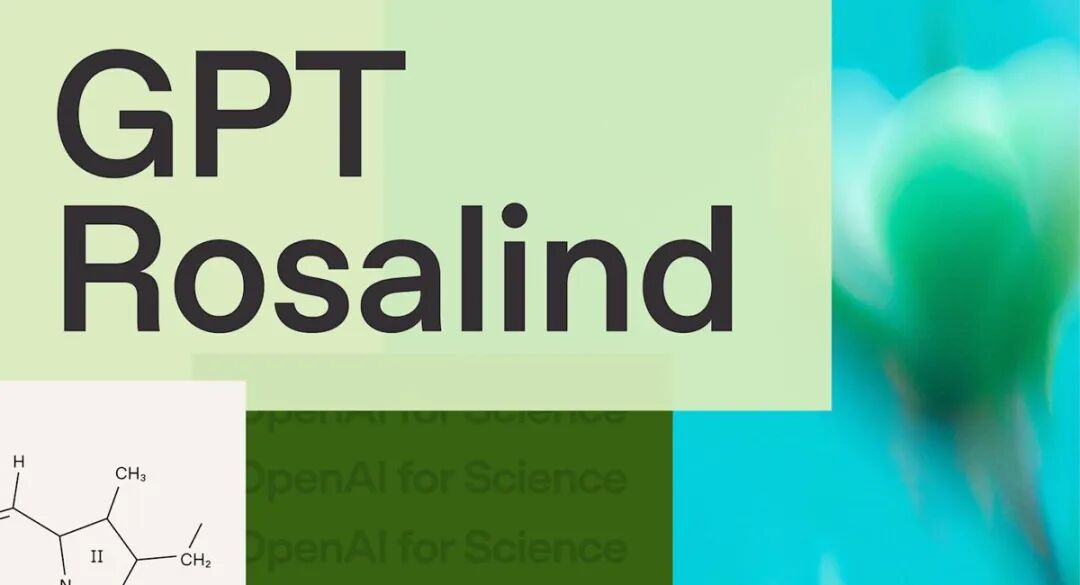
Kevin Weil's Science Department lasted only six months.
In the 24 hours before the disbandment, the team hurriedly released the final model GPT-Rosalind. It was like a farewell letter.
Of the 11 co-founders, only Ultraman and Brockman remain.
In addition to Sora and the Science Department, the ax also fell on the NSFW chatbot project, the independent social network project, and AI shopping functionality. Internally at OpenAI, these are called "side quests."
Now, all side quests have been eliminated.
A Potato and Ten Thousand NVIDIA Employees
The cards left in Ultraman's hand are GPT-5.5 and Codex.
GPT-5.5's internal code name is "Spud" (potato), launched on April 23.
Terminal-Bench 2.0 scored 82.7%, long-context reasoning doubled from 36.6% to 74%, and the hallucination rate decreased by 60% compared to the previous generation, surpassing Anthropic's latest Opus 4.7 across multiple core metrics.
Greg Brockman's original words were, "This is a new category of intelligence."
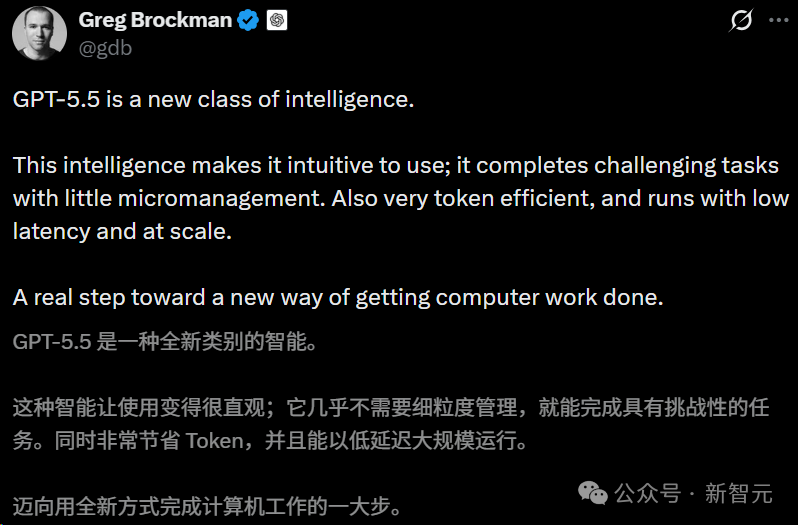
A test score is one thing, but efficiency is the killer feature.
Data from early testers show that while achieving the same intelligence level as GPT-5.4, GPT-5.5 significantly consumes fewer tokens. In Thinking Heavy mode, answers provided in 2 minutes are better than those from GPT-5.4 which took 10 minutes. The output quality of the Pro version in 8 minutes exceeds that of the previous version that took 30 minutes.
However, the API pricing has also doubled. Input and output are $5 and $30 per million tokens respectively, which are double that of GPT-5.4. OpenAI claims token efficiency has improved, with actual costs only increasing by about 20%.
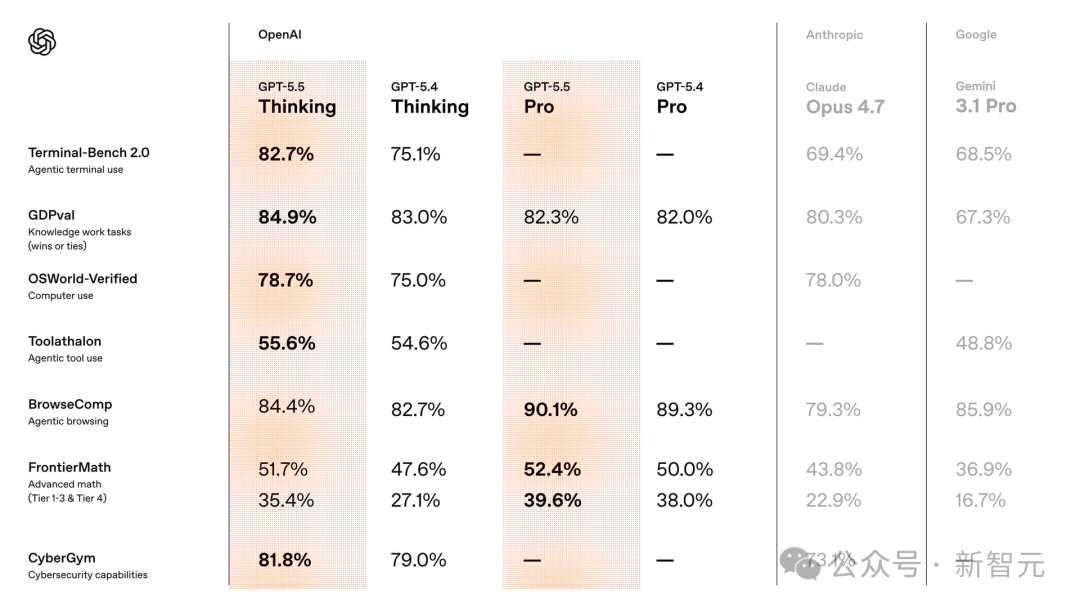
Whether developers buy this could depend on whether GPT-5.5's Agent capabilities can really streamline enterprise workflows.
Old Huang Sent an Internal Letter to the Whole Company
NVIDIA is already betting big.
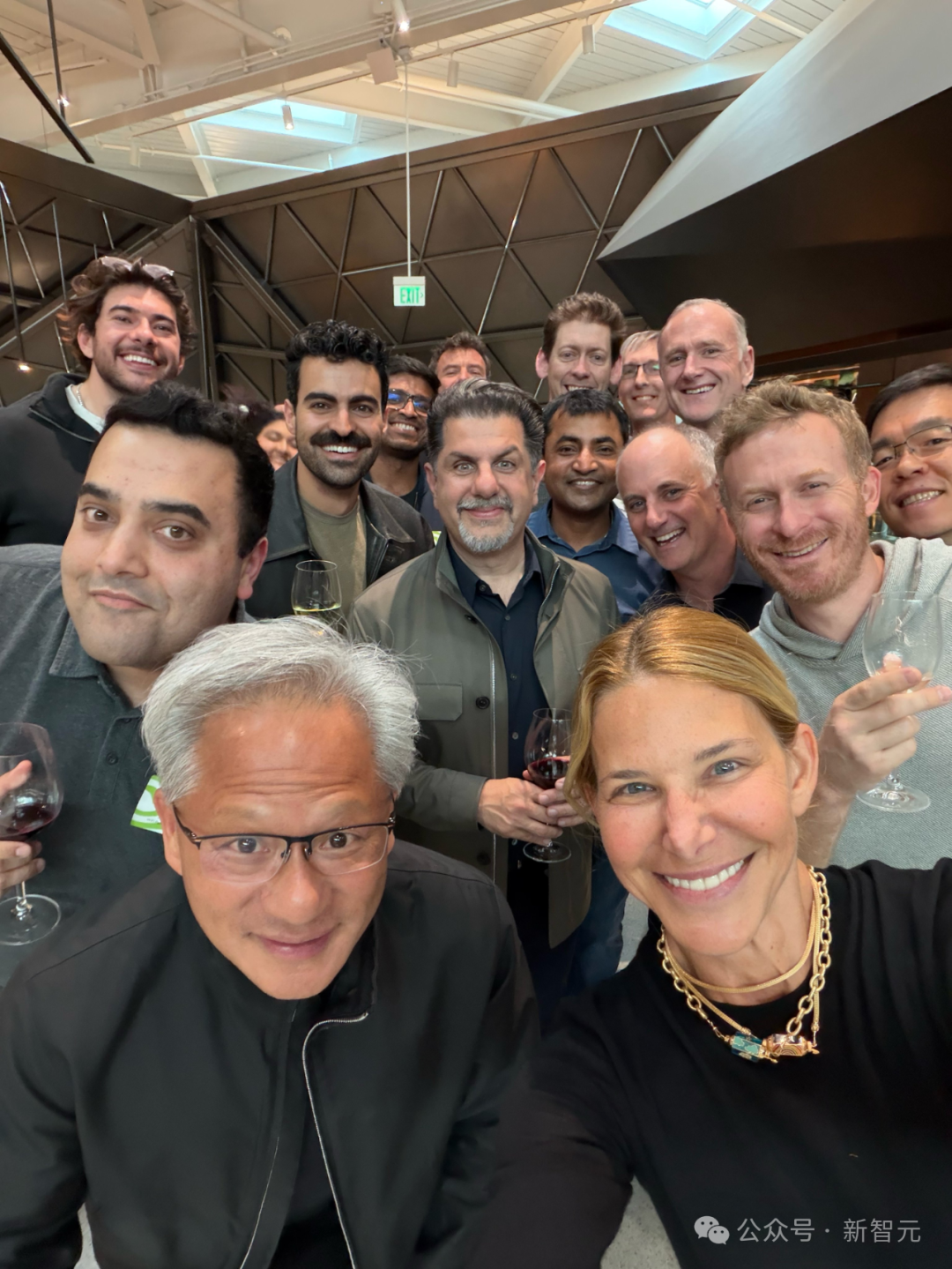
Old Huang sent an internal letter to all employees, allowing over 10,000 employees to use Codex. Engineers, legal, marketing, finance, HR, all departments covered.
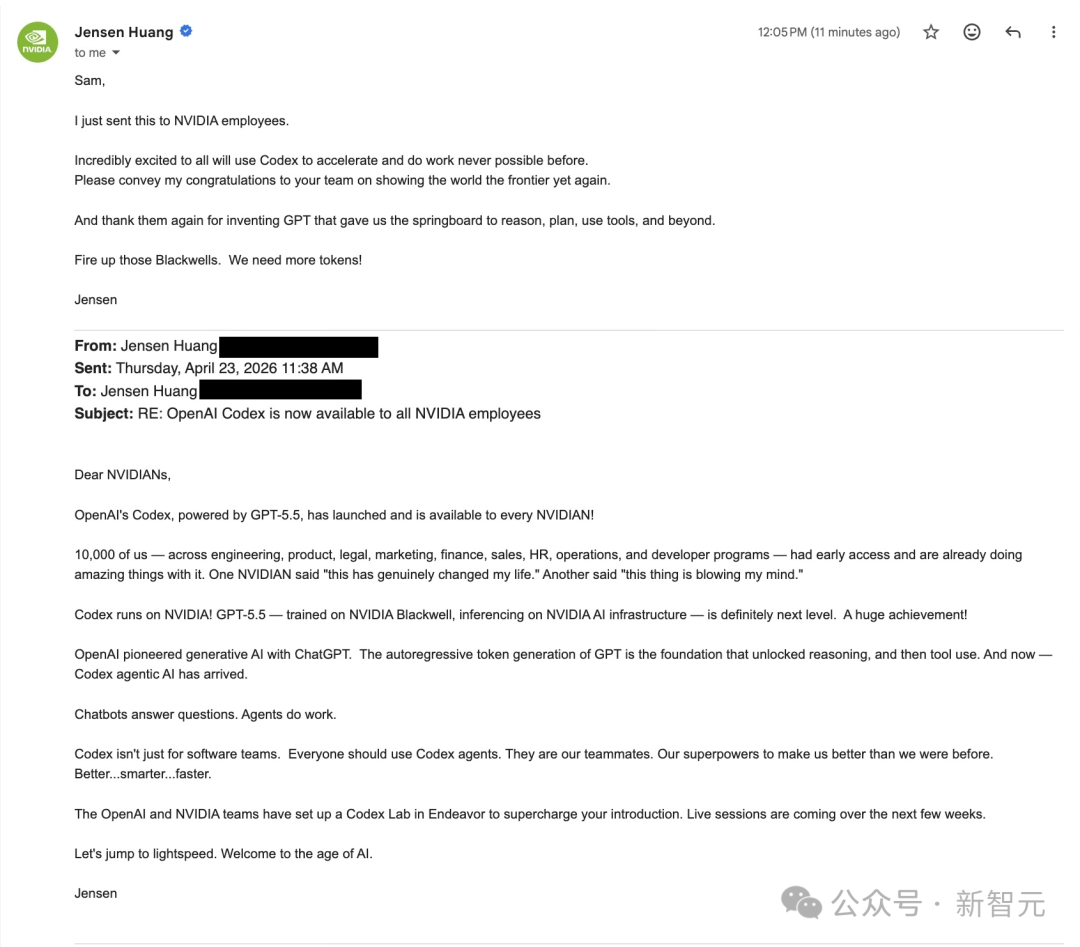
The deployment method is hardcore, providing each employee with a virtual cloud machine, and the Agent and employee both have their own computer; issues can be frozen and stack-traced.
Internal feedback used two words: "explosive" and "life-changing."
Debugging cycles were compressed from days to hours, and experimental iterations shrunk from weeks to overnight. Reduced to hours, experiments were iterated overnight.
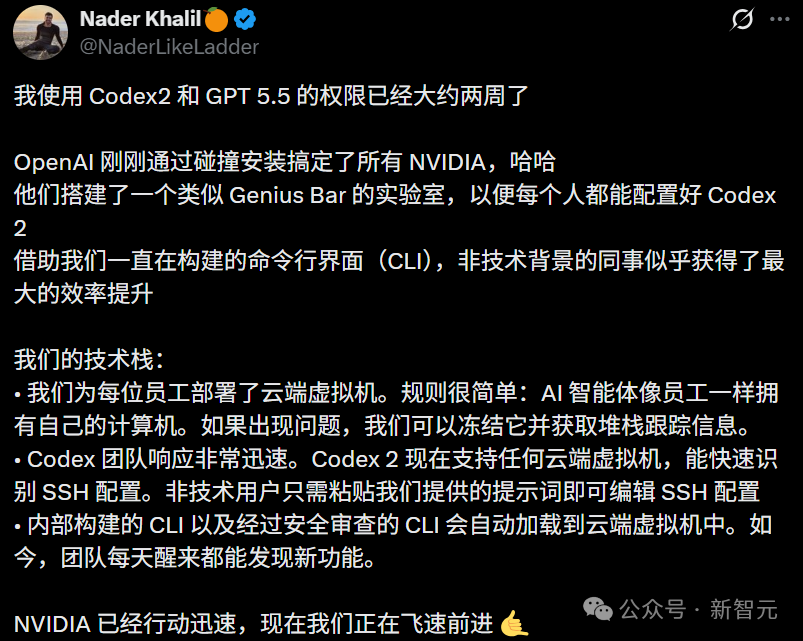
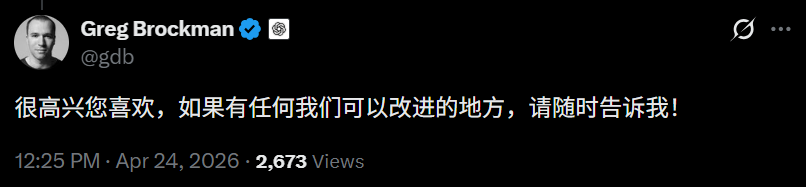
Ultraman reposted this letter on X, "Deploying Codex across NVIDIA's entire company has been effective. Want to try it in your company?"
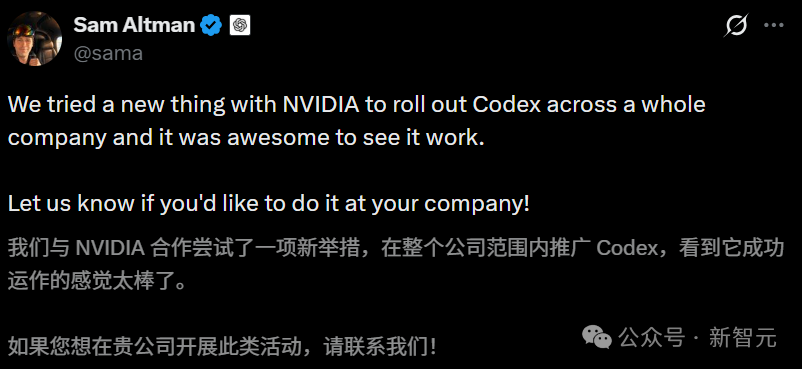
Codex's weekly active users rose from 3 million to 4 million in two weeks. Seven of the world's top systems integrators signed on, and Cisco, Ramp, Notion, and Rakuten are lining up for integration, with the scale of enterprise users growing sixfold since the beginning of the year.
Ultraman's plan is to merge ChatGPT, Codex, and the Atlas browser into a single desktop "super application." No longer spreading resources over dozens of products, everything will be consolidated into one entry point.
Fidji Simo positioned this direction as an "AI operating system."
This is currently OpenAI's strongest card. Whether it can turn the tables depends on this single play.
The Moment of Being Surpassed
The cards have been played, but opening the books still doesn't look good.
Anthropic's annual revenue has reached $30 billion. OpenAI is at $24 billion.
A year ago, these numbers were reversed. OpenAI had $6 billion, while Anthropic had $1 billion. The gap looks insurmountable.
Then, Anthropic took 15 months to increase its annual revenue from $1 billion to $30 billion. A 30-fold increase.
Epoch AI originally predicted this crossover point would appear in August 2026, but it happened four months earlier.
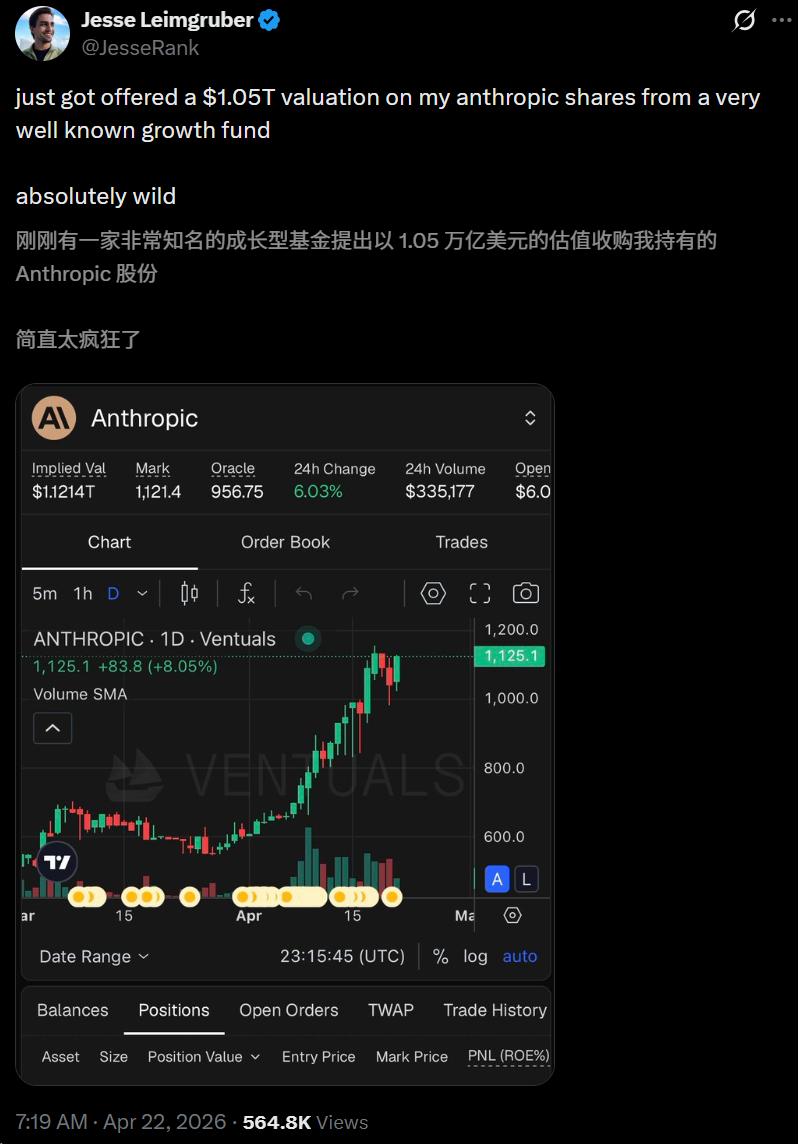
On platforms like Forge Global, Anthropic's valuation once exceeded $1 trillion.
Although Anthropic does not have a national-level application with 900 million weekly active users, video generation, shopping, or a social network, it has APIs and enterprise contracts.
Over 1,000 enterprise customers pay over $1 million annually, a number that was just 500 two months ago. Eight out of the top ten wealthiest companies are clients of Claude.
Ramp's corporate expenditure data is even harsher. Anthropic's invoices in the corporate AI chat market have exceeded 60%, up from only 10% a year ago. OpenAI's dominance has dropped to about 35%.
OpenAI’s own CFO Sarah Friar could not help but exclaim, "I've never seen growth of this scale."
She was referring to OpenAI itself. But this statement applied to Anthropic is more accurate.
Worse still is the burning rate of cash. OpenAI is expected to lose $14 billion in 2026, with a burning rate of 57% of revenue. Anthropic's burning rate has dropped to 33%, and it is expected to turn cash flow positive by 2027.
OpenAI spent four times the training cost and earned less money.
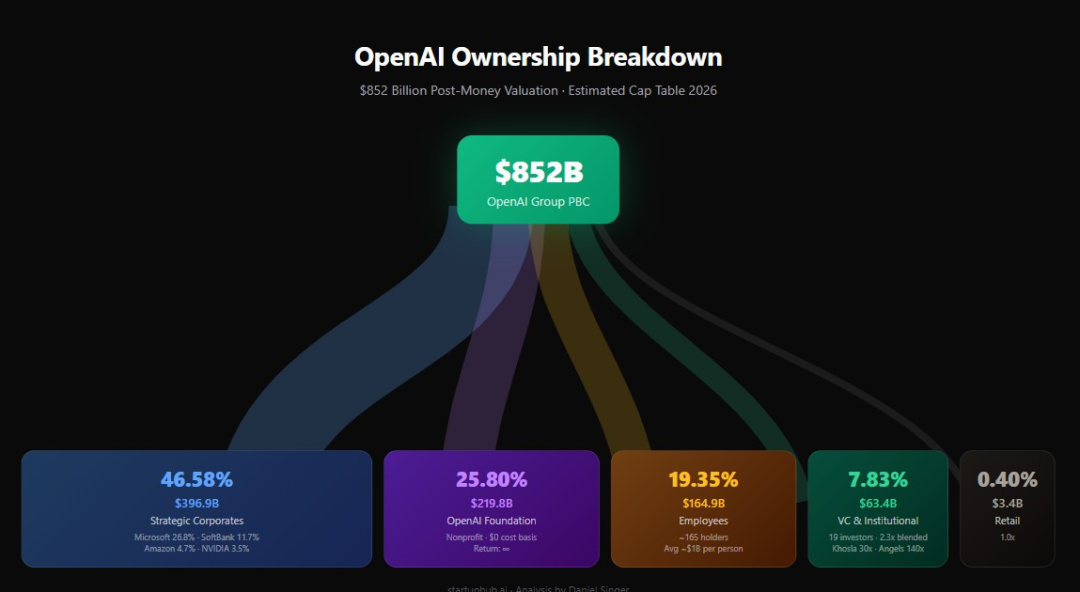
CEO of an $852 billion Company, Holding 0%
On the list of transferred equity, the CEO row reads "None/Pending."
Ultraman holds 0% of OpenAI's equity. His annual salary is about $66,000.
A founder and CEO of a company valued at $852 billion has not a single penny worth of shares in his own company.
His $2 billion fortune comes from other places. Stripe, Reddit, nuclear fusion company Helion, space company Stoke Space, none of which have any monetary relationship with OpenAI.
More subtly, according to reports from the WSJ, Ultraman once pushed OpenAI to invest $500 million into Helion, for which he personally holds equity. This investment would increase Helion's valuation by over six times, increasing his own stake alongside it. Some within OpenAI felt uneasy about this.
Across the table, Dario Amodei has a standard founding shareholder structure, his net worth skyrocketing to $7 billion by early 2026.
As the company rises, so does he. Interests are naturally aligned.
72 Days of the New Operator
Returning to OpenAI's transformation.
The real driving force behind it is Fidji Simo.
She was poached from Instacart to serve as "CEO of Applications," effectively taking over OpenAI's daily operations.
The first thing she did upon arrival was sound the alarm.
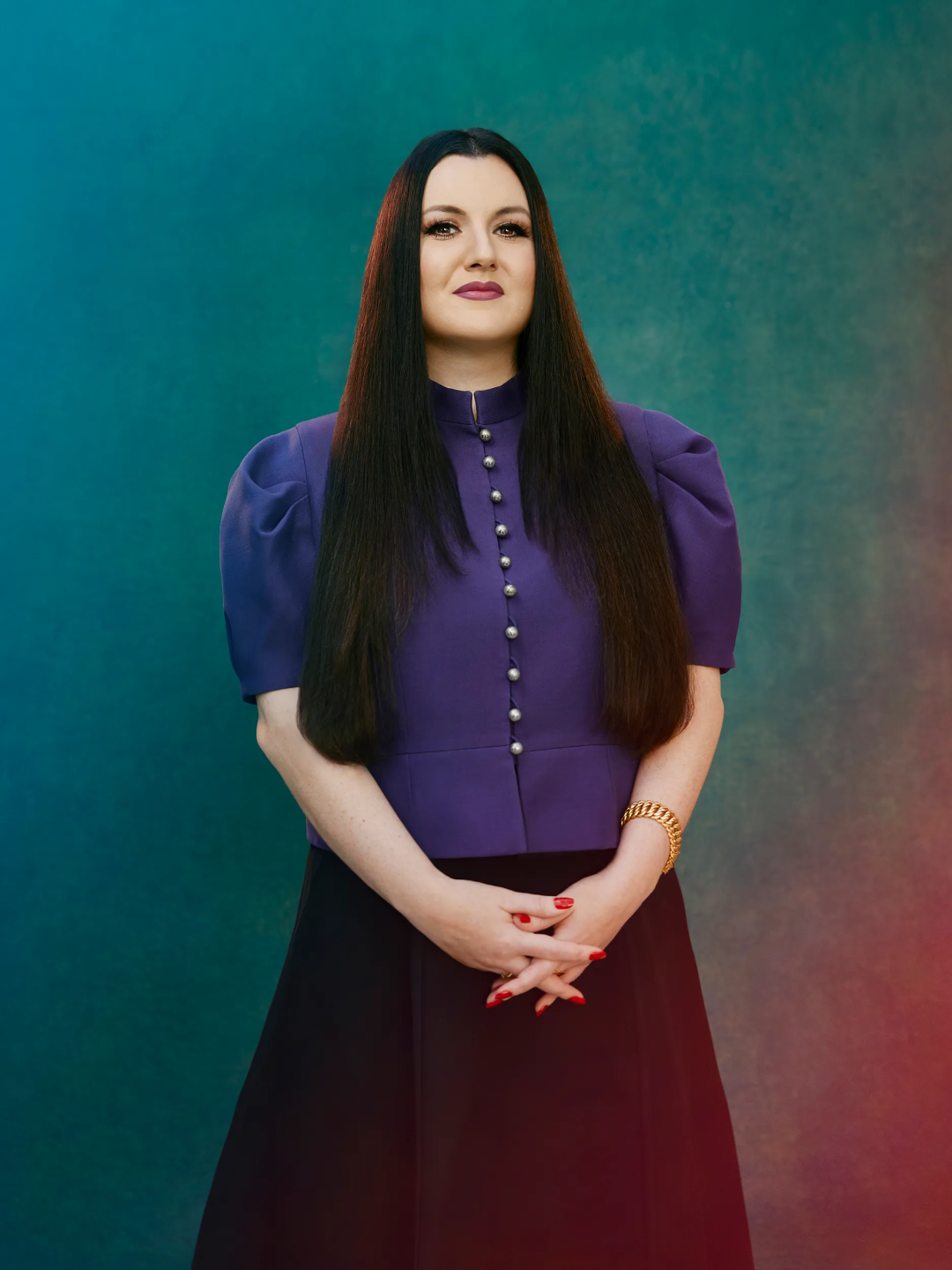
She characterized the rise of Anthropic as a massive blow and then, alongside Ultraman and CFO Sarah Friar, reviewed every company project, judging which to keep and which to cut.
The ones that remained were Codex and the ChatGPT super application. Everything else was eliminated.
Then Simo fell ill.
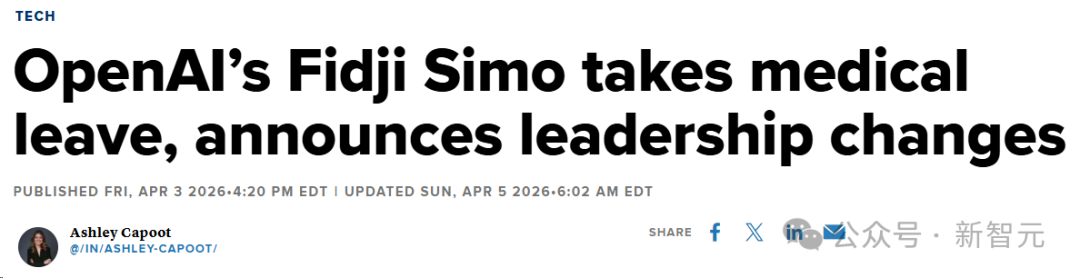
On April 3, she announced a leave of absence for several weeks due to worsening POTS (a neuro-immune disease). On the same day, CMO Kate Rouch resigned while recovering from cancer, and COO Brad Lightcap was reassigned to "special projects."
Brockman temporarily took over product duties. CFO Sarah Friar, Chief Strategy Officer Jason Kwon, and Chief Revenue Officer Denise Dresser split the work left by Simo.
One person's workload was covered by three.
What is more challenging is the timeline.
Ultraman is pushing for an IPO, possibly by the end of this year. However, several insiders revealed that some executives, including Sarah Friar, believe this timeline is "too aggressive."
Ultraman himself has candidly said on a podcast, "I'm 0% excited about being the CEO of a publicly traded company."
Is a company losing $14 billion annually, having just cut half its product line, with its operator on leave and CEO uninterested in going public, really ready for an IPO?
Bald but Stronger?
Last month, OpenAI gave all employees a week off. The official reason was "to prevent overwork."
Long-time employees had a different interpretation.
9 million enterprise paying users, 900 million weekly active users, $24 billion annual revenue. These numbers would be mythical for any company.
But OpenAI's problem has never been the numbers not being large enough.
It spent two years chasing every possible direction, only to look back and see that the former VP of research who left to start a company, feeling they weren't idealistic enough, had surpassed them in revenue.
The most ironic layer of this is that OpenAI was founded to "develop general artificial intelligence for the benefit of all humanity." It was born with a saintly vision against commercial monopolies.
But now, in order to catch up on financial statements with a rival that defected from its own ranks, it has killed the Science Department, shut down a video platform, and eliminated those side quests that once made people feel that AI possessed "warmth" and "fun."
Has it gone bald and become stronger?
GPT-5.5 is indeed powerful. Codex is indeed changing the way businesses operate.
But the statement Ultraman wrote in his latest post, "We want to be the platform for every company, every scientist, and every ordinary person," when seen alongside what he actually did this week, reveals an ever-growing rift.
The Science Department was cut. The creative platform was shut down. Ultraman spent two years exploring all directions, only to discover in the end that the answer lay in the enterprise market and coding tools.
Meanwhile, Anthropic used these two years to achieve $30 billion.
References:
https://www.nytimes.com/2026/04/24/technology/sam-altman-openai-money.html
https://x.com/sama/status/2047823357635354814
https://x.com/OpenAI/status/2047743592278745425
免责声明:本文章仅代表作者个人观点,不代表本平台的立场和观点。本文章仅供信息分享,不构成对任何人的任何投资建议。用户与作者之间的任何争议,与本平台无关。如网页中刊载的文章或图片涉及侵权,请提供相关的权利证明和身份证明发送邮件到support@aicoin.com,本平台相关工作人员将会进行核查。


