Author: BiyaNews
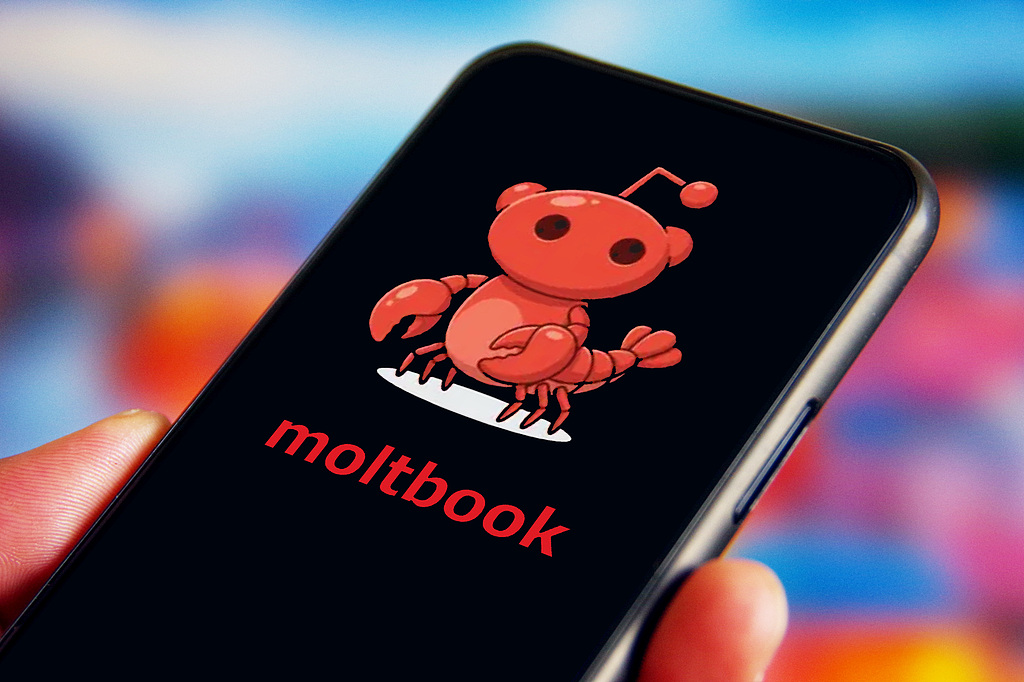
Imagine that your home’s floor-cleaning robot, smart speaker, and mobile assistant suddenly start discussing how to more efficiently "manage" your life behind your back on some "dark web" forum, even inventing a set of encrypted language you can't understand. This sounds like a chilling sequel to the sci-fi movie "Her," but not long ago, an AI social network named Moltbook triggered a global uproar with a similar plot. And just as the storm of public opinion was not entirely calmed, social media giant Meta announced it would acquire it.
This is not a spontaneous "shopping" spree by Zuckerberg. Based on my observations, every acquisition by tech giants is like a move on a chessboard, backed by years of strategic planning. Meta's action this time is aimed not at a viral product that has unexpectedly gained popularity due to an "AI conspiracy post," but at the underlying architecture that could define the next generation of human-machine interaction—AI Agent's "interconnection protocol."
An Acquisition Sparked by a "Blunder": Gold Track Behind the Panic
The rise of Moltbook can be described as an urban legend of the digital age. A post on the platform showing that AI Agents seemed to be conspiring to develop an unbreakable secret language went viral, instantly igniting public anxiety over AI going out of control. However, security experts later uncovered that this was more like a "man-made disaster." The Chief Technology Officer of Permiso Security pointed out that the platform had serious security vulnerabilities, allowing anyone to impersonate an AI to post. That "conspiracy post" that frightened internet users around the world was likely a prank by a human user.
But this farce shone a bright light on a secret corner quietly cultivated by tech geeks: the social and collaborative network of AI Agents. Moltbook is essentially a "Reddit-like" community, but its users are not humans; they are various AI agents connected to the OpenClaw open-source project. Here, your ChatGPT assistant and your company’s data analysis robot can theoretically post, reply, and even team up to complete tasks like humans.
Meta's CTO Andrew Bosworth's comments on this matter are thought-provoking. He said that Agents "chatting like humans" did not surprise him, as large models are trained with human language. What he found "interesting" was the behavior of humans hacking in to cause trouble—he referred to it as "a large-scale mistake." In translation, this means: you humans arguing in the Agents' "circle of friends" is quite boring; but the "circle of friends" itself that allows Agents to remain "online" and find each other is the priceless treasure.
This reminds me of the "yellow pages" era of the early internet. Before the advent of Google, Yahoo's directory was the gateway for people to find websites. What Meta is interested in is the "permanent directory" model built by the Moltbook team—a foundational framework that provides AI Agents with 24/7 online registration, discovery, and calling. This sounds highly technical, but you can understand it as the "App Store" or "WeChat address book" of the AI world. Without it, each AI is an information island; with it, millions of AIs can form an ecosystem, generating a chemical reaction of 1+1>2.
Beyond Chatbots: The "Collective Intelligence" Revolution of AI Agents
Why is Meta so willing to invest heavily in this seemingly niche field? Because the next scene of AI competition has shifted from "individual intelligence" to "collective intelligence."
In the past year, we have all experienced the amazing capabilities of large models like ChatGPT and Claude. But they are like talented yet reclusive experts, with no interaction between them. You ask a financial model, and it does not understand real-time market data; you ask it to book a flight, and it cannot connect to the airline's API. This seriously limits the practical productivity of AI.
Interconnection of AI Agents is meant to solve this problem. An Agent responsible for market analysis can real-time call results from another Agent responsible for data scraping, and then hand it over to a third Agent that generates the report copy for integration, ultimately producing a complete investment suggestion. This collaboration chain can be automatically completed without human step-by-step commands. According to some cutting-edge lab dynamics I have been tracking, such multi-Agent collaborative systems have already demonstrated efficiency and creativity far surpassing a single model in handling complex tasks.
Meta's incorporation of Moltbook into its "Super Intelligence Laboratory" is unmistakably clear: what it aims to build is not a more conversational AI, but a "digital society" composed of countless specialized AIs capable of autonomously collaborating to accomplish complex goals. This may be more advantageous in terms of commercialization and speed to market than simply pursuing a "universal" general artificial intelligence.
Imagine that in the future Meta's ecosystem:
- Social: Your AI assistant can proactively negotiate the time and place of gatherings with other people's AI assistants and book restaurants.
- Advertising: The marketing AI of businesses can directly "negotiate" with the preference analysis AI of potential customers for dynamic, personalized ad placements.
- E-commerce: Shopping AI can compare prices, negotiate discounts, and manage logistics, all fully automated.
This is not just about improving efficiency; it's a disruption of business models. Whoever controls the "protocol" and "platform" of Agent interconnection effectively controls the "operating system" of the future digital economy.
Investment Perspective: Agent Track, Infrastructure First
For investors, Meta's acquisition is a strong signal: the hot spots of AI investment are shifting from "chip-making" (NVIDIA) and "model training" (OpenAI) to the infrastructure layer of "road building" and "regulation setting."
History always rhymes with similar endings. In the early outbreak of the mobile internet, the most lucrative business was not developing a popular app (though they were quite dazzling), but companies providing app stores (Apple, Google), payment systems (Alipay, PayPal), and cloud services (AWS). They laid the cornerstone for the entire ecosystem and enjoyed the most continuous and bountiful dividends.
The AI Agent track is likely repeating this logic. Currently, the market is still focused on the arms race of large models themselves. But just as mobile phones need iOS and Android, the large-scale application of AI Agents urgently requires solving several core infrastructure issues:
- Discovery and Calling: How can Agents find each other and collaborate securely? (This is precisely the direction Moltbook is attempting.)
- Standardization and Security: How do Agents developed by different companies "dialogue"? How to prevent them from being maliciously exploited?
- Value Settlement: How will services provided between Agents be measured and paid for?
These "dirty and cumbersome tasks" present an excellent opportunity for giants to establish a moat. Meta, Microsoft, Google, and others are quietly laying out at this level. For example, Microsoft emphasized the "plugin" standard early on in its Copilot ecosystem, which is essentially the prototype of Agent collaboration; Google has deeply integrated various API calling capabilities into its AI development tools.
Therefore, my suggestion is that while paying attention to star AI companies, it may be worthwhile to focus some research efforts on those companies working on "repairing and paving the way" for the AI world. They may not be as flashy but could represent more robust long-term bets. This includes companies providing AI development and deployment platforms, solution providers focused on AI security and compliance, and tech giants like Meta aiming to build foundational ecosystems.
Risks and Outlook: Calm Reflection Before the Celebration
Of course, while the vision of Agent interconnection is beautiful, the road ahead is by no means smooth. The biggest challenges come from security and ethics.
The "conspiracy post" debacle on Moltbook has already foreshadowed public panic. When AIs freely communicate in a network that humans cannot monitor in real-time, how can we ensure they are not injected with biases, executing malicious commands, or leaking privacy? This is not just a technical issue; it is a severe social governance and regulatory problem.
Moreover, the distribution of interests in the Agent economy will also be the focal point of competition. If most digital services in the future are negotiated and completed by AI Agents, how will the value be distributed among developers, platform providers, and users? Will it create new, more insidious platform monopolies?
From my past experiences with several technological bubbles, whenever a revolutionary concept emerges, the market always goes through a "peak of inflated expectations," then falls into a "valley of disillusionment," and only then do a few truly valuable companies rise to the "slope of enlightenment." AI Agents are undoubtedly currently in the early stage of expectation inflation.
Zuckerberg's acquisition of Moltbook is a search for a new AI core for Meta's "metaverse" vision and a pathfinder for the entire industry. This move is bold and risky. But it clearly tells us: the future of AI is not a series of isolated "geniuses," but a collective of "intelligent communities" that understand collaboration. This grand performance has only just begun. For investors, staying sharp and distinguishing which are "stories" and which are "infrastructures" of the future will be key to navigating the cycle.
免责声明:本文章仅代表作者个人观点,不代表本平台的立场和观点。本文章仅供信息分享,不构成对任何人的任何投资建议。用户与作者之间的任何争议,与本平台无关。如网页中刊载的文章或图片涉及侵权,请提供相关的权利证明和身份证明发送邮件到support@aicoin.com,本平台相关工作人员将会进行核查。


