On March 6, the fourth press conference of the 14th National People's Congress on economic themes was held as scheduled. In response to a question from a reporter from Shanghai Securities regarding the next steps for the China Securities Regulatory Commission (CSRC) in managing risks and strengthening supervision, CSRC Chairman Wu Qing elaborated on the regulatory approach. He stated that the CSRC will focus on strengthening the supervision of new types of businesses. The overall consideration is to seize benefits while avoiding harm, standardizing development, effective supervision, and strict risk control. The main measures include: highlighting the principle of fairness, deepening and refining the supervision of high-frequency quantitative trading. Issuing regulatory measures for derivative trading, supporting lawful and compliant risk management activities, and limiting excessive speculation according to regulations. Strengthening the supervision of real-world asset (RWA) tokenization, adhering to the principle of “strict prohibition within the country, strict regulation outside the country,” establishing and improving the regulatory system and rules for crypto assets, and cracking down on behaviors that illegally speculate in the name of RWA.
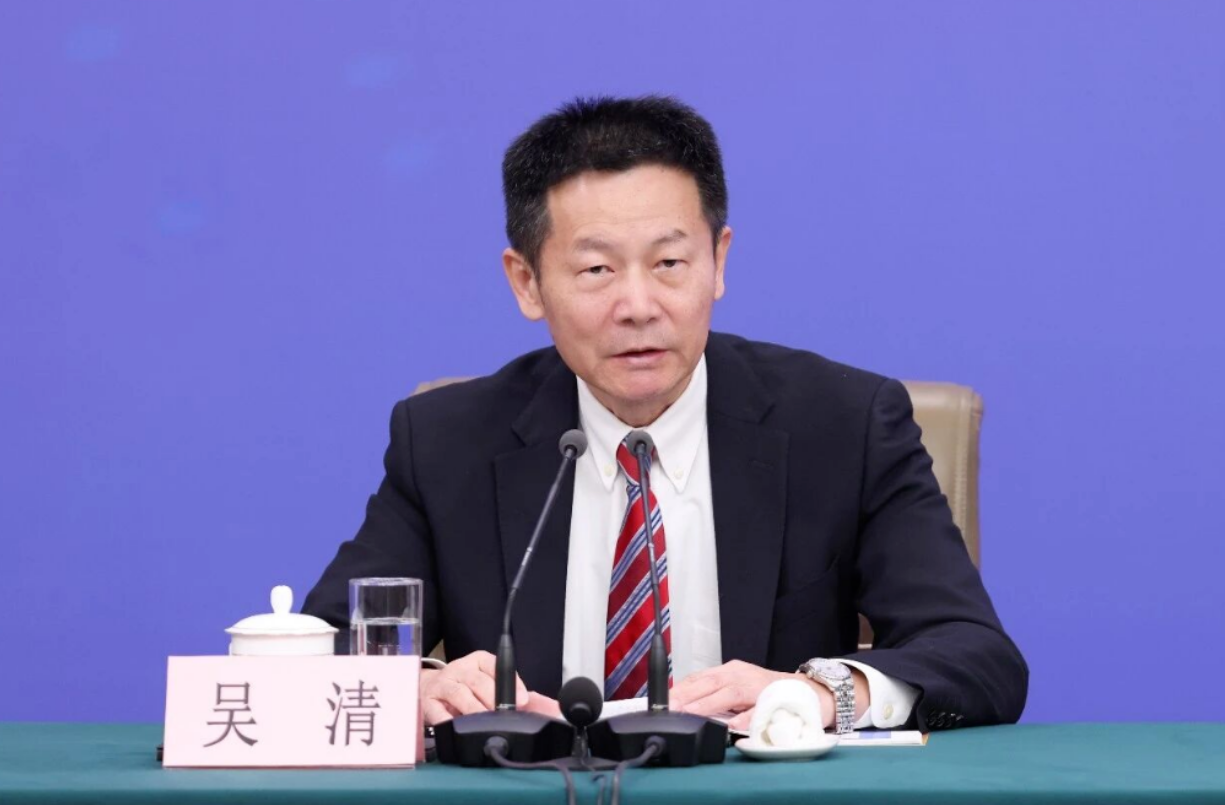
Wu Qing specifically emphasized the need to build a comprehensive regulatory system and rules to firmly establish a "breakwater" against risks in the capital market. This statement quickly sparked ripples in the fields of financial technology and digital assets.
A little over a month ago, a notice jointly issued by the People's Bank of China, the CSRC, and other eight departments titled "Notice on Further Preventing and Dealing with Risks Related to Virtual Currencies" clearly defined the concept of real-world asset (RWA) tokenization for the first time and established the core principle of “strict prohibition within the country, strict regulation outside the country.” From the joint issuance by eight departments to the CSRC chairman's special emphasis at the press conference, the regulatory stance on this emerging field has been clearly presented.
For the RWA sector, is this a "pause" in development, or a "starting gun" for a new round of standardized progress? What behaviors are prohibited within the "breakwater"? Is there room for compliant exploration outside the "breakwater"?
1. What exactly does the "breakwater" aim to prevent?
To understand the regulatory stance, it is necessary to clarify a core issue: what exactly is RWA tokenization?
According to the notice jointly issued by the eight departments, the official definition is: using cryptography and distributed ledger technology or similar technologies to transform asset ownership, income rights, etc., into tokens or other rights and bonds with token characteristics, and participating in activities for issuance and trading. This definition covers the complete chain from technological implementation to financial behavior.
On this basis, the regulation established the eight-character principle of "strict prohibition within the country, strict regulation outside the country." The notice clearly states that engaging in RWA tokenization activities domestically, as well as providing related intermediary, information technology services, etc., suspected of illegal token issuance, unauthorized public issuance of securities, illegal operation of securities and futures, illegal fundraising, and other illegal financial activities, should be prohibited.
This means that any RWA token issuance, trading, and related services aimed at the domestic public are legally classified as illegal financial activities. This is not the first time the regulatory body has issued a red card for such behaviors. As early as 2017, regulatory authorities explicitly prohibited initial coin offerings; in 2021, it was further clarified that virtual currency-related business activities are considered illegal financial activities. This recent declaration regarding RWA can be seen as a natural continuation of this regulatory logic.
However, it is worth noting that the notice also left open a "loophole": activities conducted based on specific financial infrastructure with approval from the relevant business authorities are exempt. The existence of this exception implies that regulation is not a one-size-fits-all approach to RWA technology but is based on strict preconditions regarding “who is issuing, who is operating, and whether it is regulated.”
Wu Qing's statements at the press conference further detailed the regulatory focus. He particularly mentioned the need to “crack down on behaviors that engage in illegal speculation and financial activities in the name of RWA.” The key term here is “in the name of RWA.” In other words, the regulation targets those engaging in illegal financial activities under the banner of RWA concepts, and not the RWA technology itself.
At the same time, the regulatory body has also drawn a red line for foreign institutions providing services domestically: foreign units and individuals are not allowed to illegally provide real-world asset tokenization services to domestic entities in any form. This means that even if a project is registered and issued abroad, as long as its service targets involve domestic entities, it also faces compliance risks.
From policy texts to high-level statements, the message from the regulatory body is consistent: RWA tokenization, as a new type of financial form, must be integrated into the existing regulatory framework and cannot become an extralegal zone. Those attempting to profit from the concept's popularity in a regulatory vacuum represent the primary targets that the "breakwater" aims to guard against.
2. Why has the regulatory body chosen to speak out now?
The intensive statements from the regulatory body are not happening in a vacuum. Since entering 2026, regulatory bodies in multiple regions have continuously issued risk warnings pointing to illegal financial activities disguised as virtual currencies, RWAs, and other flags.
On January 16, the Hebei Financial Regulatory Bureau issued a risk warning titled "Notice on Preventing Illegal Financial Activities," specifying that illegal financial activities often wear various disguises, claiming to be related to pensions, cultural tourism, cloud breeding, RWA, and others. On January 30, the Market Supervision Administration of Yichun City, Heilongjiang Province, also issued a warning against illegal financial risks, similarly placing RWA alongside new concepts such as blockchain, virtual currencies, and cashback apps, warning that criminals use these concepts to engage in illicit financial activities.
These risk warnings are not merely vague statements. An article published by the Hunan Branch of the People's Bank of China at the end of January detailed the typical tactics of virtual currency investment scams: enticing users with high returns to fake platforms, inducing them to invest large sums through small rebates, and then creating obstacles when attempting to withdraw money and disappearing with the funds. The article illustrates through the case of resident Lao Wang that the so-called "Bitcoin wealth management platform, with an annual return of 50%,” is often just a string of digits in the backend; once trying to withdraw a large amount, the user might encounter "system maintenance" or unresponsive customer service.
What’s even more alarming is that some criminals have started to use RWA as a new “disguise.” The Hebei Financial Regulatory Bureau pointed out in its risk warning that illegal financial activities are constantly innovating; some criminals use “high yield and capital protection,” “quick profits” as bait to lure and deceive the public into participating in illegal fundraising, online fraud, and financial pyramid schemes. The concept of RWA is relatively unfamiliar to ordinary investors, making it easier for offenders to package it as a "cutting-edge investment opportunity" for misdirection.
From within the industry, there is indeed a phenomenon where some project parties use the RWA concept for irregular publicity. Some projects claim to be backed by overseas real assets, issuing so-called "tokenized securities" but fail to provide clear asset ownership and legal guarantees. Some projects even directly solicit funds from the domestic public, promising high returns and have, in fact, crossed the red line of illegal fundraising.
Shi Zihan, a lawyer from Beijing Dacheng Law Firm and a distinguished expert at Zhejiang University City College's Law School, stated in a media interview that if investors suspect they might be caught in a virtual currency investment scam, they can collect evidence such as promotional materials, investment agreements, payment records, and WeChat chat records, and report to the police in conjunction with other investors who have encountered similar situations. This indicates that judicial crackdowns against such illegal activities are underway.
From the regulatory perspective, at this moment of “drawing the sword,” a least three considerations are at play. The first is the protection of investors. Looking back at past lessons, from the collapse of P2P to the speculation of air coins, many retail investors lacking professional judgment have suffered huge losses under inducements of high returns. RWA involves cross-border and cross-market complexities, making it even more difficult for ordinary investors to identify risks; preemptively building a "breakwater" is a necessary protective measure.
The second is preventing financial risks. The essence of RWA is to combine real-world assets with digital technology; if excessive financial leverage is applied through tokenization without the actual value of the real economy, the risks may impact the traditional financial systems through complex transmission chains. Wu Qing’s mention of “restricting excessive speculation” reflects this consideration.
The third is to establish regulatory expectations. As reflected in the eight departments' notice, regulation does not prohibit the RWA technology itself but aims to establish clear rules for this emerging form of business. Within the boundaries, compliant exploration can progress in an orderly manner; outside the boundaries, illegal behaviors will be severely punished. This approach of “combining relaxation and restriction” helps prevent the industry from falling into a cycle of "chaos when released, deadlock when managed."
3. Where are the opportunities for RWA in China under regulation?
If we broaden our perspective, we find that while regulatory authorities in the mainland clearly hold a "strict prohibition" position, the practice of RWA in the Hong Kong Special Administrative Region is experiencing substantial breakthroughs.
In late February, Hong Kong's first property RWA project was officially approved. Derlin Holdings Group announced that its two RWA tokenization products have received regulatory recognition with "no further comments" from the Hong Kong Securities and Futures Commission (HK SFC), allowing the implementation of related business plans. This means that after months of communication, the HK SFC has given a green light to this business model.
The underlying assets for this approval include two major parts: one is the limited partnership fund holding the Derlin Tower in Central Hong Kong, and the other is the limited partnership fund investing in the private equity project Animoca Brands. The Derlin Tower is located in the core business district of Central Hong Kong on Wellington Street, about a five-minute walk to the International Financial Center, and Derlin Holdings bought all units up to the top five floors and the naming rights for over HKD 280 million in 2023. This is the first time that tangible assets in Hong Kong's core business district are offered in a tokenized form to qualified investors.
In terms of specific implementation, Derlin Securities will act as the proposed token distributor, establishing the necessary operating infrastructure and product listing processes; Derlin Digital Family Office will serve as the investment manager, collaborating with the tokenization solution provider Asseto to utilize blockchain technology for the tokenized issuance of relevant fund equities.
William Li, a partner at Derlin Holdings, stated in an interview with Caijing that the project began in-depth communication with the HK SFC from scratch and underwent months of review before receiving "no objection" regulatory recognition. "This is not just the approval of a single product; it is the regulatory recognition of the RWA business model, allowing further progress."
The significance of this case lies in its demonstration of a feasible pathway for compliant implementation of RWA under a strict regulatory framework. The tokenization guidelines issued by the HK SFC require that tokenized products must comply with existing licensing systems, ensuring investor protection measures are in place. The Derlin project was approved for advancement precisely because it relied on licensed institutions, targeted qualified investors, and strictly adhered to disclosure requirements.
This pattern of "strict regulation in the mainland, exploratory efforts in Hong Kong" effectively creates a strategic complementarity. Mainland regulatory guidance emphasizes risk prevention and clear boundaries, whereas Hong Kong permits compliance institutions to explore with qualified clients under the license regulation and investor protection framework. The latest global RWA product models, technical standards, and risk management plans can be piloted in Hong Kong, with successful experiences and lessons learned serving as references for future relevant policies in the mainland and other regions.
So, in the context of the mainland's "strict prohibition," is there still room for compliant participation in the RWA field?
From the policy text, the notice from the eight departments states, “Activities supported by specific financial infrastructure approved by the relevant business authority are exempt,” leaving theoretical space for compliant exploration. This means that if it meets regulatory requirements, obtains approval from business authorities, and relies on compliant financial infrastructure, related RWA exploration is not an absolute taboo.
From a practical direction, there are at least three possible paths. The first is technological innovation serving financing for real enterprises. Under the current securities law framework, using blockchain technology to enhance the transparency and flow efficiency of non-standard assets like supply chain finance and financial leasing is considered process optimization rather than issuing securities tokens, thus the policy risk is relatively controllable. The core of this exploration lies in not crossing the red line of "issuance and trading aimed at the public."
The second category is internal and external linkage with Hong Kong as a pivot. Mainland institutions can collaborate with licensed institutions in Hong Kong to issue compliant RWA products targeted at professional investors. Such operations must strictly adhere to the firewall principle of "no outflow of funds, no inflow of assets," ensuring no fundraising from the domestic public and no trading services provided to the domestic clients. The existing regulatory framework and judicial recognition arrangements in Hong Kong provide the basis for this cooperation.
The third category involves the role of a “water seller” providing technical solutions. Since issuing tokens is prohibited, providing RWA-related technical solutions, smart contract audits, and asset custody technical services to compliant financial institutions will become a blue ocean market with lower policy risks. The mainland boasts a wealth of technical talent and mature blockchain development capabilities, giving it a competitive edge in this field.
It is essential to emphasize that the exploration of these paths must be based on strict compliance and regulatory communication, and should not encourage public speculation. As Li Xiaojia recently emphasized when discussing RWA, tokenization should not reduce the risks of underlying assets in the real world. This highlights the essence of the issue: regardless of how innovative the technology may be, the quality of the assets, the cash flows of the assets, and the legal rights to the assets remain fundamental to determining investment value.
From the joint announcements of the eight departments to the CSRC chairman’s statements at the Two Sessions, the regulatory body's "breakwater" for RWA tokenization is now vividly evident. This "breakwater" not only blocks the waves of illegal acts disguised as concepts, but also provides a stable harbor and operational environment for compliant exploration.
For practitioners, the key now is not to complain about strict regulation but to reassess: what real value can RWA technology create for which type of tangible asset circulation within the existing legal framework? Is it to continue wandering in gray areas, trying to bypass regulation, or to return to serving the real economy's origin and seek innovation space under compliance? The answer is self-evident.
The "breakwater" is not a "pause." On the contrary, it points the direction for the industry: only innovations that are integrated into the regulatory vision, serve the real economy, and can withstand risk tests will truly navigate toward broader seas. Those attempting to bypass the "breakwater" and venture through the storm will ultimately be engulfed by the waves.
(RWA Research Institute Reminder: The discussion in this article regarding the future paths of RWA is based on the logical deduction of the current regulatory framework. Any RWA-related business exploration must be conducted within the scope permitted by national laws and regulations and financial regulatory authorities. Currently, the mainland maintains a high-pressure stance against any financing activities involving token issuance aimed at unspecified public audiences. Practitioners must adhere to compliance lines and must not break the law.)
免责声明:本文章仅代表作者个人观点,不代表本平台的立场和观点。本文章仅供信息分享,不构成对任何人的任何投资建议。用户与作者之间的任何争议,与本平台无关。如网页中刊载的文章或图片涉及侵权,请提供相关的权利证明和身份证明发送邮件到support@aicoin.com,本平台相关工作人员将会进行核查。


