In 2025, it will be a landmark year for Ethereum. As Ethereum Foundation member @renaissancing stated in the annual summary “Ethereum in 2025: From Experiment to World-Class Infrastructure”, Ethereum has officially shed its role as a “social experiment” and has taken on the burden of being a “global financial infrastructure.”
If we consider the price of the coin as the annual performance, then for holders who bought ETH at the beginning of the year, this year has likely been tough. ETH has lost at least 15% since the beginning of the year, and even though it reached a historical high of $4,953 in August, the current price is at a near five-month low.
However, despite the fluctuations in coin prices, the upgrades at the protocol layer, the gradual clarity of regulatory frameworks, and the deep anchoring of institutional funds all indicate that the fundamentals are developing in a more robust direction. This article will deeply analyze the significant turning points and milestones for Ethereum in 2025, look ahead to the strategic deployments for 2026, and explore how this “world computer” is transforming from a cautiously conservative organization into a settlement empire moving towards global finance.
Two Major Upgrades Completed in Just Seven Months
Ethereum completed two major core upgrades in 2025: Pectra (May) and Fusaka (December), which focused on “user experience” and “efficiency improvements from scalability,” respectively.
Pectra Upgrade: Enhances user experience and reduces the burden on validators. It allows regular wallets to have smart contract functionality, for example: users can pay Gas fees with stablecoins or authorize multiple transactions at once without needing multiple manual confirmations. It increases the staking flexibility for validators, raising the staking limit for a single validator from 32 ETH to 2,048 ETH, improving capital efficiency and reducing the overall number of active validators in the network, thereby lowering the network burden.
Fusaka Upgrade: Addresses the data bottleneck of Layer 2 and enhances Ethereum's efficiency. Through PeerDAS technology, validators can verify validity without downloading all data, allowing Ethereum to handle eight times more data space than before while reducing Layer 2 costs. Coupled with the gradual increase of the mainnet Gas Limit from 30M at the beginning of the year to 60M, Ethereum's throughput has doubled.
From ETF Influx to the Rise of DAT
If the technical upgrades are the core evolution of Ethereum, then the influx of institutional funds is the most powerful external variable in 2025.
With the SEC releasing staking guidelines and the passage of the “GENIUS Act,” the fog of compliance is gradually lifting. This indirectly ignited the powder keg of Ethereum ETFs. From the end of May 2025 to the end of August, Ethereum spot ETFs experienced a rapid influx of funds, marking a significant shift in Wall Street's demand towards Ethereum, viewing it as a strategic asset alongside Bitcoin. However, a more noteworthy change is the rise of Ethereum treasury companies.
Data before publication shows that DAT and ETFs together hold up to 10.7% of the circulating supply of ETH, with the former holding a total of 6.81 million ETH (approximately $20.14 billion) and the latter holding 6.13 million ETH (approximately $18.12 billion). This indicates a qualitative change in Ethereum's market supply structure, with institutional holdings anchoring the lower limit of Ethereum's value.

Intense Competition Among Public Chains, Yet Solidifying the Core Position as “Global Asset Settlement Center”
In the competition of on-chain activities, although Ethereum faces strong challenges from Solana, BNB Chain, and emerging public chains, it has still solidified its core position as the “global asset settlement center.”
The TVL of Ethereum shows remarkable resilience. It started the year with a 56% share, dipped to 51% in early May, but then rebounded to 62% in August, ultimately closing the year with a stable 58% share. While speculative capital chases the next opportunity and new chains, Ethereum's TVL moat remains unbreakable, maintaining a solid position year after year.
Among them, the supply of stablecoins on Ethereum has increased by 45%, rising from $111.8 billion to $162.5 billion. Additionally, whether it’s tokenization of government bonds or credit products, almost all major financial pilots (such as JPMorgan's first tokenized money market fund MONY and BlackRock's BUIDL fund) have chosen Ethereum as their first option. As of now, Ethereum's market share in the RWA market is as high as 65.46%, far exceeding the second place BNB Chain (9.83%).
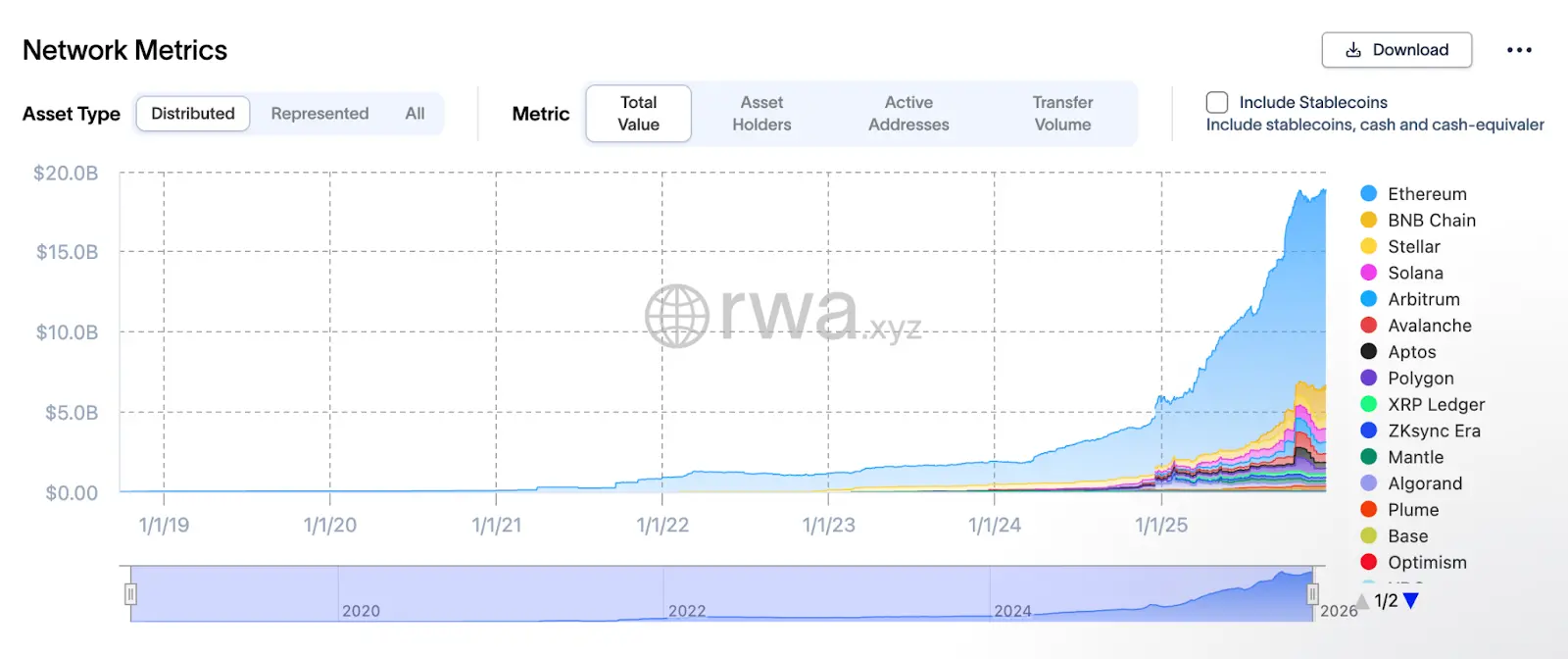
In summary, despite the ups and downs of Ethereum's coin price in 2025, the technological upgrades, the reshaping of the regulatory environment, and the structural changes in institutional holdings have all demonstrated the resilience of Ethereum's underlying fundamentals, delivering a satisfactory report card to the market.
Ethereum's 2026: Moving Towards Global Financial Settlement Layer
- Glamsterdam and Kohaku Upgrades: Accelerating Institutional Fund Entry
In 2026, Ethereum will address the efficiency and privacy concerns of institutional entry through two important upgrades:
Glamsterdam (expected mid-2026): Glamsterdam will introduce “parallel transaction processing” and “built-in proposer-builder separation (ePBS).” In simple terms, Ethereum used to function like a one-lane road, where one transaction had to complete before the next could begin. The upgrade aims to achieve parallel processing, transforming Ethereum into a multi-lane highway while maintaining decentralization. Additionally, with the Gas Limit expected to increase from 60M to 200M, this will significantly enhance Ethereum's throughput, providing a stable and fast settlement experience in financial environments.
Kohaku (expected end of 2026): Aims to promote Ethereum's privacy upgrades, providing users with better privacy protection. This upgrade will introduce the “privacy protocol Railgun” and “privacy pools,” which can help businesses and individuals obscure transaction information while proving the legitimacy of fund sources (compliance) without disclosing wallet balances and transaction business secrets to the entire network, effectively addressing concerns about privacy leaks for individuals and institutions.
However, according to analysis from Cryptoslate, the core vulnerability of Glamsterdam lies in the necessity for validators to shift from “re-executing blocks” to “verifying ZK execution proofs (ZK-proofs).” If delays or even outages occur in the system responsible for generating proofs during high-frequency trading or extreme network congestion, validators will be unable to confirm the authenticity of transactions, potentially leading to a complete network halt.
Moreover, while ePBS achieves parallel processing, it also introduces the “free option problem,” with research indicating that during extreme market volatility, up to 6% of block production may be disrupted, threatening the immediacy and stability of financial settlements, which poses a serious threat to the stability and immediacy of transactions for financial institutions seeking millisecond settlements.
- dAI Strategic Route: Laying the Infrastructure for the AI Economy
In September 2025, the Ethereum Foundation announced the establishment of the decentralized artificial intelligence project team dAI Team, aiming to make Ethereum the preferred settlement and collaboration platform for artificial intelligence and machine economy in the next decade. Project leader Davide Crapis also released the 2026 roadmap at the end of the year, positioning ERC-8004 and x402 as key pillars.
ERC-8004: Aims to establish decentralized “digital identities” and “credit reports” for AI agents. This protocol provides verifiable identities and historical reputation records for AI through ZK proofs or TEE trusted execution environments, ensuring that the results of their task execution are authentic and meet expectations. This allows machines to collaborate securely and sign automated contracts in an environment without intermediaries, laying the trust foundation for the machine economy.
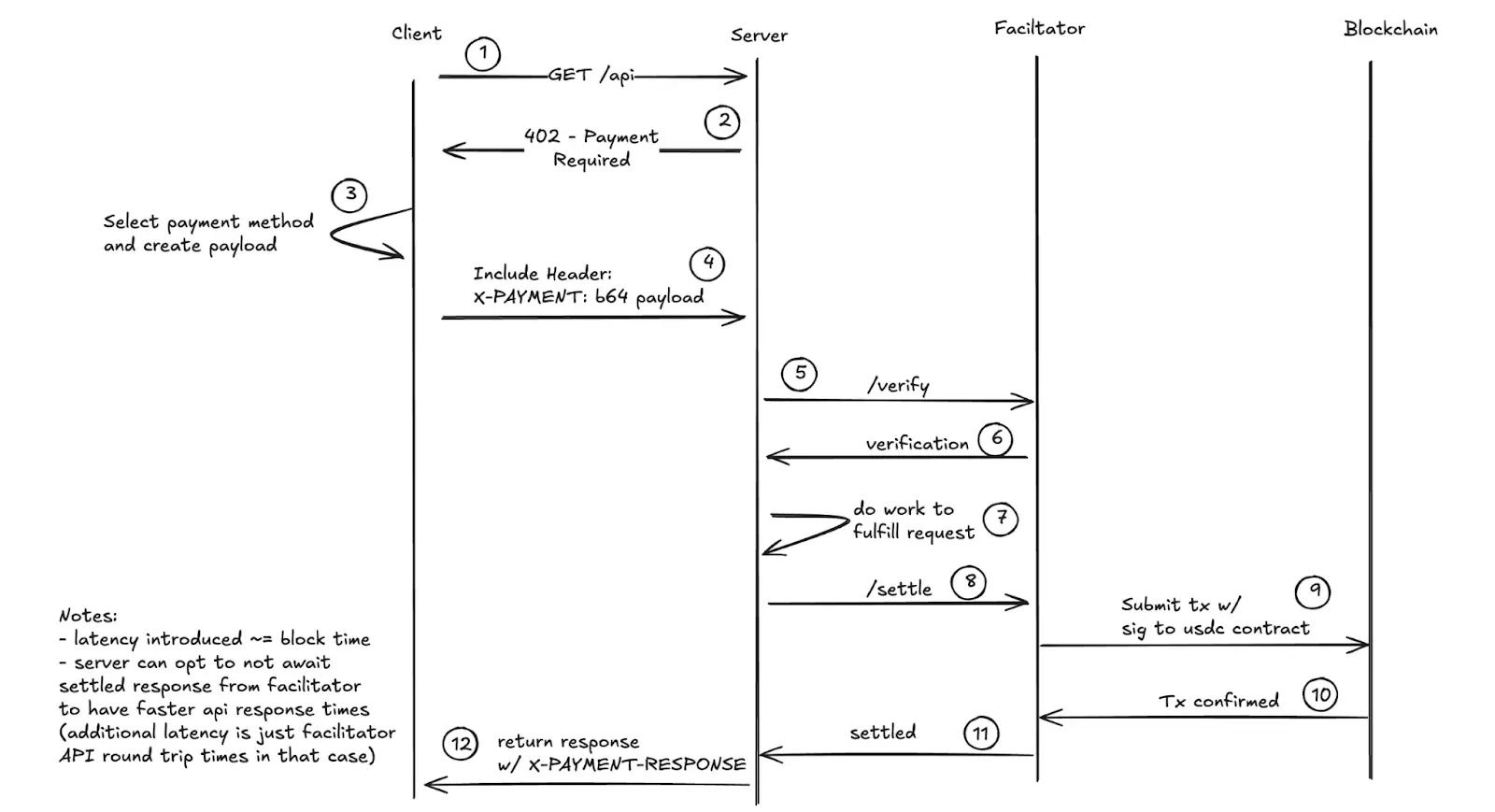
x402 Protocol: Designed by Coinbase, its core goal is to achieve “autonomous economic transactions” between machines. This protocol revives the HTTP 402 status code, embedding payment functionality directly into the underlying network protocol, establishing a payment infrastructure for interactions between AI agents. This completely resolves the pain point of AI being “unable to hold credit cards” in the traditional financial system, allowing an AI agent to automatically initiate micropayments or renewals when calling another AI's service.
ERC-8004 addresses the “trust” issue of AI, while x402 addresses the “payment” capability of AI. The combination of the two enables AI agents to autonomously complete economic settlements in a decentralized manner without human intervention, bridging the “last mile” of financialization for AI and the machine economy.
- Etherealize: The “Intersection” of Wall Street and Ethereum
Supported by direct investment from the Ethereum Foundation and Vitalik Buterin, and co-led by veteran Wall Street trader Vivek Raman and Ethereum core developer Danny Ryan, the establishment of Etherealize marks a significant shift in Ethereum's strategic focus: no longer solely concentrating on underlying code, but aiming to become the “digital logistics hub of Wall Street.”
The existence of Etherealize addresses the long-standing pain point of Ethereum being “technologically powerful but lacking marketing and financial integration windows.” Its work focuses on deeply integrating traditional finance with the on-chain ecosystem:
Asset Tokenization (RWA): Assisting banks in transforming “inefficient” assets such as mortgage markets, bonds, and credit products into tokenized assets on Ethereum to free up liquidity.
Establishing a Modern Settlement Engine: Developing settlement tools for institutional workflows, aiming to optimize the traditional T+1 or T+2 settlement processes to utilize Ethereum (and its Layer 2) for 24/7 instant settlements, enhancing capital efficiency.
Value Advocacy and Compliance: Communicating the value of ETH as an asset through the release of institutional-level reports, engaging with ETF issuers and corporations, and negotiating with regulatory bodies to ensure Ethereum's “irreplaceability” in capital markets.
Etherealize is seen as a key driver in initiating the “merger of Ethereum and institutions.” Its emergence demonstrates that Ethereum is pragmatically developing tools that meet the needs of traditional finance, allowing global financial assets to operate and settle legitimately on Ethereum's settlement machine.
2026 Will Test How to Find a Balance Between Efficiency and Decentralization
Looking back from the end of 2025, we draw some profound observations: on one hand, the fundamental data (58% TVL share, 10.7% institutional holdings, 65% RWA share) shows strong performance; on the other hand, the price performance and community confidence are relatively weak. This divergence reveals that Ethereum is undergoing a painful yet important “transformation.” As we enter 2026, all strategic pieces are in place, but the challenges at the technical foundation are also escalating.
According to analysis from Cryptoslate, the success or failure of Ethereum's 2026 roadmap depends on the structure of “Proving Markets.” If the generation of ZK proofs becomes too concentrated in the hands of a few specific vendors, Ethereum may fall into a centralized dependency trap similar to the current MEV Relay, which contradicts its original intention of pursuing decentralized infrastructure.
Ethereum has now moved beyond the stage of closed-door development. The year 2026 will be crucial in testing whether this “world computer” can ultimately prove its irreplaceability in the game between risk and efficiency.
免责声明:本文章仅代表作者个人观点,不代表本平台的立场和观点。本文章仅供信息分享,不构成对任何人的任何投资建议。用户与作者之间的任何争议,与本平台无关。如网页中刊载的文章或图片涉及侵权,请提供相关的权利证明和身份证明发送邮件到support@aicoin.com,本平台相关工作人员将会进行核查。


