Written by: Lostin
Translated by: Glendon, Techub News
Key Insights
On Solana, the operation of MEV differs from other blockchain networks, primarily due to its unique architecture and the absence of a global memory pool. Off-protocol memory pools must be developed independently and require the adoption of a majority of stakers in the network to function effectively, creating significant technical and social barriers.
Jito ceased its public memory pool service in March 2024, leading to a significant drop in revenue. This move reduced harmful MEV behavior but also prompted the rise of alternative memory pools that lack transparency and primarily benefit specific groups.
Memecoin traders are particularly vulnerable to sandwich attacks, as they set high slippage tolerances when trading assets with poor liquidity and high volatility. These users are more inclined to use Telegram trading bots in pursuit of faster trade execution speeds and instant notification services, and they are relatively insensitive to the situation of being front-run.
Marinade Finance's Staking Auction Market (SAM) employs a competitive auction mechanism where validators bid against each other directly through a "staking fee" system to compete for staking allocations. However, this mechanism has sparked controversy as it allows validators who engage in sandwich trading to acquire more staking by bidding high prices, thereby enhancing their influence in the network.
Most sandwich trading activity on Solana originates from a private memory pool operated by a single entity, DeezNode. A key validator operated by DeezNode (address starting with HM5 H6) currently holds 811,604.73 SOL in delegated staking, valued at approximately $168.5 million, and this delegated staking amount has seen significant growth over the past few months.
Several Solana validator operators have reported receiving lucrative offers to participate in the private Mempool, including detailed documents outlining profit-sharing and expected returns.
Jito bundles are the primary method for seekers to ensure profitable transaction ordering. However, Jito data does not cover the full scope of MEV activity; in particular, it does not capture the profits of seekers or activities conducted through alternative memory pools. Additionally, many applications use Jito for non-MEV purposes, such as bypassing priority fees to ensure timely inclusion of transactions.
Over the past year, Jito has processed over 3 billion transaction bundles, generating a total of 3.75 million SOL in tips. This activity has shown a clear upward trend, increasing from a low of 781 SOL in tips on January 11, 2024, to 60,801 SOL on November 19.
Jito's arbitrage detection algorithm analyzes all Solana transactions, including those outside of Jito bundles, identifying over 90.44 million successful arbitrage trades in the past year. The average profit per arbitrage was $1.58, while the highest single arbitrage trade generated a profit of $3.7 million, totaling $142.8 million in profits from these arbitrage trades.
DeezNode operates a sandwich trading bot on an address starting with vpeNAL. Internal analysis from Jito indicates that nearly half of the sandwich attacks targeting Solana can be attributed to this program. During a 30-day period (from December 7 to January 5), the program executed 1.55 million sandwich trades, profiting 65,880 SOL (approximately $13.43 million), with an average profit of 0.0425 SOL ($8.67) per sandwich trade. Annually, this program is expected to generate over 801,500 SOL in profits.
Whitelisting is widely seen as a last resort to combat bad actors, but it may create a semi-permissioned and censored environment, directly conflicting with the decentralized ethos of the blockchain industry. In some cases, this approach may also delay transaction processing, impacting user experience.
The Multi-Consensus Leader (MCL) system offers a promising long-term solution to address harmful MEV issues by allowing users to choose between leaders without incurring delays. If Leader A acts maliciously, users can redirect their transactions to honest Leader B. However, implementing MCL is expected to require several years of development time.
Maximum Extractable Value (MEV) refers to the value that can be extracted by manipulating transaction ordering, which includes adding, removing, or reordering transactions within a block. Various forms of MEV differ, but they all share a commonality: they rely on transaction ordering. Seekers (traders monitoring on-chain activity) attempt to strategically place their transactions before or after others to capture value.
On Solana, the operation of MEV is distinct from other blockchain networks, primarily due to its unique architecture and the lack of a global memory pool. Features such as Turbine (for propagating state updates) and Stake-Weighted Quality of Service (SWQoS) for transaction forwarding collectively shape how Solana handles MEV. Its characteristic of rapid streaming block production, without relying on external plugins or off-protocol auction mechanisms, somewhat limits the applicability of traditional methods for certain types of MEV (such as front-running). To gain a competitive edge, seekers run their own nodes or collaborate with high-stake validators for real-time access to the latest state of the blockchain.
Today, the term MEV has been overused, and opinions on its exact definition vary. In fact, not all MEV has negative effects. Due to the distributed and transparent nature of blockchains, it is widely believed that completely eliminating MEV is nearly impossible. Networks that claim to have eradicated MEV either lack sufficient user activity to attract seekers or employ techniques like random block packing, which, while seemingly mitigating the impact of MEV, may also lead to a surge in spam.
Among these, "sandwich trading" is one of the most concerning types of MEV, which is extremely detrimental to users. In this strategy, seekers insert a transaction before and after the target transaction to profit from it. While sandwich trading is naturally profitable for seekers, it increases transaction costs and lowers the execution price for ordinary users. A detailed discussion of this type of MEV will be elaborated in subsequent content.
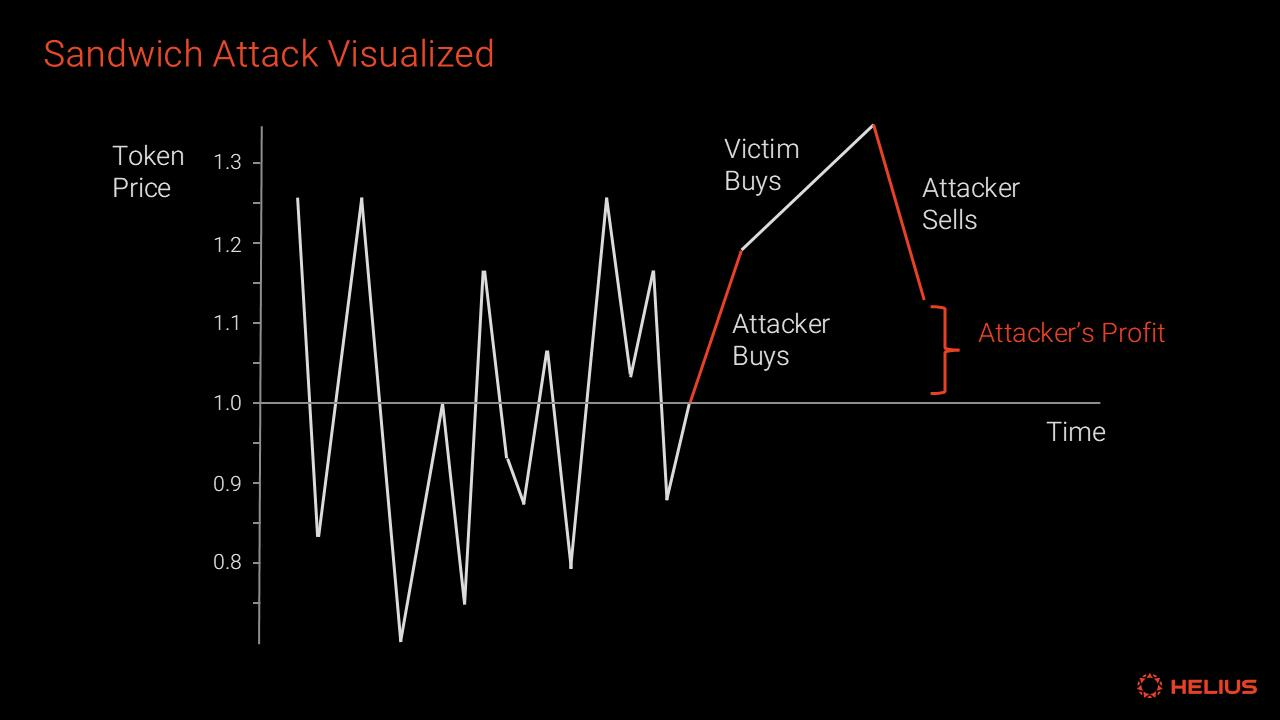
Above: A visualization of a typical sandwich attack. The attacker executes a front-running transaction before the victim's buy transaction and a trailing transaction afterward to profit.
In this report, we will analyze the current MEV landscape on Solana, divided into four parts:
1. Solana MEV Timeline: An overview of a series of key events arranged chronologically, providing valuable background information for readers less familiar with the rapid development of MEV on Solana;
2. Types of MEV: Exploring various types of MEV currently observed on Solana through specific and detailed examples;
3. Solana MEV Data: Providing relevant, quantifiable, and contextual data to illustrate the current scope and impact of MEV on Solana;
4. MEV Mitigation Mechanisms: Investigating strategies and mechanisms being considered to reduce or eliminate harmful forms of MEV.
Solana MEV Timeline
Below is a timeline of significant events related to Solana MEV.
September 2021 to April 2022: Spam and DDoS Attacks
NFTs were one of the first areas to gain significant attention on Solana. MEV in the NFT space primarily occurred during public events, where participants competed to acquire rare or valuable assets. Undoubtedly, these activities created sudden profit opportunities for seekers, with no MEV potential in blocks minted prior to these events, while subsequent minted blocks held enormous MEV potential. The NFT minting mechanism was one of the earliest causes of the massive surge in spam transactions sent by bots on Solana, overwhelming the network and temporarily halting block production.
Mid-2022: Introduction of Priority Fees
Solana implemented an optional priority fee that allows users to specify this fee in their budget instructions to prioritize their transactions. This mechanism alleviated network congestion by enabling users to pay acceleration fees during peak activity periods, establishing a more efficient framework for the fee market, thereby enhancing the network's economic model.
Additionally, priority fees helped curb spam by altering the competitive landscape. Bots that previously relied on brute transaction volume to gain an advantage could no longer dominate solely through spam. Instead, priority also depended on the fees users were willing to pay.
August 2022: Launch of Jito-Solana Client
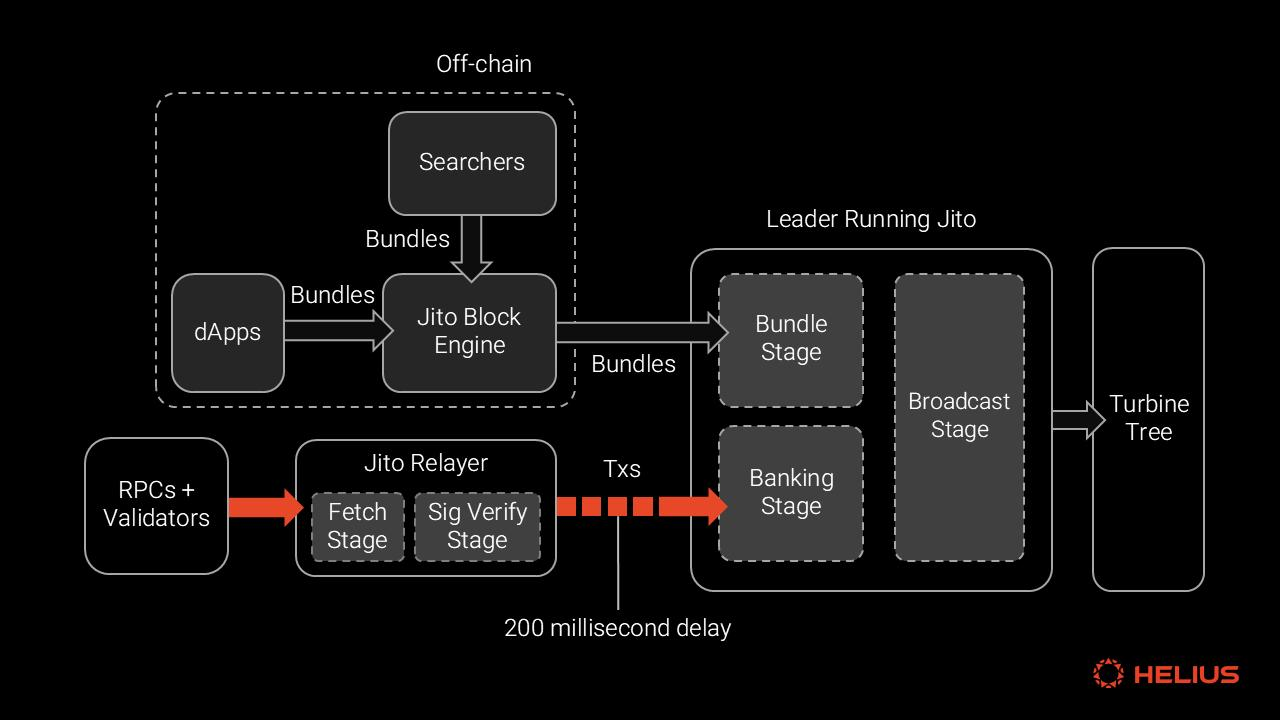
Jito has become the default Solana MEV infrastructure. This client aims to democratize MEV capture, ensuring a fairer distribution of rewards across the network. When leaders use the Jito client validator, their transactions are initially directed to the Jito relayer, which acts as a transaction proxy router. The relayer holds the transactions for 200 milliseconds before forwarding them to the leader. This speed buffer delays incoming transaction messages, providing a window for off-chain auctions through the Jito block engine. Seekers and applications submit atomic execution transaction bundles, accompanied by SOL-denominated tips. Jito charges a 5% fee on all tips, with a minimum tip of 10,000 lamports. (Bundles can be checked via the Jito Bundle Explorer.)
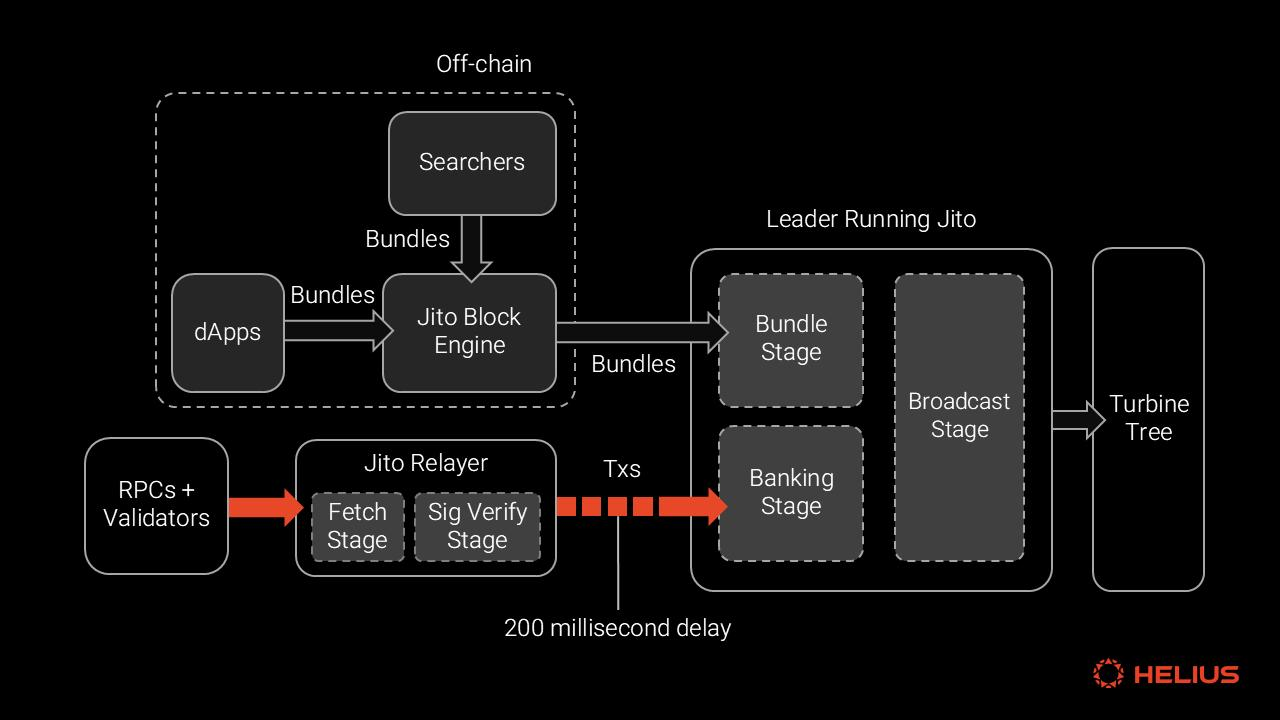
Above: The current Jito architecture includes a block engine that accepts bundles submitted by seekers and a relayer that delays sending incoming transactions to leaders.
This approach reduces spam and improves the efficiency of Solana's computational resources by conducting auctions off-chain and only publishing a single winner to the block. This is particularly important considering that unsuccessful transactions consume a significant portion of the network's computational resources.
In the initial nine months, the adoption rate of the Jito-Solana client remained below 10%, as network activity was still low and MEV rewards were scarce. Starting from the end of 2023, the adoption rate accelerated significantly, reaching 50% by January 2024. Today, over 92% of Solana validators (weighted by stake) use the Jito-Solana client.
January 2024: The Start of Memecoin Season
At the beginning of 2024, network activity surged. Memecoins like Bonk and DogWifHat gained popularity, sparking significant interest from seekers and leading to a notable increase in MEV activity. This period marked a significant shift in user behavior: compared to traditional decentralized exchanges or aggregators, Memecoin traders preferred Telegram trading bots like BonkBot, Trojan, and Photon. These bots offered faster transaction speeds, real-time notifications, and intuitive user interfaces that attracted retail speculators. Notably, these traders often set higher slippage rates to ensure time-sensitive transactions were prioritized, while being relatively indifferent to their transactions being front-run.
March 2024: Jito Suspends Its Flagship Mempool Feature
Jito's Mempool provided seekers with a 200-millisecond window to preview all incoming leader transactions. During its operation, the system was frequently used for sandwich attacks, severely degrading user experience. To prioritize the long-term growth and stability of the network, Jito made a controversial decision to suspend its Mempool, sacrificing considerable revenue in the process. While this move received widespread support, it also faced criticism from several prominent figures, including Mert Mumtaz and Jon Charbonneau.
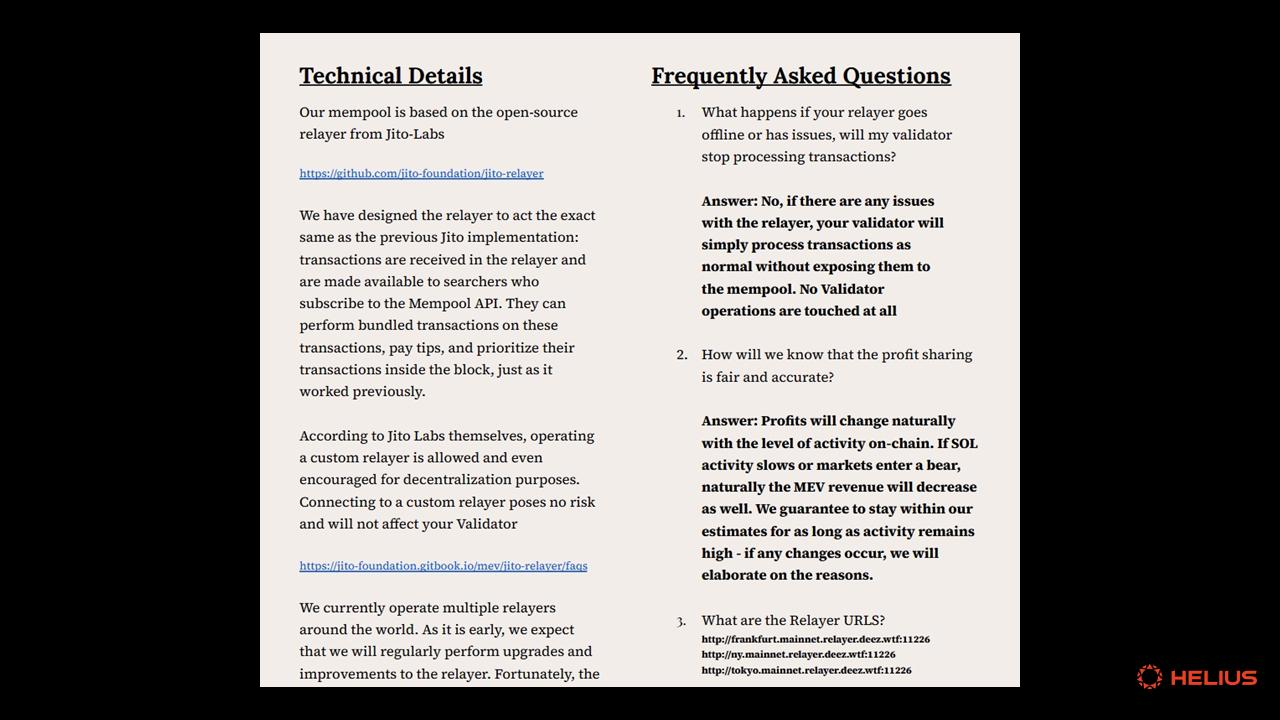
The main risk of this decision is the potential emergence of alternative memory pools that replicate Jito's functionality, leading to more harmful forms of MEV. Unlike public memory pools that promote a fairer distribution of MEV opportunities and mitigate power imbalances within the network, private permissioned memory pools lack transparency and benefit only a select few with access.
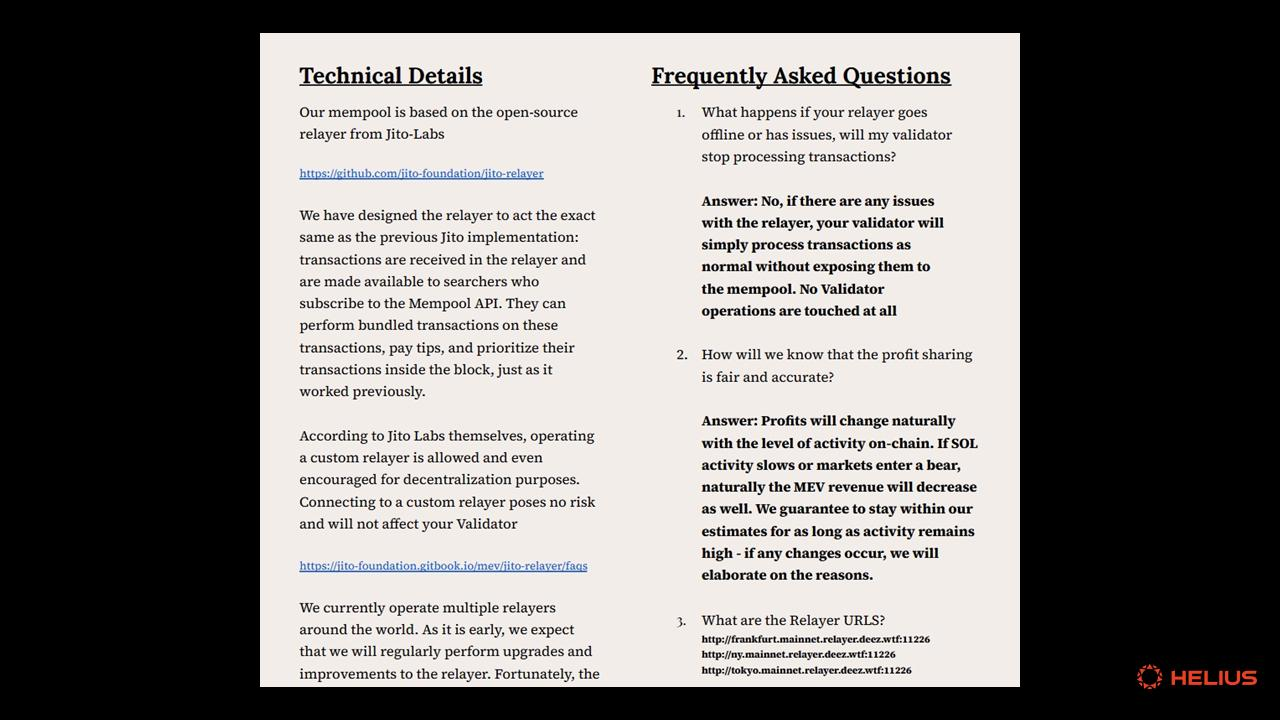
Above: Part of the DeezNode MEV proposal regarding "DeezMempool". Shortly after the suspension of the Jito Mempool, multiple validators reported receiving the DeezNode MEV proposal.
Several Solana validator operators reported receiving lucrative offers to participate in the private Mempool.
May 2024: New Transaction Scheduler
As part of the Agave-Solana 1.18 update, the new scheduler significantly improved Solana's ability to order transactions deterministically. The enhanced scheduler can better prioritize higher-fee transactions to increase their chances of being included in blocks. The central scheduler constructs a dependency graph called "prio-graph" to optimize the handling and prioritization of conflicting transactions across multiple threads.
Previously, bots engaged in arbitrage and other MEV activities were incentivized to increase their chances of successful execution by spamming leaders. The randomness of the old scheduler led to variability in transaction positions within blocks. However, the new deterministic approach reduces this randomness, curbing spam and improving the overall efficiency of the network.
June 2024: Marinade Launches Staking Auction Market (SAM)
Marinade Finance's Staking Auction Market (SAM) employs a bidding auction mechanism where validators bid against each other directly through a "staking fee" system to obtain staking allocations. This structure incentivizes validators to bid up to their perceived profitable rate. However, this mechanism has sparked controversy as it allows validators engaging in sandwich trading to acquire more staking by bidding high prices, thereby enhancing their influence in the network. Recently, Marinade Labs proposed the establishment of a public committee to oversee delegation practices. Following Jito, Marinade Finance's mSOL has become the second-largest liquid staking token and staking pool on Solana.
Above: Staking auction status in the Marinade Finance Staking Auction Market (December 27, 2024)
As of epoch 717, validators with 0% staking commission and 0% MEV commission typically offer stakers about 9.4% APY (annual percentage yield). Validators redistributing block rewards through off-protocol methods usually offer 10% or lower APY. In contrast, Marinade's SAM auction shows a winning APY of 13.73%, with bids from the top ten validators reaching as high as 18.27% APY.
This disparity indicates that these validators are either bidding unreasonably and thus incurring losses (they may subsidize their bids through staking delegations from the Solana Foundation) or supplementing their income through other sources (such as MEV extracted from user sandwich trades).
December 2024: Growing Concerns Over New Private Memory Pools
After Solana research firm Temporal publicly expressed concerns about the potential centralization of network staking, Solana MEV became a highly controversial topic, sparking widespread discussion and prompting ecosystem teams to address the challenges posed by Solana MEV once again.
Validators engaging in harmful MEV extraction obtain value disproportionate to their contributions, leading to a much faster growth rate of their staking amounts compared to other validators. This allows validators to accumulate greater network influence over time, posing centralization risks to Solana's validator economy. These higher-earning validators can also offer higher returns to stakers, attracting more staking and further expanding their advantageous position.
It is important to note that most of the sandwich trading behavior on Solana originates from a private memory pool operated by a single entity, DeezNode. A key validator operated by DeezNode (address starting with HM5H6) currently holds 811,604.73 SOL in delegated staking, valued at approximately $168.5 million. The delegated staking of this validator has seen significant growth, increasing from 307,900 SOL on November 13 (epoch 697) to 802,500 SOL on December 9 (epoch 709), after which the growth stabilized. Notably, 19.89% of the staking comes from Marinade's mSOL liquid staking pool and Marinade's native delegation. This validator currently holds 0.2% of the total staking amount (currently 392.5 million SOL), ranking 93rd by staking amount among the broader set of validators.
Jito's internal analysis shows that an increasing number of sandwich attacks are occurring outside of Jito's auction mechanism, indicating the presence of additional block engines or modified validator clients conducting such transactions.
Types of MEV
Next, let's take a look at the various types of MEV on Solana, illustrated with specific examples of actual transactions. Below are the most common types of MEV transactions observed on Solana.
Liquidation
When a borrower fails to maintain the required collateral ratio on a lending protocol, their position becomes eligible for liquidation. Seekers monitor these under-collateralized positions on the blockchain and execute liquidations by repaying part or all of the debt in exchange for a portion of the collateral as a reward. Liquidations are considered a benign type of MEV. They are crucial for maintaining the solvency of protocols and promoting the stability of the broader DeFi ecosystem.
Liquidation Transaction Example
This liquidation event occurred on December 10, involving Kamino, the largest lending protocol on Solana by liquidity and user base. The transaction consists of three steps:
The seeker initiates the liquidation by transferring 10.642 USDC to the Kamino reserve to cover the user's debt position.
In exchange, the Kamino reserve transfers 0.05479 SOL of the user's collateral to the seeker.
The seeker pays a protocol fee of 0.0013 SOL.
Additionally, the seeker paid a priority fee of 0.001317 SOL for this transaction, resulting in a net profit of $0.0492.
Above: Example of a liquidation transaction on Kamino's money market on Solana
Arbitrage
Arbitrage improves market efficiency and profits by exploiting price differences of the same asset across different trading venues. These opportunities can occur on-chain, cross-chain, or between centralized exchanges and decentralized exchanges (CEX/DEX arbitrage). Among these, on-chain arbitrage guarantees atomicity, as both parts of the transaction can be executed together in a single Solana transaction. In contrast, cross-chain and cross-platform arbitrage introduce additional trust assumptions.
Atomic arbitrage is a primary form of MEV on Solana. The simplest example of atomic arbitrage occurs when two DEXs list different prices for the same trading pair. This often involves exploiting outdated price information on automated market makers (AMMs) based on the constant product model (xy=k) and hedging trades on an on-chain limit order book, at which point the market maker has adjusted its quotes based on off-chain price movements.
Arbitrage Transaction Example
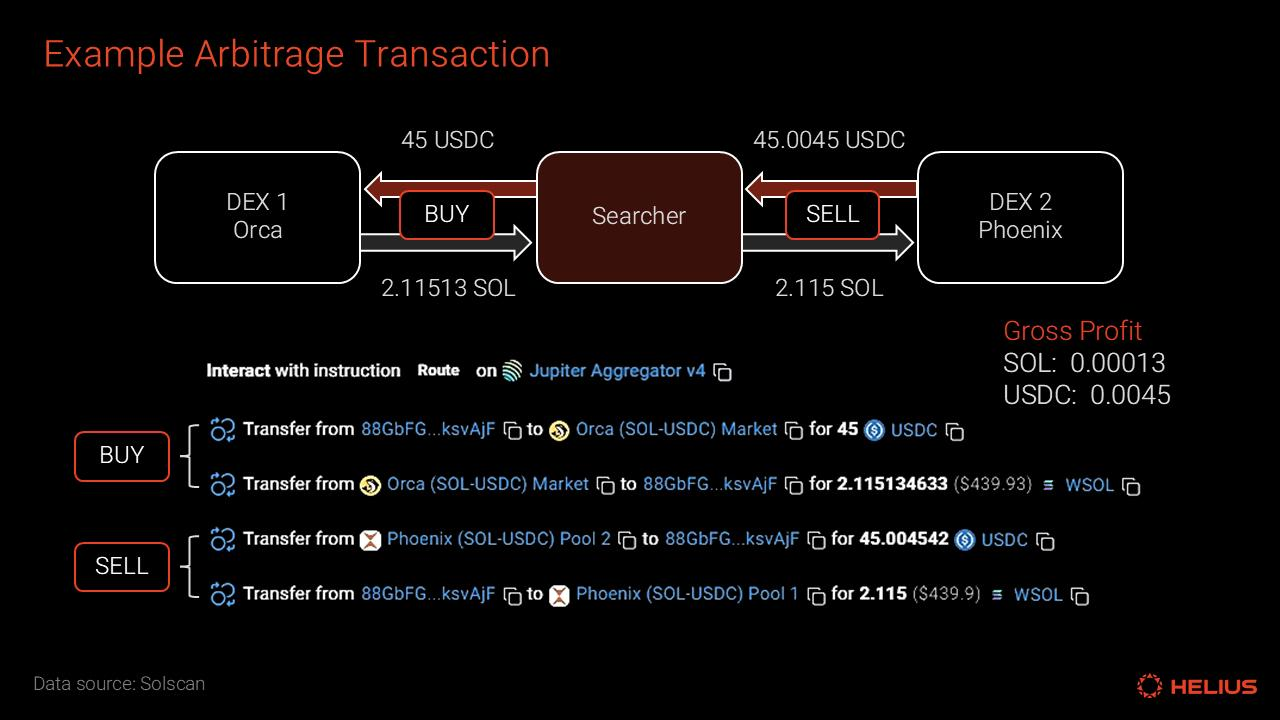
Above: Example of an arbitrage transaction between two decentralized exchanges
In this case, the price of the SOL/USDC trading pair has changed off-chain, prompting the Phoenix market maker to update their quotes accordingly. Meanwhile, the Orca AMM continues to quote based on outdated prices, creating an arbitrage opportunity for the seeker. The seeker purchased 2.11513 SOL for 45 USDC on Orca and then sold 2.115 SOL for 45.0045 USDC on Phoenix, making a profit of 0.00013 SOL (approximately $0.026). The arbitrage transaction is executed atomically, requiring no inventory from the seeker. The only risk is that if the transaction is canceled, associated fees may need to be paid.
Front Running
Front running refers to MEV seekers identifying another trader's buy or sell order in the memory pool and placing the same order before that trader, profiting from the price impact of the victim's transaction.
Front running occurs when an observer notices an unconfirmed transaction that may affect the token price and takes action based on this information before the original transaction is processed. This strategy is straightforward and does not involve the complexities of other methods (such as sandwich attacks).
The seeker realizes that a pending buy transaction will positively impact the target token price, so they bundle their buy transaction with the target transaction. Their order will be processed at a price lower than the target, and once the target transaction is completed, they will profit. In the process, the target trader buys at a higher price due to the MEV seeker's buy transaction, incurring a loss.
Back Running
Back running is the counterpart to front running and is a specific MEV strategy that profits from temporary price imbalances caused by another transaction, which is often due to misrouting. Once a user's transaction is executed, the back running seeker balances the prices across various liquidity pools by trading the same asset, ensuring a profit. Theoretically, the user could have captured this profit through more efficient transaction execution.
Back Running Transaction Example
This notable back running transaction occurred on January 10, 2024, when a user purchased DogWifHat tokens (WIF) worth $8.9 million in a single transaction. At that time, the trading price of WIF tokens was $0.2, and the total liquidity across all on-chain trading venues was only a few million dollars. The Jupiter aggregator executed this transaction through three liquidity-constrained pools, causing the price to spike to $3.
The seeker executed the back running transaction using a Jito Bundle and provided a generous Jito tip of up to 890.42 SOL ($91,621). They first exchanged 703.31 SOL ($72,368) for 490,143.90 WIF tokens through a Raydium concentrated liquidity pool. Then, they exchanged these WIF tokens for 19,035.97 SOL ($1,958,733) through the Raydium V4 liquidity pool. This series of operations netted a profit of 17,442.24 SOL ($1,794,746) in a single transaction. All dollar values reflect prices at the time of the transaction.
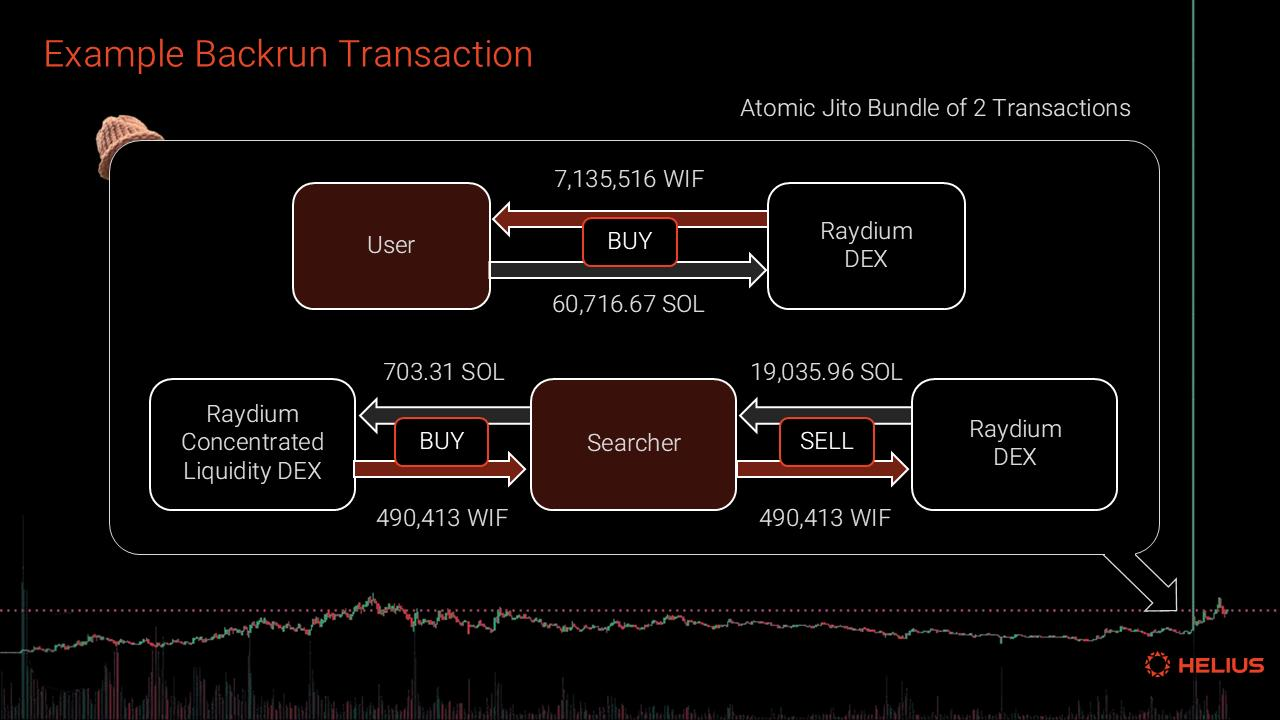
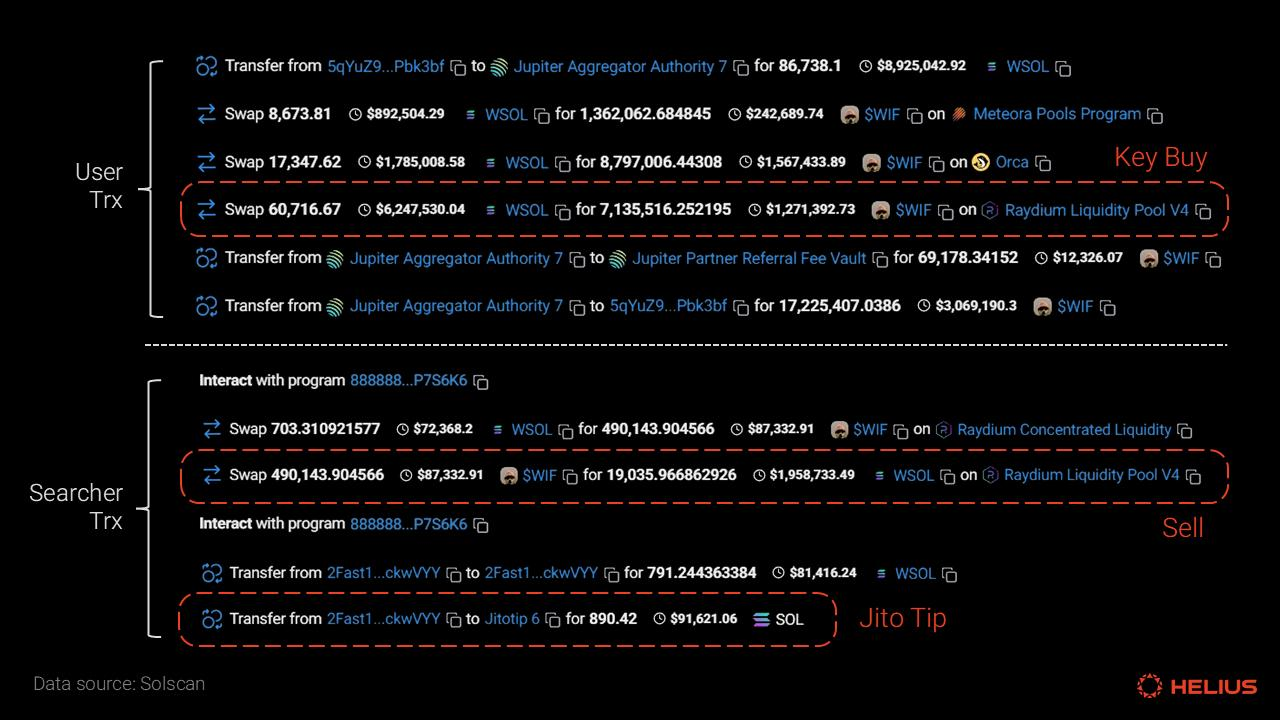
Above: Back running transaction after a large purchase of WIF tokens on January 10, 2024
Sandwich Attacks
Sandwich attacks are one of the most destructive types of MEV, specifically targeting traders who set high slippage tolerances on automated market makers (AMMs) or bonding curves. These traders increase their slippage tolerance not to accept worse prices but to ensure their orders are executed quickly. Memecoin traders, in particular, are especially vulnerable to sandwich attacks, as they often set high slippage tolerances when trading illiquid and volatile assets, ultimately leading to them executing trades at extremely unfavorable prices.
A typical sandwich attack involves three atomic transactions bundled together. First, the attacker executes a non-profitable front running transaction, buying the asset to push its price up to the worst execution level allowed by the victim's slippage settings. Next, the victim's transaction occurs, causing the price to rise further due to its execution at an unfavorable price level. Finally, the attacker completes a profitable back running transaction, selling the asset at an inflated price, thereby offsetting their initial loss and securing a net profit.
Sandwich Attack Transaction Example
This attack occurred on December 16, 2024, conducted through a well-known sandwich attack program (vpeNALD… Noax38b). The seeker submitted these transactions as atomic Jito bundles and paid a tip of 0.000148 SOL (approximately $0.03).
Front Running: The seeker paid 14.63 SOL to purchase 32.9 million Komeko tokens, a newly launched Memecoin on the Pump Fun platform;
Victim Transaction: Purchased 624,000 Komeko tokens for 0.33 SOL;
Back Running: The seeker sold 32.9 million Komeko tokens for 14.65 SOL.
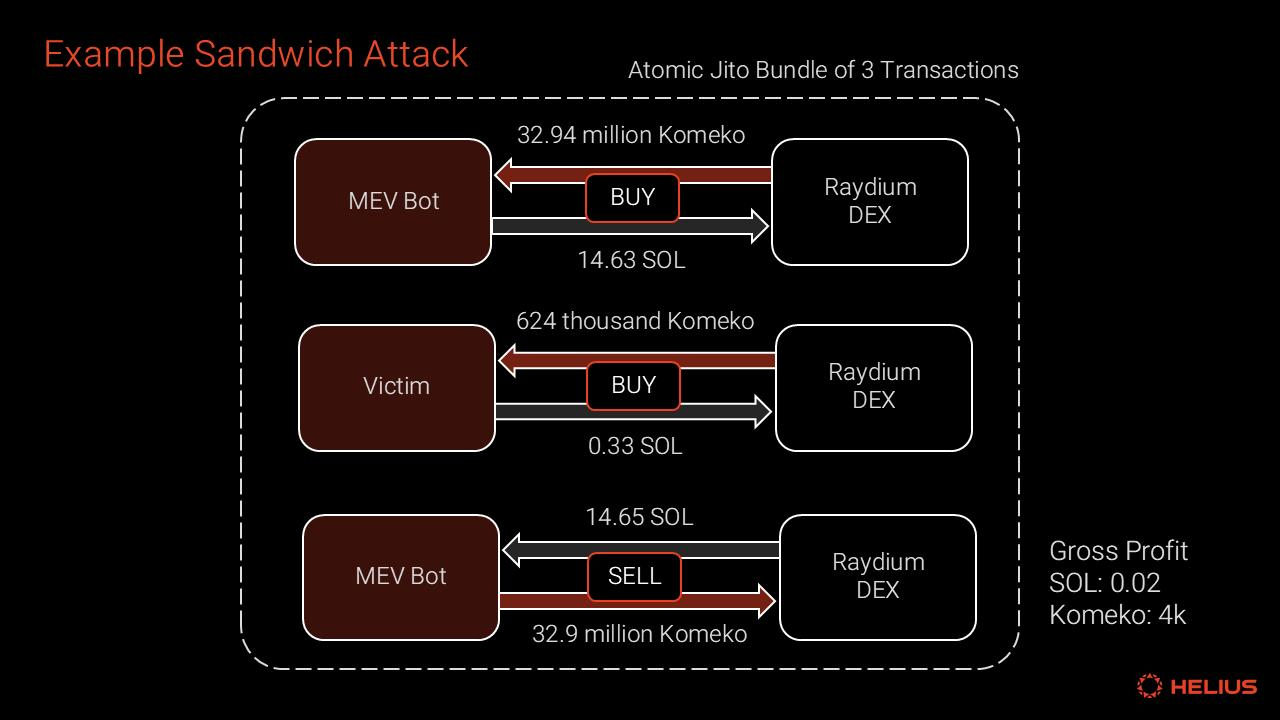
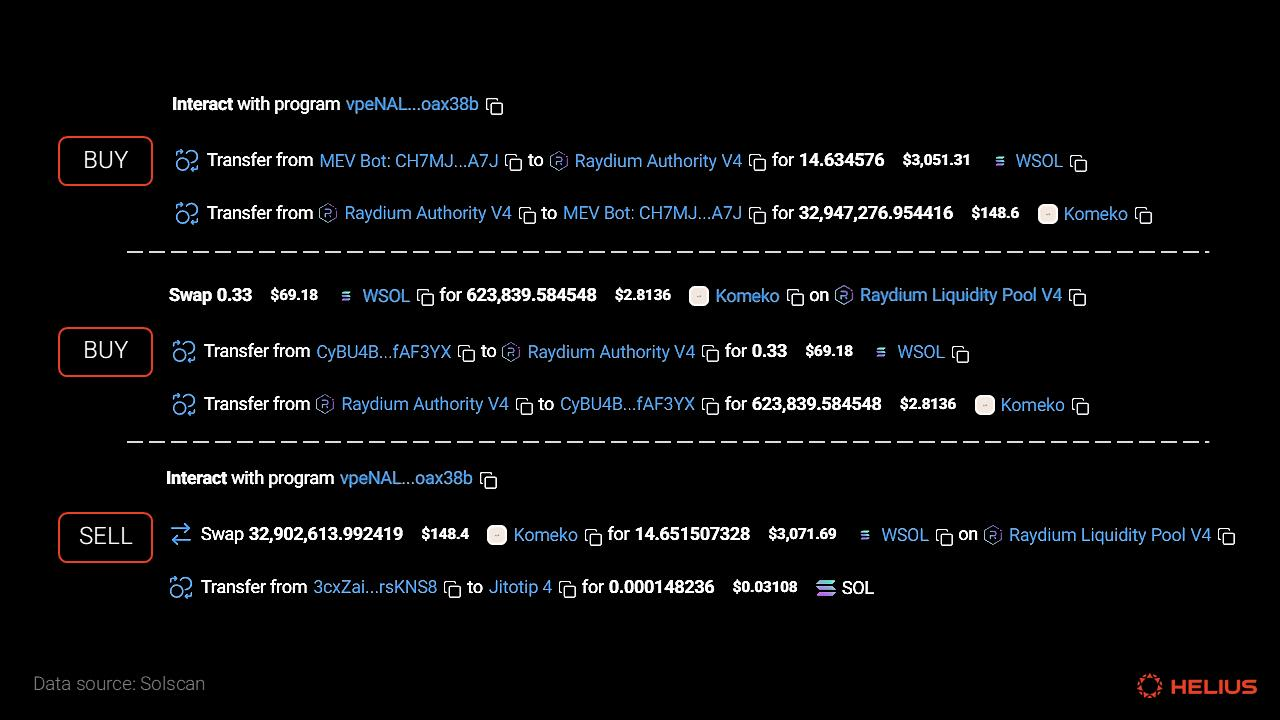
Above: An example of a sandwich attack that bundles three transactions together
Characteristics indicating this is a sandwich attack:
The signer of the middle transaction is different from the signers of the first and last transactions.
The tokens purchased in the first two transactions are the same as those sold in the third transaction.
The tokens involved in the transactions are newly minted, illiquid, and highly volatile Pump Fun tokens.
The seeker made a net profit of 0.01678 SOL, which was approximately $3.35 at the time of the transaction.
Solana MEV Data
This section evaluates the current MEV landscape on Solana using existing public data. It first analyzes Jito's performance metrics, then delves into the number of reverted transactions and the breakdown of arbitrage profitability. Finally, it concludes with a case study detailing the behavior and profitability of a well-known sandwich trading bot.
Jito
Jito bundles are the primary method for seekers to ensure profitable transaction ordering. Most Jito tips come from users who want to be among the first to purchase tokens or seize opportunities at the top of the block. However, Jito data does not cover the full scope of MEV activity; in particular, it does not capture the profits of seekers or activities conducted through alternative memory pools. Additionally, many applications use Jito for non-MEV purposes, bypassing priority fees to ensure timely inclusion of transactions.
Data from transfers to eight designated Jito tip accounts shows that over the past year, Jito processed more than 3 billion transaction bundles, generating a total of 3.75 million SOL in tips. This activity has shown a clear upward trend, rising from a low of 781 SOL in tips on January 11, 2024, to peaks of 60,801 SOL and 60,636 SOL on November 19 and 20, respectively. The chart indicates a noticeable slowdown in the third quarter, with tips dropping to a low of 1,661 SOL on September 7. Furthermore, compared to the significant growth throughout 2024, the tip values before December 2023 were negligible.
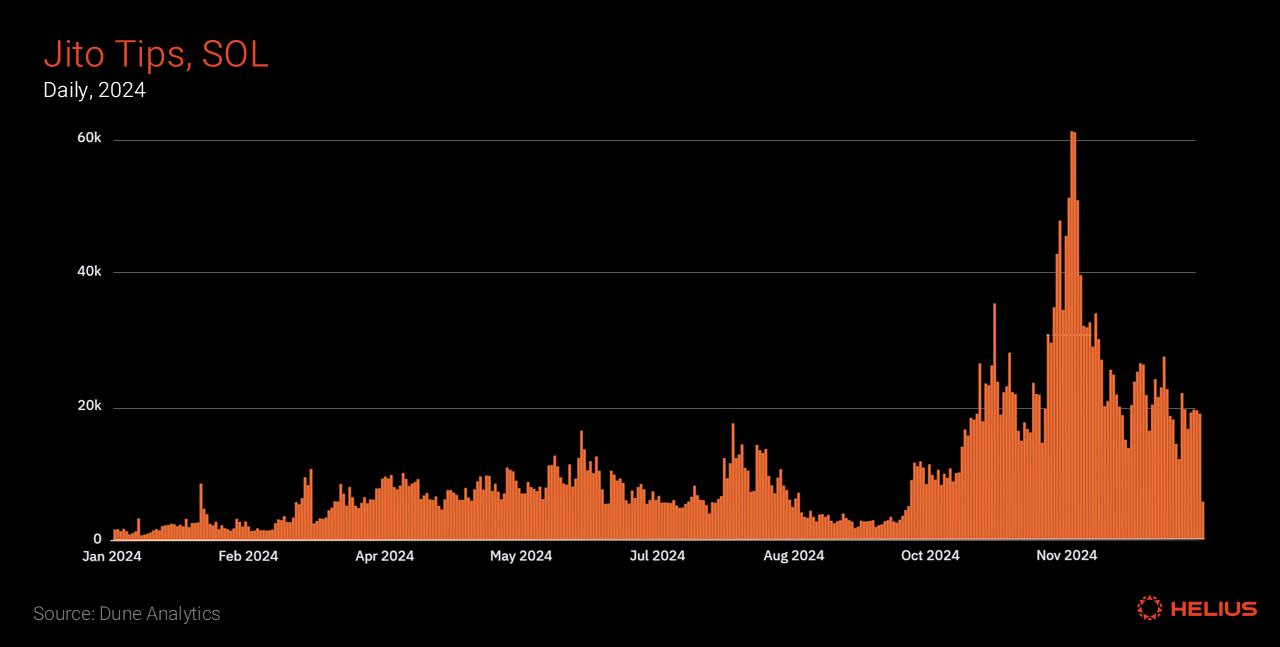
Above: Daily Amount of Jito Tips in SOL (Data Source: Dune Analytics, 21co)
Throughout 2024, the number of bundles processed through Jito continued to grow, ultimately peaking at 24.4 million bundles on December 21. This growth included two significant surges. The first surge occurred between May and early July, with the daily number of bundles increasing from about 3 million to 12 million, likely in response to network congestion issues. The second surge took place from November to December, with the daily number of bundles doubling from about 12 million to a peak of 24 million.
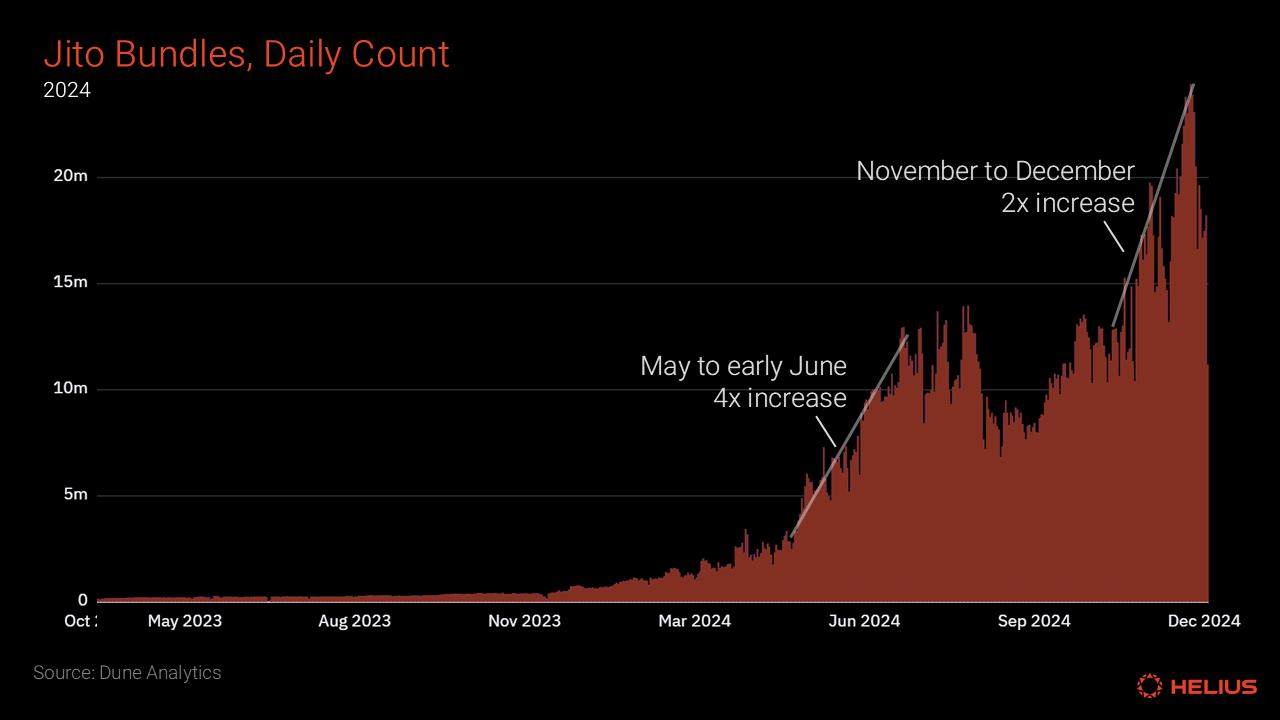
Above: Daily Number of Jito Tips (Bundles) Throughout 2024 (Data Source: Dune Analytics, Andrew Hong)
During this period, the number of accounts using Jito also showed a parallel upward trend, with about 20,000 tip payers daily at the beginning of the year, peaking at nearly 938,000 on December 10. Significant growth periods included an increase from 21,000 in early March to 135,000 in mid-April (a 6-fold increase), and a substantial rise from 208,000 in October to 703,000 by the end of the month (a 3.4-fold increase).
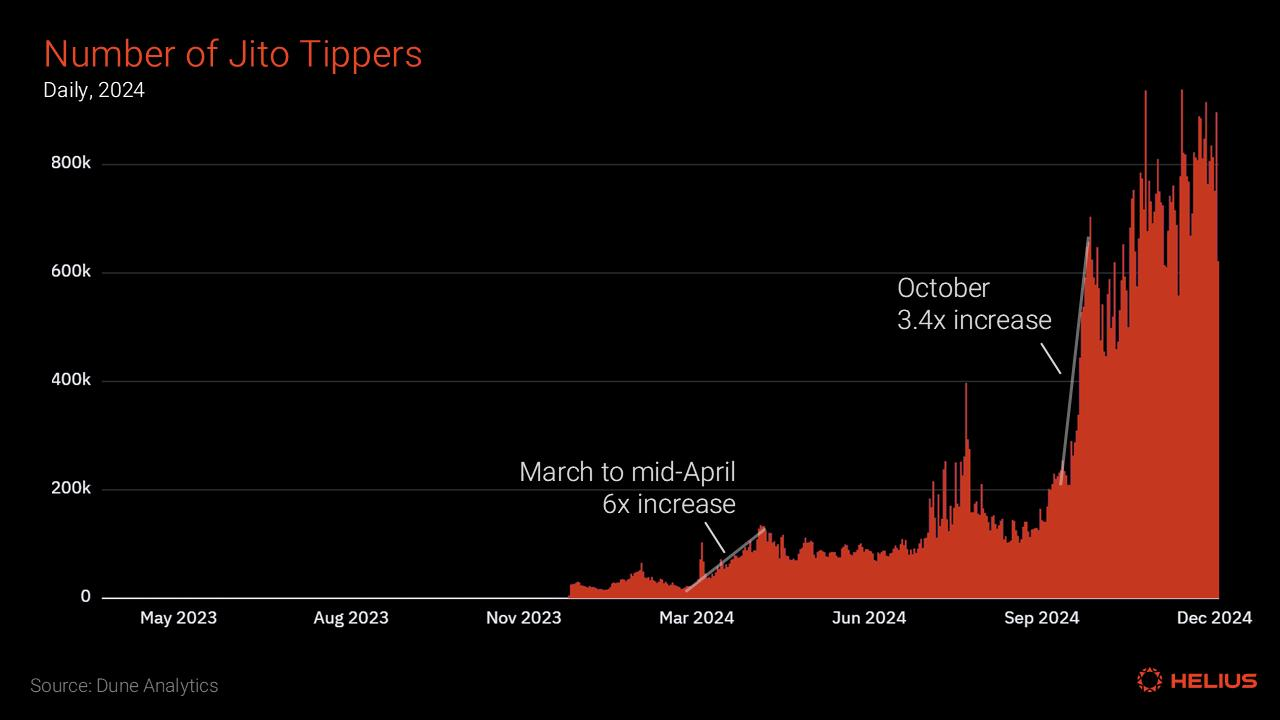
Above: Daily Number of Jito Tip Payers (Data Source: Dune Analytics, Andrew Hong)
Throughout 2024, the proportion of validators using the Jito-Solana client steadily increased, enhancing the effectiveness of Jito bundles in rapid transaction inclusion. At the beginning of the year, validators using the Jito-Solana client staked 189.5 million SOL, accounting for 48% of the total network stake. By early 2025, this number had risen to 373.8 million SOL, representing 92% of the total stake.
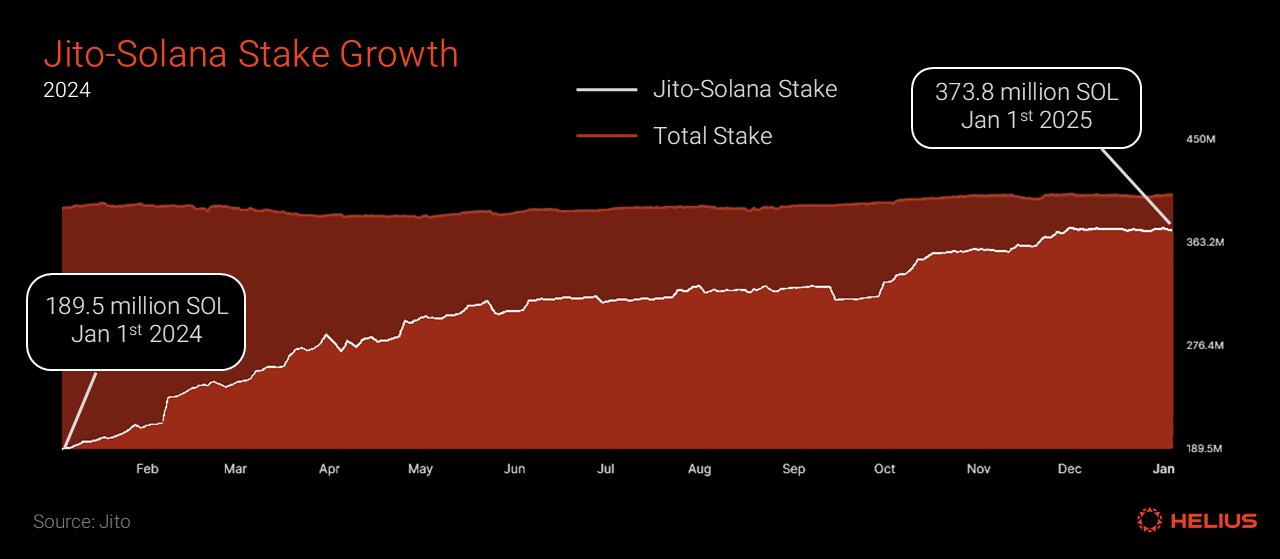
Above: Growth Rate of Jito-Solana Validators by Staked Amount in 2024 (Data Source: Jito)
Reverted Transactions
A significant portion of transactions on Solana is related to spam associated with MEV extraction. By examining the ratio of reverted transactions to successful transactions, we can identify patterns indicating MEV bots competing to capture arbitrage opportunities.
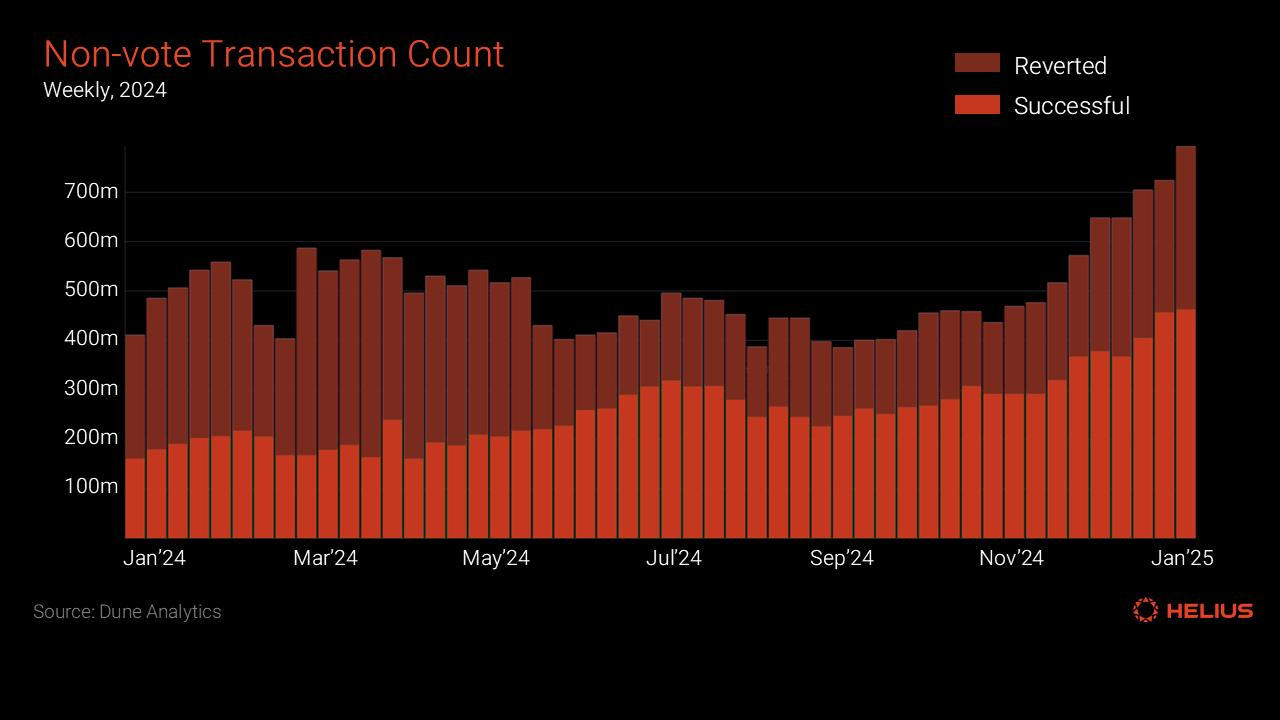
Above: Weekly Number of Reverted and Successful Non-Voting Transactions in 2024 (Data Source: Blockworks Research)
Spam presents a significant challenge as it leads to many transactions being reverted. Under the winner-takes-all nature of MEV, only one transaction can exploit a given opportunity. However, even after this opportunity is captured, the leader will still process other transactions attempting to exploit the same opportunity. These reverted transactions still consume valuable computational resources and network bandwidth. The competitive latency race among seekers exacerbates this issue, resulting in the network being flooded with duplicate transactions, which in extreme cases can lead to congestion and a decline in user experience. Due to Solana's low transaction costs, reverted arbitrage spam still holds positive expected value. Over time, traders can profit by executing these transactions on a large scale (even though individual transactions may fail).
Reverted transactions peaked at 75.7% of all non-voting transactions in April 2024. This percentage significantly decreased following the rollout of key updates, including the Agave 1.18 central scheduler. The new scheduler improved deterministic transaction ordering within the "Banking Stage," thereby curbing the effectiveness of spam.
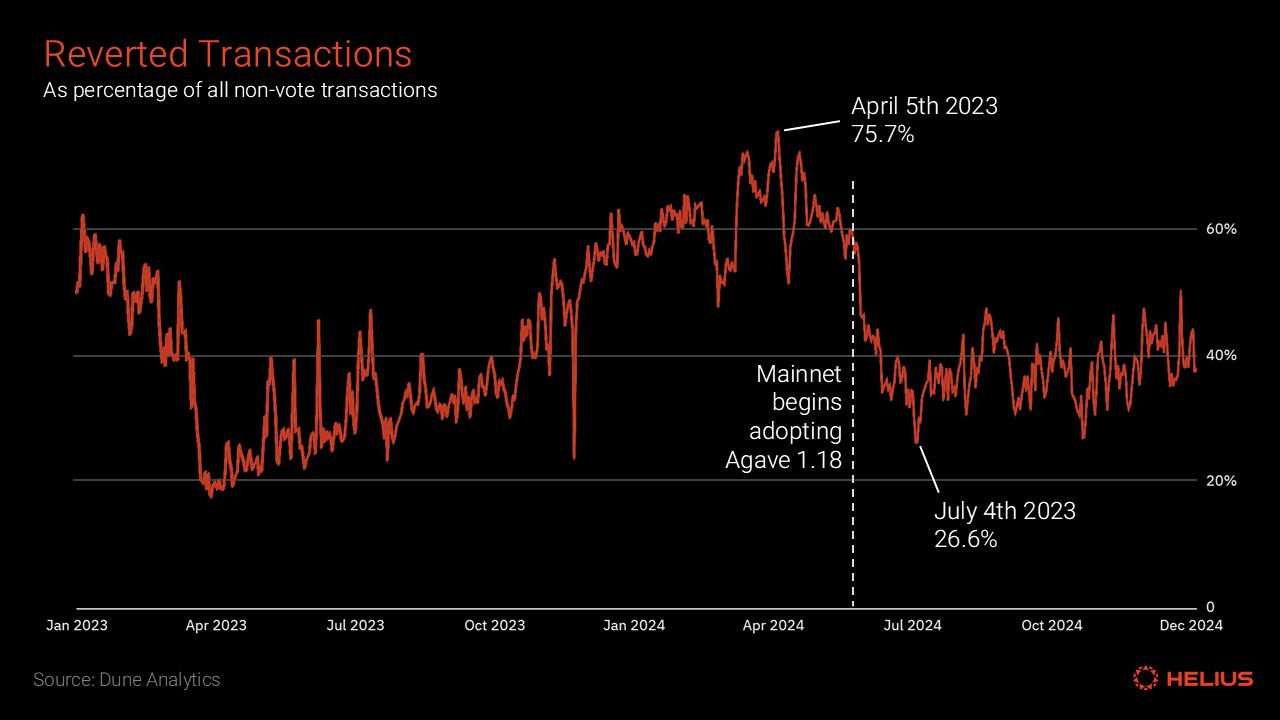
Above: Percentage of Reverted Transactions Among All Non-Voting Transactions (Data Source: Dune Analytics, 21co)
Arbitrage Profitability
Jito's arbitrage detection algorithm analyzed all Solana transactions, including those outside of Jito bundles, identifying 90,445,905 successful arbitrage transactions over the past year. The average profit per arbitrage was $1.58, with the highest single arbitrage transaction yielding $3.7 million. These arbitrage transactions collectively generated $142.8 million in profits, of which $126.7 million (88.7%) was denominated in SOL.
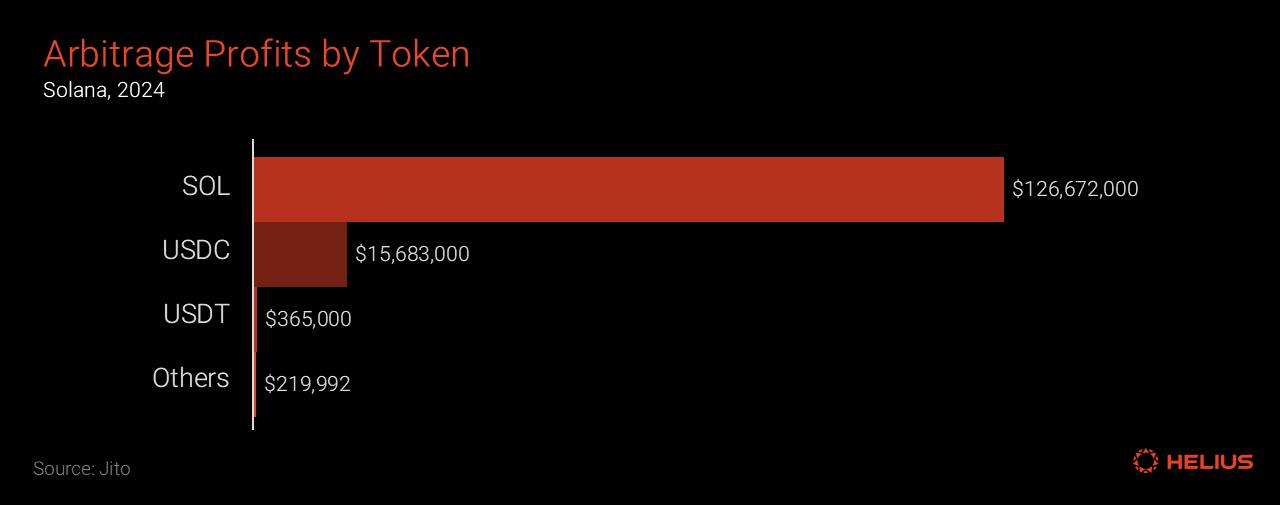
Above: Arbitrage Trading Profits by Token in 2024 (Data Source: Jito)
Case Study: Vpe Sandwich Trading Bot
DeezNode operates a sandwich trading bot at the address starting with vpeNAL as part of its alternative memory pool operations. This highly active program has recently gained notoriety for executing large-scale user sandwich attacks.
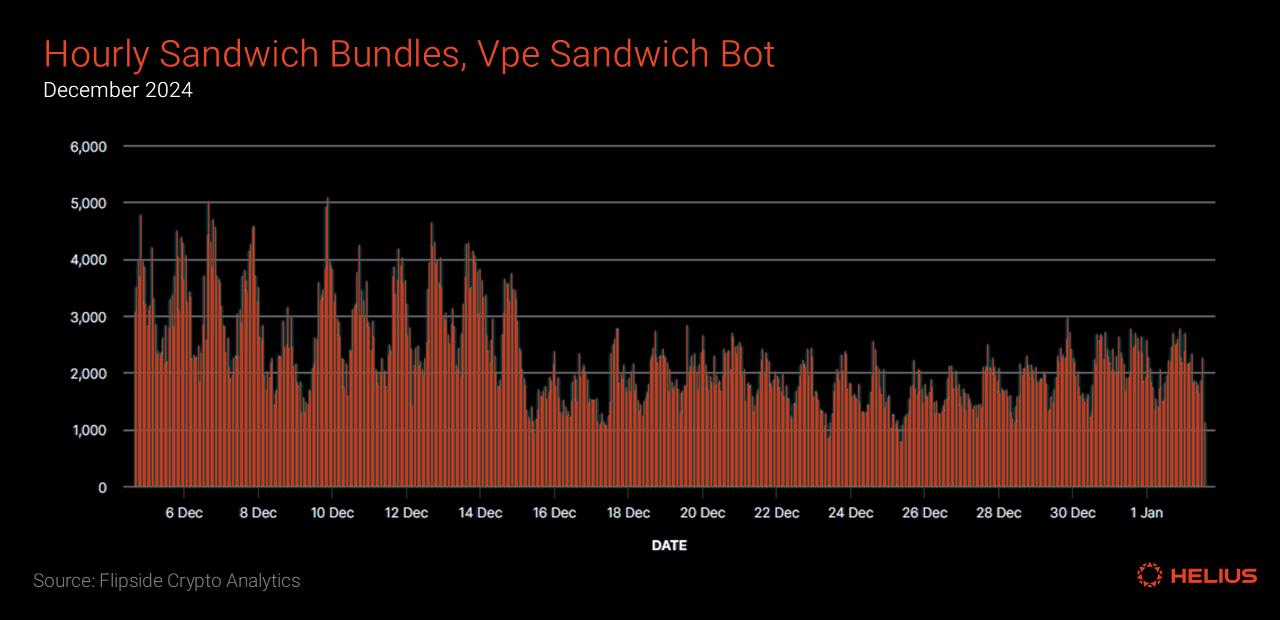
Above: Number of Sandwich Trading Bundles Initiated by Vpe Sandwich Trading Bot Per Hour (Data Source: Flipside crypto analytics, Marqu)
Internal analysis from Jito indicates that nearly half of the sandwich attacks targeting Solana can be attributed to this program.
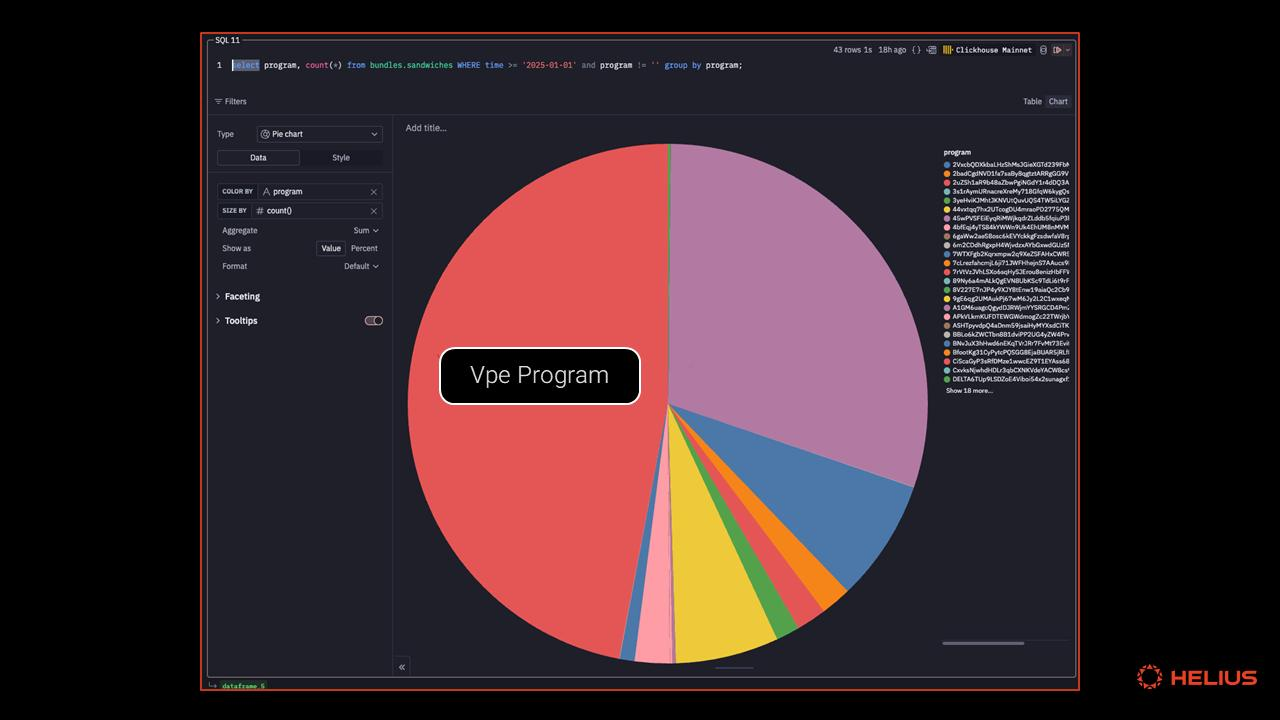
Above: The Vpe program is the source of nearly half of Solana's sandwich attacks (Source: Jito Internal)
During a 30-day period (from December 7 to January 5), the program executed 1.55 million sandwich trades, averaging about 51,600 trades per day, with a success rate of 88.9%. The program generated a profit of 65,880 SOL ($13.43 million), equivalent to approximately 2,200 SOL earned daily. The total Jito tips paid by the program amounted to 22,760 SOL ($4.63 million), averaging about 758 SOL per day, with an average profit of 0.0425 SOL ($8.67) per sandwich trade.
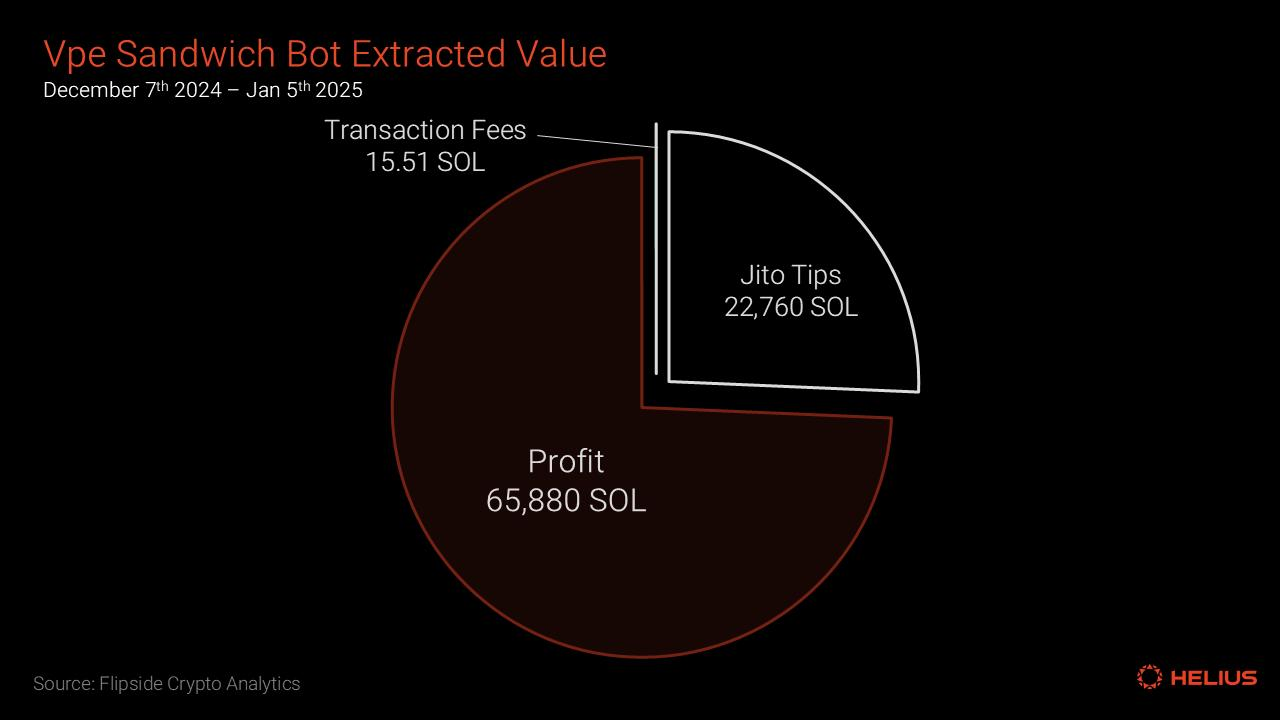
Above: Value extracted by the Vpe sandwich trading bot from December 7, 2024, to January 5, 2025
Most victim transactions involved swaps conducted through Raydium. Among the top 20 tokens that were sandwich attacked, 16 were created on Pump Fun, identifiable by their minting addresses ending with "pump."
The Vpe sandwich trading bot is one of many on-chain programs executing sandwich attacks. Click to visit Sandwiched.me for real-time detection of sandwich attacks on Solana.
Annualizing the profit data from December, the program is expected to generate an annual profit of 801,540 SOL. In the worst-case scenario of network centralization, if these profits were fully reinvested into validators of the alternative memory pool, assuming the overall network stake remains unchanged, their network stake share would increase by 0.2%.
However, the likelihood of this worst-case scenario occurring is low for several reasons. First, the current activity level of the network is close to historical highs; second, it is reasonable to assume that memory pool seekers and operators will cash out some profits rather than reinvest all earnings.
MEV Mitigation Mechanisms
A significant amount of resources has been invested in researching and exploring various mechanisms to mitigate or redistribute MEV. General, off-chain solutions are increasingly being integrated into applications and infrastructure to minimize the impact of on-chain MEV, which will be detailed below.
Validator Whitelisting
One proposal is that stakers, RPC node providers, and other validators could exclude those validators found to be conducting sandwich attacks by ignoring their leadership slots. However, whitelisting is widely viewed as a last resort. If a leader is assigned four consecutive slots, this method could delay transaction processing by several seconds, leading to a poor user experience. More importantly, whitelisting has the potential to create a semi-permissioned and censored environment, which directly conflicts with the decentralization ethos of the blockchain industry. Additionally, such a system carries the inherent risk of erroneously excluding honest validators, which could undermine trust and participation in the network.
It is worth noting that some independent developers and applications can freely establish their own lists of allowed or disallowed validators, such as the sendTransaction method in the Helius Node.js SDK.
Dynamic Slippage and MEV Protection
Traditionally, managing slippage has been a challenging and cumbersome process for users, requiring manual adjustments based on their trading tokens. This approach is particularly cumbersome when dealing with volatile or illiquid tokens, as the slippage settings suitable for stable assets (like liquid staking tokens or stablecoins) differ significantly from those appropriate for Memecoins.
In August 2024, Jupiter Aggregator, the most popular retail trading platform on Solana, introduced dynamic slippage to address this complexity. This algorithmic mechanism utilizes a set of heuristic algorithms to optimize slippage settings in real-time, calculating the ideal slippage threshold for each trade. Factors considered by these heuristic algorithms include:
Current market conditions
Type of trading token (e.g., stablecoins vs. volatile Memecoins)
Liquidity pools or order books through which the trade is executed
User's maximum slippage tolerance
These heuristic algorithms ensure that trades are optimized for success with minimal slippage, thereby reducing the scope of MEV extraction.
MEV protection modes are becoming increasingly common in decentralized exchanges and Telegram trading bots. When enabled, user trades will only be routed to the Jito block engine, significantly reducing the risk of sandwich attacks. However, this protection comes at the cost of slightly higher transaction fees, so many Telegram bots may choose not to enable it, as they prioritize speed over reducing the risk of sandwich attacks.
Request for Quote (RFQ) Systems
RFQ (Request for Quote) systems are gaining attention on Solana, allowing professional market makers rather than on-chain automated market makers (AMMs) or order books to fulfill orders. These systems employ a signature-based pricing method, allowing for off-chain calculations, with the price discovery process also occurring off-chain, while only the final trade is recorded on-chain. Here are some examples:
Kamino Swap: An intent-based trading platform designed to eliminate slippage and MEV. Kamino broadcasts swap requests to the seeker network using Pyth Express Relay, and seekers complete trades by participating in bidding. The winning seeker provides the best execution price and pays a tip to the user. In cases of arbitrage opportunities, seekers may execute trades at better prices than requested, generating a "surplus" from the trade. Users benefit by retaining any surplus in their trades, thereby enhancing their overall execution value.
JupiterZ (Jupiter RFQ): Starting in December, all swaps on Jupiter have JupiterZ enabled by default. This feature allows swaps to automatically select the best price between Jupiter's standard on-chain routing engine and the RFQ system. Through RFQ, users benefit from no slippage or MEV, as trades are executed directly with off-chain market makers. Additionally, market makers bear the priority fees for trades without the need for complex routing logic.
RFQ systems perform excellently for tokens widely traded on centralized exchanges (CEX). However, they are less effective for newer, illiquid, and highly volatile on-chain assets. Unfortunately, these trades are precisely the ones most susceptible to MEV attacks. Another drawback is that liquidity shifts off-chain, reducing composability.
Sandwich Attack-Resistant AMMs
Sandwich Attack-Resistant AMMs (sr-AMM) are experimental designs built on the traditional constant product model (xy=k) AMM, centered around using geometric formulas to automatically adjust token prices in liquidity pools.
sr-AMM uses a slot window to manage trades. Trades within a slot window create asymmetric effects on the buy and sell order pools:
When a buy order is executed, the sell price on the pool rises along the xy=k curve, while the buy price remains unchanged, effectively increasing the liquidity for the buyer;
Conversely, sell orders consume this buyer liquidity, thereby lowering the quotes determined by the xy=k curve.
At the start of each new slot window, sr-AMM resets to an equivalent xy=k state, recalibrating the buy and sell prices. By separating these resets from individual trades and maintaining consistent pricing within each slot window, sr-AMM disrupts the atomic execution required for sandwich attacks, rendering them ineffective.
However, sandwich attacks can still occur at the boundaries between slot windows. If a leader controls consecutive slot windows, they can execute a front-running and target transaction at the end of the first slot window, and then execute a trailing run at the start of the next slot window.
In November of this year, Ellipsis Labs released Plasma, a reference implementation of an audited sandwich attack-resistant AMM design.
Conditional Liquidity and Order Flow Segmentation
Decentralized exchanges (DEX) currently lack mechanisms to apply variable pricing for different types of market participants. This limitation arises from the inability of DEX to accurately identify the costs that order flow imposes on the DEX protocol. DEX narrows spreads to attract order flow but inadvertently increases the risk of adverse selection from sophisticated buyers.
Conditional liquidity introduces a new mechanism that allows DEX to dynamically adjust spreads based on the "expected toxicity" of incoming order flow (anticipated malicious behavior or potential harmful effects). This enables DEX to express a broader range of on-chain instant preferences. Conditional liquidity does not provide a single spread to all participants but allows DEX to present a spread gradient calibrated according to the perceived likelihood of adverse selection for specific recipients.
This process relies on a new class of market participants known as "Segmenters." Segmenters specialize in assessing the "toxicity" of order flow and adjusting spreads accordingly. They receive a portion of the adjusted spread as compensation while passing the remainder to wallets or traders. By managing spread-setting responsibilities, segmenters enable DEX to better compete for non-toxic order flow. Segmenters compete with each other to minimize the adverse selection risk for liquidity providers. The strictest quotes are reserved for traffic deemed least likely to harm liquidity providers. In its simplest form, a wallet or application can act as a segmenter for its own order flow. Alternatively, it can delegate the responsibility of traffic segmentation to the market.
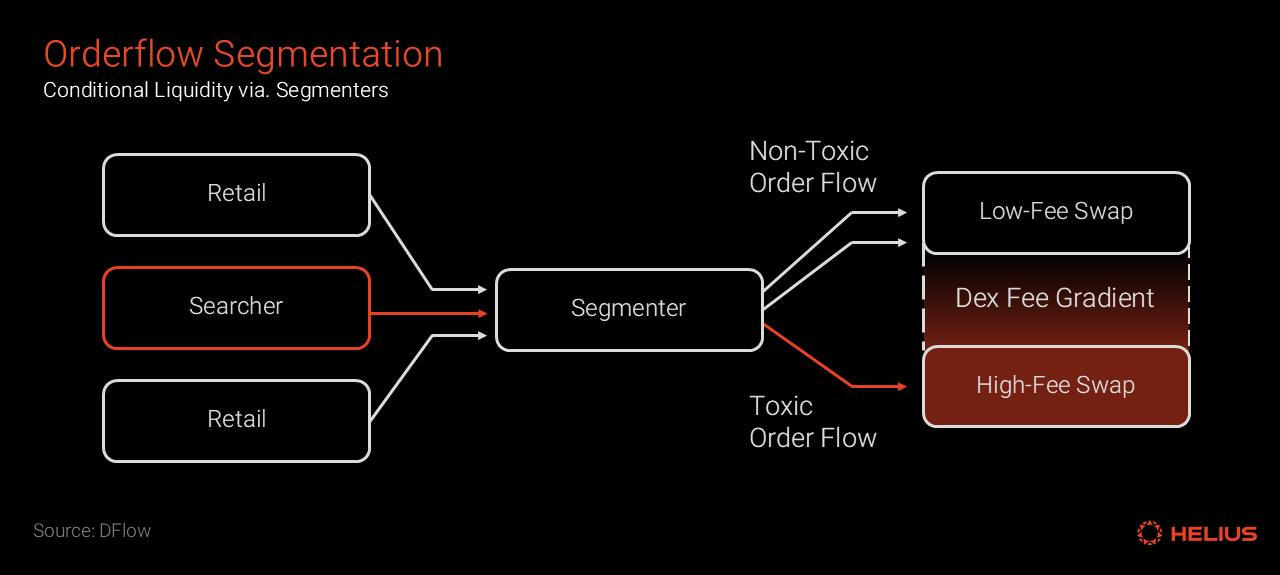
Users leverage this through "declarative swaps," which allow them to declare their intent to swap and utilize segmenters for execution. These swaps interact with existing Solana liquidity sources and DEXs that enable conditional liquidity. Declarative swaps built using Jito bundles provide traders with guaranteed quotes at the time of signing while recalculating the optimal routing before the trade enters the network, ensuring compliance with the initial quote.
This approach significantly reduces the latency between routing calculations and trade finalization, thereby alleviating slippage. Additionally, when routed through DEXs that enable conditional liquidity, declarative swaps minimize the likelihood of sandwich attacks. By offering tighter spreads for non-toxic traffic, these DEXs improve trading conditions for Solana users. Therefore, declarative swaps provide traders with the ability to reduce slippage, lower latency, and enhance protection against sandwich attacks, resulting in a more efficient and secure trading experience.
Paladin
Paladin-Solana is an improved version of the Jito-Solana validator client, which introduces a minimal code patch (about 2,000 lines of code) to include Paladin Priority Port (P3) transactions during the bundling phase. Paladin Priority Port (P3) facilitates the processing of high-priority fee transactions. Validators act as leaders to open this fast track, enabling them to process valuable transactions in a timely manner. Each P3 transaction meets a minimum fee threshold (10 lamports per compute unit) and is directly passed to the bundling stage for processing in the order received.
Paladin prioritizes high-priority fee transactions and actively identifies and discards sandwich transaction bundles based on transaction patterns. While this may initially seem detrimental to validator rewards, Paladin validators can be compensated through a trust-based mechanism. Validators that avoid sandwich attacks can attract direct transactions, thereby creating a trust ecosystem and increasing revenue.
Validators are incentivized by the prospect of earning additional rewards and the trust of users relying on the P3 fast track. However, they risk losing P3 transaction revenue if they include sandwich transaction bundles in a block. This trust is collateralized with PAL tokens.
PAL tokens are designed to align the interests of validators, users, and the broader Solana community. It has a fixed supply of 1 billion tokens, with 65% allocated to validators and stakers, while the remainder will be distributed among Solana builders, the Paladin team, and a development fund. Validators can lock PAL to enable P3 transactions on their nodes, creating a decentralized, permissionless, and token-controlled mechanism for MEV extraction and transaction prioritization.
The project is still in its early stages and has not yet reached the critical scale for widespread adoption. Currently, 80 validators are running Paladin, accounting for 6% of the network stake. Paladin claims to increase block rewards by 12.5%.
Multiple Concurrent Leaders System
Block producers maintain a monopoly on transaction inclusion within their assigned slots. Even if the current leader is known to maliciously conduct sandwich attacks, users unknowingly submit transactions expecting them to be processed immediately. Users cannot choose which node processes and orders their transactions, making them susceptible to manipulation.
The Multiple Concurrent Leaders (MCL) system introduces competition among block producers within the same time period. Users gain the ability to choose leaders without causing delays. If Leader A is malicious and known to conduct sandwich attacks, users or applications can choose to submit transactions to the behaviorally honest Leader B.
Long-term maximization of competition among leaders involves shortening durations, limiting the number of consecutive slots assigned to a single leader, and increasing the number of concurrent leaders per slot. By scheduling more leaders per second, users gain greater flexibility, allowing them to select the most favorable quotes for their transactions from available leaders.
While MCL provides a compelling long-term solution to address MEV, its implementation is complex and may require years of development.
Asynchronous Execution (AE) is another potential method for reducing MEV. Under AE, there is no need to execute or evaluate the results of each transaction when constructing a block. This speed poses significant challenges for algorithms in calculating profit opportunities and timely executing effective sandwich strategies.
Conclusion
The MEV landscape on Solana is rapidly evolving and far from reaching a stable competitive equilibrium. Seekers are continuously exploring more complex strategies to capture value, while the ecosystem deploys diversified infrastructure and mechanisms to mitigate the harmful effects of MEV. Forward-looking ecosystem investors, such as Multicoin Capital, are actively deploying capital, believing that the value extracted by ecosystem teams from Solana MEV will significantly increase, and that the distribution of this value will undergo substantial changes in the coming years.
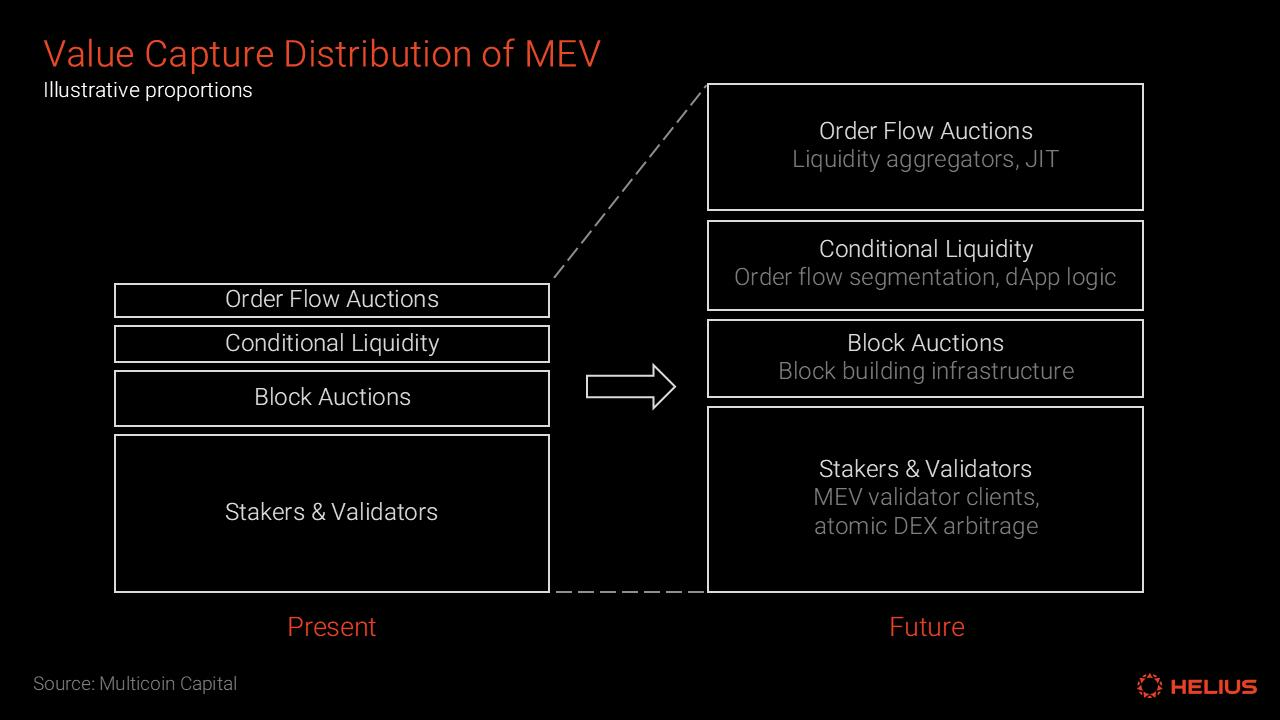
Above: Value Capture Distribution of MEV (Source: Multicoin Capital, Tushar Jain)
For any blockchain that hosts significant financial activity, MEV is an unavoidable challenge. Properly addressing and managing this "MEV demon" is crucial for the long-term success of the network. Emerging from the difficulties of 2023, Solana has undoubtedly become stronger and is now an active blockchain with a growing user adoption rate. However, new challenges lie ahead. To achieve broader adoption, the ecosystem must confront these challenges head-on. Currently, Solana is at a critical juncture in its development, presenting both challenges and valuable opportunities that will define its future.
免责声明:本文章仅代表作者个人观点,不代表本平台的立场和观点。本文章仅供信息分享,不构成对任何人的任何投资建议。用户与作者之间的任何争议,与本平台无关。如网页中刊载的文章或图片涉及侵权,请提供相关的权利证明和身份证明发送邮件到support@aicoin.com,本平台相关工作人员将会进行核查。


