Introduction
As a project that has performed well in the L1s track, Toncoin has always maintained a market value position in the top 20 of the Crypto market. Although Toncoin initially gained attention through Telegram's mini-programs and small games, its excellent performance is its core competitive advantage. Test data shows that Toncoin's TPS index has surpassed Solana, demonstrating outstanding performance.
In addition, it also has traffic entry from Telegram's platform with 900 million users, coupled with the continuous strengthening of community consensus. Toncoin has broad prospects for future development, and its future is worth looking forward to for further development and breakthroughs.
Basic Information of the Project
Project Team
Pavel Durov: Founder & CEO, also the CEO and founder of Telegram. Before creating Telegram, Pavel founded VK, the most popular social network in Russia and some other countries, with over 100 million active users.
Inal Kardan: Game Director of TON Foundation. He was a co-founder and CTO of Meta0, and also co-founder and CTO of Billy App.
Julian Tan: Head of TON's DeFi ecosystem. He previously served in business development at Binance, was an SEI ecosystem development partner, and graduated from the University of Queensland.
Jordan Dunne: Telegram DeFi Lead for TON Wallet. He previously served as a technical project manager at Google.
Financing Situation:
Toncoin has completed seven rounds of financing, with undisclosed amounts for five rounds and approximately $16 million raised for the two rounds with disclosed amounts.
Seed Round: In April 2021, Runa Capital and RTP Global invested $6 million in this round. Runa Capital is a venture capital firm, and RTP Global is an early-stage technology company.
Series A: In November 2022, DWF Labs invested $10 million in this round.
Other five rounds: Led by Mask Network, Mexc Ventures, Animoca Brands, Mirana Ventures, and Pantera Capital, with undisclosed investment amounts.
Although Toncoin's financing amount in the seven rounds shows only $16 million, as a project backed by Telegram, the world's top social APP, various investors are very optimistic about its future prospects.
Development Strength
Toncoin was initiated in 2018 by founder Pavel Durov. The project's development journey has been very difficult, as shown by the key events in the project's development:
Year
Key Events
2018
Pavel Durov announced the launch of Toncoin.
2018
Toncoin's white paper was released.
2019
Toncoin released two testnets and open-sourced the related code.
2020
Telegram announced the abandonment of Toncoin due to SEC reasons and paid a $18.5 million settlement, returning $1.7 billion of investment funds.
2020
Toncoin was accepted by the community for continued development and established the Foundation.
2021
TVM and Toncoin 2.0 test version launched.
2021
Toncoin's mainnet launched.
2022
TON Foundation took over Toncoin and received financing support from DWF Labs.
2022
Toncoin transitioned from the original POW network to a POS network.
2022
TON was integrated into the Telegram application, introducing cryptocurrency payment functions for content creators.
2022
Completed major network upgrades to improve security and performance, achieving fast, scalable, and secure transaction processing.
2023
Completed major network upgrades to improve security and performance.
2024
Announced important strategic partnerships with multiple well-known companies.
From the key events in the development of the Toncoin project, it is clear that the project has indeed faced many obstacles and challenges in its development process. However, when faced with difficulties, the Toncoin community has been able to spontaneously come forward, continuously driving the construction and development of the project, fully demonstrating the success of its community building and strong consensus cohesion.
In addition, in important milestone events such as the launch of the testnet, deployment of TVM, and the launch of the mainnet, Toncoin's technical development team has been able to complete the established plans on time and with high quality, reflecting the excellent ability and professional standards of its development team.
In summary, the Toncoin project has demonstrated the cohesion of the community and the execution power of the technical team in its development process, laying a solid foundation for its continued growth in the future. These advantages undoubtedly enhance investors' confidence and expectations for Toncoin.
Operating Mode
As an L1s project, Toncoin adopts a hybrid consensus mechanism of PoS and BFT to protect the security of the chain. At the same time, Toncoin has designed the structure of the main chain, working chain, and sharding chain, relying on the main chain to achieve the synchronous coordination of the entire network and the node to ensure the network's security, with specific interactions being executed by the working chain and sharding chain.
When performing specific tasks, the working chain is responsible for supporting the operation of smart contracts and Dapps. Each working chain has its own custom transaction types, smart contract functions, and address formats. The entire network can have up to 2^32 working chains, and the communication and interaction between each working chain is similar to the processes of Arweave AO, where they do not affect each other but can also interact through a unified message column format, maintaining communication and data transfer between the various working chains of Toncoin. When actually performing specific tasks, it is the sharding chain that executes them. The sharding chain is a subdivision of the working chain, used to process network transactions and data. The entire network can have up to 2^60 sharding chains. When executing specific tasks, each working chain will process transactions for specific accounts and smart contracts, and can automatically merge or split based on the current network load.
Toncoin's workflow is as follows: it uses message passing to handle user or other process requests. When a specific task needs to be executed, it will hand over the specific task instructions to the sharding chain for processing. After the sharding chain calculates the results, it will return the message to the working chain. The working chains can also communicate and transfer data based on a unified interoperability standard. The final calculated results are uploaded to the main chain for verification. The verified results are then stored on the main network, so that when the lower-level working chains and sharding chains need to read cross-chain messages, they can determine the latest state.
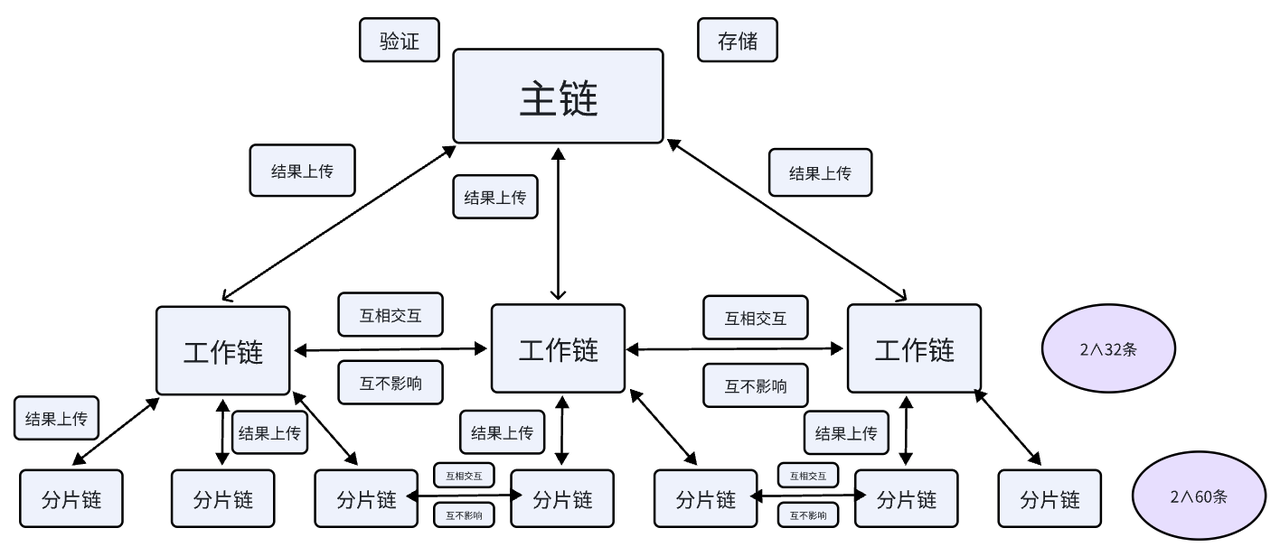
It is particularly important to note that: In order to achieve optimal performance, Toncoin also uses three technologies, namely instant hypercube routing, self-healing vertical blockchain, and asynchronous call of smart contracts, to jointly achieve its excellent scalability.
In summary, Toncoin is an L1s public chain project that adopts a hybrid consensus mechanism of PoS and BFT, and uses infinite sharding technology and asynchronous technology to increase the scalability of the chain. Hypercube routing ensures low-latency cross-chain interaction, self-healing vertical blockchain enhances the system's reliability and consistency, and these unique technologies ensure that Toncoin can maximize parallel computing efficiency when executing computational tasks, giving it superior scalability compared to other public chains, thereby providing solid technical support for its future operation of related mini-program projects.
Introduction to Toncoin's Innovative Technology
Instant Hypercube Routing
Introduction
Traditional hypercube routing involves the transmission of information between three chains: communication between sharding chains within the same working chain, communication between different working chains, and interconnection between the main chain and other working chains. Each chain is only connected to a sharding with a hexadecimal identifier different from its own, forming a hypercube structure. The entire sharding chain network forms a hypercube network with a routing count of log16(N). When the number of nodes is 4, the network can support millions of sharding chains. Toncoin uses two information routing methods: slow routing and fast routing. In fast routing, Merkel proofs can be directly used to relay information without submitting it to an intermediate sharding chain, avoiding additional delays. However, if the receipt is lost, validators will not be penalized, so both routing methods are used simultaneously.
Toncoin utilizes a high-dimensional hypercube structure to achieve rapid message transmission between different sharding chains. By constructing a multi-dimensional topology, it effectively shortens the message transmission path, reduces the latency of cross-shard communication, and significantly improves the efficiency of cross-shard information transmission and processing. This technological innovation ensures low-latency cross-chain interaction and transactions, and also helps meet the high real-time requirements of applications. The high-dimensional hypercube structure of Toncoin brings significant improvements to the performance of the blockchain system, providing strong support for fast and efficient cross-chain information transmission and processing.
Self-Healing Vertical Blockchain
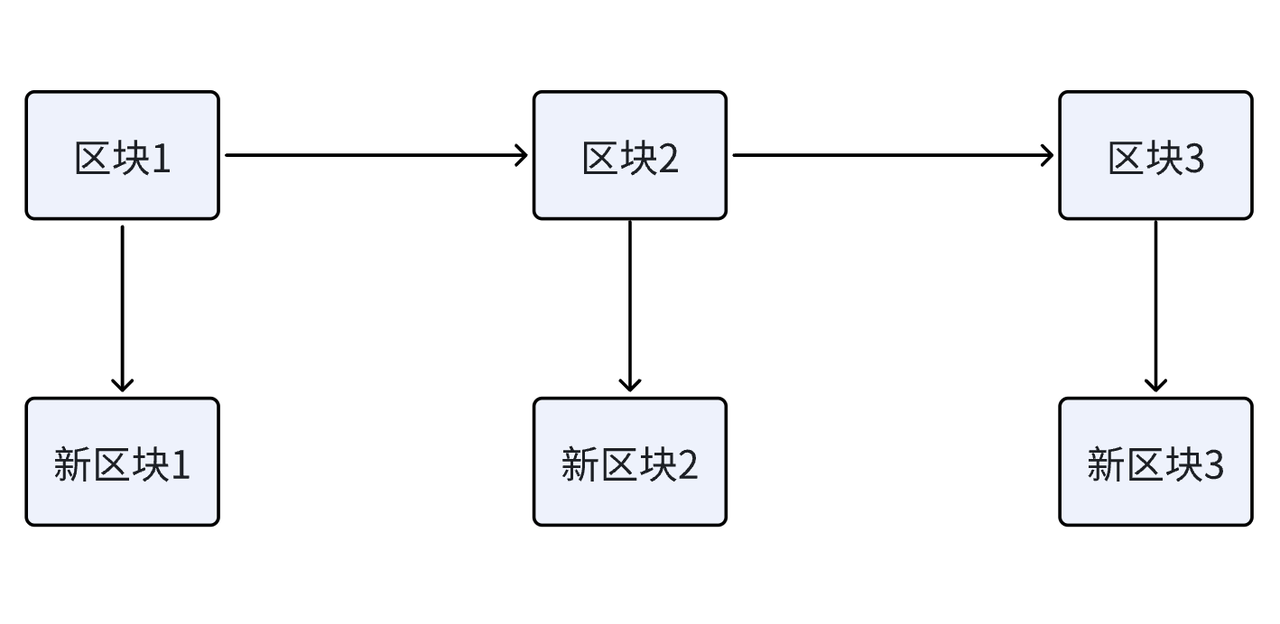
On Toncoin's main chain, each block in the sharding chain is actually considered a small blockchain, also known as a vertical blockchain. If it is necessary to repair erroneous blocks in the sharding chain, new blocks are submitted to the vertical blockchain. This new block can replace invalid horizontal blockchain blocks, or describe the differential parts of previous versions of blocks that need to be changed. When the vertical blockchain grows faster than the original blockchain, the new version can replace the original version. This mechanism protects the stability and reliability of the sharding chain and contributes to the operation of the entire Toncoin main chain.
Toncoin has practically applied self-healing vertical blockchain technology, which can correct invalid blocks without forking, maintaining the system's consistency and stability. When invalid blocks are detected, this mechanism can automatically make corrections without the need for complex system rollbacks or forking operations, reducing the complexity of network maintenance. This mechanism not only enhances the reliability of the entire network but also reduces potential security risks, ensuring the continuous stable operation of the system. This self-healing capability enables the Toncoin blockchain system to cope with various abnormal situations.
Asynchronous Call of Smart Contracts
In Toncoin, the calls between smart contracts are asynchronous. This means that when one smart contract calls a method of another smart contract, it does not execute immediately, but is processed in a future block. This design helps to improve scalability because it is not necessary to complete all transaction processing in a single block. However, asynchrony also increases the complexity of developing and maintaining applications on the Toncoin chain. Developers need to pay more attention to the order and timing of transaction execution to ensure that calls between smart contracts are handled correctly.
Advantages Compared to Competing Projects in the Same Track
As a high-performance L1s project, Toncoin's main competitors are high-performance public chains such as Ethereum, Solana, and Arweave AO.
Superior On-Chain Performance: Toncoin's block confirmation speed is fast, transaction speed is high, it can support a large number of sharding, and the communication speed between sharding is higher than Ethereum. Compared to Ethereum, Toncoin can create a chain for each user wallet, achieve parallel computation through sharding, and support fast cross-shard communication. Additionally, TVM supports asynchronous computation, providing a theoretical basis for achieving high TPS. These unique features give Toncoin a competitive advantage in the blockchain field, providing users with an efficient, fast, and secure transaction and communication environment.
Resource Payment: In Toncoin, smart contracts need to pay for their own resource costs, i.e., holding a certain amount of TON tokens to execute operations such as computation, storage, and network transmission. This design mechanism avoids users directly bearing the cost, but requires smart contracts to hold enough TON tokens to pay for execution costs. When a smart contract's TON token balance is depleted, the contract will be automatically deleted, which helps prevent data inflation on the blockchain. Therefore, smart contract owners need to ensure that the contract always has enough tokens to maintain normal operation, avoiding deletion due to insufficient funds. This also prompts smart contract owners to fully consider resource consumption and token management when designing contracts, ensuring the long-term stable operation of contracts.
Asynchrony: In Toncoin, the calls between smart contracts are asynchronously executed. This means that when one smart contract calls a method of another smart contract, it does not execute immediately, but is processed in a future block. This design enhances scalability because it is not necessary to process all transactions in a single block. However, this also poses challenges for maintaining transaction consistency and atomicity. For example, if contract A calls a method of contract B, this call will not be executed immediately, but will be processed in a future block after the transaction of contract A is completed. In other words, the call of contract B may have been processed before the transaction of contract A is completed. Asynchrony is a core design of Toncoin, giving it higher scalability and flexibility, but also increasing the complexity of development and maintenance.
Huge External Traffic: As a project founded and supported by Telegram, Toncoin has a significant advantage in customer acquisition compared to other public chains. Although Telegram was interfered with by the SEC during the development process and withdrew from the Toncoin project, it has always been driving traffic to Toncoin. We all know that traffic is the key to success in both Web 2 and Web 3. Regardless of how excellent a project's design is, it will face failure without traffic. In Web 2, Telegram has tens of billions of existing users, with 900 million daily active users and a daily growth of 2.5 million users. It can be said that Telegram itself is a huge source of traffic. Telegram has been continuously driving traffic to Toncoin, deploying various mini-programs on its chain, giving Toncoin an absolute advantage that other L1s projects do not have.
In summary, as an L1s track project, Toncoin has the advantages of superior performance, resource payment, and asynchrony, giving it a competitive edge over other public chains. Additionally, Toncoin has the huge traffic advantage of Telegram, making it unparalleled in customer acquisition compared to other public chains. Telegram's traffic driving is also the key core competitiveness of Toncoin.
Project Model
Business Model
Toncoin's economic model consists of three roles: POS miners, application developers, and blockchain application users.
POS Miners: Toncoin's validating nodes play a role in protecting the security of the Toncoin network and storing network data by staking TON tokens and adhering to the hybrid consensus mechanism of PoS and BFT. As a reward for protecting network security and storing network data, Toncoin rewards validating nodes with TON tokens, and currently, the newly added TON tokens are only issued through node staking rewards, with an annualized APY of approximately 4.2%.
Application Developers: As an L1s project, the prosperity of its own ecosystem is one of the key factors determining the success or failure of Toncoin. Therefore, Toncoin attaches great importance to its own ecosystem construction, providing greater innovation space for developers in the Toncoin ecosystem. Additionally, due to Toncoin's resource payment feature, application developers must hold a certain amount of TON tokens for a long time to ensure that their smart contracts are not deleted due to a TON token balance of 0.
Blockchain Application Users: The gas fees paid by users on Toncoin are the main source of income for Toncoin.
From the above analysis, it can be seen that Toncoin's income comes from:
- Gas fees paid by application developers and blockchain application users
Token Model
According to the whitepaper, the initial total supply of TON is 5 billion tokens. In terms of token distribution, the team initially owns 1.45% of the tokens, and the remaining 98.55% were mined through POW in the early stages. The network consensus has now transitioned from POW to POS, and the total TON supply inflates at a rate of approximately 0.6% per year to reward POS miners. The current total supply of TON tokens is 5,107,844,288.
In February 2023, the TON community passed a proposal to temporarily freeze inactive mining wallets for 48 months. These wallets have never been activated and have no outgoing transactions in their history. There are currently 312 inactive mining wallets holding over 20.7753 billion TON, accounting for approximately 41.55% of the total TON supply at that time. Currently, POS validators have staked 591.7 million TON. The circulating supply is 2,438,615,865 TON, with a circulation rate of 47.74%.
From the TON token model, it is evident that although all TON tokens have been circulated, the circulation rate is not high due to the economic model optimization and token staking. Additionally, the tokens held by the project team are very low.
Token Empowerment
According to the whitepaper, TON serves the following purposes in Toncoin:
- Miner rewards: Nodes in the network also act as miners, adhering to Toncoin's PoS and BFT hybrid consensus mechanism to protect the network's security and store data, and receive TON tokens as rewards.
- Transaction fees: Users conducting transactions on the blockchain must pay transaction fees in TON tokens.
- Staking: To become a validator node, TON tokens must be staked.
- Purchasing scenarios: Through the Telegram wallet, users can directly purchase TON with a credit card and use it to buy virtual goods such as anonymous accounts.
TON Valuation
In June 2023, the TON community proposed a deflationary mechanism for Toncoin, which effectively burns 50% of all transaction fees received by validators, including transaction and storage fees. In addition to the staking mechanism for TON tokens, in February 2023, the TON community passed a proposal to temporarily freeze inactive mining wallets for 48 months. These proposals and the staking mechanism have reduced the circulation rate of TON tokens from 100% to 47.74%, which is a significant effect. The current inflation rate in the Toncoin network is 0.6%, which is not very high. However, with Telegram continuously driving traffic to Toncoin, the active user base on the network is gradually increasing. Additionally, the cryptocurrency industry is currently in a bull market, which may lead to highly active on-chain behavior in the future. Furthermore, due to the deflationary mechanism proposal, TON tokens may experience deflation in the future.
In summary, TON tokens have been highly empowered by the Toncoin project team and community, and their value is expected to rise significantly with the thriving ecosystem.
Token Price Performance
According to Coingecko statistics, the price of TON has increased by over 6 times in the past year since May 2023 (from a low of $1.21 to a high of $8.17). The daily trading volume of TON is $346 million, with a circulating market capitalization of approximately $17.814 billion. Although the turnover rate is only 1.94%, which is relatively low, this is mainly due to the current market environment being relatively subdued, with most users adopting a wait-and-see approach.
TVL
The TVL of Toncoin has been consistently increasing, as shown in the graph.
User Count
The user count of Toncoin has been maintaining a high growth rate, as depicted in the graph.
Stakers Count
Although the total staked amount of TON has decreased after May, it has slowly started to recover in the past month.
Ecosystem Projects
The TON ecosystem has developed rapidly in recent months. The biggest moat of the Toncoin project is the flow of traffic from Telegram, which has deployed mini-programs and games on the Toncoin platform within Telegram, resulting in a huge influx of traffic to the TON ecosystem. This has led to rapid development, making TON a rare hotspot in the cryptocurrency market.
The Toncoin project itself has adopted asynchronous smart contract calling technology, which is expected to lead to challenges and slow development in the DeFi ecosystem. However, this indirectly confirms that mass adoption is the true prospect for Toncoin. Initially, TON was described as a decentralized application and service platform similar to WeChat, Google Play, or the App Store, and even as a decentralized alternative to Visa and Mastercard payment processing services. This means that TON is not just a cryptocurrency but a powerful ecosystem that can provide users with various services and applications. As more people start using TON and more applications and services migrate to this platform, its potential will be fully realized.
Therefore, Toncoin has focused its ecosystem on plugin projects similar to WeChat mini-programs and is aiming to capture the meme coin ecosystem and market share from the Solana ecosystem.
Conclusion
In conclusion, Toncoin has a promising future, with its value expected to rise significantly as its ecosystem thrives.
Notcoin aims to attract users in a gamified manner and will operate on Telegram. Users can earn NOT tokens by tapping the coin icon on the screen. This "Tap to Earn" game mechanism quickly attracted a large number of users and accumulated a huge user base in a short period. Developed by Open Builders, Notcoin leverages the high scalability, security, and efficiency of Toncoin to provide an ideal platform. Additionally, Notcoin introduces users to the Web3 community through its gamified mining mechanism, further promoting the application of blockchain technology. Since its debut in November 2023, Notcoin has gained widespread attention globally, attracting over 35 million players with a daily active user count of 6 million. Its viral spread not only increases user engagement but also promotes the popularization and development of the cryptocurrency field. Notcoin's success is attributed to its innovative gamified design, with a specific gamified mining mechanism designed around repetitive clicking. The simple and understandable "click to earn" mechanism has attracted the participation of a large number of non-cryptocurrency users, reducing their learning costs for blockchain technology and driving the expansion and development of the cryptocurrency market. Furthermore, Notcoin is committed to creating an open, fair, and transparent gamified platform, ensuring the fairness and security of user earnings in the game through the immutability and transparency of blockchain technology, further enhancing user confidence in the Notcoin project. As an innovative cryptocurrency project, Notcoin has successfully attracted a significant amount of user attention and participation through its gamified design.
Hamster Kombat
Hamster Kombat is a Telegram-based clicker game that combines the functionality of a crypto trading simulator. In the game, players take on the role of a chief executive officer of a cryptocurrency exchange, aiming to elevate the exchange to unprecedented heights. Players can accumulate virtual coins by continuously clicking on the hamster image. In addition to earning virtual coins through clicking, the game incorporates financial education elements, allowing players to accumulate wealth by clicking and upgrading their hamster team. The game's simple and highly attractive design enables players to quickly get started and immerse themselves in the game. With over 100 million global users, it has become one of the popular games in the market. Hamster Kombat not only serves as a casual entertainment game but also cleverly integrates investment concepts, providing players with a challenging and adventurous gaming environment. The game offers players the opportunity to simulate cryptocurrency trading, allowing them to learn financial knowledge and investment skills in a fun and relaxed gaming experience. By clicking and upgrading their hamster team, players can experience the joy and challenge of investment, cultivating their financial management abilities. Players can experience the fluctuations and challenges of the financial market in a relaxed and enjoyable gaming atmosphere, learning financial knowledge and investment skills. Through continuous clicking and upgrading of the hamster team, players can experience the fun and challenge of investment, cultivating their financial management abilities. The game also provides a rich variety of game content and challenges, allowing players to experience the joy and challenge of investment. Hamster Kombat integrates casual entertainment, financial education, and investment simulation, creating a new gaming experience for players. By clicking and upgrading their hamster team, players can learn financial knowledge and investment skills in a relaxed and enjoyable gaming atmosphere, experiencing the joy and challenge of investment. With the game's continuous growth, it is expected to attract more players and become a highly anticipated gaming product.
Tapswap
Tapswap is a Telegram-based clicker game that falls under the "Tap to Earn" category. In the Telegram messaging app, players can earn TAPS tokens within the game by tapping the screen. After its release on February 15, 2024, Tapswap quickly garnered significant attention and participation from users. The game's mechanics are very simple, with players earning in-game coins by tapping the large button in the center of the screen. This straightforward and direct gameplay has attracted the participation of numerous players, rapidly establishing Tapswap as a popular cryptocurrency gaming project. In addition to its launch on Telegram, Tapswap also plans to launch on Toncoin to expand its influence. The application of blockchain technology will bring more possibilities to Tapswap, providing broader development opportunities in the cryptocurrency field. Although it has not yet been listed on mainstream cryptocurrency exchanges, with the success of Notcoin, it is expected that Tapswap will enter the market in the future. As the cryptocurrency industry continues to develop, the highly anticipated gaming project Tapswap will attract more investors and players. With its simple click mechanism and a wide user base, Tapswap has become a highly anticipated cryptocurrency gaming project.
Catizen
Catizen is a cat-themed game based on the TON ecosystem, combining elements of the metaverse, GameFi, and AI technology to provide a highly immersive and interactive experience. Developed by Pluto Studio, the project draws on the experience of the previously incubated TON ecosystem GameFi project, Tap Fantasy.
The core concept of Catizen is to integrate virtual cats into the real world, providing players with a more realistic and enriching gaming experience. By leveraging advanced metaverse technology, players can interact with virtual cats in the game and earn profits through the GameFi mechanism. Additionally, Catizen uses advanced artificial intelligence technology to give virtual cats vivid and lifelike behaviors and personalities, allowing players to build closer relationships with the virtual cats.
As a game project based on the TON ecosystem, Catizen will fully utilize the advantages of blockchain technology to ensure the security and transparency of game assets. Through blockchain technology, players can ensure the authenticity and credibility of the earnings and assets obtained in the game, while also enjoying efficient and low-cost transaction experiences brought by blockchain technology. In addition to being a gaming platform, Catizen is committed to collaborating with the community to rescue stray cats, bridging the gap between the virtual and real worlds. Through cooperation with animal protection organizations, Catizen will conduct a series of activities to rescue stray cats in the real world and encourage player participation. This combination of the virtual and real worlds not only provides players with a more meaningful and profound gaming experience but also contributes to social welfare.
Currently, Catizen has entered the second phase of user expansion and is preparing to launch the LaunchPool mode, where players can earn in-game points $wCATI by staking game assets. This initiative aims to incentivize active player participation and inject new vitality into the game ecosystem's development. Additionally, Catizen will continue to improve its community governance mechanism, encouraging community members to participate in project decisions and jointly promote the healthy development of the Catizen ecosystem.
MOMO AI
The MOMO AI project is an AI-driven game social growth platform based on the TON and Solana ecosystems, aiming to provide users with rich gaming experiences and social interaction functions through its independently developed AI-agent system.
In the game, MOMO AI players plant virtual trees and manage and upgrade their trees by collecting points called "Kiwi." By accumulating points, players can increase the level of their trees, thereby accelerating the production efficiency of Kiwi points. While playing the game, players are allowed to use AI agents to interact with the game through natural language, such as setting commands to automatically collect Kiwi points. The AI not only responds to player commands but also provides personalized game suggestions and tasks based on the player's gaming habits and preferences. Players can exchange the Kiwi points earned through game activities for the native token $MTOS of the MOMO AI project, and by referring new players and sharing game content, players can earn additional Kiwi points and token rewards, incentivizing players to spread and promote the game.
Since its launch, MOMO AI has attracted 1 million natural users in just two months, with over 700,000 monthly active users and over 160,000 daily active users. This rapid growth indicates the popularity and potential of MOMO AI in the market. The project will utilize artificial intelligence technology to provide users with rich gaming experiences and social interaction functions. AI technology will empower the MOMO AI platform, providing more intelligent functions and services for users, delivering a more personalized and high-quality gaming experience.
The development of the MOMO AI project is closely tied to strategic cooperation with TON. Through collaboration with TON, MOMO AI will fully leverage the performance advantages and ecological resources of the TON network to provide users with a more stable and efficient gaming experience. Additionally, MOMO AI will inject new vitality and innovation into the TON ecosystem, driving the continuous development of the entire ecosystem.
Future Plans
The official website of the project has detailed plans for the future development of Toncoin.
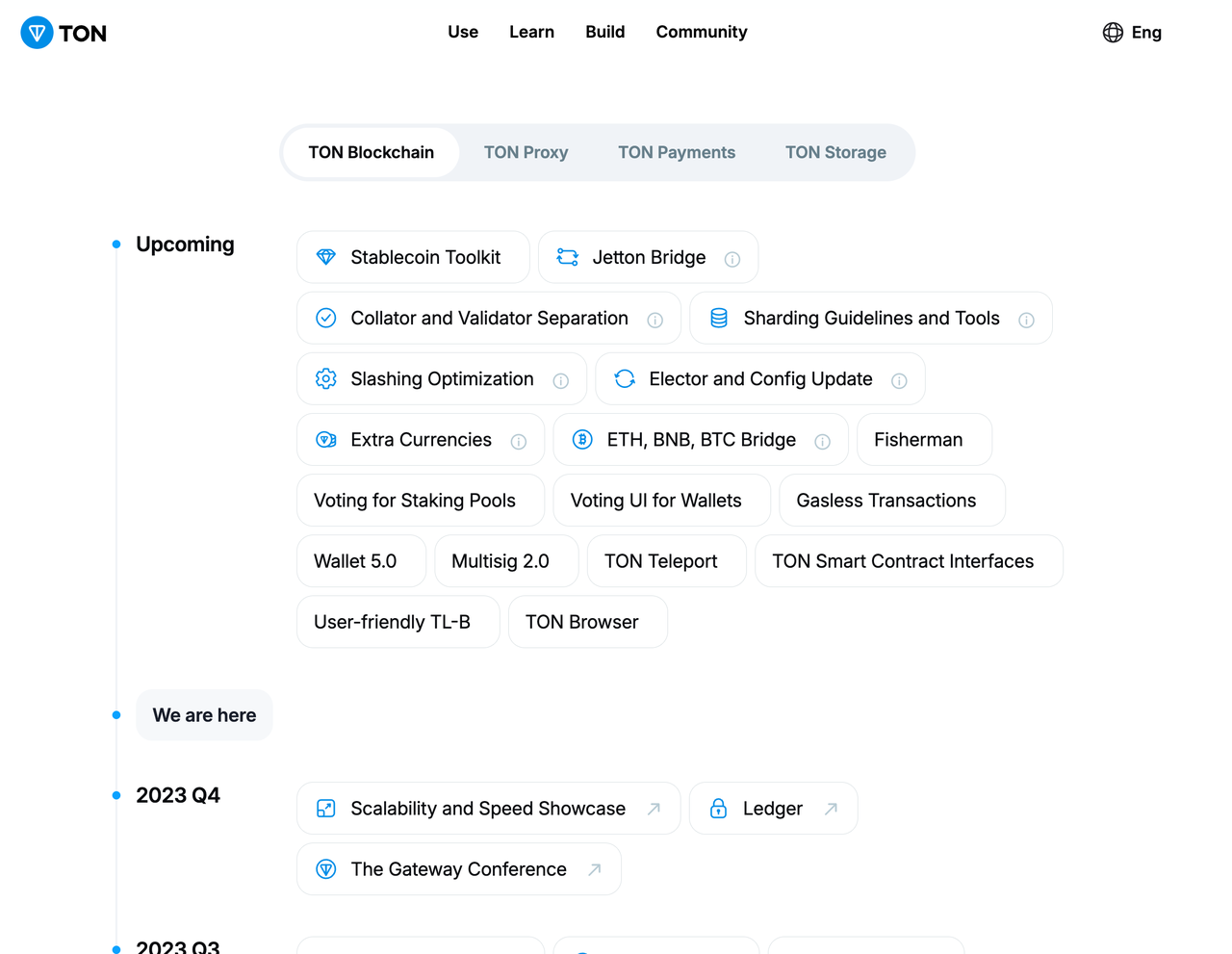
Project Risks
The developers in the Toncoin ecosystem use two editing languages, FUNC, which is difficult to use, and Fift, which is more low-level and includes TVM and Fift assembly instructions, making it even more challenging. The high difficulty of the development language, and the use of TVM, which is incompatible with EVM and SVM, poses a certain development challenge for the project, especially since most developers in the industry are accustomed to using EVM and SVM languages.
While Toncoin benefits from the massive traffic brought by its association with Telegram, based on past SEC regulatory history, it is foreseeable that Toncoin may face ongoing risks. These risks may have a negative impact on its operations and future development. Additionally, due to the close connection between TON and Telegram, any legal, public relations, or economic issues involving Telegram could potentially have a chain reaction effect on TON, affecting investor confidence, user adoption rates, and the overall market perception of TON.
Although the Toncoin community has proposed an optimization plan for the TON token economic model, which forcibly locks 41% of the tokens for 2 years until February 2025, the fact that this expiration is only 8 months away means that the entire locked amount will be released, resulting in a sudden 1.21x increase in the existing circulating supply of tokens, which is likely to have an impact on the price of TON.
While the Toncoin community has proposed a deflationary destruction mechanism, which effectively destroys 50% of all transaction fees received by validators, based on the current daily transaction volume, only about 500 TON are destroyed daily, which is insignificant compared to the annual increase of over 30 million TON.
Summary
Toncoin adopts four technologies, including infinite sharding, instant hypercube routing, self-healing vertical blockchains, and asynchronous smart contract calls, to achieve excellent scalability as an L1 project. Toncoin's superior performance, resource payment, and asynchrony give it an advantage in competition with other public chains, and its association with Telegram provides an unparalleled advantage in customer acquisition compared to other public chains. Telegram's traffic redirection is Toncoin's key core competitiveness.
However, Toncoin's ecosystem developers face the challenge of two high-difficulty editing languages, FUNC and Fift. Due to TVM's incompatibility with EVM and SVM, and the fact that most developers are accustomed to using EVM and SVM languages, the project may encounter certain development difficulties. While Toncoin is backed by Telegram, past SEC regulatory history suggests that Toncoin may face ongoing risks, which could have a negative impact on its operations and future development. The close connection between TON and Telegram could lead to chain reactions from any issues involving Telegram, affecting investor confidence and the overall market perception of TON. Additionally, despite the Toncoin community's proposal for a token economic model optimization and deflationary destruction mechanism, attention should be paid to the issues of token unlocking and the insignificant amount of destruction in response to potential impacts on the price of TON.
In conclusion, the unique technical architecture of the Toncoin project allows it to outperform all existing public chains, giving it a certain advantage in the competitive L1 race, while also benefiting from the massive traffic brought by Telegram, forming a moat that other public chains cannot match. Its future plans are highly innovative, and if fully realized, Toncoin will have an absolute technological advantage in the public chain race.
免责声明:本文章仅代表作者个人观点,不代表本平台的立场和观点。本文章仅供信息分享,不构成对任何人的任何投资建议。用户与作者之间的任何争议,与本平台无关。如网页中刊载的文章或图片涉及侵权,请提供相关的权利证明和身份证明发送邮件到support@aicoin.com,本平台相关工作人员将会进行核查。


