How to identify garbage cryptocurrency projects and improve the quality of investment decisions?

CN
链捕手
Follow
2 hours ago

1. Transparency: An Invisible Threshold

In recent cycles, the valuation system of the cryptocurrency industry has heavily relied on narrative ability. A clear and imaginative narrative is often sufficient to support early financing and market attention, as well as the potential for FDV growth after TGE.

DeFi, NFT, GameFi, AI + Crypto, Restaking, RWA… Each sector, in its explosive early stages, is accompanied by a large amount of concept output and vision promises. However, the facts have repeatedly proven that narratives alone cannot support long-term value; only product progress and real market adoption can achieve that.

As overall investment returns decline and failed projects emerge one after another, this valuation system has almost been falsified. In this context, investors' focus will shift from the narrative itself to the project's product strength, execution capability, and innovation ability, which has almost become a common consensus in the market.

However, there has always been an invisible threshold of "transparency" between key project information and investors, along with a lack of reliable information presentation platforms. Only when project teams are willing to proactively disclose dynamic information and allow users to conveniently query it can the overall information efficiency and health of the cryptocurrency market be improved. Transparency is becoming one of the key factors influencing the industry's development pattern and future space.

2. Responding to Market Demand by Quantifying Transparency Metrics

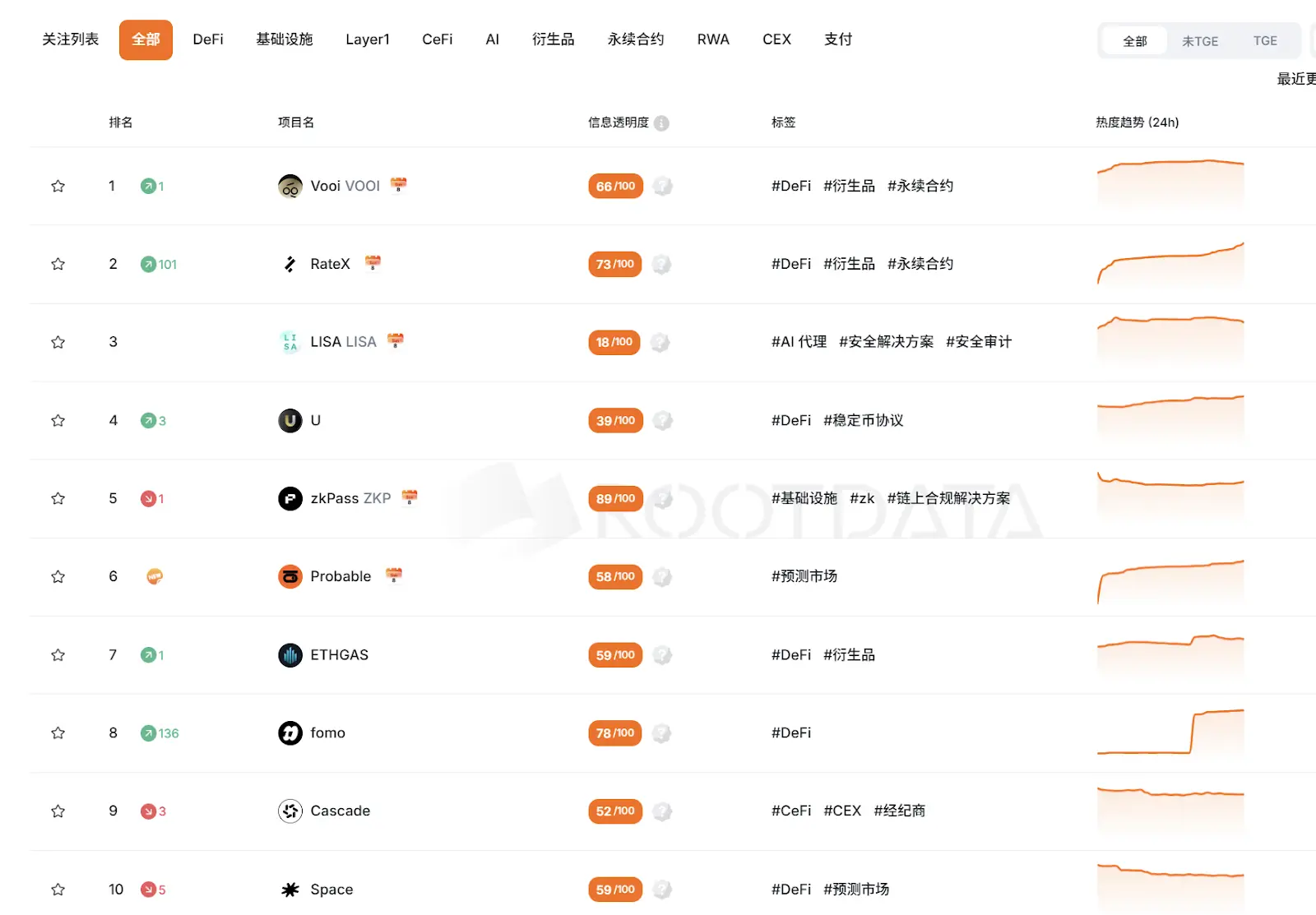
Transparency has long been a vague, subjective, and difficult-to-compare concept, where users can only judge based on experience and feelings, making it hard to be assessed by the market through quantifiable metrics. Therefore, RootData has officially launched a project information transparency score based on its long-term accumulation of fundamental project information, providing exposure in many prominent locations such as the homepage and project detail pages, allowing investors and users to understand and evaluate projects from multiple dimensions.

It is important to clarify that RootData's transparency score is not a traditional project rating. It does not attempt to answer the highly subjective question of "Is the project worth investing in?" but focuses on a more fundamental and verifiable level: whether the project continuously and systematically discloses its key information to the market.

In design, the transparency score emphasizes objectivity and dynamism. It is not generated once but continues to change as project data is supplemented, updated, or stagnated. This means that transparency is not a metric that can be "completed" through a one-time concentrated disclosure, but rather a state that requires long-term maintenance.

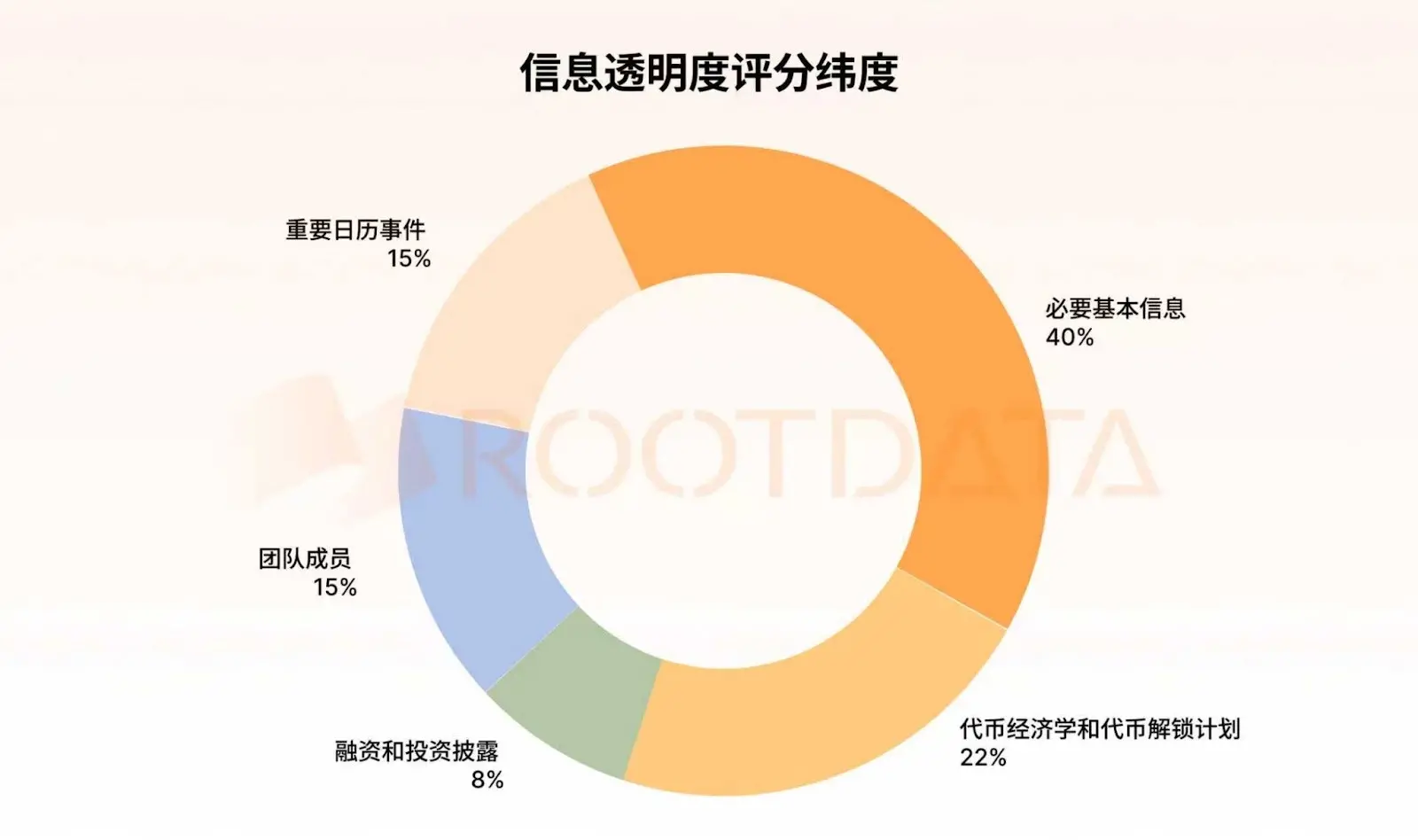
Specifically, the transparency score integrates multiple dimensions of data integrity and update frequency, covering project basic information, team background, financing background and amounts, token distribution and unlocking status, as well as project progress dynamics. Each dimension corresponds to whether the project has provided sufficient information to the market on key issues, rather than whether it has given a "good-looking" answer.

The core of this design idea lies in separating transparency from value judgment, making it an objective record of external behavior.

3. Powerful Accelerators and Stepping Stones

In practical application, the value of the transparency score does not lie in short-term price predictions but rather in the accumulation of long-term trust. For ordinary users, it provides a quick filtering mechanism to reduce exposure risks in projects with severely insufficient information or chronic failures, guiding more attention to projects with greater transparency and development potential, in conjunction with RootData's existing heat index and growth index.

For project teams, the transparency score represents a gradually accumulative external reputation and evaluation system. Continuously updating project progress and truthfully disclosing adjustments and delays may not immediately bring market heat, but it will significantly enhance the project's credibility at key nodes such as financing, cooperation, listing, marketing, or public opinion fluctuations, as well as in users' exploratory understanding.

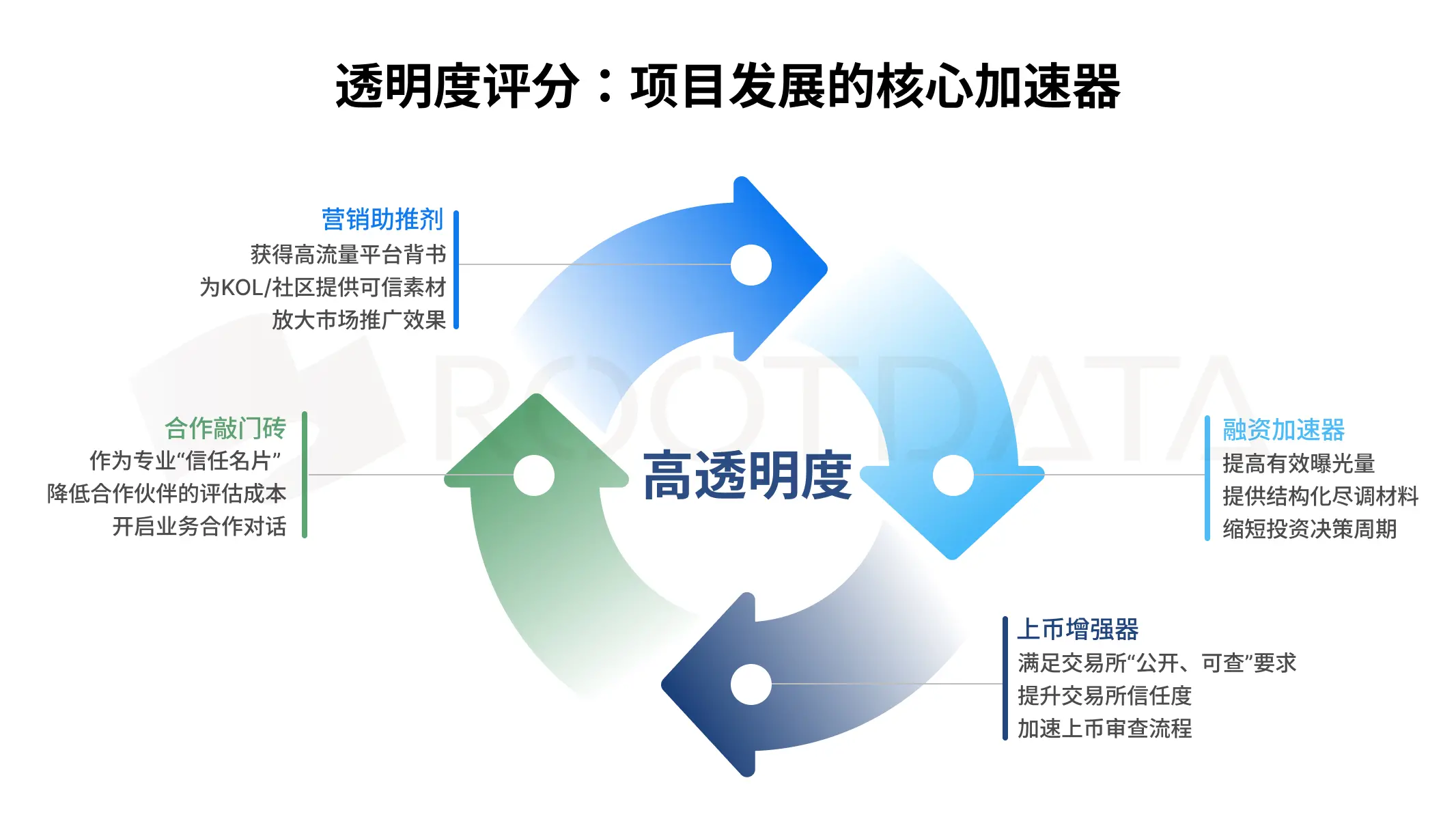
More specifically, the transparency score can be understood from the following four perspectives:

  1. Financing Accelerator: While increasing effective exposure, it provides structured and verifiable due diligence materials for investors, shortening decision-making cycles.

  2. Listing Enhancer: With comprehensive and verifiable data, it meets exchanges' core requirements for project information to be "public, searchable, and continuous," thereby accelerating the listing review process.

  3. Cooperation Stepping Stone: Using a professional and credible project display page as a business card, it provides transparent and structured information to potential partners (such as wallets, Launchpads, ecological funds, or other project teams), establishing initial trust and facilitating business cooperation communication.

  4. Marketing Booster: Through high-traffic exposure and endorsement from the platform, it attracts more community users and KOLs, providing reliable third-party verification materials for social media dissemination and influencer marketing, amplifying overall promotional effects.

In other words, maintaining a high transparency score is a high ROI strategic behavior. Project teams often only need to effectively improve their scores through simple data supplementation. For example, among projects with similar concepts in the same sector, those with higher transparency scores tend to receive faster responses and deeper negotiation opportunities when connecting with exchanges and leading VCs due to lower trust and communication costs.

Conversely, a low transparency score resulting from slow or stagnant long-term information updates means that the project's weight in the entire industry recognition network continues to decline, systematically losing market visibility, and this process is often slow but irreversible. In contrast, projects that can continuously disclose real progress, even at a slow pace, are more likely to re-enter the market's view and gain users' trust in subsequent stages.

In fact, RootData's project data has already become one of the reference sources for due diligence in listing on exchanges like Binance, and its data API has been adopted by hundreds of well-known industry clients such as Binance and OKX. This means that the influence of the information completeness and update frequency of projects on RootData is not only presented through the platform itself but is also amplified through its extensive partner network, directly correlating with its market promotion effects, making data transparency play an increasingly important role in the industry.

To align with this trend, RootData has officially launched a project claiming feature. Verified project team accounts can specifically maintain project data, significantly lowering the threshold and cycle for project teams to maintain their transparency. Meanwhile, any ordinary user can also provide feedback on information errors or untimely updates on project pages through the feedback button and receive reward points.

4. Transparency is No Longer Just an Add-On

As the cryptocurrency industry gradually enters a stage centered on products and users, the importance of transparency is being re-recognized. It is no longer an add-on but one of the fundamental conditions determining whether a project has long-term participation qualifications.

It can be expected that more and more investors and research institutions will regard project information disclosure and transparency as a fundamental metric in their internal evaluations. Meanwhile, exchanges, market makers, and third-party partners are increasingly relying on structured data rather than scattered information during the screening process. The logic is not complex: if a project cannot continuously explain its most basic development status to the outside, external participants are unlikely to have confidence in its long-term governance capabilities. Here, transparency is not a moral evaluation but a risk management tool.

In summary, the project transparency score launched by RootData is not intended to predict the future but to provide the market and users with an objective and clear scale to measure the current information state. In a market lacking unified disclosure standards and with high information barriers, this scale itself is becoming a scarce resource and playing an immeasurable role in the re-evaluation of the industry's value system.

The higher the market transparency, the more friendly it is to protecting the interests of ordinary users and investors, which in turn eliminates "garbage" projects from the market and rewards those that respect users and the spirit of Web3, promoting the healthy development of the industry.

In this context, every cryptocurrency project should take immediate action to incorporate transparency enhancement into substantive operational strategies, focusing on its image within user groups, seizing the initiative in competition with new dimensions and new metrics, and winning the preferences of exchanges, VCs, and users alike.

免责声明:本文章仅代表作者个人观点,不代表本平台的立场和观点。本文章仅供信息分享,不构成对任何人的任何投资建议。用户与作者之间的任何争议,与本平台无关。如网页中刊载的文章或图片涉及侵权,请提供相关的权利证明和身份证明发送邮件到support@aicoin.com,本平台相关工作人员将会进行核查。

Share To
APP

X

Telegram

Facebook

Reddit

CopyLink