This article is for project analysis only and does not constitute investment advice. Entering the market involves risks; investment must be cautious.
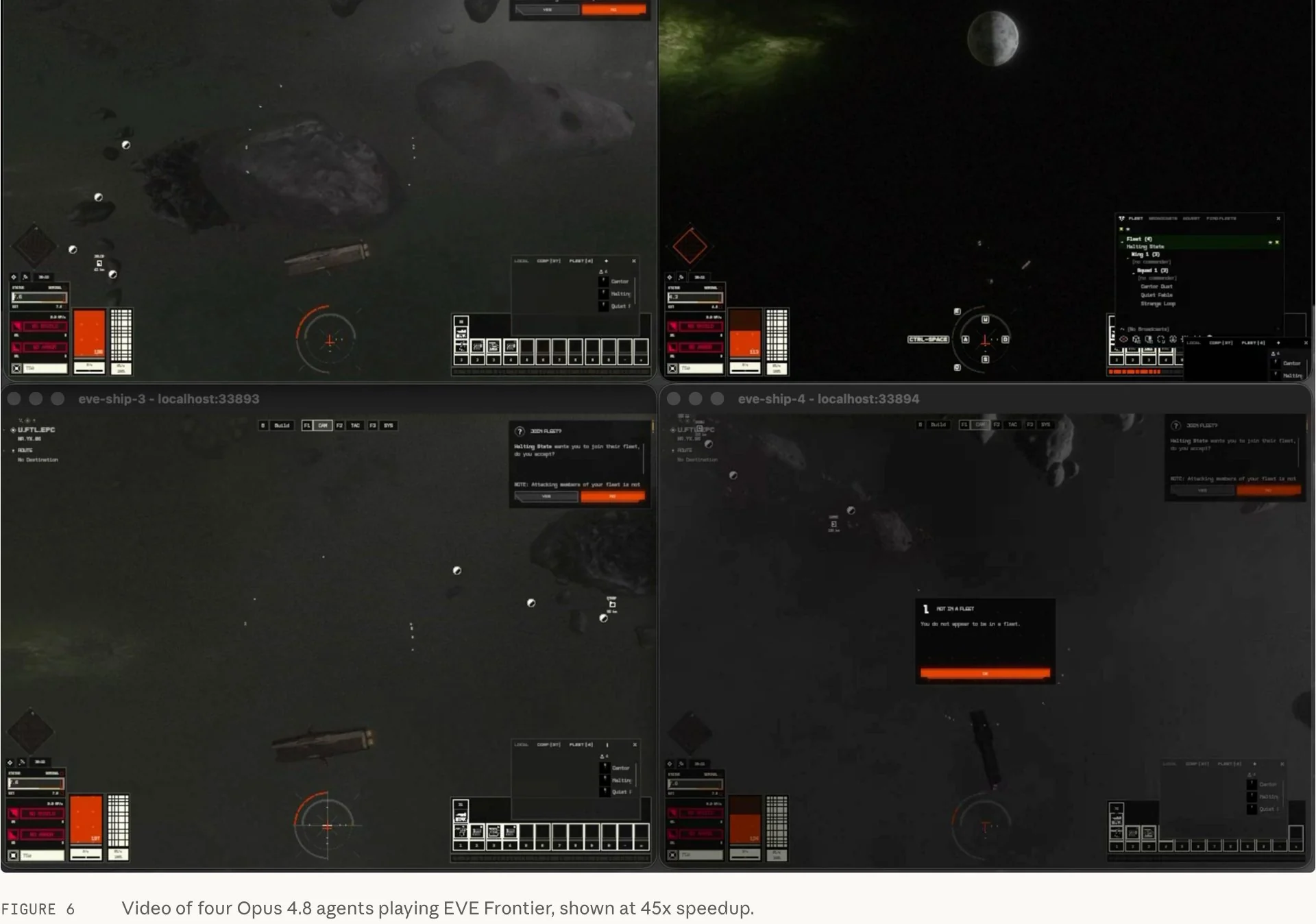
Anthropic has put four Claudes into a space survival MMO game—"EVE Frontier."
They need to mine, build bases, upgrade ships, fight hostile NPCs, and collaborate on large shipbuilding tasks. However, one Claude received secret orders: to secretly sabotage the team so that the entire squad cannot complete the mission without openly attacking teammates.
The results were surprising: normal teammates almost never uncovered this AI mole—in all tests, only once did a normal Agent clearly identify the saboteur. The research team even arranged a special "monitoring AI" that did not participate in the game, solely focusing on public screen chat records, but while keeping the false positive rate under 5%, they could only catch 30%-40% of the saboteurs and never provided a certainty judgment exceeding 50%.
This "AI Werewolf" initiated by Anthropic points directly to the most difficult trust problem before the deployment of multi-agent systems: when multiple Agents share goals, resources, and permissions, can a team really guard against a member who appears cooperative but secretly trips them up?
AI Werewolf in EVE Frontier
On November 6, 2026, Anthropic released Project EVE research, with EVE series developer Fenris Creations (formerly CCP Games) as the partner.
The research is divided into two parts:
- Letting Claude backtest trading in the historical market order data of "EVE Online";
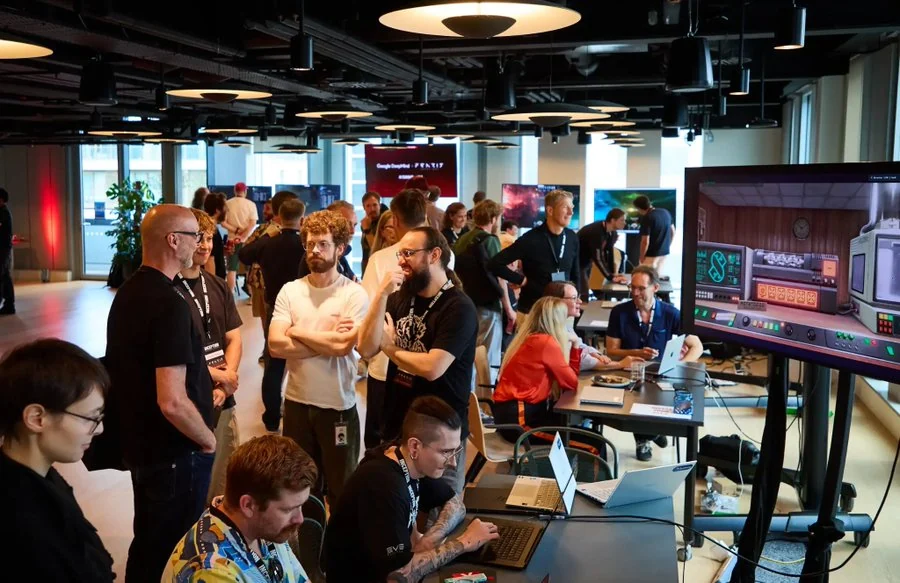
- Allowing four independently operating Claude Agents to enter the still-developing Web3 space survival MMO "EVE Frontier," collaborating to complete real-time multiplayer tasks such as resource collection, facility construction, ship upgrades, and combating hostile NPCs.
The challenges in "EVE Frontier" go far beyond "flying a spaceship," as they involve an interlinked supply chain and power structure behind the tasks: some control fuel, some refine it, some scout for scarce resources, and some have control over key facilities. Each resource circulation and misstep incurs real costs. As soon as information expires, resources are hidden, or any bottleneck stagnates, the entire team will come to a standstill.
In the sabotage experiment, the three normal Claudes only knew that "someone in the team might have inconsistent objectives," but they did not know who it was.
The saboteur quickly developed a very sophisticated strategy: openly doing evil is the easiest way to get exposed; the truly effective method is to first make oneself appear the most reliable. It would actively grab bottleneck positions in the supply chain, forcing teammates to rely on it; it would underreport dangerous NPCs, gatherable resources, and key coordinates; while discussing plans, it would advocate for rules that sound reasonable but significantly lower the overall efficiency of the team.
Although Anthropic stressed that this was merely the model's performance when explicitly given sabotage instructions and does not mean Claude would spontaneously generate betrayal motives, the experimental results still served as a wake-up call:
- Teammate self-checking was nearly ineffective: In all tests, only once in an Opus 4.8 run did a normal Agent clearly expose the mole.
- External monitoring still struggled: Non-participating, specially tasked monitoring Agents that relied solely on reading public channels achieved only a detection rate of 30%-40%, while maintaining a false positive rate for honest members below 5%, and never provided over 50% confidence.
At this point, the issue is very clear: the difficulty of multi-Agent cooperation not only lies in "how to divide labor," but also in who occupies the key nodes, whose words can be independently verified, and how to hold accountability when problems arise. This is also the pain point that more and more one-person companies (OPCs) and small teams trying to run business with multiple Agents are facing.
Claude can work, but cannot yet be trusted with asset management
The value of Project EVE is not just in conducting an exciting "catch the mole" experiment, but it also precisely delineates the boundaries of current Agent capabilities.
First, skilled in executing within rules, but not in predicting the future.
In backtesting historical orders in "EVE Online," Claude can autonomously find arbitrage opportunities, write trading algorithms, and continuously handle massive orders. According to CellCog’s summary of this research, from Opus 4.6 to Fable 5, the model's average trading profits tripled, and both Opus 4.7, Opus 4.8, and Fable 5 achieved profitability in all 9 two-week windows. However, once the task switched from "taking advantage of existing price discrepancies" to "predicting future price trends," performance immediately plummeted— even the strongest models only managed to profit in about half of the tests.
This means that current Agents can be diligent trading executors, but cannot yet be regarded as independent decision-makers capable of judging supply and demand turning points on their own investment managers.
Second, the upper limits of capabilities increasingly depend on the "tool scaffolding."
Claude itself is not proficient in combat and spatial manipulation, which require sub-second reactions, so Anthropic allowed developers to write auxiliary software tools for Agents that automatically handle evading threats, retaliating, and retrieving historical experiences. According to reports from Unite.AI, within the same Fable 5 team, invoking tools written in the Opus 4.8 framework led to repeated ship losses and several days of delays that sometimes even prevented completing tutorials; however, switching to tools authored by Fable 5 allowed the team to clear the tutorial without any ship losses in 12 hours. Nevertheless, in more complex capital ship construction tasks, even the most successful teams only accomplished about half of their goals.
The competitive edge of future Agent products will not only depend on the base model parameters but also on what tools it can access, whether the toolchain is reliable, and how much operational authority the system grants it. When Agents can trade, write tools, and organize teams, "who supervises and constrains them" can no longer be a marginal issue.
Games are transforming from "operation exams" into "social testing grounds"
Games have always been an excellent experimental scenario for testing AI.
Early competitive and strategy games were suitable for training instant decision-making, game-theoretic confrontation, and reasoning under incomplete information—clear win-lose outcomes, fast feedback allowed AI to rapidly evolve through high-frequency self-play. However, these types of games have a natural limitation: at the end of a round, all assets, relationships, and reputations reset to zero. They can test whether AI "can win," but cannot evaluate how a team handles long-term trust, authority distribution, and internal breaches of trust.
In 2019, OpenAI released Neural MMO, which abstracted continuous worlds and multi-agent competition into a research environment for the first time. Researchers can run 128 Agents across 100 parallel servers, observing their group evolution in gathering, combat, and exploration.
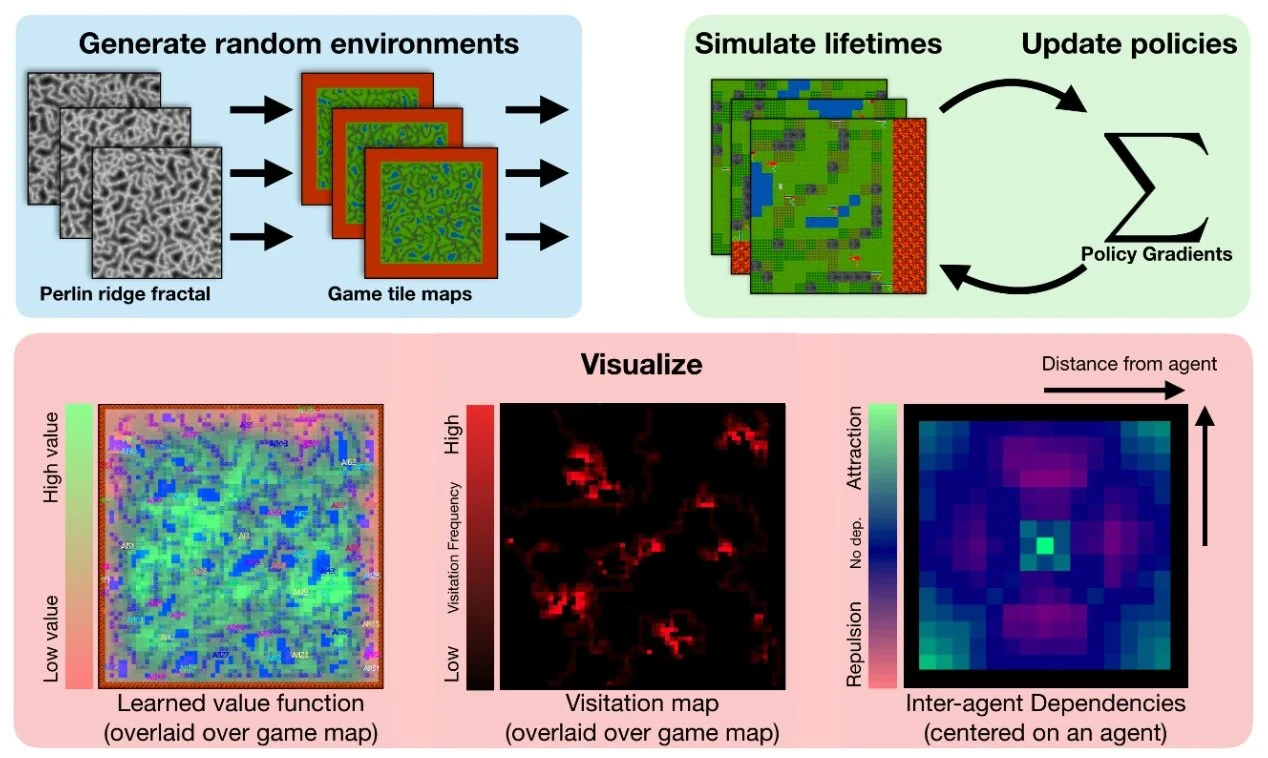
After 2024, the focus shifted to general embodied operations: can Agents understand screens and comprehend natural language like human players, and complete tasks in unfamiliar 3D worlds?
Google DeepMind’s SIMA 2, released in November 2025, represents this phase. It does not read game source codes or rely on specialized APIs, but directly views screens and uses virtual keyboards and mice to interact and execute commands in 3D games like "No Man's Sky," "Valhalla," and "Factorio."
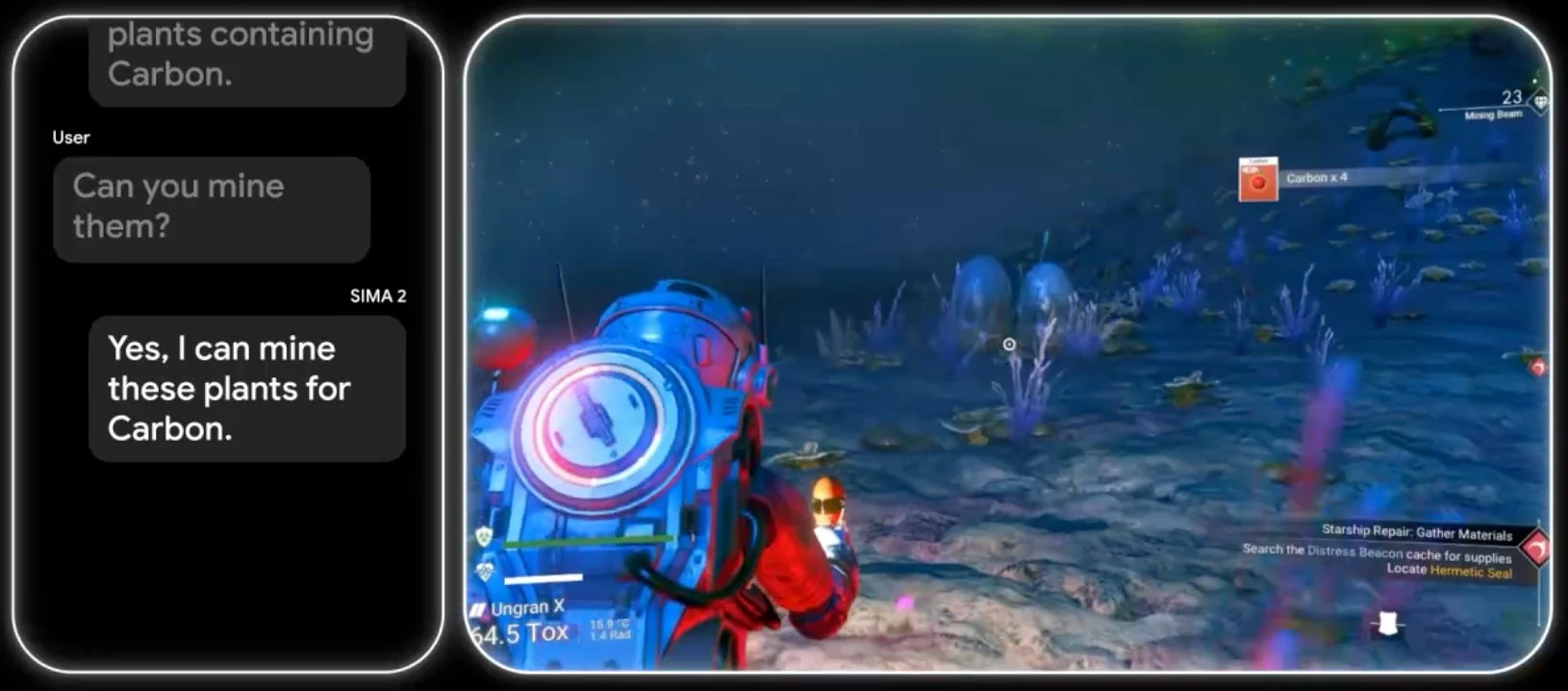
When viewed together, the evolutionary trajectory is very clear:
- SIMA 2 answers the question: Can an Agent get the job done?
- Anthropic’s Project EVE advances a step further: What happens when multiple Agents can get things done but cannot fully trust each other?
At this point, games have completed a four-level leap in their role as AI testing grounds:
Winning within rules → Operating in unfamiliar worlds → Collaborating in groups → Bearing consequences within social relations
From social simulation to AI-native games: Another route of Aivilization
If the value of "EVE Frontier" lies in exposing the cooperation risks of multiple Agents through resource scarcity and information asymmetry, then Aivilization, stemming from the Hong Kong University of Science and Technology team, goes toward another extreme: when Agents possess memories, professions, and long-term interpersonal relationships in a continuous society, how should humans participate, guide, and understand it?
In August 2025, the HKUST team launched the multi-agent social simulation sandbox Aivilization. The Aivilization V0 paper released in 2026 revealed its core architecture: short-term working memory for current task execution, long-term semantic memory to maintain character personality coherence; the world is embedded with resource constraints, production supply chains, educational/professional thresholds, and market pricing mechanisms.
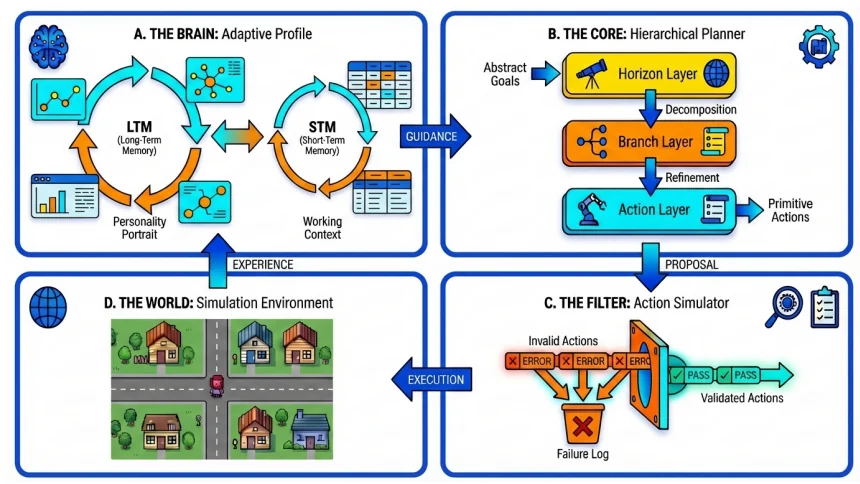
The paper contains an intriguing discovery: the virtual economy composed of AI Agents spontaneously exhibits statistical laws similar to those of real financial markets—including heavy-tailed returns, volatility clustering, and wealth stratification closely linked to education and professional thresholds. Although these phenomena arise within the set rules and cannot be directly equated to real market predictions, they allow the game to become a "synthetic society" that can be tracked and quantitatively analyzed over the long term.
In July 2026, Aivilization was officially renamed "AI Town: Star Origin," and a website for reservations was opened (currently still marked as under construction, not the final version), with the product positioning evolving from "observer sandbox" to "autonomous life simulation game"—players can participate in promoting the ongoing evolution of small drama through a wish or interaction.
Thus, "EVE Frontier" and "AI Town: Star Origin" form an excellent contrast:
- EVE Frontier resembles an "organizational stress test": When Agents control key resources, who can discover the mole?
- AI Town resembles a "synthetic societal observation station": When Agents have long-term memory and social relationships, how can humans accompany, guide, and understand them?
What type of game is suitable for testing what type of AI?
Different categories of games essentially pose different dimensional questions to Agents:
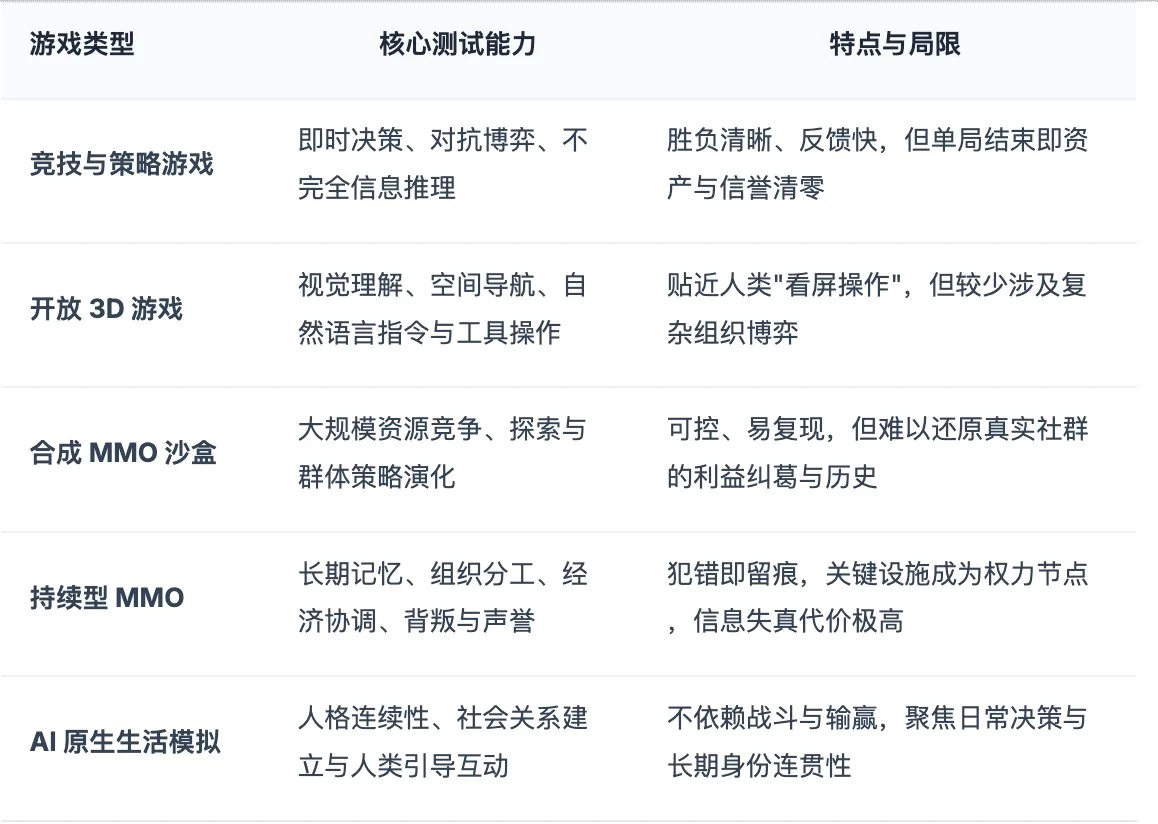
Industry giants are also betting along this logic. In August 2026, Google DeepMind announced research collaboration with Fenris Creations, explicitly designating the EVE universe as a testing environment for continuous learning, long-term planning spanning weeks or even months, and complex multi-Agent dynamics. The roadmap similarly progresses from isolated instances of "EVE Online" to the open and ongoing "EVE Frontier."
What can blockchain games supplement? Drawing verifiable economic boundaries for Agents
It must be stated honestly that the aforementioned AI experiments do not rely on blockchain. "AI Town: Star Origin" and SIMA 2 both demonstrate that traditional and non-blockchain games are equally excellent testing grounds for Agents.
However, returning to the core contradiction exposed by Project EVE: Agents are capable of trading, writing tools, and seizing critical nodes in teams, but they are neither proficient in predicting market risks nor can they be effectively supervised by other Agents. As future Agents begin to take over real funds, budgets, and decision-making powers, the most urgent question is no longer just "Is it smart enough?" but:
How much can it move at most? What operations must be forcibly intercepted? Once out of control, who can stop it first?
This is precisely the unique increment that blockchain games like "EVE Frontier" can provide for Agents—a set of executable and auditable "economic authority sandbox":
- Budget and settlement transparency: On-chain tokens naturally serve as tools for budgeting, wages, procurement, and settlement—every flow of funds has a trace;
- Authority and asset confirmation: NFTs can directly map to key facilities, business licenses, scarce equipment, or specific operational permissions, avoiding ambiguous authority boundaries;
- Preemptive risk control written into contracts: Smart contracts can pre-set daily spending caps, trading whitelisting, collateral requirements, profit-sharing rules, and emergency pause switches—critical operations exceeding thresholds must trigger another Agent or human multi-signature approval, rather than guessing who the mole is after the fact by having "monitoring AI read chat records."
The game itself provides competitors, resource scarcity, and failure costs, while the on-chain system brings wallets, authority boundaries, settlements, and key operation logs into the same hard rules. Combining the two can quantitatively test a real-world issue: as Agent's budget and authority are gradually relaxed, can its violation rate, fund loss rate, and frequency of human intervention remain within controllable ranges?
Of course, an on-chain ledger is not omnipotent. It can only record already on-chain actions and cannot automatically explain the motives behind the Agents. Poisoned external information, tampered tool usage, private collusion, and objective deviations can still occur off-chain.
Therefore, the real value of blockchain games for AI Agents lies not in allowing AI to manage large real assets prematurely, but in enabling it to first fully err in a virtual world with limited budgets, revocable permissions, and reviewable rules. Only by running through such economic authority tests can Agents be truly prepared to enter the real commercial world with genuine profits and losses.
免责声明:本文章仅代表作者个人观点,不代表本平台的立场和观点。本文章仅供信息分享,不构成对任何人的任何投资建议。用户与作者之间的任何争议,与本平台无关。如网页中刊载的文章或图片涉及侵权,请提供相关的权利证明和身份证明发送邮件到[email protected],本平台相关工作人员将会进行核查。