
Author: Heart of Computing Power
In the past week (as of November 18), stocks of Bitcoin mining companies have almost all fallen:
Of the 18 listed mining companies, 15 saw declines, with the median stock price dropping by 10% in one week.
The biggest drop was for Bitdeer (BTDR), which fell by 31.9% over the week.
IREN dropped by 23.4%. Only a few companies saw increases, with Cango (CANG) rising the most at 32.4% over the week.
Many people's first reaction is that Bitcoin has dropped, so mining stocks are also falling, which is quite normal.
This statement is not wrong, but it is only half true.
Over the past two years, mining companies have almost all been doing the same thing, shifting from mining Bitcoin to renting out AI computing power.
And this week, a critical link in this transition faced issues.
1. Coin prices drop, mining is no longer profitable
The reason everyone can see is that Bitcoin has dropped.
As of November 18, Bitcoin's price was approximately $64,377, having dropped 12.96% over the past seven days.
On October 6, 2025, Bitcoin reached an all-time high of $126,198, and now it has lost 49%, nearly half.
Looking only at November: at the beginning of the month, it was at $80,405, fell below $68,000 on November 13, and dropped another 6% on November 14.
The expectations of interest rate hikes have added further pressure. The latest inflation data is higher than expected, and the market believes the Federal Reserve will definitely raise rates in December, with traders assigning a 100% probability.
Federal Reserve Governor Waller even hinted that there might be a bigger increase in December.
Raising interest rates means borrowing money becomes more expensive, and mining companies particularly rely on loans to continuously buy equipment and build mining facilities, so their stock prices are especially sensitive to interest rate hikes.
With falling coin prices, the most direct consequence is that mining is becoming less and less profitable.
There is an industry metric called hashprice, which indicates how much money can be mined per 1 PH/s of computing power per day.
Currently, this number is about $33.3, and many mining machines can barely break even or even lose money at this income level.
JPMorgan calculated a figure:
A batch of high-cost miners has already shut down, and the industry cost of mining a single Bitcoin has dropped from $90,000 to about $78,000.
But even with the decrease, $78,000 is still higher than the current price of over $64,000. In simple terms, many mining companies are losing money on every Bitcoin they mine.
With mining becoming so difficult, mining companies need to find alternative pathways. The path they found is AI.
2. Mining companies are all going AI
Why is it AI?
Because mining companies happen to have the essential resources that AI companies lack: power, land, and facilities.
Both Bitcoin mining and running AI require a large amount of electricity and heat-dissipating facilities.
These mining companies already have them set up; they just need to replace the mining machines with Nvidia GPUs (which are AI chips) to rent computing power to AI companies and charge monthly rents.
This is much more stable than relying on fluctuating coin prices for mining.
The fastest transformation is IREN.
In the most recent quarter, its Bitcoin mining revenue fell by 58% compared to the previous quarter, down to only $28 million, while AI cloud business revenue rose by 182%, reaching $200 million, making up about 88% of the total quarterly revenue.
In other words, IREN is now basically no longer dependent on mining for survival.
Companies like Bitdeer, Core Scientific, and CleanSpark are doing the same thing: converting their original data centers and electricity into businesses renting out GPU computing power.
This transition is straightforward: mining companies have electricity and facilities, only needing GPUs.
The problem lies precisely with the GPUs: usable AI chips are mainly supplied by Nvidia, which is a U.S. company, and its sales are subject to U.S. government regulations regarding whom to sell to and where to sell.
This week, there were issues involving both Nvidia and the U.S. government.
3. The path to buying GPUs is blocked
According to reports, on November 12, Nvidia announced that founder Jensen Huang resigned from the positions of president, CEO, and board member due to being involved in an extramarital affair controversy (the other party was allegedly a Chinese spy), with CFO Colette Kress stepping in as temporary CEO.
On November 12, Nvidia's stock price fell more than 13% at some point during trading.
From the all-time high in early October, Nvidia's stock price has dropped by more than a third, falling nearly 17% this year alone.
However, Nvidia's business itself is doing very well.
After the market closed on November 17, Nvidia released its financial report: revenue of $115.8 billion, a year-on-year growth of 103%, with earnings per share of $2.68, all better than market expectations.
But there is a detail in the financial report worth noting:
In forecasting future performance, Nvidia estimated “zero revenue from data center computing power in China” and has stopped granting licenses to ship the Hopper chips to China.
In addition to Huang's situation, the market believes that the U.S. is now more closely monitoring the issue of “AI computing power flowing to China” than before.
The second matter directly affecting mining companies is as follows.
On November 16, the U.S. Department of Commerce’s Bureau of Industry and Security (BIS) released a temporary regulation: in the future, advanced chips exported from the U.S. to Brazil, Indonesia, Malaysia, Singapore, Thailand, or re-exported from these countries will require prior approval from the U.S. government.
The reason is that the risk of chips being transferred in these countries is “higher than normal levels.”
This regulation also specifically closed a loophole. Previously, some companies did not directly purchase chips, but instead remotely rented U.S.-based AI computing power from data centers in third countries; now such “remote calls” are also being regulated.
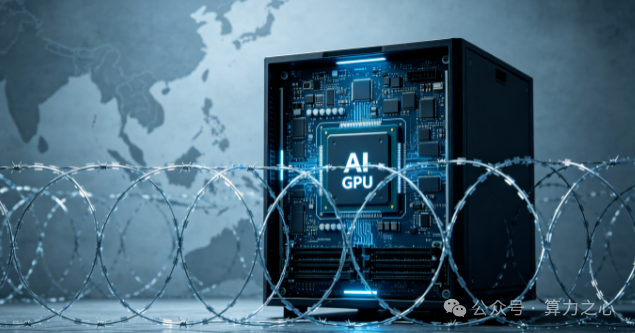
The BIS's enforcement guidance also provided an example: “When a Chinese parent company procures Nvidia H200 servers through its Singapore subsidiary,” it was directly listed as a high-risk situation.
In simple terms, the path of “setting up a company in Southeast Asia, buying American chips and engaging in AI computing power business” is now more tightly restricted.
However, some mining companies with Chinese backgrounds pivoting to AI happen to be following this path, with Bitdeer being the most typical example.
4. Why Bitdeer fell the most
While the sector's median dropped 10%, Bitdeer fell by 31.9%, over three times the median. The reason is that several factors have simultaneously affected it.
First, it just happens to be in a location that has been explicitly mentioned.
Bitdeer's headquarters is in Singapore, and its founder is Jihan Wu, a co-founder of Bitmain, with data centers distributed in the U.S., Norway, Bhutan, and Malaysia.
Both Singapore and Malaysia are on BIS’s new list.
The Chinese background of Bitmain is precisely what the U.S. is currently paying the most attention to.
In the future, whether it is purchasing Nvidia GPUs or renting computing power to clients, it may be affected by the new regulations.
Second, its most recent performance report does not look good.
On November 10, Bitdeer released its third-quarter report: revenue of $320.7 million, a year-on-year increase of 89%, setting a new record, which is indeed good.
However, losses also hit a new high: the net loss expanded from $30.1 million in the same period last year to $125.5 million, more than four times last year's figure.
The gross margin dropped from 23.4% in the same period last year to 3.4%; selling something for $100 leaves only $3.4 after deducting direct costs.
The quarter also saw a book loss on digital asset loans of $54.6 million.
After the financial report was released, analysts quickly downgraded their target prices: Barclays dropped from $17 to $14, Northland from $23 to $14, and Needham from $20 to $18.
Third, it does not have ample cash on hand.
Transitioning to AI consumes a lot of money, needing to buy a large number of GPUs and renovate facilities. For this, Bitdeer has already issued more than $1.5 billion in convertible bonds and has repeatedly issued stock for financing.
With a large amount of debt and diluted shares, once the purchase of GPUs becomes restricted and borrowing money turns more expensive, its ability to withstand these pressures becomes very limited.
With several factors colliding: on November 12, Bitdeer fell 12.8% in a single day; on November 13, it fell another 8.65%, with the stock price nearing the 52-week low of $5.03, having dropped more than 60% compared to the 52-week high of $20.72.
Just recently, it spoke of a growth story involving “$2.9 billion AI cloud orders and 3.1GW power planning.”
Comparing it to the other two companies makes the situation clearer.
IREN also dropped 23.4% this week; the reason is that Microsoft adjusted its infrastructure plans, delaying IREN's originally projected annual revenue target of $4 billion to early 2027.
However, IREN is in North America, with Microsoft as its major client; its issue is “a slow progress,” not “a blocked path.”
Cango is, conversely, moving in the opposite direction. It started to cut back earlier: selling Bitcoin to pay down debts and lowering mining costs.
Thus, during this significant sector drop, capital has instead flowed to it, and it gained 32.4% over the week.
Bitdeer's predicament is that its location and background coincidentally collided with the new regulations, without having the significant orders like IREN to support it, nor had it reduced its debt like Cango did in advance.
▌▌▌▌▌▌▌▌▌▌
Moving forward, whether mining company stocks can stop falling mainly depends on three things:
First, whether Bitcoin can hold the $64,000 level; if it breaks below $62,000, it may revisit the low point of November 15;
Second, whether Nvidia’s better-than-expected financial results, coupled with the raised growth forecast for fiscal year 2028, can restore market confidence in AI computing power;
Third, whether the implementation of the BIS's new regulations will be more lenient or strict.
Another point worth noting.
The AI computing power business is still growing rapidly, but it is uncertain how much of this growth can be allocated to companies with Chinese backgrounds.
In the past, the market looked at mining companies transitioning to AI, primarily based on how much electricity they had.
After this week, everyone might also want to ask, “To whom can you sell your computing power in compliance?”
免责声明:本文章仅代表作者个人观点,不代表本平台的立场和观点。本文章仅供信息分享,不构成对任何人的任何投资建议。用户与作者之间的任何争议,与本平台无关。如网页中刊载的文章或图片涉及侵权,请提供相关的权利证明和身份证明发送邮件到[email protected],本平台相关工作人员将会进行核查。


