
Author: Google Threat Intelligence Group (GTIG)
Translation: Deep Tide TechFlow
Deep Tide Introduction: The balance of offense and defense in cyber operations is being completely disrupted by the autonomy of generative AI. The latest global tracking report released by the Google Threat Intelligence Group (GTIG) indicates that hackers have officially surpassed the "basic stage of simply asking AI questions" and have fully upgraded to end-to-end fully automated cyber weapons driven by multi-agent collaboration.
In the latest disclosed practical intrusion, attackers deployed an automated vulnerability mining pipeline based on an open-source multi-agent framework, directly converting an official PHP security patch just released into weaponized attack code, and initiated automated penetration and data theft against French government and commercial websites within a very short time.
This article provides a panoramic recap of the evolution timeline of the multi-agent penetration framework, the hacker's black market resale of cloud-based large model computing power (LLMJacking) ecosystem, and how frontline defenders are reconstructing automated security defenses in the agent era.
Executive Summary: Attackers Officially Enter the Autonomous Multi-Agent Era
As hacker organizations accelerate their shift from basic prompt questioning to deploying fully autonomous agent workflows, the tactical application of generative artificial intelligence (GenAI) in real-world cyberattacks has reached a significant turning point.
GTIG, based on Mandiant's frontline emergency response practices and global telemetry data, summarizes the five core evolution trends of global AI threats over the past quarter:
Shift to Autonomous Workflow and Multi-Agent Framework: Attackers are not only using large language models (LLM) as productivity assistance tools but have also begun to integrate fully autonomous execution agents to coordinate concurrent execution of reconnaissance, code auditing, and vulnerability exploitation across multiple models.
Automated Vulnerability Mining and Patch Reverse Engineering: Hackers are leveraging large models to systematically analyze the latest security patches released and reverse-engineering vulnerability triggering logic within hours, effectively ending the defense side's patch window.
Computational Power Hijacking and AI Credential Monetization (LLMJacking): Profit-driven cybercriminals are widely invading enterprise cloud environments, stealing high-value LLM API keys and computational power quotas, and reselling them on the dark web at a discount.
End-to-End Automation of False Cognition Warfare (IO): National-level hackers and commercial public opinion warfare contractors have deeply integrated large models into their troll matrices, achieving fully automated registration of fake accounts, generating realistic life photos, and targeted information delivery tailored for thousands of users.
Targeted Penetration Against Cryptocurrency and High-Tech Enterprises: North Korean and hackers with specific backgrounds are extensively abusing AI resume and voice forgery tools to impersonate job seekers, generating answers in real-time during technical interviews, and implementing deep supply chain poisoning after employment.
Multi-Agent Framework in Cyber Intrusions
In previous tracking studies, GTIG primarily documented small-scale experimentation with LLMs by hackers; however, the current engineering adoption of autonomous multi-agent frameworks by attackers marks the formal transition of cyber warfare into scalable autonomous collaboration.
The core paradigm of this attack framework lies in introducing the classic OODA (Observe, Orient, Decide, Act) operational loop, where a controlling agent assigns tasks, and specialized sub-agents concurrently execute network topology sniffing, fingerprinting, script writing, and lateral movement.
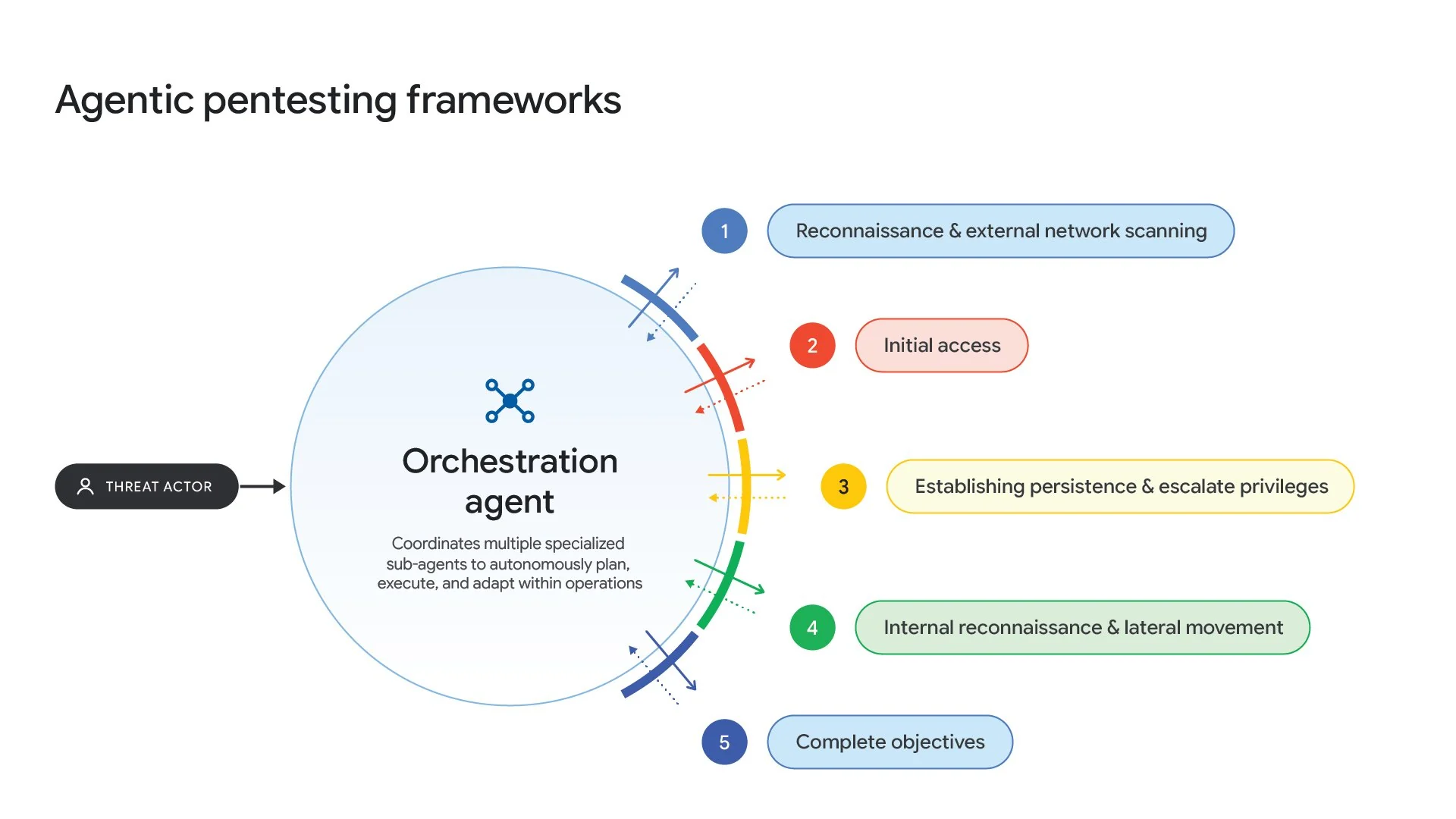
Figure: Multi-Agent LLM Offensive Framework Collaborative Execution Process
Apart from the recently controversial penetration testing tool ARTEX in the security community, GTIG has independently captured multiple open-source offensive agents directly used by attackers for frontline intrusions:
• CAIRN: An open-source multi-agent penetration testing framework based on the OODA loop, capable of autonomously scanning unprotected internal hosts and dynamically generating exploits without human intervention.
• CyberStrikeAI: An offensive framework natively designed for LLMs, equipped with sub-agents specifically responsible for maintaining permissions and credential theft.
• HexStrike AI: An active offensive tool deeply integrated with Model Context Protocol (MCP) that can seamlessly bridge various hacker penetration command lines to commercial large models.
• PentAGI: An automated tool aimed at significantly lowering the technical barrier for hacking, allowing even beginner script kiddies without a complete understanding of the underlying vulnerability principles to issue complex intrusion commands.
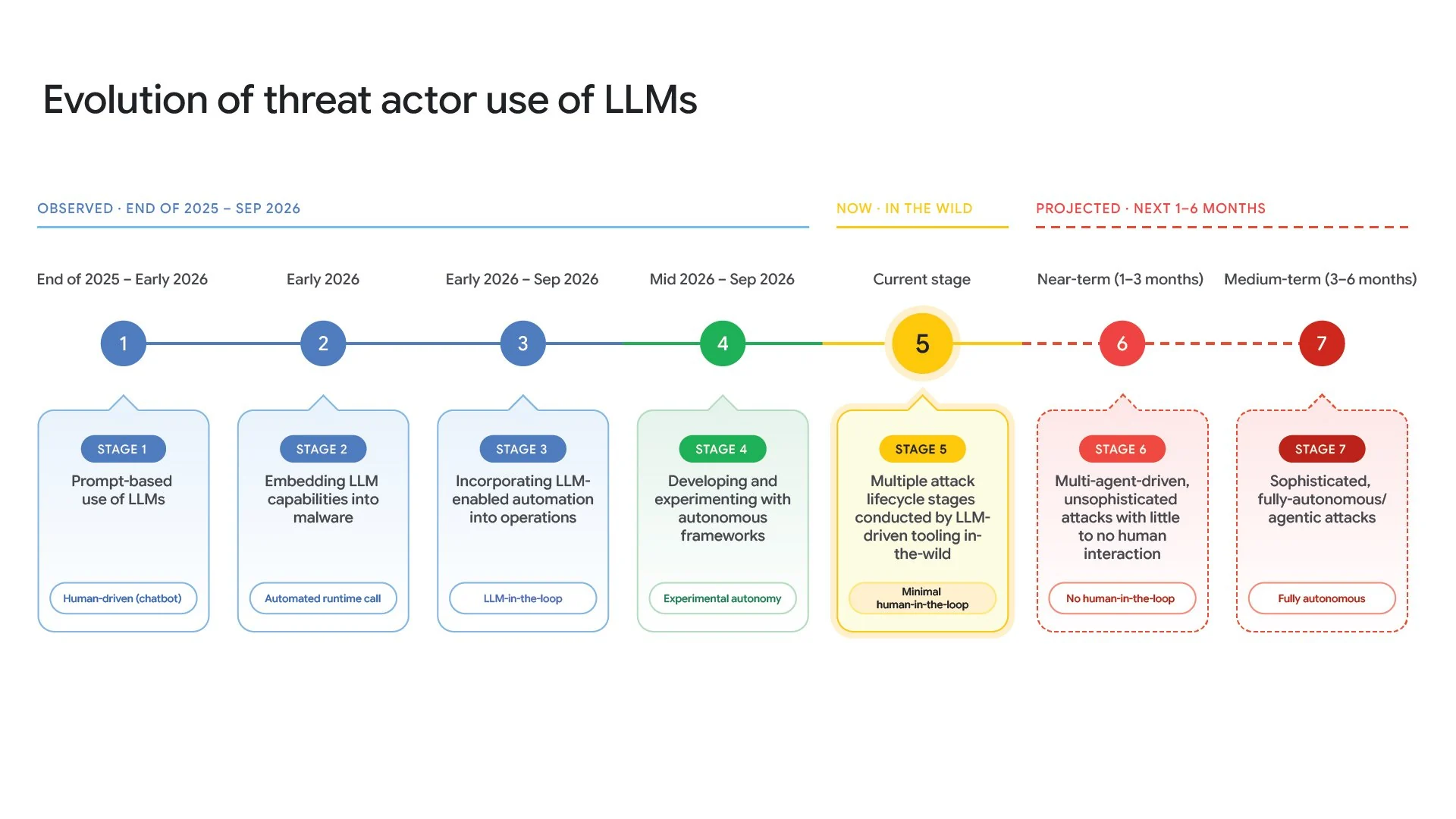
Figure: Roadmap of LLM Maturity Evolution in Real World Cyber Offense and Defense
Using Agents for Vulnerability Research and Development: Turning Patches into Attacks
The most concerning practical threat of multi-agent technology is that it compresses the time required for vulnerability mining and weaponization development from days to minutes.
Attackers automatically scrape official open-source patch code from GitHub and feed it to code analysis agents, allowing the models to compare code diffs in real-time and accurately identify the underlying defect logic of patches that have not been widely installed.
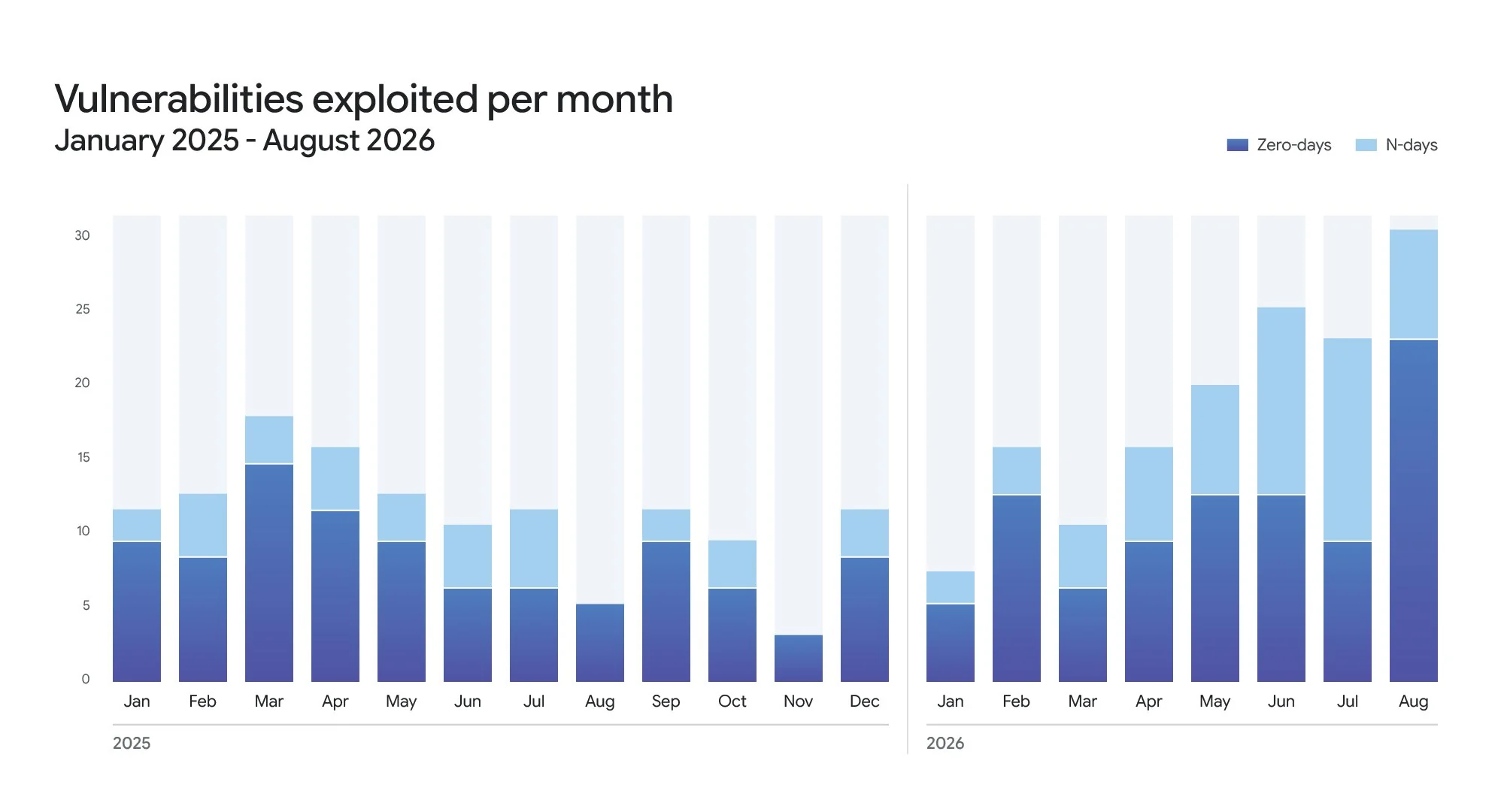
Figure: Comparison of N-Day and 0-Day Vulnerabilities Exploited by Hackers in the Wild from 2024 to Present
In the latest resolved real security event, GTIG tracked and captured an attack staging server publicly exposed on the internet. This server deployed a fully automated vulnerability mining framework based on LLMs, with the code comments prominently featuring Russian developer logs:
LLM API Key Used for Automated Vulnerability Exploit (exploit_agent Pilot Project)
Must manually enter the key into environment variables, do not input into public chat windows; both configuration lines are required fields
This hacker organization (codenamed Emad) used this framework to carry out fully automated reverse compilation against the recently disclosed PHP core vulnerabilities (CVE-2026-109618 and CVE-2026-109619) and generated practical attack payloads within hours after the patch was released. Subsequently, this automated cluster launched a large-scale indiscriminate credential stuffing probe against multiple European government and commercial portal websites, successfully stealing sensitive foundational data.
Computational Power Hijacking (LLMJacking): How Hackers Monetize Stolen Large Model Cloud Resources
With enterprises fully migrating to the cloud and the proliferation of generative AI infrastructures, the harm of stolen cloud credentials is rapidly spreading to the computational power layer of models.
Mandiant's frontline team has recently dealt with several new types of black market cases known as "LLMJacking." After hacking into enterprise AWS or Google Cloud environments, hackers no longer prefer to deploy mining trojans but instead rapidly activate their victims' access to top-tier large model APIs.
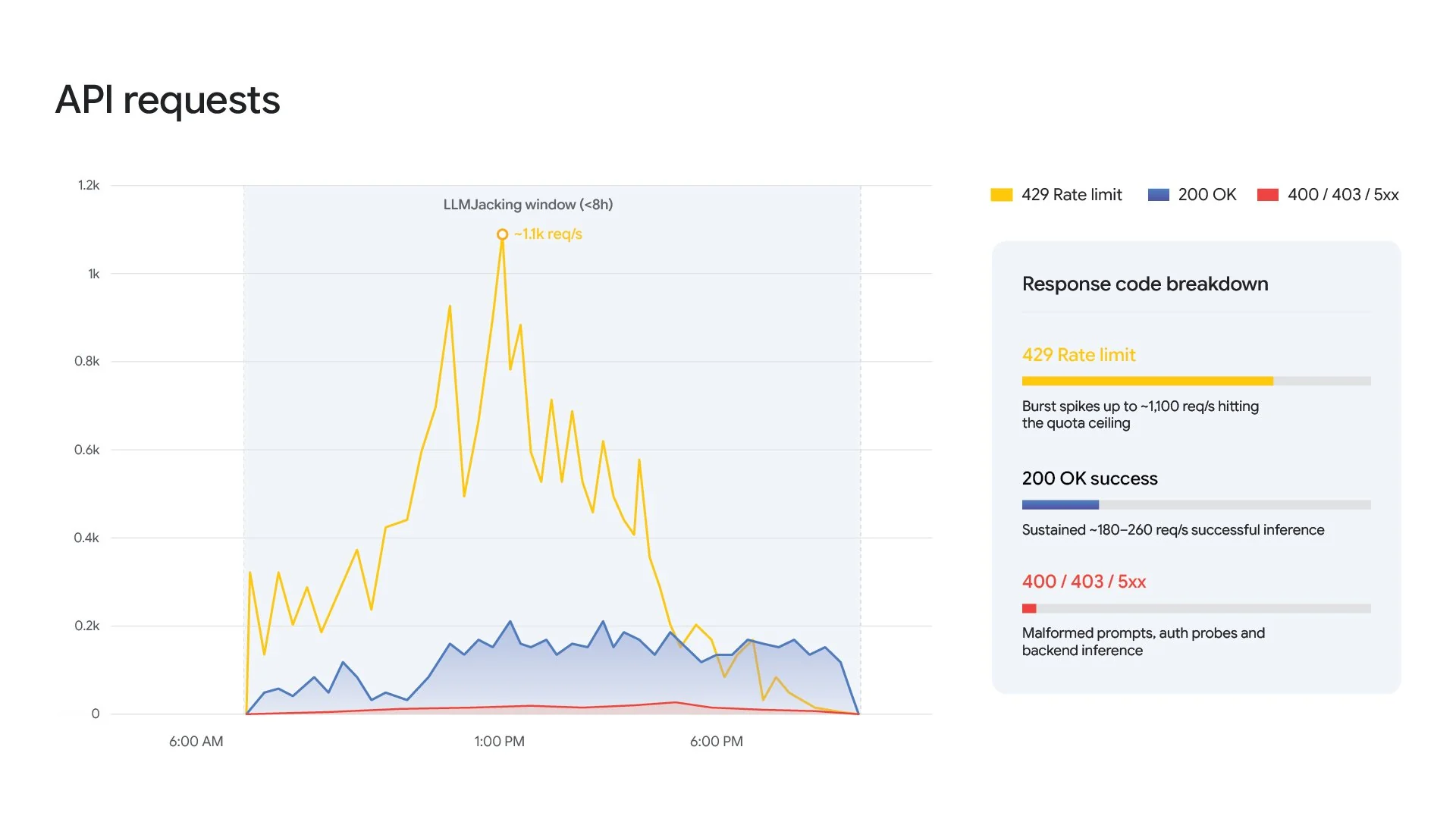
Figure: Victim Enterprises Experience Catastrophic Surge in Large Model API Calls Due to LLMJacking
Hackers create covert IAM roles and service accounts within the enterprise using stolen administrator credentials, and subsequently connect to dark web "LLM Mixing Service Gateways (LLM Mixer)."
Numerous illegal resale platforms like APIMart have emerged in the dark web underground market. Hackers resell stolen legitimate commercial large model APIs at merely 20% to 30% of the official price to other cybercriminals. The victim enterprises face not only potential data leaks but also have to pay hefty bills amounting to hundreds of thousands of dollars each month for the hackers' frenzied usage.
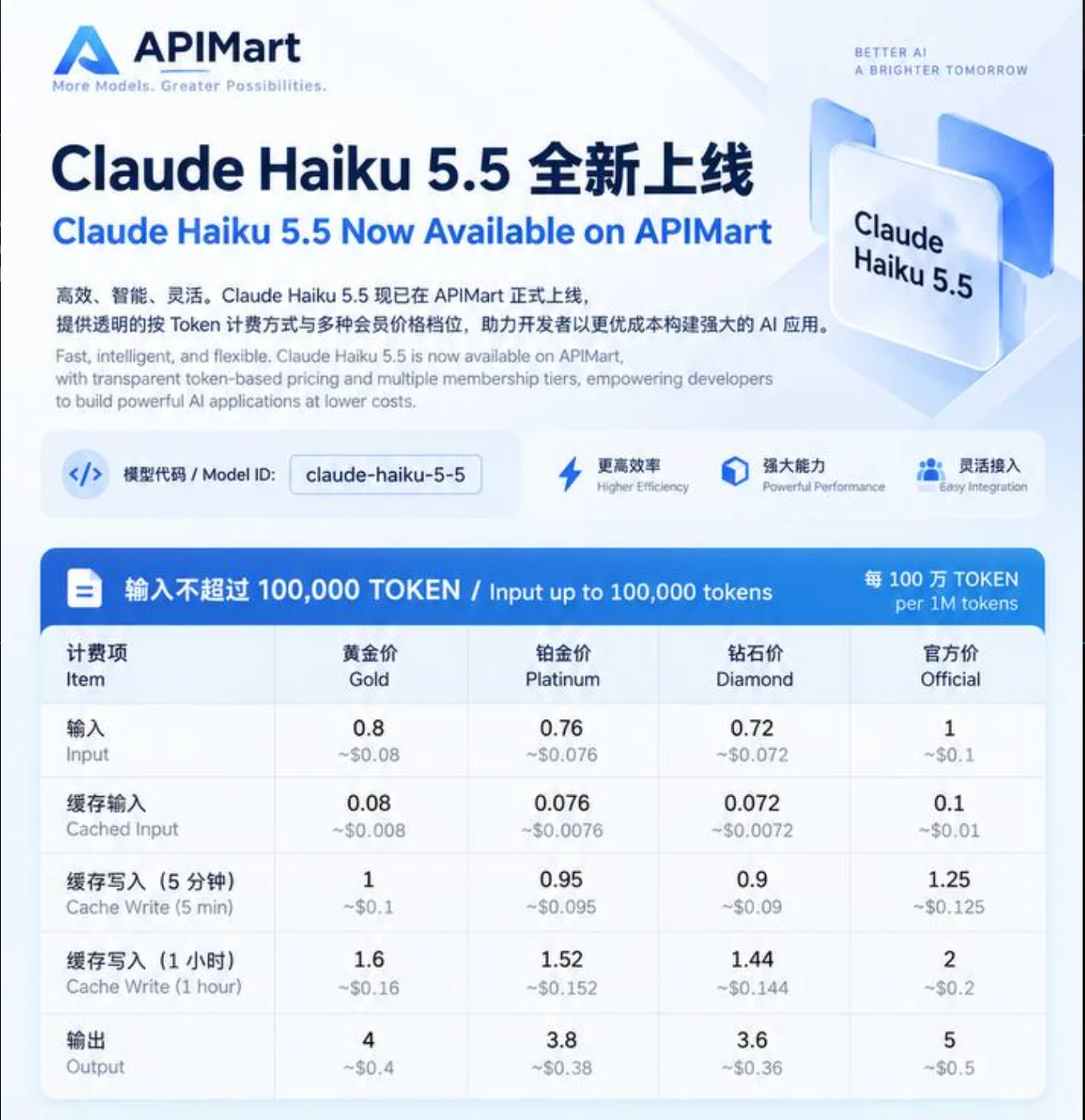
Figure: Real-time Pricing of Stolen Commercial Large Model API on Dark Web Illegal Platform APIMart
Large Models Fully Integrated into Misinformation and Public Opinion Warfare
In the field of cognitive warfare and online trolls, LLMs have become the core lever disrupting the cost structure of traditional troll studios.
Commercialized "Influence as a Service (IaaS)" black market gangs have developed out-of-the-box automated public sentiment manipulation systems. These systems automatically match fake accounts with toned voices and local dialects of segmented audiences, even deliberately adding slight lens noise, defocus, and angle tilting when generating images through diffusion models, simulating ordinary smartphone snapshots to easily bypass mainstream social media AI authentication algorithms.
At the same time, to evade IP bans on social platforms, the orchestrating gangs route traffic through globally distributed residential proxy networks, combined with batch automated disposable phone number sign-ups, creating a completely decentralized and readily renewable bot trolling matrix.
Google's Proactive Security Defense and Ecosystem Reinforcement
In the face of the increasing challenges posed by weaponized agents, Google is fully utilizing frontline threat intelligence to enhance its foundational security, constructing multi-layered proactive defense:
Real-time Model Fortification and Adversarial Sample Immunity: The latest hacker prompts and multi-agent attack logic captured in the wild by Mandiant are promptly embedded into adversarial training datasets for Google DeepMind and security teams, obstructing the models from responding to malicious codes and penetration commands at their core.
Google AI Threat Tracker Threat Tracking Platform: Provides global enterprise customers with real-time malicious behavior monitoring and anomaly warnings for agents, enabling instant blocking of unauthorized LLMJacking anomalous traffic.
Security Operations Automation (SecOps): Deploys specialized agent behavior monitoring models in the cloud security center to use AI against AI, precisely identifying the latent traces of autonomous malware from network communication topologies and system call sequences.
免责声明:本文章仅代表作者个人观点,不代表本平台的立场和观点。本文章仅供信息分享,不构成对任何人的任何投资建议。用户与作者之间的任何争议,与本平台无关。如网页中刊载的文章或图片涉及侵权,请提供相关的权利证明和身份证明发送邮件到[email protected],本平台相关工作人员将会进行核查。


