Author: QbitAI
Set some unreasonable goals, and then tell the model: This is very reasonable!
This is a small AI usage tip shared by Felix Rieseberg, head of the desktop version of Claude Code.
How to do it specifically?
Suppose you want to compress the website loading time from 10 seconds to 5 seconds, he suggests:Set the target directly to 0.2 seconds.
The model says it's impossible? Then continue to tell it: This problem can definitely be solved, try again, try again.
In Felix's view, we can be bolder when assigning tasks to AI.
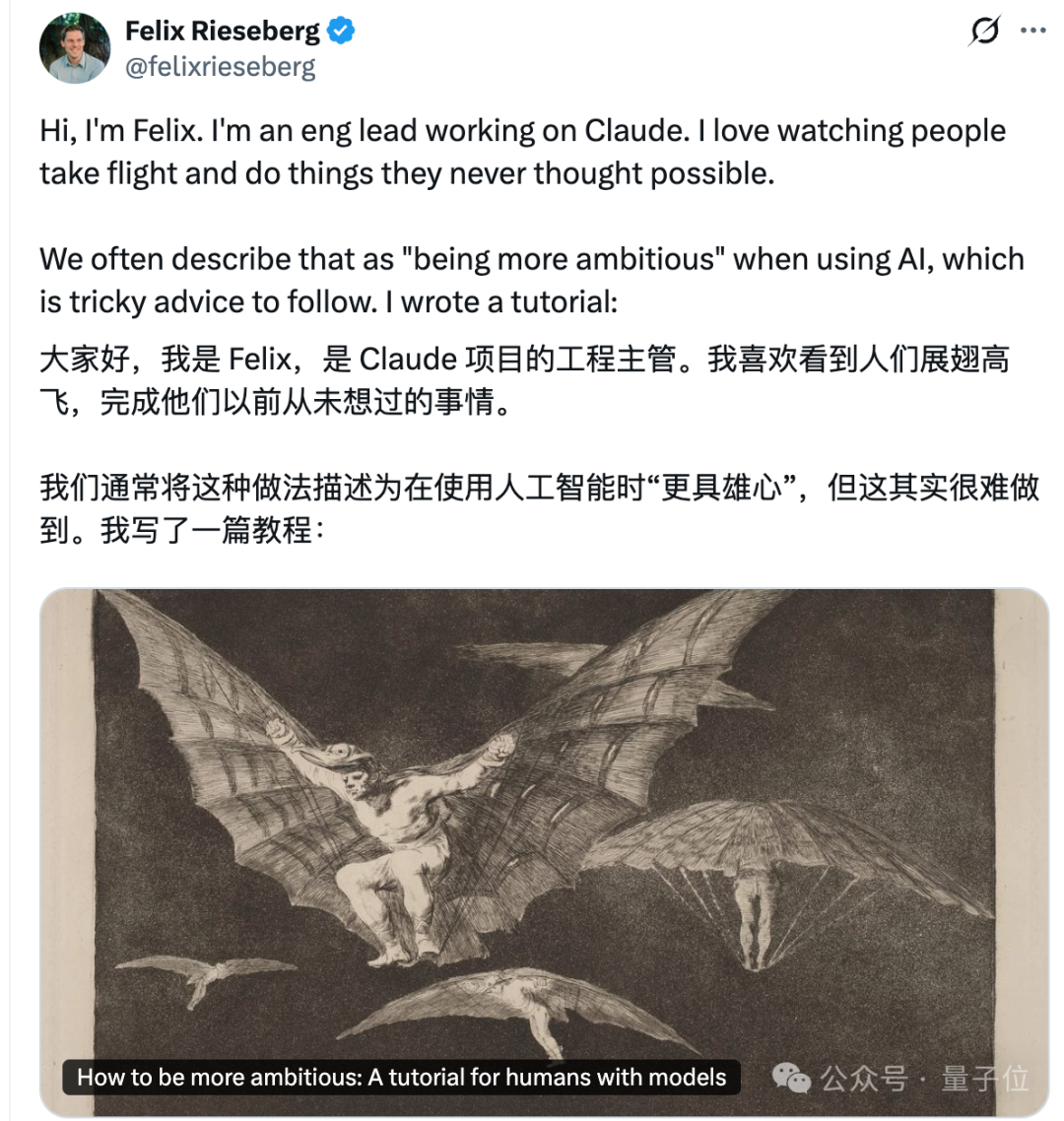
He also shared a little tip: Change the nouns in the tasks to verbs.
For example, the original task is "Create a report PPT," which can be rephrased as:
Within 30 minutes, convince a group of busy people of your explanation of the cause-and-effect of the matter and make decisions when the situation is still unclear.
Besides deliberately setting aggressive goals, he also provided several specific practices:
Don’t just let AI "think like an expert". Then follow up with: What original materials would real experts refer to, what tools would they use, what methods would they adopt, and write these requirements into the task.
Don’t take your own judgments as answers. Hand it over to AI for verification, allowing AI to go back to the original materials, looking for evidence that supports it, as well as counterexamples that may overturn it.
Don’t let AI evaluate itself. Code runs as it actually does, predicting results verified with new data, ultimately letting the real results speak.

The following is Felix's detailed tutorial on using Claude, polished.
Enjoy~
Using AI, we can be more ambitious
I work in the Claude team.
The interesting thing about this job is that I learn almost every day that another task has been accomplished using Claude—even independently by Claude.
Some tasks I never thought of, some I originally thought were impossible; others I simply didn’t have the curiosity or time to try them myself.
This month alone, Claude may have assisted in discovering a new planet; I saw the first AI music video I actually liked; we even began discussing whether a new era of mathematics is approaching.
The capabilities of the model do not progress uniformly. As Terence Tao said, they are "amazing in some directions but still lacking in others."
Some people have already learned to harness the model's amazing abilities, almost as if they are truly flying. Watching them reach such heights with the product I crafted is genuinely fascinating.
Many others are still exploring how to make good use of this newly sprouted set of wings. They are still pondering: Besides answering "What is the capital of France?" or "Can you soften the tone of this email?", what else can AI do?
Many AI practitioners and I often repeat a phrase:With AI, we should be a bit more ambitious.
This phrase has almost become our rallying cry. Whenever we see astonishing results, we share them with a note: "We are still not ambitious enough."
I also know that it is easy to say this, but quite difficult to actually do it. So, here is a tutorial on "How to be more ambitious".
I categorize ambition into four types:Speed, height, depth, and breadth.
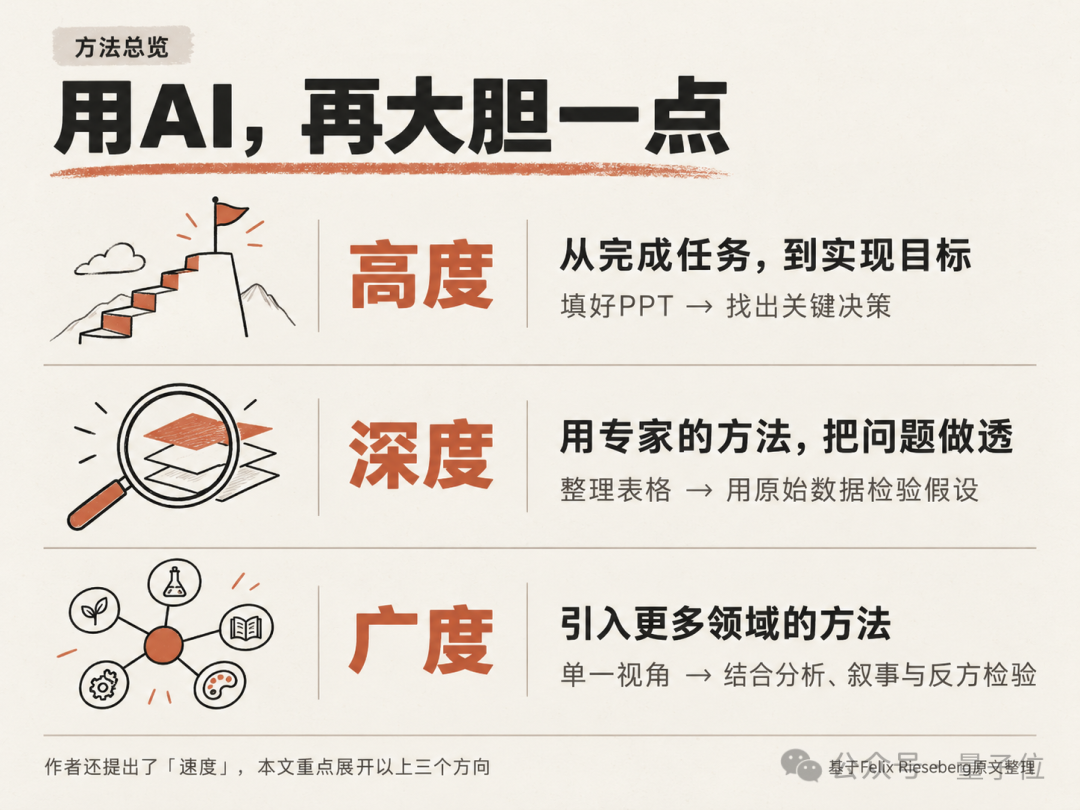
△AI Generation
Speed: Complete the same work in less time. This is the most basic way AI creates economic value.
For example, when writing a piece of code, with Claude’s help, I can finish it faster. This usage is already quite mature and does not require thought about more complex methods, so I’ll skip it here.
Height: Raise the abstract level of the tasks, focusing on the ultimate results desired rather than individual specific tasks.
Depth: Think about tasks like top experts, further delving into the underlying data, tools, and problems.
Breadth: Look for problem-solving ideas from multiple fields and utilize knowledge, tools, and methods that you wouldn't normally encounter.
Although I primarily use Claude, these suggestions are not targeted at a specific model.
Height: Let the model work at a higher abstract level
We often casually refer to this practice as "Letting the model work at a higher abstract level." When you assign tasks to the model, it is essentially executing your optimal conception of how to achieve the expected results.
If you want to think from a higher dimension, consider asking yourself—next, what do you hope will happen? What is the goal behind the goal?
At the beginning of last year, I had Claude help me fix a single program crashing issue, later I directly asked it to ensure our application remains crash-free at all times.
Let’s look at a routine office task (forgive me, it’s even a bit dull).
Suppose you're at Acme Company and need to prepare a PPT for quarterly business review (QBR). Given Claude a bunch of data, it would be happy to help you produce it; perhaps you already have a template, and it just needs to fill in the content.
This can't compare to discovering a new planet. But for preparing a quarterly report, what else can we get AI to do? We can start from the most basic requirements and gradually raise the ambition:
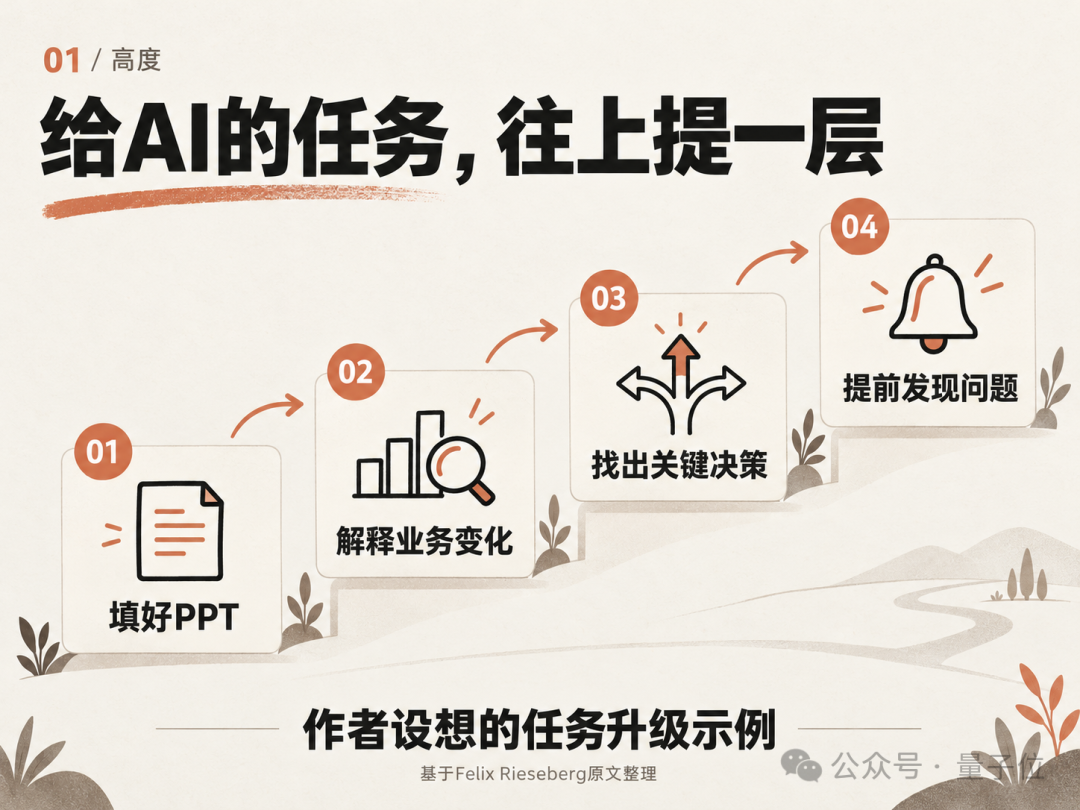
△AI Generation
First step, let it understand what happened in the business.
Most reviews need to answer these questions: What changes occurred this quarter? Why? What should be done next?
If you only want to update the numbers in the template, resist that impulse—provide as much data as you can to the model, allowing it to truly understand your business, and then ask it:
Tell me what changes occurred this quarter, why they happened, and what actions we should take.
Second step, let it identify the decisions that need to be made.
A meeting—at least a good meeting—ideally ends with certain decisions. You could ask Claude like this:
Based on everything you know, identify the three most urgent decisions at the moment, analyze possible courses of action, and list the reasons for and against each one.
Third step, let it redesign this working mechanism.
In the past, to conduct a quarterly business review, humans had to carefully sift through data, understand the meaning of the data, and then judge whether the business needed adjustment.
Now, you can try asking Claude:
The purpose of a review is to allow management to identify problems as early as possible and to allocate resources and personnel to the right places.
Please design a better implementation method than quarterly PPT, proving with our own historical data what problems could have been identified earlier, and have it run parallel with the existing method for a quarter.
When you are genuinely pursuing a specific final result, raising the goal level is most effective; but in terms of creative tasks, its applicability is relatively limited.
A good signal to judge is: If what you are doing requires a follow-up meeting for discussion, then it is worth elevating the goal further.
Of course, limitations still exist—at least in 2026, just saying "Claude, go make money," seems still unable to make things run automatically for most enterprises.
However, my overall observation is: As capabilities enhance, models seem to be increasingly able to work at higher abstract levels.
Raising the goal level can also help people find sustainable workflows that require no continuous human intervention, so you don't have to keep assigning new tasks to the model one by one.
To do this well, it often requires changing the existing workflow.
For instance, to ensure Claude keeps our application from crashing, I first need to enable it to conveniently access crash reports, understand which application version corresponds to which Git commit, and give it access to Windows, macOS, and Linux computers. Only then can it truly reproduce issues independently and verify whether the fixes are effective.
Depth: Use top expert methods to thoroughly address problems
Sometimes, you just want a task to be completed exceptionally well.
Being more ambitious in terms of "depth" means pushing the model to use the tools, techniques, media, and knowledge that the best professionals in the field employ, and continuously intensifying that—until even these experts might learn something new from your results.
Continuing with Acme Company's quarterly business review. Suppose this company is facing user churn issues, meaning customers leave over time.
I have found that using a combination of the following approaches is very helpful:
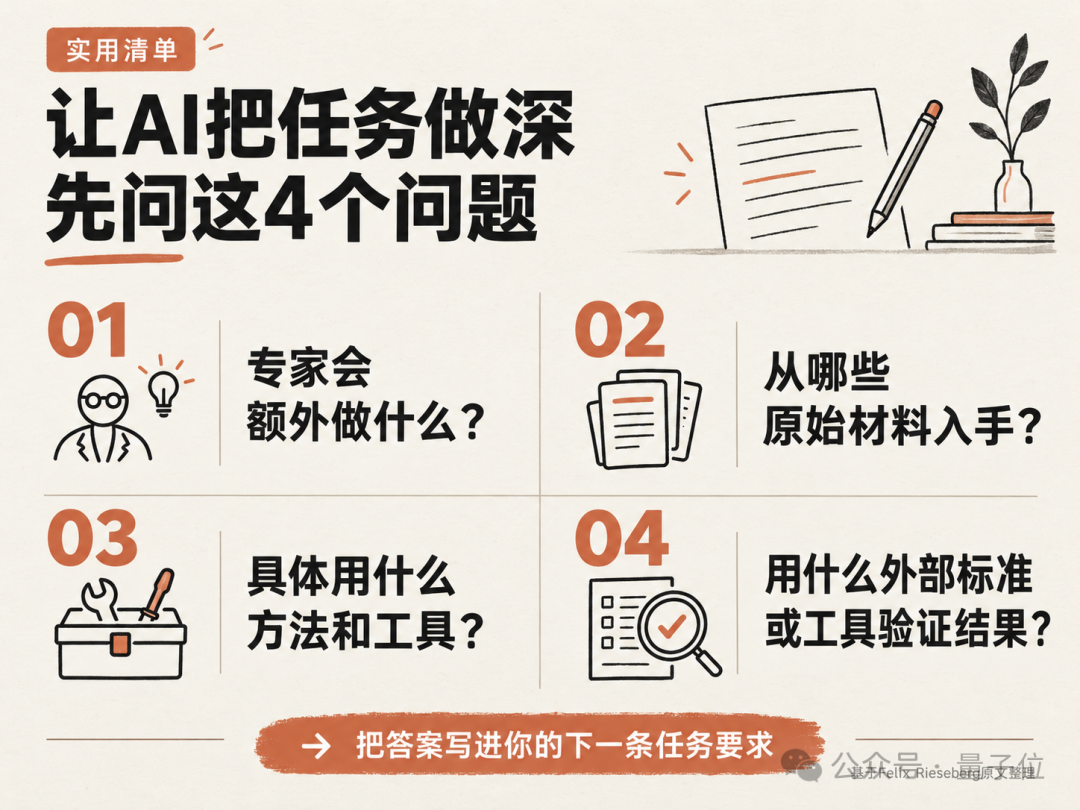
△AI Generation
Consistently use the tools employed by industry leaders
When you ask the model to "work like a professional," it often just changes the vocabulary but does not alter the actual methods.
To really delve into the problem, one must use the tools employed by top data scientists and statisticians. When Claude reaches for a Markdown table, insist on having it switch to databases and statistical models.
You don't need to know in advance what experts would use—Claude generally knows.
Set "unreasonable" goals, then tell the model they are very reasonable
Do you want to reduce website loading time from 10 seconds to 5 seconds? Directly ask for 0.2 seconds.
If the model thinks something is impossible? Reiterate to it that this problem can definitely be solved, and it needs to keep trying.

△AI Generation
Challenge your established conclusions
Especially in business, many things we believe to be facts are just rough approximations of reality.
Let the model access original information and data, testing those assumptions with a questioning attitude.
For instance:
We believe that user churn is a problem with the onboarding of new users. Please attempt to replicate this conclusion from the raw data.
Find new knowledge
This step easily follows "challenging existing knowledge"—since Claude has already thoroughly examined the data, continue to ask it to look for blind spots:
Create a customer simulation model based on our logs to replicate the past year’s situation. Then, identify the signals we are still unaware of that first indicate user churn, and validate the predictive capabilities using data it has not seen before.
Introduce external evaluation
Do not let the model evaluate itself.
I believe that as the model's intelligence continues to improve, this issue will eventually be resolved. But in October 2026, I strongly recommend you stick to using external validation.
Ideally, the validation method should be a tool that the model can run autonomously and get immediate feedback.
The following simple prompt often helps me:
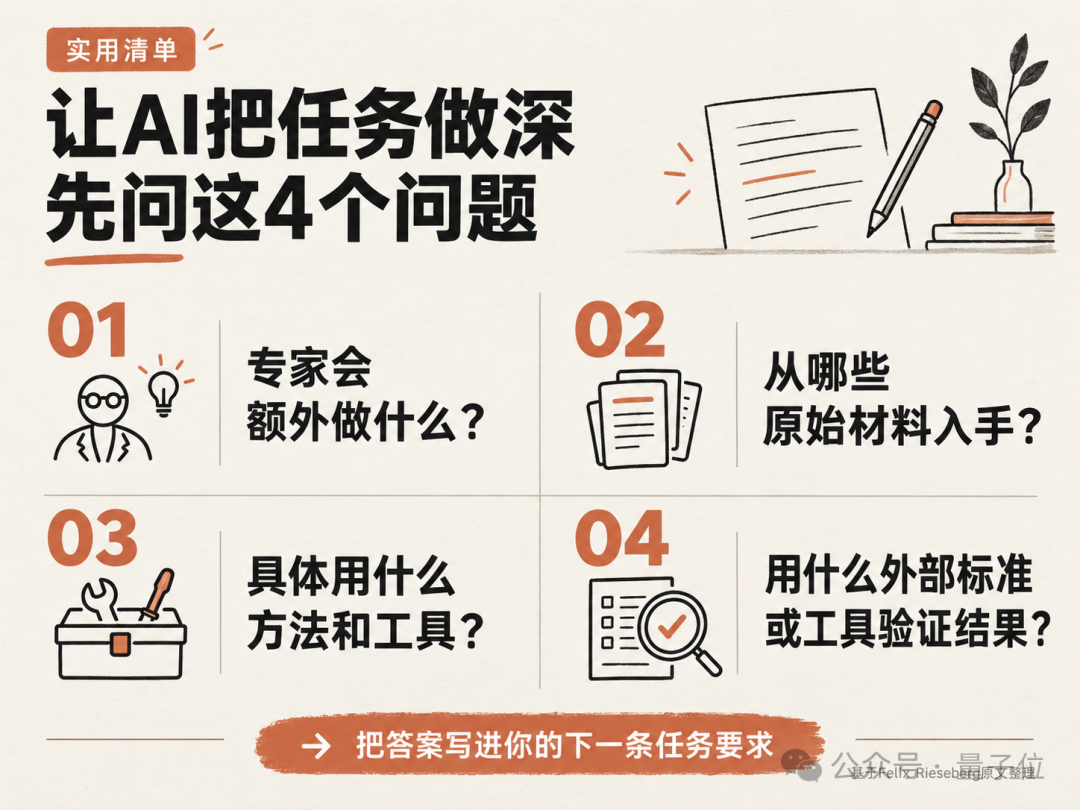
I want to go deeper with this task, rather than expanding the scope. Before rewriting the task, please complete four things:
Specify what top professionals in this field would do that I have not yet requested.
List the original materials they would start with, rather than directly using what has already been organized and digested for me.
List the specific methods and tools they would adopt.
Specify what else, besides you and me, can validate that the results are correct.
Then, rewrite my prompt, accurately incorporating these requirements.
△AI Generation
Breadth: Utilize methods from other fields
Being more ambitious in terms of "breadth" means examining your work from the perspectives of different fields.
The fields involved can be broader than before, because in the past, it was often not cost-effective to do so.
This idea is not new. Almost every movie featuring a team of specialists spends the first 30 minutes assembling a diverse group of people with different backgrounds and strengths.
As AI products increasingly make multi-agent systems easier to operate—through multiple threads, coordinators, or directly using sub-agents, I find that letting Claude introduce ideas from other fields often yields some interesting results.
However, practically implementing it is not easy; it requires exercising creativity.
Before I saw my colleague Alex Albert use Blender to render interior designs, I never imagined that I could use Claude to create a 3D environment for my homepage.
To be clear, I used to make video games!
However, this is precisely where I often find surprising outcomes.
How should you go about it? I would use the following methods.
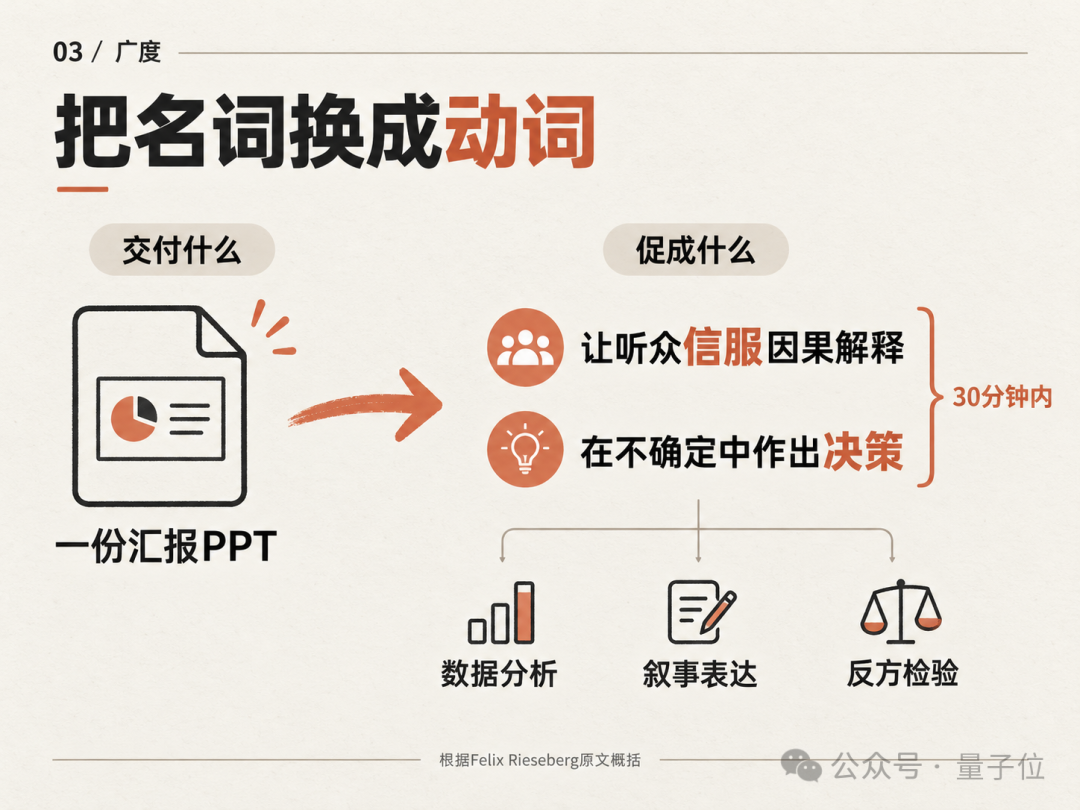
Try replacing nouns with verbs
This is an old method mentioned by Tom Kelley and Jonathan Littman in "The Art of Innovation."
The purpose of the quarterly review goes far beyond just producing "a PPT." What you need to do is:
Convince a group of busy people of an explanation of the cause-and-effect of the matter within 30 minutes, and make decisions in uncertain situations.
Describing tasks with verbs makes it easier for Claude and me to see which areas can offer unique and useful perspectives.
△AI Generation
Assemble a cross-disciplinary team
Suppose this PPT must impress; otherwise, aliens will blow up the Earth. What kind of team would humans assemble?
To ensure the quality of the output, I would bring in an analyst, a journalist, and an editor.
If live presentation is needed, I might also need to find an animation designer and an audio designer.
Introducing a "red team" that specializes in finding faults could be helpful, so I would bring in a skeptic and an audit accountant.
However, this approach can easily become role-playing by accident. The result is only a stranger dialogue with the model, without improving the actual outcomes.
You should use this method to look for useful fields and technologies. Having the model investigate methods that skeptics use to research investment candidates is more meaningful than just having it role-play as such.
All the methods I shared above require the model to have an operable computer, capable of installing software, and accessing various relevant data, whether through MCP connectors or other means.
Now there are many tools that can provide these conditions; I recommend choosing one that works for you.
Self-efficacy: Humans also need to update their judgment about their abilities
That concludes my specific advice on "how to be more ambitious."
If you are willing to stay a little longer, I want to talk about why it is necessary to discuss this topic.
Humans have always been limited by their own judgments: what we think is possible and what is not. What's more troublesome is that we usually believe we can only make an impact in very narrow fields.
A famous example is Michelangelo’s reluctance to paint the Sistine Chapel. He considered himself a sculptor and lacked identification with the identity of a painter.

△Francisco Goya's "Modo de volar" (A Way of Flying)
[Francisco Goya is one of the greatest painters in Spanish history, regarded as a pioneer of romantic painting and a key figure connecting classical masters with modern art]
In studying the issue of "ambition," I came across a related concept in psychology: self-efficacy.
Simply put, people with higher self-efficacy believe more in their abilities, and thus can accomplish more tasks.
There is evidence to suggest that self-efficacy can be enhanced through certain methods.
Locke and Latham have summarized 35 years of goal-setting research and reached a clear conclusion: Individuals who are given clear and challenging goals perform better than those who are merely told to "do their best."
Patrick Collison, co-founder of Stripe, maintains a list called "Fast," documenting what humans have accomplished under bold goals and urgent deadlines.
Here are several well-documented methods.
Believe that difficult tasks can be accomplished
In 1939, George Dantzig was late to a statistics class at Berkeley.
He copied two problems from the blackboard, thinking they were homework, and then submitted his solutions.
In fact, those were two unsolved problems in statistics.
See others accomplish, then tackle difficult tasks
For decades, humanity has tried to shorten the mile run to under four minutes.
In May 1954, Roger Bannister broke this barrier. However, this "only he managed to run under four minutes in the world" situation lasted just 46 days.
If you follow running, you’ll notice a similar phenomenon happening with the two-hour marathon barrier.
In April this year, Sabastian Sawe ran the first sub-two-hour marathon in an official event in London. The runner-up of the same event also finished under two hours.
[The two-hour marathon barrier: Marathon is 42.195 kilometers long, and human "breaking 2" (running under 2 hours) is regarded as a benchmark in physical capability, on par with "four minutes per mile"]

△AI Generation
Allow yourself to fail, then take on challenges
"The Inner Game of Tennis" seems to be a universally loved business book, and I just discovered it last week.
The core idea of this book is that when you try too hard and overexert yourself, you cannot play your best tennis.
We engineers may remember that when Linux was first announced, Linus described it like this:
I make this thing for fun, not to be grand or professional like GNU~
(Who would have thought that later Linux became a big trend, while GNU kernels have still not been realized...)
Self-efficacy is not a new issue, but it has become extremely important lately!
In an era where abilities leap forward every few weeks, we urgently need methods to accomplish things we have never seriously considered, or even believed we could do.
免责声明:本文章仅代表作者个人观点,不代表本平台的立场和观点。本文章仅供信息分享,不构成对任何人的任何投资建议。用户与作者之间的任何争议,与本平台无关。如网页中刊载的文章或图片涉及侵权,请提供相关的权利证明和身份证明发送邮件到[email protected],本平台相关工作人员将会进行核查。


