Safety and cost are pushing small public blockchains toward Ethereum.
Written by: Christina Comben
Translated by: Chopper, Foresight News
Running an independent blockchain has always come with a special promise: control.
An independent Layer 1 architecture allows projects to dominate their fate, set consensus rules, maintain their own validators, and build infrastructure around their users without relying on any other network.
But with great power comes great responsibility, and also greater costs.
Blockchains need enough users, developers, and economic activity to support the infrastructure that protects them. For some smaller networks, maintaining a whole ecosystem is no longer financially viable.
Zilliqa is the latest project to face this reality. Last week, it announced plans to abandon its L1 architecture and switch to a Layer 2 (L2) based on Ethereum: "We know this is not great. For nine years, we have built and operated our own Layer 1, but we have not succeeded."
"Usage has never reached the levels required for an independent chain," the post explains, "The funding and liquidity for independent L1 have dried up. Recent attacks have shown how much it costs to secure a chain on your own. The data is on the chain, and everyone can see it."
Zilliqa is not alone.
Gnosis also announced that it will transform Gnosis Chain into an Ethereum-based network through its "Ethereum Economic Zone" (EEZ) plan. Its RollupX testnet aims to demonstrate how participating chains can act as native Rollups, sharing Ethereum's settlement and composability.
Additionally, the gaming-focused blockchain Ronin announced in May that it would return to Ethereum as an L2.
As interest in competitive L1s dries up along with funding, will we see more and more chains gravitate toward the Ethereum ecosystem?
The cost of going solo
Independent L1s typically need to maintain several core functionalities, including execution, consensus, data availability, and settlement; they also must fund token incentives used to protect the network through staking.
"Ultimately, it all comes down to a chain's profitability," said Max Shannon, a senior research analyst at Bitwise, to Magazine.
"L2 only needs to maintain execution and does not necessarily require a token, which makes them financially and operationally more attractive," he said.
Shannon noted that the top ten largest projects have better financial sustainability. The L2 networks of Coinbase and Robinhood generated $48 million and $52 million in fees, respectively, over the past 365 days. The next eight largest chains each have annual revenues exceeding $1 million.
However, from the 11th position onwards, the total annual fees amount to less than $1 million. So, a network can have ambitious technology and a loyal community, but they may not be able to cover the bills.
Ethereum is often criticized for passing too much revenue to L2, but it is precisely this aspect that gives it unique appeal.
However, merely becoming an Ethereum L2 does not guarantee profitability. Shannon pointed out examples like Optimism, Katana, and Linea, which exceed expenses over fee revenues, while projects like Blast have already been forced to shut down.
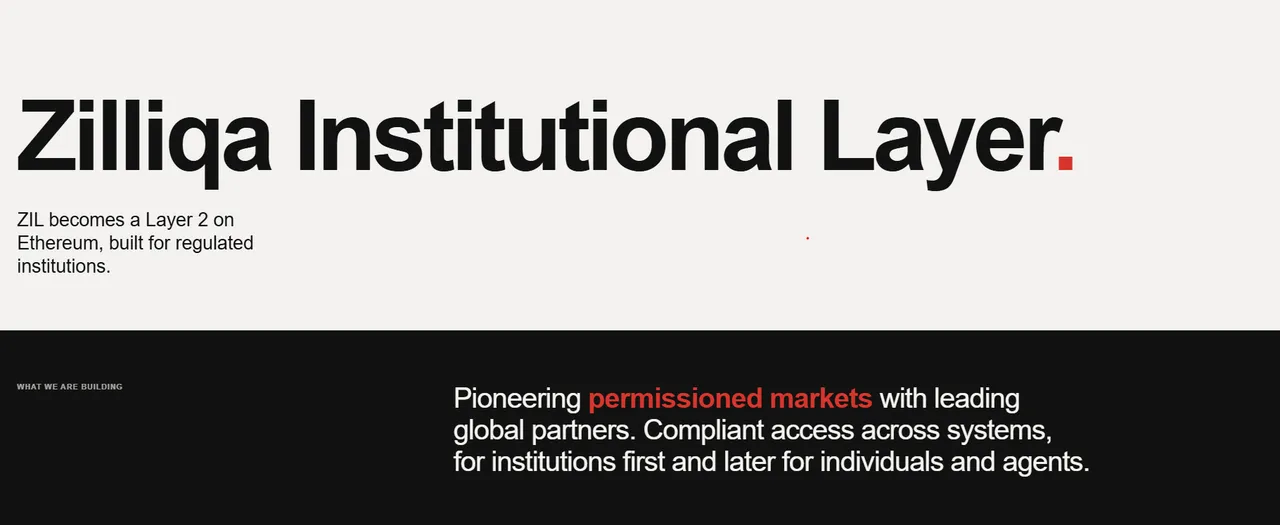
ZIL becomes an L2 on Ethereum. Source: Zilliqa
Ethereum is a "black hole" of liquidity
Gnosis plans to complete the transition by spring 2027, when it will abandon independent validator-based consensus and switch to Ethereum settlement.
"Two years ago, I gave a talk about native Rollups, which truly scale Ethereum instead of creating an isolated chain," said Gnosis co-founder Martin Köppelmann, adding that RollupX "even exceeded what I imagined at that time!"
Gnosis's EEZ plan aims to allow independent Ethereum-based networks to interact synchronously: smart contracts on one network can call another network and use its returns in the same transaction, without relying on the conventional "cross-chain bridge + wait" process.
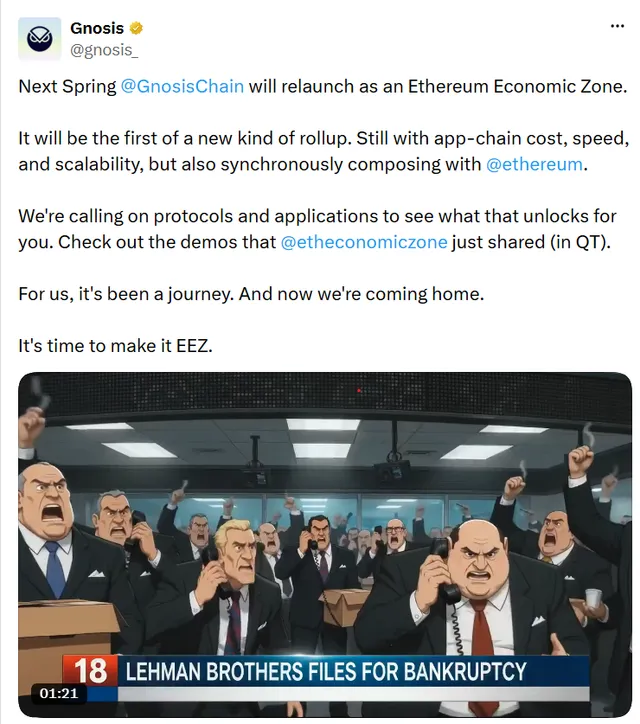
Gnosis Chain will relaunch as part of the Ethereum Economic Zone, Source: Gnosis
This prospect makes some Ethereum supporters particularly optimistic. ETH bull materkel referred to EEZ as a potential "liquidity black hole," suggesting it could further strengthen its position as a liquidity hub by increasing the total locked value of participating networks accessing Ethereum.
Will network effects and interoperability enhancements draw more and more chains into Ethereum's ecosystem?
It’s not just about saving costs
Only the economic benefits of operating costs matter. Projects can also access existing mature applications and developer ecosystems, without building these network effects from scratch.
Alex Gluchowski, co-founder and CEO of Matter Labs behind Ethereum L2 ZKsync, said he expects more L1 teams to maintain their chains but use Ethereum for settlement.
"Running an independent L1 means you have to maintain its security and create things people want to use," Gluchowski said.
"Sharing Ethereum's security can give teams more room to focus on users. I don't see much user demand that needs to be met by an independent L1 rather than an Ethereum-based chain."
But Gluchowski said that integrating with Ethereum does not necessarily mean losing control; each chain can retain control over its own rules and operations while using Ethereum for shared settlement.
He also mentioned that for applications handling sensitive financial information, maintaining a controlled private environment may be necessary. Shared settlement does not inherently mean exposing confidential transaction data.
The biggest current obstacle is that all L2s are actually isolated from each other and from Ethereum. Jumping between them is certainly possible, but it is far from seamless, with very poor interoperability.
"Fragmentation already exists," Gluchowski said, noting that the challenges are even greater when privacy is involved in transactions across networks.
He stated that as more applications seek to combine "confidential activities" with "accessing public chain liquidity," interoperability between private environments will become increasingly important.
Ronin completed its migration to Ethereum in May. Source: Ronin
Does every chain need Ethereum?
Shannon cautioned against simply describing the current market as "integration around Ethereum."
He said that some larger institutions are launching L2 networks, including Coinbase and Robinhood; however, others are still choosing to build independent L1s, such as Circle's Arc, Stripe's Tempo, and Hyperliquid's blockchain dedicated to perpetual contracts.
"So, the L1 vs L2 debate currently lacks a clear conclusion."
免责声明:本文章仅代表作者个人观点,不代表本平台的立场和观点。本文章仅供信息分享,不构成对任何人的任何投资建议。用户与作者之间的任何争议,与本平台无关。如网页中刊载的文章或图片涉及侵权,请提供相关的权利证明和身份证明发送邮件到[email protected],本平台相关工作人员将会进行核查。


