Author: Kuri, Deep Tide TechFlow
Deep Tide Guide:
On November 12, Nvidia officially announced a management reshuffle, with founder Jensen Huang, who has led the company for 33 years, resigning from all positions as President, CEO, and board member, effective immediately. Chief Financial Officer Colette Kress assumes the role of interim CEO while also continuing to serve as CFO during the transition period. The board has also appointed Harvey C. Jones, who has served on the board since its founding in 1993, as the first independent board chair in history. This significant personnel shake-up occurred just before the financial report for the third quarter is set to be released next Wednesday and follows the board's initiation of an independent investigation into Huang's personal relationships and the supply chain. This indicates that the world's highest market-cap chip giant has officially dismantled the founder-centered structure established over thirty years, forcing Nvidia to switch to a defensive and stabilizing track ahead of a crucial performance evaluation.
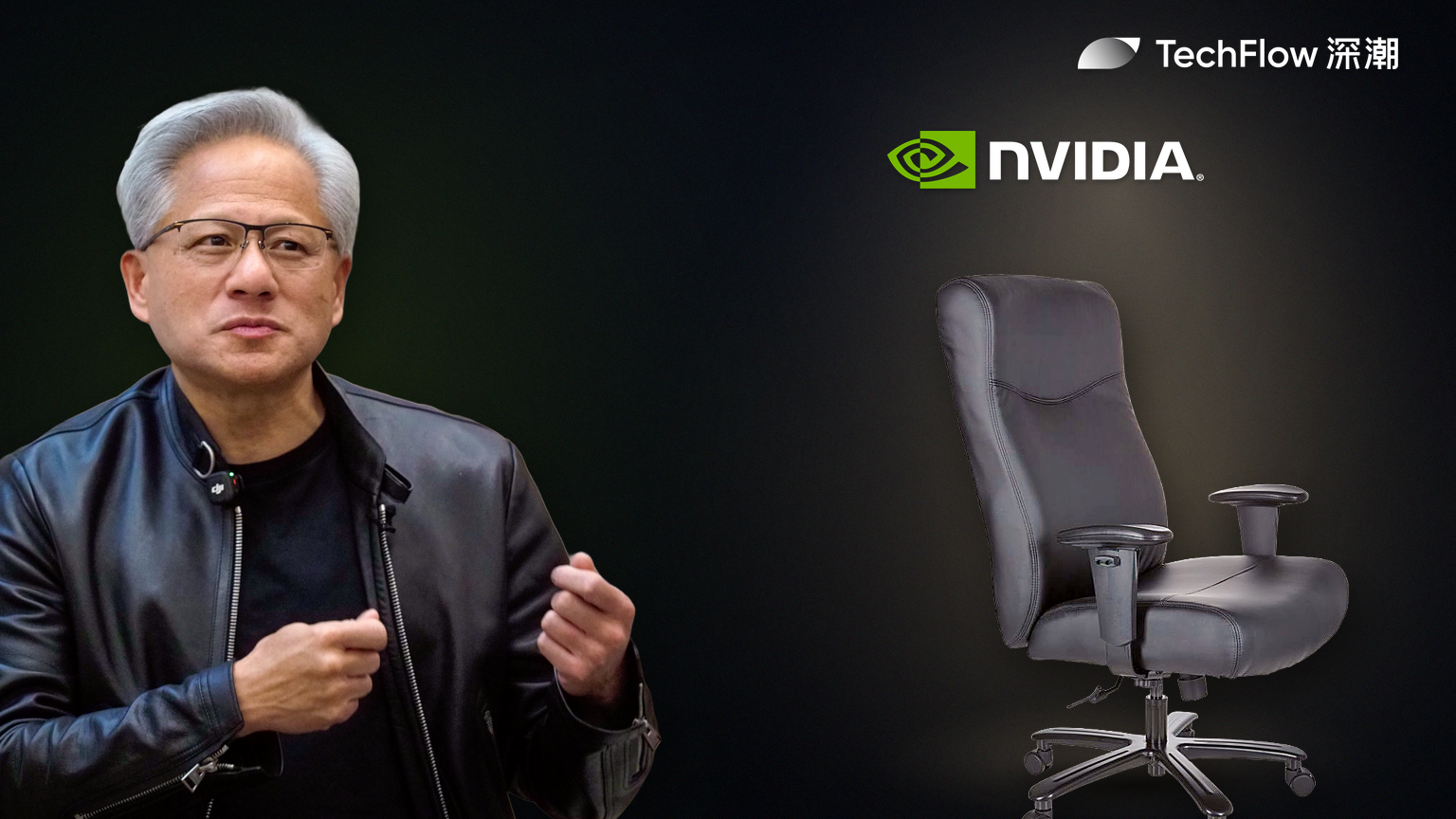
The founder, who has steered the global computing core for 33 years, has completely relinquished control in just a few lines of announcement.
According to a statement released by Nvidia's official newsroom on November 12, Jensen Huang has officially resigned as the company's President, CEO, and board member, with all departure procedures effective immediately. The board has concurrently established a special committee to initiate a formal global selection process for the new CEO. As a result of this personnel upheaval, Nvidia's stock in the U.S. saw dramatic fluctuations during pre-market trading, at one point exceeding a 5% swing.
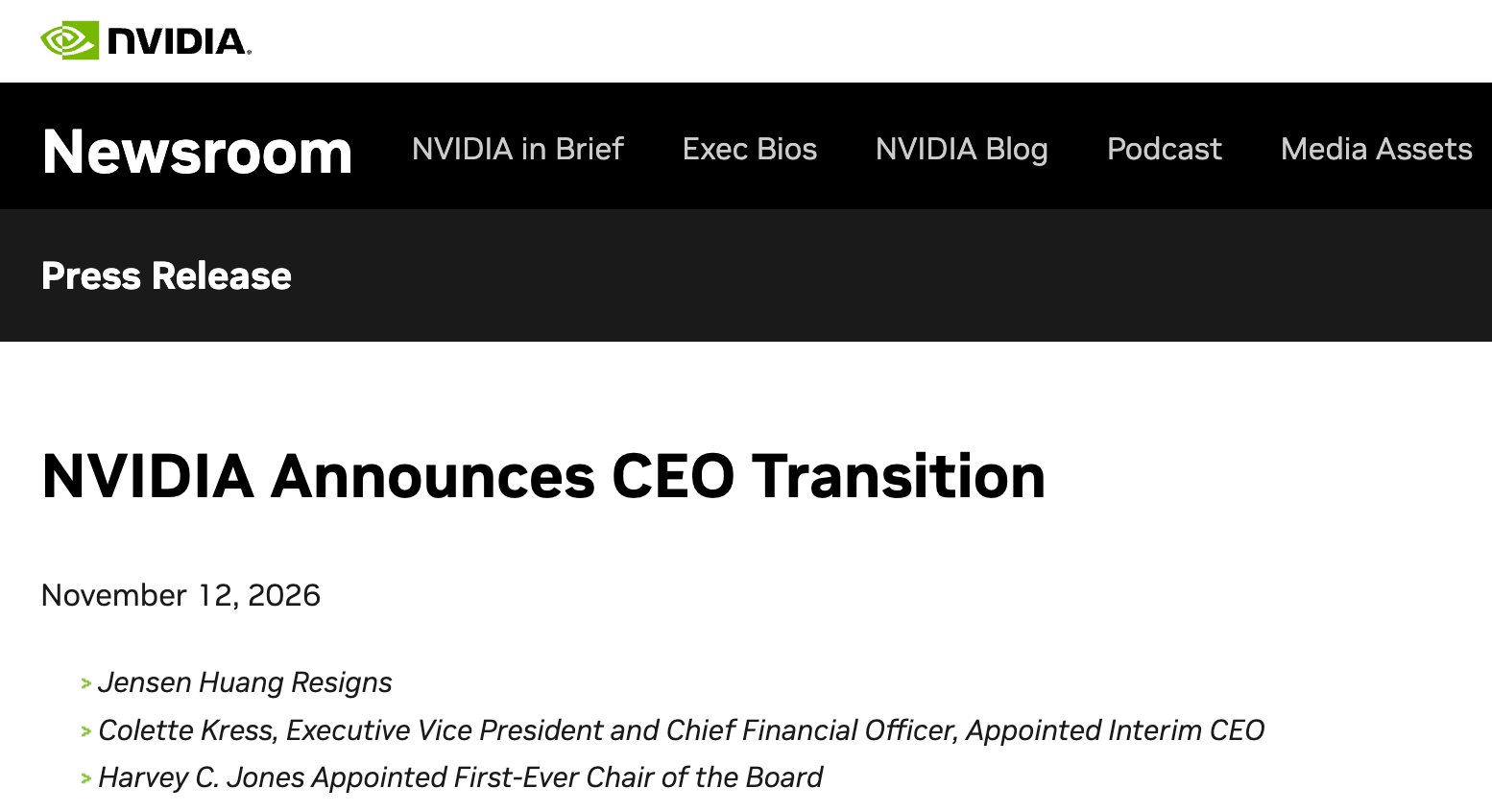
As one of the longest-serving leaders of a tech giant in Silicon Valley, Jensen Huang has overseen the entire process from graphics card chips to the CUDA software ecosystem, and now to the monopoly of generative AI computing power, since founding Nvidia with his partners in 1993. According to regulatory filings, Huang currently holds about 3.6% of Nvidia's shares, but after stepping down from all executive and director positions, he has completely ended his involvement in the daily decision-making and strategic direction of this tech giant valued at over $30 trillion.
The End of 33 Years of Founder Centralization, Board Cuts Losses Immediately
Nvidia did not elaborate on the specific reasons for Huang's resignation in the personnel announcement, but this decision coincides tightly with the timeline of an internal investigation.
According to previous reports from Bloomberg, on November 8, Huang sent a letter to all employees, publicly apologizing to his family and team regarding issues related to his personal relationships. Subsequently, Nvidia's board announced the initiation of an independent investigation to verify whether the company is facing potential information risks and compliance loopholes. Following this, compliance controversies surrounding Nvidia's computing power leasing channels in Southeast Asia continued to intensify.
According to Reuters, citing sources close to the board, the decision to announce personnel changes at this point was made as a rapid response by the board to compliance issues and external pressure from regulators. Cutting off the ongoing fallout from personal controversies before the release of next week's key performance report was the board's only option to mitigate losses.
CFO Urgently Takes on Interim Leadership, Familiar Faces on Wall Street Prioritize Preventing a Run
In the interim period before a formal successor is identified, Nvidia has chosen to let the financial steward take charge.
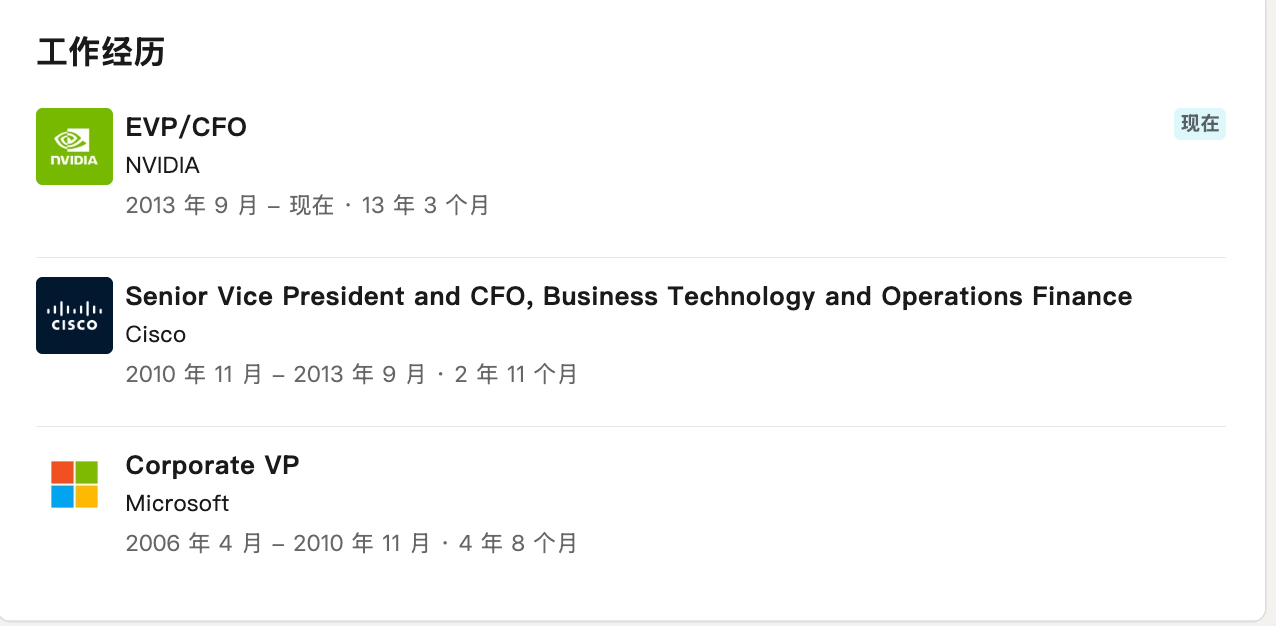
According to the announcement, Colette Kress has been appointed as interim CEO, having served as Nvidia's Executive Vice President and CFO since 2013. Until a formal candidate is found, she will also handle all duties as CFO.
This choice breaks the usual practice in tech giants of promoting a core technology vice president. Within Nvidia, the leaders of the CUDA ecosystem and data center hardware are both seen as influential technological figures, but the board ultimately handed the helm to Kress, who has a pure financial and operational background.

According to Citi's analyst team in their latest research report, Kress has worked at Nvidia for thirteen years, accompanying and managing the company's revenue growth from an average of $4 billion to a whopping $200 billion, making her the most familiar face to Wall Street and institutional investors. In the current situation, the technology development already has an established roadmap, and the board's primary task is to secure key orders from cloud vendors, lock down TSMC's advanced process foundry capacity, and prevent market panic selling during the power vacuum.
First Independent Board Chair Established, Governance Mechanism Officially Bids Farewell to Autocracy
Alongside the CEO's transition, there is a fundamental restructuring of Nvidia's governance structure.
According to Nvidia's official disclosure, former Synopsys CEO Harvey C. Jones has been officially appointed as board chair. This position breaks the internal conventions at Nvidia that have lasted for 33 years. Since its establishment in 1993, Nvidia has never had an independent board chair, and the strategic planning, daily operations, and authority to convene board meetings have long been highly centralized in the hands of Jensen Huang.
Public records show that Jones has been on the board since Nvidia's founding in 1993, making him the longest-serving and most senior external director. According to analysis by the Financial Times, establishing an independent chair not only facilitates the external selection of the subsequent CEO but also legally severs the founder's personal control over the board, completely separating the authority for day-to-day operations from the board's supervisory power.
With the dismantling of the governance structure, Nvidia officially shifts from a wartime company stamped with the founder's strong personal imprint to a compliance and supervision system closer to that of traditional mature multinational corporations.
The first stringent test is already on the agenda. According to Nvidia's official schedule, the company is set to release its third-quarter financial report for fiscal year 2027 and hold a conference call on Wednesday, November 17.
For Wall Street and global tech stock investors, next week's earnings call will be the first performance report without the iconic black leather jacket of Lao Huang; for Nvidia, having shed the founder's personal halo, this temporary team supported by financial leadership and external directors must meet the market's trust test with firm shipping numbers in just a few days.
免责声明:本文章仅代表作者个人观点,不代表本平台的立场和观点。本文章仅供信息分享,不构成对任何人的任何投资建议。用户与作者之间的任何争议,与本平台无关。如网页中刊载的文章或图片涉及侵权,请提供相关的权利证明和身份证明发送邮件到[email protected],本平台相关工作人员将会进行核查。


