“I realized I really couldn't stand this corporate system.”
Written by: Dhruv Gupta
Translated by: Chopper, Foresight News
I Thought There Were Only FAANG in the World
When I first entered the University of Pennsylvania as a freshman, I didn't know there were other career paths besides FAANG (note: FAANG refers to five American tech giants: Meta, Amazon, Apple, Netflix, Google). The first time I heard about "consulting" was while walking on Locust Walk, the main pedestrian path of Penn — I accidentally made eye contact with someone at a Wharton graduate organization booth, which was an unfortunate mistake. Investment banks and funds had a novelty appeal to me at the time.
I secured a quantitative internship at Morgan Stanley for the summer of my sophomore year before landing my freshman summer internship. I mindlessly applied for 2024 summer positions on the US campus recruitment platform Handshake, and happened to apply for a position for the summer of 2025 as well, went through three rounds of interviews, and then got it.
It was during that job that I realized I truly couldn't stand this corporate system. In the final weeks of the internship, I wanted to apply for an API key for a large language model to run a few experiments, and the response I got was: “If you apply for this key two months before your internship starts, it should be approved by the time you start full-time.”
Work was progressing slowly, expectations were low, and it felt like these people practiced “the performance of work” more than the work itself.
I started making TikTok videos in my senior year of high school to chase after a girl. A few early videos went somewhat viral, and I then developed a habit of regularly posting content, mainly during the summer. Gradually, I became a kind of “niche internet celebrity,” with content focused on engineering and quant.
An Offensive Email and Four Hours
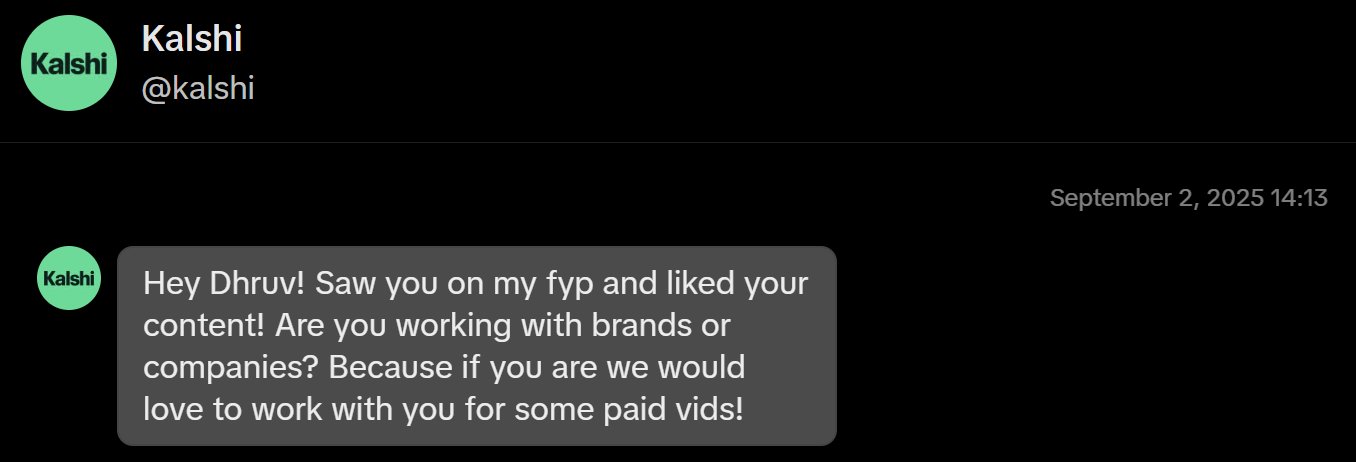
From an economic utility perspective, prediction markets have always fascinated me. When I received that private message from Salman, I felt like a lucky person. I shot a few videos that weren't particularly insightful, and then I realized I wanted to create real products. To make a long story short: Kalshi (a compliant prediction market regulated by the US CFTC) didn't have a position for me to product-build, so I sent the following rather aggressive email to the only Penn alumnus at Polymarket.

Although I initially received a reply from Will, I later got ghosted (meaning they stopped responding and disappeared). So I spent 4 hours frantically writing code, creating two rather rough projects, which was enough to pique Will's interest. He commissioned me to build a small software for news.polymarket.com.
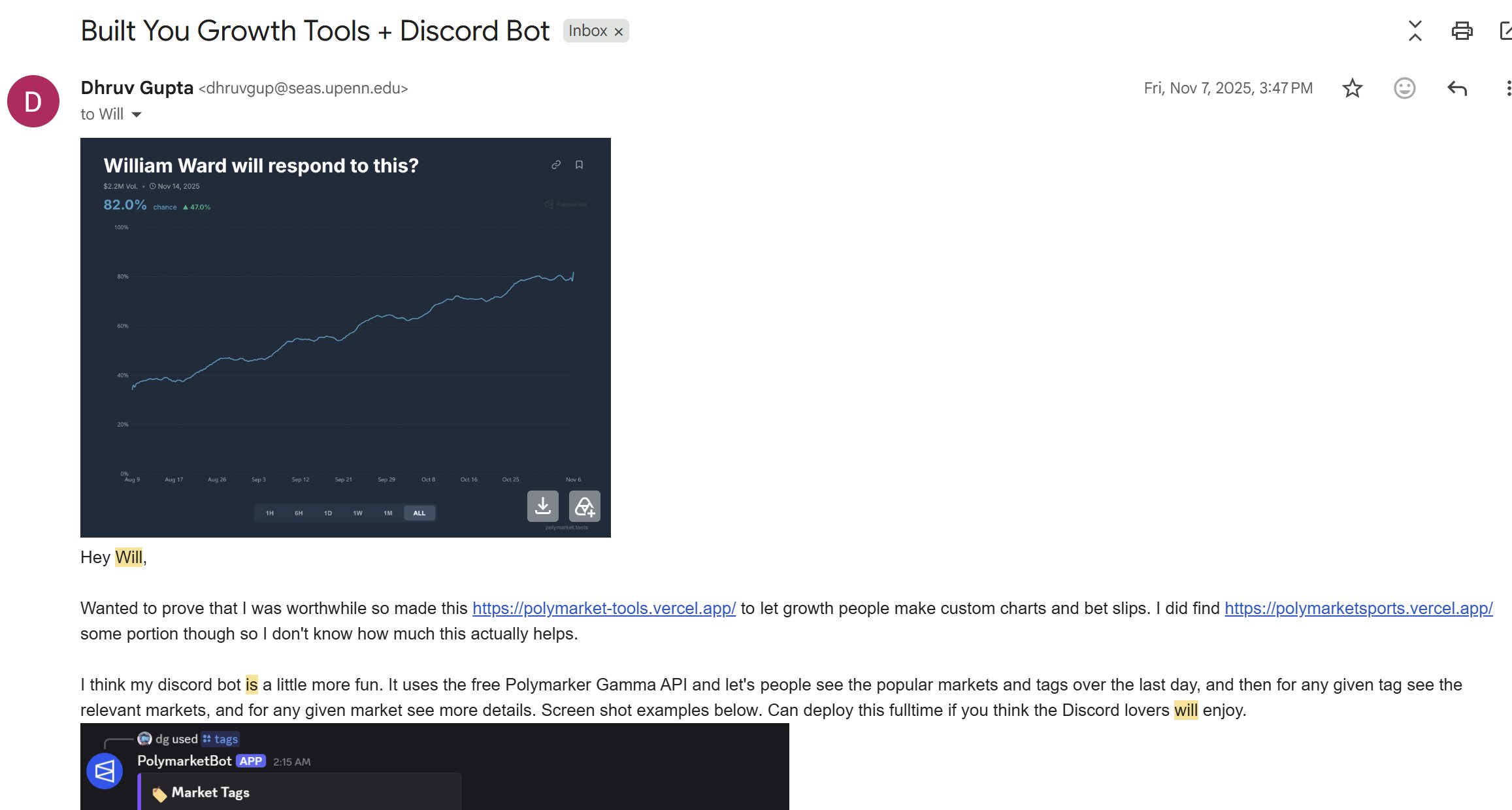
This eventually led to me helping build tools around Polymarket Polygraph, developing thespread.news, and writing a few articles.
While working at Polymarket, I almost started two startups in this space with two collaborators: one was a co-founder of Augur and Gnosis (both were early prediction market projects in the Ethereum ecosystem), and the other was a statistics professor at Wharton — he is one of the top experts in the field of Markov chains (a type of random process model for describing state transitions) and an enthusiast for using prediction markets as tools for teaching probability.
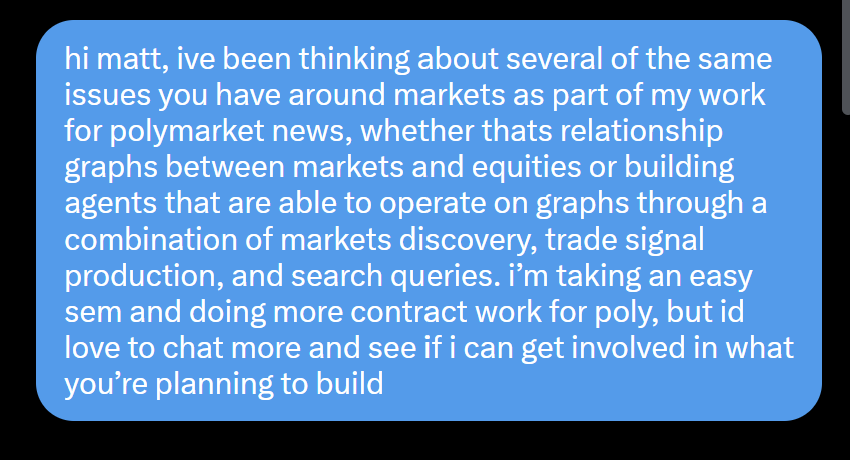
Neither of those ventures materialized in the end, but I learned a lot from them: fundraising, people, and a few niche technologies.
a16z, MTS, and That War Room
About the time the second project was about to close its pre-seed round and hoped I would join full-time, I realized I would rather work in a field I truly loved — media.
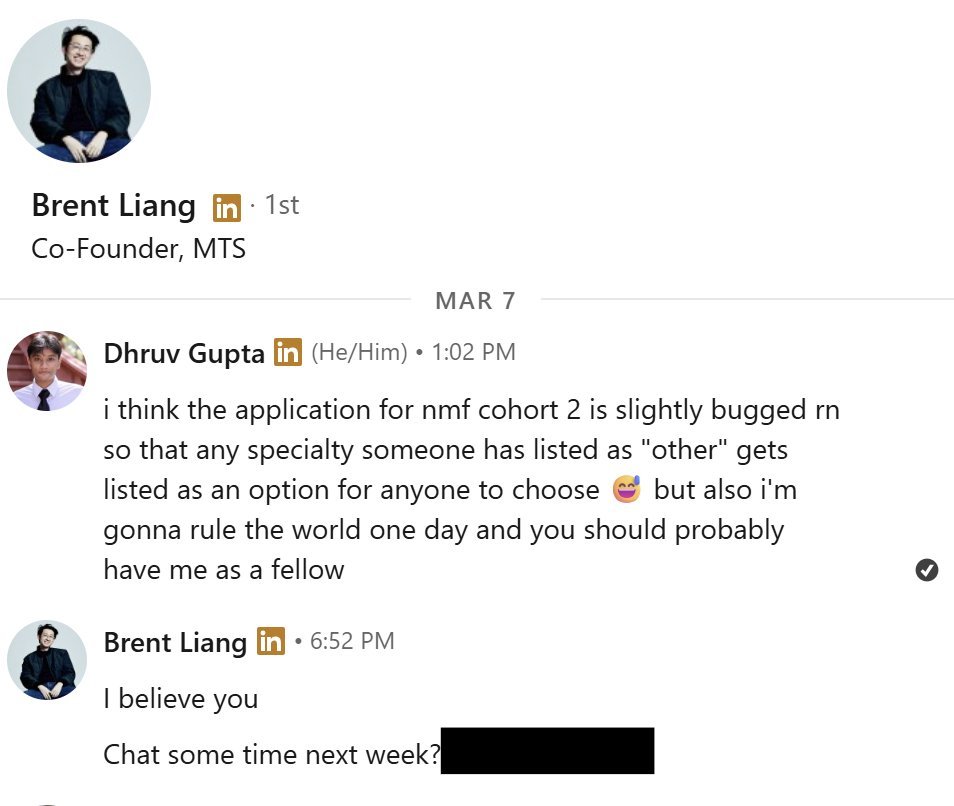
Fortunately, a16z happened to be opening its second cohort of New Media Fellows (an 8-week program for content creators) led by then-partner Brent. We met and kept in touch. Later, Brent left a16z to start MTS (Monitoring the Situation, a 24-hour live news network on the X platform), and he wanted to find someone to do what I did at Polymarket.
My contract at Polymarket was nearing its end, and I loved news, especially “The Newsroom” (the TV series); the thought of playing the role of Dev Patel's “tech reporter” in the show was extremely appealing to me.
The first time I talked to Brent about joining MTS was on the morning of their third day of streaming. By the end of that day, I had already sorted out my online final exam with all the professors, packed all my luggage, said goodbye to graduating seniors, and boarded a flight to San Francisco, ready to stay in the Tenderloin district for a month.
Initially, my job scope was just to create https://www.mts.now/situations, but soon I realized MTS had the opportunity to fill a crucial gap in the public opinion space. After early projects like the courtroom evidence database, UFO, and AI capital expenditures began gaining traction, I felt more motivated to continue.
In an era where models like Opus 5.5 and Astra could produce daily content at very low costs, creating a high-quality explanatory piece every day didn't sound like much, but in April 2026, it was an entirely different world.
During that early period, people were very averse to us. Spending 12 hours a day, 7 days a week in the war room with Brent and Sophie is one of the most unforgettable experiences of my life. I still regret leaving them to go intern at Jane Street.
Amidst all that noise, only we knew who we were, what we were building, and why we were building. Focusing on work and aiming to be 10% better than yesterday clearly paid off for this team.
Cosign: Turning a List into a Product
After that summer, I only had 6 courses left, so my reasonable options were limited to two: squeeze them into one semester and graduate in December, or take a light course load in the fall while working.
I began chatting with Erik Torenberg (a16z partner) during my time at MTS; over the summer, he painted me a vision that later solidified into Cosign — a network in the entrepreneurial sphere that turns “Who is willing to vouch for you” into a retrievable record.
Probably no product in the world aligns with my moral beliefs more than this one. A friend reminded me a few days ago that I've been maintaining my own “list” for almost a year, sending the names of people I deem qualified to founders and VCs, hoping to help lower-level students I know secure internships within this entrepreneurial ecosystem. I hope Cosign can become a place where friends and mentors can vouch for the mavericks, warriors, and visionaries they encounter.
Reaching this point has been quite a long journey. I look forward to continuously making it better by 10% every day. It’s time to start building.
免责声明:本文章仅代表作者个人观点,不代表本平台的立场和观点。本文章仅供信息分享,不构成对任何人的任何投资建议。用户与作者之间的任何争议,与本平台无关。如网页中刊载的文章或图片涉及侵权,请提供相关的权利证明和身份证明发送邮件到[email protected],本平台相关工作人员将会进行核查。


