Author: Spencer Applebaum
Translation: Shenchao TechFlow
Guide by Shenchao: In the past, building a DEX or lending protocol often required millions of dollars in funding and a six-month development cycle. Nowadays, with cutting-edge AI tools like Claude Code, founders can write matching and risk control engines over a weekend, accelerating the disappearance of the software barrier.
In this latest reflection published in Multicoin, author Spencer Applebaum dissects the path of DeFi value reconstruction after the software reaches zero cost: when technology becomes abundant, the true pricing power belongs to participants who control three major moats: user distribution, proprietary capital, and non-public proprietary data.
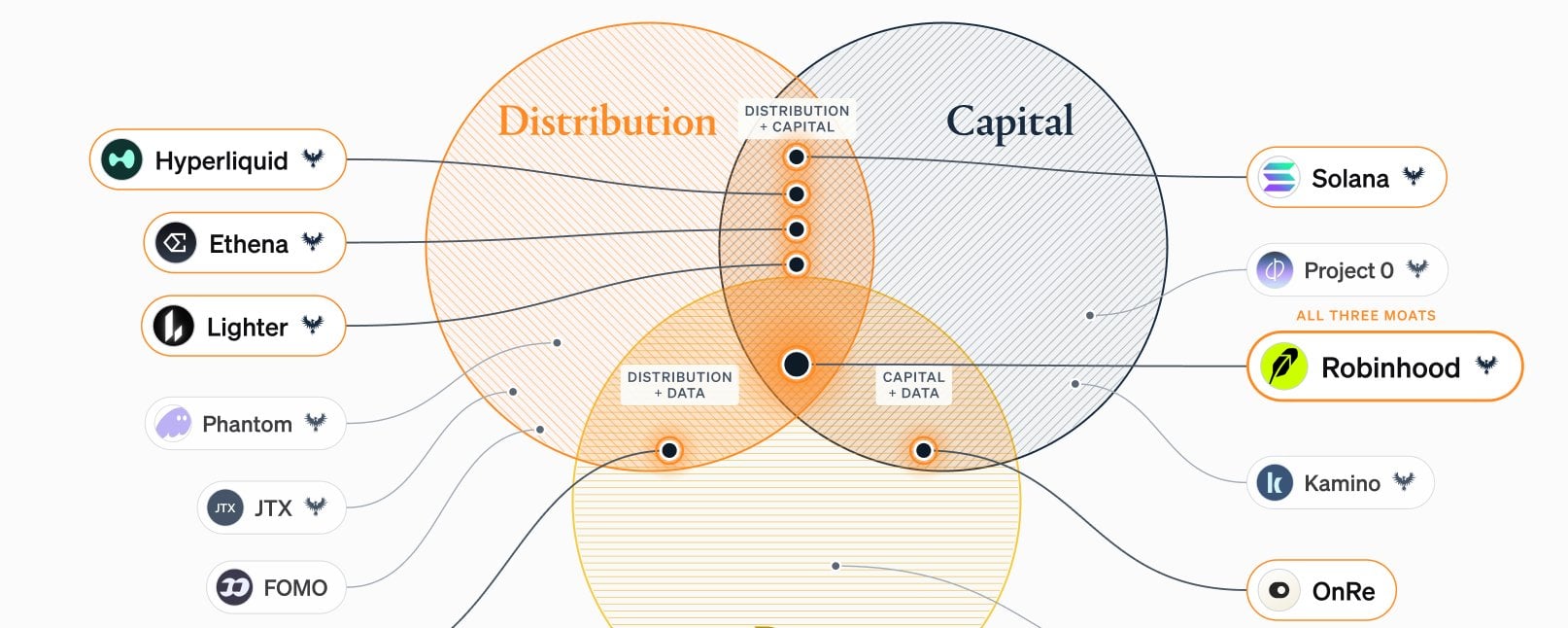
Five years ago, creating a DEX or lending protocol meant needing $3 million in funding, hiring five engineers, and spending six months to produce a minimal viable product. Today, founders can build most of the framework in a weekend using Claude Code.
With cutting-edge AI models, establishing a perpetual contract exchange can almost instantly generate matching engines, risk control engines, trading interfaces, APIs, and most core components.
AI is reducing the competitive barriers in almost all software sub-industries, but financial services will remain among the most challenging businesses to commoditize. This is because the most valuable parts of a financial enterprise are hardly related to the software itself.
Building a loyal customer base, accumulating a large balance sheet, and refining proprietary data and underwriting capabilities all require years of deep relationship cultivation, establishing past performance, and gaining trust. While AI may significantly lower the cost of building software, it cannot make these capabilities easier to replicate.
In other words, a large model can write the code for a lending protocol in an afternoon, but it cannot produce a $10 billion stablecoin deposit flowing into contracts, nor can it draw in 28 million customers for an innovative internet brokerage.
We believe this is hugely beneficial for DeFi. Over the next decade, trillions of dollars in financial activity will migrate on-chain; AI will significantly reduce the construction cost of products serving these activities, but the core elements supporting high-value and high-barrier financial businesses remain unchanged.
A New Pillar for DeFi Value Capture Framework
For years, we have been pondering the issue of DeFi value capture, with our perspective evolving alongside market maturity. In the early days, westudied how application tokens capture value through work tokens and balance models of burning and minting.
Later, wefocused on the defensibility and unforkable state of DeFi, arguing that anyone can fork open-source code but cannot replicate liquidity or network effects.
More recently, wehave argued that DeFi protocols can only capture maximum value when they must manage some form of substantial risk. These arguments have been validated to some extent, and this article represents the next iteration of our thinking.
To clarify the premise of the entire article, we believe DeFi will continue to consume CeFi and eventually engulf the entire traditional financial system. Currently, the market share of DEX compared to CEX in spot trading is at an all-time high and continues to climb:
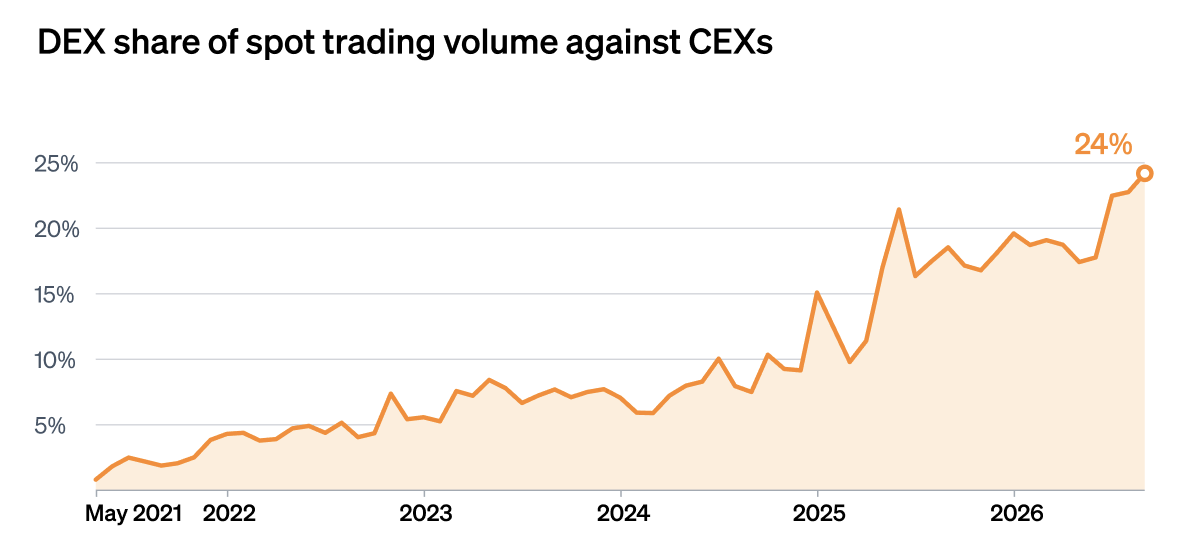
Figure: The trend of DEX spot trading volume's share of CEX trading volume has recently risen to 24% (Data Source: The Block, DefiLlama)
At the same time, whether it is U.S. Treasury bonds, private credit, or stocks, we are witnessing real adoption of tokenized assets. More importantly, the growth is no longer fueled only by crypto-native users.
Traditional industry giants, fintech companies, institutional asset managers, and traditional brokerages are all building products on-chain and bringing their existing customers into the blockchain world.
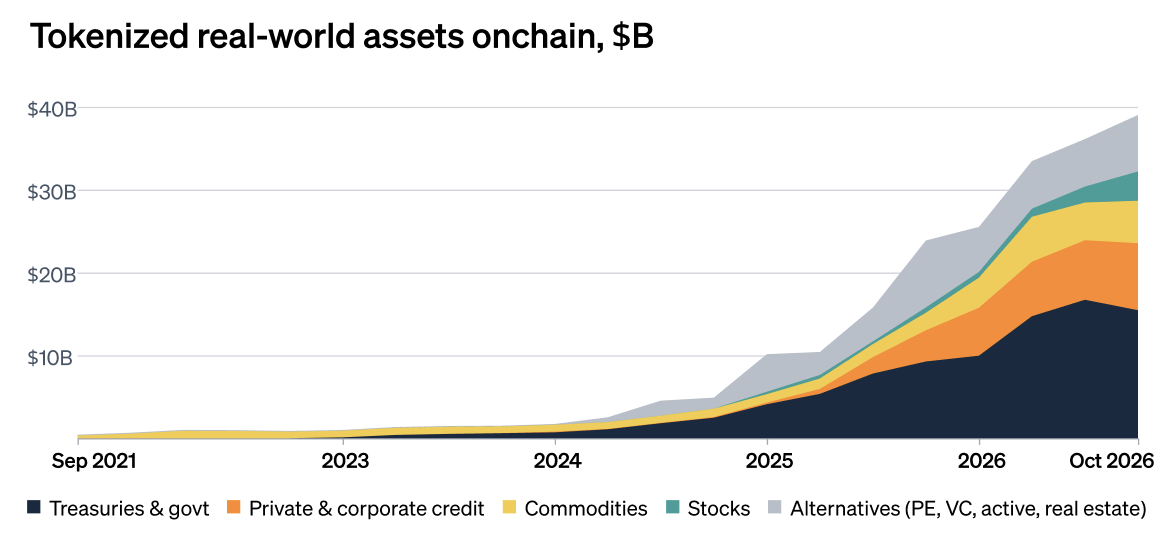
Figure: Scale structure and growth trend of on-chain tokenized real-world assets (RWA) (Data Source: rwa.xyz)
However, the key issue is that today's blue-chip DeFi protocols may not necessarily benefit from this wave of growth. As the costs of software and data analysis decrease, value will flow towards those who control “scarce elements that software cannot create.”
We believe DeFi has three core moats: distribution channels, capital, and proprietary data. Additionally, there is a fourth element, which is risk tolerance; its function is different and acts more like a wedge into the market, which we will discuss at the end of the article.
First Moat: Distribution Channels
One of the most influential theories in the early crypto space was written by Joel Monegro in 2016, titled “Fat Protocols.” This perspective argues that the internet leaves enormous value to the application layer (Google, Facebook, Amazon, etc.), while blockchain will reverse that relationship, concentrating most value at the protocol layer.
However, real-world evidence points in the opposite direction, and this trend is accelerating. As protocol deployment costs decline, value is flowing to those who control customer relationships. Such companies can redirect users and account balances to any underlying venue that offers the highest rebates. Sometimes this is an independent application, and sometimes, as with Hyperliquid, it's both a public chain and an application.
Our definition of distribution is simple: the ability to control the direction of order flow or fund balances. But not all distributions have the same customer stickiness; the difficulty in移居民身份证的账户 can build a real barrier, while a simple front-end interface is more susceptible to competition, as will be analyzed further below.
Exchanges and Other Stablecoin Distributors
The portion of the distribution channel that most clearly exhibits pricing power is in the stablecoin value chain. As long as a scale is achieved and interest rates are not close to zero, issuing stablecoins has always been a good business. Tether and Circle hold dollar reserves and earn interest, often not sharing profits with holders.
Since 2021, Tether alone has earned over $20 billion in profit with a near 100% profit margin through this model:
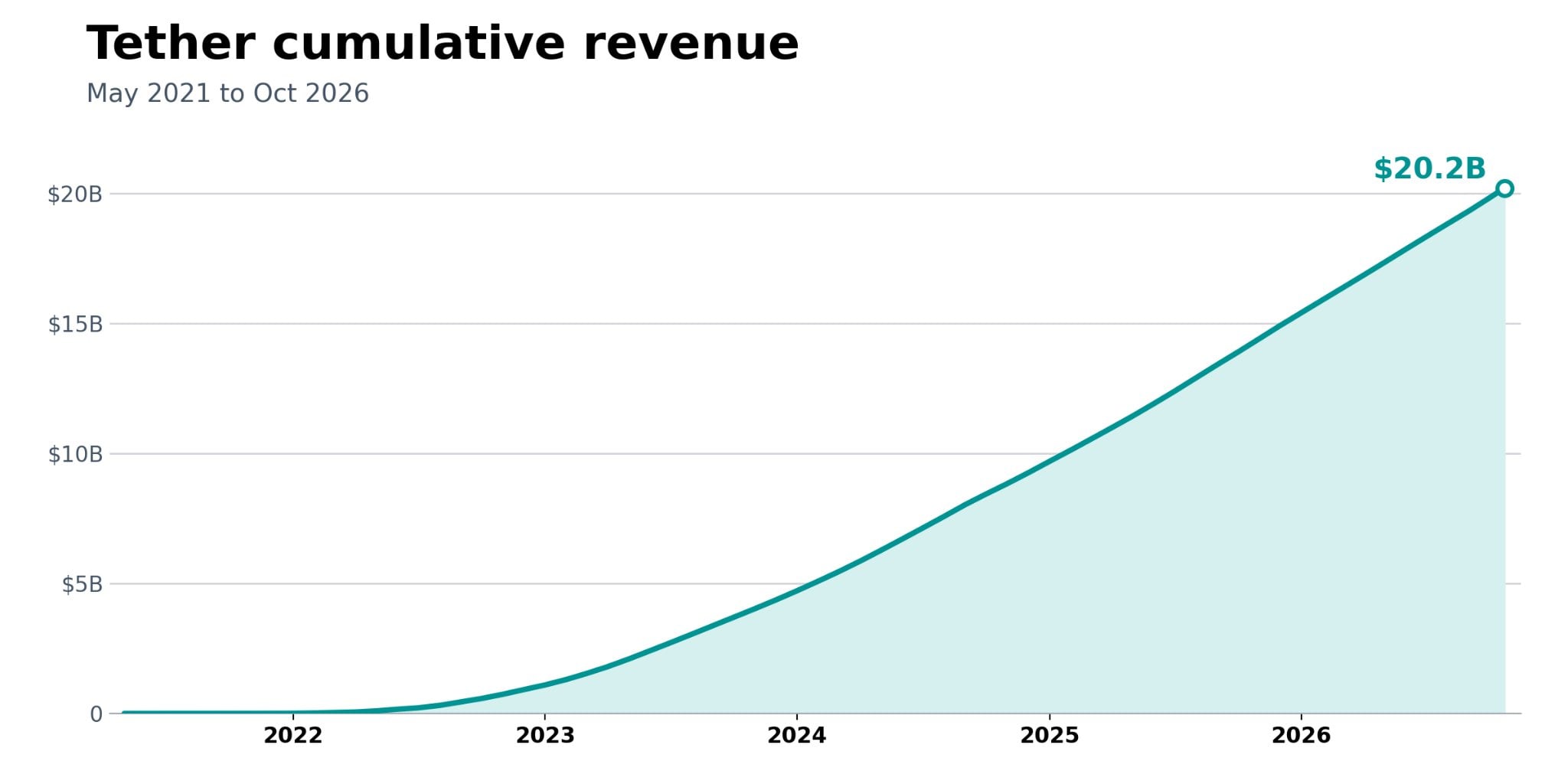
Figure: Tether cumulative revenue trend from May 2021 to October 2026, totaling $20.2 billion (Data Source: DefiLlama)
In contrast, Hyperliquid has accumulated over $6 billion of USDC as derivative margin on its platform. These retained balances generate considerable reserve interest income for Circle and its distribution partners.
At a certain stage, Hyperliquid realized that it was the fundamental reason for the existence of these balances and thus held bargaining chips: if Circle is unwilling to share profits, Hyperliquid can easily replace USDC with stablecoins willing to share, or theoretically issue its own stablecoin.
Earlier this year, Hyperliquid reached apartnership with Coinbase based on the Aligned Quote Assets (AQA) framework.
According to the agreement, about 90% of the USDC reserve income on the Hyperliquid platform no longer belongs to Circle or Coinbase but flows to the protocol's Assistance Fund for repurchasing HYPE.
With the $5.5 billion USDC accounting for this 90% share, this arrangement can now generate about $185 million annually for Hyperliquid.
Hyperliquid does not need to maintain a minting/redemption pipeline, manage treasury funds, or hold compliance licenses. It firmly controls the entry of distribution, which alone is enough to allow it to demand a larger share of economic benefits.
Wallets and Front-End Entry Points
The other side of the coin appears in the wallet and front-end space. Early non-custodial wallets struggled commercially until they realized that the most lucrative business in the crypto industry was actually trading, leading them to upgrade it to a core product a few years ago.
Now, in exchange transactions, MetaMask charges fees up to 0.875%, while Uniswap's average transaction fee rate over the past 12 months has only been 0.13%, with most of it going to liquidity providers (LP) rather than to the Uniswap protocol itself.
In short, wallets earn far more than the venues that execute matching trades. Underlying exchanges must continuously attract LPs, maintain complex infrastructure, and compete on execution slippage, whereas MetaMask only needs to win and maintain customer relationships. If a DEX provides a poor quote, MetaMask can redirect orders elsewhere at any time.
In the long run, once wallets and front-ends have enough order flow, they can even digest and match a large volume of trades internally, thereby capturing a larger share of economic benefits.
Similar competitions are also beginning to appear in the perpetual contract sector. Phantom allows users to trade perpetual contracts on Hyperliquid, adding an additional fee of 5 basis points on top of Hyperliquid's native 4.5 basis point rate.
Hyperliquid undertakes the roles of risk control engine, matching, and liquidity, while Phantom earns a higher cut merely by controlling the interface and users.
However, this model also has its limitations. In what has now become a new red ocean market, the Hyperliquid Builders ecosystem, price wars have already broken out, with teams reducing fees in exchange for user retention. In other words, the front-end layer itself cannot evade commoditization.
More generally, the relative fragility of crypto wallets is due to the very low cost of user migration. By simply importing their private key or mnemonic phrase into another wallet, users can seamlessly take over the same batch of assets in just a few minutes in a new interface.
In contrast, switching banks or fintech apps is far more cumbersome: users need to open new accounts, complete KYC requirements, transfer funds through traditional clearing channels, rebind payroll accounts, and update associated services.
Fintech Companies and Digital Banks
Take Robinhood as an example. This fintech giant boasts 28 million funded accounts. Currently, Uniswap remains the primary DEX on the Robinhood Chain, and Robinhood is pleased with this.
However, as AI continues to lower the costs of financial software development, nothing can stop Robinhood from developing and launching its own DEX protocol and then redirecting traffic there. With its vast outreach capability and top-notch AI programming tools, it could almost overnight establish one of the largest Layer 2 DEXs in the DeFi space.
We are not saying Robinhood will completely do this, as directly holding liquidity has never been Robinhood's core ambition (though they have started directing a large number of predictive orders to their own prediction market Rothera instead of Kalshi).
We merely point out that writing protocol code is no longer a challenge; acquiring users, capital, and proprietary data is.
One can observe a clear “waterfall value chain” emerging in DeFi. The front-end (Phantom) is taking a larger cut from trading venues, while trading venues (Hyperliquid) are reclaiming revenue from stablecoin issuers (Circle). At all levels, companies that hold distribution power have pricing power over their lower-tier infrastructure.
As for how much profit each layer can ultimately retain, it fundamentally depends on the difficulty of users leaving. Hyperliquid takes around 90% of reserve income, while the front-end applications operating on it are already being forced to slash trading fees to just a few basis points.
Second Moat: Capital
The natural conclusion drawn from the previous section seems to be that headless protocols and backend infrastructure are at a clear disadvantage without a front end. In certain scenarios, this is true, but besides distribution channels, there are other moats, with capital being the most significant.
Capital is the lifeblood of financial markets. Traders need capital to leverage, market makers need capital for continuous quoting, and lending protocols require deposits to lend. AI can help write code and automate workflows but cannot conjure money out of thin air. When a system encounters trouble (such as with Aave’s KelpDAO incident or MakerDAO's Black Thursday), someone must step in to underwrite the losses.
Before going further, let's talk about liquidity. Liquidity does exhibit logarithmic (log(n)) network effects: traders flow to where liquidity exists, and liquidity, in turn, follows traders. Hyperliquid’s open contract size is indeed a significant advantage, but that capital belongs to users, who can withdraw it at any time.
In the past, we have witnessed liquidity migrating en masse between different protocols in DeFi due to incentive drives and vampire attacks, and once the incentives are exhausted, a large amount of liquidity often withdraws as well. The two forms of capital described next are the true moats that can create long-term defensive barriers.
DeFi Prime Brokerage Business
Prime Brokers (PBs) are key players in traditional financial markets. They provide leverage and trading financing, allowing hedge funds to use a shared pool of funds across different markets and strategies without locking margin in each trading venue.
This is an extremely large business. Benefiting from the hedge fund industry and highly leveraged multi-strategy hedge funds (Pod Shops) expansion, the industry PB revenues have grown from about $15 billion in 2020 to approximately $27 billion in 2024.
We believe this opportunity will be even more significant in the DeFi world. Traditional prime brokers primarily serve large institutions because servicing small clients incurs too high operational costs; smart contracts can automate most processes, enabling individual retail traders with as little as $500 and research teams managing hundreds of millions in positions to utilize unified margin services.
Today, traders typically have to pay independent margins on Hyperliquid, Aave, Lighter, Morpho, Variational, and Kamino separately. Not only is this capital inefficient, but as tokenized stocks, U.S. Treasuries, private credit, and other RWAs go on-chain, the problem will only worsen.
If a fund is long on tokenized stocks in one venue while being short on index perpetual contracts in another, it should not be forced to post full margin on both sides when some risks offset each other.
Developing software to manage this logic is becoming increasingly easier, but the real difficulty lies in having the balance sheet to back the positions, maintaining low capital costs, and having the risk control experience to prevent liquidations. Prime brokers with cheaper capital can offer better financing conditions, attract more clients, and leverage their scale to secure even cheaper funds, creating a powerful scale effect.
Underwriting DeFi Protocol Risks
The second way capital constructs a moat is by undergirding protocol risks. This ties back to ourprevious exploration of DAO risk management: we pointed out that protocol tokens that do not actively manage risk are easier for competitive forks to replace than those that do.
Using Hyperliquid's HLP Vault as an example, it provides liquidity by acting as a market maker and taking over liquidated positions, where depositors share profits while also assuming the risk of losses. In March 2025, HLP lost around $4 million while handling a large ETH position liquidation, and the subsequent JELLYJELLY incident further pressured its exposure.
These two incidents confirmed the importance of derivative DEX insurance funds. Aave's Umbrella mechanism fulfills a similar role, allowing users to earn extra income by taking on bad debt risks.
Anyone can fork the smart contract code for HLP or Umbrella, but forking does not take the real funds locked within. Of course, this does pose concerns: they belong to third-party capital, and if better yields appear elsewhere, depositors may withdraw their investments at any time.
Conversely, the stickiness of some funds comes from a high overlap between token holders and vault depositors. For example, HYPE holders may intentionally retain some dollar assets in HLP to strengthen exchange security and protect their token positions.
The most solid ultimate form of this strategy is for a protocol to build its own balance sheet through retained earnings. This self-owned capital will not exit merely because another provider offers higher short-term yields or incentive plans.
Binance's recent response illustrates the importance of having a proprietary balance sheet. Following the $6.3 billion hack that occurred on October 29, Binance utilized its SAFU reserve and company funds (mostly the latter) to fully cover the gap, restarting withdrawals within days with only a net outflow of 3%.
Although it is still in the early stages, the market's trust in its solid balance sheet has clearly helped to prevent a bank run.
As DeFi advances into private credit, tokenized stocks, and other RWA assets, the demand for insurance capital and risk capital will only continue to rise. The end result will be that protocols that truly provide and manage capital will capture value far beyond that of pure software deliverers.
Third Moat: Proprietary Data
The third moat involves information and data, but it requires a crucial premise. DeFi has always been built on the idea that “financial data should be open and transparent,” which works exceedingly well in the cases of over-collateralized lending and spot trading of crypto assets. However, as more RWA assets go on-chain, there will be an increasing number of business models built around “non-public information.”
The real moat lies in the combination of “proprietary non-public data” and the “ability to perform risk pricing and underwriting based on that data.”
Credit Curators
The lending space first reveals this difference. Today, on platforms such as Morpho, Kamino, and Euler, the size of risk management funds that curators manage for depositors has reached $9.5 billion:
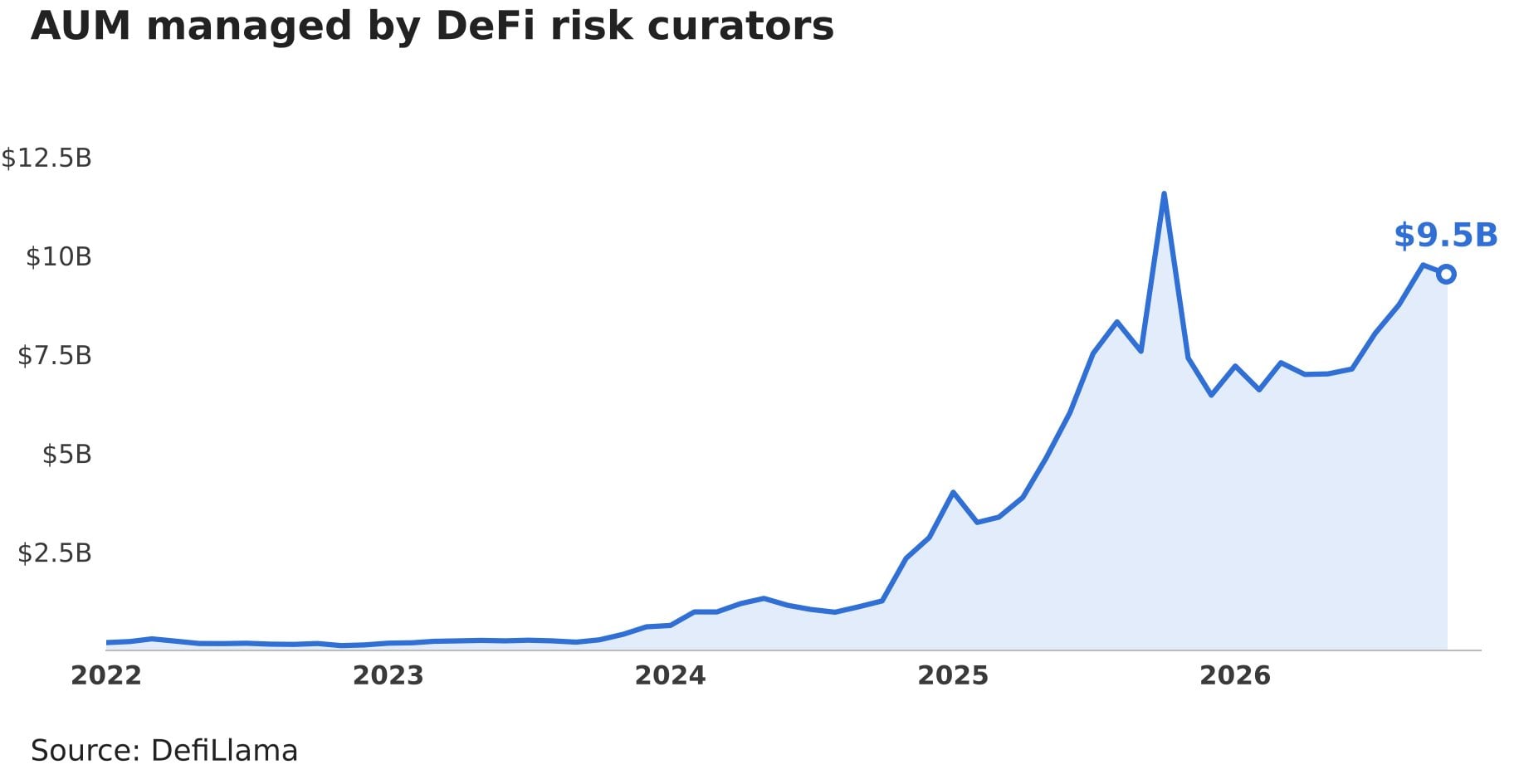
Figure: The trend of asset size managed by DeFi Risk Curators, currently at $9.5 billion (Data Source: DefiLlama)
These risk managers are granted limited permissions within the vault smart contracts to allocate capital across lending markets, set risk parameters, and monitor collateral positions. However, despite managing a total of $9.5 billion in assets, their revenue is minuscule, especially compared to traditional asset management firms that have greater discretion and responsibility.
In fact, many managers charge almost no fees. The largest DeFi risk manager by asset management size, Steakhouse Financial, only takes a total cut of 22 basis points on the assets it manages, while the average cut rate for all industry risk managers is only 19 basis points.
Part of the reason is that the current risk-adjusted returns in DeFi are not particularly enticing (partially influenced by the large amount of idle capital locked in Aave); another reason is that Morpho and Kamino have commoditized the vault layer and have ended up stuck between the managers and depositors, which again supports our earlier points regarding distribution channels.
However, the more fundamental issue is that most risk managers use the same batch of public data. If one is dealing with ETH or BTC-backed lending, the prices, liquidation rules, and collateral are all obvious. AI has made replicating risk modeling incredibly easy, ultimately pushing managers towards competing based on one-off risk assessments and historical performance, which will inevitably suppress management fees in the long run.
In contrast, take a look at a protocol like OnRe. It is an on-chain reinsurance company that raises funds from investors to underwrite real-world insurance risks. For this, it must grasp historical payout records, loss probabilities, and specific insurance contract texts, relying on professionals who can interpret this data.
None of this information can be found on a blockchain explorer; no matter how smart a cutting-edge AI model is, without access to the internal reinsurance ledger, it simply cannot calculate the underwriting pricing.
This is precisely why OnRe can charge a management fee of 75 basis points plus a 20% share of excess returns. Based on current return levels, its annualized fee rate reaches approximately 3%, equivalent to 16 times that of the average risk manager in DeFi.
Although both are entirely different businesses in nature and risk, the premium in fee rates also reflects some consideration for non-liquidity and principal loss risk. This further substantiates our core judgment: companies that hold proprietary data, underwriting expertise, and customer relationships can set far higher prices; if you only have the same public data and tools as everyone else, you will ultimately become a cheap commodity.
What Does This Mean for Value Capture?
Following this analytical framework, a glaring question arises: if DeFi sees significant expansion in the long term, who is most likely to capture the value dividend, and who will find it harder to monetize?
Public Chain Infrastructure (L1 and L2)
A somewhat harsh interpretation is that infrastructure tokens like L1 and L2 are in a tough position right now. This is because in the past, public chains inadvertently provided new DeFi applications with the two major moats of “distribution” and “capital,” and these benefits are now fading.
Historically, public chains held distribution power because users tended to deposit assets on the most active chain. Building on Ethereum meant reaching Ethereum users, while building on Solana meant reaching Solana users. When creating Uniswap, Compound, Aave, Kamino, or MakerDAO from scratch, starting off in an ecosystem where users congregate was crucial.
However, the evolution of cross-chain interoperability is weakening this binding. Today, a fomo user can open an account via a mobile app and trade any assets cross-chain without worrying about which underlying chain it is.
In the future, an increasing number of new users will enter DeFi through Revolut, Nubank, and Robinhood—giants that already possess tens of millions of users without requiring customers to manage their wallets themselves.
In the past, L1 relied on ecosystem wealth effects to funnel capital; when SOL or ETH appreciated, users had more investable capital on-chain, where the complications of cross-chain transactions and tribal community affiliations kept funds in place.
However, as cross-chain transactions become more seamless, new capital is flowing directly through stablecoins, tokenized assets, and institutions, with RWA issuers like Securitize, Superstate, and Ondo preferring to deploy on multiple mainstream chains.
Regarding data, public chains have almost never built defenses. The vast majority of on-chain financial information is publicly available, lacking any defensible proprietary data from the very beginning.
AI is even eroding another traditional advantage of blockchains: the developer ecosystem. One of the advantages Ethereum historically had over new chains like Solana or Aptos was its mature toolchain, audited codebase, and expansive integration ecosystem. However, as AI can easily migrate and reconstruct applications across different virtual machines, the importance of this advantage diminishes significantly.
More broadly, general-purpose public chains are losing their distribution and capital dividends while having almost no data moats. This leads them to combat mainly on execution and settlement efficiencies, and under the reality of ample block space, unit transaction costs continue to decline.
However, this does not mean public chains cannot possess high value. As Tushar explained years ago in a summit talk, L1 tokens have attributes of capital assets, commodity assets, and value storage. Even if they only charge a penny per transaction, if Solana eventually processes a billion payments a day, annual fee income could still reach $3.65 billion.
As the following data reflects, on-chain transaction processing volumes continue to rise:
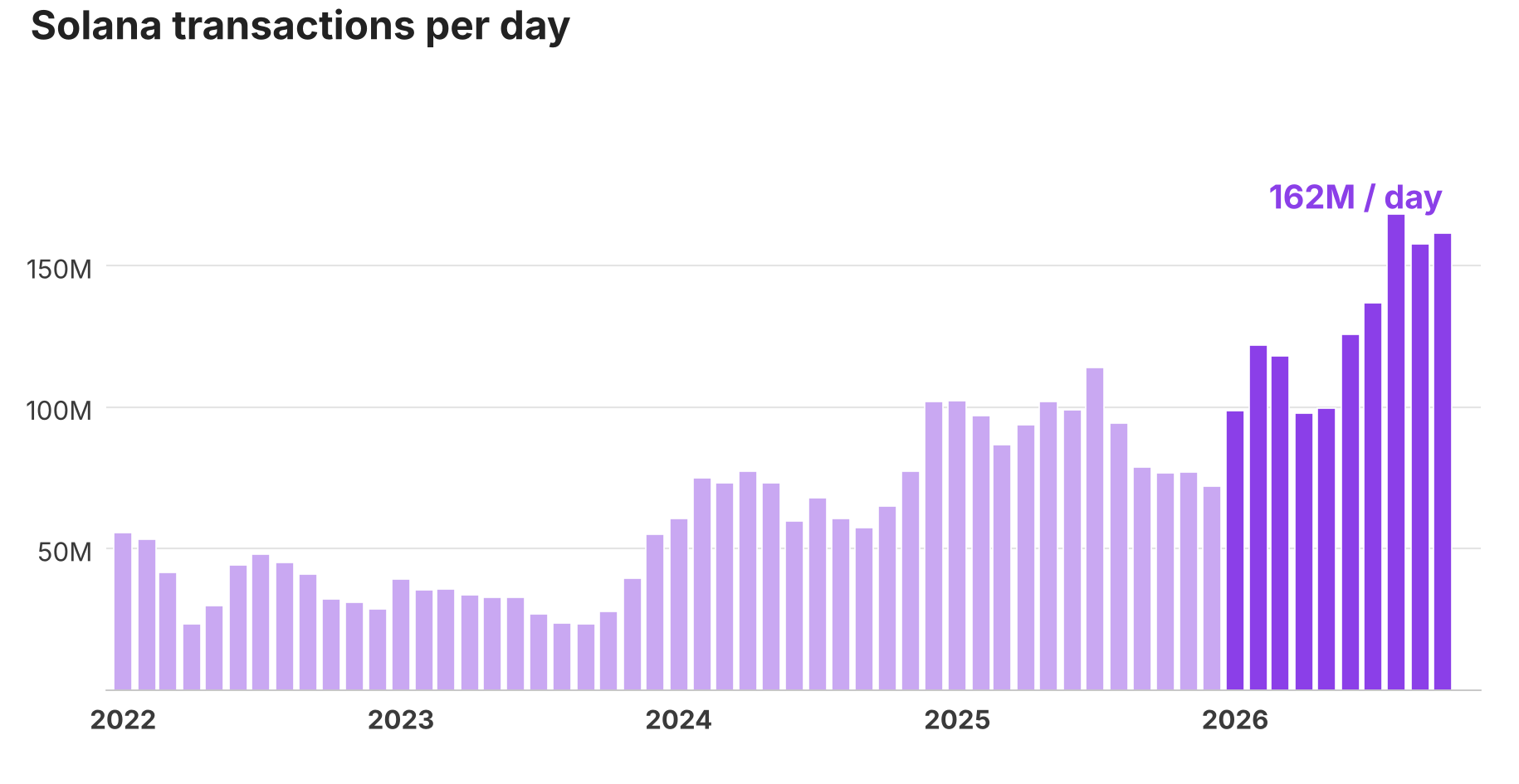
Figure: Daily transaction count trend on Solana, projected to reach 162 million by 2026 (Data Source: Blockworks Research)
The real insight is that the underlying logic of why public chains will be valuable in the future may differ significantly from investors’ initial assumptions.
Application Layer and Protocol Layer
When it comes to applications and protocols, the winners who can ultimately capture the highest value will undoubtedly master at least one of the three moats: establishing distribution barriers through hard-to-migrate direct customer relationships (like Robinhood or Hyperliquid), mastering capital barriers via balance sheets that can absorb losses, or monopolizing proprietary data barriers through unmatched underwriting capabilities.
No matter how powerful AI models evolve, these three factors are much harder to replicate than the software itself.
As for whether value ultimately flows toward company equity or protocol tokens, we believe it does not determine the outcome; both will share in this wave of dividends. Recent SEC guidelines and draft rules have already outlined potential paths for token compliance to capture value, and we firmly plan to capitalize on these opportunities.
The only core measure boils down to one question: whether a company controls scarce elements, whether it possesses pricing power as a result, and whether it can effectively translate that advantage into investor returns regardless of whether it presents itself as tokens or equities.
As more financial activities move on-chain, the valuation and profit gap between protocols with real moats and those with “just a bunch of software code” will continue to widen. As one of the largest investors in this space, we are devoting significant energy to identify which projects truly hold and can maintain these moats across the stack.
Isn’t This All an Advantage for Traditional Giants?
Following the analysis above, it’s reasonable to conclude that traditional giants seem to have the upper hand. Robinhood has a vast customer base, Goldman Sachs likely has a balance sheet stronger than any DeFi prime broker, and Moody's possesses deep data and authoritative licenses.
If software is nearing free while moat construction is costly, then large companies that already own moats should leverage their advantages.
However, startups still hold an ace: the willingness to take on risks that giants are afraid to touch. AI here acts as a double-edged sword: enabling Robinhood to set up a DEX in a weekend while also allowing a three-person startup to have the same研发速度.
As the costs of developing reliable products plummet, the true historic opportunity for startups lies in boldly penetrating markets and customer bases that traditional giants are hesitant to touch due to various concerns. Several compelling examples have already emerged in reality.
Ethena has built synthetic dollar products around Delta-neutral hedging. The arbitrage trading strategy isn’t mysterious to Wall Street institutions, but traditional companies cannot and do not wish to bring it to crypto exchanges due to compliance or internal restrictions, allowing Ethena to scale to $5.4 billion AUM.
Pump.fun and fomo started virtually from scratch, creating a new trading experience around the novel asset class of Memecoins and establishing massive distribution entry points, becoming two of the brightest winners in this crypto cycle.
Hyperliquid stepped into the derivatives space, which was originally monopolized by Binance, Bybit, and OKX, and quickly seized market share. It even launched pre-market perpetual contracts for unlisted tech giants like OpenAI and Anthropic, products that traditional licensed exchanges would never touch.
These markets constantly attract new traders and incremental liquidity, as exemplified by the explosive jump in new wallet creations on the Hyperliquid platform on the day of the SpaceX IPO:
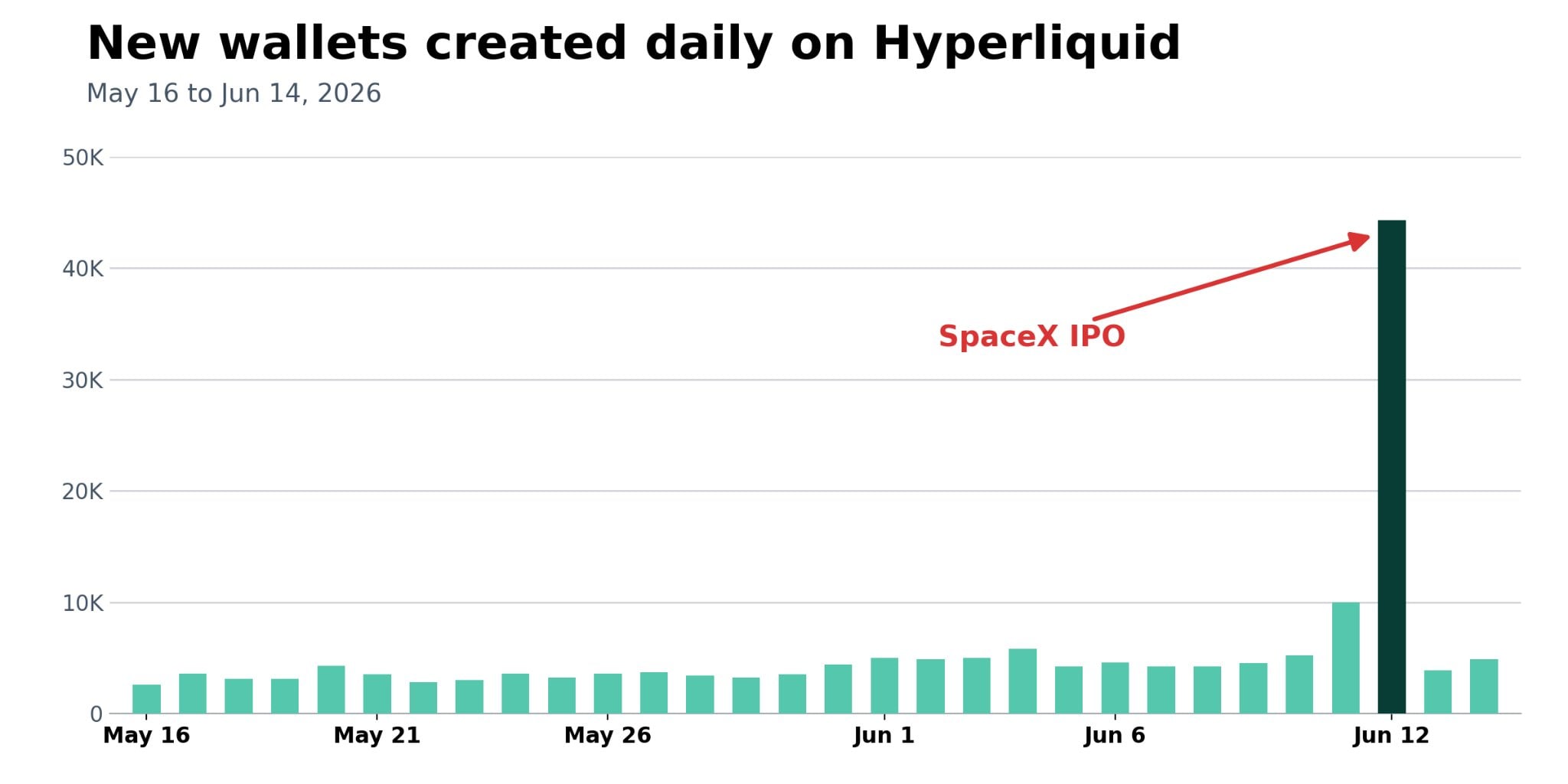
Figure: Daily new wallet creation numbers on Hyperliquid from May 16 to June 14, 2026, with over 40,000 on the day of the SpaceX IPO (Data Source: HyperTracker)
In the realm of capital moats, Project 0 specifically provides financing for DeFi collateral that traditional prime brokers are unwilling to handle; in the proprietary data moat, USD.ai can complete risk underwriting and pricing for loans backed by GPU computing power hardware, an area in which traditional banks have almost no experience.
The common thread linking these successful cases is that they are all targeting niches that giants have proactively left unaddressed due to regulatory constraints, operational complexities, reputational concerns, or initially considering the market too small. Historical experience suggests that such asymmetrical entry points will continue to emerge in the future.
This is precisely why the intersection of AI and DeFi is so exciting: AI greatly reduces the manufacturing costs of financial products, while DeFi allows startup teams to reach global customers and mobilize capital without having to rebuild the entire traditional financial stack from scratch.
Of course, merely having a high-risk tolerance is not a lasting moat. Over time, regulations will catch up, and once a new market is validated, traditional giants will eventually move in (as has been the case in the Bitcoin spot ETF market).
However, startups do not need to possess a complete moat on day one. They only need an entry point that a giant is unwilling to engage with and seize the time window to solidify it into one or more of the moats mentioned above, after which they can initiate a compounding growth trajectory.
Conclusion
We firmly believe that in the next decade, trillions of dollars in financial activity will move on-chain, and AI will reduce the construction costs of financial software serving these activities to unprecedented lows.
Yet, as software increasingly turns into a commodity, the elements that truly uphold a financial enterprise's value have not depreciated. Direct customer relationships, real risk capital, and non-public proprietary data remain extremely hard to obtain; enterprises holding these scarce elements will firmly possess pricing power.
For this reason, we are particularly optimistic about a new generation of DeFi startups. The proliferation of AI development tools has equipped startup teams with faster and lower-cost means to challenge traditional giants, and once any of the aforementioned moats are successfully established, they can be expected to grow into sustainable, evergreen entities.
Ultimately, code can always be forked and can now even be directly generated by leading AI models; but no model can conjure any of the moats mentioned above out of thin air for you. As investors in the crypto space, the real excess return opportunities lie here. (See original disclosure statement at Multicoin's website).
免责声明:本文章仅代表作者个人观点,不代表本平台的立场和观点。本文章仅供信息分享,不构成对任何人的任何投资建议。用户与作者之间的任何争议,与本平台无关。如网页中刊载的文章或图片涉及侵权,请提供相关的权利证明和身份证明发送邮件到[email protected],本平台相关工作人员将会进行核查。


