
Overview
In the third quarter of 2026, Bitcoin rose by approximately 43%, yet the crypto primary market continued to cool down. RootData recorded a total of 199 financing rounds, with disclosed amounts totaling $4.46B; the count has decreased for four consecutive quarters. However, the market hasn't stalled, and the destinations for funding and the investors themselves have undergone profound changes.
VC activity has significantly cooled down, with a month-over-month decrease in deal count of -5% and a decrease in disclosed amounts of -24%.
Funds are flowing towards late and strategic rounds. Strategic and private rounds accounted for approximately $1.75B, while early rounds only reached about $0.73B. Excluding the public offerings of listed companies, IPOs / de-SPACs, mergers and acquisitions, token public offerings, OTC, and debt financing, this quarter's equity financing included 144 rounds with a disclosed total of about $3.38B, representing a month-on-month increase of +12% and a year-on-year increase of +35%; however, the count decreased by -14% month-on-month and by -36% year-on-year. The total amount year-on-year decreased by -74%, mainly due to the high base from the public offerings and IPOs in the third quarter of 2025.
The median amount has rebounded, but large transactions have decreased. The median disclosed amount increased from $6.0M to $8.0M; the number of transactions exceeding $100M decreased from 17 to 13, with the share of the top ten transactions dropping from 62% to 57%. The most significant decrease has been in the disclosed small transactions below $5M.
The money is primarily being invested in centralized financial companies such as exchanges and brokers. CeFi recorded 31 deals, taking 32% of the disclosed amounts; DeFi had 51 deals, the highest number, but only secured 8%.
The amount of trades exclusively involving crypto-native capital has decreased by nearly sixty percent. The disclosed amounts for these transactions fell from $2.57B to $1.05B; transactions involving traditional finance or general capital have seen their share rise from 39% to 45%.
The outlook for the next funding round is pessimistic. This quarter, only 3 new crypto venture funds completed fundraising, totaling about $1.3B, marking the lowest number of new funds since the third quarter of 2019.
1. Currency Prices Rise, but the Primary Market is Cooling
This quarter, RootData recorded a total of 199 financing rounds, with 116 disclosing amounts totaling $4.46B. The count is down 5% from the second quarter, with amounts down 24%; compared to a year ago, amounts have decreased by 74%.
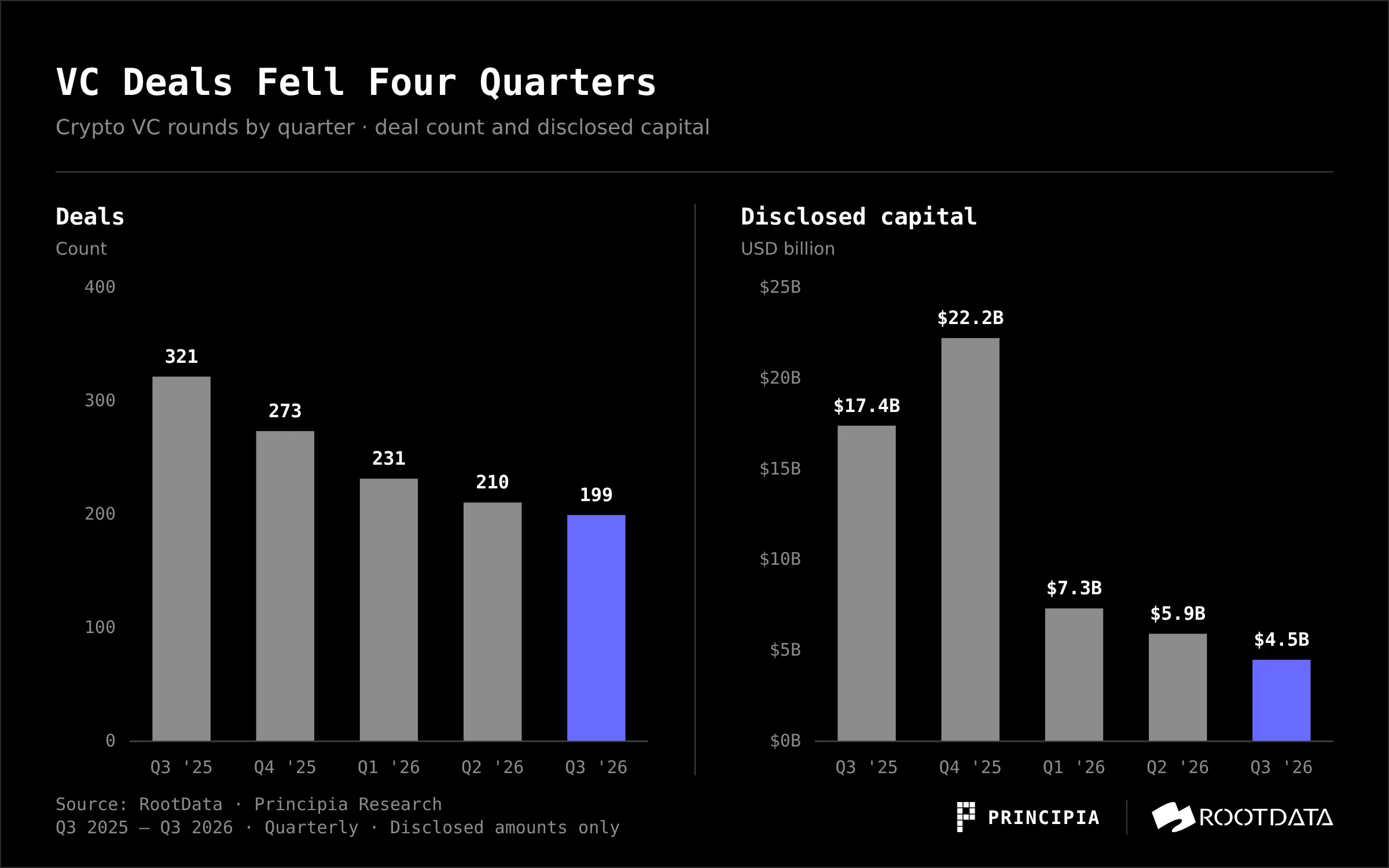
The basis of the third quarter of 2025 included a large number of public offerings and IPOs from listed companies: Strategy approximately $2.52B, Forward Industries approximately $1.65B, Galaxy approximately $1.40B, Bullish IPO approximately $1.11B. Following this wave of "coin-stock" financing, there was a significant year-on-year drop of 74%. The $22.19B in the fourth quarter reflects a similar trend, with nearly half coming from a $10.3B acquisition by Dunamu.
Looking solely at equity financing, the conclusion is different. Excluding listed company issuances (Post-IPO), IPOs / de-SPACs, mergers and acquisitions (M&A), token public offerings, OTC, debt financing, and community rounds, and excluding verified transactions over $100M that are categorized as secondary stock transfers, token presales, listed company financings, or debt, this quarter's equity financing included 144 rounds, with disclosed amounts of about $3.38B, surpassing the roughly $3.02B (168 rounds) in the second quarter and about $2.50B (226 rounds) in the third quarter of 2025, reflecting a month-on-month increase of +12% and a year-on-year increase of +35%, while deal count saw a decrease of -14% month-on-month and -36% year-on-year. Fewer transactions occurred, but deal sizes increased.
Moreover, it is noteworthy that there is a divergence between currency prices and financing. Bitcoin rose from about $58.6K at the beginning of July to about $83.6K at the beginning of October, an increase of approximately 43%; yet the primary market has not warmed up accordingly. We believe a significant reason for this shift is the absorption of capital by AI: the demand for funding in AI computing power and models is substantial, and the market anticipates greater growth potential in this area; amid limited allocation quotas for LPs, some funds that were originally directed towards crypto venture capital are now shifting to AI. Actions from leading crypto-native institutions also validate this: on July 8, Paradigm announced the completion of its $1.2B fourth fund, expanding its investment scope from crypto to cutting-edge fields like AI and robotics, while stating it would continue to invest in crypto; IOSG founder Jocy Lin established the IOSF Ventures focusing on AI; on October 22, a16z Crypto was rebranded to a16z Frontier, broadening its new fund's investment scope to AI and autonomous machines, while continuing to invest in the crypto space.
The fluctuations within the quarter were mainly driven by a few large deals. July was the hottest month with $2.37B across 72 transactions, where Crypto.com, Ionic Digital, and Securitize each raised $400M. August was the coldest month with $0.72B across 63 transactions. September rebounded to $1.37B across 64 transactions, primarily from Polymarket's $300M and Félix's $200M.
2. Funds Flowing Towards Late and Strategic Rounds
This quarter, nearly 40% of funds landed in strategic and private rounds, amounting to approximately $1.75B. Early rounds had the highest deal count, but their dollar amount only accounted for approximately one-sixth.
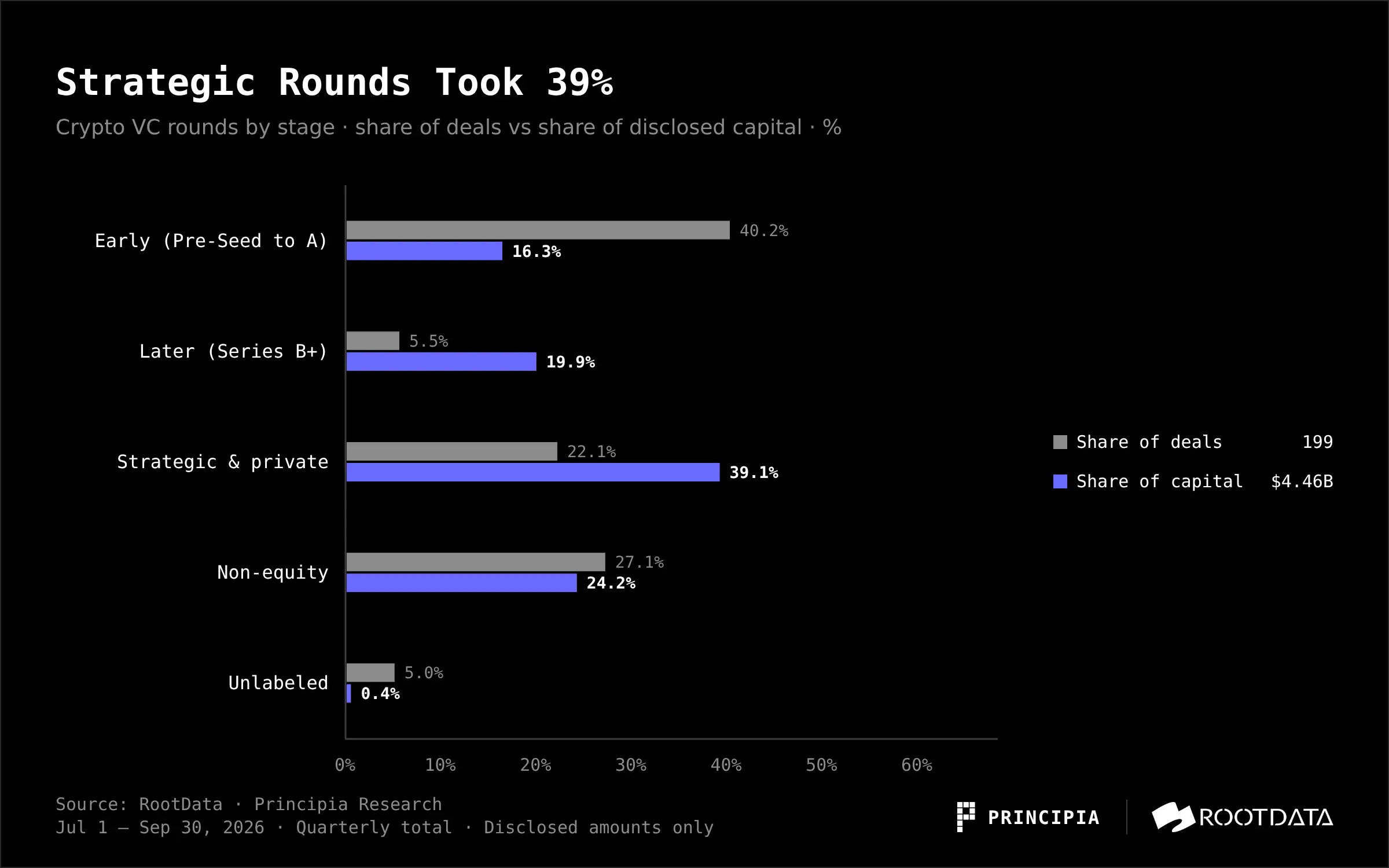
Early rounds remain the most active with 80 transactions, accounting for 40% of all deals, but in terms of dollar amounts, they play a supporting role: transactions outside of early rounds captured around 84% of the disclosed amount.
In terms of deal sizes, there were 25 mid-sized transactions in the $20M–100M range (excluding $100M+), with a total disclosed amount of approximately $1.15B, up from 19 deals worth about $0.77B in the second quarter. However, this quarter, 7 of the deals within this range belonged to OTC, debt financing, company issuances, or acquisitions; solely considering equity financing, the mid-sized transactions totaled 18, worth about $0.87B, with the count comparable to the second quarter (18 deals, approximately $0.73B), and the amount increasing by about 19%, though still lower than the third quarter of 2025 (31 deals, approximately $1.03B).
This reflects a decrease in risk appetite as well as a shift in investors: some crypto-native investment institutions have ceased making new investments, liquidated, or shifted focus to AI. In December 2025, following a lawsuit by the SEC, Shima Capital's founders reportedly announced their resignation in internal emails to portfolio projects and initiated an orderly liquidation of the fund. In June 2026, Arbitrum DAO's gaming investment program AGV proposed to halt new investments and only manage the existing portfolio, which was approved in early July, and approximately 143.7 million ARB will be returned to the DAO treasury in batches. In October, Deus X Capital ceased operations and is set to officially liquidate on January 31, 2027, with CEO Tim Grant transitioning to CEO of the AI company TensorX. By the end of the month, Verda Ventures, focused on stablecoin infrastructure, halted new project investments due to its founder joining Tether and shifted to solely servicing the existing portfolio.
At the same time, traditional finance and strategic capital are stepping in. Citadel Securities invested $400M in Crypto.com at a valuation of $20B; Nasdaq's Nasdaq Ventures agreed to invest $100M in Kraken's parent company Payward, valuing it at approximately $21B according to Bloomberg. 1789 Capital led a financing round of about $1B for Polymarket, contributing approximately $300M and valuing it at $21B. Tiger Global led Augustus' $180M Series B; SBI Holdings led EDX Markets' $76M Series C and Gauntlet's $125M Series C. These funds are directed towards more definitive and compliant areas such as licenses, clearing, and trading gateways, rather than new narratives.
3. Sectors: Funds are Buying “Financial Pipelines”
According to RootData's main tags, CeFi accounted for 31 transactions this quarter, taking $1.44B, which is 32% of the disclosed amounts, ranking first. DeFi had the highest transaction count with 51 deals but only secured $0.37B, accounting for 8%.
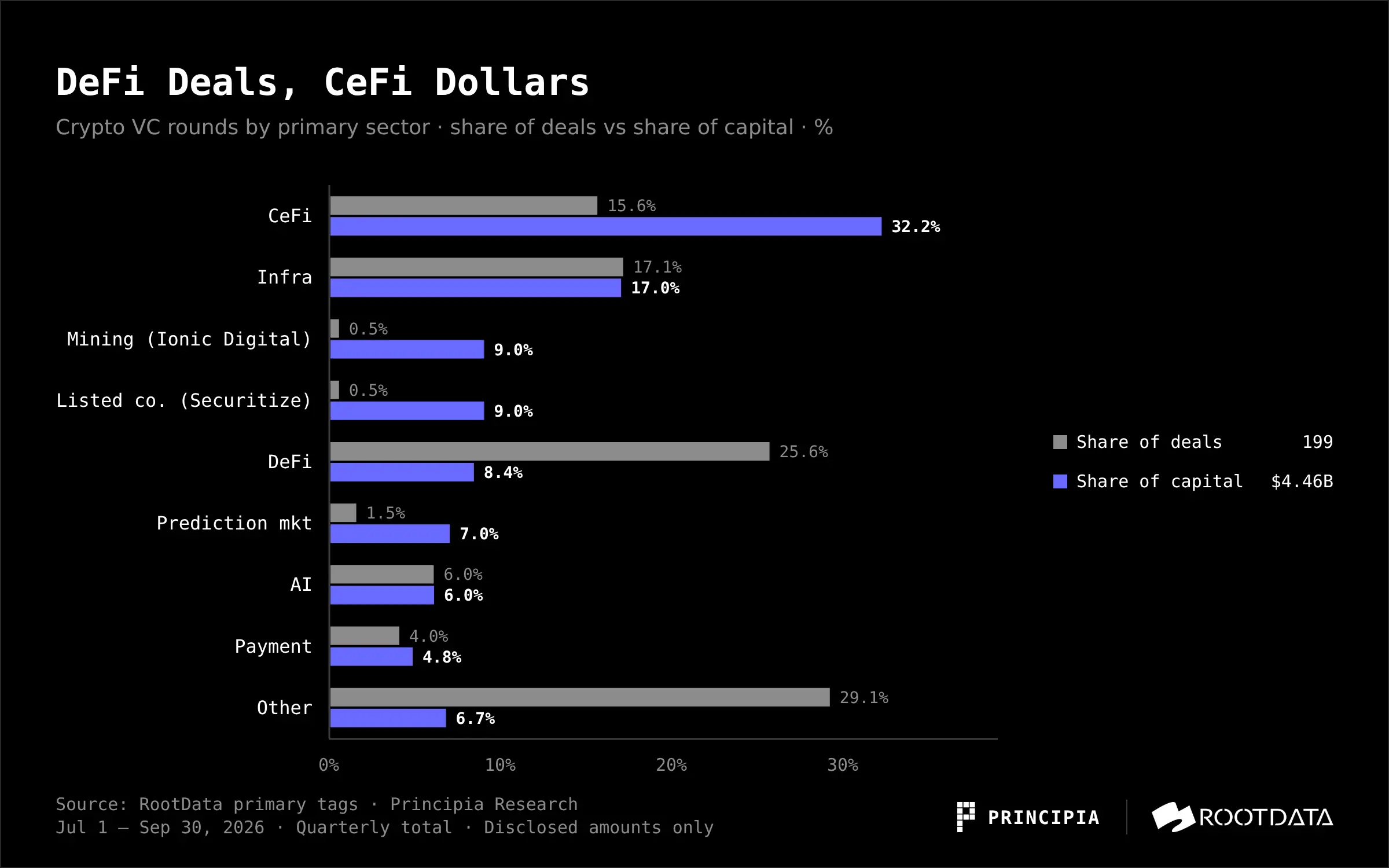
CeFi's large transactions are almost all related to trading, brokerage, and clearing hubs: Crypto.com, Kraken, Augustus, Alpaca, EDX Markets. Infra ranks second with 34 transactions valued at $0.76B, represented by Ripple (Ripple Prime $275M senior unsecured notes), Prime Intellect, and Gauntlet. Additionally, two $400M transactions support individual tags: Bitcoin mining company Ionic Digital and Securitize listed on the NYSE through a SPAC.
DeFi has lower amounts for several reasons, part of which relates to insufficient disclosures: among the 51 transactions, only 25 disclosed amounts. Yet even accounting for this, DeFi is evidently dominated by small-scale, early-stage, and protocol-oriented transactions. The consumer sector is nearly non-existent: the gaming main tag includes only 3 transactions totaling about $5.9M.
4. Transactions Exclusively Involving Crypto-native Capital Have Decreased by Nearly Sixty Percent
Transactions involving only crypto-native capital saw disclosed amounts fall from $2.57B in the previous quarter to $1.05B this quarter, with their share diminishing from 44% to 24%; transactions involving traditional finance or general capital saw their share increase from 39% to 45%.
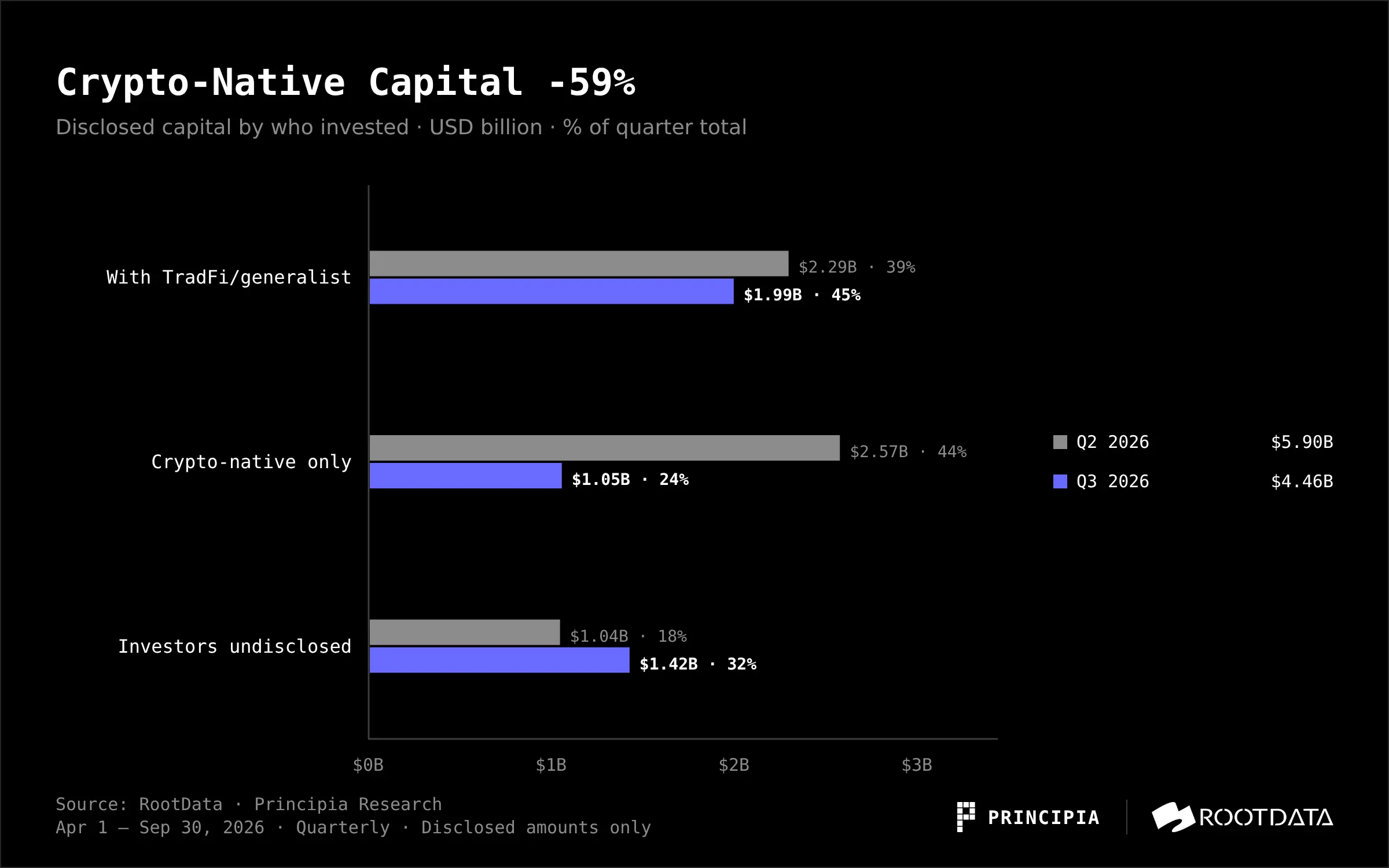
"Traditional finance or general capital" refers to banks, exchanges and market infrastructure, brokers, asset managers, tech giants, trading firms, as well as integrated and fintech VCs. Crypto-native capital is contracting, while several of the largest transactions this quarter were backed by Citadel Securities, Nasdaq, 1789 Capital, Tiger Global, Peak XV, SBI, Intel Capital, and ICONIQ.
When considering the frequency of appearances, the picture looks different. The most active are YZi Labs and Coinbase Ventures, but both primarily focus on incubation and follow-on investments, with little leading participation.
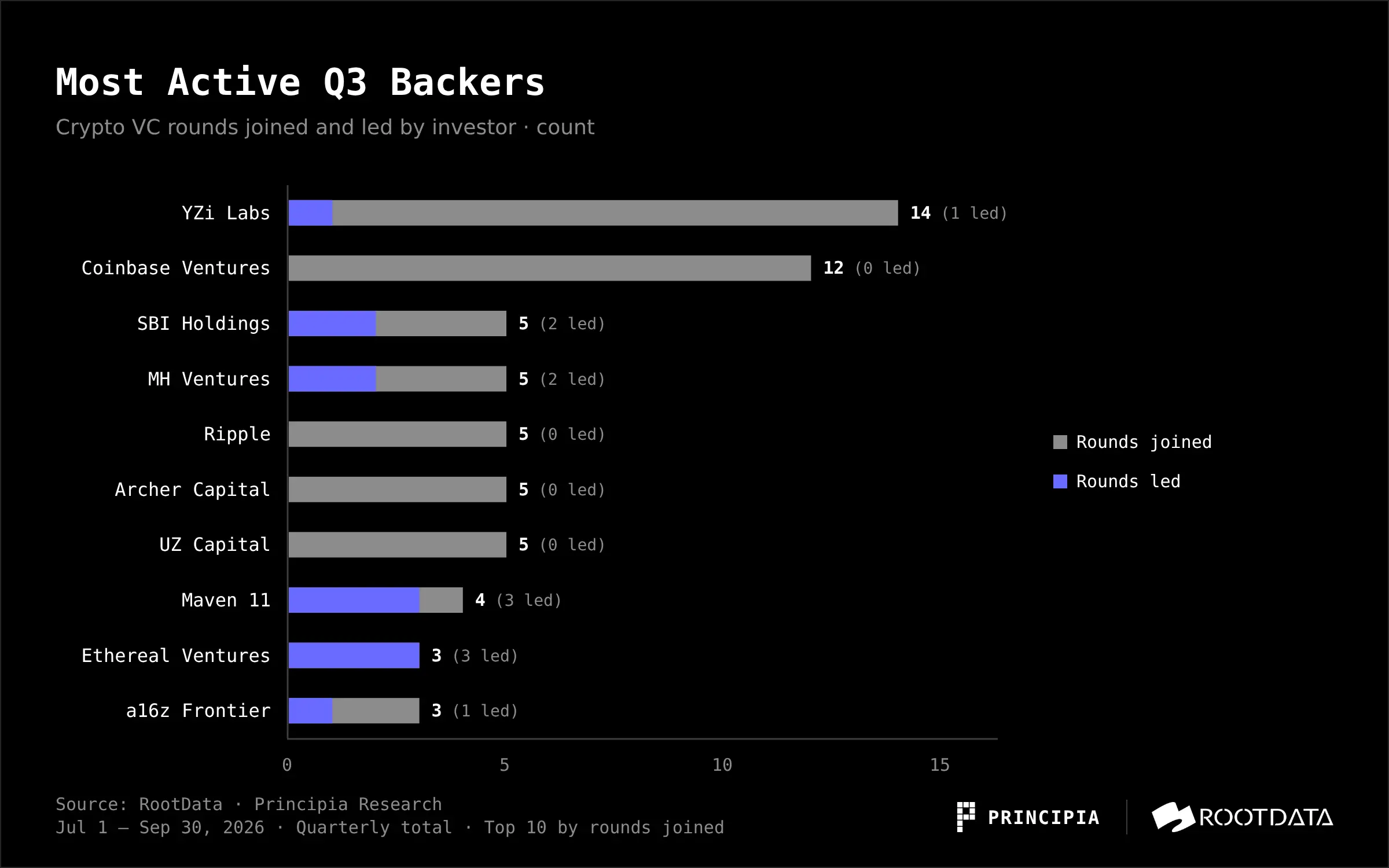
Compared to the second quarter, the players have changed. The most active in the second quarter were Coinbase Ventures (13 times), Animoca Brands (12 times), and a16z Frontier (formerly a16z Crypto, 8 times), while Paradigm led 4 transactions. This quarter, traditional financial institutions held more pricing power.
5. More New Companies, Established Companies Securing Large Funds
Companies established in 2021 and earlier secured 51 financing rounds this quarter, raising $2.30B, accounting for more than half of the disclosed amounts. New companies founded after 2025 had the highest count with 67 rounds but only secured $0.63B.
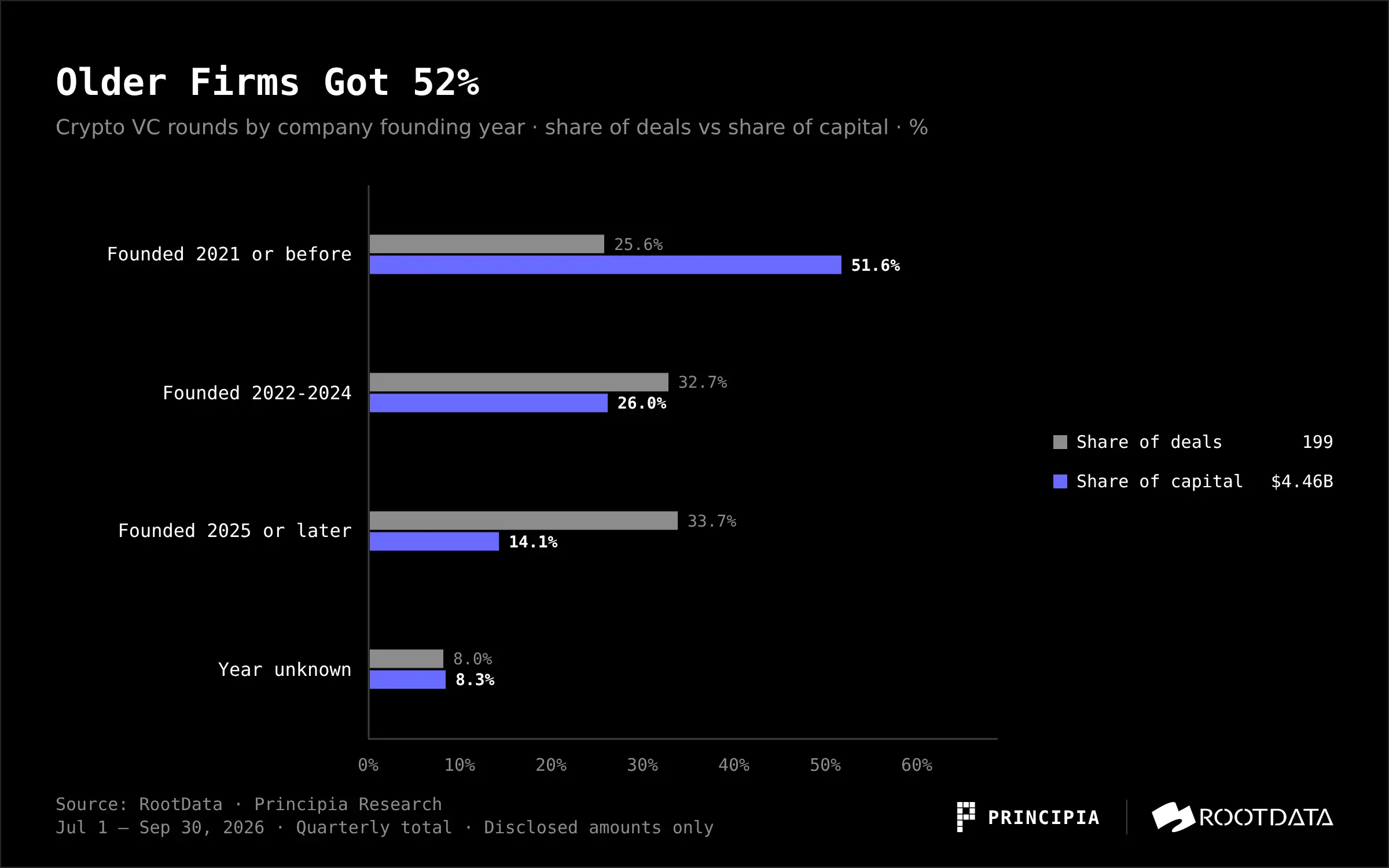
The list of established companies securing significant funding is quite familiar: Crypto.com (founded in 2016), Kraken (2011), Ripple (2013), Securitize (2017). They have revenue, licenses, and measurable businesses, aligning perfectly with this quarter's funding preferences.
6. Regionally, the US Remains Dominant
RootData's country field only covers 53 of the 192 projects (28%), corresponding to 55 transactions totaling $2.19B, about half of the disclosed amounts for the entire season. In this subset of samples, the US accounted for 28 transactions valued at $1.52B; Singapore accounted for 10 transactions valued at $444M, with Crypto.com alone accounting for $400M.
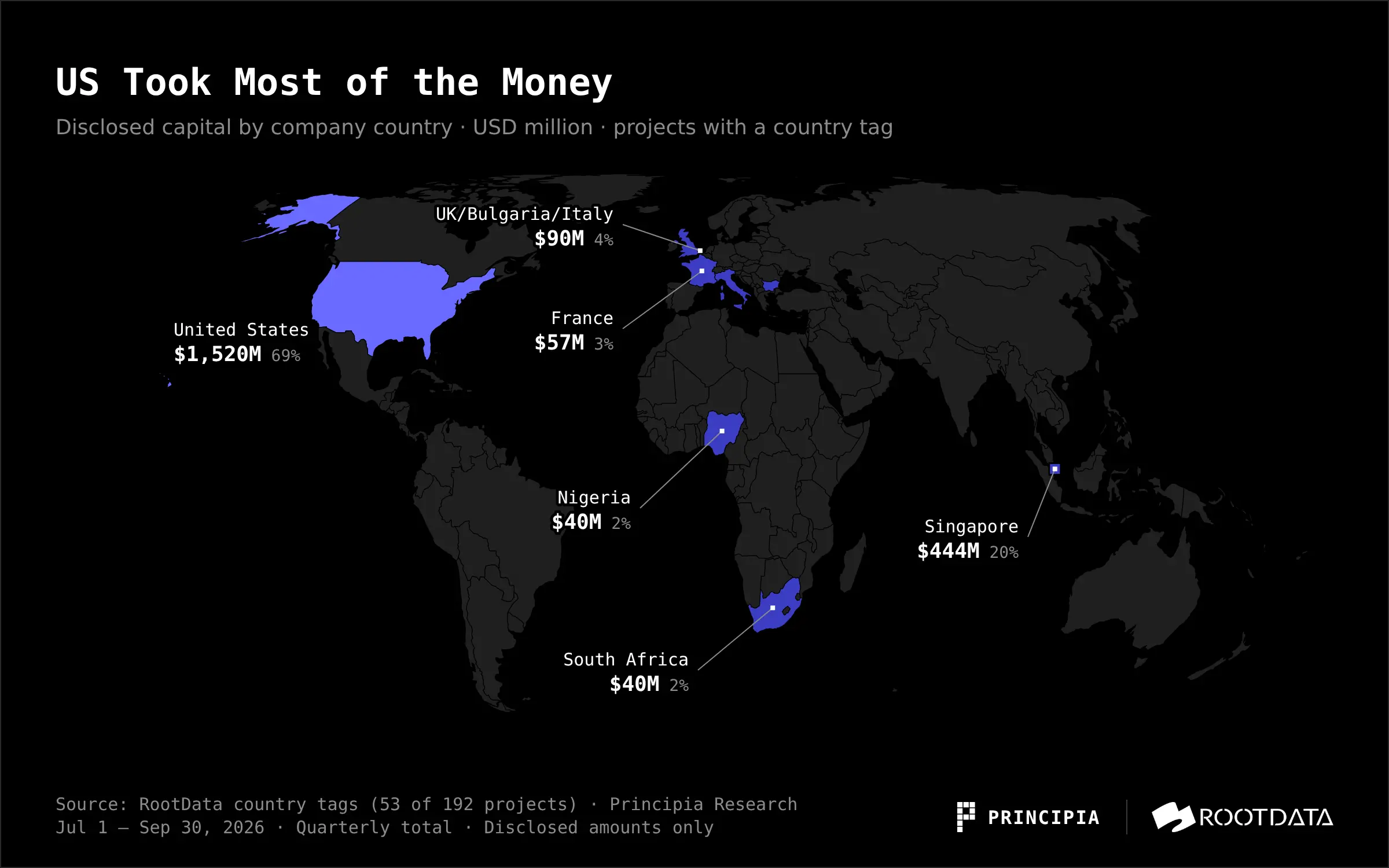
The remaining countries have sparse representation. The UK, Bulgaria, and Italy each accounted for $90M, France for $57M, and Nigeria and South Africa for $40M each; Hong Kong had 3 transactions, Japan had 2, both with very small amounts. Although the coverage rate is so low, it still indicates that funding is highly concentrated in the US, with large transactions in Asia mainly coming from Singapore's exchanges.
7. Fundraising: Tight Ammo for the Next Round
The amount available in the primary market ultimately depends on how much funds can raise. According to Galaxy Research, only 3 new crypto venture funds completed fundraising this quarter, totaling about $1.3B, the lowest number of new funds since the third quarter of 2019. Annualized, fundraising this year is about $8.2B, slightly below 2025's $8.75B. The average fund size this year is approximately $386M, with a median of only $71M: most new funds are small, while a few large funds have inflated the average.
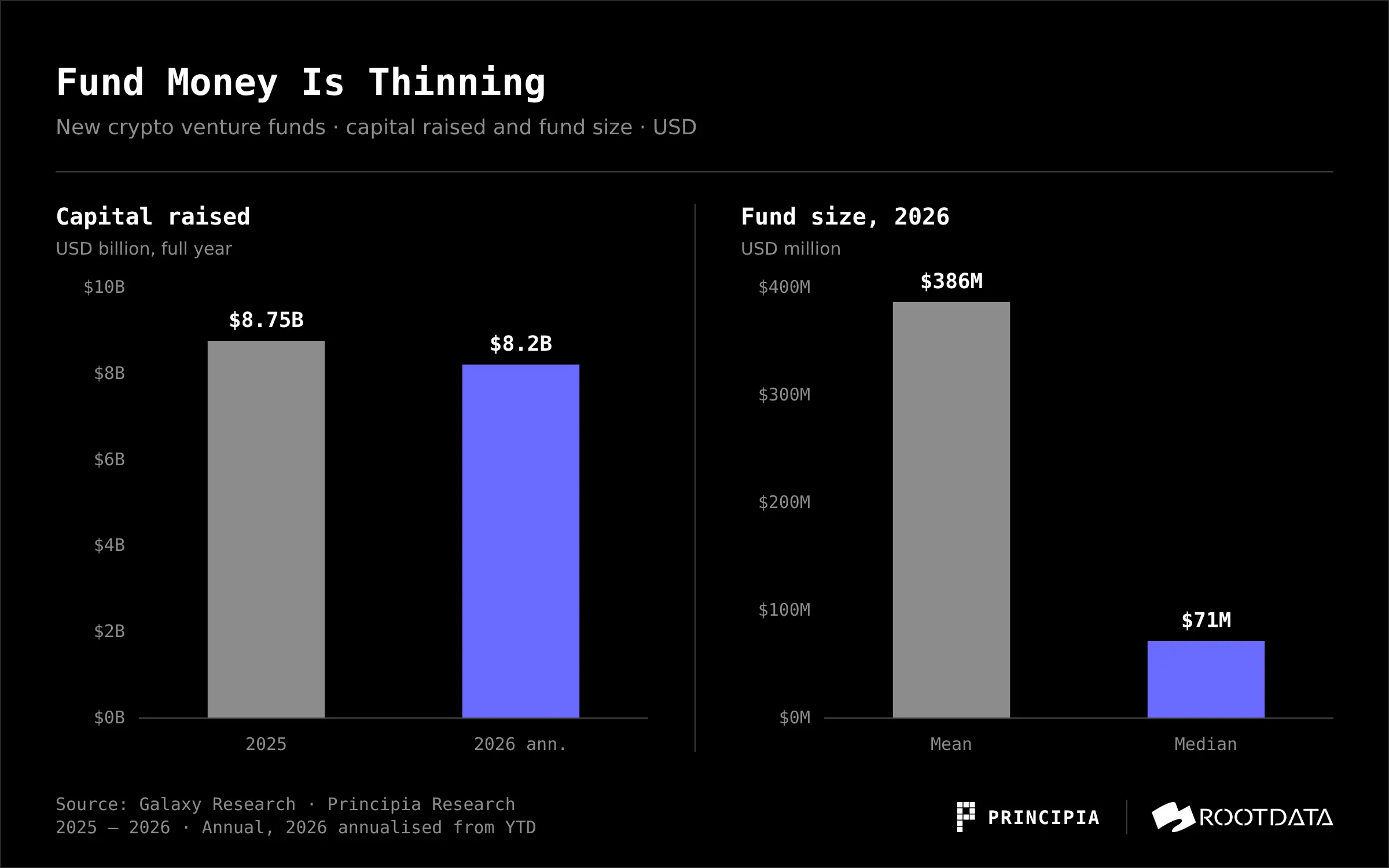
The difficulty in fundraising and the cooling of investments are two sides of the same coin: spot ETFs, digital asset treasury companies, and AI are all competing for LP's allocation quotas. Our judgment is that tighter financing at the LP end will make GPs more cautious: they will prioritize supporting follow-on rounds for already invested projects and focus more on companies that have revenue and licenses. This is precisely the trend reflected in this quarter's investment side.
8. Conclusion
Overall, Q3 has seen a cooling of VC investment activity; funds are flowing towards financial pipelines that can charge fees, hold licenses, and clear transactions, with pricing power increasingly handed over to traditional financial institutions; VC LP fundraising is facing a downturn, and the situation for startups is grim regarding follow-up rounds of financing.
For entrepreneurs, the timeline to secure large funding has been pushed back, with expectations shifting toward more mature companies: revenue, licenses, and distribution channels are more likely to convert into valuation than narratives. Early-stage funding has significantly decreased, VC risk appetite has diminished, and preparations to speak with product data and accepting smaller initial rounds are necessary.
For investors and LPs, the rebound in coin prices has not automatically transmitted to the primary market. This quarter, Bitcoin rose by about 43%, but financing continues to decline, rendering the old script of "rising coin prices, thriving venture capital" temporarily ineffective. Transactions in the mid-range of $20M–100M have increased month-on-month, but the count of equity transactions remains stable, requiring more quarters of data to confirm the trend.
Looking to the fourth quarter:
Will traditional finance continue to participate? This quarter, 45% of disclosed amounts involved their participation. Is this a structural change or just a coincidence of a few large transactions? The fourth quarter will provide answers.
Can coin prices transmit to early rounds? A rebound in the number of small early round transactions would indicate a genuine recovery on the entrepreneurial side.
Policy and fundraising. The progress of the CLARITY Act and whether new funds can complete fundraising before the end of the year.
免责声明:本文章仅代表作者个人观点,不代表本平台的立场和观点。本文章仅供信息分享,不构成对任何人的任何投资建议。用户与作者之间的任何争议,与本平台无关。如网页中刊载的文章或图片涉及侵权,请提供相关的权利证明和身份证明发送邮件到[email protected],本平台相关工作人员将会进行核查。


