The UK is contracting, the EU is expanding, and the rise of stablecoin and euro trading is emerging.
Written by: Chainalysis
Translated by: Luffy, Foresight News
The data research agency Chainalysis in the crypto field has released the2026 Global Cryptocurrency Adoption Report. The report mentions that even as the global crypto market faces a downturn, the €2.08 trillion crypto economy in Western Europe remains resilient, achieving slight positive growth. The internal landscape of the region is clearly differentiated: the UK market is contracting; users in France are turning to self-custodied stablecoins due to fiscal pressure; Spanish exchanges attract a significant amount of cross-border funds from Europe. The holding of stablecoins in Western Europe has surged, with the euro's share in crypto trading increasing, and the industry is transitioning from speculation to institutionalization. Below is the Chinese translation of the report's Western Europe section:
When the global crypto market enters a downturn cycle, Western Europe shows strong resilience. During the statistical period (July 2025 – June 2026), the total size of the Western European crypto economy is €2.08 trillion, ranking second globally, achieving a slight growth of 1.2%. Only three regions worldwide recorded positive growth: Sub-Saharan Africa, Latin America, and Western Europe.
New regulatory policies, continuous entry of institutional funds, and deepening ties with traditional finance are transforming the crypto market in this region. However, the developmental paths of various countries show significant differences: the proliferation of stablecoins, the rise of the euro's status in crypto trading, and cross-regional development of exchanges have become common trends.
Christopher Beck, Co-CEO of European leading crypto infrastructure service provider BS Digital, commented on this round of changes: “The speed of institutional adoption is accelerating; crypto assets have gradually transitioned from a type of emerging speculative asset to a mainstream financial product.”
However, the backdrop of all this is the uncertain overall economic outlook in Europe and the continuous change in user preferences, which directly determine the flow of crypto funds and the market focus.
Six Markets Support Two-Thirds of the Western European Crypto Economy
The UK remains the largest crypto market in Western Europe, with a scale of €424.5 billion, accounting for 20% of the total in Western Europe. As a long-established global financial center, with a mature capital market and banking sector, the UK crypto market resembles a natural extension of its domestic financial services. However, during the statistical period, the market size declined by 8%, primarily due to a reduction in trading volume on decentralized exchanges (DEX).
Germany ranks second with €288.8 billion, while France comes in third with €215.8 billion. The German market has slightly contracted, also due to reduced DEX trading; the French market remained roughly flat. Spain (€156.1 billion) and Switzerland (€132.8 billion) experienced growth, driven primarily by increased activity on centralized exchanges (CEX).
With the addition of the Netherlands (€207.8 billion), these six countries account for about two-thirds of the total crypto economy in Western Europe, indicating a high concentration of crypto activity in leading countries.
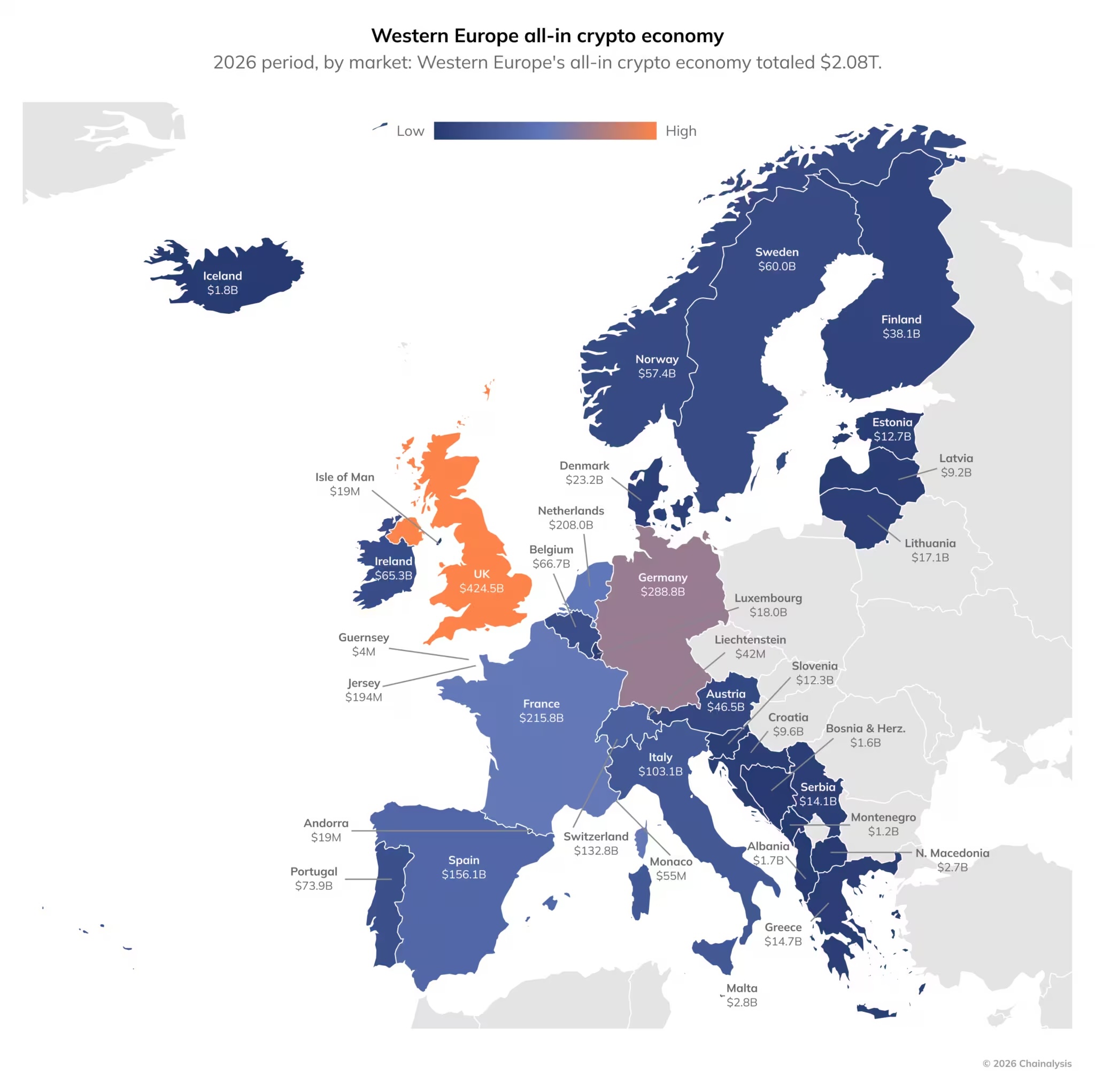
Map of Western European Crypto Economy Size
Industry experts interviewed generally believe that the European crypto industry has left behind its phase of brutal growth and entered a new stage of mature development. Faustine Fleuret, Global Head of Public Affairs at decentralized credit infrastructure Morpho, stated, “We can clearly see a shift: people are no longer just experimenting with cryptocurrencies but are embedding blockchain into mainstream financial services. Banks, asset management institutions, and fintech companies are slowly realizing that on-chain finance is not a parallel system competing with traditional finance but a whole new underlying technology on which to build business.”
The Euro's Voice in the Crypto Market Is Strengthening
The rise of the euro's status is one of the markers of the maturity of the Western European crypto market, aligning with its role in the traditional foreign exchange market.
Data from the Bank for International Settlements (BIS) shows that in April 2025, the euro participated in 28.9% of global foreign exchange transactions. Crypto order book statistics are based on unilateral trading pairs (euro versus tokens), which differs from the bilateral statistics in foreign exchange; this article takes half, or 14.5%, as a reference benchmark.
Chainalysis data indicates that the euro is increasingly becoming the exchange channel for ordinary people entering the crypto market. By the end of the statistical period, euro-denominated transactions accounted for 11.8% of crypto trading across 33 major fiat currencies globally, showing a notable increase compared to the past, nearing the benchmark share in the foreign exchange market.
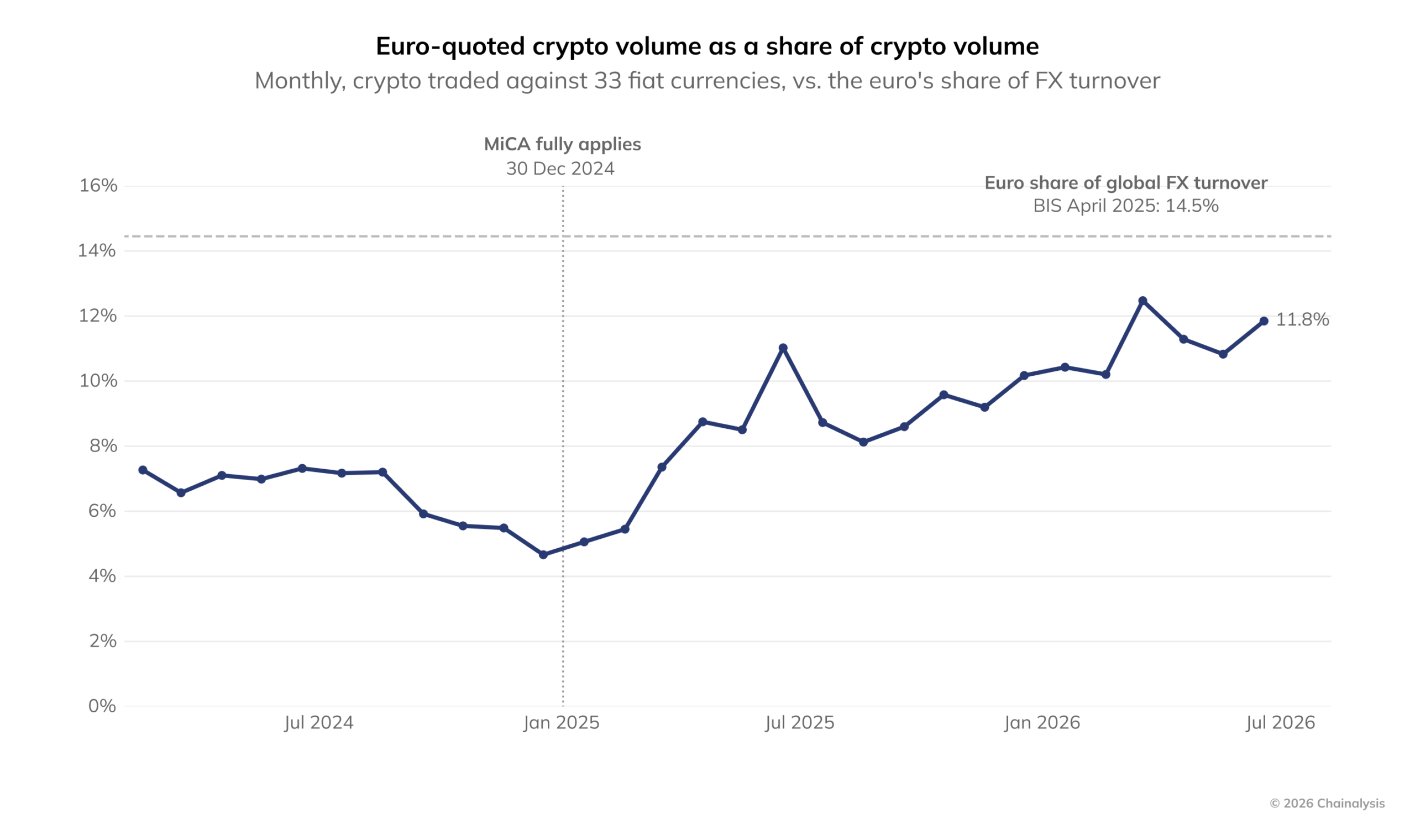
Proportion of Euro-denominated Crypto Trading Volume in Total Crypto Trading Volume
This upsurge coincides with the implementation of the EU's MiCA regulation. MiCA establishes a unified regulatory framework for all crypto asset issuers and service providers within the EU, reducing uncertainty for investors, allowing service providers to operate in all EU countries once they obtain a license.
Although data cannot directly prove a causal relationship between the two, the increase in the euro's trading share is likely benefiting from the market stability provided by unified regulation, as well as the overall expansion of the EU crypto market.
Laurynas Spangevičius, General Manager of Robinhood Europe, commented on the impact of MiCA: “The most impactful regulatory change for the European crypto industry is the comprehensive implementation of MiCA. Uncertainty in regulation has been replaced by clear rules, giving long-term mainstream investors the confidence to enter the market.”
Western European Stablecoin Holdings Are Growing Far Faster Than Other Global Regions
Research has found that the weight of stablecoins in the digital asset allocation of Western European residents is increasing, with stablecoin balances in personal wallets across all surveyed countries rising.
This change is significant. After the proliferation of stablecoins, Europe must answer a core question - how to integrate these digital dollars / digital euros into the existing financial system.
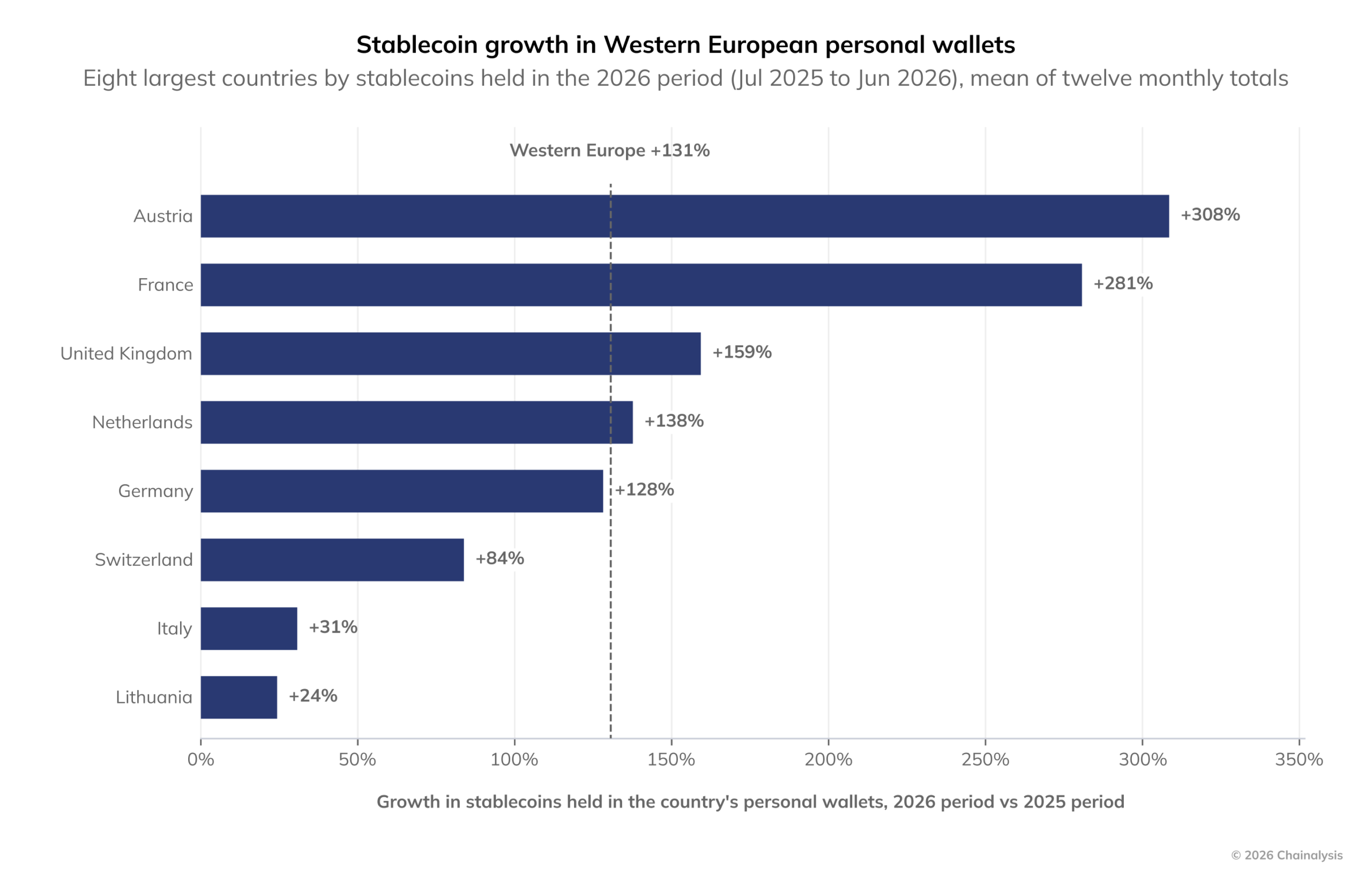
Growth Rate of Stablecoin Holdings in Personal Wallets in Western Europe
The total holdings of stablecoins in personal wallets in the Western European region surged by 131%, far exceeding the global increase of 52%, with Austria and France showing particularly significant increases. This wave of growth has raised Western Europe's share of global stablecoins from 3.4% to 5.1%.
Multiple factors are driving this: the European populace desires more diverse tools for saving and transferring funds; MiCA has established clear entry rules for euro stablecoin issuers, promoting the development of the euro stablecoin sector. The rapid proliferation of stablecoins in Europe and their potential impact on the financial system can no longer be ignored.
Relevant debates have already begun. In September 2026, the European Central Bank and the central banks of EU countries publicly opposed a stablecoin reserve rule in MiCA: according to current rules, ordinary stablecoin issuers must hold at least 30% of reserves in European bank deposits, while major important stablecoins are at 60%. Central banks are concerned that a large-scale redemption run could lead to a sudden outflow of bank deposits, triggering financial risks.
Traditional financial institutions are also stepping in. Qivalis's CEO Jan-Oliver Sell, whose stablecoin project is supported by the alliance and complies with MiCA regulatory requirements, mentioned that compliant euro stablecoins have already demonstrated clear use cases: as on-chain cash settlement tools for tokenized assets and supporting conditional programmable payments between companies.
A spokesperson from the Spanish multinational bank CaixaBank stated that engaging in such business is also part of Europe's intention to avoid complete reliance on dollar stablecoins in the stablecoin sector.
In summary, euro stablecoins are expected to become an important part of Europe's digital financial infrastructure, but regulators and banks are continually weighing the risks they bring to financial stability and monetary sovereignty.
Changes in Euro Bond Yields Affect EU Bitcoin and Tokenized Gold Trading
Research has also uncovered a trend: when yields on eurozone government bonds increase relative to US bonds, the proportion of euro-denominated bitcoin and tokenized gold trading rises simultaneously.
The backdrop for this phenomenon is the growing market concern over European public finances, sparking discussions on sovereign debt risks. Years of high debt, consecutive economic shocks, and stagnated economic growth have gradually revealed fiscal hazards. France has been the focal point in the market, with high debt levels and political stalemate disrupting the bond market. In October 2026, the yield on 10-year French government bonds surpassed 5.14%, reaching a 20-year high, reflecting investors' concerns about French fiscal and political situations.
Using weekly data from July 2025 to June 2026, Chainalysis compared the yields of highly rated eurozone government bonds and US bonds, alongside bitcoin and tokenized gold trading, and found a clear pattern: as euro yields rise relative to US bonds, the trading volume of euro-denominated bitcoin and tokenized gold increases compared to USD transactions; when the yield spread narrows, the popularity of euro trading declines.
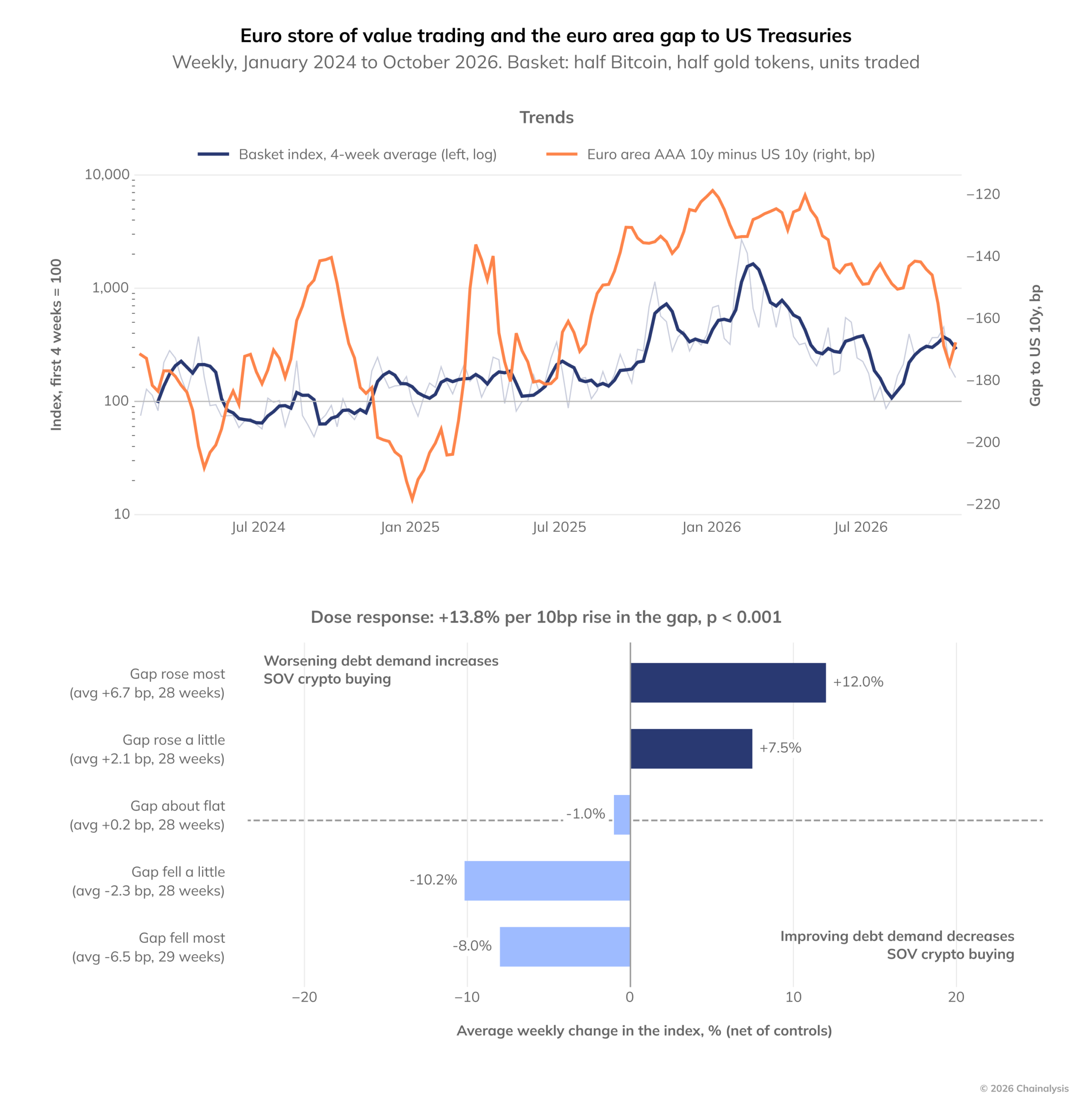
The Relationship Between Eurozone Value Storage Crypto Trading and the US-Germany Bond Yield Spread
There is also a correlation in the magnitude of the changes. When euro yields rise about 2 basis points over US bonds, euro-denominated trading is approximately 7.5% higher than USD trading; if yields increase by 7 basis points, that rises to about 12%; when euro yields decrease, the volume of euro trading drops by 8%–10%.
One interpretation is that when doubts arise about the fiscal outlook in the eurozone, traders tend to include bitcoin and tokenized gold in their portfolios as alternative safe-haven assets. Subsequent data from France also indirectly verify this trend, though of course, data can only show correlation, not direct causality.
Prediction Markets: European Users Bet on Geopolitical Events, Prefer Betting on Negative Outcomes
Prediction markets have made crypto assets not only used for speculating on coins but also allow users to bet on geopolitical conflicts and economic results. Chainalysis analyzed the trading behaviors of European wallets in geopolitical event contracts.
The data for this analysis was collected before the European Securities and Markets Authority (ESMA) introduced new regulations in July 2026: the new rules classify such event contracts as retail binary options, which are largely prohibited within the EU; the UK also has relevant bans in place, and the analysis has taken the continually changing regulatory environment into account.
Data shows that during the statistical period, 74% of the funds from European wallets in US-Iran related binary prediction markets were betting on negative outcomes (the global average is 49%). However, on average, positions betting on negative outcomes yielded lower returns than those betting on positive outcomes.
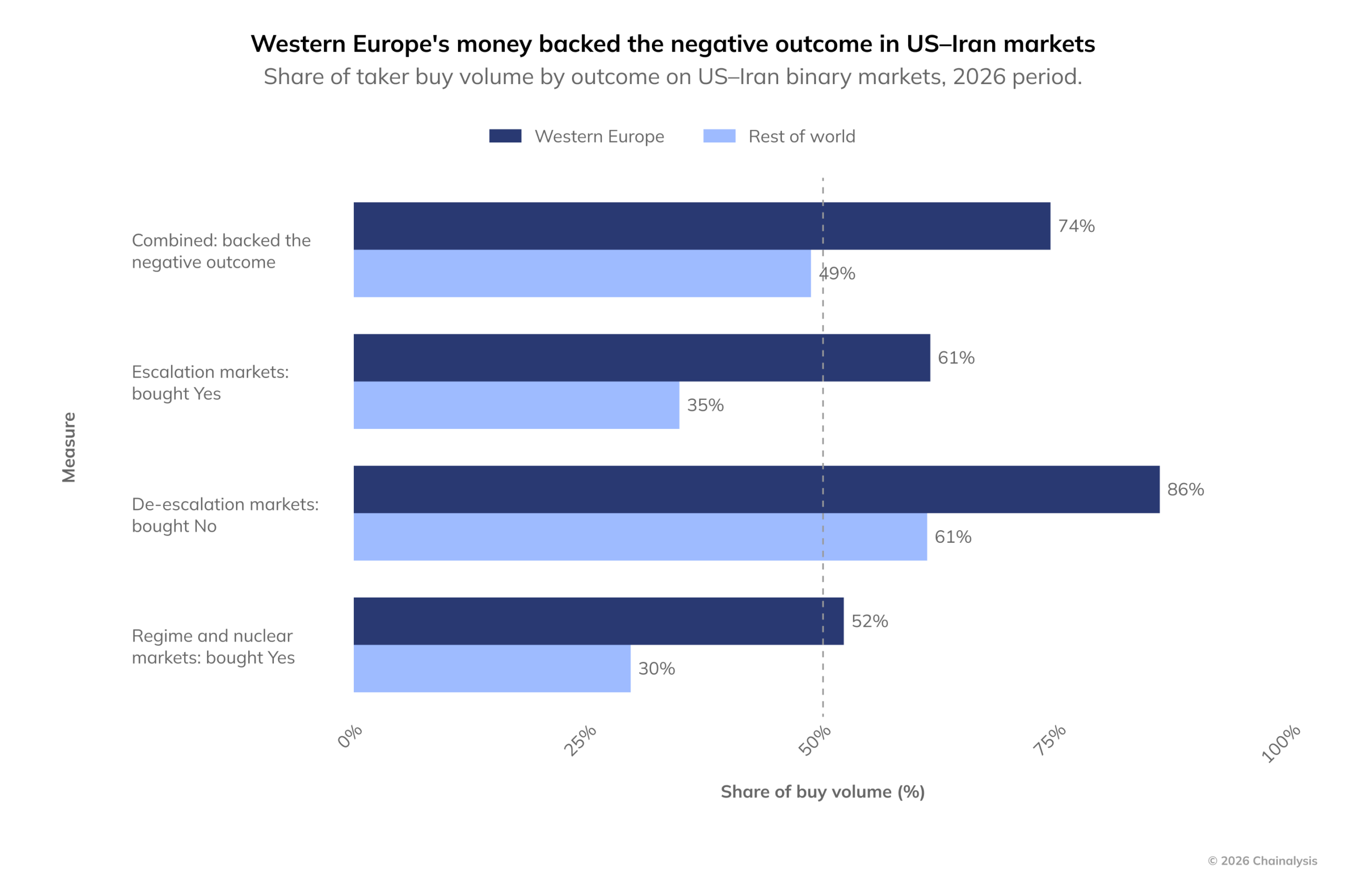
Western European Funds Generally Bet on Negative Trends in the US-Iran Situation
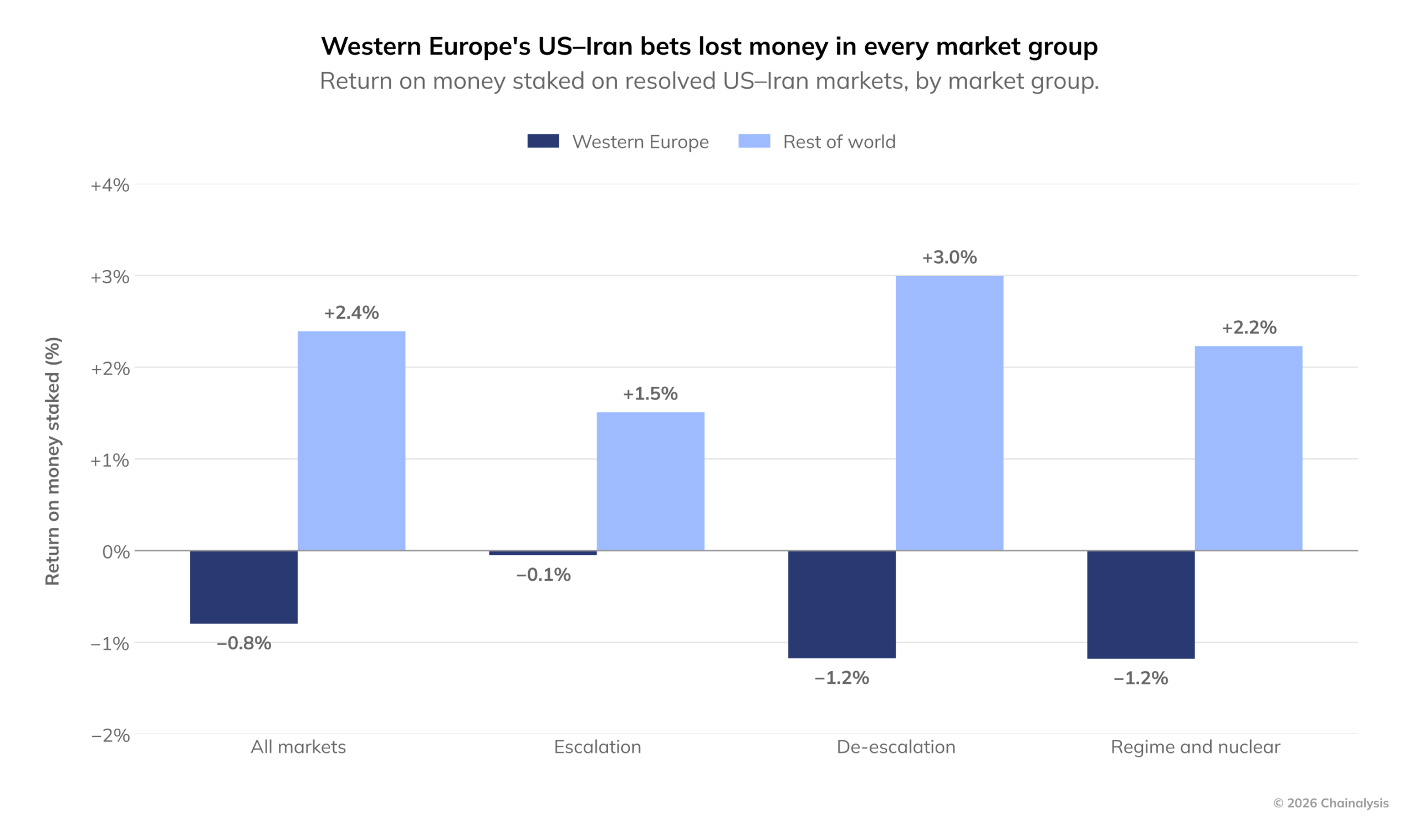
In US-Iran related prediction markets, Western European funds have incurred losses across all categories
This indicates that prediction markets are not just used to forecast event directions but have also become a channel for users to express geopolitical views. However, the disconnect between fund flow and profitability results persists: while users may anticipate events turning problematic, it's difficult to translate that prediction into profit.
The UK Market Shifts from Growth to Decline, while the EU Continues to Expand
In the past few years, the UK crypto market has led Western Europe in growth rate, but the situation has now reversed. The UK remains the largest market in Western Europe, but its size has declined by 8%; the rest of Western Europe has seen an overall growth of 3.8%, with EU regions growing by 2.2% when statistically isolated.
This differentiation raises two questions: why did the UK grow quickly before? Why is the EU now more resilient?
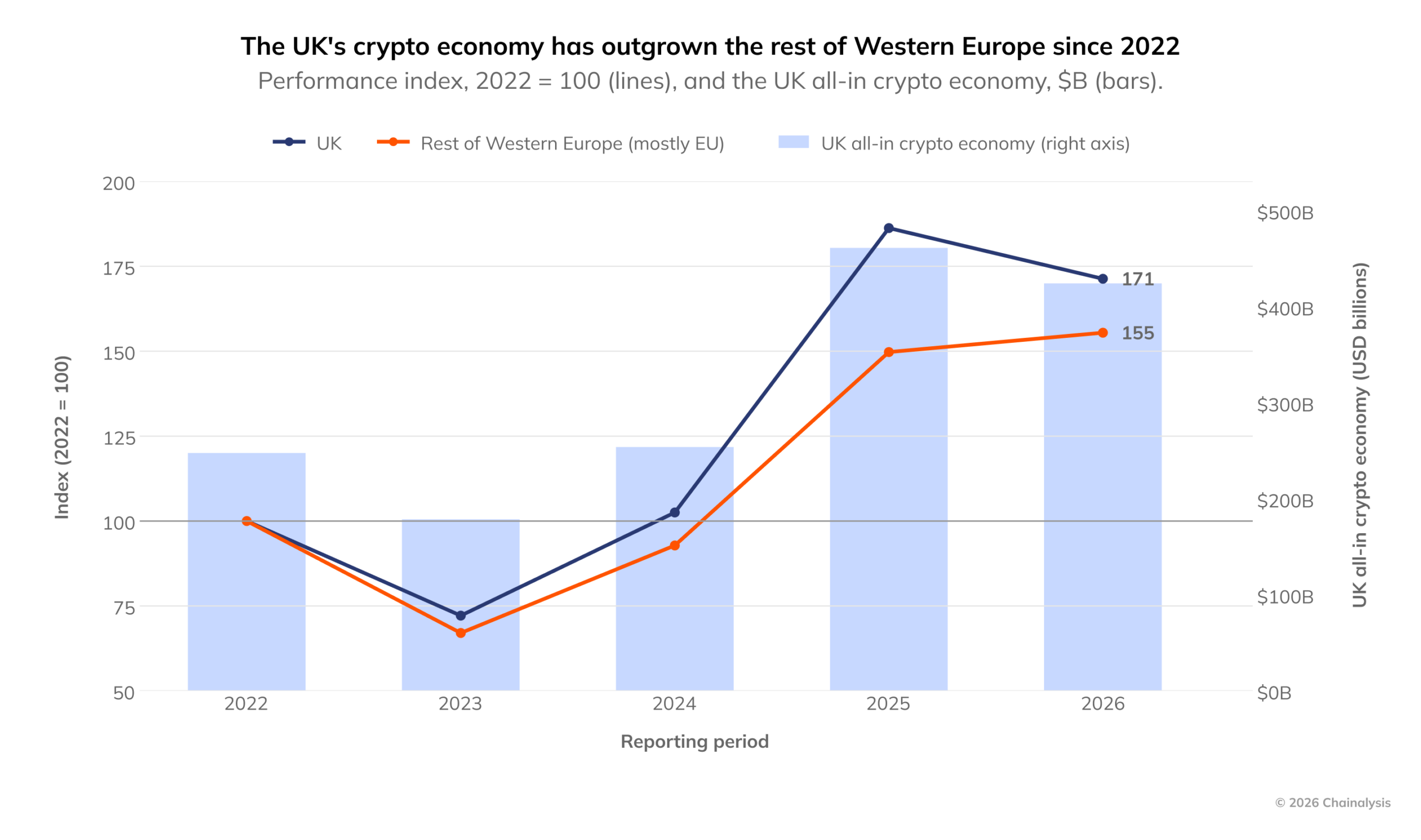
Since 2022, the growth rate of the UK crypto economy outpaced that of other regions in Western Europe
The impact of MiCA is an important clue. In December 2024, MiCA began its initial implementation phase, increasing compliance costs and creating regulatory uncertainty, suppressing growth in the short term. By July 2026, when service providers completed the transition and obtained licenses, the MiCA dividend would be released — licensed service providers could directly operate in all EU countries without needing to apply for licenses one by one.
Therefore, MiCA initially suppresses and then boosts the expansion of the EU market. This round of expansion is occurring amidst a bear market where the global crypto market value has halved.
In contrast, the UK lacks a unified regulation to buffer the downturn cycle. The market cooling is also related to the UK's Financial Conduct Authority (FCA) launching crypto regulatory entry pathways in September, prompting many participants to adopt a wait-and-see stance.
Of course, data cannot prove that this is entirely due to regulation; market factors are equally complex, making it impossible to isolate the impact of MiCA; however, the timing of these events aligns closely.
New Developments in UK Stablecoins: From Cross-Border Tools to Dominant Domestic Transfer Method
The use of stablecoins in the UK is changing: the scale of wallet-to-wallet stablecoin transfers within the UK has surged, with stablecoins no longer being used solely for cross-border remittances, and domestic fund circulation demands rising rapidly.
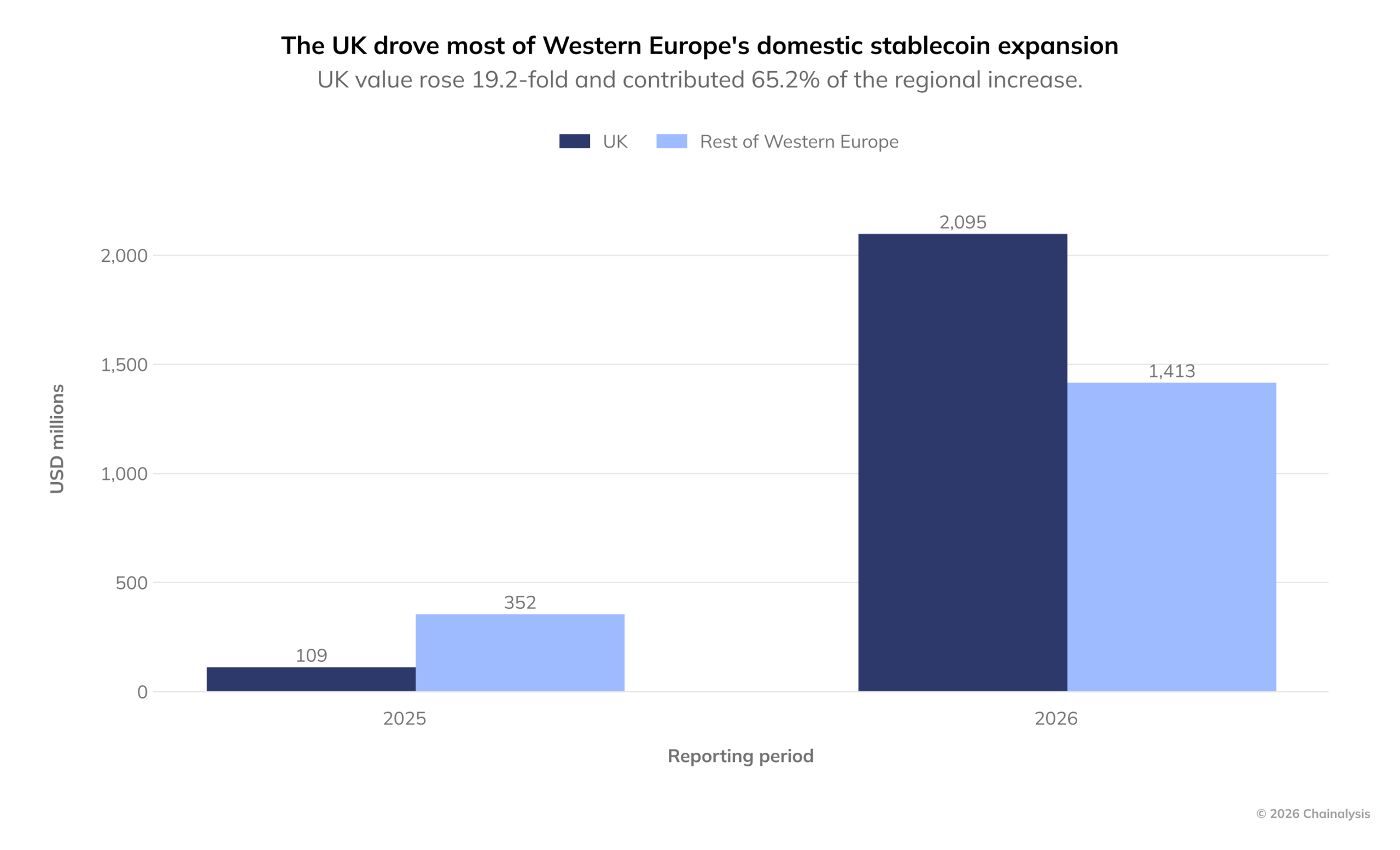
The UK Leads the Expansion of Local Stablecoin Scale in Western Europe
During the statistical period, point-to-point transfers of stablecoins within the UK reached €2.09 billion, compared to just €109 million during the same period last year. The increase in domestic stablecoins in the UK accounted for 65.2% of the total increase in the Western European region, with the total transaction amount making up 60% of domestic transfers in Western Europe.
In contrast, the difference with other parts of Europe is striking. The domestic transfer amount in the UK is 1.32 times that of cross-border P2P and service provider transfers; in other Western European regions, the scale of cross-border transactions is 4.38 times that of domestic transactions.
The UK regulators have also prioritized stablecoin payments as a key focus for 2026. In June 2026, the Bank of England released a draft regulatory policy for systematic stablecoins, establishing rules for large-scale stablecoin payments.
The Bank of England has also set limits on individual holdings. For each systemic pound stablecoin, an individual may hold a maximum of £20,000, which will determine the role stablecoins play in household financial management. On-chain data has already indicated a trend: more and more ordinary users in the UK are using stablecoins as a means of storing funds, not just as transactional intermediaries.
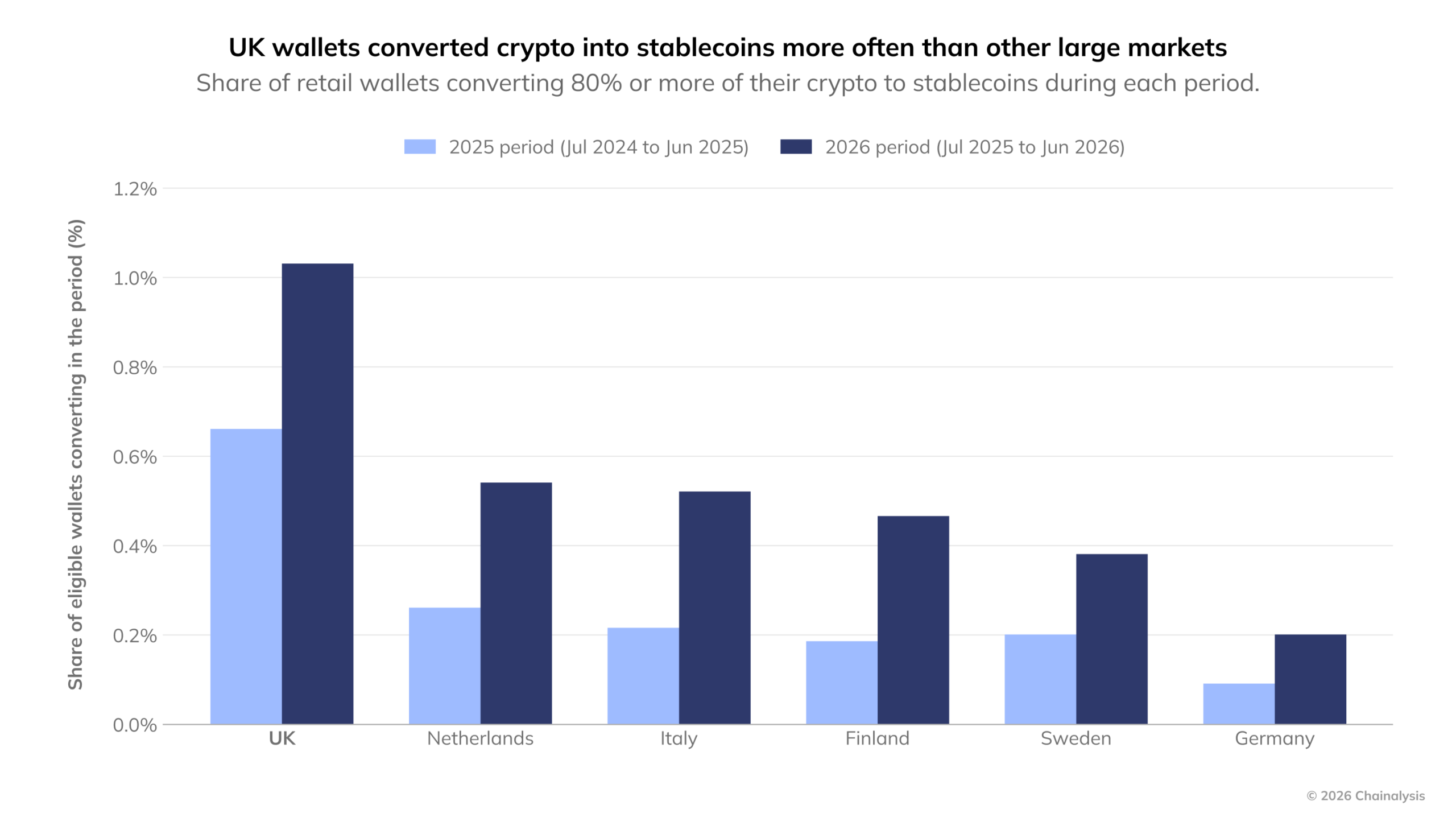
The Proportion of Proportion of UK Retail Wallets Converting Most of Their Crypto Assets into Stablecoins is Higher than Other Major Western European Markets
During the statistical period, among eligible UK retail wallets, 1.03% converted at least 80% of their crypto assets into stablecoins; the previous year, this proportion was 0.66%, the highest among the six core markets in Western Europe. In the Netherlands it was 0.54%, in Italy 0.52%, in Finland 0.46%, in Sweden 0.38%, and in Germany 0.20%.
The proportions in all six countries increased, with Italy and Germany experiencing even higher multiples of growth (Italy 2.5 times, Germany 2.3 times, UK 1.6 times), but the absolute lead of the UK continues to widen.
Another critical point is that the peak of the currency exchange wave occurred between July and September 2025, earlier than the peak for bitcoin in October. This indicates that it is not merely a bear market hedging operation, but rather a long-term, gradual change in user habits. Continuous tracking of these wallets reveals that when market conditions decline thereafter, many users opt to continue holding stablecoins.
Under Fiscal Pressure, Users in France Turn to Self-Custodied Stablecoins
France is at the center of Europe's fiscal contradictions. High debt levels and a split parliament make it challenging to cut spending and control deficits; austerity measures have sparked protests, and budget bills face hurdles, weakening market confidence in French public finances.
Against the backdrop of heightened economic and political uncertainty, on-chain data has observed three distinct signals that French users are increasingly using self-custodied stablecoins to manage assets: a rising proportion of withdrawals from centralized exchanges, an increase in the number of personal wallets holding stablecoins, and a continuous growth in wallet balances as users seek to control their assets.
Over the past three years, France has risen from 10th to 1st place among major Western European markets in terms of withdrawals related to stablecoins. During the statistical period, stablecoin withdrawals accounted for 54.2% of French users' total withdrawals from exchanges, surpassing Germany. The total amount of funds transferred from exchanges to French wallets increased by 12%, compared to an average of 7% in other Western European regions, indicating more assets are being self-custodied on-chain.
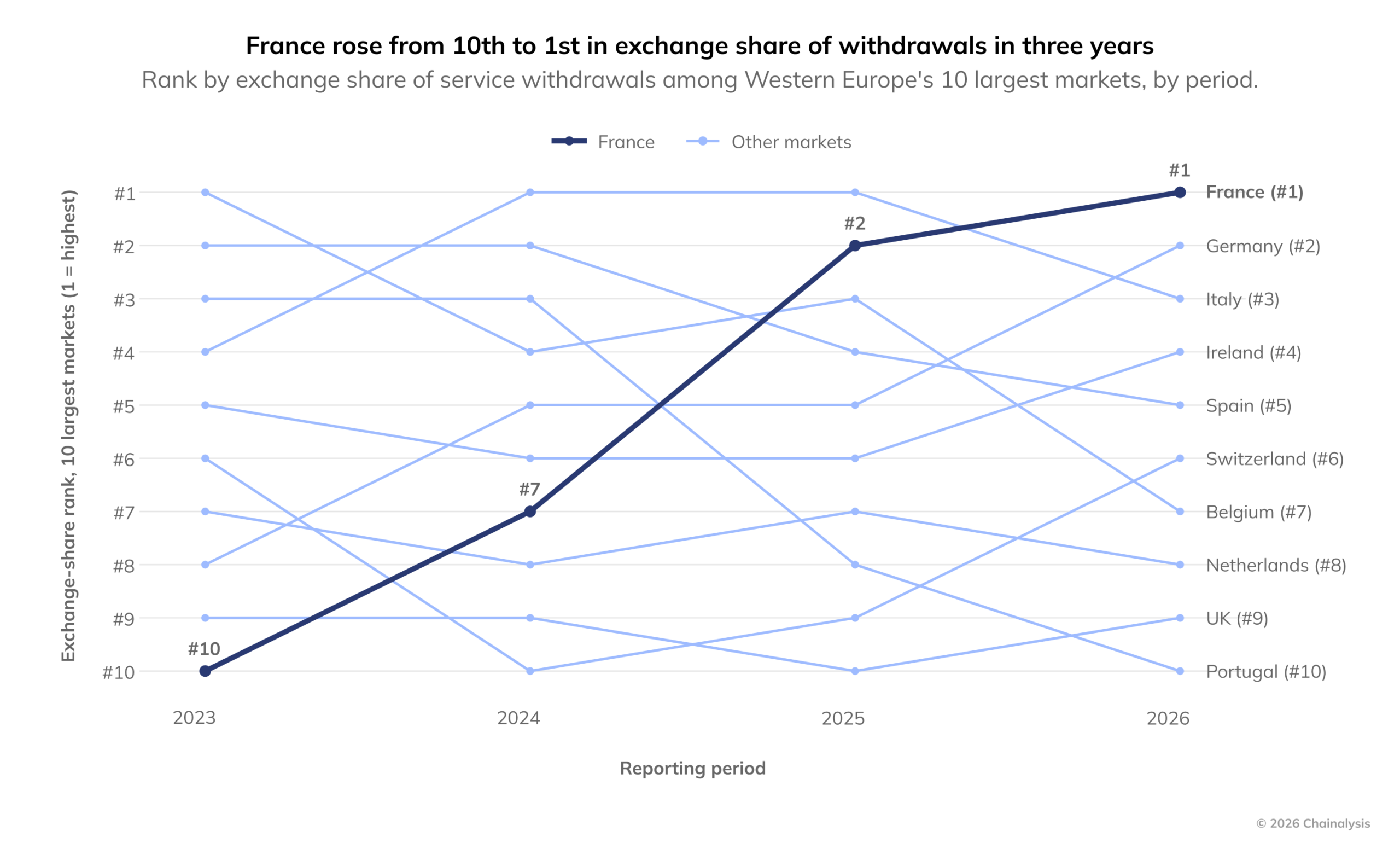
Over Three Years, France's Share of Withdrawals from Exchanges Ranks First in Western Europe, up from 10th
The number of personal wallets holding stablecoins in France has steadily increased: in June 2025 there were 3,577, which reached 12,255 in June 2026, a 3.4-fold increase; the average in other Western European regions was only 1.7 times.
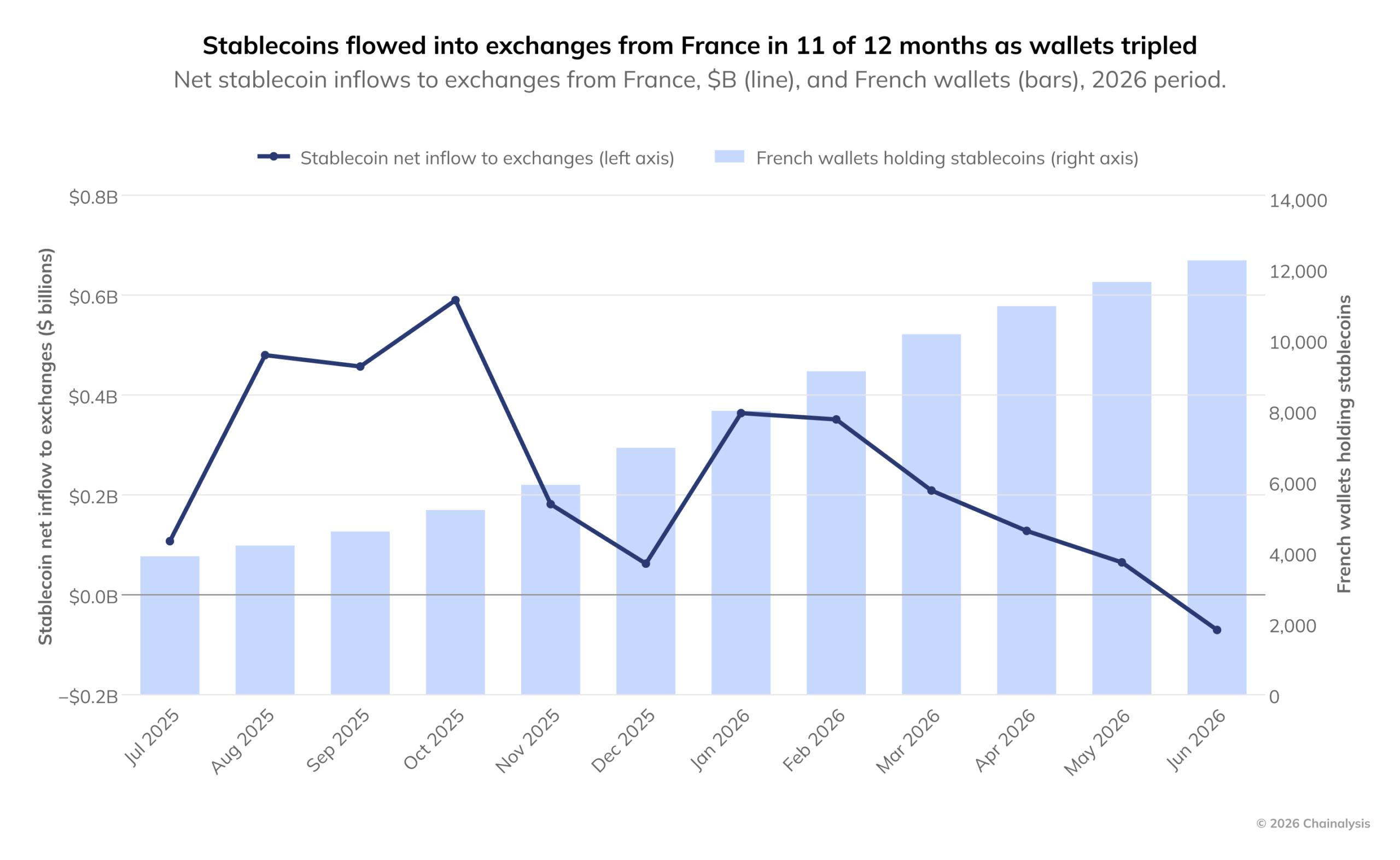
The Number of Stablecoin Wallets in France Has Tripled, with Net Stablecoin Inflow to Exchanges for 11 of 12 Months
The growth rate of wallets has synchronized with pressure in the bond market. In mid-2025, the monthly growth rate was about 6%; after the turmoil in the bond market in autumn, the monthly growth rate surged to 18% by year-end; following a market calm, it fell back to 5% by June 2026. This report's statistics end in June, and the new wave of bond market shocks in October is not covered, leaving further effects yet to be seen.
During the statistical period, the balance of self-custodied stablecoins held by users in France surged by 192%; in the same timeframe, bank deposits in France only grew by 2%. Although the scale of stablecoins remains small compared to traditional savings, the growth rate is quite remarkable.
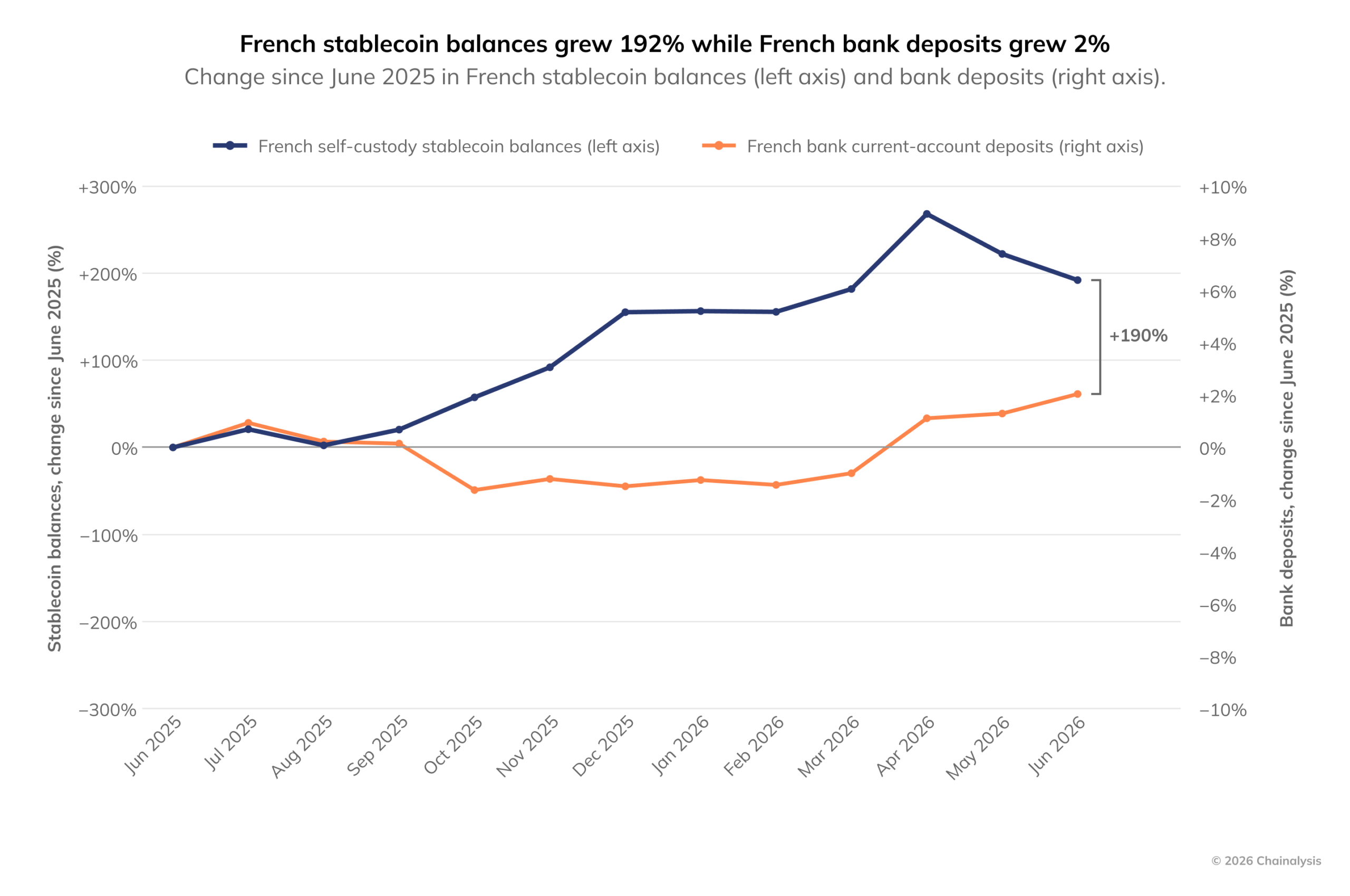
The Balance of Self-Custodied Stablecoins in France Increased by 192%, While Bank Deposits Grew by Only 2%
This series of trends represents French residents seeking alternative asset storage channels in times of uncertainty, and it does not mean that everyone has lost confidence in the euro; rather, it reflects a choice for diversified asset allocation.
Spanish Exchanges Attract Users from Across Europe
Funds flowing into Spanish crypto exchanges are no longer predominantly from domestic users; the scale of funds contributed by users from other European countries has surpassed that from local users, making Spain a hub for pan-European crypto trading.
Since 2024, both domestic and cross-border funds flowing into Spanish exchanges have risen, but cross-border funds are increasing at a markedly faster rate. During the statistical period, funds from other European countries flowing into Spanish exchanges exceeded those from local users.
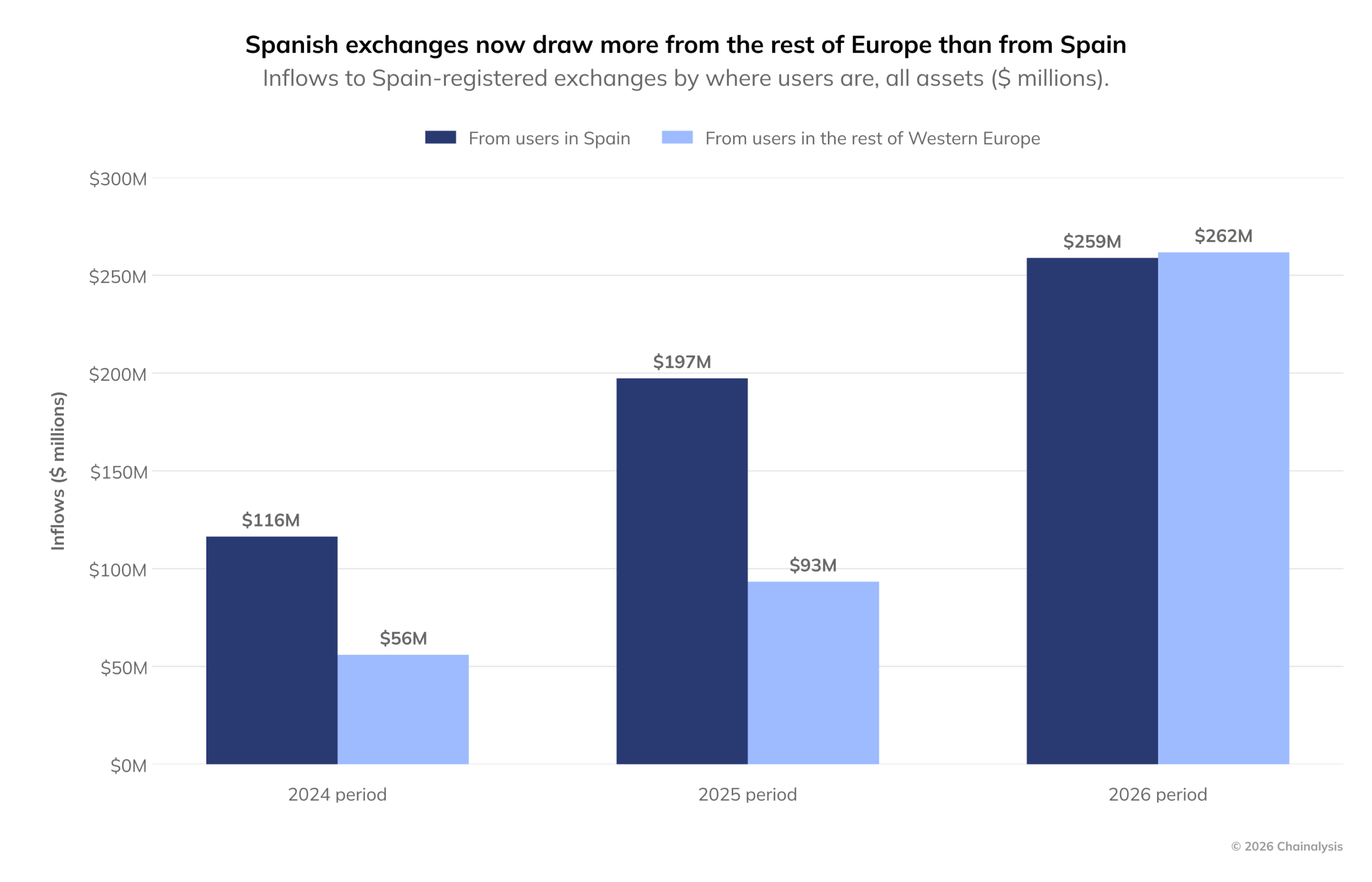
Sources of Funds for Spanish Exchanges: Foreign Western European Users Have Surpassed Local Spanish Users
The growth of cross-border inflows is widespread: countries that transferred over $1 million to Spanish exchanges in the previous year saw an average increase of 198% during the statistical period, compared to 100% in the previous year; the median growth rate rose from 82% to 162%. Italy and Portugal are the largest source countries: the growth rate of funds from Italy skyrocketed from 22% to 329%, while Portugal's grew from 36% to 751%.
Funds from other European countries flowing into Spanish exchanges increased by 79.1%, while the overall growth rate of Spain's local crypto economy was only 24.6%. From July 2023 to now, Western European users have transferred a total of $984 million to Spanish exchanges, of which $521 million flowed in during this statistical period.
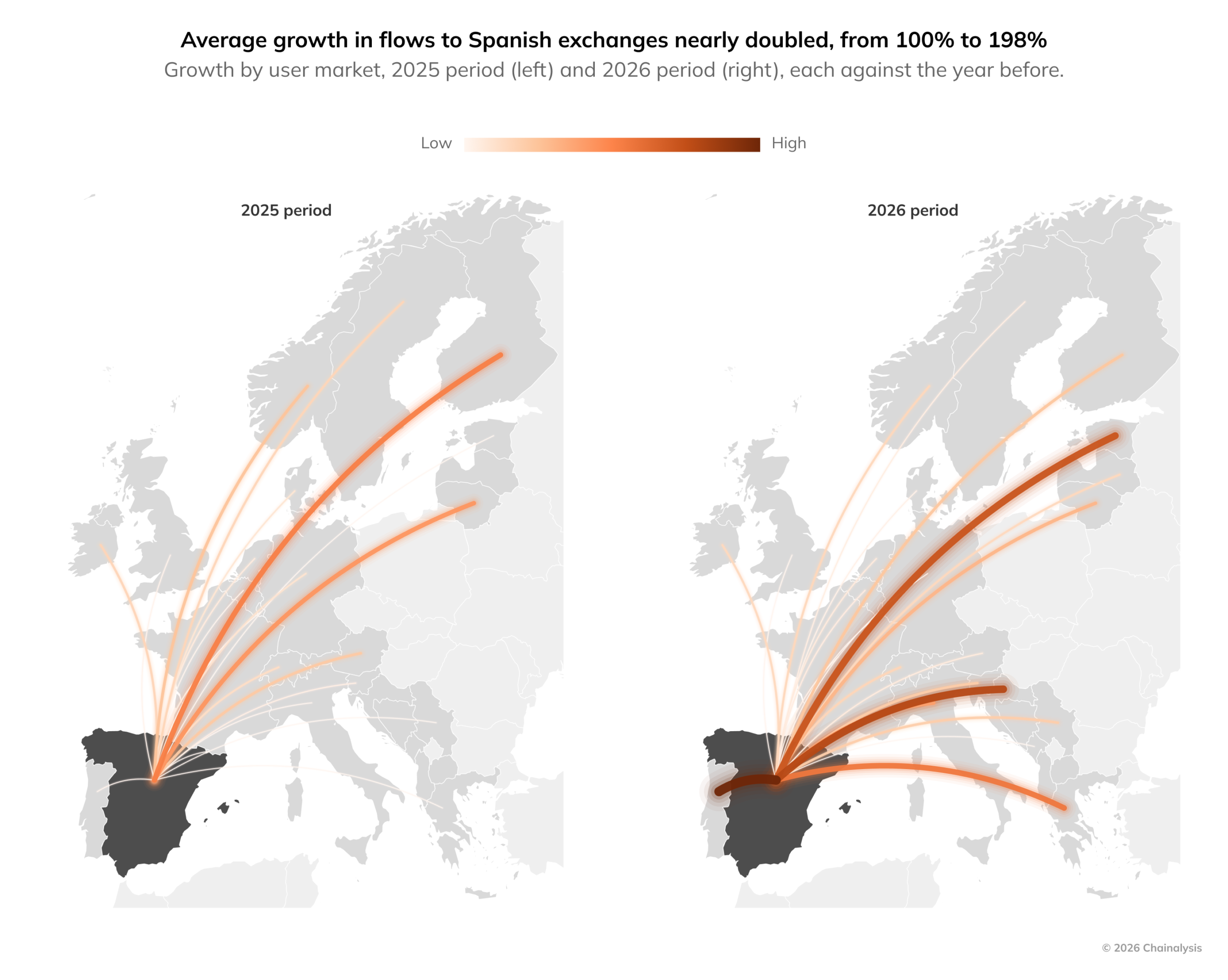
The Inflow Growth Rate of Spanish Exchanges Has Almost Doubled, Rising from 100% to 198%
Gabriel Ayala, API and Banking Operations Director at leading Spanish exchange Bit2Me, explained the reasons behind this: some neighboring countries lack large local platforms. “The Portuguese market's size and language characteristics make it difficult to produce a large-scale local platform; Italy's complex regulation and fragmented market hinder the formation of a major local exchange.”
Spanish platforms have seized this opportunity to compete across Europe backed by their compliance capabilities and scale advantages. The MiCA unified regulatory framework has also further lowered the operational threshold across the EU. The rise of Spanish exchanges reflects the convergence of markets across European countries.
The European Crypto Industry Enters a New Chapter
The proliferation of stablecoins, decreased DEX trading in some markets, and cross-border user attraction to exchanges are reshaping the Western European crypto market alongside shifts in user habits, funding preferences, and external macro factors. Spangevičius of Robinhood summarizes that the European crypto industry has shifted from fragmented speculation to structural maturity.
Financial risks, geopolitical events, and regulatory reforms are changing global digital asset trading, and Europe provides the clearest sample to observe these changes. Whether the industry can continue to move forward depends not only on whether institutional funds continue to enter but also on how practitioners adapt to the continually changing financial environment and regulatory rules.
As institutional participation deepens, consumer protection, unified regulatory rules, and the interplay between the crypto market and traditional banking systems will become core topics determining the long-term direction of the industry.
免责声明:本文章仅代表作者个人观点,不代表本平台的立场和观点。本文章仅供信息分享,不构成对任何人的任何投资建议。用户与作者之间的任何争议,与本平台无关。如网页中刊载的文章或图片涉及侵权,请提供相关的权利证明和身份证明发送邮件到[email protected],本平台相关工作人员将会进行核查。


