Author: Martin Peers, The Information
Translation: Deep Tide TechFlow
Deep Tide Overview: After Jensen Huang was involved in the scandal of "an affair with a woman suspected of being a Chinese spy," investigations by Nvidia's board, Congress, and the FBI commenced simultaneously. On Monday, Nvidia fell 4%, while AMD rose 13% and Broadcom nearly 9%.
The Information columnist Martin Peers further posits that even if the board clears Jensen Huang, his reputation will be difficult to fully restore, and Nvidia's lack of an obvious second-in-command is the real "key person risk" that shareholders should worry about.
We do not agree that the succession topic should be treated as a foregone conclusion, but it highlights an aspect of Nvidia's valuation that has been largely overlooked.
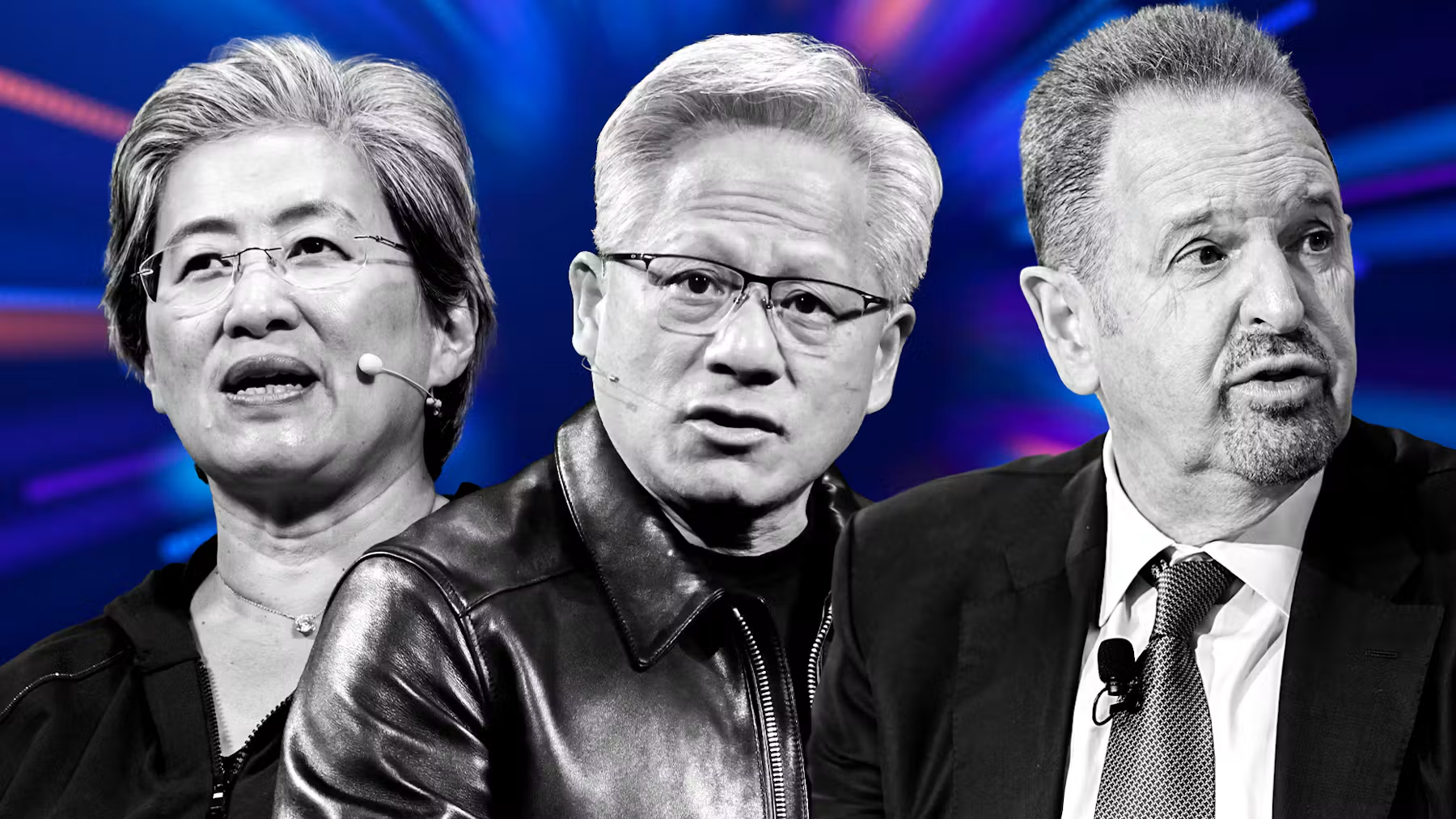
Headhunters are likely making calls throughout the semiconductor industry, pondering who to recommend to the board as a replacement for Nvidia's CEO Jensen Huang if the board decides he must leave. Two surprising candidates come to mind: AMD CEO Lisa Su and Arm CEO Rene Haas.
Lisa Su's company is a direct competitor to Nvidia in AI chips (as we previously noted, "AMD is Nvidia's only credible competitor"). She has transformed AMD into a stronger competitor and has done an outstanding job: after years of stagnation, AMD's revenue has soared under her leadership.
Of course, the competitive relationship between the two companies could complicate Lisa Su's "switch" (she and Jensen Huang are cousins, which may add another layer of complication).
Therefore, Rene Haas might be a better choice. He is very familiar with the industry (in the early years of his career, he even worked at Nvidia for seven years).
Certainly, the board may not yet be at the point of replacing Jensen Huang, but it is conceivable that some people around Nvidia are considering backup plans. After all, due to Huang's affair with a woman suspected of being a Chinese spy, Nvidia's brand has become somewhat tarnished.
Moreover, given that investigations by the board, Congress, and the FBI are underway, Jensen Huang is bound to be somewhat distracted and may not be able to command Nvidia's clients as he once did, nor come up with new tricks for selling chips.
Let's not forget that Nvidia is facing increasingly strong competitors, such as Google, which on Monday (in partnership with AMD) announced a series of new AI chips. Nvidia's already troubled stock price fell 4% on Monday, while AMD's stock surged 13% and Broadcom rose nearly 9%, and there is a reason for that.
Apart from the potential impact on daily operations, Jensen Huang's status as the number one evangelist for AI has also been severely damaged. Let's not forget that just weeks ago, he vigorously refuted claims that "AI poses a danger to humanity." In fact, even if Nvidia's board determines that Jensen Huang has done nothing wrong, it is hard to imagine that this CEO's reputation can be fully restored. One reason is that if the board truly clears him, outsiders will suspect that the board did so due to the lack of an obvious successor.
Jensen Huang is the core of Nvidia's operations, and this is no secret. He has a vast number of direct reports and, as we wrote in 2023, "is involved in almost every aspect of the company's daily operations." Nvidia does not have an obvious second-in-command to replace him. This is undesirable under any circumstances and is a real issue at this moment. Chief Financial Officer Colette Kress could serve as a temporary substitute, but she would not be a permanent successor.
Nevertheless, Jensen Huang may ultimately have to step aside: such investigations often ferment and escalate on their own. Huang may realize that, as a key shareholder, his own interests (not to mention those of all shareholders) would be better protected with a fresh start for the company. In an email to employees on Sunday, he stated that he is "committed to protecting Nvidia." This may suggest that he is willing to "take the sword and cut himself," proactively taking responsibility.
Coursera Strikes Back Against "Invaders"
What is going on with Europeans and established American tech companies? Not only is the Italian company Bending Spoons making significant acquisitions (like Airtable, AOL, etc.), but a radical investor based in the Czech Republic, Pale Fire Capital, has been buying stakes in other companies. A few years ago, after accumulating a 22% stake in Groupon and obtaining a board seat, Pale Fire gained management control of Groupon within about a year or two.
Pale Fire has a new target. In recent months, this investor has been steadily buying shares of Coursera, holding 14.7% now, which it disclosed last week. Coursera, which merged with competitor Udemy earlier this year, has not been passive: the company announced on Monday that it has adopted a "poison pill" style "shareholder rights plan." Any shareholder who purchases more than 15% of the stock without board approval will see their shares significantly diluted.
Coursera stated that the rights plan aims to "protect the company and its stakeholders from third parties gradually gaining control in the open market."
In other words, Coursera seems keen to prevent a fate similar to Groupon's from befalling itself. But is it really that dire? In recent years, Groupon's revenue has started to show slight growth after several years of decline. Coursera finds itself in a similar predicament.
AI poses a significant threat to its online education programs. In recent years, its growth has slowed, with third-quarter revenue declining by 3% (provided we assume that Coursera's merger with Udemy occurred at the beginning of last year to exclude the distortion this transaction might cause in recent data). Perhaps injecting some fresh blood wouldn't be a bad idea.
免责声明:本文章仅代表作者个人观点,不代表本平台的立场和观点。本文章仅供信息分享,不构成对任何人的任何投资建议。用户与作者之间的任何争议,与本平台无关。如网页中刊载的文章或图片涉及侵权,请提供相关的权利证明和身份证明发送邮件到[email protected],本平台相关工作人员将会进行核查。


