Original Title: "Why is This Chunk of Data Centers Facing Resistance?"
Source: Blockworks
Author: Byron Gilliam
Translation: BitpushNews
In the eyes of the IRS, airports are like giant ATMs.
Airports first generate property taxes, income taxes, and payroll taxes. But that's just the entry fee.
Take Pittsburgh International Airport as an example, parking incurs an additional 11.5% tax (excluding regular sales tax). At Chicago O'Hare, "patent operation recovery fees" and "customer facility fees" can raise costs by as much as 50%.
At each airport, departures incur a 7.5% federal excise tax on labor costs, a $5.30 "segment" fee for each takeoff and landing, a $4.50 "boarding facility fee" for each departure airport, and a $11.20 TSA fee for each round trip. Altogether, a $150 labor hour could end up costing an extra $60 in fees and taxes.
These numbers add up quickly. In 2025, Dallas Fort Worth International Airport paid about $14 billion in federal taxes, $5 billion in state taxes, and $34 billion in local taxes.
(The airport also charges passengers a 5% "venue tax" to fund the Dallas Mavericks' arena.)
But what about the planes flying to and from Dallas? They might pay not a penny.
Professional leasing companies own about half of the commercial aircraft worldwide, and most of these companies are legally registered in Ireland, where the corporate tax rate is 15%.
This is clearly a very lucrative deal, and the planes are able to negotiate such terms because they can easily move.
Dallas Fort Worth International Airport is situated only in Dallas Fort Worth.
This illustrates the "Ramsey principle" of taxation. Immovable assets like airports, power plants, oil fields, hotels, and parking garages are taxed heavily because they have no bargaining chips. No matter how taxation changes, they can't move. Movable assets such as aircraft, cargo ships, intellectual property, and wealth are taxed lightly; they can shop around and seek better deals.
Thus, tax officials are often eager to attract large immovable assets. Like data centers.
However, taxpayers are quite enthusiastic.
This week the Nasdaq fell sharply as midterm election results suggested that data centers may no longer be welcome in the United States. Nationwide, there are 47 ballot measures that give voters the opportunity to restrict or prohibit data centers in their communities. Of those, 46 have passed.
This is unwelcome news for a tax system that has yet to complete a value-added tax.
In Richland Parish, Louisiana, the tax revenue from the metadata center provides $50,000 bonuses for public school teachers. In Hoffman Estates, Illinois, the revenue from the Microsoft data center will help fund a new fire station. In Effingham County, Georgia, the tax revenue from the OpenAI data center will finance a 40% reduction in local property taxes. In Loudoun County, Virginia, the property tax revenue generated from data centers over the past decade is accounted for.
Loudoun County estimates that for every $1 of service consumed by data centers, $26 in taxes is levied.
From the market's response to the assessment elections, you would think no one is willing to accept such deals anymore.
But that may not be the case.
The center in Harwood (North Dakota) at least remains popular—it's the only place where voters rejected the ballot measure to restrict construction. They seem satisfied with the data centers being built. "For our small town, the sales and property taxes are just incredible," Mayor Blake Hanke said this morning, adding that the data center is expected to create over 200 jobs today.
Harwood has a population of 820.
Data centers in Alabama are also still quite popular, with the incoming governor Tommy Tuberville eager to finalize deals. "We're going to establish data centers," Tuberville said earlier this year. "The tax revenue these bring to schools and law enforcement is just incredible."
The elected governor also stated that he would integrate data centers into the state grading system. Like local utilities, data centers would be taxed on 30% of their highest property value.
Imagine paying 30% of tax on the value of your home each year!
If you like data centers as much as immovable things, you might also have to own one.
Let’s look at some charts.
People have spoken:
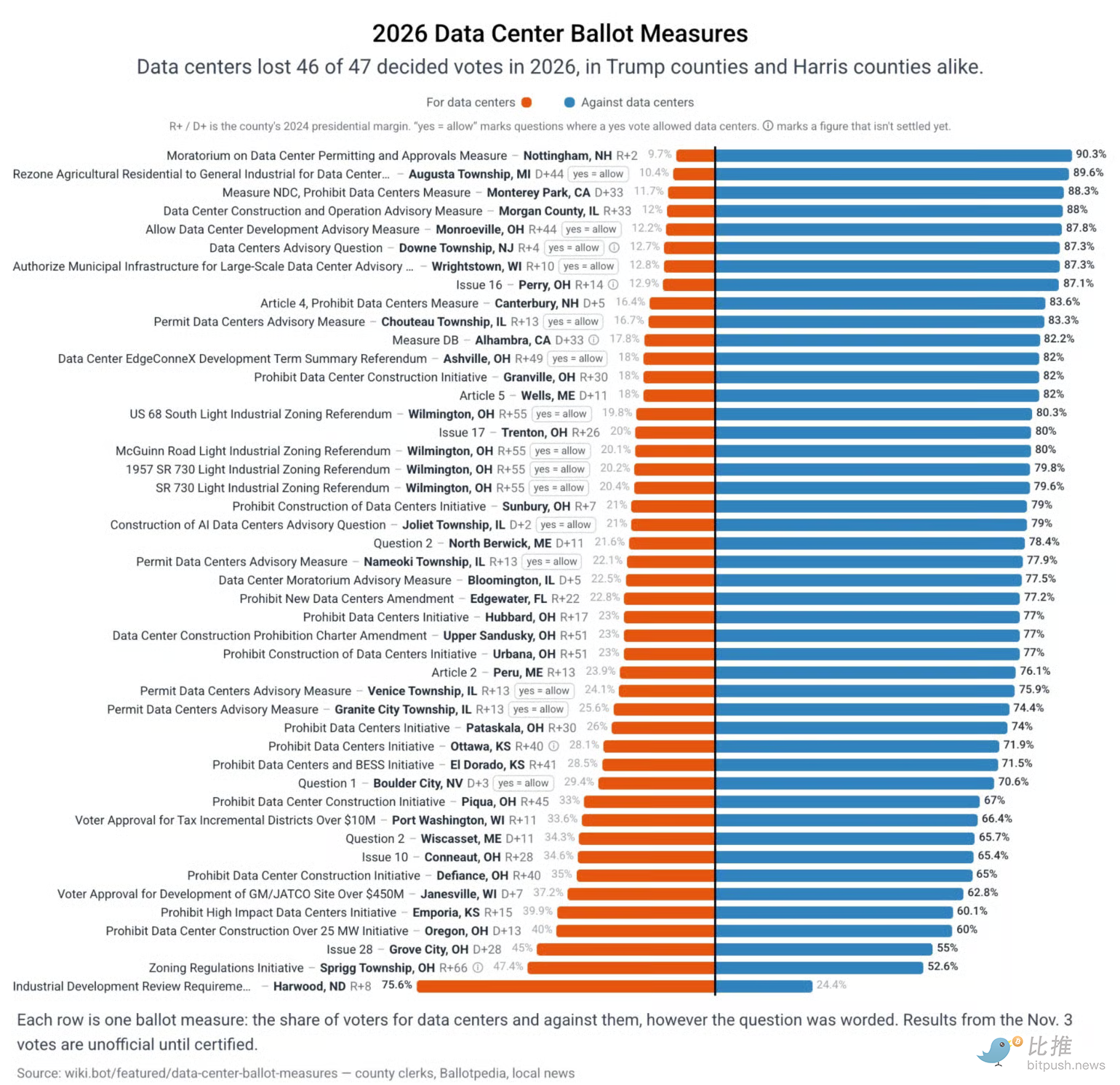
In Nottingham, New Hampshire, the data center permit moratorium passed with 90.3% of the vote. In Springdale, Ohio, the zoning passed narrowly with 52.6% of the vote. However, the votes supporting the restriction carry significant meaning: Harwood in North Dakota rejected the measure by a 3:1 vote.
Survey Review:
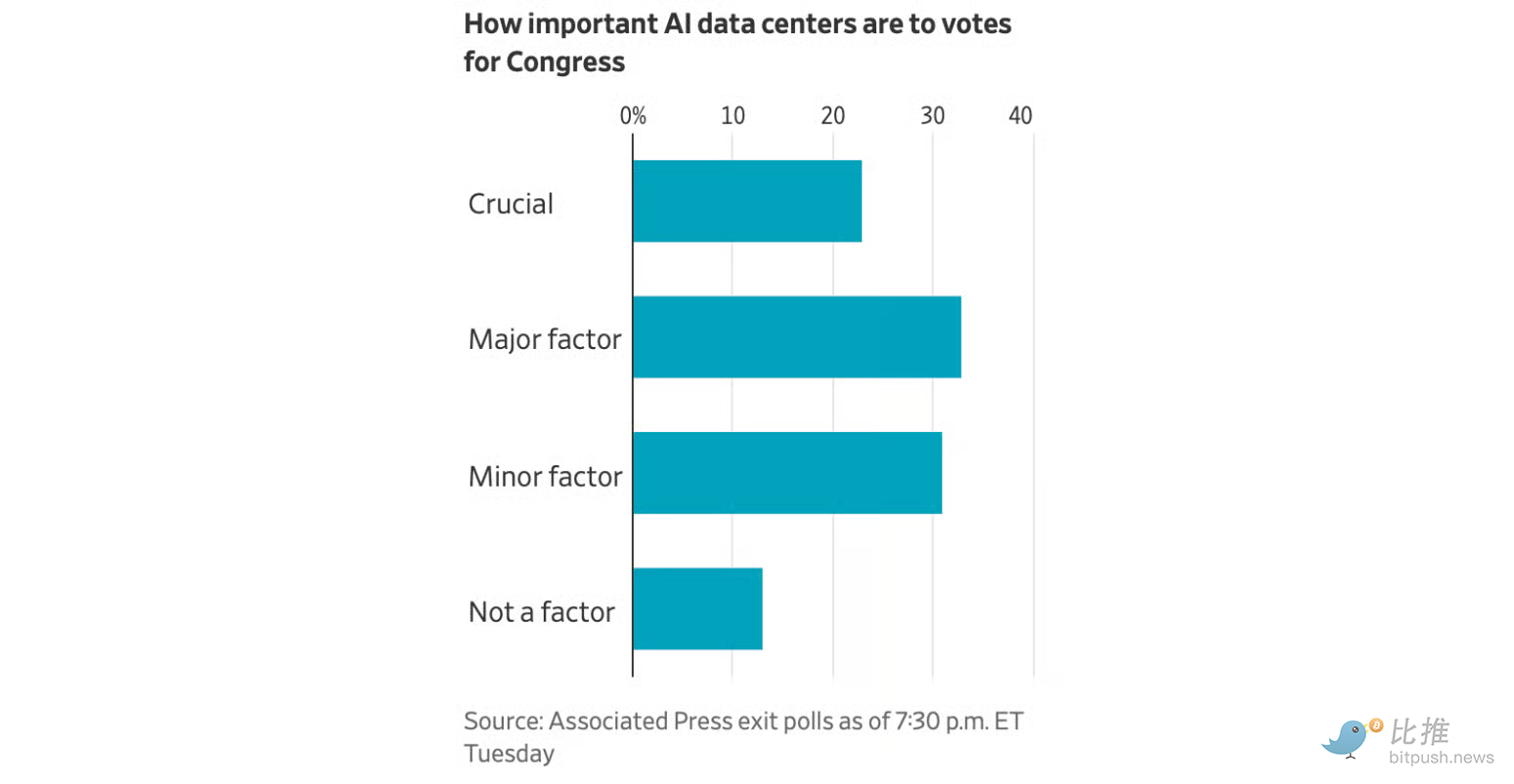
The issues surrounding data centers extend beyond specific measures. Nationwide, about 56% of voters exclude data centers as a key or important factor in their congressional election votes.
This isn't solving the problem.
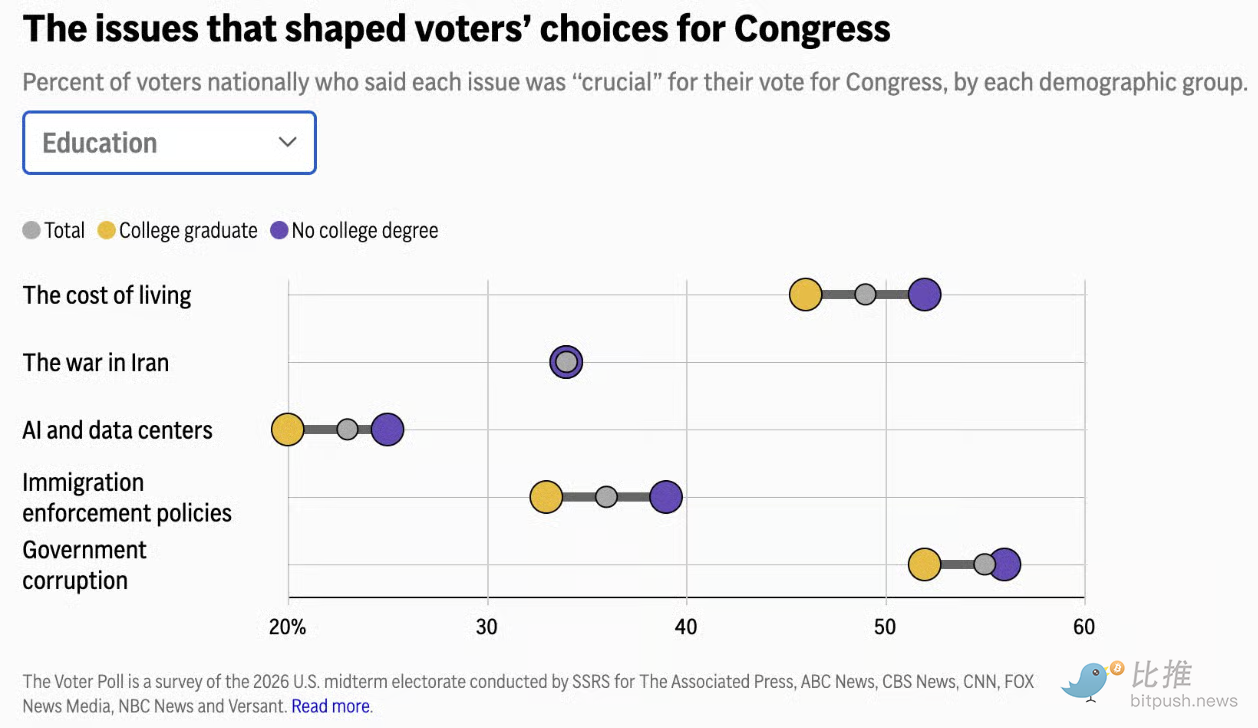
The rankings of artificial intelligence and data centers are far lower than cost of living, the Iran war, ICE, and corruption.
So why is that?
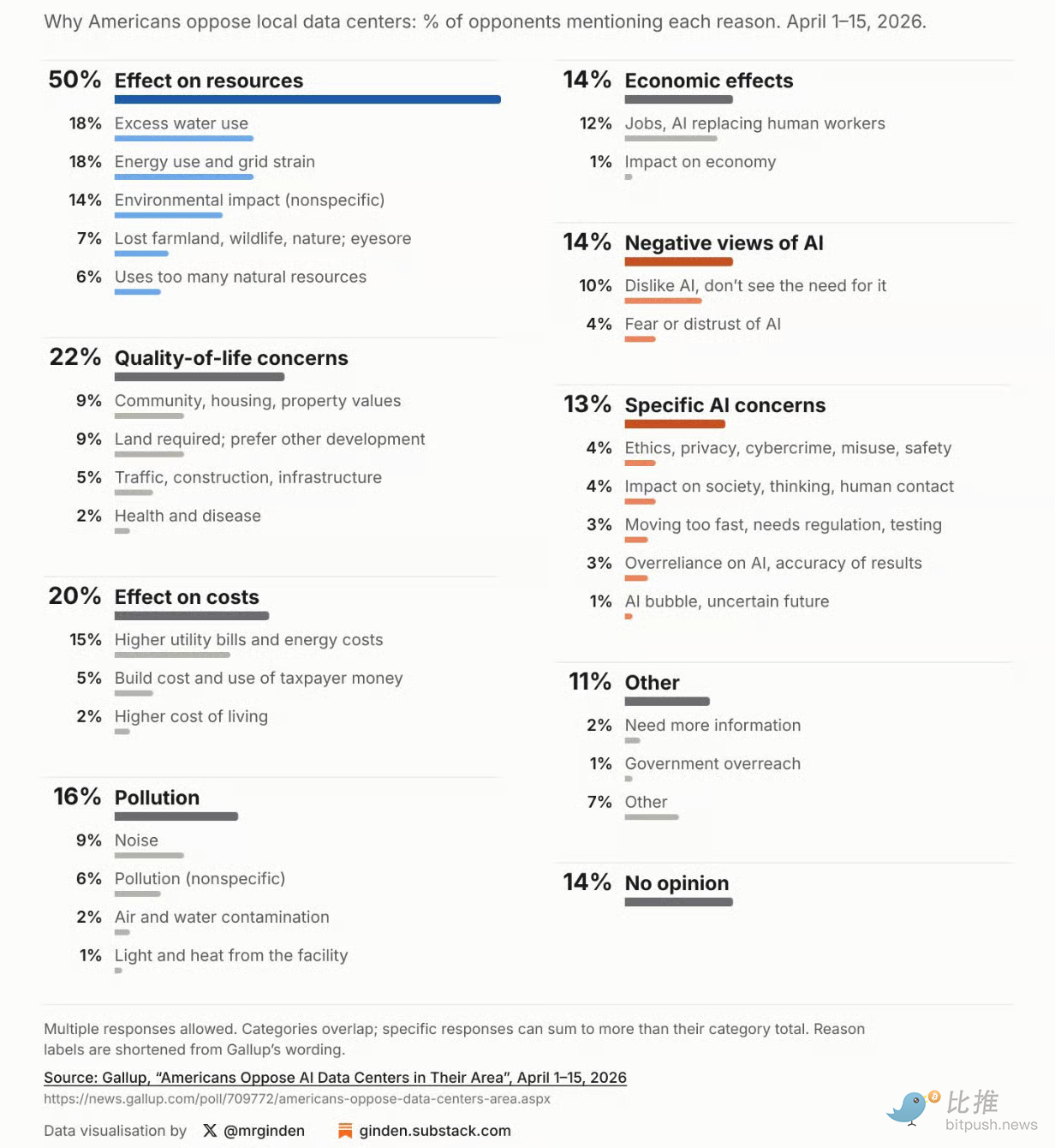
Participants said their worries about the water use by data centers concern "impact on resources," including water and electricity usage. Fortunately, the water usage of modern data centers is roughly equivalent to that of a local restaurant, and in some cases, they can even lower consumers' electricity bills.
Top Growth Rates:
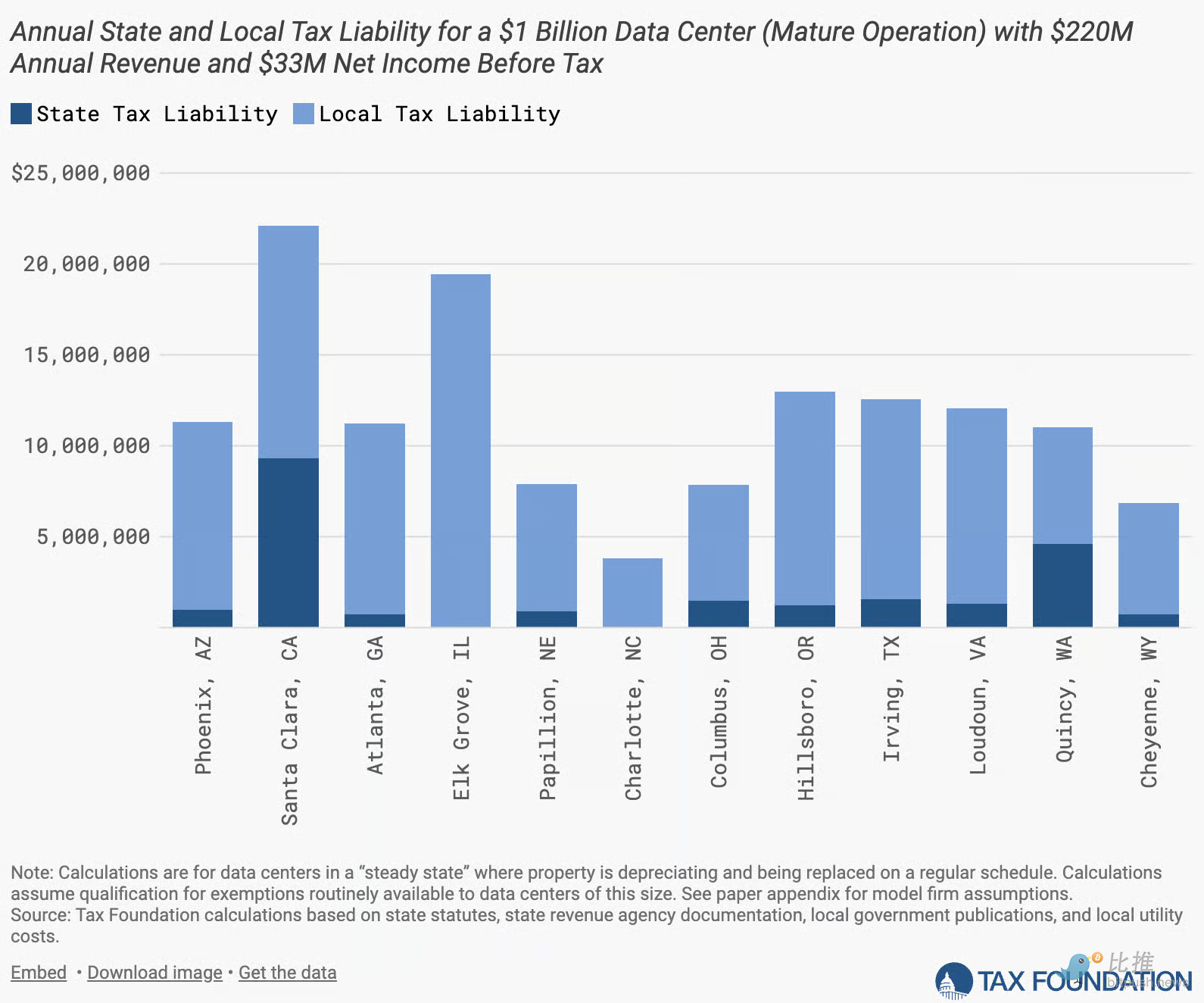
The Tax Foundation estimates that a data center in Santa Clara, California, will generate about $33 million in revenue and about $22 million in taxes. The actual growth rate could be as high as 67%! (I welcome such data centers to my backyard!).
Excluding Property Tax:
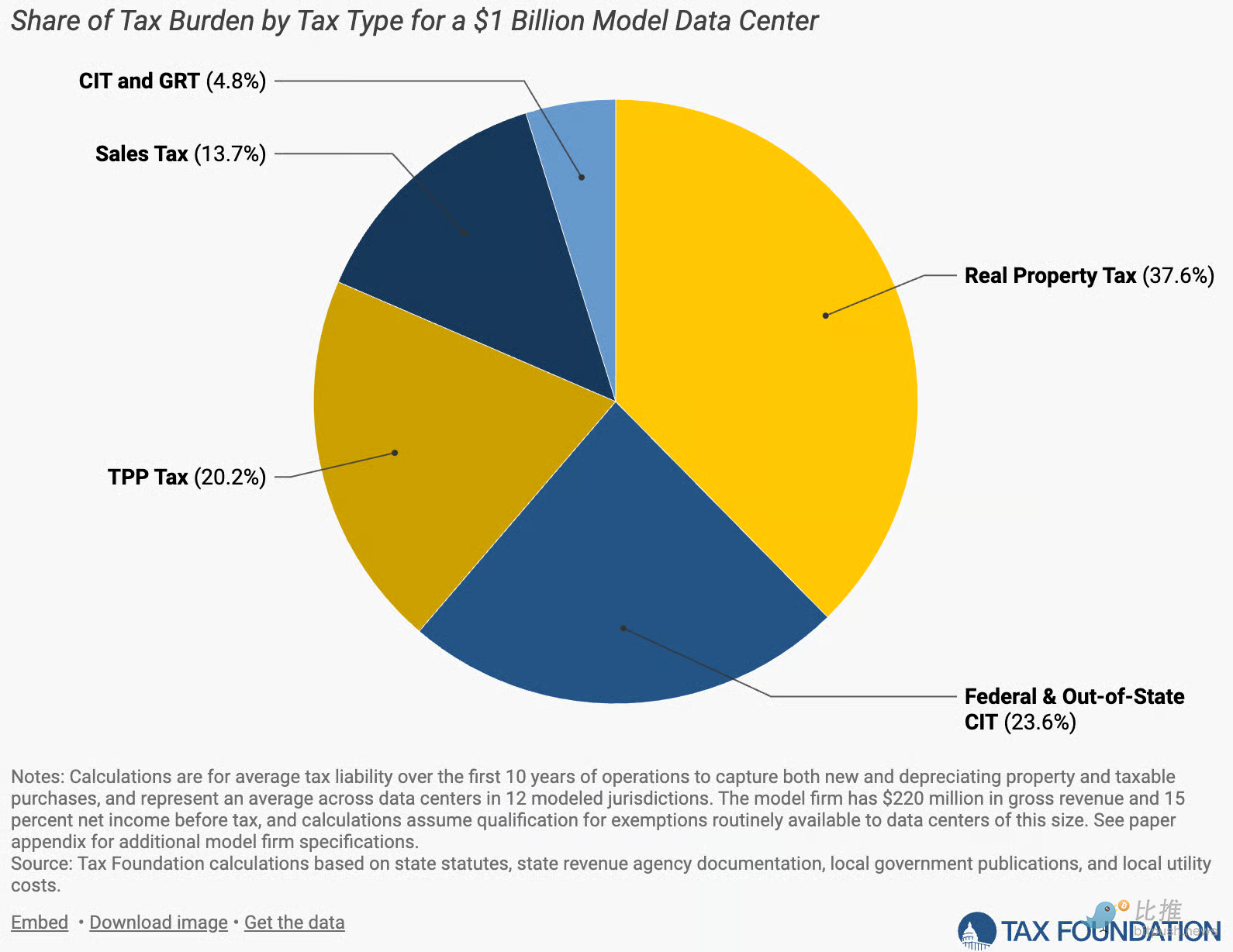
When a profitable project is immovable, taxes layer upon layer increase. Besides property tax, corporate income tax, and sales tax, data centers also incur gross receipts taxes (based on income turnover, oh no) and tangible personal property taxes (taxes on the value of all items within the data center, like servers, GPUs, and backup batteries).
Made in America:
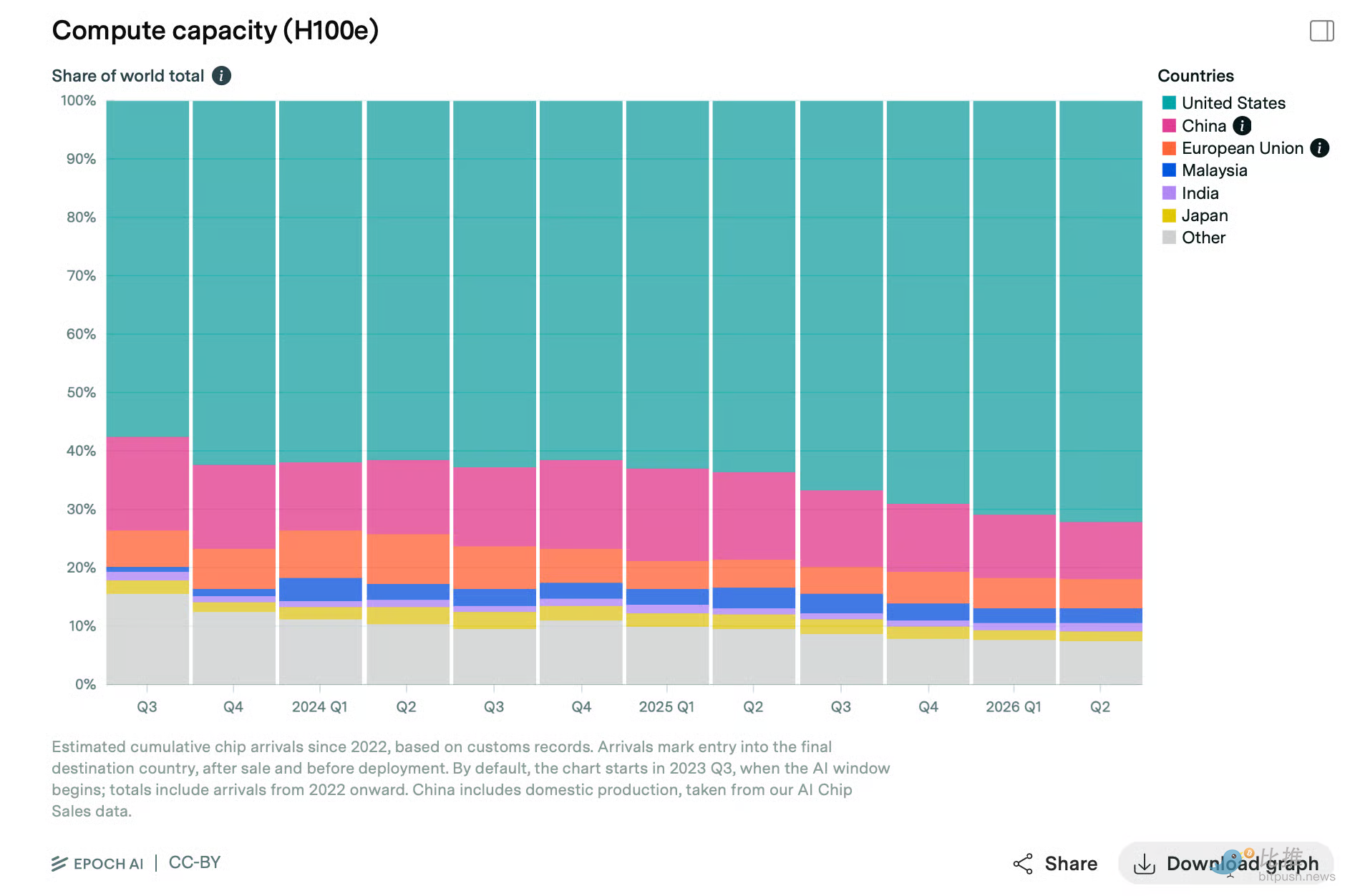
The United States holds most of the world's data center capacity. But it may not last long. If data centers are unwelcome in the U.S., they will seriously consider places like Malaysia. Or outer space! Considers Elon Musk’s plans to build data centers in space less far-fetched.
The apocalypse of employment has never come?
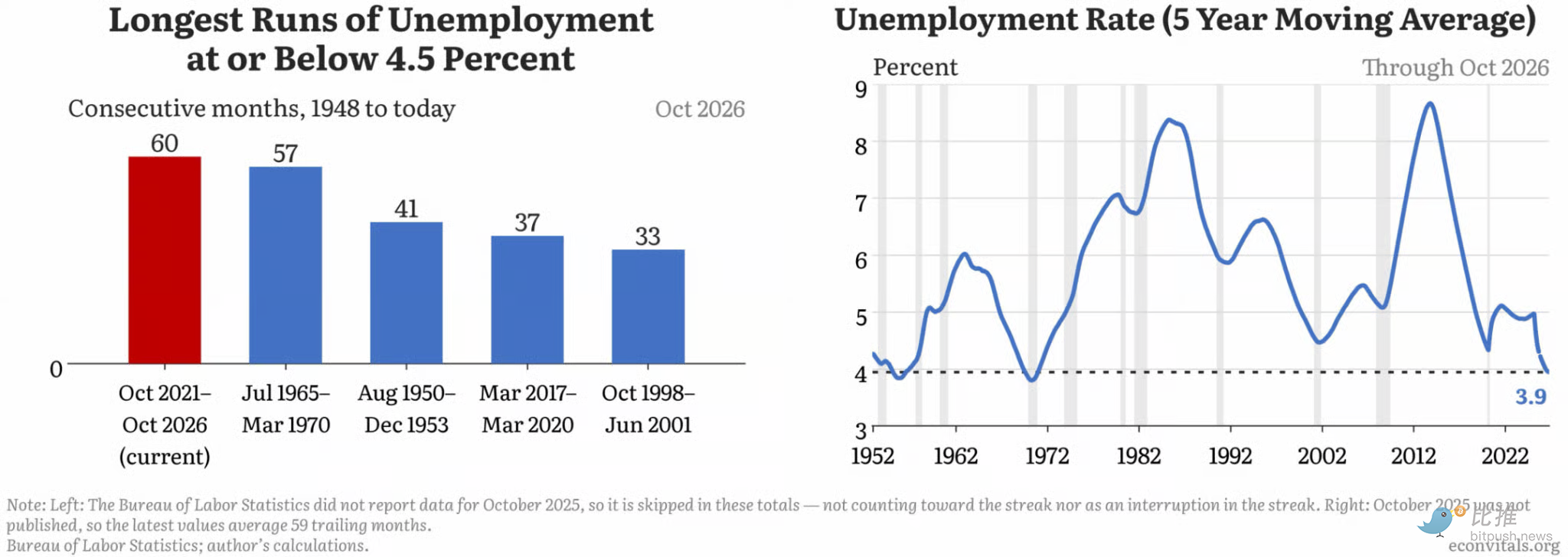
Artificial intelligence doesn't seem to be causing many people to be unemployed. After data releases this morning, economist Jason Furman said, "This could be one of the best—if not the best—jobs markets we've ever seen."
Technology apocalypse is coming:
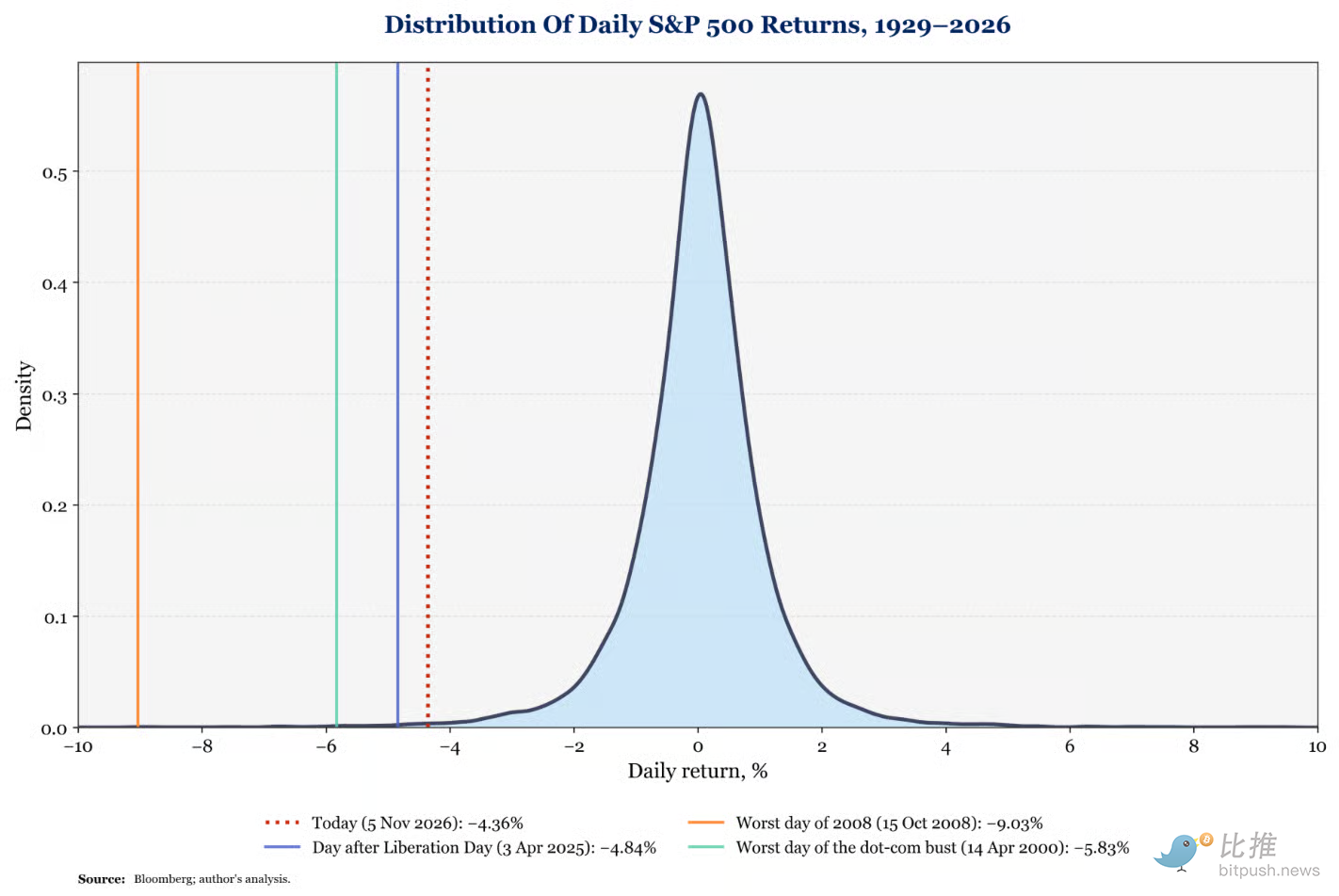
Thursday's 4.4% sell-off of the S&P 500 is one of the most severe 0.5% down days on record.
This may be the correct response: the stock market has leveraged enormous investments in megacorp data centers, and now data centers will be harder to build.
But I believe someone will be willing to take their money. If not, we have outer space to consider.
I wonder what the top growth rate on the moon is?
免责声明:本文章仅代表作者个人观点,不代表本平台的立场和观点。本文章仅供信息分享,不构成对任何人的任何投资建议。用户与作者之间的任何争议,与本平台无关。如网页中刊载的文章或图片涉及侵权,请提供相关的权利证明和身份证明发送邮件到[email protected],本平台相关工作人员将会进行核查。


