Author: Chen Le | Editor: Ye Jinyan | Produced by: DeepWeb · Tencent News Xiaoman Studio

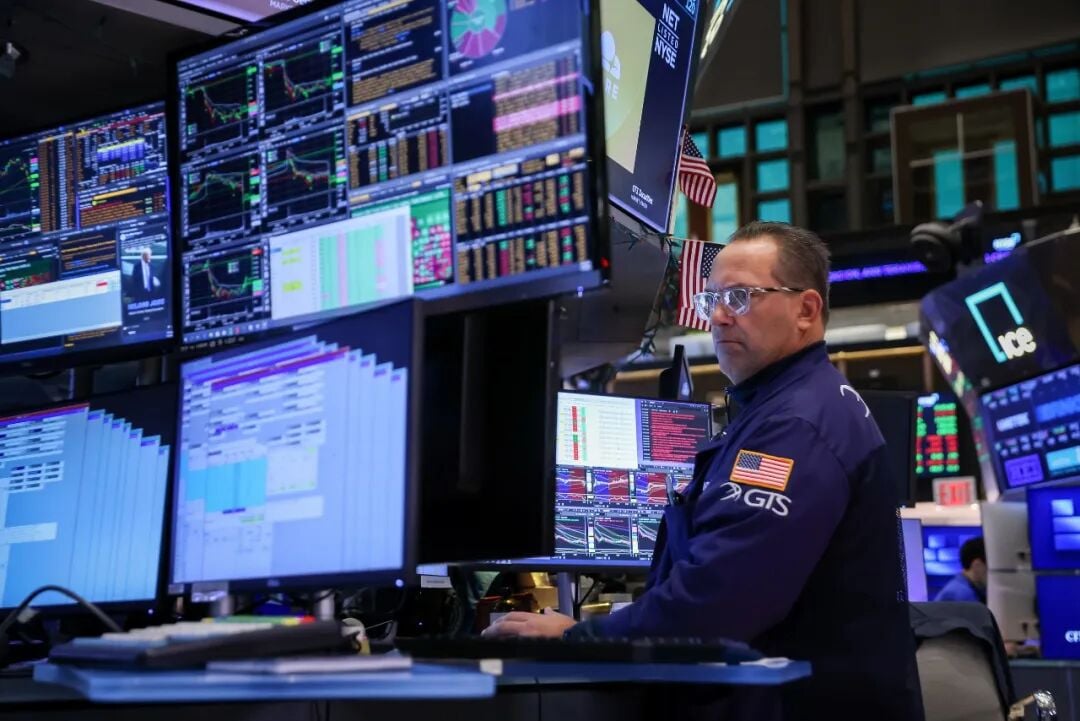
Image Source: Visual China
Author | Chen Le Editor | Ye Jinyan
Produced by | DeepWeb · Tencent News Xiaoman Studio
Produced by | DeepWeb · Tencent News Xiaoman Studio

After the U.S. midterm elections, Wall Street's optimism about AI plummeted within two days.
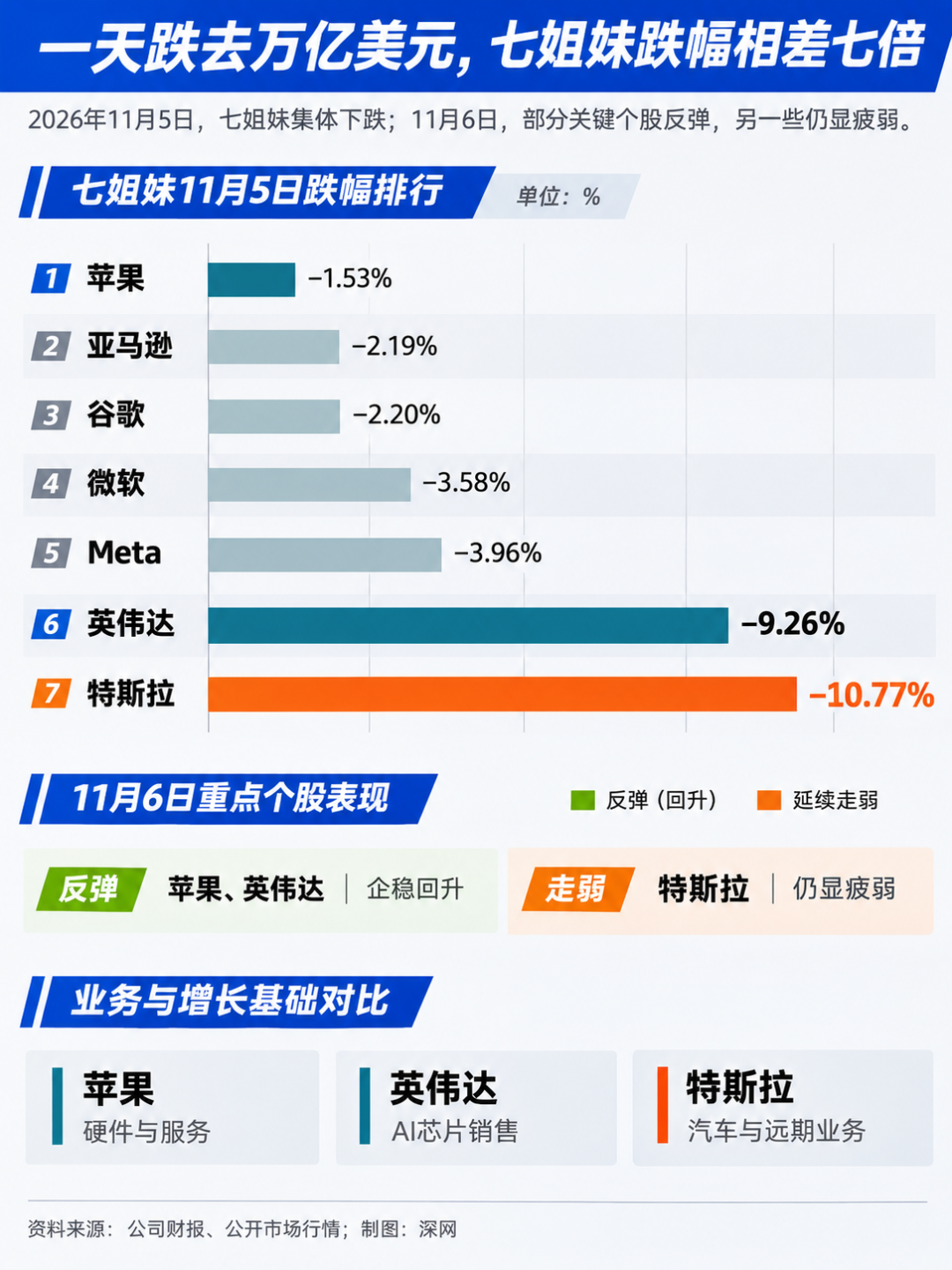
On November 5, the market value of the "seven sisters" of U.S. stocks evaporated by approximately $1.04 trillion in one day, but the declines varied significantly: Apple fell slightly by 1.53%, while Tesla dropped by 10.77%; Nvidia, as the biggest winner of the AI wave, plummeted by 9.26%, with a market value loss exceeding $440 billion in one day, falling 2 to 4 times more than its chip buyers (Microsoft, Google, Amazon).
The trigger for this crash was the U.S. midterm elections. After the Democratic Party won control of both houses of Congress on November 3, U.S. stocks initially rose the next day, but by the 5th, investors began to worry that the new Congress might tighten AI regulation and slow down data center construction, leading to a single-day sharp drop of 5.52% in the Nasdaq. On the 6th, tech stocks rebounded, with the Nasdaq rising by 1.09%, Nvidia up by 2.78%, and AMD surging by about 11%, but Apple and Microsoft continued to fall. The Nasdaq still recorded a cumulative decline of 3.4% for the entire week.
In fact, except for Tesla, the fundamentals of the giants have not deteriorated: Nvidia's revenue doubled year-over-year, Apple reached a new high for the same period, and the cloud businesses of Microsoft, Google, Amazon, and Meta's advertising business are still growing.
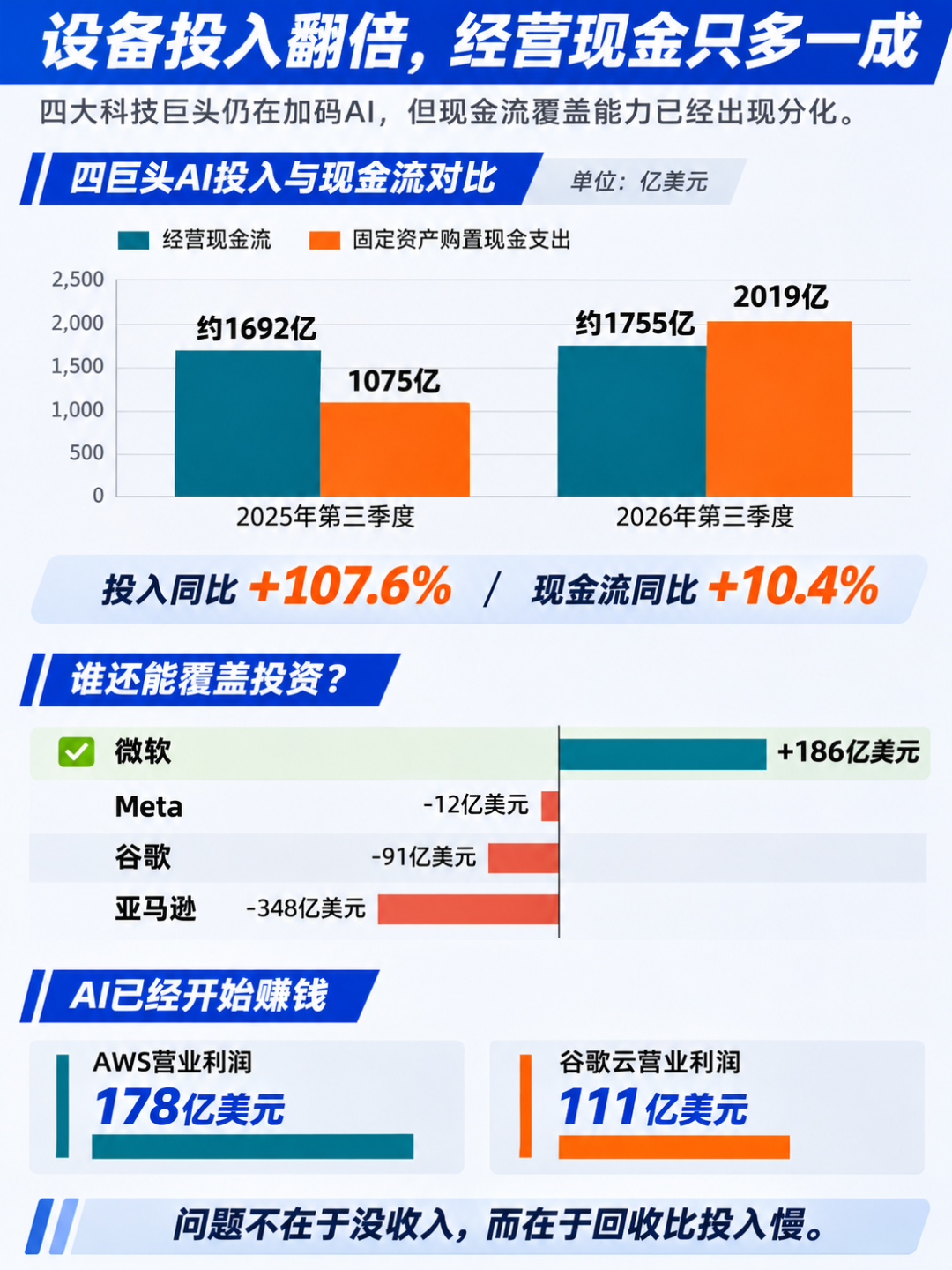
Economist Song Qinghui analyzed that the uncertainty of policies and the market's anxiety over AI investment returns have resonated with each other. The valuations of tech giants are already highly reliant on the high growth of AI, but the massive investments have yet to translate into corresponding profits. In the third quarter of this year, Microsoft, Google, Amazon, and Meta continued to increase their investments in data centers and other infrastructure, with the growth rate of capital expenditure significantly outpacing operating cash flow.
Every large amount spent by the giants translates into Nvidia's revenue. Once buyers can no longer "spend money," how long can Nvidia's high growth be sustained?
If data centers stop work, the most affected are the "shovel sellers."
The answer to this question primarily depends on whether data centers can be built as planned. After the elections, in addition to concerns about whether AI investments can be recouped, the market has another layer of worry: will the regulatory policies of the new Congress and local governments slow down data center construction? Compared to cloud giants, Nvidia, which relies on downstream procurement, is more sensitive to this change.
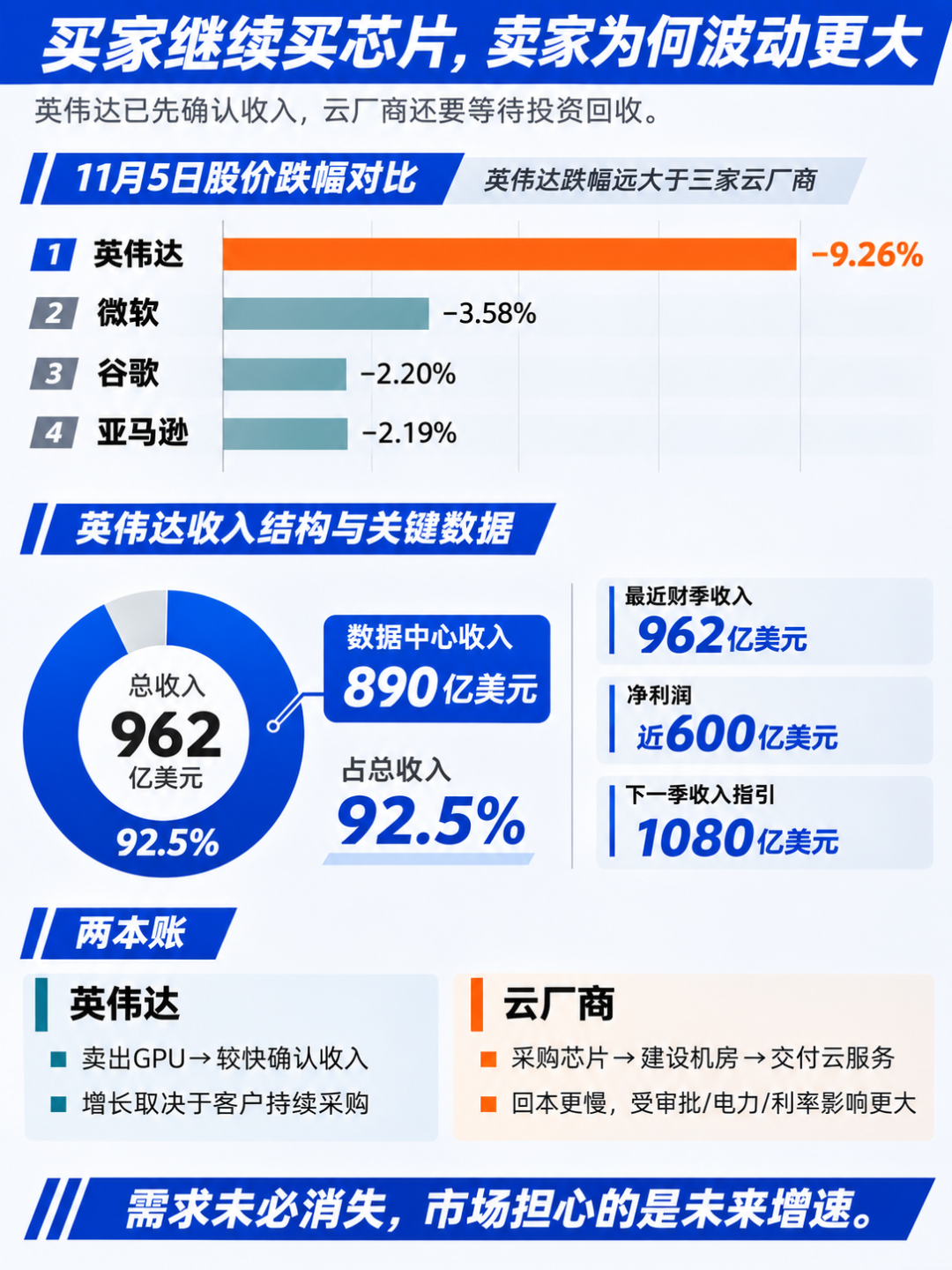
Nvidia's recent financial report shows net profits nearing $60 billion, with expectations for revenue to grow by another 12% quarter-over-quarter. However, over 90% of its revenue is highly dependent on data centers. In its customer structure, cloud giants and AI startups, along with governmental and enterprise clients, make up half each, with the latter growing at a faster rate. This model means Nvidia's performance is deeply tied to the pace of downstream infrastructure: if the data centers are built quickly, shipments surge; if progress is hindered, orders can only be delayed.
This election has coincided with changes in this aspect. On polling day, among 41 local proposals related to data centers in 10 states, 40 had results favoring restrictions on data center development, with 27 restrictive or oppositional proposals passing. The newly elected Democratic governor of Texas, Inohosa, even promised during the campaign to fully suspend data center construction until specific legislation is introduced.
SemiAnalysis, a semiconductor research firm, estimates that most data centers to be delivered in 2027 are already under construction, but the real impact of this election is on the 2028 plans, with Texas alone accounting for nearly 30% of the added computing capacity in the U.S. in 2028. The policy changes brought about by the election may primarily affect Nvidia's growth expectations for 2028 and beyond.
If project delays occur, the impact on both ends of the supply chain will not be the same: buyers can postpone some capital expenditures, while Nvidia may face the risk of delayed chip order deliveries. The trading volume on November 4 had already shown this differentiation: according to foreign media reports, on the same day that investors bet on the giants reducing AI expenditures, Microsoft and Amazon rose against the trend by about 6%, while Nvidia alone dropped.
On the 5th, the sell-off spread throughout the entire AI supply chain. Under concerns about Qualcomm's weak performance and worries related to policies slowing AI infrastructure, the Philadelphia Semiconductor Index plummeted by 12% in one day, with a decline far exceeding that of cloud computing companies.
However, this does not mean that computing power demand has peaked. Song Qinghui warns that programmatic trading, leveraged funds, and options hedging will significantly amplify short-term volatility; a single-day plunge does not correspondingly indicate that the intrinsic value of the company has been damaged. On the 6th, Nvidia rebounded by 2.78%, but has not yet recovered most of the 9.26% decline from the previous day. The new quarterly financial report set to be released on November 17 will serve as an important window for the market to assess its growth prospects.
In contrast, Apple and Tesla are positioned at opposite ends of this logical chain. Song Qinghui points out that the growth logic of the two companies is fundamentally different from that of AI infrastructure companies: Apple's profit base relies on phones and services, making it less dependent on data center construction, and therefore more resilient to declines; Tesla is facing the largest drop and is also affected by Musk's political contributions. Musk previously invested over $400 million to support the Republican Party, and after the Democratic victory, his business ventures might face more regulatory scrutiny. Within two days after the election, Tesla and SpaceX saw their combined market value evaporate by over $400 billion.
Who will foot the next hefty bill?
Ultimately, whether data centers can be established depends on funding. This hefty sum is mainly undertaken by Nvidia's core buyers, Microsoft, Google, Amazon, and Meta. The latest financial reports reveal that the four companies are still increasing their AI investments, but they can no longer rely solely on organic growth to support these expenditures.

A year ago, the combined operating cash flow of the four companies exceeded fixed asset expenditures by about $61.7 billion; in the third quarter of this year, this surplus has turned into a gap of about $26.4 billion.
This is not because AI is not profitable; Google Cloud's operating profit in the third quarter was three times that of the previous year, AWS’s operating profit rose from $11.4 billion to $17.8 billion, and Microsoft Azure's revenue grew by 48%.
The gap arises from timing differences: money for building data centers must be paid upfront, while revenue will take years to recoup. Taking Google as an example, it has $561 billion in cloud orders, over 55% of which will be recognized as revenue within two years, but its signed future purchasing commitments total a staggering $924 billion, 1.65 times its orders.
Furthermore, the upfront payment is increasingly reliant on borrowing. Google has raised its long-term debt within a year from about $20 billion to $125 billion and has launched a stock issuance plan of over $80 billion; Amazon has transformed from a net inflow of $14.8 billion in free cash flow over the past 12 months to a net outflow of $42.4 billion, primarily relying on debt issuance to make up the difference. Meta’s free cash flow turned negative for the first time in over a decade, and the trading levels of its long-term bonds are comparable to many BBB-rated companies.
Aviva Investments believes this reflects investor concerns about its excessively high expenditures and the uncertainty of monetizing AI. Among the four companies, only Microsoft still has about $18.6 billion in free cash flow and has not engaged in extensive debt issuance in recent years. According to Bank of America statistics, the five major cloud providers are projected to issue approximately $121 billion in dollar-denominated bonds by 2025, more than four times the average level of the previous five years.
As the scale of external financing expands, the cost of financing is also becoming an important factor affecting the pace of data center expansion. Song Qinghui states that persistent inflation and high interest rates will drive up financing costs, and projects dependent on external financing with long return cycles should slow down their expansion appropriately. Currently, the yield on the 10-year U.S. Treasury bond remains above 4.8%. Approval is another hurdle. SemiAnalysis points out that giants can afford the costs brought about by new regulations, but this does not guarantee timely delivery of computing power; projects stalled due to suspension orders are also unlikely to quickly shift to other states.
The most pressured are the group of clients experiencing the fastest growth at Nvidia. Pan Helin, a member of the Expert Committee on Information and Communication Economics of the Ministry of Industry and Information Technology, points out that unlisted large model companies like OpenAI and Anthropic are highly reliant on external financing. If interest rates remain high and regulation tightens, their future financing difficulties will significantly increase.
This is precisely why Nvidia has fallen more sharply than its buyers. Nigel Green, CEO of deVere Group, believes that investors will scrutinize each company to see who can genuinely convert AI investments into revenue.
On November 6, although Nvidia experienced a rebound, it still did not recover most of the previous day's drop. Compared to Apple's relatively independent profit model from AI infrastructure, Nvidia's high growth is more dependent on sustained investments from downstream. How quickly buyers can build data centers will directly impact the next round of growth for this "shovel seller."





Xiaoman Studio | Produced by Tencent News
This article is copyrighted by "Tencent News." For reprinting, please leave a message after the article, and permission is needed to reproduce.
Issue 1528 Operation Layout: Xiao Jiu
Issue 1528 Operation Layout: Xiao Jiu
Issue 1528 Operation Layout: Xiao Jiu
Issue 1528 Operation Layout: Xiao Jiu
Issue 1528
Operation Layout: Xiao Jiu
Are you "watching" me?
免责声明:本文章仅代表作者个人观点,不代表本平台的立场和观点。本文章仅供信息分享,不构成对任何人的任何投资建议。用户与作者之间的任何争议,与本平台无关。如网页中刊载的文章或图片涉及侵权,请提供相关的权利证明和身份证明发送邮件到[email protected],本平台相关工作人员将会进行核查。


