Tether's quarterly disclosure reveals the scale of the stablecoin business and makes the details of reserve management worth a closer look.
Written by: Corundum
For example, if someone has 100 US dollars in their account, some may leave it in the bank, while others may convert it into USDT. For users, the difference between the two choices might be in the transfer, trading, and receipt speed. For Tether, which issues USDT, the willingness of an increasing number of people to hold this token signifies that a large reserve fund needs to be managed.
On October 30, Tether announced the situation for the third quarter of 2026, stating that the net operating profit for the quarter was 1.5 billion dollars, with a total of 4.5 billion dollars for the first three quarters. The concurrently disclosed reserve report showed that as of September 30, the total assets of the issuing entity were approximately 191.451 billion dollars, with total liabilities of about 183.496 billion dollars, resulting in a surplus of about 7.955 billion dollars.
The basic structure of this business is actually not difficult to understand: users need US dollar tokens that can be transferred at any time, while the issuer places the corresponding reserves into income-generating assets. What’s truly worth looking into is how the income is generated, whether funds can be redeemed in a timely manner, and what else is included in the reserves besides U.S. Treasury bonds.
1. Users hold tokens while reserves operate at the other end
We can start by using a simplified scenario to understand USDT. Customers who meet the issuer's criteria pay dollars to the issuer, which issues tokens according to rules; when customers request redemption, the tokens are reclaimed or destroyed, and the issuer pays out the corresponding fiat currency. The tokens then circulate between exchanges and personal wallets, and the holders in the market may have changed hands multiple times.
These secondary market transfers usually only change the token holder, while the corresponding reserves are still managed by the issuing entity. If you buy USDT from another user, the payment recipient may be a counterparty or trading platform; on the issuer's side, they may not increase reserves by an equivalent amount. Understanding which layer the funds enter from allows one to grasp the relationship between issuance and trading volume.
If a group of customers continuously holds the tokens, the reserves will remain on the issuer's asset side for the corresponding period. The issuer can allocate assets such as short-term Treasury bonds within the scope permitted by reserve policies to earn interest or other income. The tokens themselves maintain a usage target near one dollar, while reserve income is handled according to the issuer's arrangements.
This is also a characteristic of the stablecoin business model. Users value the convenience of circulation and are willing to keep tokens in wallets or trading accounts; the issuer manages the assets behind these tokens and bears redemption and operational arrangements. Payment demand, trading demand, and U.S. dollar asset yield are thus interconnected.
As the scale increases, even a slight change in yield will result in significant income variation. For example, if there are 100 billion dollars in assets, and the average yield changes by one percentage point over the year, the corresponding annual income difference is 1 billion dollars. This is just a rough example to help understand scale effects; actual income will also depend on asset composition, holding time, financing, and operational costs.
2. How short-term U.S. Treasury bonds generate income
The bulk of Tether's reserves is still related to short-term U.S. dollar interest rates. The report at the end of September listed approximately 122.84 billion dollars in short-term U.S. Treasury bonds, with a weighted average maturity of less than 90 days. The report also includes items such as overnight and term reverse repurchase agreements. The company's announcement combines certain related exposures, and readers can refer back to the reserve details while reading.
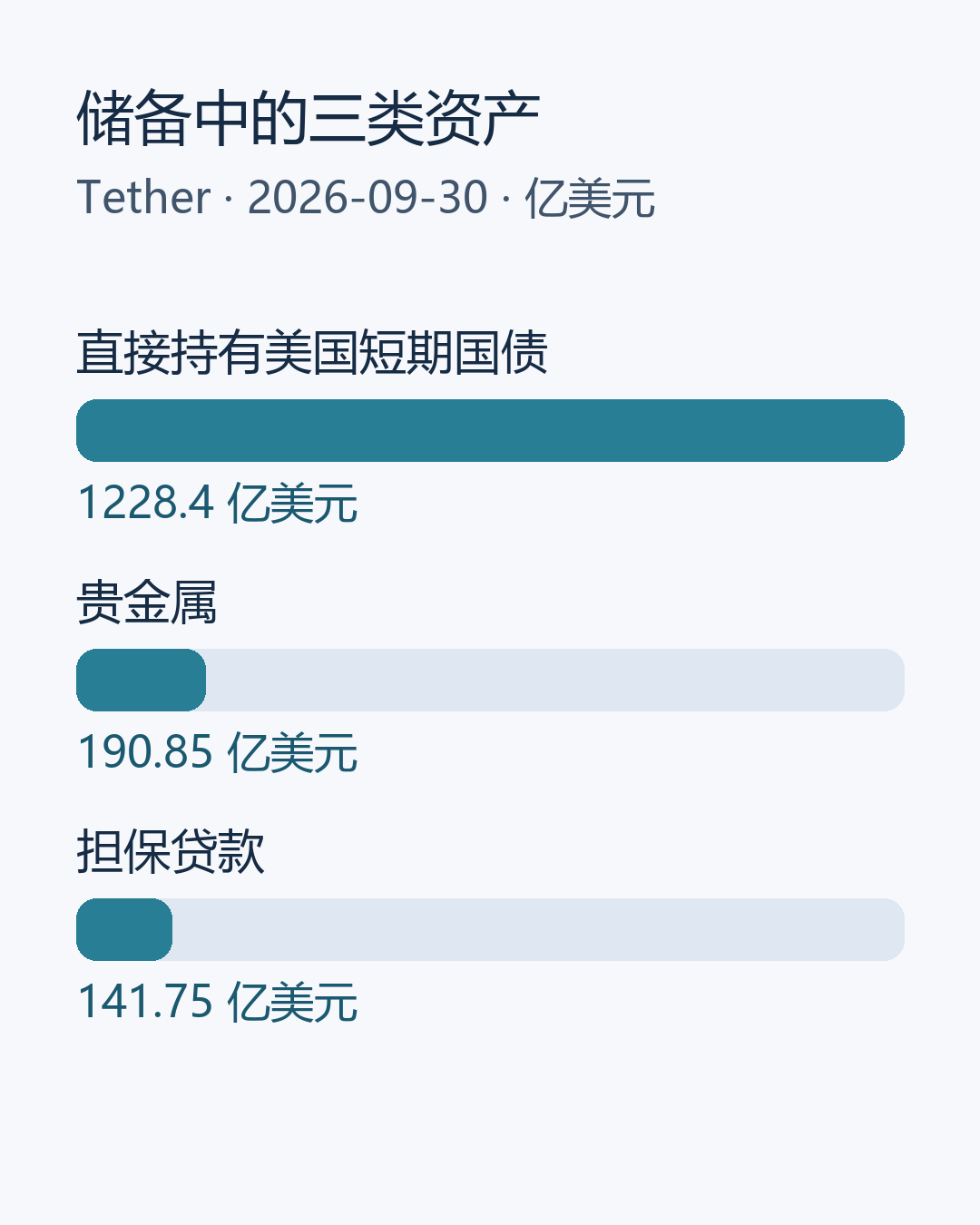
Some items of the reserves as of September 30, 2026, can be found in the main text.
The yield from short-term Treasury bonds can be understood as investors lending funds to the U.S. government for a relatively short period and receiving returns based on issuance and trading conditions. Short-term assets are typically easier to roll over upon maturity and facilitate liquidity arrangements for issuers when customers redeem. However, the yield obtained from rolling investments will follow market interest rate changes.
Reverse repos are another type of short-term funding arrangement. The funding provider pays cash and obtains securities as collateral from the counterparty, agreeing to reverse the transaction later based on conditions. Relevant items in the report are collateralized by U.S. Treasury bonds. For issuers, this arrangement affects both yield and the timing of when funds can be reused.
When we see the term "U.S. Treasury exposure," it sometimes includes directly held Treasury bonds and may also encompass related exposures created through repurchase agreements and other tools. The contractual structures and counterparties of the two differ, so statistical criteria will naturally vary. Therefore, when examining reserves, it’s best to check both the details and footnotes instead of only remembering a total figure.
If U.S. interest rates decline, the yield from reinvestment of short-term assets after maturity may decrease as well. The issuer can rely on growing circulation, cost management, and other income to cope with this; how much can be offset depends on subsequent operating data. This interest rate sensitivity is also why stablecoin issuers' incomes often attract attention in line with macro policies.
3. Reserves also include gold, Bitcoin, and loans
The large proportion of Treasury bonds does not prevent us from looking at other assets. The report lists approximately 19.085 billion dollars in precious metals, about 8.367 billion dollars in Bitcoin, and approximately 14.175 billion dollars in secured loans, along with some publicly traded stocks, other investments, and a small amount of corporate bonds. The prices, liquidity, and counterparty risks associated with these assets vary.
Gold and Bitcoin enter the asset table at the valuation on the report date. When prices rise, this can increase asset value, but declines can also affect the accounting buffer. Particularly during periods of concentrated customer redemptions, the issuer needs to consider which liquid assets to utilize first, how long other assets can be sold, and whether sale prices may deviate from typical valuations.

Secured loans require further examination of the borrowing and collateral relationship. The report states that relevant loans are over-secured by assets and involve additional margin requirements and liquidation arrangements. Whether loans can be redeemed on time depends both on the borrower's performance and on the prices of collateral and the execution of liquidation. This has different requirements for funding arrangements compared to short-term Treasury bonds with defined maturities.
A simple analogy from personal finance can be made here: if an account has cash, short-term bonds, and other investments, total assets may seem ample, but when a large payment is due tomorrow, one still needs to know which assets can be liquidated in a timely manner. The larger the reserve size, the more crucial it becomes to manage this maturity schedule and funds allocation.
Thus, to assess a reserve report, one can look at total assets, asset categories, maturities, and valuation methods in sequence, combined with liabilities and redemption arrangements. Reading it this way helps to understand how the issuer makes money usually and where they prepare to withdraw funds when pressures increase.
4. What does a buffer of nearly 8 billion dollars mean?
As of the report date, there is a difference of approximately 7.955 billion dollars between total assets and total liabilities. Dividing this difference by total liabilities yields about 4.3%. It can serve as an indicator to observe the capacity to withstand asset volatility. The company also mentioned in the announcement that the reserve buffer has increased compared to the second quarter.
This surplus asset corresponds to the amount by which assets exceeded liabilities on the report date. When asset prices fluctuate or losses occur, this surplus will be affected first. For issuers needing to maintain stable redemptions, retaining a certain buffer helps to absorb changes that occur during operations.
However, the actual effect of the buffer should also be viewed alongside asset structure. The same 8 billion dollar difference, if placed in a portfolio primarily consisting of high liquidity short-term assets, would face different pressures compared to one with significantly volatile asset prices. As liabilities continue to grow, the required liquidity arrangements will also expand accordingly.
There is also a timing issue. The reserve report presents data as of September 30, while token issuance, redemptions, and reserve investments occur daily. The figures at the end of the month help outside actors understand the asset situation, but ongoing operations still rely on daily reconciliations, fund transfers, and risk controls. These tasks rarely appear in promotional headlines but are the basis for completing redemptions as planned.
For users, a suitable reading habit to develop is to compare reports over several periods: how total liabilities change, the proportion of short-term assets, whether other investments have increased, and if significant litigations or valuation assumptions have changed. Continuously observing a set of criteria is more helpful than isolating specific appealing figures from a single period.
5. What did BDO actually verify?
This disclosure includes a reasonable assurance report issued by BDO under ISAE 3000 revised, which pertains to financial figures and reserve-related information for the specified date. The report has its own verification scope, preparation standards, and limitations, and it’s best to treat it separately from the profit news released by management.
Reasonable assurance can be understood as the verifier following applicable standards to implement procedures that gather sufficient appropriate evidence to form opinions on specific information in the report. It provides a high level of assurance, but the subject is still determined by the scope of business. Here, we mainly focus on assets, liabilities, and related disclosures as of the report date.
The actual profit the company made for the quarter is related to revenues and expenses during that period. The timing verification of reserves differs from the operational performance during the period, covering different content. The 1.5 billion dollar net operating profit mentioned in the text comes from Tether's announcement, which allows us to discuss its business model; the specific profit composition should still be viewed based on the company's disclosures.
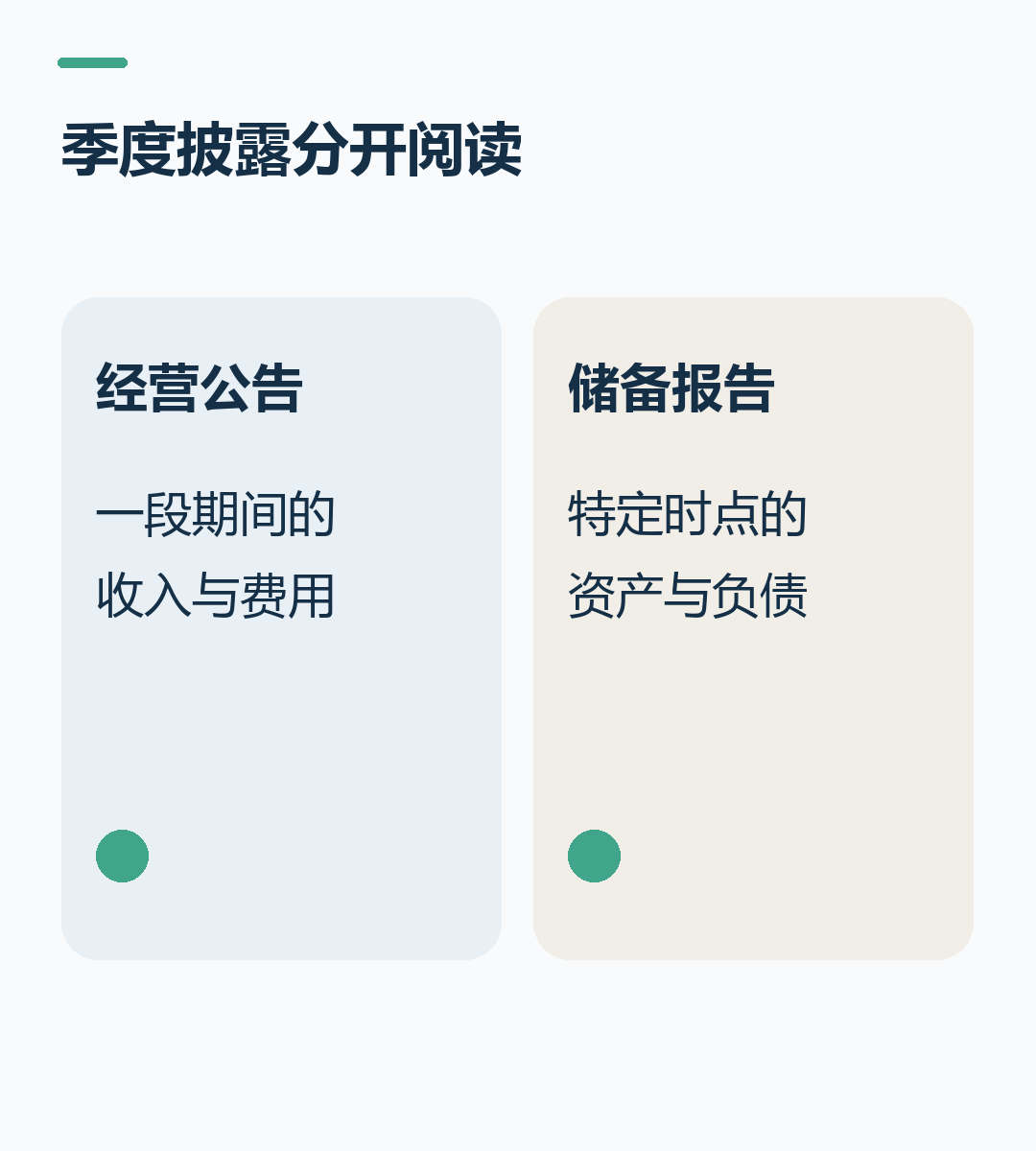
The 1.5 billion dollar profit comes from the company announcement; the reserve verification has a specific scope.
The footnotes of the report are also worth noting. Asset valuations are typically based on relevant market prices and assumptions, and some investment values require judgment; litigation, going concern, and other matters are also specifically explained. These elements help readers understand the applicability of the verification opinion and what situations might require additional attention.
If a business intends to incorporate stablecoins into larger-scale financial operations, it can review the latest reserve report, issuer terms, redemption processes, and its own accounting policies together. The finance department cares about how assets are booked, the funds department is concerned with receipt timing, and the legal department focuses on rights and dispute resolutions. Aligning these documents can make internal decision-making easier to implement.
6. How to exchange USDT back to dollars
Many ordinary users sell USDT through trading platforms and receive fiat currency or other assets. The price, fees, and receipt speed of this pathway primarily depend on the platform and trading channel. To directly redeem with Tether, one must meet the issuer's customer qualifications, verification, and minimum amount conditions.
At the time of data verification, Tether's public fees page lists the minimum amount for direct purchase or redemption as 100,000 dollars; each redemption fee is either 1,000 dollars or 0.1% of the redemption amount, whichever is higher. The application also involves account verification requirements. This arrangement makes direct redemptions more suitable for qualified larger clients.
Thus, a user holding a few hundred USDT will have a significantly different exit path compared to an institution that has already passed issuer review and is prepared to redeem millions. The former usually relies on the trading market, while the latter can apply for primary redemption contractually. Both are concerned with stability, but face different counterparties, fees, and operational steps.
During market fluctuations, secondary trading prices will be affected by liquidity and trading demand. Participants who can directly redeem can decide whether to buy tokens and apply for redemption based on price differences and costs; such trading activities help bring prices back to redeemable value. Whether implementation goes smoothly also depends on account qualifications, funding channels, on-chain transfers, and actual processing times.
If a business plans to use USDT for payments long-term, it’s best to conduct a full small-value business test in advance: who receives the tokens, how to confirm the network and address, what information is required from counterparties, who will handle currency exchange and fiat deposits, and how to retain accounting vouchers. Resolving these issues in advance is far easier than seeking exits after funds have arrived.
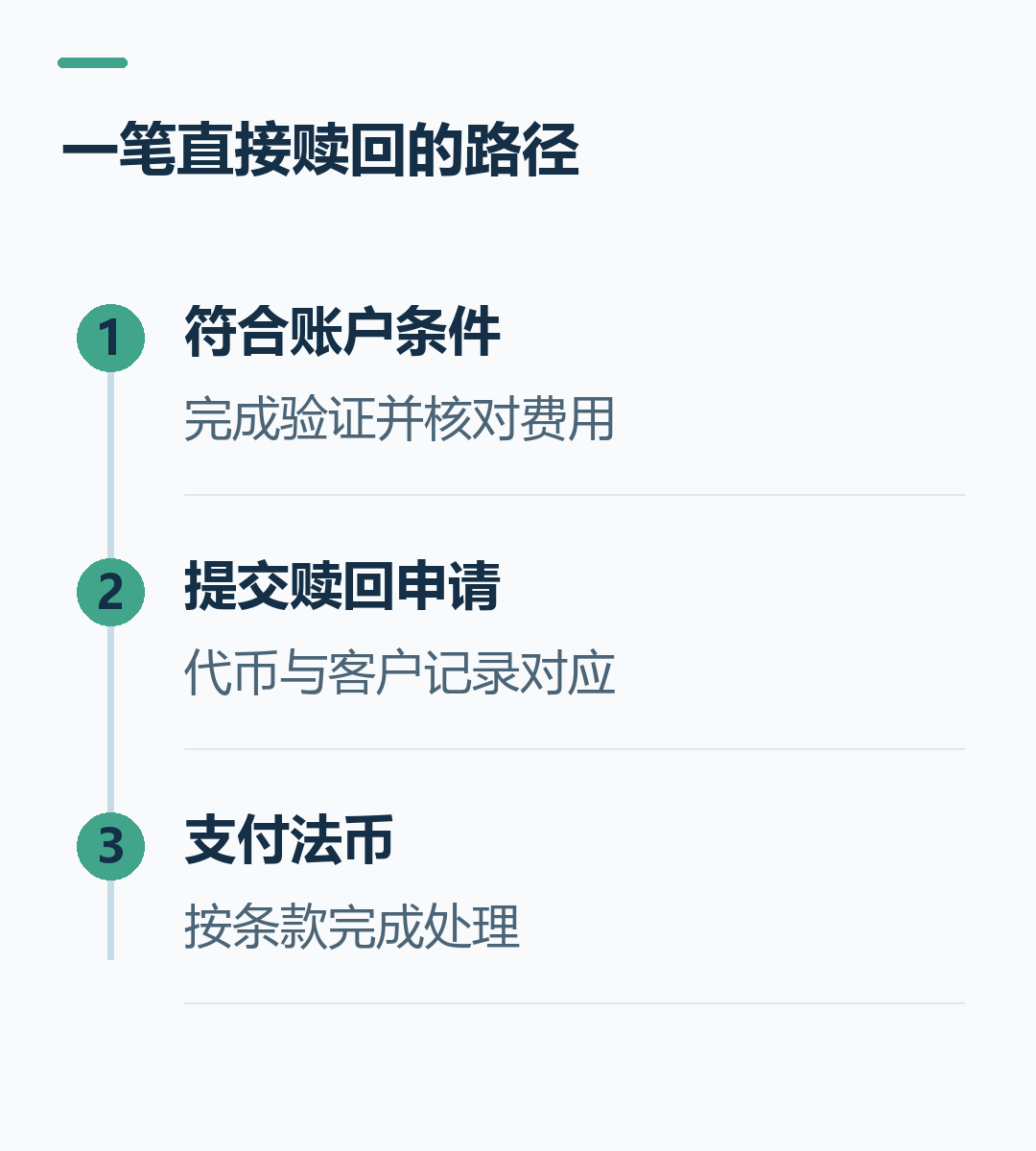
Primary redemptions and sales on trading platforms use different channels.
7. The freezing function is also part of this business
A feature often overlooked in the use of stablecoins is that issuers typically retain certain on-chain management rights. If suspicious funds are discovered, legal processes are received, or issues defined in issuance terms are triggered, related addresses may face freezing and other restrictions. Recent security events at trading platforms have renewed market attention to the role of issuers in recovery.
Freezing can help stop part of the assets from continuing to circulate, allowing time for law enforcement investigations and subsequent returns. For victims, this is a practical tool beyond tracking on-chain funds. Processing still requires identifying asset addresses, transaction records, application subjects, and legal basis; the ownership and return of frozen funds must also be processed through the appropriate procedures.
For business users, address management is therefore quite necessary. Businesses can keep records of commonly used payment addresses, verify counterparty information, and write handling methods for abnormal receipts into internal processes. When payment is obstructed, knowing which service provider to submit what documentation is usually more efficient than repeatedly inquiring across multiple platforms.
Issuers, trading platforms, and custodians each have different responsibilities here. Issuers manage related rights in token contracts, platforms manage customer accounts, and custodians hold and operate customer assets. Businesses need to know where their assets are being held at which layer, and which entity can handle the current issue to send work orders and legal requests to the right place.
These arrangements make the use of stablecoins more akin to a long-term payment service. While it may seem like simply entering an address and clicking transfer, behind it are connections linking reserves, account reviews, and anomaly handling. When businesses use it for operational payments, they can directly adapt existing payment approval and reconciliation habits, while also adding the new elements of on-chain addresses and networks.
8. Larger revenue brings more specific operational issues
As the issuance volume of stablecoins expands, the coordination required by issuers will also increase. Which institutions hold reserves, how to align the working hours of different banks, how to arrange liquidity for large redemptions, and how to handle anomalous on-chain addresses—all these aspects could affect the final user experience.
One very realistic difference is that tokens can circulate 24/7, while the banks and securities markets that support the reserves operate on different schedules. When large trading demands arise over the weekend, issuers and market participants need to rely on pre-arranged assets and funding channels to respond. The convenience of stablecoins is built on this linkage between on-chain and off-chain.
Regulation will likewise develop along these specific issues. What kinds of reserve assets can be held, what redemption rights customers enjoy, how issuers isolate risks, and who makes decisions in cases of freezing or disputes all impact whether businesses can issue or provide services in specific markets. As cross-border usage expands, customers need to confirm the parties and terms versions they are engaging with.
These arrangements will also influence the selection of counterparties. When an exporting business considers receiving payments in stablecoins, it can first list the cryptocurrencies and networks it uses most frequently, and then check if local service providers, bank deposits, and accounting documentation can align. Companies with larger funding volumes can also pre-arrange notification, refunds, and alternative payment methods in unusual situations, integrating daily payment processes into their existing financial management.
Tether's quarterly disclosure has revealed the scale of the stablecoin business and made the details of reserve management worth reconsideration. Next time you see profit numbers, we can follow up with a few specific inquiries: what assets generate income, what stages are involved in redemption, and how the surplus in the report changes with market fluctuations. Viewing funds' operations behind USDT through these questions becomes much more comprehensible.
免责声明:本文章仅代表作者个人观点,不代表本平台的立场和观点。本文章仅供信息分享,不构成对任何人的任何投资建议。用户与作者之间的任何争议,与本平台无关。如网页中刊载的文章或图片涉及侵权,请提供相关的权利证明和身份证明发送邮件到[email protected],本平台相关工作人员将会进行核查。


