Circle has not done well enough, but it's not bad either.
Written by: Eric, Foresight News
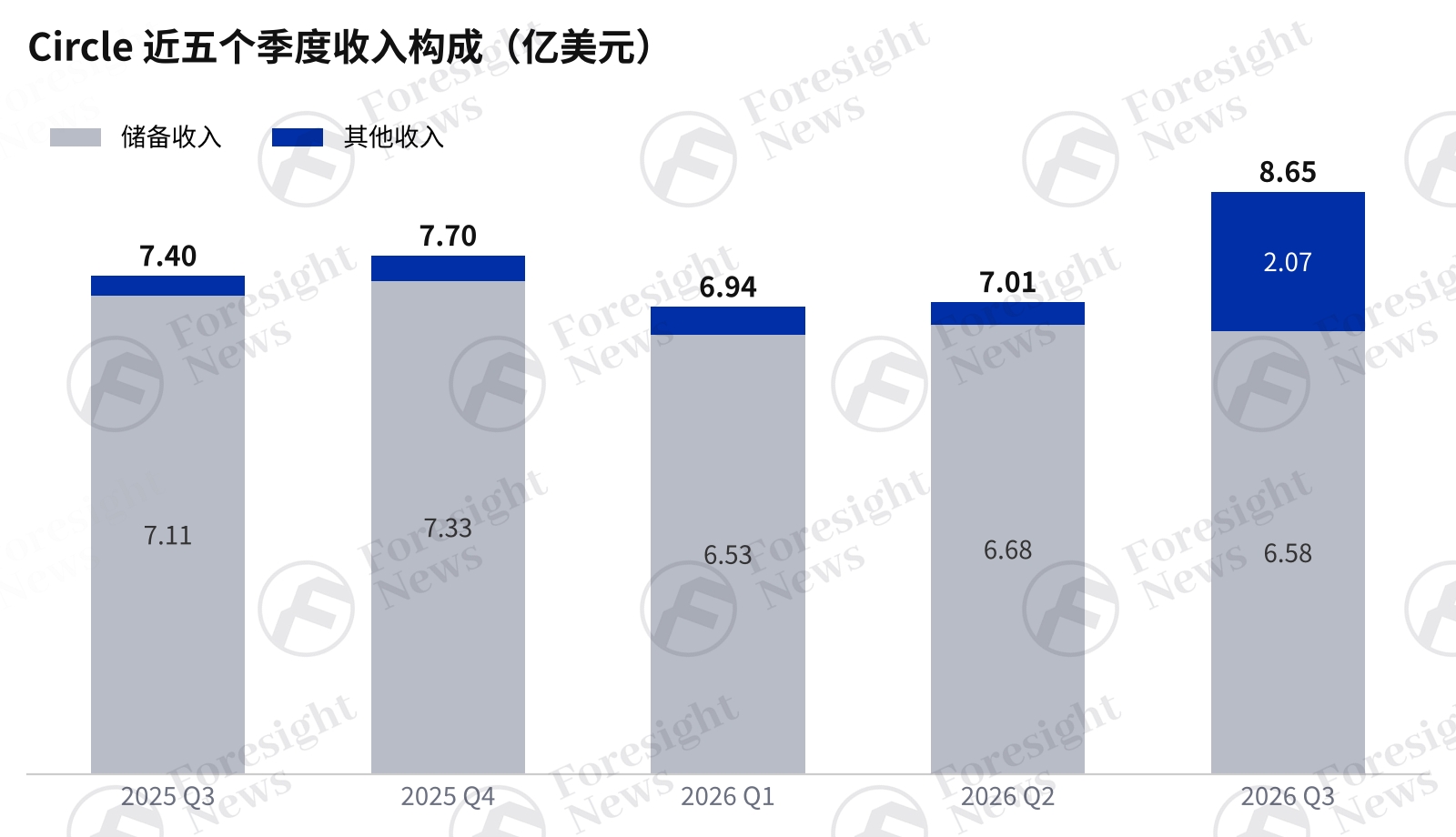
On November 4th, before the market opened in Eastern Time, Circle released its financial report for the third quarter of 2026. The data shows that the company achieved total revenue and reserve income of 865 million dollars in the quarter, a year-on-year increase of 17%; a net operating profit of 226 million dollars, a year-on-year increase of 5%; and an adjusted EBITDA of 317 million dollars, a year-on-year increase of 85%.
After the release of the financial report, the company's stock price rose over 3% in pre-market trading before dropping more than 6%. After opening, Circle's stock price stabilized and rebounded, ultimately closing at 76.12 dollars, an increase of 1.2% from the previous trading day's closing price.
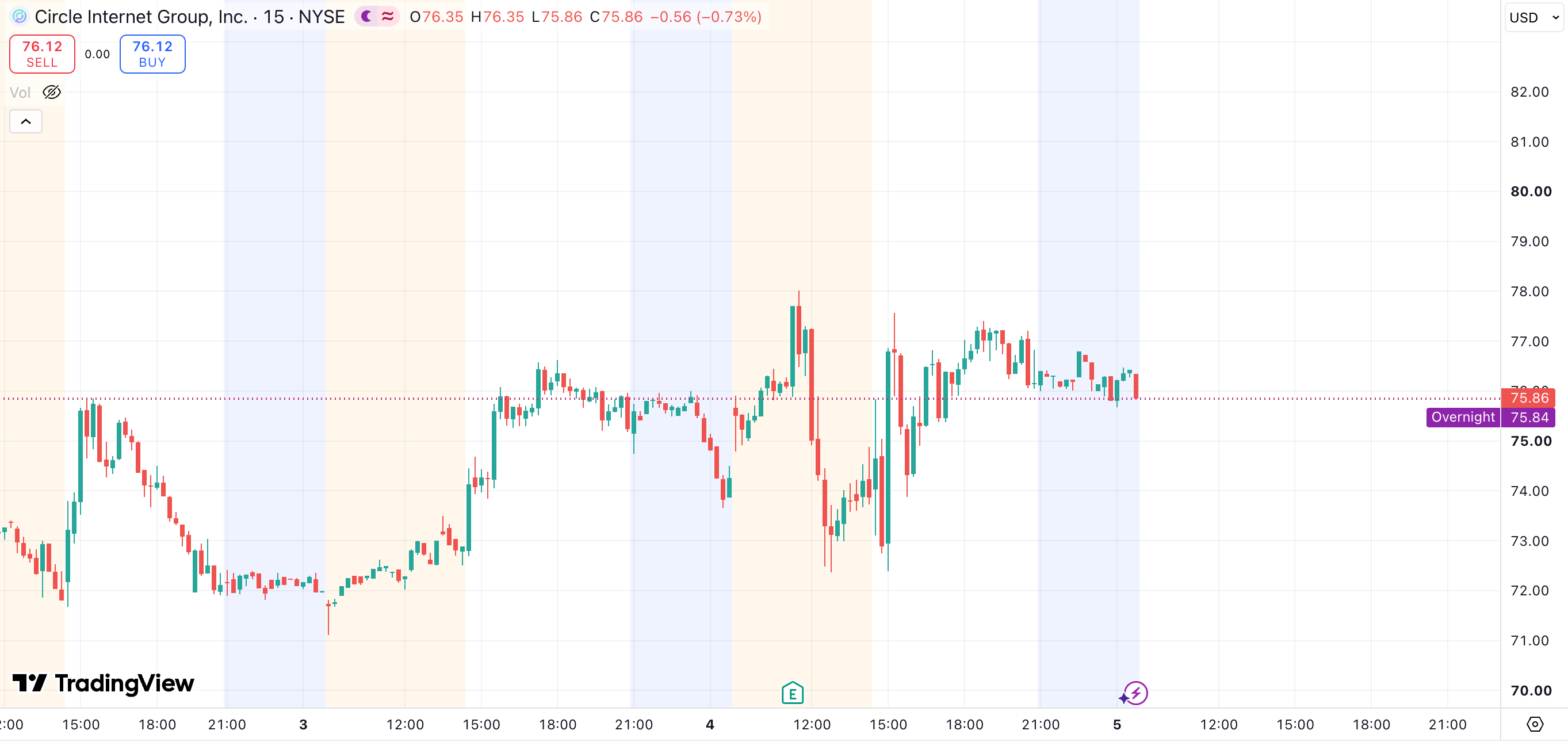
On the surface, this is a report with revenue and profit exceeding expectations. However, when analyzing the revenue structure, it can be found that the quality and sustainability of this quarter's growth are in doubt. Overall, this is a report that is in line with market expectations, with neither good nor bad performance exceeding those expectations.
Main Business Continues to Face Pressure
Circle's revenue pillar is still the USDC reserve income, which reached 658 million dollars this quarter, a year-on-year decrease of 8%. The company explained that the main reason was the reserve yield's decline of 61 basis points year-on-year to 3.5%, which was partially offset by an 8% growth in average USDC circulation.
In the Federal Reserve's interest rate reduction cycle, the interest rate sensitivity of reserve income is becoming increasingly evident: with an estimated reserve size of about 73 billion dollars, for every 25 basis points decline in the benchmark interest rate, the company's annual income will decrease by approximately 180 million dollars.
As of the end of the quarter, the USDC circulation was 73.9 billion dollars, remaining flat year-on-year; the stablecoin market share was 27%, a year-on-year decrease of 183 basis points. This contrasts sharply with the management's guidance of a "40% compound annual growth rate for USDC circulation over many years," indicating that the pressure on this guidance is accumulating.
According to information from Circle's official website, as of November 2nd local time, USDC circulation has fallen below 70 billion dollars, down over 7% from the beginning of the year. Although the decline in annual growth does not necessarily break the expectation of 40% compound growth every year, according to CoinMarketCap's quarterly report, the total market capitalization of dollar stablecoins increased by approximately 1.78 billion dollars in the third quarter.
Combining the relatively stable USDT circulation data from Tether in the third quarter, USDC's market share is actually being diluted by small-cap stablecoins.
High USDC Usage Rate Struggles to Support Issuance
Although circulation data is poor, some usage metrics still maintain rapid growth: on-chain transaction volume of USDC reached 13.9 trillion dollars, a year-on-year increase of 49%; USDC within the platform reached 13.9 billion dollars, a growth of 36%; the number of "meaningful wallets" holding more than 10 dollars of USDC reached 7.3 million, an increase of 16%.
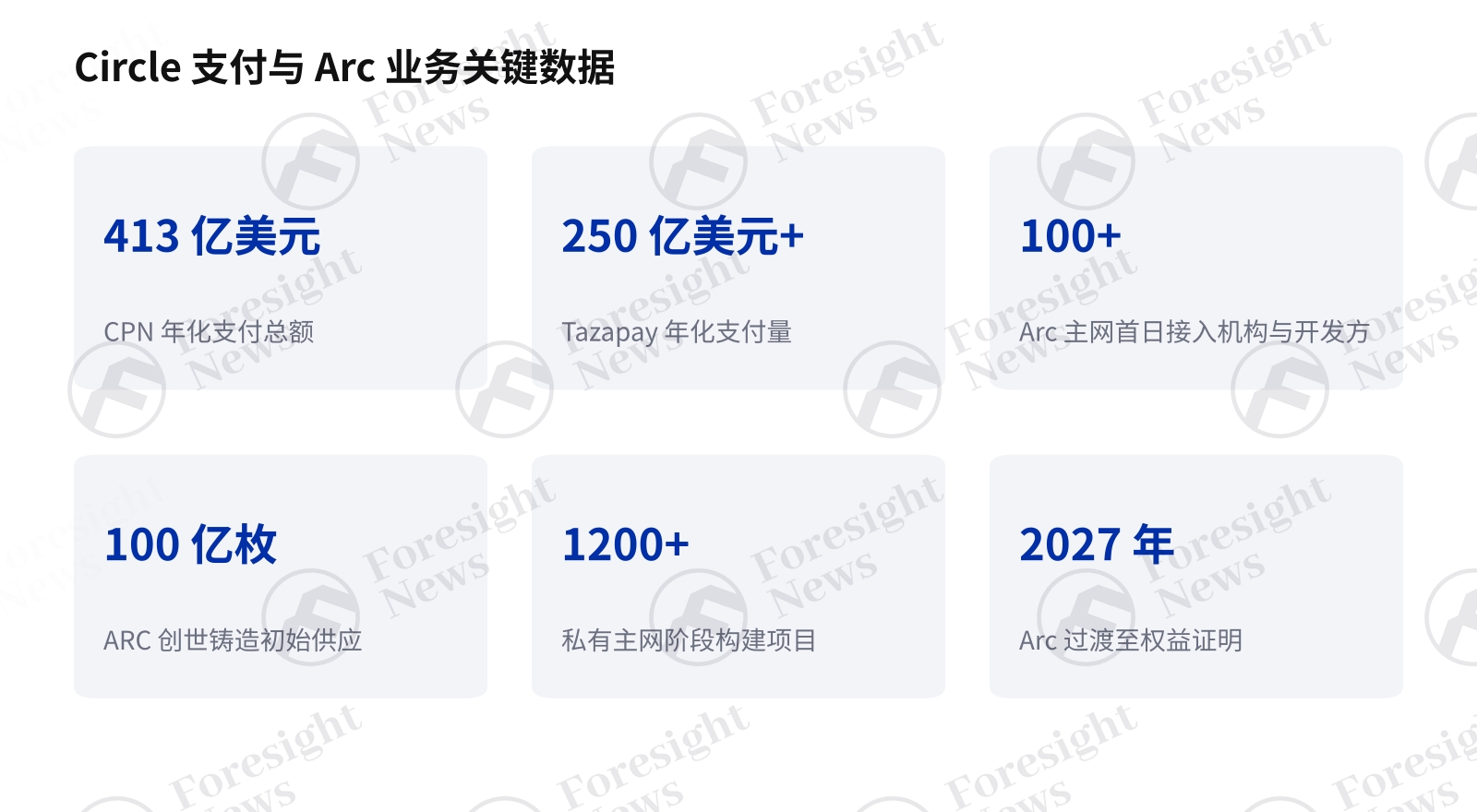
On the business side, the company has been active this quarter: it signed an acquisition of the Singapore cross-border payment platform Tazapay (annual payment volume exceeding 25 billion dollars, expected to close in 2027); Circle Payment Network's (CPN) annual transaction processing volume reached 41.3 billion dollars; Visa Direct stablecoin pre-load has entered the commercial phase; and Samsung Wallet has launched USDC cross-border remittances.
It can be foreseen that USDC usage data will continue to grow in the future, but I pointed out in a May article "Circle Using Hyperliquid to 'Nurture a Poisonous Worm'" (https://foresightnews.pro/article/detail/97086) that the growth in usage cannot offset the decline in issuance, and that a quantity at the level of 10 billion dollars may be sufficient to support a value circulation at the trillion-dollar level.
In the third quarter, Circle received a 100 million dollar investment from Binance, and it will also regard Binance as an important issuance channel in the future. Essentially, how much USDC can circulate still depends on exchanges like Binance and Coinbase, as well as the distribution from DEXs like Hyperliquid, and the genuine demand from DeFi protocols for financial management and trading.
The biggest variable in this quarter's revenue structure comes from "other income," which reached 207 million dollars, a year-on-year increase of 627%, with 182 million dollars coming from the ARC token pre-sale of the public chain Arc. Pre-sale income is characterized by one-time events. If this income is excluded, Circle's revenue for this quarter would be approximately 683 million dollars, showing an actual year-on-year decline of about 8%. The adjusted EBITDA would also fall to around 135 million dollars, showing a year-on-year decline of about 20%. In other words, the ARC pre-sale significantly "altered" this quarter's growth curve.
High Profit Margin Paves the Way for Q4
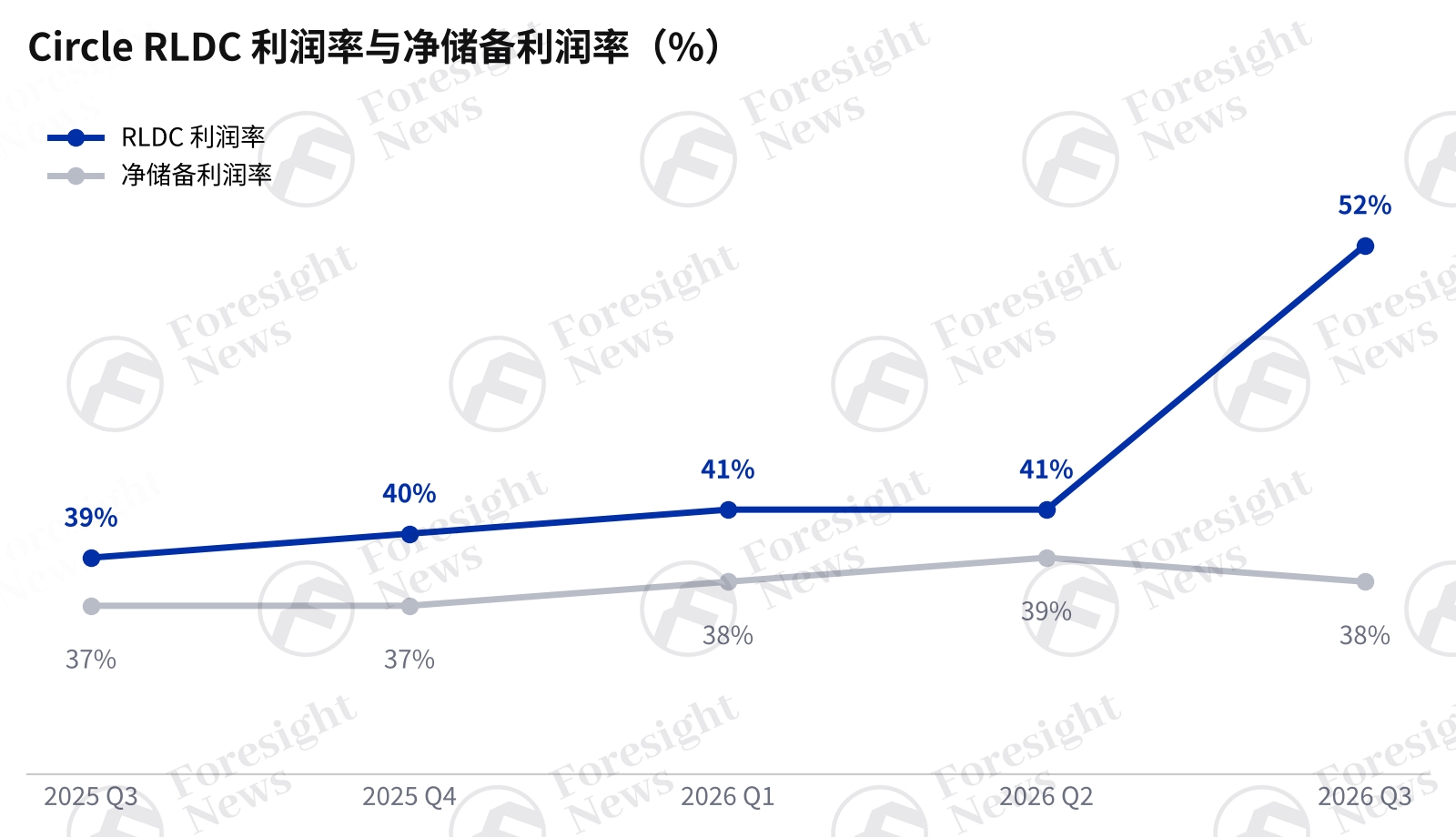
This quarter, Circle's profit margin after deducting distribution costs (RLDC) jumped from 39% in the same period last year to 52%, one of the brightest indicators in the financial report. The company lightly mentioned the reason for the cost reduction as "reduced distribution expenses" in the report without disclosing specific components.
From the financial report's own data, this improvement is not a result of enhanced operational capabilities.
The net reserve profit margin, which measures the distribution burden of core reserve businesses, barely increased from 37% to 38%; if the ARC pre-sale income is excluded, this quarter's RLDC profit margin was approximately 39.7%, remaining basically on par with the same period last year. Considering that Circle's distribution payments to trading platforms are usually linked to reserve income, the reduction in distribution costs due to declining interest rates is more a mechanical result rather than an improvement in terms.
In addition, the company's full-year RLDC profit margin guidance remains unchanged at 41.7% to 43.7%, implying that the profit margin will significantly decline in the fourth quarter, which the market speculates may be related to the revenue-sharing arrangements after renewing the contract with Binance.
Market Discrepancies Persist
From the sharp rise and fall before the market opened to the rebound after opening, the market's attitude reflects clear discrepancies.
Optimists believe that the success of the ARC pre-sale validates institutional demand for the Arc ecosystem, providing the company with a second growth curve beyond the USDC reserve business; the marginal improvement in the proportion of distribution costs alongside a robust balance sheet offers a cushion for transformation.
On the other hand, cautious observers point out that if one-time income is excluded, the core business is actually contracting, and the dual pressure of the interest rate reduction cycle and market share loss has yet to be alleviated. Starting from the fourth quarter, when ARC income wanes, the true profit levels will be put to the test.
Before the financial report was published, CRCL's stock price had already retreated about 70% from last June's peak, indicating that market expectations for this performance were already low. Throughout 2025, the circulation of USDC surged from less than 40 billion to over 70 billion; such rapid growth inevitably leads to a correction phase in 2026. Currently, Circle's stock price seems to have priced in the market's expectations for difficulty in achieving high growth in the short term.
Institutional discrepancies are also evident. Firms like Bernstein and TD Cowen maintain buy ratings, with target prices generally within the range of 100 to 150 dollars; while Morgan Stanley has given an Underweight rating, lowering the target price to 34 dollars.
Objectively, Circle's growth prospects appear weak, yet its fundamentals are hard to challenge, and its value in the short term still relies on industry and regulatory factors. According to information from the earnings call, Circle considers Arc and Circle Payment Network (CPN) important growth points for 2027; if both can grow against the prevailing trends in the crypto market, perhaps the market will price in the "second growth curve" story.
免责声明:本文章仅代表作者个人观点,不代表本平台的立场和观点。本文章仅供信息分享,不构成对任何人的任何投资建议。用户与作者之间的任何争议,与本平台无关。如网页中刊载的文章或图片涉及侵权,请提供相关的权利证明和身份证明发送邮件到[email protected],本平台相关工作人员将会进行核查。


