Today's AI computing power track is equally volatile and fraught with risks, not more stable than the cryptocurrency industry.
Written by: Vicky Ge Huang
Translated by: Chopper, Foresight News
Last year, Ben Gagnon set out to transform the originally Bitcoin-mining data center, hoping to ride the wave of artificial intelligence and transition into a computing power data center. This seemed like a perfect path: avoiding the collapse of the cryptocurrency market and embracing the hottest track on Wall Street.
The reality, however, is that the AI data center business is also fraught with difficulties. The WGMI index tracking this sector benefited from a 72% surge in the AI market in 2025, but has dropped 23% year to date. The constituents of this index include companies like CoreWeave, Nebius, Corz, and CleanSpark, which have all transformed from Bitcoin mining to data centers, and thus have faced tremendous pressure in this round of AI sector sell-off.
"We thought that by leaving Bitcoin, we could find a more stable market, but we realized that this market is even more volatile than Bitcoin; it was a baptism of fire," said Gagnon, CEO of Keel (formerly Bitfarms).
Last week, the cracks in the AI trading market further widened, as investors sold off shares of tech giants like Alphabet and Intel in large volumes. Emerging cloud service providers are at the center of the sell-off, squeezed by heavy debt and rising financing costs. The skepticism from well-known industry figures intensified this wave of selling pressure; for example, Elon Musk warned that for companies without stable, significant revenue aside from AI computing power, the debt market has basically shut them out.
Musk stated on X: "This means that over 200 emerging cloud computing power companies will face a brutal clearance and consolidation. A few may survive, but not many."
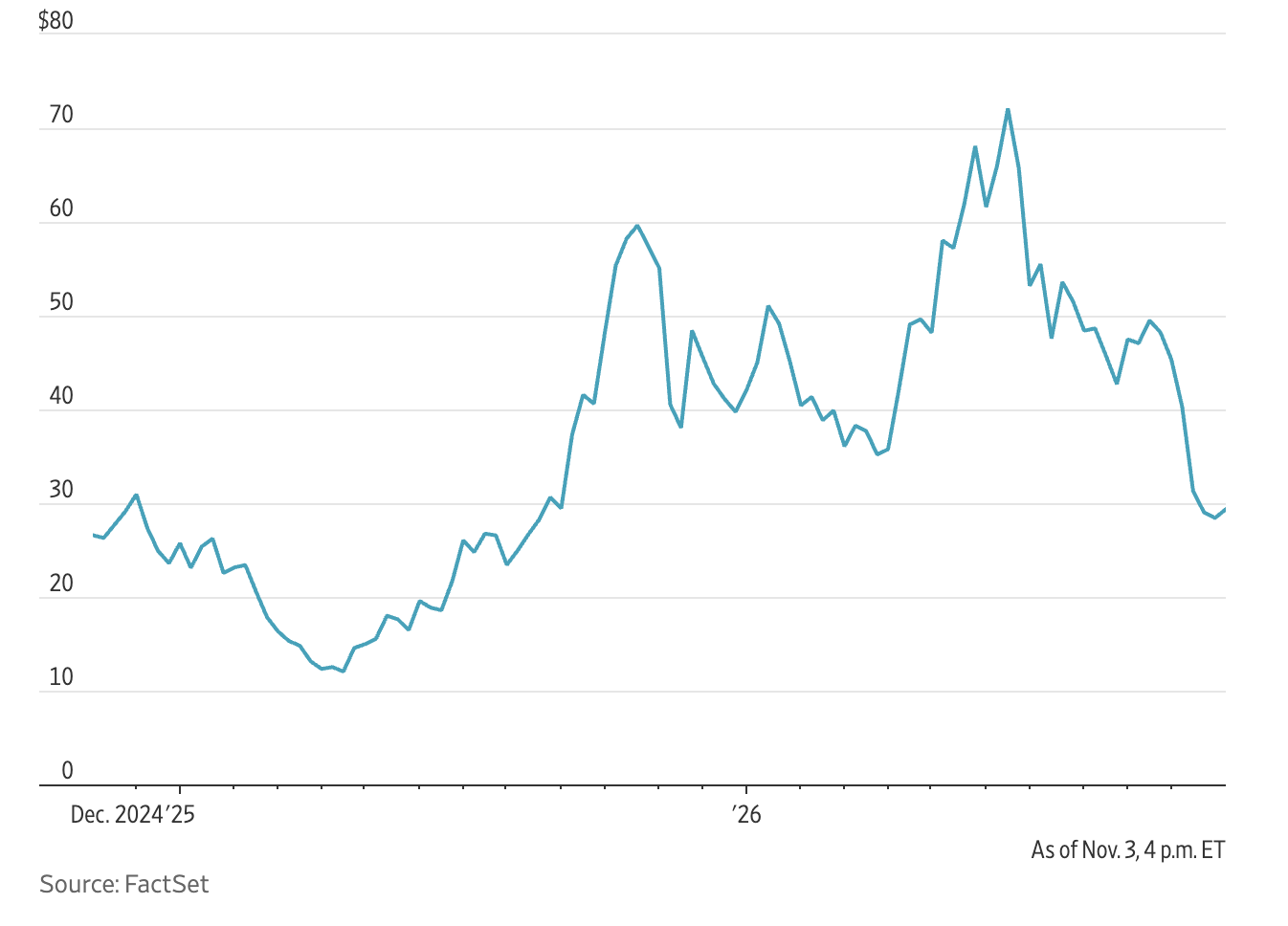
CoinShares Bitcoin mining and digital power ETF trends. Data source: FactSet
The background of Bitcoin mining companies turning to AI is that the mining business itself is becoming increasingly difficult: the competition for computing power has become intense, continuously compressing profit margins; the Bitcoin halving mechanism directly cuts miners' block rewards in half every four years, forcing companies to seek new sources of income; the downturn in the cryptocurrency market has also led to a continued shrinkage of Bitcoin reserves held by miners.
CoreWeave, originally an Ethereum mining project, later transformed into AI, was once the brightest success story in this track. With valuations soaring and receiving investment from Nvidia, other miners have followed suit in this transformation path.
Miners whose profits are continuously narrowing quickly stood on the windfall of AI infrastructure boom. Their data centers are already equipped with large-capacity power supplies and flexible power contracts; moreover, unlike traditional data centers bound by long-term clients, miners can flexibly allocate power resources and supply AI computing power business at any time.
For a time, this transformation progressed smoothly. Major-scale cloud vendors like Alphabet, Amazon, Meta, and Microsoft invested hundreds of billions into AI capital expenditures, making these data centers with ample power capacity an immediate necessity. Former crypto miners secured new revenue by leasing agreements with major clients like big firms and Anthropic.
However, the wind turned suddenly, and investors began doubting whether the massive investments in AI could yield returns. Whenever competition intensified, growth slowed, or news of operational setbacks at data center operators emerged, panic spread. Recent high interest rates and geopolitical uncertainties have also led the market to question whether heavily indebted computing power developers can sustain rapid expansion.
Once the benchmark for miners transforming into AI, CoreWeave has now also become a typical representative of high-risk AI trading. Its stock price has dropped 25% this year, and in recent weeks, both stocks and bonds faced severe sell-offs.
At the same time, AI data centers are beginning to face the same public backlash that Bitcoin mining encountered back in the day: politicians are starting to criticize these facilities for their massive consumption of electricity and water resources, reminiscent of the resistance faced during the early expansion of mining operations.
Setting aside the macro environment, different data center business models each have their own advantages and disadvantages. Companies that completely abandon mining and fully transition to computing power centers have one advantage: a single business model makes it easier to gain Wall Street's valuation recognition.
Gagnon revealed that Keel Infrastructure has completely shut down its Bitcoin mining operations in the United States, but the new data center has yet to sign customer contracts. The company expects that when the commercialization process and site construction are completed, three computing power locations will generate revenue next year. Keel Infrastructure's stock price has dropped 6.8% this year.
JonesTrading analyst Kevin Dede stated, "Investors tend to label companies. Those that are not fully transformed and are indecisive find it difficult to be valued comparably to those that have completed their transformation and clearly positioned themselves in the investment circle."
However, completely transitioning to a computing power center also means losing the steady stream of Bitcoin mined to support expansion. Once the mining machines are unplugged, the company no longer possesses a stable daily cryptocurrency income, which is originally a crucial source for supporting capital expenditures.
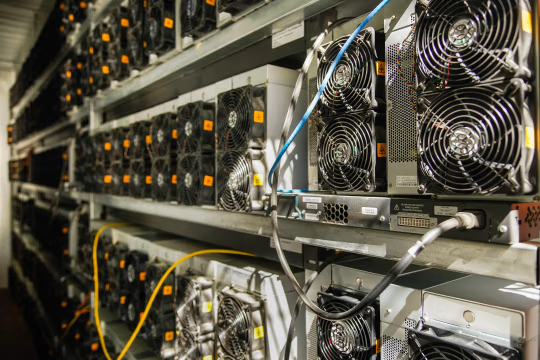
In 2022, Bitcoin mining equipment at CleanSpark's mining site in University Town, Georgia
Needham analyst John Todaro's data shows that publicly listed mining companies in the US sold a total of 48,900 Bitcoins in the first half of this year, setting a new historical high for a half-year cycle. He expects that in the second half of the year through early 2027, mining companies will continue to sell off their Bitcoin reserves to raise funds for new computing power centers.
Todaro said, "From these companies, we have learned that financing for AI computing power projects is becoming difficult. So we believe that if there is still Bitcoin on the balance sheet, companies are highly likely to increase their sell-off to cover capital expenditures and advance projects that have not yet secured funding."
Some mining companies have chosen a compromise approach, such as CleanSpark, which views Bitcoin mining as a transitional method for developing data centers: on the same site, it mines to earn cryptocurrency profits while simultaneously constructing data centers that meet customer needs nearby; when needed, it can switch power to the computing power business.
CleanSpark holds over 1 billion dollars in Bitcoin on its balance sheet, and its stock price has dropped 19% this year.
CleanSpark CEO Matt Schultz stated, "We do not plan to invest large amounts of capital continuously in mining, but rather regard mining as a tool to secure large capacity power allocations. The Bitcoin on the balance sheet serves as capital reserves."
免责声明:本文章仅代表作者个人观点,不代表本平台的立场和观点。本文章仅供信息分享,不构成对任何人的任何投资建议。用户与作者之间的任何争议,与本平台无关。如网页中刊载的文章或图片涉及侵权,请提供相关的权利证明和身份证明发送邮件到[email protected],本平台相关工作人员将会进行核查。


