Author: Billy Bambrough, Forbes
Translation: AididiaoJP, Foresight News
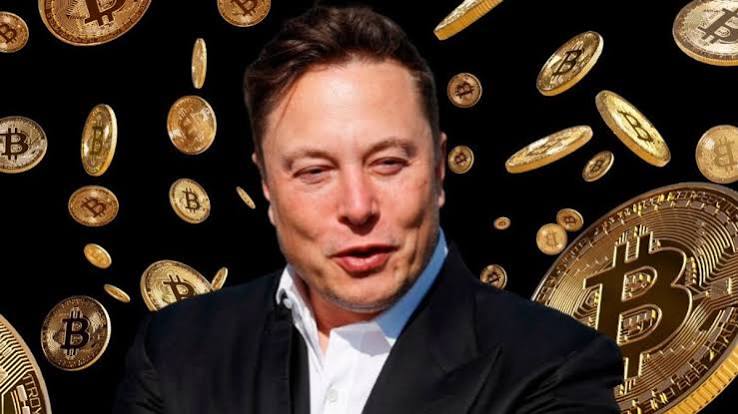
Elon Musk has rarely called out as frequently as in 2021, but he has brought X one step closer to the crypto market. This article analyzes how Musk is setting up for the next round of Bitcoin and cryptocurrency market activity: not just by tweeting to pump prices, but by connecting discussions, market trends, and transaction entry points.
On the same day, the price of Bitcoin soared to around $87,000, then slightly retreated, still holding at a several-month high. This is still far from the previous high of about $126,000 in October 2025, but for a market that has lingered within the $60,000 to $80,000 range for most of this year, it was enough to boost sentiment. Dogecoin also strengthened, briefly rising back above $0.10, with a 24-hour increase of over 10%. The market views these two developments together: prices are rising, and X has turned "seeing the coin" into "clicking to buy."
What X Did and Didn't Do
The change is in Cashtag. American users clicking on $BTC, $ETH, $XRP, $SOL, $DOGE, or $TSLA, $COIN stock tags in their timelines can see larger real-time charts, related posts, and a "Trade" button. Clicking redirects to Coinbase, Kraken, Gemini, or Interactive Brokers, Moomoo. The first three exchanges handle crypto assets, while the last two brokerages deal with stocks and ETFs. Log in or open an account, place orders, and custody are all carried out on partner platforms. X does not match or clear trades, nor does it touch customer funds; it only provides a discovery layer and a traffic layer.
Mridul Singhai, a member of the X product engineering team, stated that the goal of Cashtag is to fill the gap between timeline information and market execution. The function is currently only available to U.S. users; there is no timeline for other markets. For a platform with daily active users in the hundreds of millions, the significance of this step is not that "X has become an exchange," but rather that crypto discussions are becoming actionable rather than just spectator activities. By early 2026, Smart Cashtag should be able to show real-time quotes; now there is an added order pathway. Information becomes action, with one less layer of friction that involves opening a browser, searching for an exchange, and registering.
This is separate from X Money. X Money opened up to some Premium users mid-year, offering fiat transfers, savings, and Visa card services, promoting about a 6% yield and cashback, but it did not initially include crypto functionality. The regulatory licenses follow pathways for currency transfers and bank partnerships, building a fiat foundation first before discussing the integration of stablecoins or cryptocurrencies. Musk's team previously confirmed that crypto trading would be accessible via Smart Cashtag, with X itself not acting as a broker. The trading button launched in September effectively made that statement actionable. The market is still speculating on whether Bitcoin, Dogecoin, or stablecoins will soon be embedded in X Money, but there is currently no official timeline.
Companies and People: Holding Coins, Speaking of Energy
Tesla still holds about 11,509 Bitcoin, valued at nearly $1 billion at current prices, with the position appreciating by about $123 million this week. SpaceX's disclosed listing materials reveal approximately 18,712 coins, which once doubled external estimates of holdings, with a purchase cost of about $661 million. Together, the two companies hold over 30,000 coins, likely ranking fifth in the world in terms of publicly traded companies' Bitcoin holdings. Musk has long acknowledged holding Bitcoin, Ethereum, and Dogecoin, but the specific quantities have never been made public. The market sees him as a switch for crypto sentiment, focusing on influence rather than how many coins he personally holds.
His public statements in recent years have shifted from "buying or not" to "what is money." He wrote: Energy is the real currency; fiat money can be printed, but energy cannot be faked; Bitcoin is built on energy. He also told The Economist that if AI and robots dramatically boost supply in about ten years, the concept of money might no longer be important. The Bitcoin community interprets this as: he hasn't exited the narrative; he has just brought the conversation down to a more fundamental level—computing power, electricity, and uncompromisable settlement.
This narrative contrasts sharply with that of 2021. Back then, Tesla briefly accepted Bitcoin payments, later pausing due to the energy consumption of mining; subsequently, the company sold most of its position, leaving the current batch. Musk turned to Dogecoin and memes, briefly aligning with policy during the Trump era, before distancing himself again. Price lapses no longer trigger immediate reactions, but whenever X modifies its products, the market will reassess his value.
Price Rises Do Not Confirm the Cycle Yet
In mid-September, Bitcoin was still around $75,500, then climbed over 15% within days, touching about $87,300 before retreating back to the $85,000 to $86,000 range. The spot volume increased significantly. On-chain data platform Glassnode pointed out that the Bitcoin MVRV ratio re-crossed the 365-day moving average, a momentum signal that had previously appeared before the bull markets in 2019 and 2023. Some analyses view crossing above the 365-day average as a "bull market signal," with the next resistance level anticipated at $88,000 to $90,000. However, other analyses caution that the earlier shorts being squeezed significantly amplified the price rise—over $648 million in short positions across the market were forcibly liquidated, creating a "breakout-clearing-rebreakout" self-reinforcing cycle. It's noted that chasing leveraged highs now may be inappropriate, and it’s necessary to first observe whether $82,000 can hold.
The total market capitalization of the crypto market is nearing $3 trillion again, with Bitcoin comprising about 59%. These numbers indicate that the rebound has volume, but they do not independently prove that the four-year cycle has changed.
The macro narrative remains the same: U.S. debt expansion, changes in monetary environment, gold leading the way, and so-called depreciation trade flowing back to digital assets. Kevin O'Leary and others have set the next ceiling very high, proposing that Bitcoin could achieve a 1% to 3% allocation in institutional alternative asset portfolios, suggesting a price range of $253,000 to $760,000; if the upper limit is reached, the market cap would soar to $15 trillion. He also noted that Bitcoin reaching $1 million requires the industry to first alleviate concerns about quantum computing potentially breaking encryption standards. Predictions themselves are highly volatile and are better suited as emotional coordinates.
For traders, the facts now available for verification are not complicated. First, X has connected crypto discussions to licensed exchanges, initially testing in the U.S. Second, the two core companies within Musk's ecosystem remain major holders of cryptocurrencies, with positions that are publicly accessible. Third, payment products first go through fiat currencies, with crypto integration listed as a plan rather than an existing function. Fourth, coin prices have rebounded from year-to-date lows to several-month highs, but still have a considerable distance to go to prior highs.
The opening of the entry is not a bull market starting gun, and fewer posts do not equal exiting the market. If the next round truly arrives, the market will look back on this step: not what Musk called out next, but whether it takes just one click to buy coins when over hundreds of millions see $BTC.
免责声明:本文章仅代表作者个人观点,不代表本平台的立场和观点。本文章仅供信息分享,不构成对任何人的任何投资建议。用户与作者之间的任何争议,与本平台无关。如网页中刊载的文章或图片涉及侵权,请提供相关的权利证明和身份证明发送邮件到support@aicoin.com,本平台相关工作人员将会进行核查。