In the face of unexpectedly high non-farm payroll data, gold prices remain limited in their decline—this is not a failure of interest rate logic, as the market has completed its expectation repricing.
By: Zhao Ying, Wall Street Watch
The gold market is quietly changing its pricing logic regarding Federal Reserve policies. UBS’s latest research report points out that gold prices have significantly decreased sensitivity to the Federal Reserve’s next actions, with the market increasingly focused on longer-term macro risks, policy, and geopolitical factors.
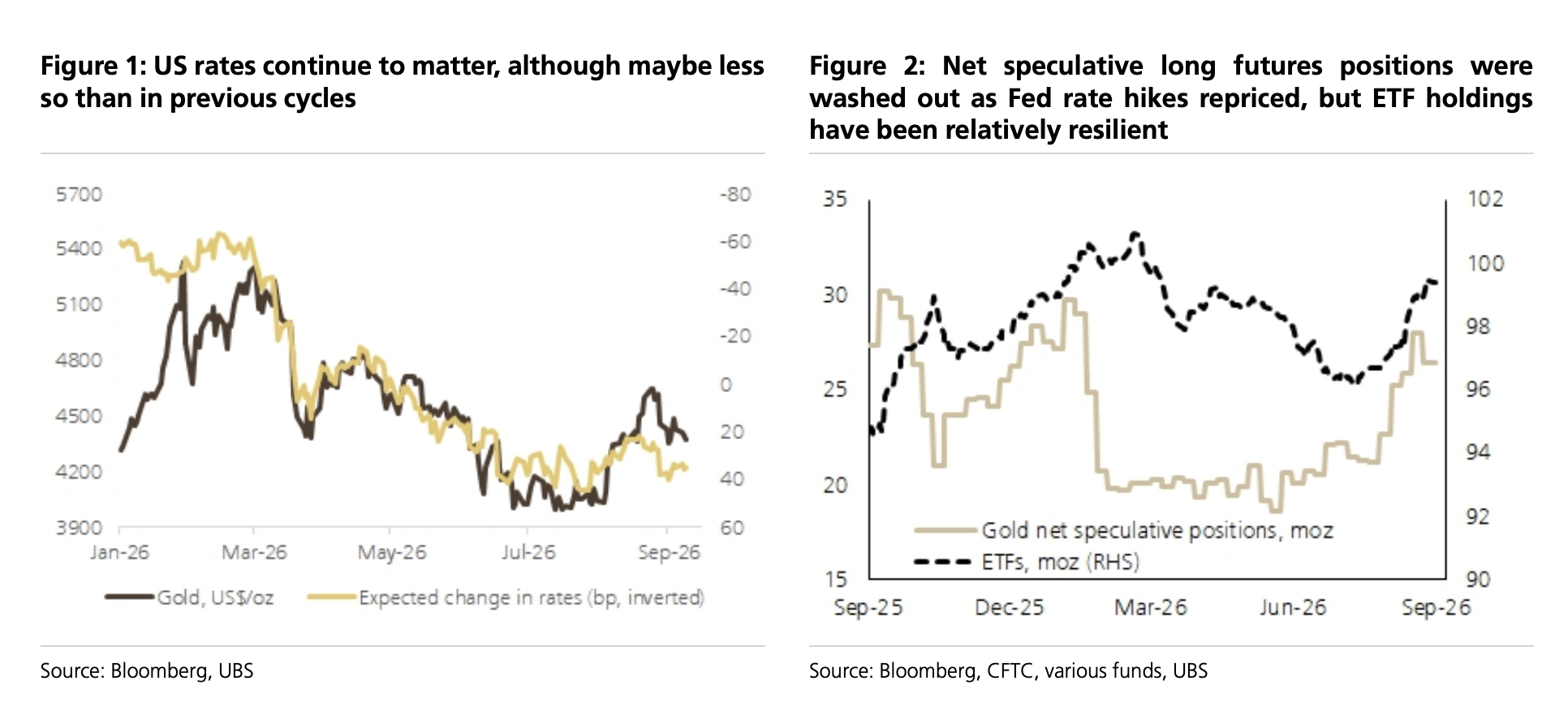
According to Foresight Trading Desk, UBS strategist Joni Teves stated in the "Global Precious Metals Review" released on September 9 that although the U.S. non-farm employment data for August significantly exceeded expectations, the probability of a rate hike by the Fed in September has risen to about 62%. However, the pullback in gold prices has remained limited. This performance itself is a signal—the market has largely digested tightening expectations, and investors are placing more weight on gold's strategic value as a long-term portfolio hedge.
The report clearly states that if the Fed raises rates in September as expected, gold prices may experience a brief decline, but the drop is expected to be manageable; if the Fed chooses to stand pat, gold prices may see a stronger upward reaction. UBS believes that with seasonal physical demand approaching, official sector purchases continuing, and diversified investment channels providing support, the risk-reward ratio for gold prices is increasingly skewed upwards towards year-end.
Resilience as a Signal: Gold Prices Have Fully Digested Rate Hike Expectations
Under normal logic, the strong performance of August's non-farm employment data should have triggered a larger pullback in gold prices. Data shows that 162,000 new non-farm jobs were added in August, about three times the market's expectations. However, the reaction in gold prices has been relatively mild, which UBS interprets not as a failure of rate factors, but rather as evidence that the market has completed a significant level of expectation repricing.
The report notes that investors remain concerned about real interest rates and the dollar's trajectory, but they are also questioning: what are the fundamental drivers pushing rates up? How sustainable is this trend? What does it mean for economic growth, fiscal credibility, and the broader policy framework? This distinction is critical. If the backdrop for rate hikes is inflation driven by accelerating economic growth, it would impose substantial pressure on gold; however, the current situation is not so.
UBS believes that gold's resilience indicates that strategic investors are increasingly viewing price pullbacks as an opportunity to improve entry costs, rather than a reason to exit their positions.
Asymmetrical Risks: The Upside Space Without Rate Hikes Exceeds Downside Risks With Hikes
UBS has made a clear judgment on gold price trends under two scenarios, emphasizing the significant asymmetry between the two.
If the Fed raises rates in September, gold's first reaction is likely to be downward—higher real interest rates and a stronger dollar will create dual pressure. However, UBS expects the declines to be limited: improvements in seasonal physical demand, and institutional investors and official sectors seeking strategic positioning buying on dips, will collectively provide support for gold prices. The ultimate result may be a pullback significant enough to draw market attention but insufficient to change the overall direction.
In contrast, if the Fed chooses to pause rate hikes, the market reaction could be much stronger. Investors might chase gold, especially if this decision is interpreted as increasing risks of policy missteps or raises questions about the Fed's independence and credibility. In this scenario, the release of short-term interest rate pressures will align with the long-term diversification logic of gold, pushing the extent of gold price increases beyond the potential declines in the rate hike scenario.
The report concludes that while gold may still be somewhat vulnerable to hawkish surprises, its sensitivity to positive catalysts is increasing.
Continued Purchases by Official Sectors, Structural Support Remains Unchanged
The ongoing gold purchases by official sectors provide important structural support for gold prices. The latest data show that central banks globally net bought about 23 tons of gold in July, bringing the identifiable purchase amount to about 125 tons year-to-date, down from approximately 182 tons during the same period last year. Although the total has declined, UBS points out that reserve management agencies are still accumulating gold at a historically significant speed and show a pattern of increasing purchases when prices are low or relatively stable.
China added about 20 tons in August, bringing the total purchases this year to approximately 80 tons, with the past two months seeing the strongest buying since the end of 2023. Poland remained the largest buyer among central banks until the end of July, with cumulative purchases reaching 90 tons. Additionally, Uruguay increased its gold reserves for the first time in about 30 years, further confirming the continued expansion of official sectors' interest in gold purchases.
Of note is the Dutch central bank (DNB) announcing the transfer of about 85 tons of gold from the U.S. and Canada to London. UBS believes this move aligns with the overall trend among official sectors and will not have a direct impact on gold prices, but reflects the increasingly cautious considerations of central banks regarding the storage locations of gold, as well as the recognition of gold's effective usability in specific scenarios.
Structural Divergence in Chinese Demand, Investment Channels Gradually Taking Over
The domestic gold market in China exhibits characteristics of structural divergence. Trading volumes for gold futures and forward contracts have recently rebounded, but physical spot trading volumes at the Shanghai Gold Exchange remain sluggish; meanwhile, import volumes remain high, indicating that investment demand and inventory replenishment are playing a more significant role rather than traditional jewelry consumption channels.
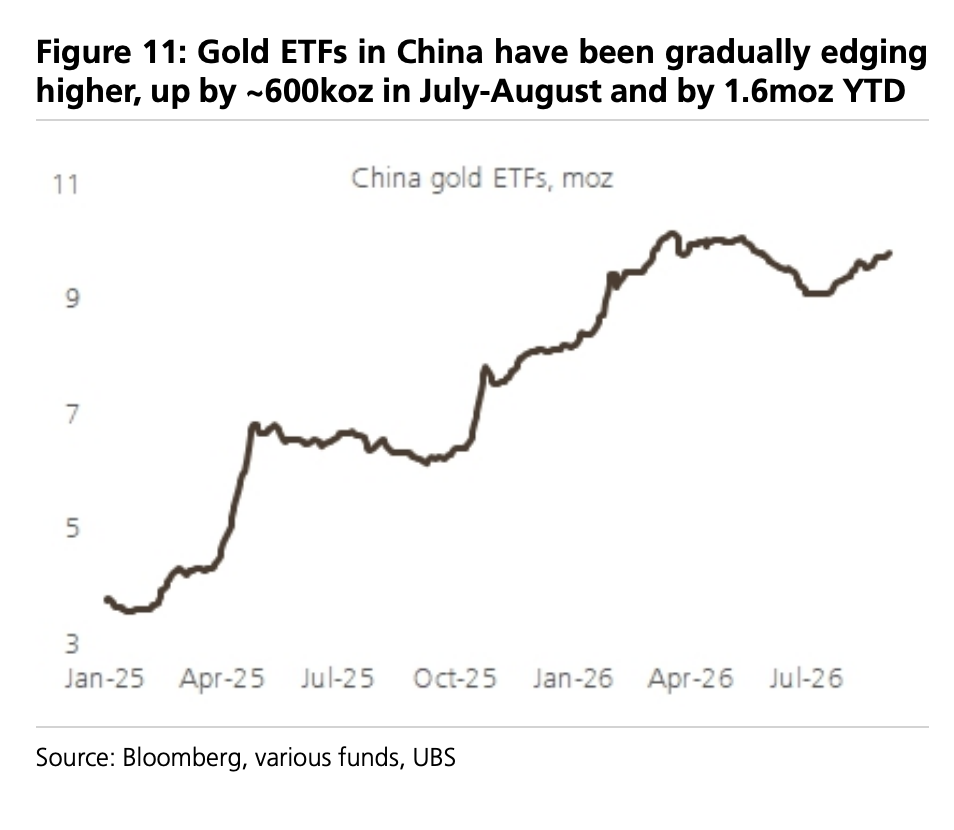
Chinese gold ETFs have continued to attract inflows, with a total net inflow of about 19 tons from July to August, and this positive trend has continued into early September, with the total holdings amounting to approximately 305 tons. UBS believes this combination indicates that China’s gold demand is becoming more diversified, reducing dependence on a single channel.
From a longer-term perspective, Asia’s role in global gold trading, investment, and physical distribution is becoming increasingly important and is expected to gradually enhance the region's influence on global gold price discovery, deepening market liquidity during Asian trading hours, and opening broader participation channels for investors. UBS believes this trend is favorable for the sustained growth of gold investment demand in the long run.
免责声明:本文章仅代表作者个人观点,不代表本平台的立场和观点。本文章仅供信息分享,不构成对任何人的任何投资建议。用户与作者之间的任何争议,与本平台无关。如网页中刊载的文章或图片涉及侵权,请提供相关的权利证明和身份证明发送邮件到support@aicoin.com,本平台相关工作人员将会进行核查。


