Author: Nancy, PANews
ZEC is experiencing a strong one-sided trend. Bears continue to contribute to the rising momentum, and bullish voices overseas are rising, even considering it a privacy version of Bitcoin.
However, amidst the high market sentiment, this privacy narrative worth hundreds of billions of dollars has been openly contradicted by Eastern crypto OGs. So, is this round of ZEC's rise a return of the privacy narrative, or a new market defeating the old one?
ZEC market cap enters the top ten, capturing sixty percent of the privacy coin market
Thanks to this strong surge, ZEC has made a comeback to the core narrative of the crypto market, becoming the focus of capital again.
According to CoinGecko data, over the past 30 days, ZEC has risen by 130.9%; over the past year, its increase has reached 2252.0%. Currently, ZEC's market cap is close to 20 billion USD, successfully surpassing the long-established meme coin DOGE and entering the global top ten cryptocurrencies by market cap. In comparison with the performance of mainstream crypto assets, ZEC clearly outperformed Bitcoin and Ethereum.
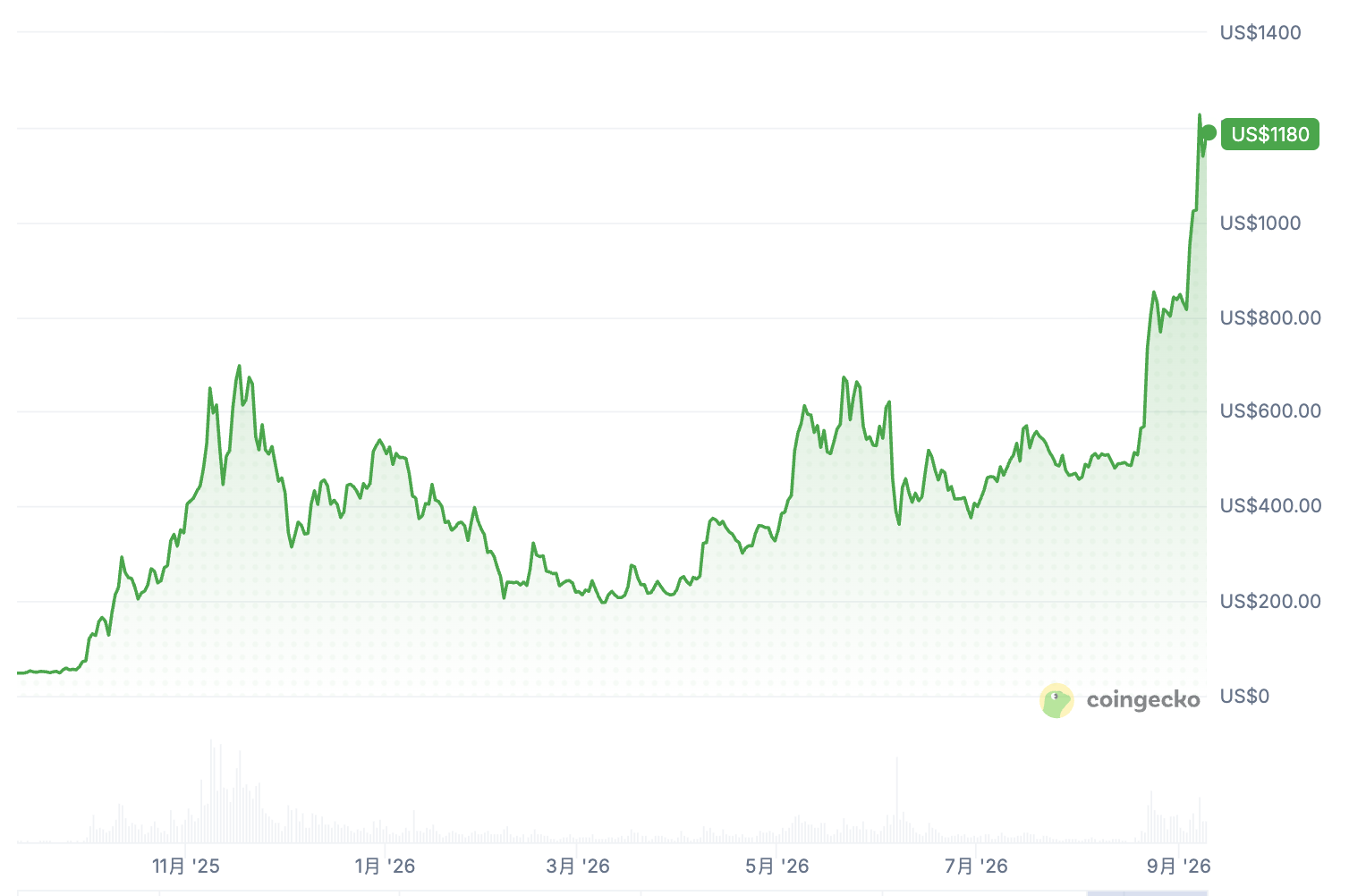
As ZEC continues to rise, its market cap has also surpassed the original privacy coin leader Monero (XMR). As of September 9, ZEC’s market cap accounted for over 66.7% of the total market cap of the privacy sector, becoming the core driving force behind this round of privacy narrative's return.
According to Glassnode analysis, among the current major crypto sectors, the privacy sector is the only one with a market cap above its peak in October 2025, increasing by 213% since then; over the past 30 days, the privacy sector also led the top ten sectors with a 90% increase. Meanwhile, the total market cap of privacy coins in the top 200 crypto assets has grown from 7.1 billion USD a year ago to 33.6 billion USD, approaching Tron. Nearly half of this increase has come from the past 30 days, with ZEC being the primary source of growth.
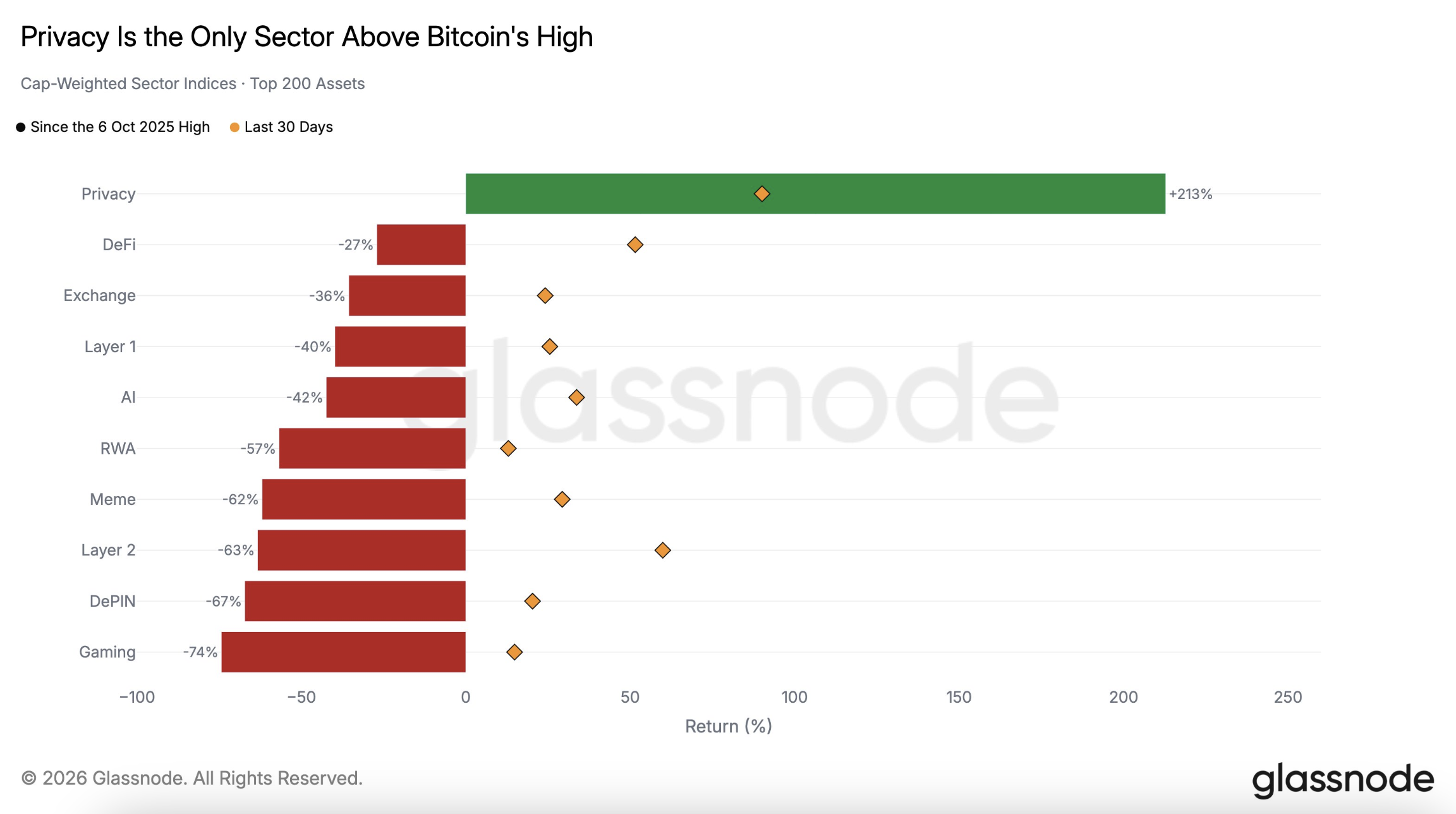
In terms of privacy coin performance, over the past 90 days, DASH, XMR, and ZEN have all outperformed Bitcoin. Among the top 25 assets, only ZEC, HYPE, XMR, and WBT are priced higher than on October 6 of last year, two of which are privacy coins. Even with a broader rebound in the crypto market over the past month, the annual returns are still predominantly concentrated in the privacy sector.
Not only is ZEC itself attracting funds, but its popularity has also spilled over to the ZEC dividend meme coin ZCAT. Driven by speculation, ZCAT has recently surged rapidly, with a market cap surpassing 170 million USD.
As ZEC aggressively rises and continually sets new highs, the liquidation amount has at times ranked first in the entire network, mainly concentrated in short positions. Some whales betting against the trend have suffered significant losses and even liquidations, providing fuel for further rises in ZEC. For example, Garrett Jin, the largest ZEC short seller on Hyperliquid, had increased his short position against the trend during the price rise; he has since reduced his position, but his unrealized losses are still close to 20 million USD.
Furthermore, bullish sentiment towards ZEC in overseas markets is rapidly heating up, with overseas crypto leaders such as Balaji, Bitwise CIO Matt Hougan, Multicoin partner Tushar Jain, and well-known crypto KOL Ansem all publicly expressing optimism for ZEC, with Balaji even calling a target price of 100,000 USD.
Fundamentals questioned by Eastern OGs, is ZEC's rise a new market defeating the old one?
As ZEC triggers a privacy narrative frenzy, some Eastern crypto OGs and KOLs are throwing "cold water" on the situation, questioning the fundamental support for this rise and conducting rational analyses of its upward logic from different angles.
On September 8, F2Pool co-founder Wang Chun tweeted that Zcash's recent rise is more driven by narrative rather than fundamental support. He believes that ZEC's market cap entering the top ten of the crypto market does not mean it has the same real application value as Solana or Hyperliquid.
Wang Chun pointed out that Zcash was not fairly distributed at its inception, with 20% of the block rewards during the first four years allocated as founder rewards, flowing to the founders, employees, advisors, and early investors, totaling about 2.1 million ZEC, accounting for 10% of the total supply of 21 million; after this distribution ended, a similar 20% block reward distribution was resumed in the form of a development fund.
Moreover, he believes that Zcash has long positioned privacy as its core selling point, but privacy addresses are not the default option, and a large amount of assets still remain in public addresses. On governance, there have been long-standing governance disputes among organizations such as the Electric Coin Company and the Zcash Foundation, and the entire ECC team's resignation in January 2026 further exposed governance issues; regarding security, a severe vulnerability in the Orchard pool disclosed in May 2026 had existed for about four years and could theoretically have been used to create untraceable fake ZEC. The Ironwood upgrade implemented in July closed the old privacy pool and mandated assets to pass through the gate. In his view, this resembles a security fix rather than a reason to support ZEC's entry into the top ten of the crypto market.
Cobo co-founder and CEO Shen Yu subsequently recalled in a post that he has always had a profound shadow regarding ZEC. When ZEC launched its mainnet in 2016, BitMEX had set the price ceiling at 10 BTC, which became the historical high for ZEC. Shen Yu expressed that shortly after starting mining on the night of launch, the transformer in his GPU mining farm was struck by lightning, and ZEC has not appeared in his personal wallet since then.
Waterdrop Capital CEO Jademont Zheng believes that after ZEC's recent rise, many market participants have become bullish on ZEC, a scene that "is reminiscent of BCH supporters' debates on the authenticity of the big cake back in the day." He pointed out that ultimately, BCH's Chinese supporters suffered heavy losses, and this time, the "lead role has simply shifted to a group of foreigners."
However, Jademont Zheng also emphasized that he has always held ZEC and has been continuously writing bullish pieces on ZEC since last year. He views holding ZEC more like purchasing "insurance," as with insurance, one should not expect it to be effective in reality, just as one does not hope to fall seriously ill after buying critical illness insurance.
In the eyes of crypto KOL Blue Fox, the controversy among crypto community OGs regarding ZEC has existed for a long time, but "whether anyone is speculating on ZEC and whether it can make money" are actually two different questions.
He believes that the core of the real divergence among the punks is not whether ZEC will rise, but rather that ZEC has taken a path different from BTC and Monero since its inception. BTC and Monero are closer to being "ownerless, default privacy, and fairly launched," while ZEC has always been accompanied by controversy. For example, during ZEC's first four years, there was a 20% block reward as founder rewards; privacy was adopted in an optional mode, offering a Viewing Key that keeps large amounts of funds in transparent addresses while ensuring compliance; the early project had significant corporate and VC backgrounds, and later, changes occurred in the ECC and the original governance system, yet development did not halt. Furthermore, Zcash's early privacy pool had a window of not being able to prove from a cryptographic level that "no one minted fraudulently." The old pool was ultimately closed, and the new pool restricted fund outflow through gates, while the window itself was not afterwards disproven.
Blue Fox believes these issues are more about perspectives than market conditions. As for making money, it follows another set of logic. Centralized hash power, hidden fund flows in privacy pools, ZEC narratives from public companies' treasuries, ETF and custody channels, and short sellers being squeezed could all become actual variables driving prices.
In his view, an asset may not fully conform to the original spirit of crypto, yet it can still become a tradable asset with good liquidity, smooth narratives, and ongoing capital relay. Ideology and trading are not entirely mutually exclusive. This reflects the reality that today's crypto market is far from the original crypto market.
Crypto KOL 0xTodd conducted an objective analysis of ZEC's upward logic from the perspective of market structure and capital flow. In his view, an important reason for ZEC's current rise is that XMR adopted a mandatory privacy mode, subsequently affected by delistings from exchanges like Binance and Coinbase, while ZEC allows simultaneous existence of transparent and privacy addresses, thus its liquidity and trading channels have not faced the same level of restriction. At the same time, under similar exchange support, while DASH was involved, Grayscale under DCG also held ZEC. Additionally, he further pointed out that many illicit activities in reality do not particularly care about privacy coins, often opting for USDT and BTC on TRON; genuine attackers valuing privacy may prefer using mixing tools like Tornado Cash. This is because large monetary movements often occur within the EVM ecosystem, and privacy chains, aside from their privacy attributes, lack equivalently sized capital pools and application scenarios.
Therefore, in 0xTodd's view, even if XMR and DASH rebound in the future, it cannot prove that ring signatures or mixing mechanisms have defeated zero-knowledge proofs. "It can only prove that a new market has defeated an old market."
Grayscale as an important driving force, a decade-long layout from mining to ETF
Grayscale is undoubtedly an important driving force behind this round of ZEC's rise. However, looking at the timeline, Grayscale's parent company DCG is not an outsider to the Zcash ecosystem; they laid out their plans many years ago.
In 2016, when Zcash's mainnet was launched, the announced early investor list included DCG and its founder Barry Silbert. As an early shareholder of the Electric Coin Company (ECC), DCG not only obtained equity but also received ZEC founder rewards. The following year, Grayscale launched the Grayscale Zcash Trust, packaging ZEC into a financial product that institutional investors could participate in.
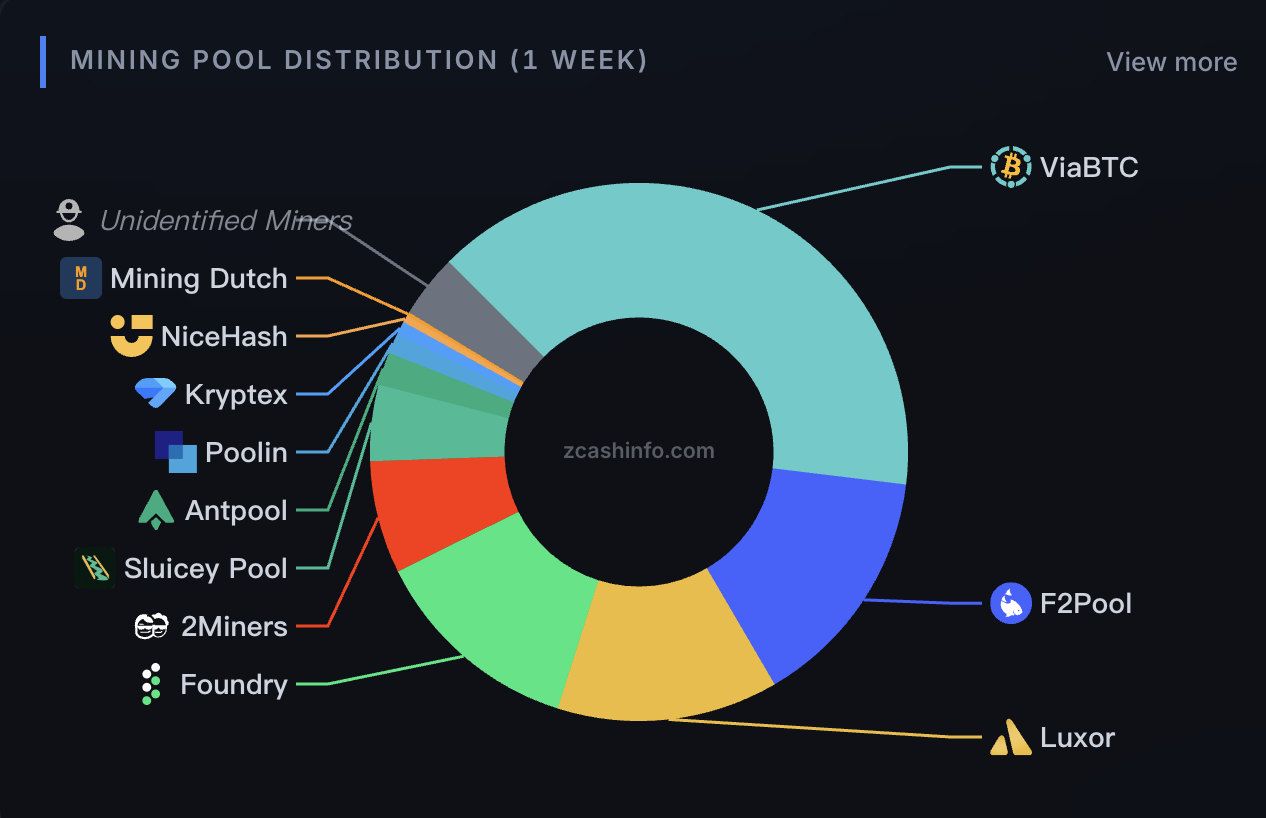
Starting in 2019, DCG's Fortitude Mining began participating in ZEC mining. This year, the mining company further advanced its merger with HeartSciences for NASDAQ listing and announced a $45 million investment to strengthen Zcash mining infrastructure. Meanwhile, Foundry Digital, DCG's mining and staking subsidiary, also launched an institutional-grade Zcash mining pool, currently accounting for about 14.2% of the total network hash rate.
The launch of the ZEC spot ETF has garnered more attention for Grayscale. Last month, Grayscale's ZCSH officially converted to the first US ETF directly tracking privacy coins. In just two weeks after launch, the assets under management exceeded 500 million USD, currently holding over 550,000 ZEC and further opening up options trading.
This is significant for Grayscale. During the GBTC era, Grayscale's greatest advantage lay in its first-mover advantage, occupying the compliant entry point for US institutions to allocate Bitcoin for a long time. However, with traditional financial giants like BlackRock and Fidelity successively introducing spot ETFs, the Bitcoin ETF market has become highly homogeneous, making it difficult for Grayscale to replicate its early nearly monopolistic product advantage.
In contrast, the privacy coin ETF still represents a relatively blank market space. For Grayscale, this is a market where it can continuously tell stories and attract incremental funds. Additionally, ZCSH's management fee is as high as 2.5%, far exceeding mainstream BTC and ETH spot ETFs. This means that if ZEC can continue to attract fund inflows, Grayscale gains not only in management scale growth but also in a business with a fee structure significantly higher than mainstream crypto ETFs and relatively few competitors. Notably, Grayscale also withdrew its registration applications for three altcoin ETFs, ADA, HBAR, and DOT, in August this year, sparking market speculation that Grayscale might be concentrating more resources on higher-priority similar products like ZEC.
More importantly, the narrative space for ZEC is larger; it is being rebranded as "Bitcoin with privacy features." With a total supply of 21 million, PoW consensus mechanism, and highly similar currency attributes to Bitcoin, ZEC has a foundational basis for aligning itself with the Bitcoin narrative; in the context of rising data monitoring and privacy needs in the AI era, the optional privacy mechanism also adds new imagination space for ZEC. At the same time, changes in the regulatory environment regarding privacy coins are also reducing the long-standing uncertainties surrounding ZEC; in January 2026, the SEC ended its investigation into the Zcash Foundation, alleviating market concerns about its regulatory risks to some extent.
Recently, Grayscale Research also adds fuel to the ZEC narrative. The institution published a statement indicating that Zcash, as a decentralized digital currency with privacy features similar to Bitcoin, is expected to pose a real challenge to Bitcoin's network effects. In Grayscale's view, Zcash possesses advantages in financial privacy not available to Bitcoin, continuous development to counter quantum computing and other cybersecurity risks, and cross-chain connections through intent technology, all of which may become increasingly important in an AI-driven surveillance era.
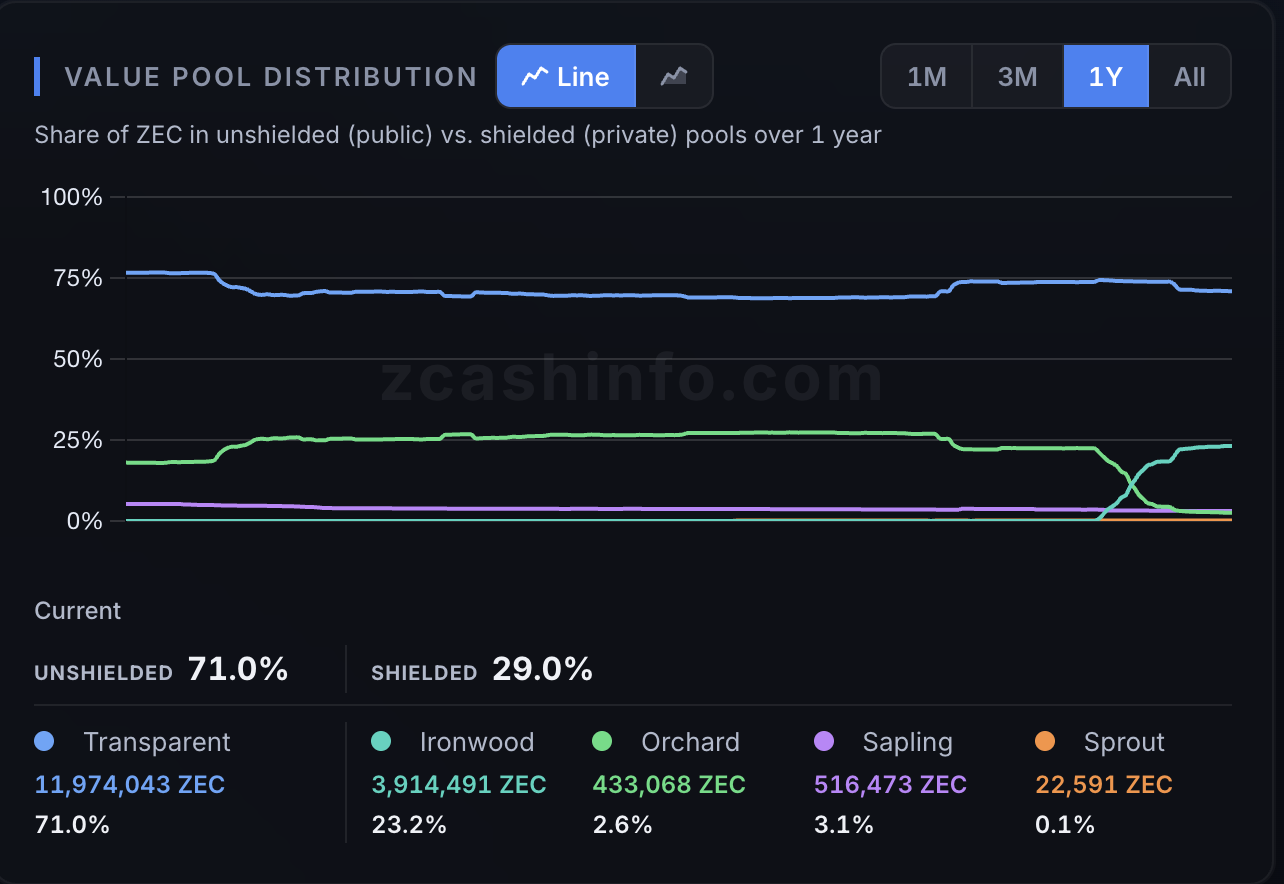
Moreover, the continuous increase in the scale of shielded pools further strengthens market expectations for ZEC supply contraction. As of September 9, approximately 29% of ZEC has entered shielded pools, with Ironwood accounting for 23.2% of the total supply, becoming the largest shielded pool currently. As more ZEC enters a shielded status, the actual chips available for free circulation and trading in the market are diminishing.
To some extent, for Grayscale, choosing ZEC is not simply betting on an altcoin that is rising but investing in an asset that has narrative space, compliance foundation, product potential, and the opportunity to be repriced by Wall Street.
Overall, the privacy narrative is merely the ignition; capital is the key driving force for repricing ZEC. However, how far this round of rising can go ultimately depends on whether there will be sustained new funds and market consensus to take over.
免责声明:本文章仅代表作者个人观点,不代表本平台的立场和观点。本文章仅供信息分享,不构成对任何人的任何投资建议。用户与作者之间的任何争议,与本平台无关。如网页中刊载的文章或图片涉及侵权,请提供相关的权利证明和身份证明发送邮件到support@aicoin.com,本平台相关工作人员将会进行核查。


