Author: Christina Comben (Cointelegraph Contributor, Magazine, September 4, 2026)
Translated by: TechFlow
TechFlow Introduction: Crypto projects are pouring hundreds of millions of dollars into "buying back their tokens." As of 2026, the buyback scale has reached approximately $640 million, an increase of about 17% year-over-year, with Hyperliquid and Pump.fun accounting for nearly 90% of it.
On the surface, buybacks (and burnings) can create demand, reduce supply, and support token prices, while also providing holders with a more intuitive connection that "the protocol is making money"; but on the flip side, every dollar used to buy back tokens cannot be used to hire developers, expand the business, or shore up the balance sheet.
This article points out, through the perspectives of 1inch, Bitwise, and Spark, that buybacks can support the token economy but do not necessarily improve the underlying business, nor can they save inherently unsustainable protocols. As tokens increasingly resemble stocks and regulators begin to question "where the value actually comes from," the real question may be: If buybacks stop, do you still have a reason to hold this token?
Crypto projects are spending hundreds of millions to buy back their tokens. But are buybacks really creating lasting value, or merely making tokens appear more valuable than they are?
As the industry matures and begins to increasingly borrow practices from traditional finance (TradiFi), crypto projects are starting to imitate the behavior of publicly listed companies. The latest trend shaking up the crypto space is token buybacks: using revenue to purchase back their own tokens.
As of 2026, crypto projects have spent about $640 million on this effort, an increase of approximately 17% compared to the same period last year, and significantly higher than the mere $366,000 in 2024. Among them, Hyperliquid and Pump.fun have accounted for nearly 90% of the current expenditure.
So where did this trend suddenly come from?
Buybacks can create demand for tokens, while burnings can reduce supply, making each token more valuable. This dynamic can exert upward pressure on token prices.
It also provides a more concrete connection between holders and the economic activities of the underlying protocol. Orest Gavryliak, Chief Legal Officer of the decentralized exchange aggregator 1inch, stated to Magazine:
“When projects implement buybacks and burnings supported by revenue, they usually have one or two goals: either to reduce the supply of tokens in circulation or to demonstrate to the market the logic of investing in protocol revenues.”
Gavryliak said that telling users “we bought back and burned the tokens” is much “more straightforward” than explaining how governance works, how fees are determined, or how protocols are used.
Why do crypto projects buy their own tokens?
You might wonder whether it’s counterproductive for projects to buy their own tokens. After all, projects usually sell tokens to raise money to cover costs.
It’s somewhat similar, but there’s a key premise. Using generated revenue to buy back tokens (and hold or burn them) establishes an implicit connection between the success of the protocol and the value of the tokens, which has been a pain point for crypto projects for a long time. As explained by Max Shannon, Senior Research Assistant at Bitwise Europe:
“Buybacks and burnings remain an effective means of solidifying value for token holders: they create persistent buy pressure for tokens on the public market and directly tie the success of the tokens to the adoption of the platform.”
This represents a sea change for an industry that has been obsessed with chasing narratives or betting on the “greater fool theory” over the past few years, as those buying Fartcoin or Peanut the Squirrel are not doing so for solid economic models.
Some protocols have been much more aggressive in this regard than others. For instance, Hyperliquid allocates 99% of its revenue to buy back and burn HYPE; Pump.fun allocates 50% of its revenue to buy back and burn its tokens, with a value of $446.65 million worth of PUMP already removed from circulation.
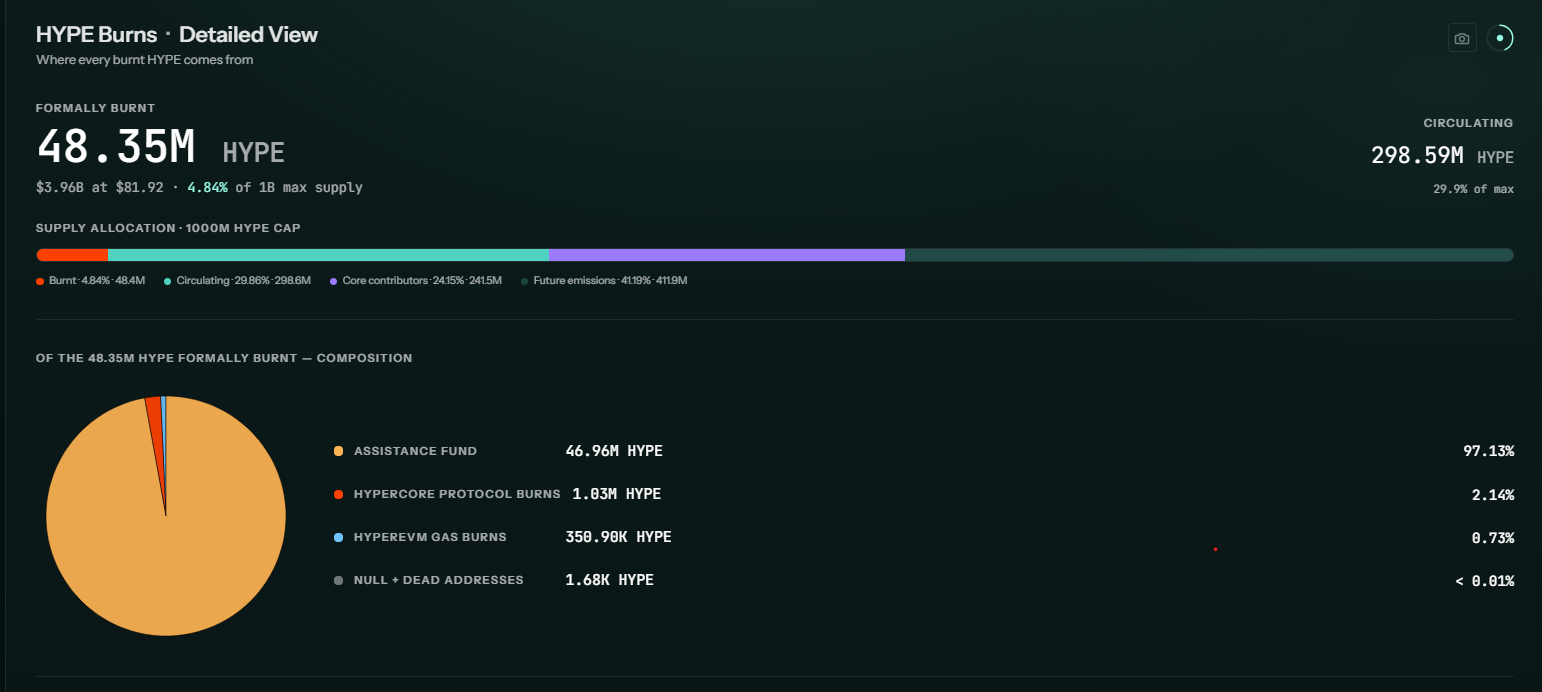
Image: HYPE Burns. Source: Hyperliquid
The DeFi infrastructure protocol Spark offers a slightly different model: according to its co-founder and CEO Sam MacPherson, it has cumulatively bought back over 143 million SPK through publicly funded market buybacks.
However, these tokens have not been burned but are kept in Spark’s treasury to reward long-term participants in the ecosystem. MacPherson told Magazine that the focus is not merely on reducing supply:
“Token holders should participate in the protocol's long-term economic success, rather than just receiving a payout every time the protocol generates revenue.”
He stated that buybacks allow Spark to establish this alignment of interests while “retaining flexibility on how and when to deploy the purchased SPK,” making the token economically meaningful rather than reducing it to “just a simple dividend mechanism.”
Token buybacks are also a tax-efficient way to return revenue to holders, as users do not have to bear a heavy tax burden for dividends or rewards.
Is buying tokens really the best use of money?
Although the above logic sounds incredibly rational, the bigger question is: Is buying back its own tokens really the best use of a project’s funds?
It probably isn’t in all circumstances. MacPherson said:
“The question should be: what is the highest value use of the next dollar in surplus?”
He explained that if a protocol could reinvest its funds for attractive returns, that might be much more valuable than “distributing revenue as soon as it arrives.”
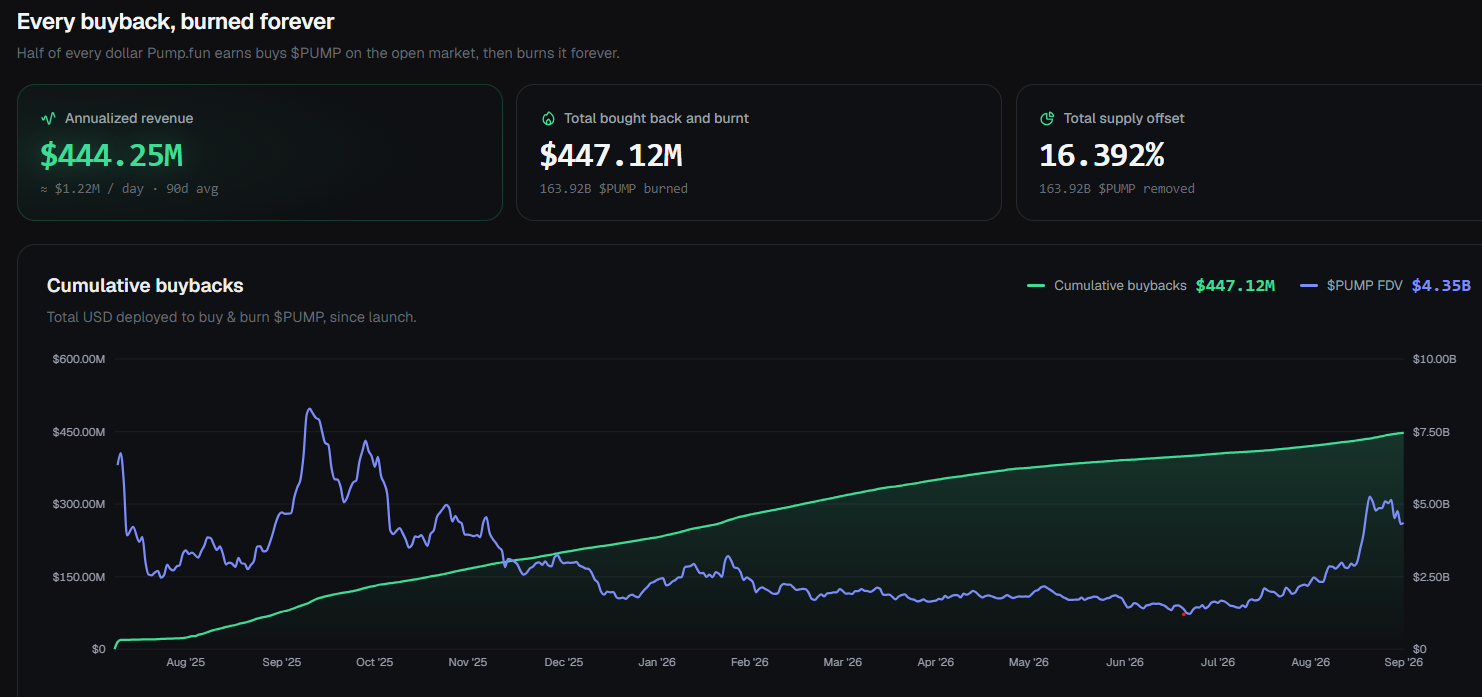
Image: PUMP Burns. Source: Pump.fun
Buybacks can support the token economy but do not necessarily improve the underlying business.
There’s also no ironclad guarantee that buybacks will translate into higher token prices. Pump.fun has been aggressively buying back and burning PUMP since July 2025, but the token is still about 50% lower than its historical peak in September 2025. The rise in UNI following Uniswap’s UNIfication proposal in November 2025 has also retraced by about half.
Shannon pointed out that there are "many factors" contributing to these price movements, so they do not prove buybacks are a failure, but:
“They prompt investors to debate whether these startup projects should reduce their commitment to allocating revenue for buybacks and burnings, and reinvest more back into the team and the project itself.”
Investors should carefully differentiate between “buyback plans that drive up token prices” and “successful business models.”
A protocol that can generate real surplus and is sustainable might decide that spending some money on buying back tokens is the best choice; however, a struggling project may simply be attempting to leverage buybacks to lift its price. MacPherson bluntly stated:
“Buybacks will not make an unsustainable protocol sustainable.”
When tokens start looking like stocks
Although token buybacks superficially resemble stock buyback plans, this does not mean that tokens are becoming more like stocks.
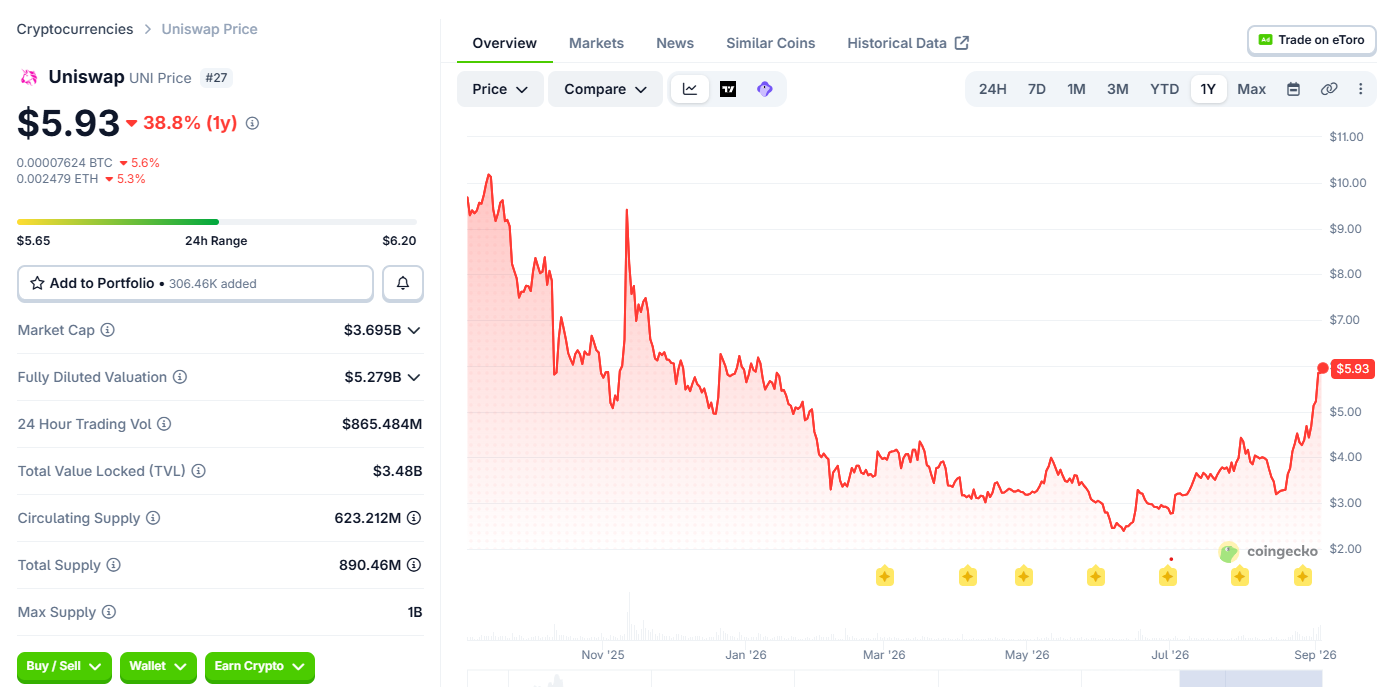
Image: UNI has dropped about 50% since starting its buyback and burn. Source: Coingecko
Shareholders own a portion of a company, potentially enjoying voting rights, dividend rights, or claims on residual assets. Token holders typically do not possess these equivalent legal rights; Orest believes this distinction is crucial. “This is a market mechanism, not a legally enforceable right,” he said.
MacPherson described SPK as a “pseudo-equity” of an on-chain protocol. Although the legal ownership structure, in the traditional sense, does not exist, economically, Spark is “trying to create many of the same characteristics: participation in governance, long-term alignment, and a mechanism that allows those most loyal to the protocol to benefit from its success.”
When buybacks start resembling dividends
But as crypto begins to mimic TradFi’s buybacks, dark clouds might be gathering on the horizon, as regulators are pondering what these mechanisms really mean.
Although the Digital Asset Market Clarification (CLARITY) Act of 2025 remains a draft and should not be seen as established law, Gavryliak noted that its proposed framework raises a key question: Where does the value of tokens actually come from?
“If the value comes from the network’s own functionality, then assets appear to look like commodities; but if the value is based on the efforts of a project team in delivering, marketing, or providing returns to token holders, then it has already become a security. Bottom line, don’t wrap tokens in stock clothing and expect them to remain commodities.”
Ultimately, crypto investors want to know what is underlying the tokens: revenue, users, a sustainable economic model, and some credible way tokens can benefit from these things.
While buybacks may offer a solution, they might also just be another financial engineering scheme that makes tokens appear more valuable than they are without addressing the underlying problems, as Gavryliak put it:
“If buybacks stop, will there be any reason to hold this token? If the answer is no, then the problem runs deeper than the token economy.”
免责声明:本文章仅代表作者个人观点,不代表本平台的立场和观点。本文章仅供信息分享,不构成对任何人的任何投资建议。用户与作者之间的任何争议,与本平台无关。如网页中刊载的文章或图片涉及侵权,请提供相关的权利证明和身份证明发送邮件到support@aicoin.com,本平台相关工作人员将会进行核查。


